Skip to content
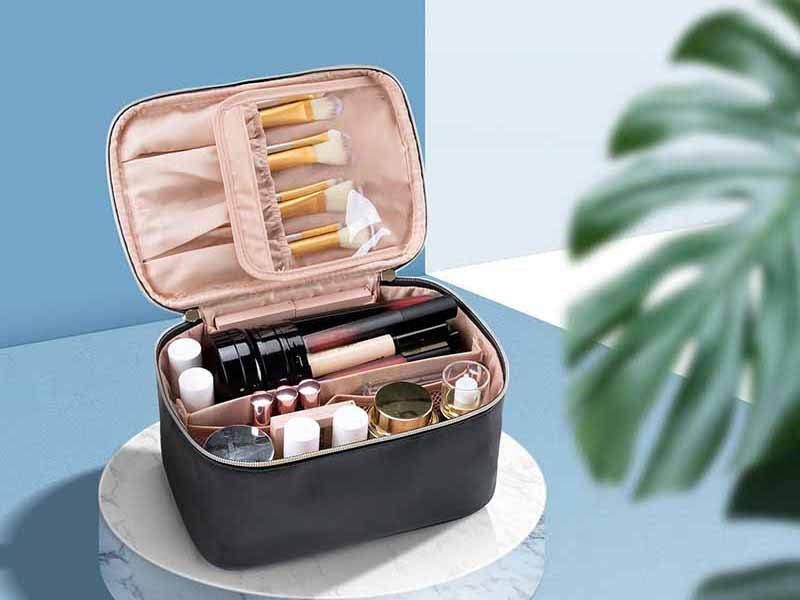
Retail brands rarely fail because of design ideas. They fail because the manufacturer behind the product cannot deliver consistency. Makeup bags look simple—zippers, lining, fabric, logo—but in retail reality, small defects turn into large losses: broken zippers, peeling coatings, uneven stitching, color mismatches, or bags that arrive smelling of chemicals. Returns add up fast, and once a retailer loses trust in a supplier, switching costs time, money, and market momentum.
A reliable makeup bags manufacturer is one that can repeatedly deliver the same quality, finish, and function across samples and bulk orders, while meeting retail timelines, packaging standards, and compliance requirements. Reliability is not about claims—it’s about systems, experience, and proof.
Many retail brands learn this the hard way. One brand may succeed with the first sample, only to receive a bulk order that feels different, looks cheaper, or fails during customer use. That gap usually comes from weak factory controls, not bad intent. Choosing the right makeup bags manufacturer early can mean the difference between scaling smoothly and constantly fixing problems.
Let’s walk through how experienced retail brands actually evaluate a makeup bags manufacturer—step by step, without guesswork.
What Is a Reliable Makeup Bags Manufacturer?
A reliable makeup bags manufacturer is a factory that delivers consistent materials, construction, and finishing across repeat orders, with controlled defect rates and predictable lead times. Reliability means the sample is not a “one-off”—it’s a true preview of bulk production, supported by clear QC checkpoints, stable sourcing, and retail-ready packing standards.
What Does “Reliable” Mean in a Makeup Bags Manufacturer?
For retail brands, reliability is not a feeling—it’s performance you can measure. A manufacturer is “reliable” when they can keep the same standard even when production is busy, when workers rotate, and when raw materials come from different lots.
Retail brands usually measure reliability by:
- Consistency: sample and bulk feel the same
- Defect control: low defect rate and clear sorting rules
- Repeatability: reorder quality matches the first order
- Timelines: shipment date is predictable (not “maybe”)
- Communication: clear answers when problems appear
A practical scoring checklist:
| Area | What “Reliable” Looks Like | Red Flag |
|---|---|---|
| Materials | same spec, same feel | “similar material” language |
| Zippers | tested, stable supplier | zipper brand unclear |
| Stitching | consistent stitch density | uneven seams in photos |
| QC | inspection report available | “we check carefully” only |
| Packaging | barcode/label accuracy | packing depends on workers |
If a factory can’t explain how they keep these stable, you’re taking a gamble.
Why Retail Brands Fail with the Wrong Makeup Bags Manufacturer?
Retail failures are usually caused by small defects that scale into big numbers. A 3% defect rate sounds small—until you ship 10,000 units. That’s 300 problem pieces.
Common retail failure points:
- zippers snagging or breaking
- PU peeling or cracking
- seams opening at corners
- lining tearing near zipper tape
- bad odor from glue/coating
- color shift between batches
- logo rubbing off
Where these problems typically come from:
- untested zipper grades
- inconsistent PU thickness or coating cure
- weak corner reinforcement
- no incoming material checks
- no final sorting standard
Here’s what “small defects” look like in retail math:
| Order Qty | 1% Defects | 3% Defects | 5% Defects |
|---|---|---|---|
| 1,000 pcs | 10 pcs | 30 pcs | 50 pcs |
| 5,000 pcs | 50 pcs | 150 pcs | 250 pcs |
| 10,000 pcs | 100 pcs | 300 pcs | 500 pcs |
Retail brands don’t just lose product cost—they lose platform ratings, retail trust, and future PO opportunities.
How Can You Tell a Real Makeup Bags Manufacturer from a Trader?
This is a big one, because many “suppliers” can show you samples, but not all can control production.
A real makeup bags manufacturer can usually provide:
- photos/videos of the sample room and sewing lines
- clear material options (PU grades, lining types, zipper choices)
- realistic lead times (not overly fast promises)
- detailed answers about construction and reinforcement
- QC process explanation (how defects are handled)
Quick verification questions that work:
- “Which zipper options do you use for retail orders?”
- “How do you prevent zipper wave and puckering?”
- “What’s your common return issue and how do you fix it?”
- “Can you show corner reinforcement on a sample?”
- “Do you test odor and colorfastness?”
Traders usually answer with general words. Factories answer with specific methods.
Which Makeup Bags Manufacturer Materials Work for Retail?
Retail makeup bags face daily friction, makeup stains, moisture, and constant zipper use. Material selection is not only about looks—it directly impacts cleaning ability, odor risk, cracking, and return rates. A reliable makeup bags manufacturer should match materials to your retail price level and usage scenario, then confirm performance with clear specifications.
Which Fabrics Do Makeup Bags Manufacturers Use Most?
Here are common retail materials and what they’re good at:
| Material | Strength | Cleaning | Look | Common Retail Use |
|---|---|---|---|---|
| PU leather | Medium–High | Excellent | premium | gift sets, mid-premium |
| Polyester | Medium | Good | flexible | everyday, budget |
| Nylon | High | Very good | sporty | travel, outdoor |
| Neoprene | Medium | Good | soft | protective, trendy |
| Canvas | Medium | Fair | casual | eco/lifestyle |
| TPU/PVC lining | — | Excellent | hidden | waterproof inside |
Retail brands often choose the outer fabric for “style,” but returns usually come from lining, zipper, and corner build—so those must be specified too.
How Does a Makeup Bags Manufacturer Match Materials to Price Levels?
A common mistake is over-specifying expensive materials while ignoring construction. Customers feel value through use, not spec sheets.
Material matching by price tier:
| Retail Price Tier | Material Strategy That Works |
|---|---|
| Entry | polyester + simple lining + good zipper |
| Mid-range | PU + wipe-clean lining + better puller |
| Premium | upgraded PU/nylon + thicker lining + clean finishing |
| Travel focus | nylon + waterproof lining + durable zipper |
A reliable manufacturer will help you balance:
- material cost vs perceived value
- durability vs softness
- print/branding method vs fabric texture
Which Makeup Bags Manufacturer Options Reduce Returns?
These are the upgrades that most consistently reduce retail complaints:
Return-reduction upgrades (high impact, low cost):
- stronger zipper grade + smoother slider
- thicker or wipe-clean lining
- corner reinforcement (especially bottom corners)
- cleaner seam finishing inside
- odor control (avoid heavy glue smell)
A simple priority guide:
| Upgrade | Helps Prevent | Cost Impact |
|---|---|---|
| Better zipper | breakage, snagging | low–medium |
| Reinforced corners | seam opening | low |
| Wipe-clean lining | stains, leakage | low |
| Wider binding | fraying | low |
| Odor check | complaints/returns | low |
If a supplier pushes you toward heavier outer fabric but ignores zipper and lining, that’s a warning sign.
Where Szoneier Fits In (Real Capabilities)
At Szoneier, makeup bags are produced across PU, polyester, nylon, neoprene, canvas, and waterproof lining systems. With 18+ years of bag manufacturing experience, the focus is on repeatable quality, not “one perfect sample.” Projects typically start by locking down the most return-sensitive items first: zipper grade, lining choice, reinforcement method, and material consistency rules.
How to Evaluate a Makeup Bags Manufacturer’s Sampling Ability
Sampling is not just about getting a prototype. For retail brands, sampling is a stress test of the makeup bags manufacturer’s systems: communication, material control, workmanship, and ability to follow instructions under time pressure.
A reliable makeup bags manufacturer treats sampling as a preview of bulk production, not as a one-off showcase.
How Fast Should a Makeup Bags Manufacturer Deliver Samples?
Speed matters in retail, but speed without accuracy is dangerous.
From real retail sourcing experience, here are reasonable benchmarks:
| Sample Type | Normal Timeline | What It Shows |
|---|---|---|
| Simple remake (existing mold/style) | 5–7 days | responsiveness |
| Modified structure/material | 7–10 days | pattern & sourcing ability |
| New custom design | 10–14 days | development capability |
Warning signs:
- “3 days” promised for a fully new custom bag
- No questions asked before sampling
- Sample arrives fast but differs from specs
Good signs:
- factory confirms materials before sampling
- pattern questions are raised early
- construction details are discussed, not assumed
Retail brands should prefer accurate samples in 10 days over rushed samples in 3 days.
What to Check in a Makeup Bags Manufacturer Sample
Most brands focus on appearance first — which is natural — but retail failures come from what’s inside and underneath.
A practical sample evaluation checklist:
Construction
- zipper runs smoothly (10–20 open/close tests)
- seams are even, no skipped stitches
- corners reinforced, not just folded
- lining fixed cleanly, not floating loose
Material
- PU or fabric thickness consistent
- no strong chemical odor
- lining wipes clean after makeup smear test
Use simulation
- load with real cosmetics
- place in bag, suitcase, drawer
- check shape retention and zipper stress
A reliable makeup bags manufacturer expects this level of checking and does not get defensive about it.
Sample vs Bulk — How to Detect Hidden Risk Early
One of the most important questions retail brands ask is:
“Will bulk look and feel like this sample?”
You can’t know for sure — but you can reduce risk.
What to ask the manufacturer:
- Is the sample fabric from bulk stock or sample stock?
- Are zippers from the same supplier as bulk?
- Is the sample sewn by production workers or sample room only?
Best practice:
- request one extra “production-standard sample”
- confirm it uses bulk-grade materials
- approve that version for mass production
This step alone prevents many “sample good, bulk different” problems.
What Is a Reasonable MOQ from a Makeup Bags Manufacturer?
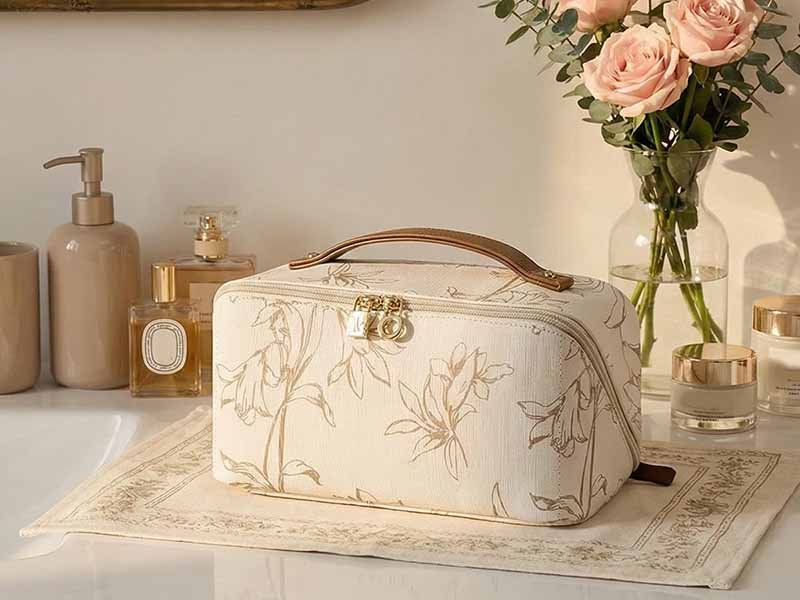
MOQ is not just a number — it reflects how the factory is set up and how flexible they are with retail brands testing new SKUs.
A reliable makeup bags manufacturer will explain why their MOQ exists and where flexibility is possible.
Typical MOQ Ranges for Makeup Bags Manufacturing
From real factory operations, common MOQs look like this:
| Bag Type | Common MOQ Range |
|---|---|
| Simple polyester makeup bag | 300–500 pcs |
| PU makeup bag | 500–1,000 pcs |
| Complex structure / multiple materials | 1,000+ pcs |
| Fully custom hardware or molds | 2,000+ pcs |
If a supplier offers extremely low MOQ without explaining trade-offs, be cautious. Cost or quality is usually hidden somewhere else.
How Retail Brands Use MOQ Strategically
Experienced retail brands don’t fight MOQ blindly. They work with it.
Common strategies:
- start with one core color, expand later
- reduce SKUs in first order
- test with private label before full OEM
- accept higher unit price for first run
Example:
“500 pcs in one color first, scale to 2,000 pcs across 4 colors next season.”
A reliable makeup bags manufacturer understands this logic and plans capacity accordingly.
MOQ Red Flags Retail Brands Should Watch
Be careful if a manufacturer:
- changes MOQ after sampling
- ties MOQ vaguely to “factory policy”
- cannot explain material MOQ vs production MOQ
- promises any MOQ without price impact
Transparent MOQ discussion is a sign of a professional factory mindset.
How Do Retail Brands Test a Makeup Bags Manufacturer Before Bulk?
Before placing a large PO, smart retail brands test the manufacturer, not just the product.
Start with a Controlled First Order
Instead of jumping to 5,000–10,000 pcs, many brands:
- place a pilot order (500–1,000 pcs)
- test warehouse handling
- monitor customer feedback
- track defect rate
What brands look for:
- consistency across cartons
- packing accuracy
- defect rate under 2–3%
- responsiveness if issues appear
This first order tells you more than any factory presentation.
Measure Communication Under Pressure
Problems always happen — delays, material issues, packing changes. What matters is how the makeup bags manufacturer responds.
Good signs:
- proactive updates
- clear options, not excuses
- photos or videos from the line
- realistic revised timelines
Bad signs:
- silence
- last-minute surprises
- blaming logistics or workers
- vague “we will fix” messages
Retail brands need partners, not just producers.
How Reliable Manufacturers Handle Mistakes
Even good factories make mistakes. Reliable ones:
- admit issues early
- isolate affected goods
- propose solutions (rework, replacement, credit)
- document corrective actions
If a supplier denies obvious issues, they will repeat them.
What Quality Standards Should a Makeup Bags Manufacturer Meet?
For retail brands, quality is not about perfection — it’s about control. A reliable makeup bags manufacturer is one that understands where defects happen most often, controls those points consistently, and reduces risk before products reach customers.
Quality standards must be defined, measurable, and checked, not assumed.
What QC Checks Matter Most in a Makeup Bags Manufacturer?
Retail makeup bags have a few critical failure points. A factory that understands retail will focus QC resources there first, instead of “checking everything lightly.”
High-impact QC checkpoints:
- zipper performance
- seam strength (especially corners)
- lining attachment
- coating durability (PU / TPU / PVC)
- odor and cleanliness
A simple retail-oriented QC checklist:
| Area | What to Check | Why It Matters |
|---|---|---|
| Zipper | smooth open/close (20x) | #1 return reason |
| Seams | no skipped stitches | prevents tearing |
| Corners | reinforcement present | stress point |
| Lining | firmly fixed | prevents tearing |
| Odor | no strong smell | retail complaints |
If a manufacturer cannot explain how they check these points, quality is left to chance.
How Does a Makeup Bags Manufacturer Control Zipper and Stitch Quality?
Zippers are the most common complaint in retail makeup bags — even more than fabric issues.
A reliable makeup bags manufacturer controls zippers by:
- using stable zipper suppliers (not spot buying)
- matching zipper grade to bag size and load
- testing slider smoothness before sewing
- avoiding tight zipper curves that cause snagging
Zipper reality in retail:
- cheap zipper = high return risk
- smooth slider > fancy puller
- wrong installation causes more failures than material
Stitching control focuses on:
- stitch density consistency
- correct thread thickness
- reinforced start/end points
A factory that talks about stitch patterns and reinforcement, not just “good stitching,” understands retail expectations.
Which Defects Cause Retail Makeup Bag Returns?
From retail data and factory feedback, these defects trigger the most returns:
| Defect | Why Customers Return |
|---|---|
| Zipper stuck/broken | bag unusable |
| PU peeling/cracking | looks cheap fast |
| Lining tearing | messy inside |
| Strong odor | safety concern |
| Logo rubbing off | brand damage |
Most of these defects are preventable with correct material choice, reinforcement, and process control. A reliable makeup bags manufacturer designs to avoid them — not to fix them later.
What Compliance and Safety Checks Should Retail Brands Require?
Even non-electronic products like makeup bags must meet basic safety and chemical expectations, especially in the US and EU.
A professional makeup bags manufacturer should understand this without being pushed.
Which Compliance Areas Matter for Makeup Bags?
Key compliance topics retail brands care about:
- chemical safety (REACH, CPSIA where applicable)
- heavy metal limits in PU, inks, and hardware
- colorfastness (no dye transfer)
- odor control
Not every order needs lab testing, but the factory should:
- use compliant raw materials
- know which materials require testing
- support third-party tests when needed
If a manufacturer avoids compliance discussions, that’s a risk signal.
How Do Retail Brands Reduce Compliance Risk Without Over-Testing?
Smart retail brands:
- test new materials, not every reorder
- lock approved material lists
- keep test reports on file
- retest only when material or supplier changes
This balances cost and safety without slowing launches.
How a Makeup Bags Manufacturer Supports Retail Packaging
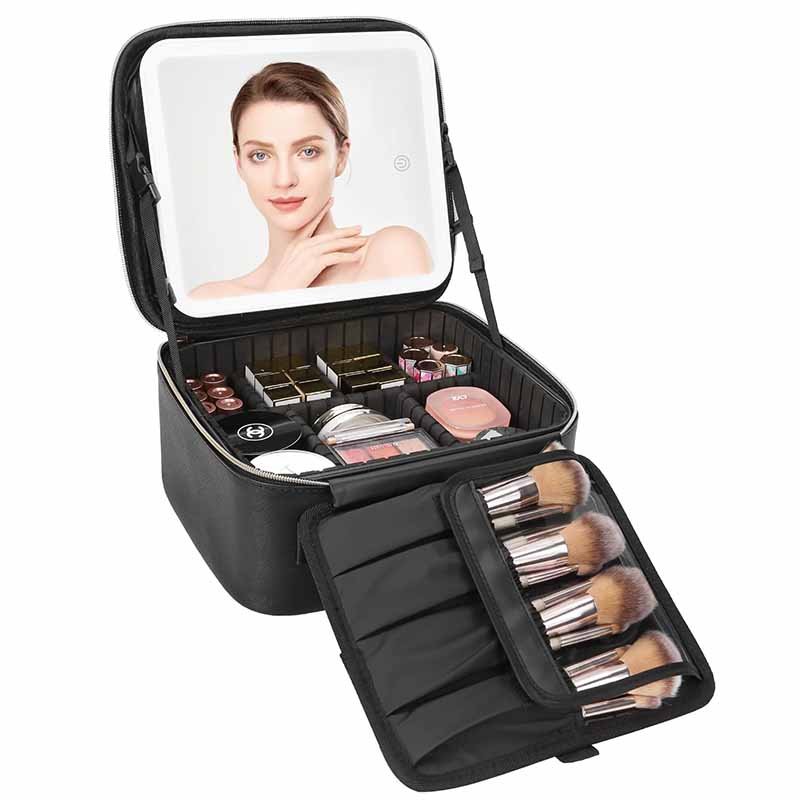
Packaging is where many factories fail retail brands — not because they can’t sew, but because they don’t understand retail execution.
What Packaging Should a Makeup Bags Manufacturer Offer?
Retail-ready packaging often includes:
- individual polybags or paper wraps
- barcode stickers (UPC / EAN)
- size or color labels
- warning or material labels
A reliable makeup bags manufacturer confirms:
- label placement
- barcode orientation
- packing sequence
- carton labeling accuracy
| Packaging Error | Retail Impact |
|---|---|
| Wrong barcode | warehouse rejection |
| Missing labels | relabeling cost |
| Mixed colors | sorting delays |
| Dirty packaging | returns |
Packaging mistakes often cost more than product defects.
How Does a Makeup Bags Manufacturer Handle Barcodes and Labels?
Barcodes must be:
- scannable
- placed consistently
- protected from rubbing
Reliable factories:
- scan-test barcodes before packing
- keep label samples on file
- separate SKUs clearly by carton
Retail brands should never assume this happens automatically — it must be confirmed.
Why Retail Brands Choose the Right Makeup Bags Manufacturer Long-Term
Retail brands do not stay with a makeup bags manufacturer because of loyalty or habit. They stay because switching suppliers quietly destroys margin, speed, and brand stability. Once a product enters retail channels, consistency becomes more valuable than short-term cost savings.
Long-term cooperation is not about “getting comfortable.” It is about reducing operational risk while scaling.
Long-Term Makeup Bags Manufacturers Reduce Hidden Costs
Most sourcing decisions focus on unit price. Experienced retail brands focus on total cost, not just factory quotes.
Hidden costs that increase when switching manufacturers:
- repeated sampling fees
- new pattern and mold development
- re-approving materials and colors
- internal QC time and re-training
- higher defect risk in early orders
Here’s a simplified comparison:
| Cost Area | New Manufacturer | Long-Term Manufacturer |
|---|---|---|
| Sampling rounds | 2–3 times | 1 time |
| Sample approval time | 3–4 weeks | 1–2 weeks |
| Early defect risk | Higher | Lower |
| Internal QC workload | Heavy | Stable |
| Launch delays | More likely | Rare |
Retail brands often find that a “cheaper” supplier increases real cost by 10–20% once delays and rework are included.
Consistency Protects Brand Perception on Shelves
Customers do not compare today’s makeup bag to a competitor’s—they compare it to the last one they bought from your brand.
When brands change manufacturers frequently, common problems appear:
- fabric feel changes between seasons
- color tone shifts slightly
- zipper pullers feel cheaper
- lining thickness changes
These differences may seem minor, but customers notice.
Retail reality:
- inconsistent feel = “quality went down” perception
- negative reviews accumulate quickly
- return rates rise even if defects stay low
A stable makeup bags manufacturer keeps:
- material sources consistent
- construction methods unchanged
- QC standards aligned with brand expectations
This protects brand trust, which is much harder to rebuild than a supply chain.
Long-Term Manufacturers Improve Speed, Not Slow It Down
There is a myth that staying with one manufacturer limits flexibility. In practice, the opposite is true.
When a makeup bags manufacturer already knows your:
- materials
- zipper specs
- lining requirements
- packaging format
- labeling rules
They can:
- develop new SKUs faster
- adjust designs without re-learning basics
- sample in fewer iterations
- respond quicker during peak seasons
Speed comparison from real projects:
| Task | New Manufacturer | Long-Term Partner |
|---|---|---|
| New sample | 10–14 days | 5–7 days |
| Color adjustment | 5–7 days | 2–3 days |
| Reorder setup | 7–10 days | 1–2 days |
Retail brands that launch seasonal collections rely heavily on this accumulated familiarity.
Defect Rates Drop Over Time with the Same Manufacturer
Quality improves with repetition.
When working long-term with the same makeup bags manufacturer:
- recurring issues are identified and eliminated
- QC focuses on brand-specific weak points
- workers become familiar with construction details
Realistic defect trend over time:
| Order Stage | Typical Defect Rate |
|---|---|
| First bulk order | 3–5% |
| Second order | 2–3% |
| Stable cooperation | 1–2% |
Lower defect rates mean:
- fewer returns
- fewer chargebacks
- less warehouse sorting
- less customer service workload
This operational stability is one of the biggest reasons retail brands stay long-term.
Long-Term Partners Help Brands Control Risk During Scale-Up
As order volume grows, risk grows with it.
A reliable long-term makeup bags manufacturer can:
- plan capacity in advance
- reserve materials for repeat SKUs
- warn brands early about raw material changes
- adjust timelines before delays happen
This is critical when:
- moving from 1,000 pcs to 10,000+ pcs
- expanding to new colors or sizes
- launching into new retail channels
Manufacturers who understand your brand’s growth plan become risk buffers, not bottlenecks.
When Retail Brands Decide to Switch Manufacturers
Retail brands do not switch lightly. Most switches happen after repeated issues, such as:
- bulk quality drifting from samples
- defect rates increasing over time
- missed delivery windows
- poor communication under pressure
- denial of responsibility when problems occur
Switching is often a last resort, because brands know the transition cost is high.
That’s why the initial choice matters so much.
What Retail Brands Gain from the Right Makeup Bags Manufacturer
Retail brands that choose the right manufacturer long-term gain:
- predictable cost control
- stable product feel across seasons
- faster development cycles
- lower return rates
- smoother warehouse operations
- stronger retailer confidence
In other words, they gain operational leverage, not just products.
Top 10 Makeup Bags Manufacturers in the World:List Guide)
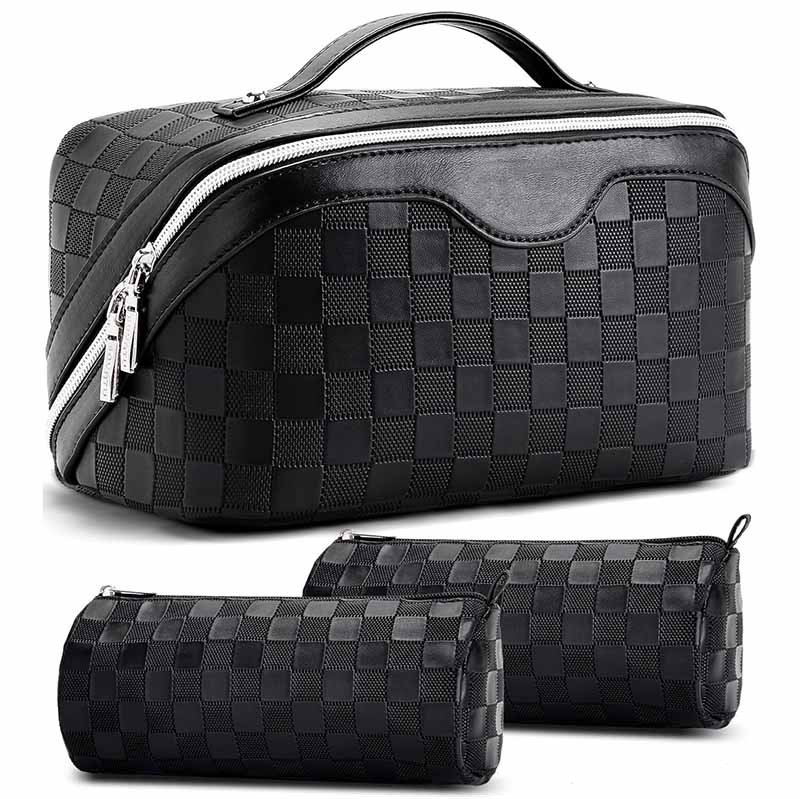
Choosing a makeup bags manufacturer is not about finding “the biggest factory,” but about finding a manufacturer whose capabilities, scale, and working style match your brand’s retail strategy. Below is a curated list of globally recognized makeup bags manufacturers, covering luxury, retail, OEM/ODM, and private label production.
This list is based on manufacturing capability, retail experience, material expertise, and long-term brand cooperation, not advertising claims.
1. LVMH Métiers d’Art (France)
Best for: Luxury & high-end cosmetic brands LVMH Métiers d’Art supports premium leather goods and cosmetic accessories for luxury brands under the LVMH group. Their makeup bags focus on craftsmanship, leather quality, and brand heritage, not volume production.
- Strengths: luxury leather, craftsmanship, brand consistency
- Limitations: very high MOQ, not suitable for mass retail
2. Szoneier (China)
Best for: Retail brands, private label, OEM & ODM makeup bags
Szoneier is a vertically integrated makeup bags manufacturer with over 18 years of experience in bag R&D, sampling, and bulk production. The factory supports a wide range of materials including PU, polyester, nylon, neoprene, canvas, TPU/PVC linings, EVA, and leather trims, serving both emerging retail brands and established international clients.
- Strengths: stable quality, fast sampling, low MOQ, retail-ready packaging
- Typical clients: DTC brands, retailers, Amazon sellers, cosmetic brands
- Key advantage: strong balance between cost control and repeatable quality
3. Cosmopak (USA / Global)
Best for: Brands needing full cosmetic packaging solutions
Cosmopak is primarily known for cosmetic packaging, but also offers cosmetic bags and pouches as part of complete brand packaging programs. They are often chosen by brands wanting design + packaging + accessories under one supplier.
- Strengths: packaging integration, global compliance
- Limitations: less flexible for small-batch custom bags
4. KACO (China)
Best for: Promotional and mid-range cosmetic accessories
KACO manufactures a wide range of cosmetic accessories including makeup bags, brushes, and gift sets. Their strength lies in standardized designs and promotional programs.
- Strengths: competitive pricing, gift-ready sets
- Limitations: limited deep customization
5. Intercos Group (Italy)
Best for: High-end cosmetic brands with accessory programs
Intercos is a major cosmetics manufacturer that also develops accessory items, including makeup bags, as part of brand experience extensions.
- Strengths: luxury brand understanding, compliance
- Limitations: accessories are not core focus
6. Talbots Accessories Suppliers (Global)
Best for: Department-store level retail accessories
Many department-store private labels source makeup bags through established accessory supplier networks linked to major retailers. These manufacturers focus on consistency, compliance, and seasonal programs.
- Strengths: retail compliance, volume handling
- Limitations: less flexible for brand-driven customization
7. Haining PU Goods Manufacturers (China)
Best for: PU leather makeup bags
Haining is a well-known PU manufacturing hub in China, supplying many global cosmetic brands with PU-based makeup bags and pouches.
- Strengths: PU material expertise, cost efficiency
- Limitations: quality varies greatly by factory
8. Dongguan Bag Manufacturers (China)
Best for: OEM/ODM bag development
Dongguan hosts hundreds of professional bag factories capable of producing makeup bags at scale. Brands often work with selected factories that specialize in zippers, linings, and multi-material construction.
- Strengths: manufacturing depth, flexibility
- Limitations: factory selection is critical
9. Cosmetic Bag Manufacturers Thailand (Thailand)
Best for: Mid-volume production with ASEAN sourcing
Thai manufacturers are increasingly chosen for cosmetic bags due to stable labor, regional trade advantages, and improving quality standards.
- Strengths: stable production, regional sourcing
- Limitations: higher cost than China for similar specs
10. Vietnam Accessories Manufacturers (Vietnam)
Best for: Brands diversifying supply chains
Vietnamese manufacturers are popular for brands seeking supply-chain diversification. Makeup bags production is often linked to garment and soft-goods factories.
- Strengths: trade advantages, growing capacity
- Limitations: longer development cycles for complex bags
Ready to Source Makeup Bags with Confidence?
If you’re evaluating a makeup bags manufacturer and want:
- samples that reflect bulk reality
- fewer retail returns
- predictable lead times
- packaging that passes warehouses smoothly
Reach out to Szoneier to discuss your makeup bag project, request samples, or start a pilot order.
Choosing the right makeup bags manufacturer is not just a sourcing decision — it’s a brand protection decision.