Skip to content

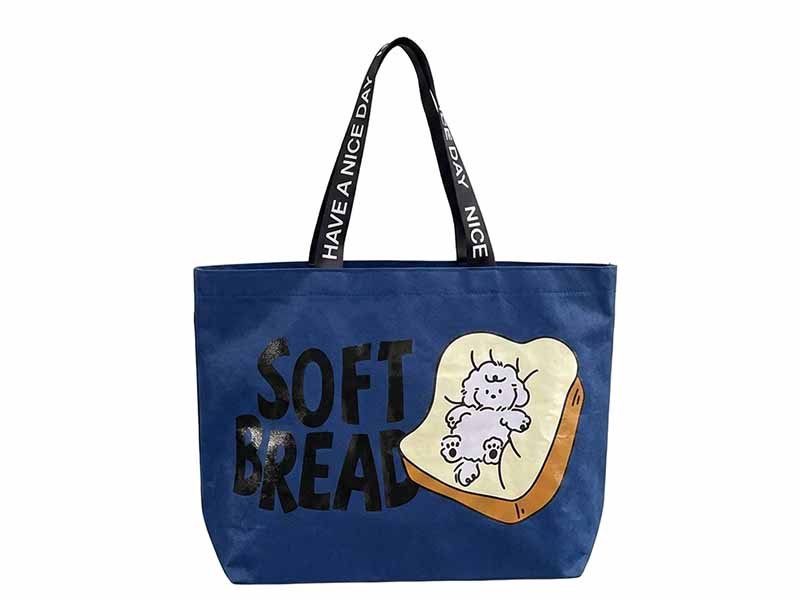
A logo that looks perfect on a computer screen can become one of the weakest details on a finished bag if the application process is chosen without considering the material underneath it. Heat transfer is popular because it can reproduce multicolor artwork, gradients, small graphic elements, and complicated brand designs with relatively flexible setup. Yet bag materials are much less predictable than a flat sheet of paper. Polyester may contain coatings, nylon can react to excessive heat, neoprene stretches, canvas has a visible weave, and PU surfaces can change gloss when pressed. A successful result therefore depends on much more than whether a heat press is available.
Heat transfer is usually a strong choice for custom bags when the artwork contains multiple colors, gradients, fine details, or complex graphics and the selected bag material can tolerate the required heat and pressure. Polyester, nylon, Oxford, neoprene, and certain PU or canvas constructions are common candidates. It becomes less attractive on highly textured, heavily coated, heat-sensitive, or repeatedly folded surfaces.
The practical question is not simply whether heat transfer is a good printing method. It is whether it is the right branding method for a specific combination of artwork, material, bag construction, order quantity, retail positioning, and expected use. A 300-piece polyester gym bag order with a seven-color gradient logo presents a very different manufacturing decision from 5,000 heavyweight canvas totes carrying a one-color wordmark. Understanding those differences before sampling can prevent disappointing logo quality, unnecessary development cost, and expensive bulk-production rework.
What Is a Heat Transfer Logo?
A heat transfer logo is a graphic applied to a bag by using controlled temperature and pressure to bond a prepared transfer layer to the material surface. It is especially useful when artwork includes several colors, gradients, fine details, or complex graphics that are difficult to reproduce efficiently with basic screen printing. Final quality depends on the transfer system, fabric surface, heat tolerance, pressure, and pressing time.
How Heat Transfer Works
The visible part of the process looks simple: the transfer is positioned, the press closes, and heat and pressure are applied for a defined period. The important work, however, happens before that moment. Artwork must be prepared correctly, the transfer system must match the material, and the pressing conditions need to be established through testing. The adhesive or bonding layer must activate sufficiently to grip the material without using so much heat that the bag fabric becomes distorted, glossy, discolored, or permanently marked.
Bag production makes this more complicated than applying graphics to basic garments. A polyester backpack panel may contain a PU coating that changes how the adhesive bonds. Lightweight nylon may react to heat faster than heavyweight Oxford. Neoprene compresses and stretches. PU leather can soften or develop unwanted shine. Heavy canvas may prevent the transfer from reaching the lower areas of its weave. For that reason, the same temperature and pressure settings should not be assumed to work across different fabrics simply because they appear visually similar.
Where construction permits, the logo is often easier to control when it is applied to a flat cut panel before final sewing. This gives the press a more even surface and allows the operator to measure placement from known reference points. Finished bags can contain seams, piping, foam, pockets, zippers, and reinforcement layers that interfere with even pressure. A transfer that receives strong pressure in one area and weak pressure in another may appear acceptable at first but later develop edge lift or inconsistent bonding.
The safest production approach is to test the logo on the exact material intended for bulk production. The test fabric should match the planned order in composition, coating, thickness, color, and surface finish. Szoneier’s documented logo-selection process follows this same principle, evaluating branding methods according to material, logo detail, color requirements, durability, MOQ, cost, and bulk-production stability rather than treating heat transfer as a universal process.
Which Heat Transfer Types Are Used?
“Heat transfer” is often used as one broad term, but several different systems can sit inside that category. Digital transfers are useful for detailed multicolor artwork, while cut-film or vinyl systems are more suitable for clean lettering and simple graphic shapes. Reflective films are commonly considered for sports, cycling, running, and outdoor-related products. Specialty films can also create matte, glossy, metallic, elastic, reflective, or slightly dimensional finishes depending on the desired appearance.
The correct choice should begin with the finished effect rather than the process name. A promotional tote may only need an economical, clean logo that remains readable throughout a campaign. A gym bag may need better resistance to flexing and repeated packing. A neoprene product may require a transfer that can tolerate compression and some stretching. A cosmetic pouch may need an especially thin edge because a thick film can make an otherwise refined product look inexpensive.
Transfer thickness also affects how the finished bag feels. A small logo may have very little influence on the overall product, while a large solid transfer can noticeably stiffen lightweight material. This is important for foldable bags, travel accessories, soft pouches, and other products where hand feel is part of the user experience. A graphic that is technically possible to produce is not automatically the best visual or tactile solution for the product.
When submitting artwork to a manufacturer, it is therefore more useful to explain the required appearance, material, logo dimensions, color requirements, and expected usage than to write only “heat transfer” in an RFQ. The manufacturer can then compare appropriate transfer systems and, if necessary, prepare more than one small test before a complete sample is produced.
Is Heat Transfer the Same as Sublimation?
Heat transfer and sublimation both use heat, but the finished constructions are different. Most heat-transfer systems place a distinct graphic layer on the surface of the bag material. Depending on the film and logo coverage, that layer may be slightly noticeable when touched. Sublimation works by turning suitable dyes into gas under heat and transferring the color into compatible polyester fibers, which means the graphic becomes part of the material rather than forming a conventional film on top.
That difference makes sublimation especially useful for all-over designs, photographic patterns, and large printed panels on appropriate polyester fabrics. A full front panel covered with a complex pattern can often maintain a softer original hand feel through sublimation. Heat transfer is usually more practical when the project requires one local logo, a sponsor mark, a small multicolor graphic, or artwork that does not justify printing an entire fabric panel.
The base color also influences the choice. Sublimation is generally most effective on light-colored, polyester-rich substrates because the dye does not create the same opaque surface layer as many transfers. A localized full-color logo on a dark polyester gym bag may therefore be better suited to a transfer system that includes the required opacity. A white polyester drawstring bag with edge-to-edge photographic artwork may be a stronger candidate for sublimation.
The decision should ultimately follow artwork coverage, substrate composition, base color, hand-feel requirements, and quantity. Choosing between the two simply because both involve heat can lead to the wrong production method and unnecessary sample revisions.
Which Bags Suit Heat Transfer?
Heat transfer is commonly suitable for polyester, nylon, Oxford, neoprene, and selected PU-based bags. Canvas and cotton can also produce good results when the surface is compatible. Coated, deeply textured, or heat-sensitive materials require more testing because adhesion and surface appearance can change significantly. The most reliable decision comes from applying the proposed transfer to the exact material planned for production.
Polyester and Nylon Bags
Polyester is one of the most common candidates because it appears across backpacks, gym bags, promotional totes, cooler bags, travel organizers, drawstring bags, sports bags, and many lightweight accessories. Its relatively stable woven surface can support clean transfers, but polyester itself is not one standardized material. A 210D lightweight polyester behaves differently from 600D or 900D Oxford-style constructions, and laminated or heavily coated materials introduce another layer of variables.
Heat can also influence the dyes or finishing chemistry used on synthetic fabrics. Dark polyester materials may require extra attention to opacity and possible color migration, while certain surface treatments can interfere with adhesion. A logo that works perfectly on one black polyester may not perform identically on another black fabric supplied from a different mill. For this reason, bulk material approval and logo approval should ideally be connected rather than treated as completely separate decisions.
Nylon presents similar challenges. It is widely used for packable backpacks, outdoor products, travel accessories, technical pouches, and higher-end lightweight bags. Smooth nylon can produce excellent detail, but some lightweight or coated constructions may show press marks, temporary gloss changes, shrinkage, or coating damage if temperature and pressure are not carefully controlled. Lower-temperature systems can sometimes help, but they still require physical testing.
For practical sourcing, the right question is not “Can polyester or nylon be heat transferred?” but “Can this exact fabric receive this exact transfer without damaging its surface or compromising long-term adhesion?” That distinction turns a generic printing decision into a controlled product-development decision.
Neoprene and Sports Bags
Neoprene is another useful heat-transfer substrate because it is widely used for bottle sleeves, soft totes, laptop sleeves, lunch products, sports accessories, can coolers, protective pouches, and flexible storage products. Its relatively smooth surface can carry detailed graphics effectively, and heat transfer is often attractive when the artwork contains multiple colors that would be awkward to build through simple spot-color printing.
The main concern is movement. Neoprene can stretch and compress more than many woven bag fabrics, so the transfer system must tolerate the expected movement. A logo can look perfect on a flat sample immediately after pressing but develop small cracks when the material is stretched repeatedly. Where the product is expected to bend or expand around its contents, stretch and flex testing should be part of the development process rather than an afterthought.
Sports bags create similar mechanical demands even when they are made from polyester or nylon. A gym duffel changes shape as it is filled. A drawstring bag wrinkles repeatedly when the opening is closed. A foldable backpack may be compressed along the same fold line dozens or hundreds of times. Placing the logo near a zipper, bottom curve, shoulder-strap anchor, piping edge, or frequently folded zone can therefore reduce its useful life even if the transfer chemistry is otherwise correct.
The following compatibility guide provides a practical starting point, but it should not replace physical testing on the actual production material.
| Bag Material | Typical Heat Transfer Suitability | Main Issue to Check |
|---|---|---|
| Polyester | High | Coating, dye migration, press marks |
| Nylon | High to medium | Heat sensitivity and surface coating |
| Oxford | High to medium | Weave texture and coating |
| Neoprene | High | Stretch and compression |
| Canvas | Medium | Coarse weave and uneven bonding |
| Cotton | Medium | Texture and transfer selection |
| PU | Medium | Gloss change or surface damage |
| PVC | Case-by-case | Heat deformation |
| TPU | Case-by-case | Temperature sensitivity |
| Jute | Low | Very rough surface |
Szoneier’s internal material guidance follows a similar practical approach, listing polyester, nylon, Oxford, neoprene, and PU among suitable candidates while identifying canvas, cotton, strongly coated materials, and heat-sensitive PVC or TPU as applications that require additional evaluation.
Canvas, PU, PVC, and TPU
Canvas is often considered a simple material, but weave depth changes how well a transfer can bond. Smooth, tightly woven canvas can produce clean results because the film makes relatively uniform contact with the surface. Heavy, open, or heavily textured canvas creates a different situation: the film may bond strongly to the raised threads while making less contact in the lower portions of the weave, which can reduce visual sharpness or long-term edge stability.
PU surfaces need a different type of caution. Some PU materials tolerate controlled heat and pressure well, while others become glossy, soften, discolor, wrinkle, or retain the rectangular impression of the press. Those changes may be unacceptable on fashion, beauty, or lifestyle products even when the logo itself remains securely attached. The appearance of the surrounding material should therefore be evaluated at the same time as the logo.
PVC and TPU can be even more heat-sensitive. Depending on formulation, thickness, backing layer, and surface treatment, excessive temperature can soften or deform the material before the transfer reaches ideal adhesion. Low-temperature films may make certain applications possible, but they should not be treated as a guarantee. A small trial on an offcut of the real production material is a much safer way to establish whether the concept is workable.
This is also a strong argument for completing logo testing early. Discovering that a PU surface changes gloss on a 100 mm test panel is manageable. Discovering the same problem after several hundred finished cosmetic bags have already been sewn, lined, zipped, and packed creates a much more expensive problem.
Which Logo Designs Work Best?
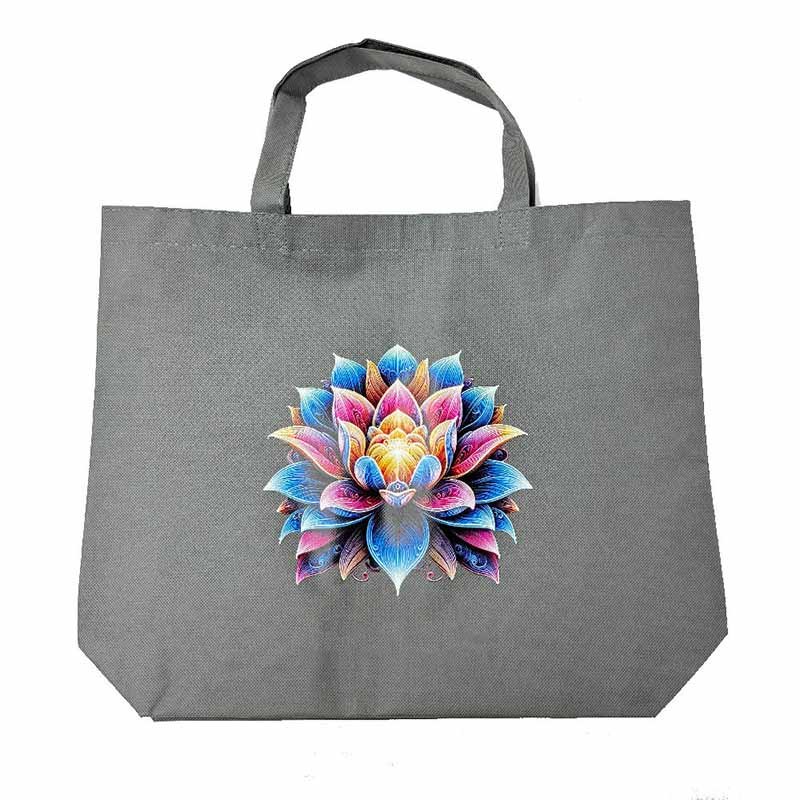
Heat transfer performs especially well with multicolor logos, gradients, fine graphic elements, and artwork that would require complicated setup through basic screen printing. It also gives designers more flexibility for illustrated or photographic graphics. The advantage becomes smaller when the logo is extremely large, repeatedly folded, heavily textured, or intended to create a premium three-dimensional appearance rather than precise graphic detail.
Full-Color Artwork
Color flexibility is one of the strongest reasons to consider heat transfer. A conventional screen-printed design usually becomes more complicated as additional solid colors are added because separate screens, registration, and setup steps may be needed. With a suitable transfer system, several colors, gradients, small icons, and detailed illustrations can be handled as a single prepared graphic, which can be commercially attractive for low to medium production volumes.
Common applications include multicolor brand marks, gradient graphics, illustrated mascots, event artwork, sponsor combinations, photographic elements, and small colored symbols that would be difficult to separate cleanly into several traditional print layers. This is particularly useful when a brand uses modern digital artwork rather than a simple one-color wordmark.
Color capability does not mean that a digital file automatically predicts the final physical appearance. Fabric color, transfer film, white backing layers, printing equipment, heat exposure, and the selected color-management method can influence the result. A dark base material can also change how opaque or bright certain colors appear. If a brand relies on a specific red, blue, orange, or other identifying color, the physical sample should be treated as the final approval reference.
A digital mockup is still useful for confirming proportions and placement, but it should not replace physical sampling when the project depends on tight color control. For important brand programs, viewing the sample in normal daylight and indoor retail lighting can also reveal differences that are less obvious in photographs.
Fine Lines and Small Text
Heat transfer can reproduce relatively fine detail, but it still operates within physical manufacturing limits. As lines become thinner and text becomes smaller, surface texture begins to matter as much as the artwork itself. A fine element that appears crisp on smooth polyester may become partially broken on canvas because the fabric weave is larger than some of the graphic detail.
A useful working reference is to keep very fine lines around 0.2 mm or thicker and small text around 3 mm or taller whenever the design allows it. Szoneier’s documented heat-transfer guidance uses similar approximate thresholds and notes that extremely fine elements may not transfer completely. These values should be treated as practical starting points rather than universal guarantees, because film type and material surface still influence the final result.
Negative space deserves particular attention. A letter can meet the minimum overall height while still containing internal gaps too small to remain open after transfer. Letters such as A, B, P, and R are common examples. Very small registered trademark symbols, narrow outlines, and reversed white text can create the same issue, especially on textured fabrics.
| Artwork Feature | Practical Starting Point | Main Production Risk |
|---|---|---|
| Fine line | About 0.2 mm or thicker | Broken or incomplete detail |
| Small text | About 3 mm or taller | Reduced readability |
| Gradient | Physical sample approval | Tone variation |
| Dark substrate | Opacity testing | Weak color coverage |
| Large solid area | Hand-feel test | Stiffness and cracking |
| Tiny reversed detail | Physical test | Gaps filling in |
When a master brand logo contains extremely complicated details, creating an approved simplified version for small applications can produce a cleaner and more professional result than forcing every element into a limited print area. This is common brand practice and often improves consistency across bags, zipper pullers, labels, packaging, and other small branding positions.
Logo Size and Placement
Logo size directly affects both appearance and mechanical performance. A small 40–60 mm wordmark positioned on a flat front pocket creates relatively little additional stiffness and usually has a short perimeter where edge lifting can begin. A large 200–250 mm solid transfer introduces much more film area, more edge length, and more opportunity for uneven pressure, creasing, or repeated bending.
The problem becomes more noticeable when the logo extends toward curved areas of the finished bag. A graphic can appear perfectly centered on a flat pattern piece but move visually once the bag is filled and becomes three-dimensional. On duffel bags, backpacks, and rounded pouches, the true visual center of the finished product may not be identical to the center of the flat cut panel.
Production sequence also matters. Where construction permits, applying the logo before final assembly can create more even pressure and more accurate positioning. The manufacturer can measure the transfer from clearly defined cut-panel edges before pockets, foam, piping, zippers, and reinforcement layers make the area difficult to press. Seam allowances and finished visual position still need to be included in the placement calculation.
Large logos are not inherently wrong, but they require stronger justification and more testing. Szoneier’s documented heat-transfer guidance specifically identifies large-area transfers as applications where hand feel and edge behavior need closer attention. A slightly smaller graphic on a stable, visible panel often looks cleaner and remains more comfortable than an oversized transfer occupying every available centimeter.
How Durable Is Heat Transfer?
Heat-transfer durability can range from moderate to very good when the transfer material, substrate, heat, pressure, size, and placement are correctly matched. Most failures are connected to edge lifting, abrasion, cracking, repeated folding, stretching, or incompatible surface treatments. The most useful durability assessment therefore comes from simulating how the finished bag will actually be handled rather than judging the logo immediately after pressing.
Peeling and Edge Lift
Peeling usually begins at the edge because that area experiences direct contact with fingers, clothing, other bags, shelves, floors, packing materials, and repeated flexing. Incorrect temperature, insufficient pressure, surface contamination, incompatible coatings, or incomplete adhesive activation can all weaken the initial bond. The transfer may still look perfect immediately after pressing, which is why inspection should continue after the logo has cooled completely.
Placement can be just as important as the adhesive. A logo positioned near the lower corner of a gym bag can rub against floors and benches frequently. The same logo placed higher on a stable front panel may experience very little direct abrasion. The transfer system is identical, but the real-world mechanical environment is completely different.
Szoneier’s documented heat-transfer guidance identifies edge lifting and long-term friction-related detachment among common risks. That is one reason useful durability discussions should avoid vague promises such as “the logo lasts for years.” A conference tote used occasionally, a school backpack used every day, and a gym duffel exposed to repeated packing and abrasion do not need the same performance level.
For important programs, the physical sample should be handled rather than simply photographed. Flex the material around the logo, rub the edges, pack the bag, and leave it for a period before inspecting the transfer again. Small signs of edge instability are much easier to correct during sampling than during final inspection.
Cracking and Flexing
Cracking is different from peeling because the film can remain firmly bonded while the graphic surface itself develops visible lines. Large solid transfers are more vulnerable because a broad continuous film must bend with the fabric. When the bag folds repeatedly through the same point, the transferred layer may eventually fatigue even though adhesion remains strong.
Stretchable substrates introduce another challenge. Neoprene can extend significantly during use, while the transfer film may have a lower stretch limit. If those two materials do not move together, microcracks can develop. The same principle applies to soft bags that bulge outward when filled, especially when the logo is placed across an area that changes shape substantially.
Packaging can also create a repeatable problem. If every bag is folded directly through the middle of a large logo before being placed into its individual polybag or shipping carton, hundreds of finished products can receive the same concentrated crease. Changing the folding method or moving the logo slightly can sometimes solve the issue without changing the transfer itself.
Szoneier’s internal guidance lists large-area cracking, stretch-related damage, incorrect temperature, insufficient pressure, missing stretch tests, and inconsistent bulk pressing conditions among the main heat-transfer risks. These are process problems that can usually be reduced when they are identified before bulk production begins.
Practical Testing
Testing does not need to become unnecessarily complicated, but it should match the intended use of the bag. A simple promotional tote that will be used occasionally may not need the same evaluation as a neoprene sports product or a washable drawstring bag. The important point is to identify realistic stresses and reproduce them on the approved sample before large-scale production.
A practical test plan can look like this:
| Test | Main Purpose | Most Relevant Applications |
|---|---|---|
| Visual inspection | Color, position, edge quality | All projects |
| Hand-rub test | Initial adhesion | All projects |
| Flex test | Cracking around folds | Foldable bags |
| Stretch test | Film compatibility | Neoprene and elastic materials |
| Abrasion check | Surface wear | Gym, travel, outdoor bags |
| Wash test | Care-cycle durability | Washable products |
| Packing simulation | Crease resistance | Folded shipping formats |
| Bulk comparison | Batch consistency | Production orders |
Wash performance deserves special care because customers often assume that every transfer behaves the same once applied. Film chemistry and pressing conditions can make a substantial difference. Szoneier’s documented process specifically recommends wash testing when machine washing is part of the expected product use.
Quality control should also continue after printing. A logo may leave the heat press in perfect condition and then become damaged during sewing, trimming, stacking, turning, packing, or carton compression. For meaningful bulk control, logo appearance should be reviewed after decoration, after the product has been fully assembled, and again during final inspection before shipment.
When Is Heat Transfer Better?
Heat transfer is usually a stronger option when artwork includes several colors, gradients, detailed illustrations, or photographic elements and when the production volume does not favor complex screen-print setup. Screen printing often remains better for simple high-volume graphics, embroidery for textured premium branding, sublimation for all-over polyester designs, and patches or metal elements when dimensional appearance is more important than printed detail.
Heat Transfer vs Screen Printing
Screen printing remains one of the most practical methods for simple artwork produced in larger quantities. If a project involves 5,000 canvas totes carrying one bold white logo, the screen setup cost can be distributed across the full order and the production process can be highly repeatable. In that situation, switching to a more complicated transfer system may add cost without creating meaningful visual value.
The calculation changes when artwork complexity increases. A 250-piece order of polyester gym bags carrying a seven-color gradient logo can be much more difficult to reproduce through conventional spot-color screens. Heat transfer may reduce setup complexity while preserving gradient detail, small artwork, and color variation that would otherwise require more advanced screen-printing techniques.
Quantity alone should not make the decision. A large-volume order can still justify heat transfer when artwork complexity is important, while a smaller order can still use screen printing if the logo contains only one or two simple solid colors. Durability, substrate, print area, and surface texture remain relevant in both cases.
A useful starting rule is straightforward. Simple one- or two-color artwork in large quantities should be evaluated for screen printing first. Detailed multicolor or gradient artwork in smaller and medium quantities should be evaluated for heat transfer, digital printing, or related processes. The lowest unit price is only useful when the selected method can still reproduce the brand correctly.
Heat Transfer vs Embroidery
Heat transfer is primarily a graphic process, while embroidery is primarily a tactile branding process. A gradient logo, detailed illustration, or small multicolor artwork can often be reproduced more faithfully through transfer because thread has physical thickness and cannot create infinitely smooth tonal changes. Embroidery usually requires the artwork to be digitized and may require simplification of very fine details.
Embroidery becomes attractive when the product needs texture, dimensionality, and a more traditional premium appearance. Structured backpacks, heavy canvas totes, travel bags, lifestyle accessories, and other products made from stable fabrics can support raised thread particularly well. The finished logo becomes a physical part of the product rather than simply a graphic image.
Material weight matters. Dense embroidery can distort thin or lightweight fabric if the stitch count, backing, and construction are not controlled properly. A lightweight drawstring bag may therefore look cleaner with a heat transfer. A structured 600D backpack front panel can usually tolerate embroidery much better and may benefit visually from the added texture.
The decision can be reduced to one useful question: is exact reproduction of the digital artwork more important, or is physical texture more important? Heat transfer normally has the advantage when visual fidelity dominates. Embroidery becomes stronger when dimensional appearance, tactile quality, and premium perception are the main goals.
Other Logo Methods
Heat transfer is one part of a much broader branding system. Sublimation is often better when an entire compatible polyester panel needs to carry photographic or repeating artwork because the dye becomes part of the fabric and leaves little additional surface feel. This can be especially useful for sports bags, printed backpacks, drawstring bags, and products where large visual areas are part of the design.
Rubber and silicone patches are useful when a product needs a more dimensional, technical, or outdoor character. Their molded surface works well on sports backpacks, equipment bags, and other products where a tactile logo can become a design feature. Leather patches create a different mood and often suit heritage, outdoor, and lifestyle products, especially when paired with canvas or structured woven fabrics.
Metal plates are generally selected for perceived value rather than graphic complexity. A small brushed, polished, or plated metal logo can make a cosmetic pouch, fashion accessory, or premium travel product appear more refined than a large printed graphic. Woven labels are another practical option when the bag material is difficult to print or when the logo only needs to appear as a subtle secondary branding element.
Szoneier supports a broad range of branding processes, including heat transfer, screen printing, digital printing, sublimation, embroidery, woven labels, leather patches, rubber and silicone patches, metal plates, debossing, reflective logos, jacquard webbing, and custom zipper pullers. The manufacturing decision is made around material, logo detail, target cost, durability, quantity, and brand positioning rather than forcing one method across every product.
How Do Cost, MOQ, and Sampling Work?
Heat-transfer cost changes according to logo size, transfer type, artwork complexity, number of positions, material compatibility, quantity, and testing needs. For selected custom bag programs, quantities can begin around 200 pieces, while complex films or large transfer areas may require higher practical volumes. Sampling should verify both appearance and physical performance before the process is released into bulk production.
Cost Factors
The price of heat transfer cannot be understood from order quantity alone. A 40 mm wordmark requires far less film and press area than a 220 mm full-front graphic. A second logo on another side of the bag creates another positioning and pressing operation. Reflective films, specialty effects, unusual adhesives, and low-temperature transfer systems can also cost more than basic transfer materials.
Artwork complexity can affect development even when the production process handles many colors efficiently. Color adjustment, test films, special opacity requirements, multiple transfer locations, and substrate testing can all add sample work. A logo applied to a clean flat polyester panel is usually simpler than the same logo positioned near a curved seam on a partially assembled backpack.
Standard heat transfer generally sits in a middle cost range. Szoneier’s internal manufacturing guidance places it above basic screen printing in many ordinary applications while commonly remaining below embroidery, molded rubber branding, or custom metal-logo hardware. That makes it useful for projects needing more visual complexity without moving directly into higher-cost dimensional branding.
The cheapest transfer film is not always the lowest-cost decision over the life of the product. If a slightly stronger system reduces edge lifting on a bag with a meaningful retail value, the additional logo cost may be easier to justify than warranty complaints, retailer rejections, or poor reviews. A one-time promotional bag with limited expected use may reasonably make a different tradeoff.
MOQ and Quantity
For selected custom bag projects, Szoneier’s documented starting MOQ is approximately 200 pieces, although the exact requirement varies with material availability, logo process, accessories, packaging, color options, and structural complexity. That starting point is useful for development planning, but it should not be interpreted as a universal quantity for every bag and every transfer system.
Within heat-transfer projects, small conventional transfers can often be evaluated from roughly 200 pieces, while multicolor applications commonly become more practical around 200–300 pieces. Larger transfer areas may be more suitable from approximately 300 pieces, and specialty films require case-by-case confirmation because the transfer material itself may have a minimum purchase quantity.
The final product MOQ can still be higher than the logo MOQ. A transfer supplier may be able to prepare 200 graphics while the selected fabric mill requires enough custom-colored material for 500 finished bags. Custom zipper pullers, molded hardware, specialized coatings, or retail packaging may introduce their own minimums as well.
For new product launches, this distinction is useful because it allows the sourcing team to identify which component is actually driving the production quantity. When standard materials and accessories are available, a relatively small trial order can help a brand test market response before committing to larger repeat orders.
Sampling and Bulk Control
A useful heat-transfer sample should answer more than whether the logo looks attractive in a photograph. Logo width, height, position, color, line clarity, edge quality, surface feel, material deformation, and adhesion after cooling should all be checked. If the product will be folded, stretched, washed, or exposed to abrasion, the relevant conditions should also be simulated before sample approval.
Szoneier’s documented working references place simple heat-transfer samples at roughly 5–7 working days, more complex multicolor graphics around 7–10 working days, and specialty films around 10–15 working days. Separate material testing can require approximately 7–12 working days, depending on availability and process complexity. These are development references rather than fixed promises for every project.
Once approval is complete, the bulk production file should lock measurable standards. Useful references include the logo width and height, distance from seams, placement centerline, transfer specification, material code, approved color reference, and the physical approved sample. Relying on photographs alone leaves too much room for interpretation when production moves to multiple operators or larger quantities.
Szoneier’s broader sampling system connects material confirmation, logo-process matching, sample development, internal inspection, sample revision, final approval, sealed-sample management, pre-production confirmation, and bulk-production documentation. The purpose of that structure is not to create one perfect sample. It is to make the approved result repeatable across the full production order.
Conclusion
Heat transfer deserves its place among the most practical branding methods for modern custom bags because it handles artwork that traditional one- or two-color printing cannot always reproduce efficiently. Multicolor graphics, gradients, detailed icons, sponsor marks, and complex brand artwork can all benefit when the substrate and transfer system are correctly matched. Polyester, nylon, Oxford, and neoprene are common starting points, while canvas, PU, PVC, TPU, and heavily coated materials require more careful evaluation.
The process becomes less attractive when the logo occupies a very large flexible area, crosses frequent fold lines, sits on a highly textured surface, or needs to create a premium tactile effect. In those situations, screen printing, embroidery, sublimation, leather patches, rubber logos, woven labels, silicone badges, or metal branding may produce a more appropriate result. Good product development is therefore not about proving that one logo method is best; it is about matching the branding method to the material, construction, usage, quantity, and price position of the finished bag.
For a custom project, the most useful information to prepare before sampling is the actual artwork file, intended logo dimensions, bag material, target quantity, product use, and expected visual effect. With those details, Szoneier can compare the appropriate branding processes, test the logo on the relevant material, and establish an approved reference before bulk production begins. That small amount of testing early in development can prevent a much larger problem after hundreds or thousands of finished bags have already been produced.
Frequently Asked Questions
Is heat transfer good for custom bags?
Heat transfer is a good option when a custom bag needs multicolor artwork, gradients, fine graphic details, or a complicated logo that would be less practical through simple screen printing. Polyester, nylon, Oxford, and neoprene are common compatible materials, although coatings and surface treatments still need to be checked. It is less suitable for highly textured fabrics, heat-sensitive surfaces, or locations that experience constant folding and abrasion.
Does heat transfer peel off bags?
A properly selected and correctly applied transfer should not peel easily under normal use, but poor adhesion, incorrect temperature, insufficient pressure, incompatible coatings, abrasion, and repeated folding can cause edge lifting. Logo position also matters because a transfer near the bottom of a bag or a frequently flexed area experiences more mechanical stress. Physical sampling, flex testing, and inspection after full cooling provide a more useful durability assessment than appearance immediately after pressing.
Is heat transfer better than screen printing for bags?
Heat transfer is often better for detailed, multicolor, gradient, or photographic artwork, particularly when quantities are relatively small or medium. Screen printing is often more economical for large quantities of simple one- or two-color logos. Neither process is universally superior. Material, artwork complexity, logo dimensions, order volume, durability requirements, and the expected retail appearance should all be considered before selecting the final method.
Can heat transfer be used on nylon bags?
Heat transfer can work very well on many nylon bags, including lightweight backpacks, travel accessories, packable bags, and sports products. The main concern is that nylon constructions vary widely in coating, thickness, finish, and heat tolerance. Some lightweight or coated nylons may develop pressure marks, gloss changes, shrinkage, or weak adhesion. Testing the proposed logo on the exact bulk material before production is therefore strongly recommended.
What is the minimum order quantity for heat-transfer bag logos?
The logo process itself can sometimes support relatively low quantities, but the finished bag MOQ depends on the entire product. For selected Szoneier custom bag projects, production can begin at approximately 200 pieces, while multicolor heat transfers are commonly evaluated around 200–300 pieces and larger transfer areas may be more practical from around 300 pieces. Fabric, accessories, packaging, custom colors, and specialty films can increase the final MOQ.
How do I know whether heat transfer or embroidery is better?
Choose heat transfer when accurate reproduction of multicolor artwork, gradients, and fine details is the main priority. Choose embroidery when raised texture, tactile quality, and a more dimensional premium appearance are more important. Material construction also matters because dense embroidery can distort lightweight fabrics, while a transfer may suit them better. Structured backpacks and heavy canvas can often support embroidery more naturally than thin foldable bags.
Should I test a heat-transfer logo before bulk production?
Yes. A physical test is especially valuable because the same logo film can behave differently on fabrics that look nearly identical. The sample should be checked for color, dimensions, placement, adhesion, edge quality, hand feel, fabric deformation, and the stresses expected during real use. If the finished bag will be folded, stretched, washed, or heavily abraded, those conditions should be included before the logo process is approved for production.