 Skip to content
Guangzhou Bag Factory OEM/ODM Guide for Brands, Retailers & E-Commerce Sellers
Guangzhou has become one of the world’s most capable manufacturing centers for custom bags, offering mature supply chains, dense material markets, and engineering-ready factories experienced with both traditional sewing and advanced material processing.
However—success with a Guangzhou bag factory depends on how well the project is planned, engineered, communicated, and quality-managed. This guide explains exactly how Szoneier, a Guangdong-based manufacturer with four invested factories (fabrics, bags, leather goods, and webbings) and a 25+ engineer R&D team, supports brands, retailers, and e-commerce sellers through every stage of the product lifecycle.
Szoneier, delivers rapid 3–7 day sampling, low 50–200 MOQ, 15–25 day production, multi-material engineering, and stable private-label manufacturing.
Who needs to know about Guangzhou bag factories?
This guide is designed for professionals who rely on predictable quality, technical development capability, and stable production cycles, rather than low-end trading. Szoneier supports a wide range of customer profiles, each with distinct operational needs.
Brand Owners Developing Seasonal or Core Bag Collections
These include lifestyle, travel, outdoor, and everyday-carry brands that need repeatable production year after year.
Their priorities:
- Full OEM/ODM partnership
- Material consistency across seasons
- Brand identity consistency (logo, metalwork, stitching color)
- Cost structure stable enough for long-term forecasting
- Clear lead-time planning to match product launch calendars
How Szoneier supports them:
- Dedicated project engineers
- Technical drawings before sampling
- Material continuity documentation
- Unified packaging concepts
- Multi-season collection alignment
Amazon & Cross-Border E-Commerce Sellers
These sellers need speed, flexibility, and competitive cost.
Their concerns:
- Low MOQ (to test new listings)
- Short sampling and production cycles
- Packaging compliance (FBA / barcode / polybag requirements)
- Fast replenishment to avoid stockouts
- Product differentiation to avoid price wars
How Szoneier supports them:
- 50–200 MOQ
- 3–7 day sampling
- FBA-ready packaging
- Multi-SKU small-batch production
- Ability to produce product variations quickly (colors, materials, bundles)
Importers, Distributors & Wholesalers
These clients manage multiple SKUs and large shipments.
Their priorities:
- Stable pricing
- High volume capacity
- Repeatable QC standards
- Ability to supply hundreds of SKUs across materials
- Predictable delivery schedules
How Szoneier supports them:
- Four factories operating across material categories
- Multi-SKU coordination with batching
- Standardized QC documents
- Cost optimization across material grades
Corporate Buyers & Retail Private Label Programs
Used for employee kits, promotional events, conferences, or retail house brands.
Their challenges:
- Brand color accuracy
- Uniform quality across large quantities
- Fixed timeline events
- Complex packaging requirements
Szoneier’s value:
- Dedicated packaging designers
- Color-matching through Pantone or physical swatches
- Stable production lines across our four factories
- Bulk + custom projects with consistent finishing
Industrial Designers, Design Studios & IP Owners
Professionals who need engineering-level support and careful handling of confidential designs.
They need:
- CAD patterns
- Precise structural engineering
- Material testing and validation
- Contracted NDA protection
- Ability to produce functional prototypes rapidly
Szoneier offers:
- Engineering team with experience across leather, PU, TPU, EVA and neoprene
- In-house sample development room
- Confidential handling through NDA agreements
- 1:1 review of technical files and tolerances
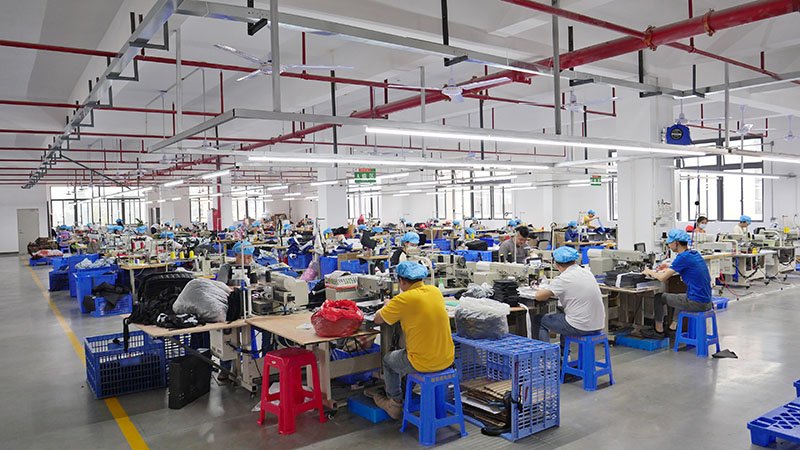
Why Selecting the Right Guangzhou Bag Factory Matters
Guangzhou is a powerful manufacturing hub—but not all factories operate at the same technical or management level. Choosing the wrong supplier can lead to failed launches, unstable quality, or costly delays.
Below are the real-world risks that experienced buyers look for—and how Szoneier mitigates them through engineering and production control.
Quality Stability Across Batches Is Harder Than It Looks
The most common failure in bag manufacturing is inconsistency:
Common issues include:
- Stitching strength variation between batches
- Material density differences
- Zippers swapped for lower grades
- Color tone inconsistency
- Thread tension variation
- Reinforcement tapes not properly heat-set
Why this happens in many Guangzhou factories:
- Subcontracted workshops
- Limited QC checkpoints
- Last-minute material substitution
- No technical documentation
How Szoneier avoids it:
- Four invested factories with unified QC standards
- In-house material supply (fabric & webbing factories)
- Technical specification sheets for each order
- AQL sampling + inline QC + final QC
- Engineers sign off on reinforcement and load-bearing points
Engineering Depth Determines Whether a Bag Lasts 3 Months or 3 Years
Most factories can “sew a shape.” Far fewer can engineer a bag that performs reliably.
Key engineering elements Szoneier handles daily:
- Load distribution (stress mapping for straps and handles)
- Needle gauge vs. material compatibility
- Reinforcement technique selection (bartack, box-X, rivets, webbing backing)
- Lining structure & pocket reinforcement
- EVA molding curvature and pressure adjustment
- TPU welding temperature & alignment tolerance
- Hardware torque/load rating
This is why Szoneier maintains a 25+ engineer team, not only sewing operators.
Reliable Lead Time Requires Direct Control Over Materials
Most production delays occur not on the sewing line, but upstream:
- fabric dyes not available
- leather batch color mismatch
- wrong zipper specification delivered
- hardware plating delayed
- EVA molds arriving late
- TPU sheets needing re-lamination
Szoneier solves this because:
- We operate our own fabric finishing and webbing plant
- Leather goods and bag factories run under unified production planning
- Materials are prepared before sewing begins
- Production managers provide daily status reports
This is why we consistently hit 15–25 day lead times.
Brand Consistency Requires Professional Design & Communication
Brand teams care about details:
- logo placement precision
- color consistency across SKUs
- zipper puller design recognition
- stitching color matching
- packaging alignment
Factories without design teams struggle with such needs.
Szoneier solves this with:
- 10+ designers across product, packaging & graphics
- color systems based on Pantone and in-house swatch libraries
- packaging prototypes before mass production
- digital mockups + 3D previews for complex items
- multi-language teams for global communication
Communication Issues Create Costly Mistakes
Misunderstandings lead to:
- wrong dimensions
- material swaps
- incorrect logo techniques
- unusable prototypes
- duplicated sampling cycles
Szoneier reduces risk through:
- technical drawings
- BOM confirmation
- video call reviews
- pre-production samples
- detailed change-log tracking
Clear documentation = accurate production.
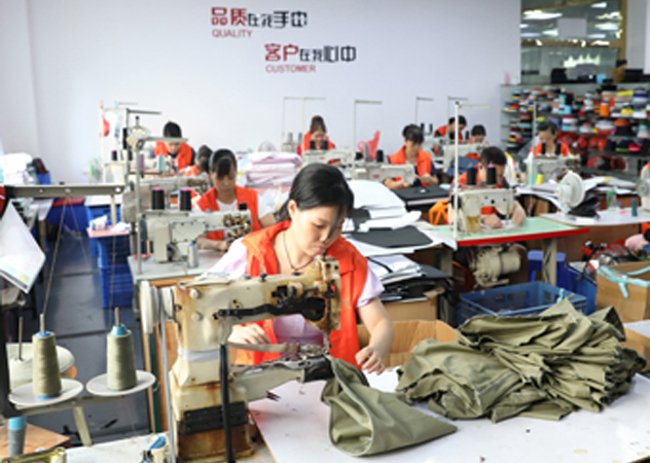
Key Factors to Evaluate a Guangzhou Bag Factory
Selecting a Guangzhou bag manufacturer requires a structured assessment. Factories differ widely in engineering capability, raw-material control, quality systems, and production discipline. Below is a more comprehensive framework used by experienced brand operators, importers, and product teams.
Production Control, Factory Ownership & Vertical Capabilities
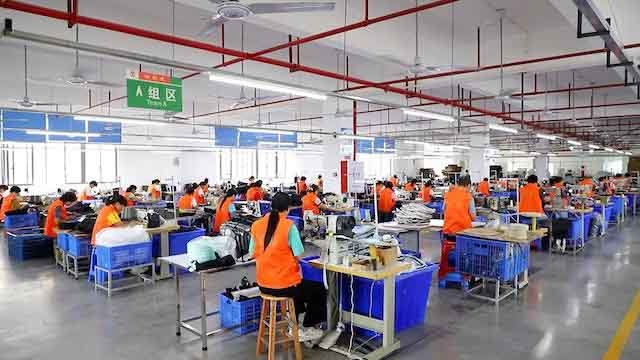
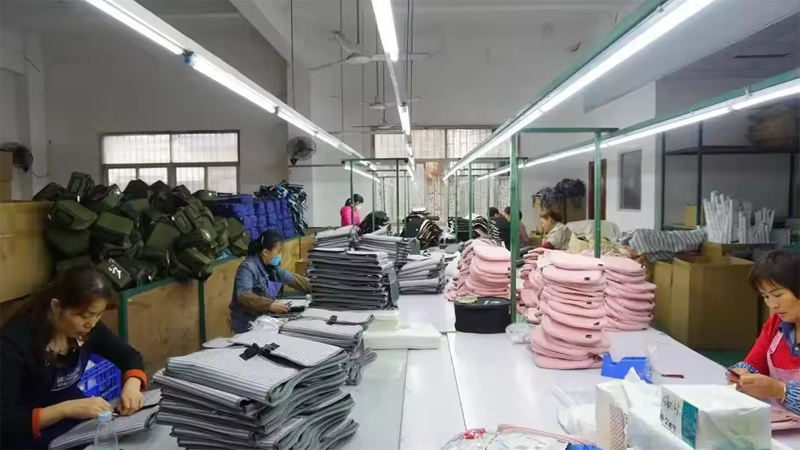
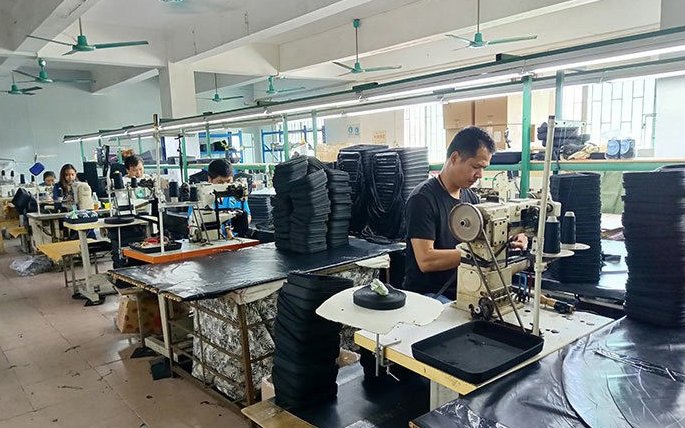
A legitimate Guangzhou bag factory should operate its own production lines rather than relying on scattered subcontractors. Consistency comes from controlled environments.
What to verify onsite or via video:
- Factory ownership: Are they using rented lines or subcontracting?
- Production line count: Number of sewing lines, line capacity, peak capacity.
- Departments in-house: CAD patterning, cutting, sewing, bonding, heat pressing, QC, packing.
- Daily output records: A well-managed line should show daily completion logs and target-vs-actual reports.
- Workforce stability: High worker turnover often leads to uneven stitch quality.
Why this matters
Factories without in-house control often change materials without notice, shift work to low-cost workshops, or fail to maintain process consistency.
Szoneier’s structure
- Four invested factories: bag manufacturing, leather goods, fabric finishing, webbing.
- Internal sampling center with pattern makers and technicians.
- 25+ engineers supporting production preparation and process audits.
- Centralized planning linking all factories with coordinated capacity schedules.
This level of vertical control eliminates the “sample good, mass order bad” issue common in outsourced workshops.
Engineering Capability Beyond Basic Sewing
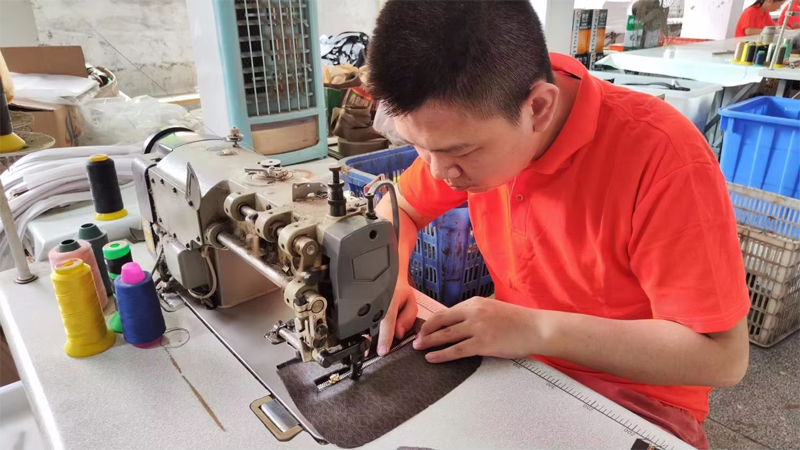
A durable, cleanly finished bag relies on correct structural engineering rather than stitching alone.
What real engineering includes:
- Load mapping and reinforcement selection (bartack placement, box-X stitching, rivets).
- Material compatibility (PU bonding strength, TPU welding temperature tolerance, EVA lamination).
- Zipper performance testing under tension and curvature.
- Pattern correction for stretch materials like neoprene.
- Hardware torque evaluation (buckles, adjusters, snap hooks).
- Seam type selection: single needle, double needle, binding seam, hidden seam, welded seam.
Red flags
- A factory that only says “Yes, we can do it,” but cannot explain how it will reinforce the structure will produce unpredictable results.
- Factories that cannot comment on stitch density, thread type, or reinforcement methods are usually operating on guesswork.
Szoneier’s strength
Our engineering team works daily with PU, leather, neoprene, TPU, EVA, Oxford, canvas, and understands the structural demands of each. Technical drawings and reinforcement diagrams are provided before production.
Raw Material Control & Supplier Network
Material issues cause more failures than sewing.
Must-evaluate points:
- Color and dye-lot consistency.
- PU coating strength and peeling resistance.
- TPU sheet clarity and anti-hydrolysis grade.
- EVA hardness (shore degree) consistency across batches.
- Webbing tensile strength relative to bag load.
- Zipper model authenticity (YKK vs generic).
- Leather surface grading, yield efficiency, and defect zones.
What a strong factory should demonstrate
- Material certifications (GRS, REACH, RoHS).
- A documented list of long-term raw-material suppliers.
- In-house material testing capability (tensile, thickness, adhesion, tear resistance).
Szoneier’s advantage
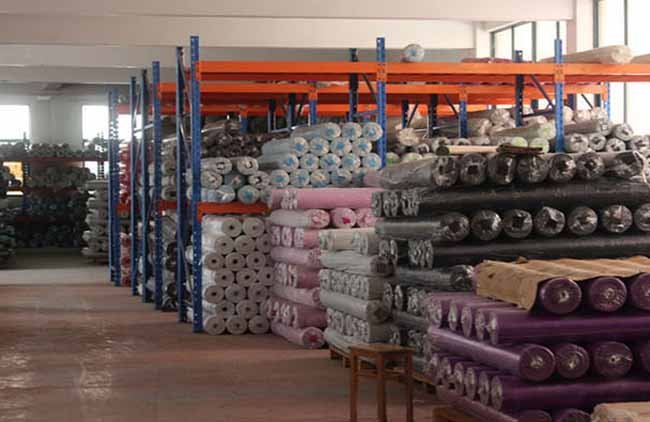
Because we operate both a fabric finishing plant and a webbing manufacturing facility, we can guarantee color alignment, performance stability, and long-term availability of materials.
Quality-Control Discipline (QC System)
Good factories create quality through process design, not last-minute inspections.
A professional QC system includes:
- Raw-material inspection: color check, GSM, thickness, tensile.
- Pre-production approval: PP sample verifying all details.
- Cutting QC: panel alignment, grain direction, marking accuracy.
- In-line QC: stitch tension, bartack accuracy, alignment, symmetry.
- End-line QC: hardware tests, strap pull tests, zipper tests.
- Final inspection: AQL random sampling + packaging verification.
What this prevents
- unbalanced straps
- skewed panels
- off-center logos
- weak seams
- inconsistent thickness or stiffness
- invisible defects inside lining or foam layers
Szoneier QC
- Dedicated QC team independent from production
- Full AQL reports
- Stress testing for tactical, tool, and outdoor bags
- Photo documentation for high-value projects
Production Planning & Schedule Reliability
A reliable Guangzhou manufacturer must provide predictable lead times.
Key evaluation points:
- Does the factory implement a production calendar?
- How do they consolidate multi-SKU orders?
- Do they run large and small orders simultaneously?
- What is their machinery utilization rate?
- Do they pre-book material before cutting?
Common causes of delays in weaker factories
- late fabric delivery
- zipper shortage
- seasonal overload
- subcontracting bottlenecks
- lack of pre-production planning
Szoneier’s approach
Our project managers coordinate daily updates with factory planners. Material preparation is completed before sewing begins. This is why we consistently deliver within 15–25 days.
Communication Precision
Accurate communication eliminates the most expensive manufacturing mistakes.
What strong communication involves:
- CAD drawings
- BOM files
- Clear marking of tolerances
- Packaging specs
- Carton measurements
- Sample comparison notes
- Revision logs
Szoneier communication
- English, Chinese, and Japanese available
- Video sample checks
- Recorded instructions for complex structures
- Documented change logs for every project
Szoneier’s OEM/ODM Process
This is the exact workflow followed inside our four factories.
It reflects the real way OEM/ODM development happens.
Step 1
Requirement Mapping & Technical Assessment
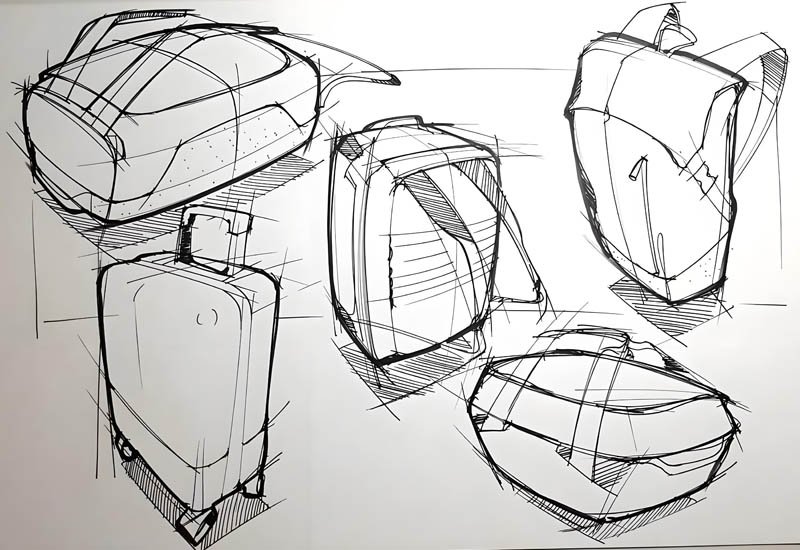
We begin with complete information: sketches, CADs, photos, mood boards, samples, brand guidelines, target budget, and performance requirements.
Our engineering team evaluates:
- structure feasibility
- material compatibility
- reinforcement zone requirements
- weight and load expectations
- required seam methods
- hardware torque requirements
- packaging structure
- long-term manufacturability
- compliance requirements (REACH, RoHS, etc.)
A project manager is assigned to guide the entire cycle.
Step 2
Material & Hardware Selection
Different bag categories demand different material behavior.
Szoneier selects:
- main body fabrics (nylon, canvas, PU, leather, TPU, EVA, neoprene)
- linings
- webbings
- foam thickness
- binding tapes
- hardware types (zinc alloy, plastic, aluminum)
- zippers (YKK, SBS, or custom)
Each material is tested for:
- thickness tolerance
- stretch behavior
- bonding strength
- color stability
- coating adhesion
- water resistance
We share photos/videos or mail swatches for confirmation.
Step 3
Pattern Making & Prototype Production
Our sample room produces accurate functional prototypes.
Pattern-making includes:
- seam allowance mapping
- curvature correction for shaped panels
- symmetrical panel pairing
- tolerance adjustments for foam, binding, and pockets
- zipper curvature alignment
- hardware positioning marks
- reinforcement placement indicators
- liner interaction points
After patterns are created, our technicians cut, sew, bind, reinforce, and assemble the complete structure — not a simplified display sample.
Sampling window: 3–7 days
Step 4
Sample Evaluation & Revision Cycles
You receive photos, videos, or a physical prototype.
We review with you:
- shape accuracy
- handle/strap load response
- interior organization
- weight and balance
- zipper smoothness and curvature
- PU/leather edge painting and finishing
- logo and branding placement
- foam padding distribution
- webbing and reinforcement stitching
Each adjustment is documented in a revision sheet.
Step 5
Pre-Production Sample (PP Sample)
The PP sample represents the exact final product.
It includes:
- final colors
- final materials
- correct hardware
- correct stitching and reinforcement
- packaging and labeling
- hangtags or inserts
Final confirmations:
- BOM
- packaging specs
- carton size and weight
- compliance and testing requirements
- delivery method (FOB, DDP, DAP)

Step 6
Mass Production & Process Control
Our factories follow strict production sequences:
Cutting
- digital marker layout
- grain alignment (for leather/PU)
- EVA mold pressing (if applicable)
Sewing
- line balancing
- operator assignment
- reinforcement steps (bartack, box-X stitching)
- foam or board insertion
- inspection after each sub-assembly
Welding (for TPU/Waterproof Bags)
- temperature control
- pressure calibration
- overlap tolerance maintenance
Molding (for EVA cases)
- mold temperature control
- curing time monitoring
- trimming and zipper embedding
In-Line QC
QC teams check:
- stitch count and length
- alignment tolerances
- binding finishing
- hardware installation
- zipper smoothness
- symmetry of panels
Step 7
Final Inspection, Packing & Shipment
Before packing, our QC team performs:
- appearance inspection
- stress test on handles and straps
- zipper cycle test
- color and gloss check
- measurement verification
- stitching tension review
- function test for pockets and dividers
Packing includes:
- OPP/polybags
- barcode placement
- hangtags
- retail packaging (if required)
- export carton with reinforced taping

Product & Type Options
How Szoneier Structures, Engineers & Manufactures Different Bag Categories
Szoneier operates across four invested factories in Guangdong (bag manufacturing, leather goods, webbing, fabric finishing), giving us the ability to produce a wide range of bag types covering lifestyle, outdoor, technical, premium, corporate, and specialty markets.
Below is a comprehensive guide of the bag categories we manufacture, including their material systems, engineering requirements, reinforcement logic, branding potential, and typical clients.
Everyday & Lifestyle Bags
These bags emphasize appearance, daily usability, and comfort.
Szoneier produces high-volume lifestyle SKUs for brands, retailers, and private-label programs.
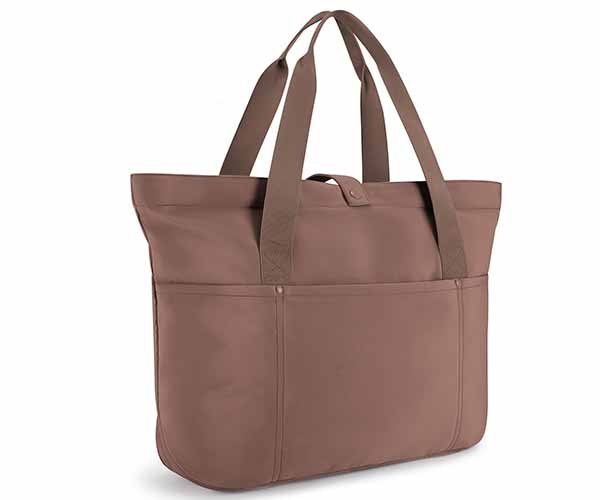
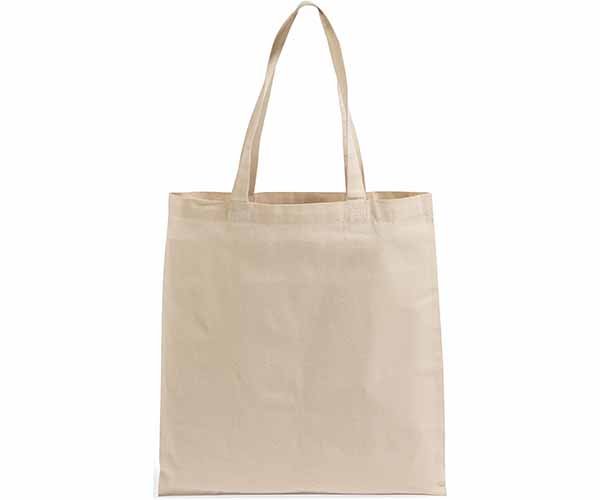
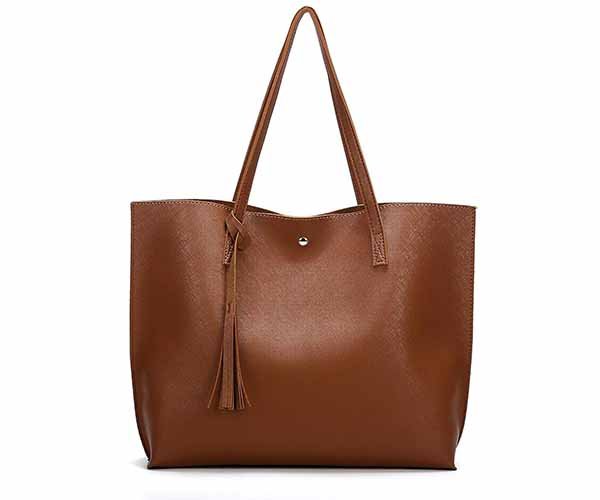
Tote Bags (Canvas, Cotton, PU, Leather)
Materials: 12oz–24oz canvas, cotton, recycled cotton, PU, top-grain leather
Engineering Notes:
- handle reinforcement (cross-stitch or hidden webbing)
- bottom board or foam inserts for structure
- clean edge-binding or internal overlock finishing
- colorfastness and washing stability for canvas
- printing or embroidery for brand identity
Szoneier Advantage: Our fabric finishing plant controls canvas GSM, color consistency, and shrinkage rates.
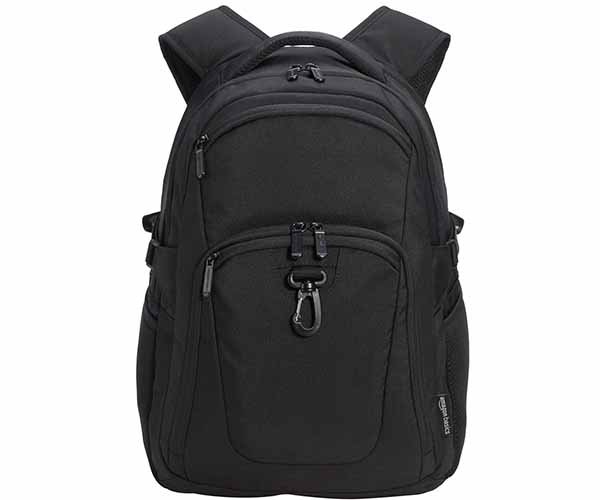
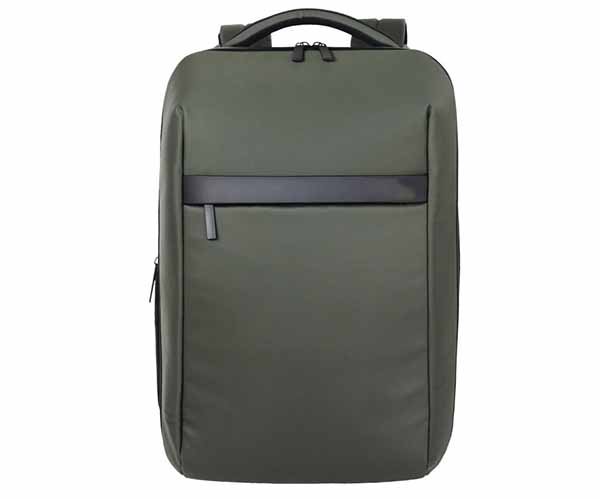
Everyday Backpacks (Casual/Urban Use)
Materials: 600D/900D nylon, 1680D Oxford, microfiber PU
Engineering Notes:
- padded and contoured shoulder straps
- load distribution on back panel
- bartack reinforcement at strap base
- internal foam for laptop protection
- multi-layer construction for pocket systems
Branding Options: Woven labels, TPU patches, embroidery, jacquard straps.
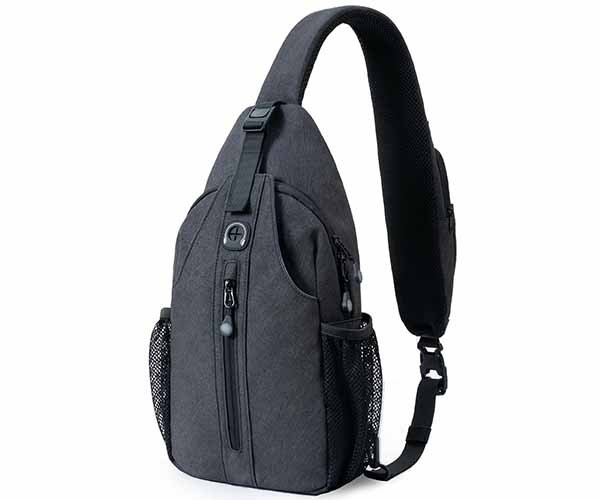
Crossbody & Sling Bags
Materials: Nylon, PU, microfiber, canvas
Engineering Notes:
- angled strap attachment for better ergonomics
- adjustable hardware tested for torque
- slim-profile patterning
- hidden pockets and RFID layers (optional)
- curved panels requiring precise stitching alignment
Szoneier Specialized Skills: We are skilled at curved-edge PU shaping and clean edge painting for premium slings.
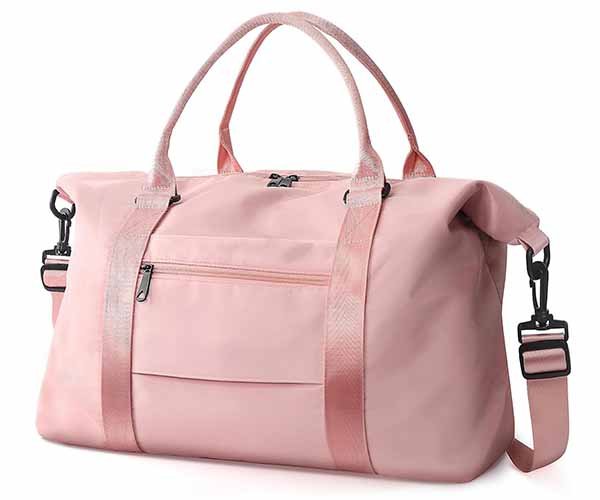
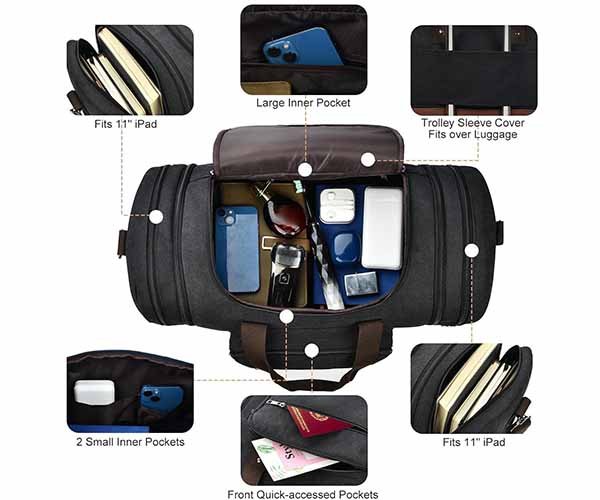
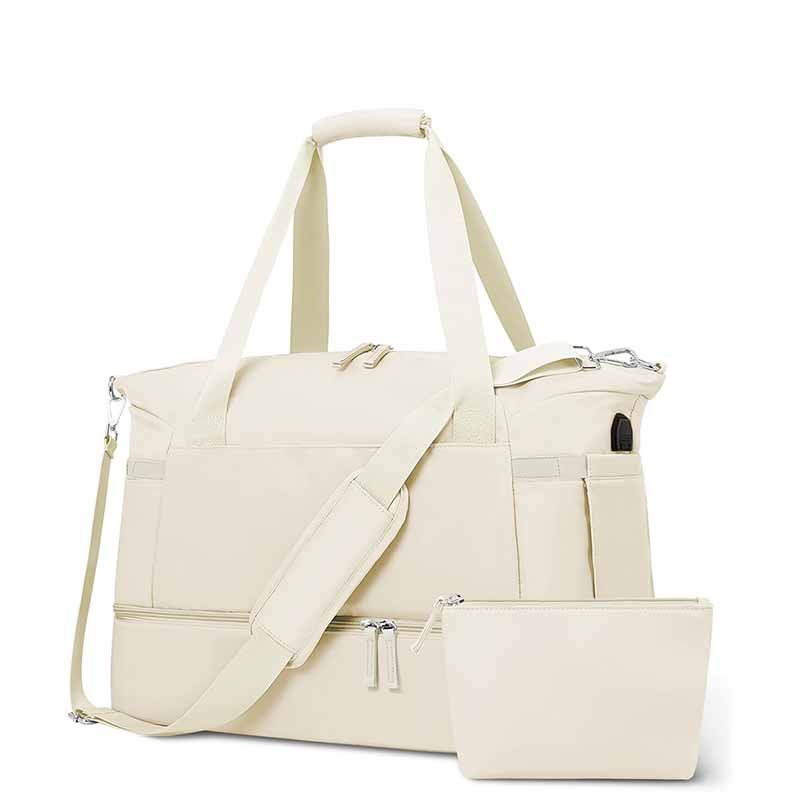
Duffle & Weekender Bags
Materials: Heavy canvas, PU, oxford nylon, leather trims
Engineering Notes:
- long handles reinforced with internal webbing
- large-panel cutting accuracy
- metal hardware load-rated to 20–30 kg
- foam reinforcement for base
- trolley sleeve integration for travel
Use Cases: Lifestyle brands, corporate travel kits, retail collections.
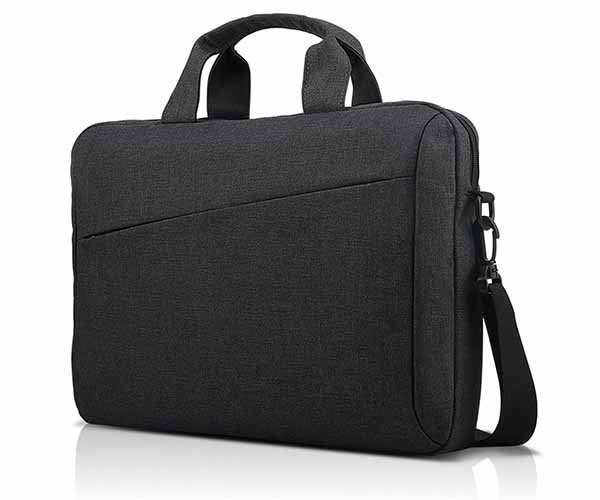
Laptop & Work Bags
Materials: Nylon, neoprene, EVA molded panels, microfiber lining
Engineering Requirements:
- shock-absorbing padding
- molded EVA shells for high protection
- water-resistant lining
- high-tolerance zipper curvature
- internal organization for cables, monitors, pens
Szoneier Expertise: We operate our own EVA molding line — ensuring precise shape matching and consistent shell density.
Technical & Functional Bags
These categories require strong engineering discipline and material knowledge.
Szoneier handles the entire process from patterning to load testing.
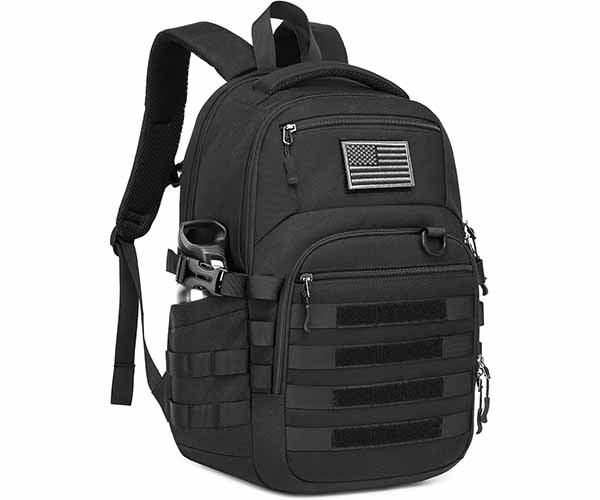
Tactical / Military / MOLLE Bags
Materials: 1000D nylon, PP webbing, heavy-duty zippers
Engineering Notes:
- MOLLE grid spacing accuracy (25mm pitch)
- bartack reinforcement at 18–32 stress points
- double-layer bottom and spine areas
- load tests at 20–35 kg
- hydration system compatibility
Szoneier Strength: Our QC team performs pulling tests and seam strength tests on every production batch.
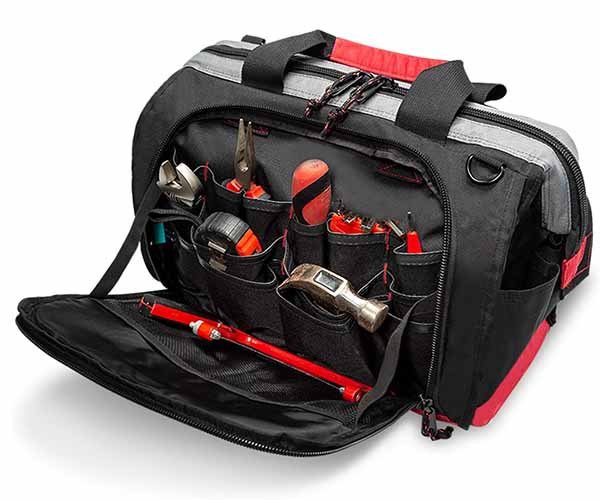
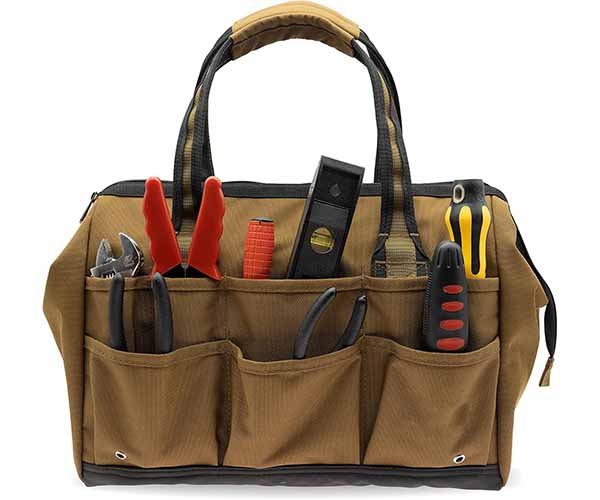
Tool Bags & Industrial Gear Bags
Materials: Oxford with PVC/TPU coating, EVA bases, structural webbing
Engineering Notes:
- reinforced inner boards and PE sheets
- metal base rivets
- heavy-duty handles
- pocket layout designed for weight distribution
- structural seams and box-X stitching
Common Clients: Contractors, electricians, technicians, industrial equipment brands.
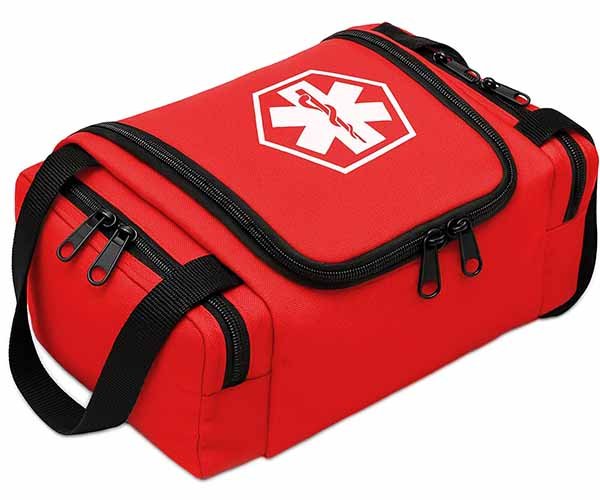
Medical & Emergency Response Bags
Materials: Nylon, TPU lining, foam + PE board
Engineering Notes:
- waterproof compartment separation
- tool loops and elastic mesh organization
- bright interior colors for visibility
- easy-clean TPU lining
- high-tolerance zipper paths
Compliance Support: We can assist with material testing (colorfastness, abrasion, chemical resistance).
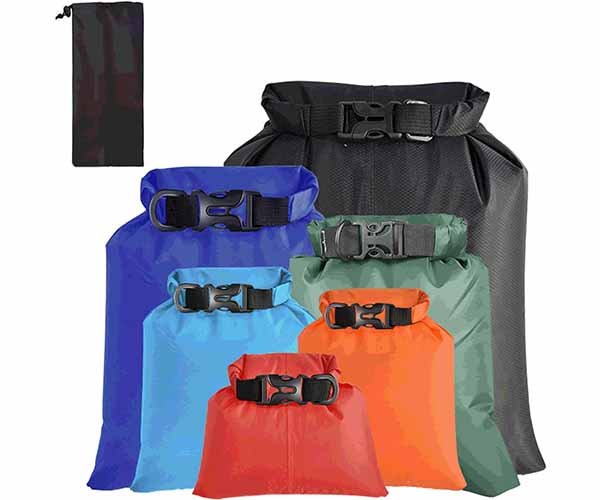
Waterproof Outdoor Bags (Dry Bags)
Materials: 0.4–0.8 mm TPU, heat-welded seams
Engineering Notes:
- seam welding with ±1mm precision
- waterproof roll-top or valve systems
- tear-resistance improvement via reinforcement patches
- UV-stable TPU formulation
- scratch-resistant matte finishes
Szoneier In-House Capability: TPU welding line with programmable welding temperature & pressure controls.
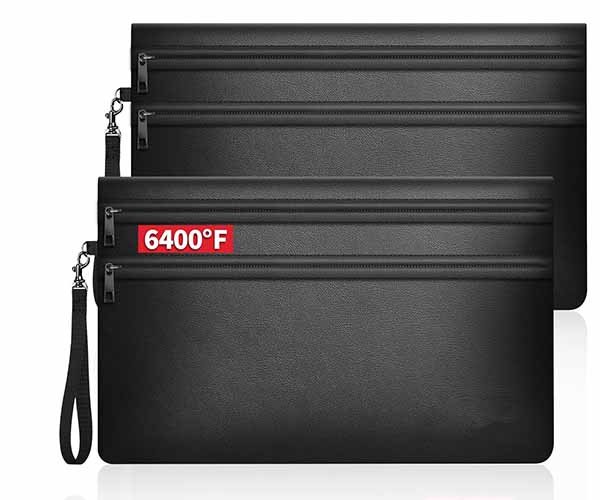
Fireproof & Safety Storage Bags
Materials: Fire-resistant fiberglass fabric, coated layers
Engineering Notes:
- multi-layer insulation
- flame-retardant thread
- Velcro + zipper dual-closure system
- heat-resistant handles
Use Cases: Battery storage, document protection, industrial safety kits.
Premium Leather & PU Goods
Handled by Szoneier’s leather goods factory with specialized craftsmen skilled in finishing techniques.
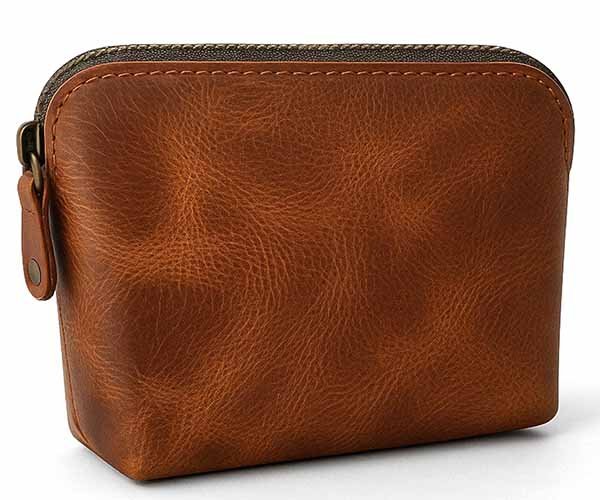
Leather Makeup Bags / Cosmetic Pouches
Materials: Full-grain leather, microfiber PU
Engineering Notes:
- edge painting (3–5 layers)
- custom emboss molds
- lining stitching precision
- metal zipper integration
Branding: Deboss, gold foil, metal plate.
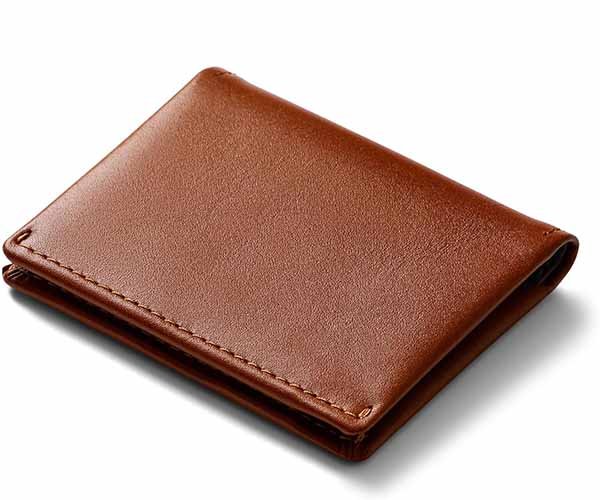
Passport Holders & Card Wallets
Materials: Leather, microfiber PU
Engineering Notes:
- tight tolerance card slots
- clean folded edges
- precise stitch length
- foil stamping
Corporate Use Cases: Airline kits, hotel gifts, premium retail.
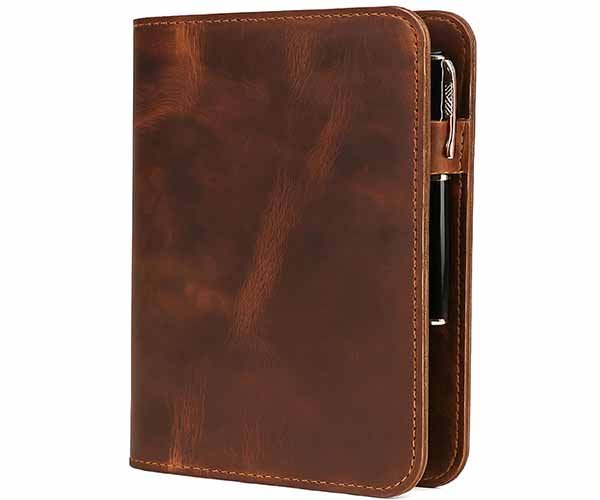
Leather Notebook Covers
Materials: Top-grain leather
Engineering Notes:
- flatness and stiffness balance
- spine reinforcement
- magnetic closure integration
- pen loop handling
Szoneier Advantage: Our leather workshop handles natural grain variation and ensures batch-to-batch color consistency.
Molded, Laminated & Specialty Material Bags
Handled by Szoneier’s leather goods factory with specialized craftsmen skilled in finishing techniques.
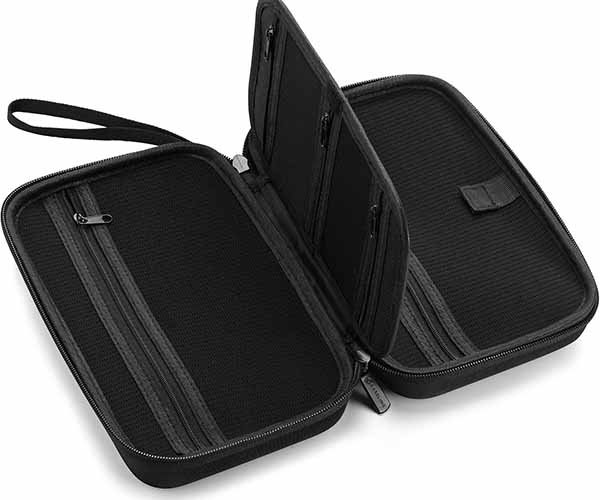
EVA Molded Hard-Shell Cases
Materials: EVA (45–75 Shore), nylon, PU, velvet lining
Engineering Notes:
- mold development & correction
- curve shaping
- zipper embedding
- lamination thickness control
- compression and resilience testing
Applications: Electronics, beauty tools, medical devices, camera accessories.
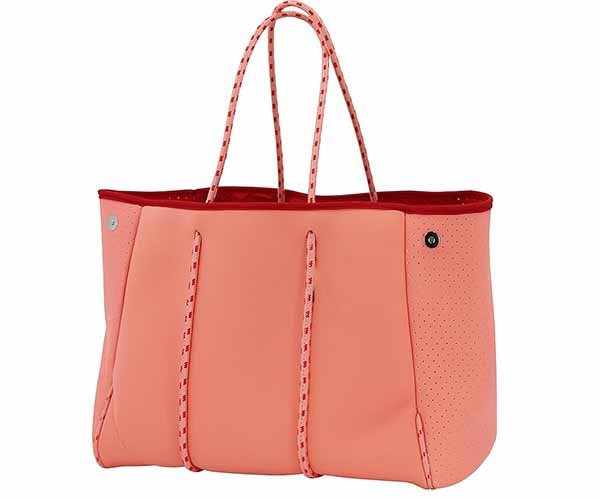
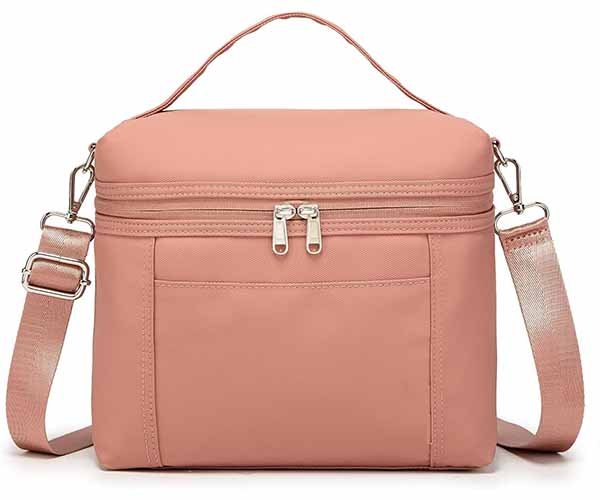
Neoprene Bags & Accessories
As a factory with over 18 years of experience in neoprene development, Szoneier produces:
- lunch bags
- sleeves
- bottle holders
- fitness accessories
Engineering Notes:
- stretch ratio control
- smooth trimming on curves
- fabric bonding
- waterproof stitching options
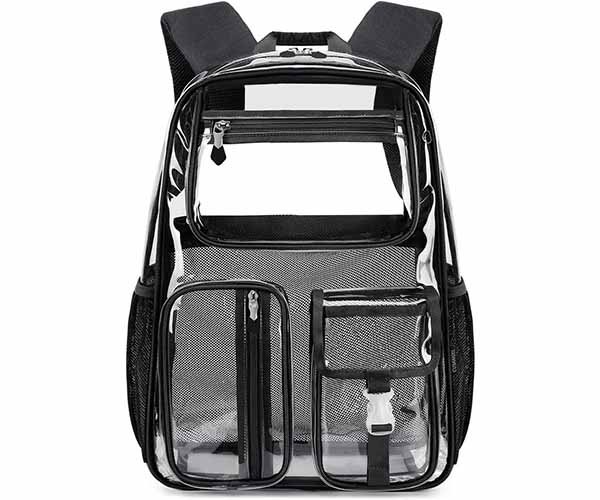
TPU Transparent Bags (Stadium / Beach / Travel)
Materials: 0.4–0.8mm TPU, anti-hydrolysis grades
Engineering Notes:
- heat sealing
- anti-yellowing treatment
- scratch resistance optimization
- hardware reinforcement
Typical Projects: U.S. stadium bags, cosmetics packaging, outdoor waterproof pouches.
Recycled Material Bags (RPET, Recycled Nylon)
Materials: GRS-certified RPET fabrics + recycled webbing
Engineering Notes:
- material testing for tensile loss
- shrinkage control during cutting
- color variation management
Szoneier Documentation: Full GRS chain of custody available upon request.
Corporate, Promotional & Event Bags
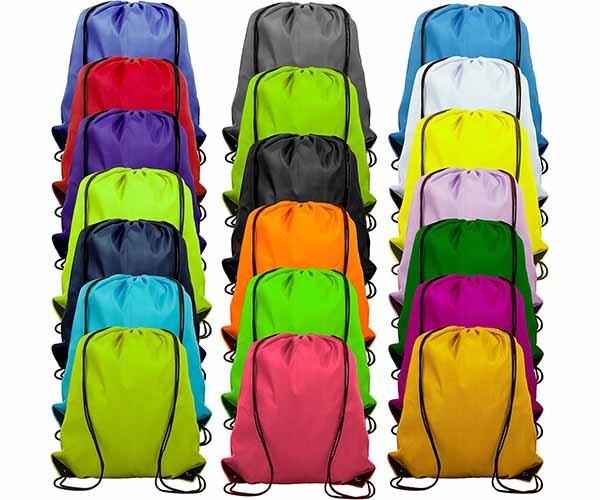
Corporate Gifts / Trade Show Bags
Materials: Canvas, cotton, felt, PU
Engineering Notes:
- low-cost but strong reinforcement
- fast concept-to-sample cycles
- large-volume stability
We support worldwide corporate clients for event kits.
Retail Private-Label Collections
We help retailers launch seasonal SKU groups:
- backpacks
- crossbody bags
- wallets
- weekenders
- lunch bags
- makeup bags
We ensure consistent colors, packaging, and materials across the full collection through our vertically integrated supply chain.
Why Szoneier Handles Such a Wide Range of Bag Types
Recycled fabrics used in bag manufacturing vary significantly in structure, strength, and stability. Understanding these differences is essential for selecting the right recycled material for durability, appearance, and scalable production.
Everyday & Lifestyle Bags
| Type | Typical Materials | Engineering Notes | Application |
|---|---|---|---|
| Tote Bags | Canvas, Cotton, PU, Leather | Handle reinforcement, bottom insert, edge binding | Daily use, retail, corporate |
| Backpacks | 600D/900D Nylon, Oxford, PU | Shoulder load distribution, foam padding, bartack stress points | School, professional, travel |
| Crossbody Bags | PU, Microfiber PU, Nylon | Adjustable strap load control, hardware anchoring | Urban carry, fashion |
| Weekender Bags | Canvas, Oxford, Leather | Large panels, reinforced base, heavy-duty zippers | Travel, lifestyle |
| Laptop Bags | Neoprene, EVA, Nylon | Shock absorption, molded structure, zipper curvature | Office, tech brands |
Functional & Technical Bags
| Type | Material System | Construction Focus | Primary Users |
|---|---|---|---|
| Medical/EMT Bags | Nylon + TPU Lining | Waterproof compartments, tool pockets | Hospital, emergency response |
| Tactical Bags | 1000D Nylon + Webbing | MOLLE load system, bartacks, reinforced stress points | Military, outdoor |
| Tool Bags | Oxford + EVA | Reinforced base, crush resistance, heavy webbing | Technicians, electricians |
| Waterproof Bags | TPU | Heat-welded seams, sealing strips, valve integration | Water sports, camping |
| Fireproof Bags | Fire-resistant fabrics | Multi-layer insulation, thread selection | Fire safety, document protection |
Leather & PU Goods
| Product | Material | Finishing Techniques |
|---|---|---|
| Makeup Bags | Top-grain leather / PU | Edge painting, embossed logo, lining workmanship |
| Passport Covers | Leather / PU | Stitch precision, card slot shaping |
| Notebook Covers | Leather | Metal hardware integration, hand-finishing |
Materials & Construction Guide
Recycled fabrics used in bag manufacturing vary significantly in structure, strength, and stability. Understanding these differences is essential for selecting the right recycled material for durability, appearance, and scalable production.
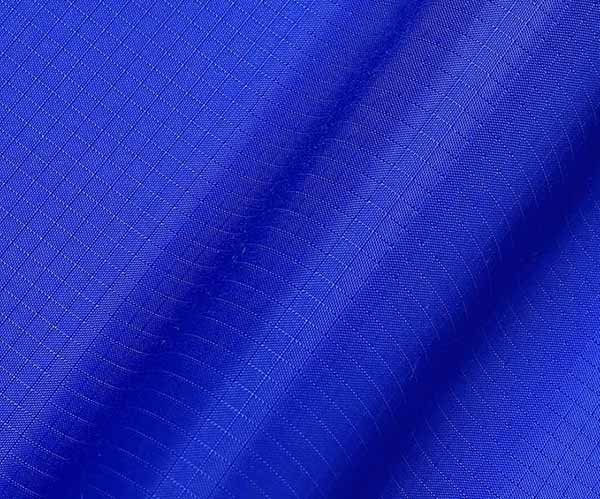
Nylon & Oxford Fabrics (300D, 600D, 900D, 1680D)
Nylon is used for lifestyle, outdoor, travel, and technical bags. Different deniers offer different performance levels.
Key Performance Indicators:
Denier (D): thickness & tensile strength
Weaving density: stiffness vs flexibility
Coating: PU or PVC-free PU coating affects waterproofing
Abrasion resistance: measured by rub cycles
Colorfastness: UV and washing stability
Tear strength: especially for outdoor or technical bags
Engineering Notes:
600D nylon balances durability and cost for backpacks and totes
1680D nylon offers superior abrasion resistance for luggage and tool bags
PU-coated nylon must be tested for hydrolysis resistance
Stitching tension must be matched to fabric thickness to avoid seam slippage
Szoneier Capability:
Because Szoneier operates its own fabric finishing plant, we maintain control over:
GSM accuracy
coating consistency
dye-lot stability
colorfastness
waterproof ratings
We also run tensile and coating adhesion testing for outdoor and tactical projects.

Canvas & Cotton (8oz–24oz)
Canvas has become popular for lifestyle, fashion, and corporate bags because of its natural feel and strong structure.
Performance Considerations:
fabric weight affects stiffness
pre-shrinking required for colorfast stability
washing durability
print adhesion (screen print or DTG)
fiber direction during cutting (affects shape)
Engineering Notes:
heavier canvas (16oz–24oz) is ideal for structured totes
lighter canvas may require internal lining or interfacing for stiffness
handles often need internal webbing reinforcement
Szoneier Capability:
Our fabric finishing factory performs pre-shrinking, dyeing, and waterproof coating to ensure batch uniformity.
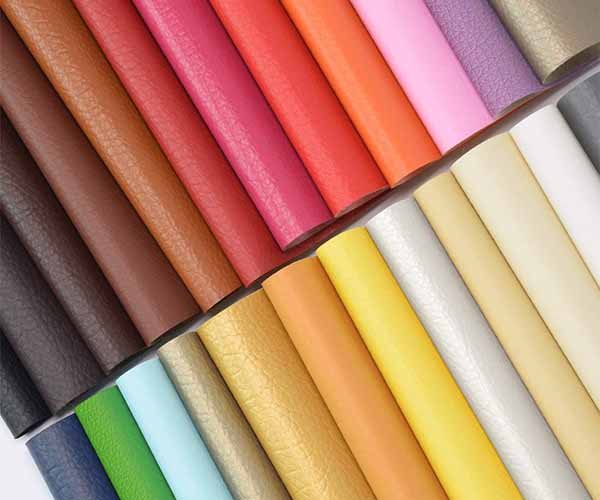
PU & Microfiber PU
PU is versatile, cost-efficient, and widely used for fashion bags, makeup bags, slings, crossbody styles, and women’s lines.
Key Evaluation Points:
thickness tolerance across full rolls
surface finish (matte, glossy, embossed texture)
backing fabric strength (woven vs non-woven)
edge paint durability
seam performance around curves
color consistency
Engineering Notes:
thinner PU < 0.9mm needs stabilizing material
thick PU (1.2–1.6mm) is used for structured handbags
backing layer determines tear-resistance
PU can deform under heat; must control sewing temperature
Szoneier Capability:
Our PU products are produced in our leather goods factory, where craftsmen manage:
edge painting (3–5 layers)
clean panel shaping
embossed logo molds
foil stamping
precise stitching
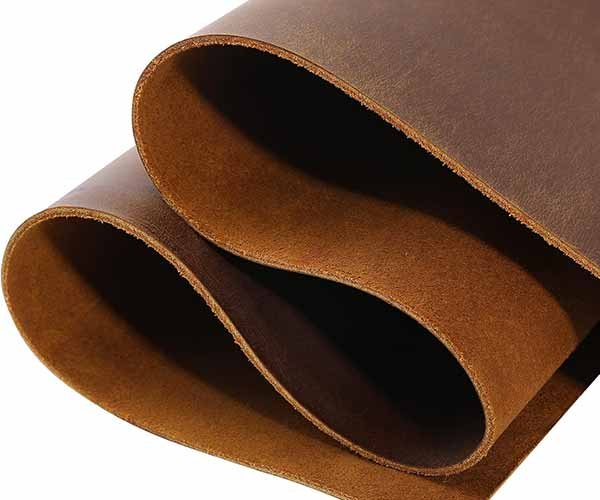
Genuine Leather (Top-Grain & Full-Grain)
Leather requires professional handling, as each hide behaves differently.
Quality Indicators:
grain uniformity
natural marks and yield rate
oil/wax content
tanning quality
thickness consistency
stretch behavior
Engineering Notes:
full-grain leather is stronger and ages better
top-grain leather offers more uniform appearance
lining choice affects bag firmness
stitching holes must be consistent to avoid tearing
thicker leather may require skiving
Szoneier Capability:
We operate a dedicated leather workshop with:
industrial skiving machines
edge-painting stations
hot stamping + embossing units
skilled craftsmen with 10+ years of experience
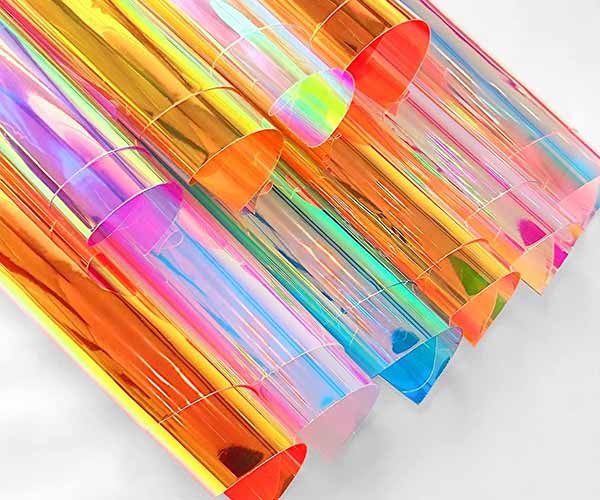
TPU (Waterproof, Transparent, Matte, Frosted)
TPU is used for waterproof bags, stadium bags, outdoor pouches, and travel cases.
Key Considerations:
thickness (0.4mm–0.8mm common)
anti-hydrolysis grade
anti-yellowing stability
clarity (for transparent bags)
scratch and abrasion resistance
bending resistance
Engineering Notes:
welded seams require precise temperature control
TPU stretches under heat; alignment must be controlled
thicker TPU increases durability but reduces flexibility
hardware must be reinforced with binding tape
Szoneier Capability:
We operate in-house TPU welding equipment, allowing:
ultrasonic welding
high-frequency press
±1mm weld tolerance
waterproof performance verification
scratch-resistance testing
EVA Molded Panels & Hard-Shell Cases
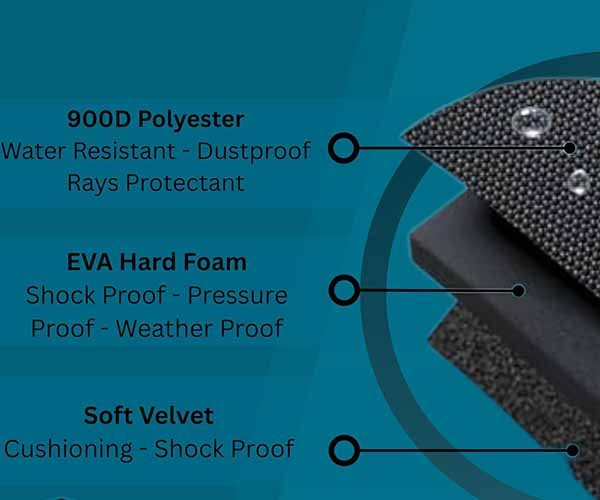
EVA provides structure, protection, and shape retention for electronics, medical devices, accessories, and premium products.
Key Performance Factors:
hardness (45–75 Shore A)
molding temperature accuracy
lamination thickness
EVA density
shape memory and compression recovery
Engineering Notes:
molds must be calibrated to avoid misalignment
zipper installation requires careful embedding
inner lining must be wrinkle-free
trimming must match curvature precisely
Szoneier Capability:
Our in-house EVA molding line handles:
mold development
lamination
trimming
zipper embedding
sample-to-mass consistency checks
Clients receive CAD drawings for mold approval before production.
Neoprene (2mm–5mm Thickness)
Szoneier has 18+ years of neoprene manufacturing experience, making us one of the few factories in Guangdong capable of advanced neoprene engineering.
Material Properties:
stretch behavior
thermal insulation
water resistance
flexibility
smooth cutting performance
Engineering Notes:
stretch ratio affects final bag dimensions
curved shapes require sharp blades + experienced trimming
flatlock stitching for sports bags
glue + stitching for lunch bags
lamination determines surface feel
Applications:
Lunch bags, bottle holders, sleeves, fitness accessories, children’s bags.

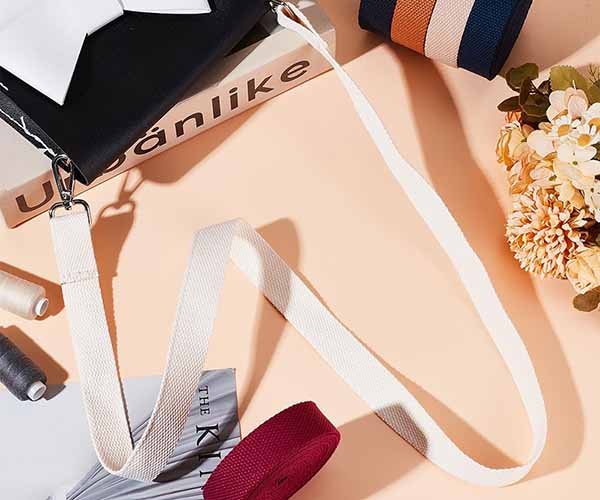
Webbing (Polyester, Nylon, PP, Jacquard)
Webbing determines load-bearing capability.
Quality Factors:
tensile strength
weaving density
color accuracy
abrasion resistance
softness vs rigidity
Engineering Notes:
load-bearing straps require internal reinforcement
bartacks must be positioned in high-stress zones
jacquard webbing allows integrated branding
Szoneier Capability:
We operate our own webbing factory, enabling:
jacquard logo straps
recycled webbing options
color-matching across collections
breaking strength testing
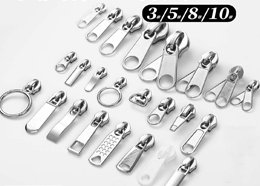
Zippers & Hardware
Hardware defines the feel and durability of a bag.
Hardware Considerations:
plating thickness
corrosion resistance
load capacity
smoothness
fatigue resistance
Zipper Options:
YKK (Japan)
SBS (China)
Custom metal pullers
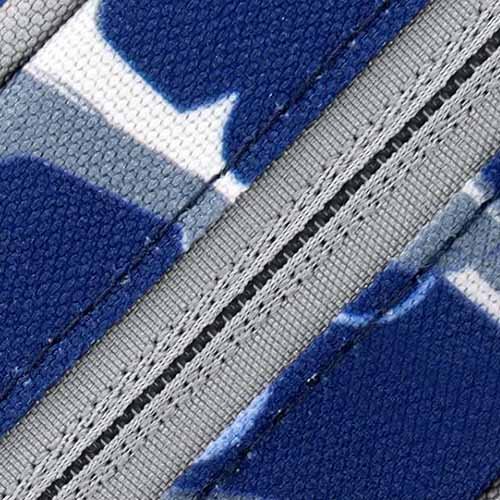
Waterproof zippers
Reverse-coil zippers
Engineering Insight:
zipper curvature must match panel geometry
incorrect puller length can cause skipping
zipper chain must be compatible with TPU for waterproof bags

Foam, Liners, and Reinforcement Materials
These materials define structure and comfort.
Common Options:
PE boards
EVA thin sheets
polyester foam
air mesh
nylon lining
custom printed lining
Usage:
backpacks: shoulder and back padding
laptop bags: shock absorption
duffles: structure stabilization
leather goods: rigidity control
Construction Methods Used by Szoneier
1. Regular Sewing
single needle
double needle
binding
2. Reinforcement Methods
bartack
box-X
hidden webbing backing
rivets
3. Welding & Bonding
TPU heat welding
ultrasonic sealing
adhesive bonding for neoprene
4. Molding
EVA hard shells
curved shaping for leather
5. Edge Finishing
edge painting
folded edges
binding tape
6. Structural Additions
internal frames
PE reinforcement boards
molded EVA inserts
Why Szoneier Excels in Multi-Material Construction
Most Guangzhou factories specialize in one category: nylon bags, leather goods, or waterproof bags. Szoneier stands out because we operate across multiple material systems and maintain vertical supply chain control:
- Fabric finishing → canvas, nylon, RPET
- Webbing mill → straps, jacquard branding
- Bag factory → lifestyle, outdoor, tactical, technical
- Leather workshop → premium leather goods
- EVA molding → protective cases
- TPU welding → dry bags & waterproof gear
- Neoprene line → sports & lifestyle neoprene
This combination allows us to engineer consistent, collection-wide quality across different SKUs, materials, and seasons.

Customization & Branding Options
Brand differentiation relies heavily on the factory’s ability to execute consistent and precise branding work. In Guangzhou’s bag manufacturing industry, the quality of logo execution, material matching, color accuracy, and packaging presentation directly affects how the final product is perceived in retail or online.
Szoneier provides a complete branding system across fabric bags, leather goods, PU items, neoprene products, EVA cases, and TPU bags.
Logo Application Techniques
Different materials require different logo approaches. Precision and durability are key.
Screen Printing
Suitable for canvas, cotton, nylon, PU
Works well for solid-color logos or line art
Requires precise curing temperature to avoid cracking
Szoneier uses double-layer coating for high-wash items such as gym bags and totes
Heat Transfer Printing
Best for bags requiring photographic prints or multi-color artwork
Requires heat-control ± 3°C tolerance
Used frequently for lifestyle backpacks and promotional items
Good adhesion to polyester fabrics
Embroidery
Suitable for canvas and thicker nylon
Requires backing reinforcement to prevent puckering
Excellent for heritage and premium branding
Deboss/Emboss on Leather & PU
Used for leather makeup bags, card holders, notebook covers
Szoneier’s leather factory uses custom brass molds for crisp logo depth
Edge painting and post-press oiling enhance finish quality
Metal Logo Plate / Badge
Zinc alloy or stainless steel
Requires precise stitching or riveting alignment
Often used in premium women’s bags or corporate gifts
Jacquard Webbing Branding
Used for straps on premium backpacks or designer bags
Woven directly into the webbing for long-term durability
Produced in Szoneier’s own webbing factory for color consistency
TPU or Rubber Patch
Applied with stitching or high-frequency pressing
Excellent for outdoor and sports bags

Color Development & Matching
Color is often the most sensitive brand requirement.
Szoneier manages color accuracy via:
- Pantone matching
- In-house fabric and PU color swatch library
- Lab-dip approval for nylon/oxford/canvas
- Factory-controlled color formulas for PU and neoprene
- Color stability testing under sunlight and humidity
Color consistency is inspected at three stages: raw material, panel cutting, and final assembly.

Structural Customization
We customize structures based on usage scenario, load expectation, and material behavior.
Examples include:
- custom pocket layout
- molded EVA panels for protection
- adjustable strap systems
- hidden anti-theft pockets
- load-bearing reinforcement for tool bags
- waterproof zipper integration
- ventilation mesh
- rigid frames for travel gear
- foam padding distribution for laptop bags
- welded compartments for TPU waterproof bags
Each modification is validated by our engineering team before pattern creation.
Hardware Customization
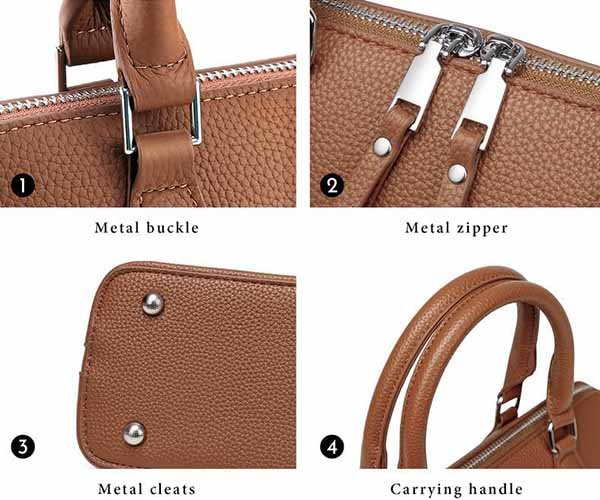
Hardware influences product feel and longevity.
We offer custom:
- zipper pullers (laser engraved, molded rubber, metal)
- buckles
- swivels
- snap buttons
- D-rings
- metal labels
- strap adjusters
Different hardware grades are suggested depending on load requirement.
Packaging Customization
Packaging is part of the brand experience, especially for retail and e-commerce.
Options include:
- custom polybags with print
- kraft boxes or gift boxes
- UV-coated boxes
- hangtags
- QR / barcode stickers
- premium tissue paper
- dust bags for leather items
Szoneier’s packaging designers build complete brand-consistent packaging systems.
QC & Testing Guide
A reliable Guangzhou factory must maintain a repeatable and documented quality-control process.
Szoneier’s QC system includes multiple checkpoints to ensure consistency from raw materials to shipment.
Raw Material QC
Each batch of materials is inspected before use.
Checks include:
- Color consistency (comparison with approved swatch)
- Thickness accuracy (micrometer measurement)
- Fabric GSM (weight-per-square-meter check)
- PU peeling resistance
- TPU clarity and hydrolysis-resistant grade
- EVA hardness check (Shore A)
- Webbing tensile strength
- Zipper authenticity (YKK verification)
Any mismatch leads to immediate supplier return.
Cutting QC
The cutting stage sets the foundation for assembly accuracy.
We check:
- panel symmetry
- grain direction (for leather/PU)
- marker accuracy
- layer alignment in multi-layer cutting
- labeling consistency (to avoid mixing SKUs)
Incorrect panel shapes cause misalignment during sewing — caught early.
In-line QC
QC inspectors rotate through sewing stations to ensure consistency.
Inspections include:
- stitch density (SPI: stitches per inch)
- thread tension
- seam alignment
- bartack reinforcement accuracy
- pocket alignment
- zipper mounting angle
- foam or PE board insertion position
- binding finish quality
- handle/strap anchoring
High-load bags require additional pull tests.
End-line QC
At the end of each line, semi-finished goods are inspected.
Checks include:
- panel symmetry
- hardware alignment
- logo accuracy
- thread trimming
- overall shape
- functional tests (zipper smoothness, strap adjustment)
Non-conforming items return to rework.
Final AQL Inspection
Before packaging, the QC team performs a full AQL sample inspection.
Levels commonly used:
- General Level II
- Acceptable Quality Levels:
- Major: 2.5
- Minor: 4.0
Tests include:
- handle/strap pull test
- zipper cycle test (20–50 cycles)
- load-bearing test (weight hanging for 12–24 hrs)
- color rubbing test
- waterproof test (for TPU items)
- dimensional check
- surface inspection
AQL results are documented and archived for repeat orders.
Packaging QC
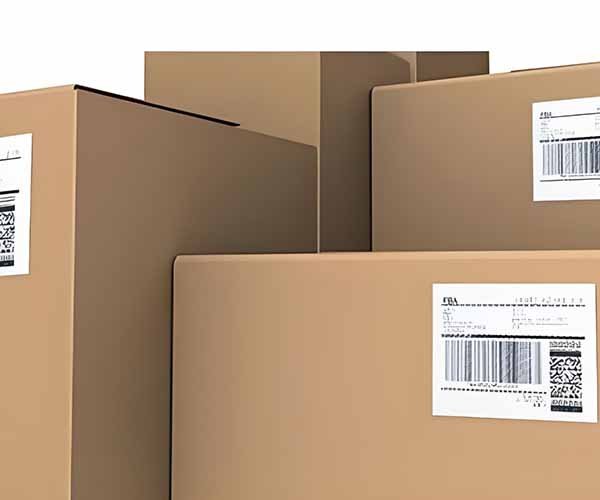
The last stage ensures packaging accuracy for retail, wholesale, or Amazon FBA.
We check:
- barcode and label accuracy
- hangtag placement
- polybag sealing
- carton size and weight
- carton drop test (if required)
Checklist for Selecting a Guangzhou Bag Factory
This checklist helps brands and product teams objectively evaluate factories.
Each point comes from years of manufacturing experience in Guangdong.
1. Factory Capabilities
✔ Does the factory own its production lines?
✔ Do they run bags, leather goods, EVA, or TPU in-house?
✔ Do they have a sample room and pattern makers?
✔ How many sewing lines and workers?
2. Engineering Ability
✔ Can they create technical drawings? ✔ Do they understand reinforcement, stress points, load distribution? ✔ Have they produced multi-material bags before?
3. Material Control
✔ Do they have stable fabric, PU, leather, TPU suppliers?
✔ Can they provide lab dips and material test reports?
✔ Do they control color matching internally?
4. QC System
✔ Do they run raw material → inline → end-line → final inspection?
✔ Can they provide AQL reports?
✔ Do they have dedicated QC staff?
5. Communication Accuracy
✔ Do they provide BOM files, spec sheets, revision logs?
✔ Do they confirm technical details before sampling?
✔ Do they offer video calls for sample review?
6. Lead Time & Capacity
✔ Can they commit to 15–25 day lead times?
✔ What is their monthly capacity?
✔ Do they manage peak season orders effectively?
7. Past Project Types
✔ Have they done the same materials you need?
✔ Have they handled large or urgent orders?
✔ Do they have experience with your market?

Case Studies
Below are six example projects that represent what Szoneier typically handles.
We do not name clients, but describe the engineering and production scope realistically.
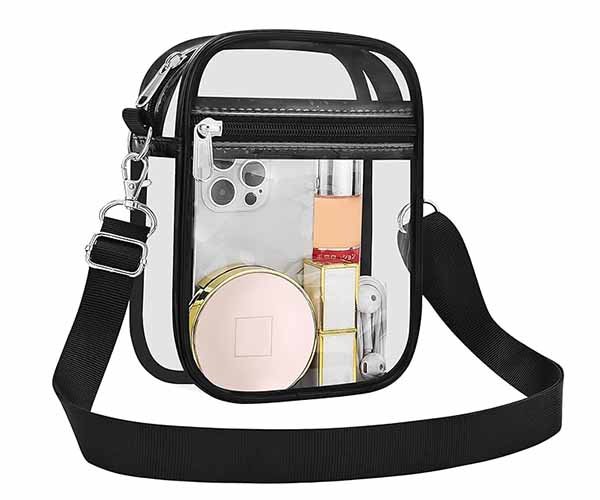
Clear TPU Stadium Bag for a U.S. Lifestyle Brand
Materials: 0.6mm anti-hydrolysis TPU, nylon binding, PP webbing
Key Work:
- TPU welding with ±1mm tolerance
- scratch resistance improvement
- neon color webbing with Pantone matching
- reinforced strap anchoring
- waterproof zipper integration
- solved fogging issue through controlled lamination temperature
Outcome: Delivered 8,000 units with consistent clarity and accurate brand colors.
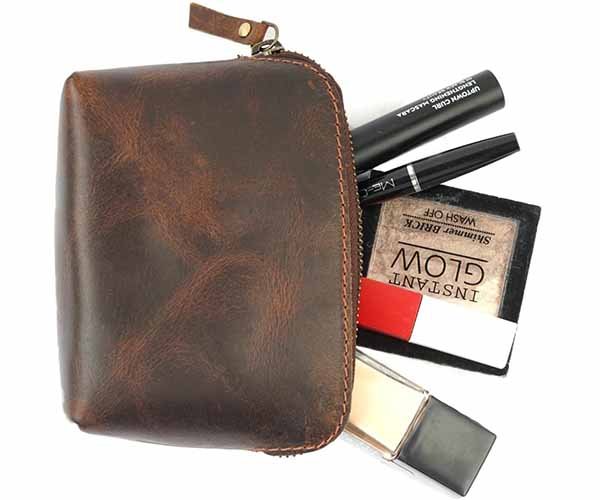
Leather Makeup Bag for a European Cosmetics Brand
Materials: Top-grain leather, microfiber lining, metal logo plate
Key Work:
- brass mold for embossed logo
- edge painting with 4-layer application
- internal pocket shaping
- metal hardware color consistency
- sample verified under studio lighting for color tone accuracy
Outcome: Approved by client after first PP sample, produced 5,500 units.
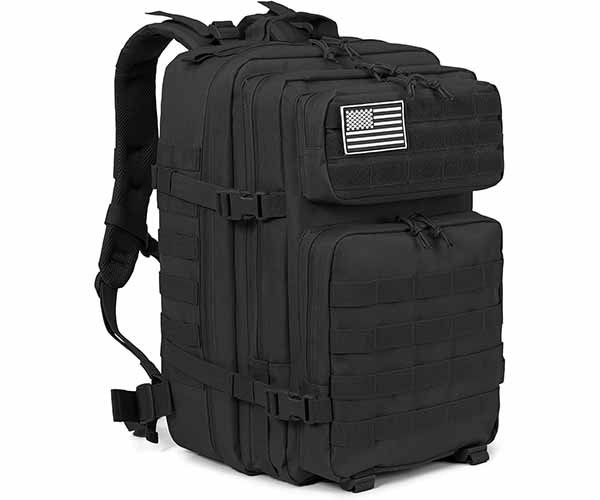
Tactical Backpack for Outdoor Equipment Company
Materials: 1000D nylon, reinforced webbing, YKK #10 zipper
Key Work:
- MOLLE system alignment and strength testing
- double-layer bottom panel
- bartack reinforcement at 18+ stress points
- hydration bladder compartment integration
- load-bearing test at 25kg for 24 hours
Outcome: Zero major defects across 3 production batches.

EVA Molded Electronics Case for Japanese Retail Brand
Materials: EVA 65° hardness, nylon outer, velvet inner lining
Key Work:
- custom EVA mold development
- zipper embedding with curve correction
- shock absorption improvement
- precise trimming of molded edges
Outcome: Consistent molding quality across 12,000+ units.

Recycled RPET Travel Organizer for an Eco Brand
Materials: GRS-certified RPET fabric, recycled webbings
Key Work:
- GRS compliance documentation
- material consistency inspection
- structure reinforcement for lightweight materials
- custom FBA packaging
Outcome: 6 SKU variations delivered with stable color matching.
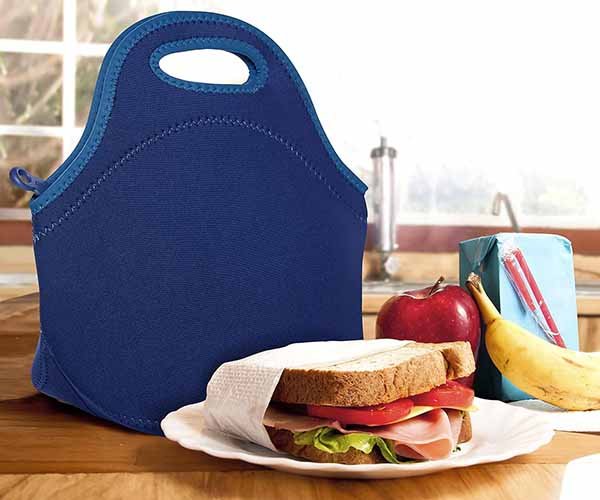
Neoprene Lunch Bag for a U.S. Food Brand
Materials: 4mm neoprene, heat-pressed panels
Key Work:
- pattern correction for stretch behavior
- strong flatlock stitching
- color-block design
- insulation performance test
- food-contact compliant packaging
Outcome: Required only minor sample revision; mass production completed in 21 days.
Ready To Elevate Your business Line?
Begin your journey with Szoneier bag now. We can assist in wholesaling or customizing Luggage and bags at the most competitive prices to enhance your brand.
FAQ
Below are frequently asked questions from brands, product teams, importers, and e-commerce sellers working with Guangzhou bag factories. All answers reflect real factory practice — transparent, detailed, and grounded in production reality.
What is your MOQ for custom bags?
Our standard MOQ is 50–200 units, depending on material and structure.
Leather goods and molded EVA usually require 150–300 units due to material yield.
Neoprene and TPU products can start at 100 units.
Nylon/Canvas bags can start at 50–100 units. MOQ is flexible because Szoneier operates its own factories and manages raw materials directly.
How long does sampling take?
Sampling normally takes 3–7 ending on complexity. Leather items requiring custom molds may take 5–10 days if the logo emboss mold is needed. EVA molded items may require 7–12 days including mold adjustments. We always produce functional prototypes — not display samples.
What is your standard production lead time?
Most production runs are completed within 15–25 days, depending on:
material readiness
quantity
assembly complexity
number of reinforcement steps
packaging requirements Orders requiring multiple SKUs or mixed materials (e.g., nylon + EVA + leather trims) typically fall within 20–30 days.
Can Szoneier help refine or redesign my bag concept?
Yes. Our 25+ engineers and 10+ designers work together to refine:
structural strength
pocket layout
weight distribution
foam placement
hardware selection
aesthetic balance
manufacturability
retail packaging We work with brands that provide sketches, mood boards, or even rough photos — and turn them into production-ready designs.
How do you ensure consistent quality?
We follow a strict QC workflow:
raw material testing
cutting accuracy checks
in-line inspection during sewing
reinforcement verification (bartack, box-X)
hardware alignment
final AQL inspection
packaging inspection We store QC photos, PP samples, and BOM files for each order to ensure long-term repeatability.
Which materials can you work with?
We routinely work with:
nylon (300D/600D/900D/1680D)
canvas (8oz–24oz)
top-grain + full-grain leather
PU and microfiber PU
TPU (welded and stitched)
EVA molded shells
neoprene (2–5mm)
RPET/recycled materials
jacquard webbings Multi-material integration is one of Szoneier’s specialties.
Can you handle Amazon FBA packaging requirements?
Yes. We prepare:
FBA-compliant barcodes
suffocation warnings
carton labeling
polybag thickness requirements
custom bundles
insert cards We also offer DDP shipping to Amazon warehouses if needed.
Can you develop fully waterproof bags?
Yes. For waterproof or water-resistant products, we use:
TPU heat-welded seams
waterproof zippers
seam-sealing tape
laminated reinforcement panels We control welding temperature and pressure to maintain ±1mm seam alignment.
What affects the cost of a custom bag?
Main cost drivers include:
Material grade (nylon weight, leather grade, PU density)
Hardware quality (zippers, buckles, clips)
Structure complexity (pockets, dividers, foam, linings)
Reinforcement steps (bartacks, binding, panel thickness)
Logo technique
MOQ and batch size
Packaging requirements
Testing or compliance requirements
Can you sign an NDA?
Yes. We frequently work with brand studios, designers, and product teams requiring confidentiality. NDAs can be signed before file exchange, sampling, or production.
Do you provide testing reports (REACH, RoHS, GRS)?
Yes. We work with certified labs in Shenzhen and Guangzhou to conduct:
REACH
RoHS
CPSIA
Colorfastness
Tensile strength
Material composition GRS materials are verified with chain-of-custody documentation.
Do you support multi-SKU collections?
Yes. We help brands launch collections with 3–12 SKUs sharing:
unified color systems
coordinated hardware
consistent packaging Our vertical supply chain (fabric + webbing + bags + leather goods) ensures cohesive collections.
Ready to Evaluate Your Bag Project?
If you’re planning a new bag line or developing seasonal SKUs, Szoneier can review your concept and provide:
- structural recommendations
- material suggestions
- cost expectations
- production feasibility
- engineering improvements
- packaging proposals
- timelines for sampling & production
Our team handles fabric, leather, PU, TPU, EVA, neoprene, and recycled materials, allowing us to support a wide range of product categories.
What You Can Send Us
To start efficiently, you can share:
- sketches or photos
- technical drawings
- reference samples
- target price & quantity
- desired materials
- brand guidelines
- packaging requirements
Within 24 hours, we’ll return with practical notes and development suggestions.
Exclusive Offer for You
As a first-time buyer, you’ll receive a Free bags Color Card to help you select the right material and shade. Once confirmed, we’ll also provide a Free Sample made by our factory—no extra cost.
For our regular partners, we send New Color Charts multiple times a year—completely free—to support your latest collections.
