Skip to content
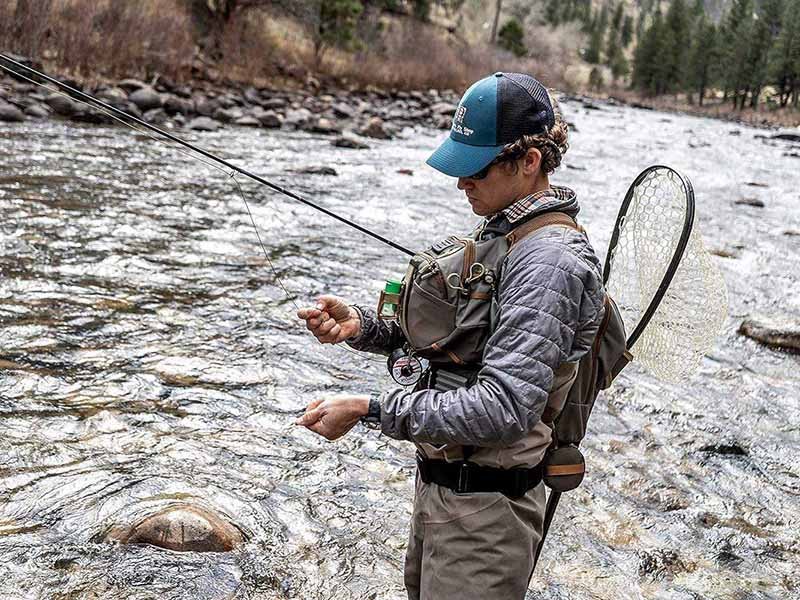
A lot of fishing bags look good on a product page. Far fewer still feel right when an angler is standing in cold moving water, changing flies with wet hands, and trying to reach a tippet spool or forceps in seconds. That is where fishing bag manufacturing for fly fishing gear stops being a simple sewing project and becomes a product engineering job. In this category, the real value is not just in making a bag that holds gear. It is in making a bag that helps anglers move better, organize faster, protect expensive tackle, and stay comfortable for hours. For brands, this is also where product differentiation happens. A fly fishing bag with smart layout, durable waterproof materials, reliable zippers, and field-friendly access can create stronger reviews, lower return rates, and better repeat orders than a generic outdoor bag with a fishing label on it.
Fishing bag manufacturing for fly fishing gear is the process of designing and producing specialized bags that protect, organize, and speed up access to fly fishing tools such as fly boxes, leaders, tippet spools, reels, nippers, hemostats, and small accessories. The best bags combine waterproof or water-resistant materials, durable construction, ergonomic carrying systems, and purpose-built storage for real on-water use.
The interesting part is that many end users do not describe this as “manufacturing quality.” They describe it as something much more practical: “I can reach my gear faster.” “My tools stay dry.” “My shoulder doesn’t hurt after six hours.” “The pack feels balanced.” That is exactly why this topic matters to importers, brand owners, and product managers. If your fishing bag is built around the real workflow of fly anglers, it becomes easier to sell, easier to position, and easier to scale. And once you see the category through that lens, you start noticing what separates a serious fly fishing product from a bag that only looks the part.
What Is a Fishing Bag for Fly Fishing Gear?
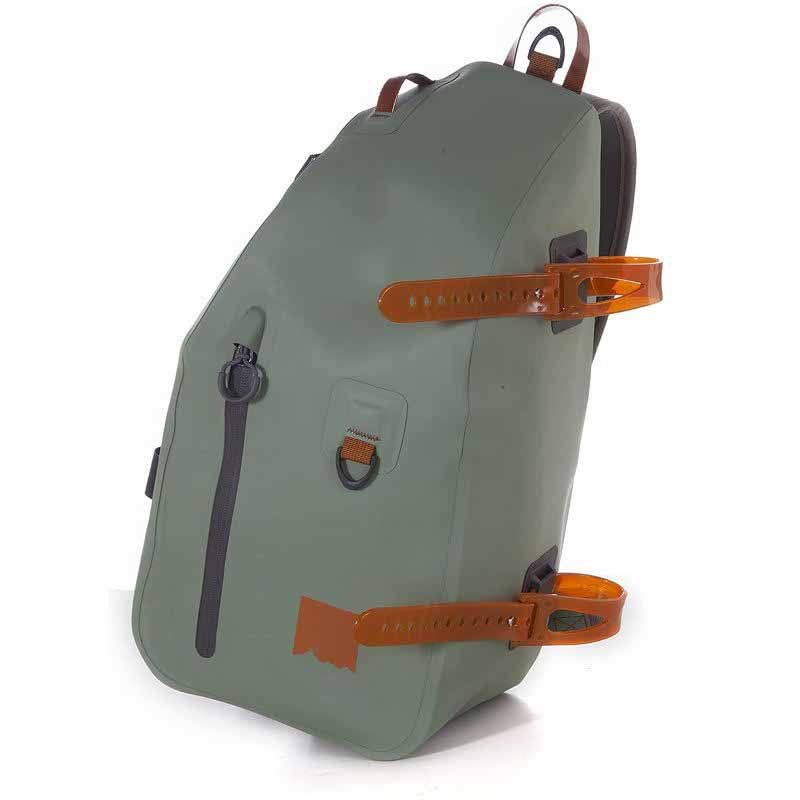
A fishing bag for fly fishing gear is a purpose-built bag designed to keep small, high-value tools organized, protected, and easy to reach while fishing. Compared with regular bags, it focuses more on access speed, layout logic, water protection, and carrying comfort in active outdoor conditions.
What makes a fishing bag different from regular bags?
A regular backpack is built around general storage. A fly fishing bag is built around task flow. That difference sounds simple, but in actual product development it changes everything: compartment structure, opening angle, zipper location, shoulder balance, attachment points, even where the brand places exterior patches or logo panels.
A standard outdoor bag usually answers one basic question: “How much can it hold?” A real fly fishing bag has to answer several harder questions:
- Can the user open it with one hand?
- Can tools be reached without putting the bag on the ground?
- Will wet conditions damage the contents?
- Can the bag stay balanced while walking, wading, casting, and kneeling?
- Are the most-used items in the fastest-access zones?
This is why premium fly fishing packs often include features such as tippet docking systems, quick-access tool stations, water-resistant or waterproof closures, fly patches, net slots, attachment loops, and segmented storage. Orvis highlights that chest packs and sling packs are organized around on-water access, while Simms and Fishpond emphasize waterproof protection, tool attachment, workstations, and integrated carry systems across sling, chest, and backpack styles.
For customers sourcing products from a factory, this matters because a bag that is merely “outdoor style” will often fail in actual fly fishing use. The most common problems with generic bags are easy to spot:
| Problem in Generic Bags | What It Causes on the Water | What Better Manufacturing Solves |
|---|---|---|
| Large undivided compartments | Slow access, gear mixing, tangles | Zoned storage with dedicated functions |
| Low-grade zippers | Jamming, leakage, short product life | Water-resistant or waterproof zipper systems |
| Weak strap design | Shoulder fatigue, bag swing | Better weight distribution and strap padding |
| No external attachment points | Tools end up inside pockets | Fast-access docking and clip systems |
| Poor fabric choice | Wet-out, abrasion, shape collapse | Coated technical fabrics with structure |
For a brand, this is where product positioning becomes clearer. You are not selling “a bag for fishermen.” You are selling a tool that reduces wasted movement and protects expensive gear. That is a much stronger commercial story.
What gear must a fly fishing bag hold?
One reason this category is harder than many buyers expect is that fly fishing gear is compact, but it is not simple. The bag has to carry many small items with different shapes, access frequencies, and protection needs. The design challenge is not only capacity. It is organized capacity.
Most fly fishing users need a bag that can handle the following categories:
| Gear Item | What the Bag Must Do |
|---|---|
| Fly boxes | Keep flat, secure, easy to grab |
| Tippet spools | Allow quick access and controlled dispensing |
| Leaders and indicators | Prevent crushing and tangling |
| Nippers, forceps, hemostats | Support exterior docking or instant retrieval |
| Reels or spools | Protect from impact and moisture |
| Small accessories | Separate beads, split shot, floatant, strike indicators |
| Phone, wallet, keys | Add water protection and isolation from wet gear |
| Water bottle or extra layer | Support comfort for longer sessions |
That list is why serious fly fishing bags need a more intelligent internal layout than casual tackle bags. A customer may say they want a “small sling pack,” but when you unpack the use case, they often really need:
- 2 to 4 fly-box-ready storage zones
- a front workstation or drop-down panel
- at least one quick-grab pocket
- at least one protected valuables compartment
- external tool docking
- net carry compatibility for some models
- comfortable load transfer for half-day or full-day use
Market examples make this very clear. Orvis chest packs center around fixed tippet access and streamlined management. Fishpond chest packs focus on secure fly-box storage, zip-down benches, and keeping essentials high on the body. Simms sling and backpack models emphasize organized compartments, accessory ports, bottle pockets, and net sleeves.
For importers and private label buyers, there is a practical lesson here: product development should start with a gear map, not with appearance. Before approving patterns, the factory should define what the bag must hold, how often each item is accessed, and which items require the highest protection level. This reduces revision rounds and helps the final product match a real user profile.
Why is a dedicated fishing bag important?
A dedicated fishing bag matters because fly fishing is a high-motion, high-focus activity. Anglers walk uneven banks, step into rivers, change flies frequently, and often work with cold or wet hands. In that environment, poor bag design does more than create inconvenience. It slows decisions, increases fatigue, and raises the risk of losing or damaging gear.
From the customer’s point of view, the value of a purpose-built fly fishing bag usually shows up in five areas:
- Speed: less time searching for flies, tools, and tippet
- Protection: better defense against water, abrasion, and impact
- Comfort: lower shoulder and back strain during long sessions
- Control: easier tool management while standing or wading
- Confidence: gear stays where the user expects it to be
This is also why “small details” matter so much in production. A bag may technically fit all the gear, but if the zipper pull is hard to grab with wet fingers, if the pack swings during casting, or if the most-used item is hidden behind a secondary compartment, the product will feel wrong in use.
Well-known category leaders already build around these expectations. Orvis notes that chest packs keep accessories close at hand, while sling packs and backpacks increase capacity. Simms markets waterproof and submersible designs for wet environments, including self-healing waterproof zipper systems on some models. Fishpond highlights high-body organization, drop-down work areas, and net integration. These details reflect what the market already rewards: easier access, better weather resistance, and more stable carrying systems.
For Szoneier’s target customers, especially mid-sized importers and outdoor brands, this creates a clear sourcing opportunity. A custom fly fishing bag does not need to compete only on price. It can compete on better usability, stronger material choices, cleaner organization, and more precise positioning for a specific angler segment. That is where product margin usually gets healthier.
Which Fishing Bag Types Fit Fly Fishing Gear?
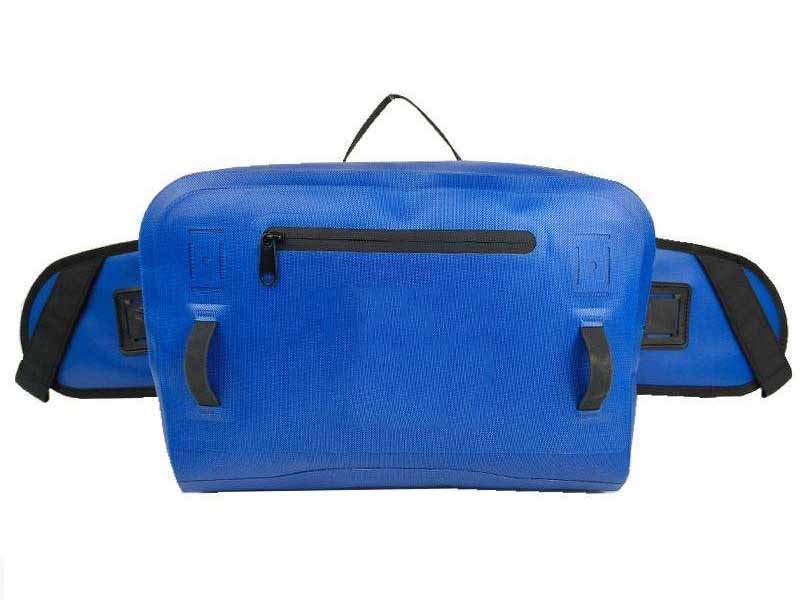
The main fishing bag types for fly fishing gear are chest packs, sling packs, and backpacks. Chest packs are best for high-speed access and lighter carry, sling packs balance access with capacity, and backpacks work better for longer sessions and larger loadouts. There is no single best option for every angler, but there is usually a best option for each fishing scenario.
Which fishing bag works best: sling, chest, or backpack?
This is one of the first questions potential customers ask, and it is also one of the most commercially important because it shapes the whole product line. The short answer is that each format solves a different problem.
Here is a simple comparison:
| Bag Type | Main Advantage | Main Limitation | Best Use Scenario |
|---|---|---|---|
| Chest Pack | Fast front access | Lower carrying capacity | Short to medium sessions, active wading |
| Sling Pack | Strong balance of access and storage | One-shoulder load over time | Half-day trips, versatile all-round use |
| Backpack | Highest capacity and better long-load carry | Slower access during active fishing | Full-day trips, travel, extra layers and food |
Chest packs are popular with anglers who want everything in front of the body. This makes fly changes and tool access fast, especially in moving water. Market examples from Orvis and Fishpond show how chest packs are built around low-profile storage, front access, fly-box management, tippet stations, and net integration.
Sling packs tend to be the most commercially flexible option. They rotate to the front for access, then move back out of the casting zone. Orvis, Simms, and Fishpond all position sling packs as a strong blend of access and capacity, with docking stations, multiple compartments, ambidextrous carrying, and ergonomic shape.
Backpacks matter when the user needs more than tackle alone. Food, rain layers, hydration, camera gear, larger fly boxes, and long-distance comfort push the product toward backpack design. Waterproof backpack models from Simms and Orvis also show how higher-denier fabrics, padded shoulder systems, bottle pockets, MOLLE or lash points, and submersible closures move the category into premium territory.
For a factory and brand working together, this usually means one thing: the smartest range is not one bag, but a 3-style collection built around different trip types and price levels.
Which fishing bag suits short vs. long trips?
Trip length changes the whole bag decision because time on the water changes what the user carries. A two-hour session near home is very different from an all-day river outing or a destination trip where the angler needs extra clothing, food, camera gear, and backup tackle.
A practical way to approach product planning is to map bag size to session length:
| Session Length | User Need | Best Bag Direction |
|---|---|---|
| 1–3 hours | Minimal gear, fast access, low weight | Chest pack or compact sling |
| Half day | Balanced storage, mobility, comfort | Medium sling pack |
| Full day | More gear, water, layers, broader organization | Backpack or large sling |
| Travel / destination | Maximum load and protection | Technical backpack or waterproof system |
This is not just a design question. It is also a merchandising question. Many outdoor buyers do not want one “do everything” bag. They want a clear reason to buy different models for different kinds of trips. That is why brands with stronger product architecture often perform better: they do not force one SKU to solve every problem.
Orvis explicitly notes that chest and hip packs carry less than sling packs or backpacks and may become less comfortable over longer wading or walking distances. That aligns with how many customers actually use these products. Smaller front-focused packs shine when access speed is the priority. Larger packs win when time, distance, and extra load matter more.
For OEM and private label projects, this creates a useful development roadmap. Instead of asking the factory for one fishing bag, customers often get better results by structuring the line this way:
- entry model for light sessions
- mid-size sling for core sales volume
- premium waterproof backpack for high-value users
That strategy supports wider price coverage and stronger brand storytelling.
Which fishing bag offers quick access on the water?
If quick access is the top priority, sling packs and chest packs usually lead the category. The reason is simple: both keep essential tools closer to the user’s working zone, reducing hand travel and repositioning time.
The fastest-access systems tend to include:
- front-facing compartments or rotatable body access
- fixed tippet bars or spool docks
- magnetic drop pockets
- external retractor points
- fly patches or work panels
- net slots and clean clipping points
This is exactly how established fly fishing brands describe their best-performing models. Orvis sling packs highlight docking stations and secure pockets for tippet and tools. Orvis chest packs emphasize fixed, fast tippet access. Fishpond chest packs mention zip-down fly benches, accessory loops, and keeping essentials high on the body. Simms promotes ergonomic sling layouts and organized, ready-to-deploy waterproof storage.
From a manufacturing standpoint, access speed depends on details that are often decided very early in development:
- zipper path length
- opening angle
- left/right shoulder orientation
- tool docking location
- whether the bag can be used with one hand
- whether the structure collapses when partially loaded
This is why sampling matters so much. A bag can look excellent in flat drawings and still feel awkward when worn. For serious customers, the factory should test the sample with actual pack rotation, standing access, and one-hand retrieval checks. That extra discipline often decides whether the final product feels “professional” or just “acceptable.”
How Is a Fishing Bag Manufactured for Fly Fishing Gear?
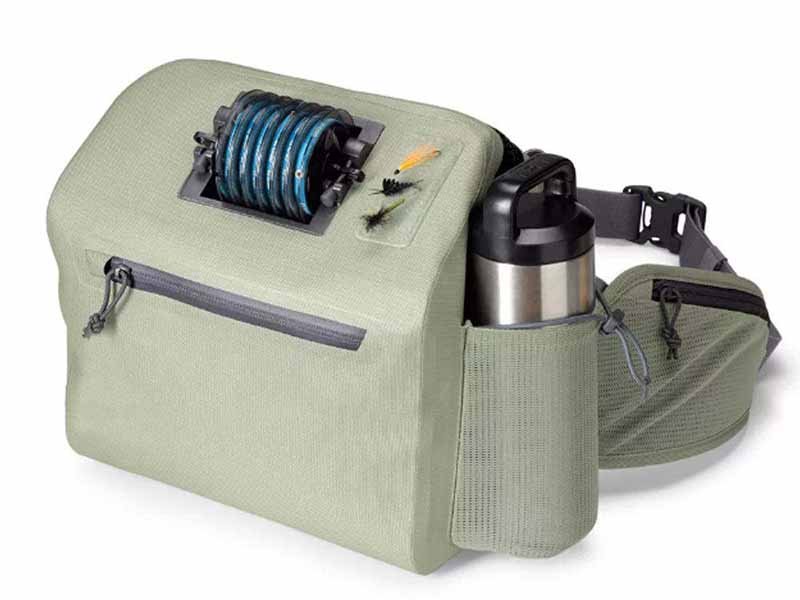
Fishing bag manufacturing for fly fishing gear is a structured process that combines material selection, functional design, precision cutting, reinforced sewing, and performance testing. The goal is not just to produce a bag, but to create a tool that performs reliably in wet, high-movement outdoor environments while keeping gear organized and protected.
How are materials chosen for a fishing bag?
Material selection is one of the most critical decisions in fishing bag manufacturing because it directly affects durability, waterproofing, weight, and user comfort. Different materials are chosen based on product positioning, target price, and performance requirements.
Below is a comparison of commonly used materials:
| Material Type | Key Advantages | Limitations | Typical Use |
|---|---|---|---|
| Neoprene | Shock absorption, flexibility, water resistance | Heavier than nylon | Protective sleeves, premium bags |
| Nylon (420D–1680D) | Lightweight, strong, abrasion-resistant | Needs coating for waterproofing | Main body fabric |
| Polyester | Cost-effective, good color retention | Slightly less durable than nylon | Entry-level bags |
| TPU-coated fabric | Waterproof, flexible, durable | Higher cost | High-end waterproof bags |
| PVC | Fully waterproof, rigid structure | Less eco-friendly, heavier | Budget waterproof solutions |
For fly fishing bags, most brands combine materials instead of relying on one. For example:
- Outer shell: 600D or 1000D nylon for durability
- Inner lining: TPU coating for waterproofing
- Padding: EVA foam for structure and protection
Szoneier often supports multi-material customization, allowing brands to balance cost and performance. For example, a mid-range sling bag may use nylon + TPU coating, while a premium version upgrades to TPU laminated fabric with sealed seams.
From a cost perspective, material choice can affect product pricing by 20–40%, which directly impacts your target market positioning.
How is a fishing bag made waterproof?
Waterproofing is not just about fabric—it is a system-level design involving materials, construction, and accessories. Many products claim to be waterproof, but in reality, there are three distinct levels:
| Level | Description | Manufacturing Method |
|---|---|---|
| Water-resistant | Handles light rain/splashes | PU coating + standard stitching |
| Water-repellent | Slows water penetration | DWR treatment + tighter weave |
| Waterproof | Prevents water entry completely | TPU/PVC + sealed seams + waterproof zippers |
To achieve true waterproof performance, manufacturers use:
- Seam sealing or welding Traditional stitching creates needle holes. High-end bags use heat sealing or RF welding to eliminate leakage points.
- Waterproof zippers Standard zippers are one of the biggest failure points. Premium fishing bags use coated or airtight zipper systems.
- Roll-top or sealed closures Especially common in waterproof backpacks, this prevents water from entering through openings.
For example, high-end brands like Simms use submersible waterproof systems with self-sealing zippers, which can withstand full water exposure.
For most brands, the key decision is:
Do you need full waterproof performance or just water resistance?
- Entry-level market → water-resistant (lower cost)
- Mid-range → water-repellent + reinforced zippers
- Premium → fully waterproof construction
Szoneier typically helps customers define this early to avoid over-engineering or under-delivering.
How are compartments designed in a fishing bag?
Compartment design is where a fishing bag truly becomes a functional tool, not just a storage product. The goal is to reduce time spent searching for gear and improve workflow efficiency.
A well-designed fishing bag usually follows this structure:
| Zone | Function |
|---|---|
| Primary compartment | Fly boxes and main gear |
| Secondary pockets | Accessories, tools |
| Quick-access zone | High-frequency items |
| External attachment | Tools, nets, bottles |
| Hidden pocket | Phone, wallet, valuables |
Key design principles include:
- Frequency-based layout Items used most often must be closest to the user.
- One-hand access Critical for use in water environments.
- Separation of wet and dry items Prevents damage to sensitive gear.
- Modular organization Adjustable compartments increase flexibility.
One of the biggest mistakes in product development is overloading the bag with too many compartments. While it may look “feature-rich,” it often reduces usability. The best designs are simple but intentional.
From a production standpoint, compartment design also affects:
- Sewing complexity
- Material usage
- Assembly time
- Final cost
That’s why experienced manufacturers like Szoneier usually optimize layouts during sampling to ensure balance between usability and production efficiency.
What Features Should a Fishing Bag Include for Fly Fishing Gear?
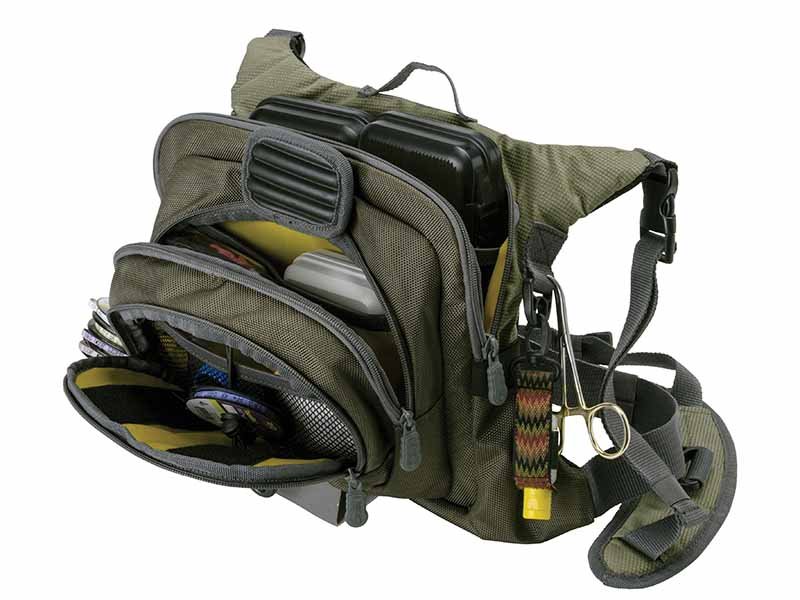
A high-quality fishing bag should include features that improve access speed, durability, comfort, and protection. These features directly influence user satisfaction, product reviews, and repeat purchases.
What makes a fishing bag durable and lightweight?
Durability and weight must be balanced carefully. A bag that is too heavy reduces comfort, while a bag that is too light may lack structure and strength.
Key durability factors include:
- Fabric denier (thickness) 600D–1000D is common for fly fishing bags
- Reinforced stitching (bar-tack points) Strengthens stress areas like straps and handles
- Abrasion-resistant panels Protects bottom and corners
- High-quality zippers and hardware Often determines product lifespan
Here is a simple durability breakdown:
| Component | Recommended Specification |
|---|---|
| Fabric | 600D–1000D nylon or TPU |
| Stitching | Reinforced + double stitching |
| Zippers | YKK or equivalent |
| Hardware | Anti-corrosion metal/plastic |
| Bottom panel | Reinforced or double-layer |
Lightweight design is achieved by:
- Reducing unnecessary layers
- Using high-strength lightweight fabrics
- Optimizing internal structure
A well-balanced fishing bag typically weighs 0.6kg–1.5kg, depending on size and function.
What storage features improve fishing efficiency?
Storage efficiency is one of the biggest selling points for fly fishing bags. The faster an angler can access gear, the better their overall experience.
Important storage features include:
- Tippet spool holders Allows fast line replacement without searching
- Fly patches Temporary holding area for frequently used flies
- Magnetic pockets Quick open/close without zippers
- Expandable compartments Adjust storage space when needed
- Color-coded or labeled sections Helps organization
These features may seem small, but they can reduce gear access time significantly.
For example:
- Without organization → 10–20 seconds to find a tool
- With optimized layout → 2–5 seconds
Over a full fishing session, this creates a noticeable difference in user satisfaction.
From a business perspective, these functional improvements often lead to:
- Better product reviews
- Higher perceived value
- Increased repeat orders
What comfort features matter in a fishing bag?
Comfort is often overlooked during product development, but it becomes critical during actual use. Fly fishing sessions can last several hours, and poor ergonomics quickly lead to fatigue.
Key comfort features include:
- Ergonomic shoulder straps Reduces pressure on neck and shoulders
- Breathable padding (mesh or foam) Improves ventilation
- Weight distribution design Prevents imbalance
- Adjustable straps Fits different body types
- Stability system Keeps the bag from swinging
Here is a comfort comparison:
| Feature | Benefit |
|---|---|
| Wide straps | Better weight distribution |
| Breathable mesh | Reduces sweat buildup |
| Back padding | Improves long-term comfort |
| Stabilizer straps | Prevents movement during casting |
For sling bags, balance is especially important. Poor design can cause:
- Shoulder fatigue
- Uneven weight pressure
- Reduced mobility
This is why premium products invest heavily in ergonomic testing.
Szoneier often works with clients to refine these details during sampling, ensuring the final product meets both functional and comfort expectations.
How to Choose a Fishing Bag Manufacturer for Fly Fishing Gear?
Choosing the right fishing bag manufacturer directly affects product quality, delivery reliability, and long-term brand growth. A strong manufacturer should not only produce bags but also help optimize design, reduce risks, and improve product competitiveness in the market.
How to evaluate a fishing bag manufacturer?
Most buyers focus on price first, but experienced brands evaluate manufacturers based on a combination of capability, consistency, and communication.
Here are the most important evaluation factors:
| Criteria | What to Check | Why It Matters |
|---|---|---|
| Experience | Years in bag manufacturing (10+ years preferred) | Reduces development mistakes |
| Material expertise | Knowledge of neoprene, nylon, TPU | Ensures correct material selection |
| Sampling ability | Prototype turnaround (5–10 days ideal) | Speeds up product launch |
| Production capacity | Monthly output volume | Supports scaling orders |
| Quality control | Inspection system (AQL standard) | Reduces defect rate |
| Communication | Response speed and clarity | Prevents misunderstandings |
A reliable manufacturer should be able to:
- Understand your product idea quickly
- Suggest improvements based on real production experience
- Identify potential risks before mass production
- Provide clear timelines and cost structures
Szoneier, for example, leverages 18+ years of manufacturing experience across neoprene products, bags, and protective gear, helping customers avoid common development mistakes such as poor material pairing or overcomplicated structures.
What customization options are available for fishing bags?
Customization is where brands create differentiation. A standard product is easy to copy, but a well-customized fishing bag can build long-term brand identity and customer loyalty.
Common customization options include:
1. Logo Branding Methods
| Method | Effect | Suitable For |
|---|---|---|
| Screen printing | Cost-effective | Large volume orders |
| Embroidery | Premium look | Outdoor brands |
| Heat transfer | Detailed graphics | Complex logos |
| Rubber patch | Durable, modern | Mid-high range products |
| Woven label | Subtle branding | Minimalist designs |
2. Structural Customization
- Custom compartment layout
- Size adjustments
- Modular add-ons
- Tool docking systems
3. Material Customization
- Waterproof level selection
- Fabric thickness (denier)
- Eco-friendly materials (RPET, TPU)
4. Color & Design
- Pantone color matching
- Multi-color panel design
- Seasonal collections
From a business perspective, customization can increase product value by 30–80%, especially in mid-to-high-end markets.
Szoneier supports low MOQ customization, allowing smaller brands to test new designs without large inventory risks.
Why do brands choose OEM fishing bag manufacturing?
OEM (Original Equipment Manufacturer) allows brands to focus on marketing, sales, and branding, while the factory handles production.
Key advantages include:
- Lower upfront investment
- Faster product development
- Access to manufacturing expertise
- Flexible scaling
Here is a comparison:
| Model | Pros | Cons |
|---|---|---|
| In-house production | Full control | High cost, complex setup |
| OEM manufacturing | Cost-efficient, scalable | Requires reliable partner |
| Wholesale buying | Fast, simple | No differentiation |
Most successful fishing brands today rely on OEM or ODM models because they allow:
- Faster response to market trends
- Lower operational complexity
- Better focus on brand building
With Szoneier’s OEM/ODM service, customers can go from concept to sample in as fast as 5–7 days, significantly reducing time-to-market.
Why Is Custom Fishing Bag Manufacturing for Fly Fishing Gear Growing?
Custom fishing bag manufacturing is growing rapidly because anglers are demanding better performance, and brands are competing on differentiation rather than price alone. Standard products no longer meet the expectations of modern outdoor consumers.
Why are custom fishing bags trending?
Today’s anglers are more experienced and more selective. They look for products that match their specific fishing style, environment, and personal preferences.
Key market trends include:
- Demand for lightweight and functional design
- Preference for waterproof and durable materials
- Growth of specialized fishing segments (fly fishing, kayak fishing, etc.)
- Increasing focus on brand identity and aesthetics
This shift creates opportunities for brands to:
- Launch niche products
- Build loyal customer communities
- Charge premium prices
Custom fishing bags are no longer optional—they are becoming a standard expectation in the market.
How does private label fishing bag production help brands?
Private label manufacturing allows brands to build their own identity without investing in production facilities.
Benefits include:
- Full control over branding
- Unique product design
- Higher profit margins
- Stronger customer loyalty
Here is a simple comparison:
| Product Type | Market Position | Profit Potential |
|---|---|---|
| Generic products | Price competition | Low |
| Private label products | Brand differentiation | Medium–High |
| Fully customized products | Premium positioning | High |
Many successful outdoor brands started with private label products and gradually moved into deeper customization.
Szoneier supports this process by offering:
- Free design support
- Fast sampling
- Flexible production quantities
- Consistent quality control
How can manufacturers support brand growth?
A good manufacturer is not just a supplier—it becomes a long-term partner that supports your brand’s growth.
Key ways manufacturers add value:
- Product development support Helping refine designs and improve usability
- Cost optimization Suggesting alternative materials or structures
- Quality consistency Maintaining stable production standards
- Supply chain reliability Ensuring on-time delivery
- Scalability Supporting growth from small orders to large volumes
Szoneier’s integrated manufacturing system (fabric + production + assembly) allows better control over:
- Lead times
- Product quality
- Cost structure
This is especially valuable for brands looking to scale quickly while maintaining consistency.
Ready to Build Your Custom Fishing Bag?
If you are planning to develop a fly fishing gear bag, now is the right time to work with a manufacturer that understands both materials and real-world usage.
Whether you need:
- A new fishing bag design
- A private label product line
- Or a reliable OEM manufacturing partner
We are ready to support your project from concept to production.
Send us your idea, sketch, or reference product today—and get a professional quotation within 24 hours.