Skip to content
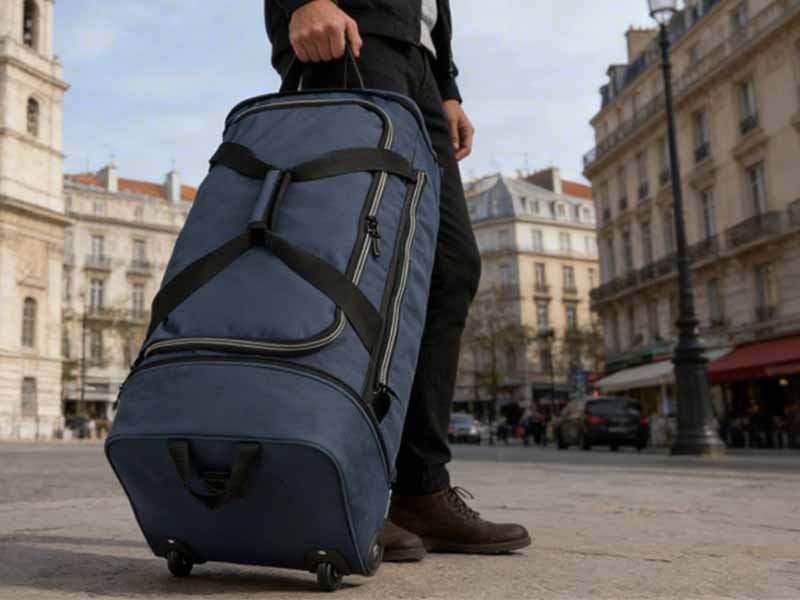
A rolling travel bag can look premium, feel solid in the hand, and still disappoint the moment it hits real ground. The first clue is usually the sound: a “rattle” on tile, a harsh “buzz” on concrete, or a squeak when turning. Then comes the frustration—wheels that wobble, drag, or develop flat spots after a few trips. Customers rarely write reviews about “fabric stitching” on wheeled luggage. They write reviews about wheels.
PU and TPE are the two most common wheel materials used on rolling travel bags. PU wheels usually last longer because they resist abrasion and deformation under heavy loads. TPE wheels are usually quieter and smoother because they absorb vibration better. The best choice depends on travel frequency, terrain, bag weight, wheel design (spinner vs inline), and how much your brand values quiet comfort versus long service life.
A lot of brands learn this only after a production run ships. Samples often roll on clean showroom floors. Customers roll on airport sidewalks, hotel carpets, escalators, and rough pavement. That gap between “sample testing” and “real use” is where wheel engineering either saves your reputation—or costs you returns. Let’s start by getting clear on wheel types and materials.
What Types of Wheels Are Used on Rolling Travel Bags?
Most rolling travel bags use PU wheels, TPE wheels, or multi-material (hybrid) wheels, usually built around a plastic hub with bearings. Your wheel choice affects four things customers notice immediately: noise, smoothness, stability, and how long the wheel stays round (no wobble, no dragging). The same wheel material can perform very differently depending on bearing quality, wheel size, and housing rigidity.
What are PU wheels?
PU (polyurethane) wheels are popular because they sit in the “sweet spot” between hard plastic and soft rubber. They can carry heavy loads without squashing too much, and they wear slowly over time.
What customers like about PU wheels
- They stay stable under heavier luggage loads (less “wobble”).
- They resist grinding down on rough sidewalks.
- They hold shape better during long pulls.
Where PU can feel less comfortable
- On textured pavement, vibration can transmit into the handle.
- Noise can increase if the wheel is small or the bearing is cheap.
What PU wheels usually do well (real-world performance map)
| Performance Factor | PU Wheel Behavior | What Users Notice |
|---|---|---|
| Abrasion wear | Slower wear rate | Wheel lasts more trips |
| Load handling | Strong shape retention | Less wobble, less drag |
| Rolling feel | Firm, controlled | Feels “stable” |
| Noise on smooth floors | Low to medium | Acceptable indoors |
| Noise on rough ground | Medium | Can sound “harder” |
| Flat-spot risk | Lower than soft wheels | Better long-term roundness |
Where PU fits best: Mid-to-high durability luggage, heavier checked bags, frequent travel, business travel.
What are TPE wheels?
TPE (thermoplastic elastomer) wheels are softer. That softness acts like a mini shock absorber, which is why people often describe TPE wheels as “quiet” and “smooth.”
What customers like about TPE wheels
- Quieter rolling on tile and hard flooring.
- Less vibration on uneven surfaces.
- Smoother turning feel, especially in airports and hotels.
Trade-offs customers may experience
- Faster wear on rough pavement (depends on compound).
- More deformation under heavy loads if wheel design is not reinforced.
What TPE wheels usually do well (comfort-focused map)
| Performance Factor | TPE Wheel Behavior | What Users Notice |
|---|---|---|
| Vibration absorption | Strong | “Smooth pull” feel |
| Indoor rolling noise | Lower | Quiet in hotels/airports |
| Grip | Higher | Less slipping |
| Abrasion wear | Medium | May wear quicker outdoors |
| Load handling | Medium | Can feel less stable if overloaded |
| Flat-spot risk | Medium | Higher risk if stored loaded |
Where TPE fits best: Cabin luggage, urban travel, lifestyle/fashion luggage, quiet-rolling positioning.
What other wheel materials exist?
Most products still center on PU or TPE, but you’ll see these variations in the market:
| Wheel Construction | Why Brands Use It | Weak Point | Best For |
|---|---|---|---|
| Hard plastic (PVC/PP) | Lowest cost | Loud, fast wear | Entry-level luggage |
| Rubber blend | Quiet grip | Wear faster | Indoor/short trips |
| Dual-material (hard core + soft tread) | Balance durability + quiet | Higher tooling cost | Premium spinner luggage |
| Metal-core PU | Strong load stability | Heavier | Heavy-duty cases |
Many “premium” wheels are not just about material—they’re about the whole wheel system: larger diameter, better bearings, thicker axle, and stronger housing.
Which Material Is Better: PU or TPE?
There’s no universal “best.” PU is usually the safer choice when you want long life, heavy-load reliability, and fewer warranty issues. TPE is usually the better choice when you want quiet rolling and comfort, especially for cabin use on smoother surfaces. For many brands, the best answer is a hybrid wheel design that uses a supportive structure with a softer contact layer.
Which wheel handles wear and abrasion best?
Abrasion is what happens when wheels continuously grind against concrete, asphalt, and debris. Over time, the wheel loses material, becomes uneven, and starts to wobble.
In general production reality:
- PU wheels tend to resist abrasion better.
- TPE wheels often trade wear resistance for softness.
Side-by-side durability comparison (what matters to brands)
| Durability Metric | PU | TPE | Why It Matters |
|---|---|---|---|
| Abrasion resistance | Higher | Medium | Controls lifespan on pavement |
| Load deformation | Lower | Higher | Affects wobble + drag |
| Shape retention | Strong | Moderate | Keeps wheel round longer |
| Cut/tear risk | Lower | Medium | Important for gravel/debris |
| Heat build-up during long roll | Moderate | Moderate | Influences material fatigue |
If your bag is positioned for frequent flyers or checked luggage, PU reduces the risk of complaints like “wheel wore out after one trip.”
Which wheel is softer and quieter?
Noise is not only “material.” It’s a system result: wheel softness + diameter + bearing precision + housing stability. But material softness is still the biggest contributor.
What controls luggage wheel noise most?
| Noise Source | What Causes It | What to Improve |
|---|---|---|
| Vibration transfer | Hard wheel + rough ground | Softer tread (TPE/hybrid) |
| Bearing chatter | Low-grade bearings | Higher precision bearings |
| Housing resonance | Loose wheel fork | Stronger housing + tighter tolerances |
| Small wheel diameter | More impacts per meter | Larger wheel size |
General rule customers feel immediately: TPE = smoother + quieter on indoor floors. PU = firmer, sometimes louder on rough surfaces.
Which performs better on rough surfaces?
Rough surfaces include sidewalks, bricks, cobblestones, parking lots, and uneven concrete. Two things matter most:
- Does the wheel wear too fast?
- Does the wheel shake the bag?
Terrain-based wheel choice (easy guidance)
| Terrain | More Suitable | Reason |
|---|---|---|
| Smooth airport floors | Both | Low wear, low impact |
| City sidewalks | PU | Better abrasion resistance |
| Rough pavement / bricks | TPE or hybrid | Better shock absorption |
| Gravel / debris risk | PU (stronger tread) | Less cut/tear risk |
| Long-distance pulling | PU | Better shape retention |
What brands often do for premium models: Use hybrid wheels (durable structure + softer outer layer) and combine with better bearings to reduce noise without sacrificing lifespan.
Mini “spec sheet” your customers actually care about (useful in inquiries)
When clients ask “Can you make it quiet and durable?”, you can guide them to specify these items:
| Spec Item | Recommended Options | Why It Matters |
|---|---|---|
| Wheel material | PU / TPE / hybrid | Sets comfort vs durability |
| Wheel type | spinner (360°) / inline | Controls handling feel |
| Wheel diameter | larger = smoother | Reduces vibration + noise |
| Bearing grade | higher precision = quieter | Prevents rattle and drag |
| Bag load target | e.g., 15–25 kg | Determines deformation risk |
| Use scenario | cabin vs checked | Changes wheel design priority |
How Does Wheel Noise Affect the Travel Experience?
Wheel noise is often the first quality signal a traveler notices. Even before durability becomes an issue, sound communicates whether a rolling bag feels smooth, premium, or cheap. Quiet wheels suggest precision engineering and comfort. Loud wheels suggest vibration, instability, or rapid wear—factors that quickly influence product reviews and return rates.
In luggage development, noise is not controlled by material alone. It is the combined result of wheel compound softness, diameter, bearing precision, axle stability, and housing rigidity. Understanding how these elements interact allows brands to reduce sound without sacrificing long-term durability.
How loud are PU wheels in real travel conditions?
PU wheels usually produce moderate rolling sound. On smooth airport flooring, the sound level remains low and controlled. However, on textured pavement or sidewalk gaps, the firmer material transfers more vibration into the wheel frame, which increases audible noise.
Real-world PU noise behavior by surface
| Surface Type | Sound Perception | Technical Reason |
|---|---|---|
| Polished airport tile | Low | Minimal vibration input |
| Hotel flooring | Low to medium | Small texture variations |
| Concrete sidewalk | Medium | Hard contact amplifies vibration |
| Brick or rough stone | Medium to high | Repeated impact transmission |
Because of this pattern, PU wheels are often described as stable rather than silent. Travelers pulling heavier luggage usually accept slightly higher noise in exchange for longer lifespan and structural reliability.
How loud are TPE wheels compared with PU?
TPE wheels generally sound quieter and softer, especially indoors. The elastomer structure compresses slightly on contact, absorbing part of the vibration before it travels into the luggage shell.
| Factor | PU Wheel Feel | TPE Wheel Feel |
|---|---|---|
| Indoor rolling sound | Noticeable but controlled | Very quiet |
| Vibration in handle | Medium | Low |
| Turning smoothness | Firm | Smooth |
| Perceived comfort | Stable | Cushioned |
This difference explains why many carry-on suitcases and lifestyle luggage choose softer wheel compounds. For short trips and indoor movement, reduced noise strongly improves perceived quality—even if long-term wear resistance is lower.
How can wheel design reduce noise beyond material choice?
Material alone cannot create a quiet wheel. Many loud wheels fail because of low-grade bearings, unstable housings, or small diameters, not because of PU itself.
Engineering factors that most influence luggage wheel noise
| Design Element | Effect on Noise | Improvement Strategy |
|---|---|---|
| Wheel diameter | Larger rolls smoother | Increase size when possible |
| Bearing precision | Reduces rattling | Use higher-grade bearings |
| Axle rigidity | Prevents vibration | Strengthen metal axle |
| Housing stiffness | Stops resonance | Reinforce wheel fork |
| Tread softness | Absorbs shock | Use hybrid or TPE outer layer |
Premium luggage often combines multiple small improvements rather than relying on one dramatic change. The quietest rolling experience usually comes from balanced system engineering, not a single material upgrade.
How Do Travel Conditions Impact Wheel Durability?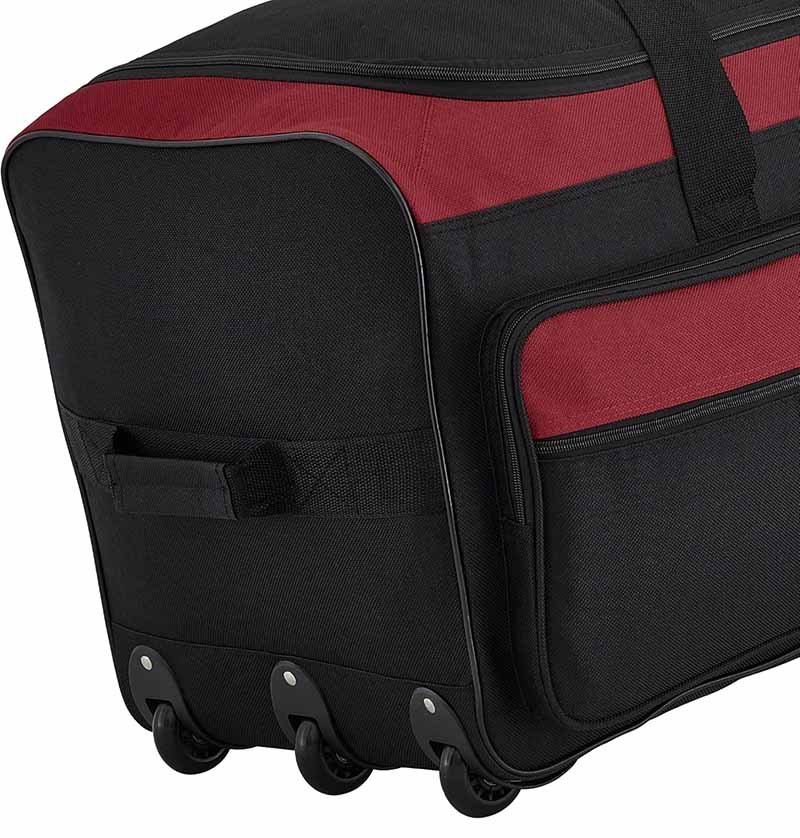
Noise is only the beginning. True product quality appears after repeated loading, long walking distances, and exposure to uneven terrain. Wheel durability determines whether luggage survives months—or fails after a single trip.
Durability depends on three main stresses:
- Mechanical load from packed weight
- Surface abrasion from ground contact
- Impact shock from obstacles and edges
Each stress interacts differently with PU and TPE materials.
How do cracks and deformation develop over time?
Wheel failure rarely happens suddenly. It usually begins with small surface wear, followed by material fatigue, then visible cracking or chunking.
Common luggage wheel failure sequence
| Stage | Physical Change | Customer Symptom |
|---|---|---|
| Early wear | Surface roughening | Slight noise increase |
| Mid fatigue | Minor deformation | Rolling feels uneven |
| Crack formation | Visible splits | Vibration or wobble |
| Material loss | Chunking or flat spots | Dragging or instability |
PU tends to delay crack formation because of stronger abrasion resistance. TPE may show deformation earlier under heavy or continuous load, especially if wheel diameter is small.
How do speed and load influence wheel lifespan?
Pulling speed and luggage weight significantly change stress levels. A heavily packed suitcase pulled quickly across rough pavement generates higher friction heat and impact force, accelerating material fatigue.
Load-related durability behavior
| Condition | PU Response | TPE Response |
|---|---|---|
| Light cabin load | Stable | Very comfortable |
| Medium travel load | Durable | Acceptable wear |
| Heavy checked load | Strong retention | Faster deformation risk |
| Long walking distance | Slower wear | Higher fatigue risk |
For checked luggage expected to carry 20–30 kg repeatedly, PU usually provides longer service life and fewer warranty claims.
How does terrain type change wear patterns?
Not all ground surfaces damage wheels equally. Wear increases dramatically when hard edges, debris, or rough textures are present.
Terrain-based durability comparison
| Terrain | Main Stress Type | Better Material Direction |
|---|---|---|
| Airport flooring | Low abrasion | Either |
| Smooth sidewalks | Moderate abrasion | PU advantage |
| Rough pavement | Impact + abrasion | Hybrid or PU |
| Cobblestones | Repeated shock | TPE comfort but faster wear |
| Gravel/debris | Cutting stress | PU resistance |
This explains why premium luggage for frequent international travel often prioritizes PU-dominant wheel systems or reinforced hybrids.
What Design Features Improve Rolling Performance?
Beyond material and terrain, mechanical engineering inside the wheel assembly strongly influences real-world performance. Two suitcases using the same PU compound can feel completely different depending on bearing quality, wheel size, and housing strength.
What role does bearing quality play in smooth rolling?
Bearings control friction and rotation stability. Low-precision bearings create drag, noise, and uneven motion, even if the wheel material is high quality.
Bearing performance levels in luggage wheels
| Bearing Level | Rolling Feel | Noise | Durability |
|---|---|---|---|
| Basic sleeve | Higher friction | Loud | Short lifespan |
| Standard ball bearing | Smooth | Moderate | Good |
| Precision ball bearing | Very smooth | Quiet | Long |
| Sealed precision bearing | Smooth + protected | Quietest | Longest |
Upgrading bearings is often the most effective single improvement for perceived rolling quality.
What wheel size works best for different travel bags?
Wheel diameter directly affects vibration frequency and obstacle handling. Larger wheels roll over gaps and debris more easily, reducing both noise and impact stress.
Wheel diameter vs user experience
| Diameter Range | Rolling Feel | Best Application |
|---|---|---|
| Small | More vibration | Compact cabin bags |
| Medium | Balanced | Standard luggage |
| Large | Smoothest | Premium or heavy luggage |
Increasing diameter slightly can dramatically improve comfort and durability without major cost change.
Why does wheel housing and frame stability matter?
Even perfect wheels fail if the housing flexes or loosens. Instability transfers vibration into the suitcase shell and accelerates wear on bearings and axles.
Key stability factors include:
- reinforced mounting plates
- thicker axle structures
- tight assembly tolerances
- impact-resistant plastic or metal housings
Strong housing design protects the entire rolling system, not just the wheel.
Are There Tests and Metrics for Wheel Quality?
Reliable luggage wheels are not judged by appearance alone. True performance is verified through controlled laboratory testing and long-distance simulation, designed to reproduce the stresses of real travel—continuous rolling, repeated impacts, temperature change, and heavy loading.
For brands selling in global markets, measurable testing is essential because:
- warranty costs often come from wheel failure, not fabric damage
- online reviews frequently mention noise, wobble, or breakage
- retailers increasingly request durability validation data before listing products
Professional wheel evaluation therefore focuses on three measurable areas:
- noise level
- abrasion and impact resistance
- long-distance rolling lifespan
Are noise level tests standardized?
Unlike electronics, luggage wheels do not follow one universal global noise standard. However, most quality-focused factories use controlled rolling sound comparison to ensure consistency between production batches.
Common wheel noise evaluation method
| Test Element | Typical Setup | What It Reveals |
|---|---|---|
| Rolling surface | Smooth tile or coated concrete | Baseline indoor noise |
| Load weight | 15–25 kg | Real travel condition |
| Pulling speed | Walking pace (~4 km/h) | Human-use realism |
| Distance | 20–50 meters repeated | Consistency of sound |
| Measurement | Decibel comparison or panel rating | Perceived loudness |
Customers rarely compare decibel numbers. They compare how the wheel feels and sounds beside another suitcase. That is why many brands rely on side-by-side rolling tests, not just instruments.
Are abrasion and impact tests required?
Yes—especially for mid-range and premium luggage. Abrasion and impact resistance determine whether a wheel survives sidewalk friction, stair edges, and debris contact.
Typical durability test categories
| Test Type | Simulation Purpose | Failure Sign |
|---|---|---|
| Abrasion drum test | Continuous ground friction | Surface wear or flattening |
| Drop impact test | Stair or curb collision | Cracking or hub damage |
| Load pressure test | Heavy packing stress | Permanent deformation |
| Temperature cycling | Hot/cold travel storage | Material brittleness or softening |
PU wheels generally perform better in abrasion and load tests, while TPE wheels often perform better in impact comfort and vibration damping.
For export markets, durability testing is one of the strongest ways to:
- reduce return rates
- strengthen distributor confidence
- justify premium pricing
Are long-distance rolling tests used to estimate lifespan?
Yes. Many factories simulate tens of kilometers of rolling distance to estimate service life before visible failure.
Example rolling endurance framework
| Parameter | Typical Range | Meaning for Real Use |
|---|---|---|
| Continuous rolling distance | 10–30 km | Multiple full trips |
| Load weight | 20–30 kg | Checked luggage stress |
| Surface variation | Smooth + rough sections | Mixed terrain reality |
| Failure checkpoint | Noise, wobble, crack | End of usable life |
While exact lifespan varies, endurance testing helps brands compare:
- PU vs TPE longevity
- bearing quality differences
- housing strength performance
This data becomes especially valuable when positioning products as:
- heavy-duty travel luggage
- premium silent-rolling suitcases
- long-warranty collections
How Do Brands Choose the Right Wheel Specification?
Selecting luggage wheels is ultimately a market positioning decision, not only a technical one. Different customer groups prioritize different outcomes:
- frequent travelers → durability and load strength
- casual travelers → quiet comfort
- fashion retail → smooth feel and aesthetics
- budget markets → cost efficiency
Balancing these priorities requires aligning material, structure, and testing level with the intended selling price.
Matching wheel design to travel frequency
| Travel Pattern | Recommended Wheel Direction | Reason |
|---|---|---|
| Occasional short trips | TPE or hybrid | Comfort and quiet feel |
| Regular business travel | PU or reinforced hybrid | Longer wear resistance |
| Heavy international travel | High-grade PU system | Maximum durability |
| Lightweight cabin luggage | Soft TPE design | Indoor smoothness priority |
This alignment prevents over-engineering low-cost products and under-engineering premium luggage.
Balancing cost, durability, and comfort
Wheel upgrades influence product cost less than many brands expect, yet they strongly influence customer satisfaction and reviews.
Cost-impact perspective
| Upgrade Choice | Cost Change | User Perception Gain |
|---|---|---|
| Better bearing precision | Low | Major smoothness improvement |
| Slightly larger wheel size | Low–medium | Noticeably quieter rolling |
| PU → hybrid tread | Medium | Comfort + durability balance |
| Reinforced housing | Medium | Reduced warranty risk |
Because wheels directly affect daily user experience, small investments here often deliver the highest return in perceived quality.
Request Custom Rolling Travel Bags from Szoneier
Designing reliable rolling luggage requires more than choosing fabric or color. It requires careful control of wheel material, bearing precision, housing strength, and durability testing—all working together to deliver a smooth, quiet, long-lasting travel experience.
With over 18 years of manufacturing experience, Szoneier supports global brands through:
- professional guidance on PU, TPE, and hybrid wheel systems
- engineering support for noise reduction and durability improvement
- rapid prototyping and real-condition rolling tests
- stable large-scale production with strict quality control
- flexible OEM, private label, and custom design solutions
Whether you are developing:
- premium silent-rolling luggage
- durable checked travel bags
- lightweight fashion cabin suitcases
the right wheel engineering from the beginning can prevent costly failures later.
Contact Szoneier today to request samples, discuss specifications, or receive a quotation for your custom rolling travel bag project. A smoother journey for your customers starts with the right wheels.