Modern travelers no longer choose travel bags only because they need space for clothes. They choose bags because they want smoother airport movement, better packing control, easier access to electronics, cleaner organization, stronger materials, safer storage, and a product that fits their real lifestyle. A weekend traveler may want a soft duffle that works for road trips and flights. A digital worker may need a backpack with a laptop sleeve, trolley sleeve, hidden passport pocket, and charger storage. A family traveler may care more about washable lining, large openings, and separate wet storage. A business traveler may want a clean, low-profile bag that looks professional but still holds everything needed for two days away.
Modern travel bag trends are shaped by lightweight mobility, versatile styles, durable materials, useful smart features, cleaner design, and better manufacturing execution. Consumers want travel bags that are easier to carry, better organized, attractive, strong under repeated use, and suitable for multiple travel scenarios.
For brands, retailers, Amazon sellers, Shopify brands, importers, and promotional buyers, the question is not simply “what is trending?” The better question is: “Which travel bag trends can become real products that customers use often, review well, reorder, and recommend?” That is where material selection, product structure, sample development, sewing details, quality control, packaging, and export delivery become important. A travel bag is not just a shape. It is a small mobile system. When that system works, consumers feel the difference every time they pack, carry, open, and unpack it.
Szoneier is a Shenzhen-based custom bags and soft goods OEM/ODM manufacturer with 18+ years of manufacturing experience, supporting global buyers with material sourcing, sampling, sewing production coordination, quality inspection, packaging, and export delivery for custom bags and soft goods.
What Do Modern Travelers Want From Travel Bags?
Modern travelers want bags that make movement easier, not harder. They look for lightweight materials, clear organization, comfortable carrying, durable construction, and flexible use across short trips, flights, work, fitness, and weekend travel. A good travel bag now needs to solve real-life friction: messy packing, tired shoulders, weak zippers, poor access, and products that do not match modern travel routines.
How Are Travel Habits Changing?
Travel is no longer limited to long holidays or formal business trips. Many consumers now take shorter, more frequent, and more flexible trips. A customer may use the same bag for a two-night city break, a gym session, a business meeting, a road trip, or a flight with strict cabin limits. This change has made hybrid travel bags more attractive than single-purpose products.
For brands, this means a travel bag must be designed around movement. A modern buyer often expects one product to carry clothing, electronics, toiletries, chargers, shoes, documents, and small daily items without feeling messy. This is why bags with laptop sleeves, trolley sleeves, quick-access pockets, wet/dry compartments, and convertible carrying options have become more practical.
The most successful travel bags usually start with a clear user scenario. A digital commuter needs a different structure from a weekend road traveler. A family traveler needs easier cleaning and larger openings. A business traveler needs a cleaner exterior and better document protection. When a brand understands the user’s trip type, the design becomes sharper and easier to sell.
What Pain Points Drive Bag Choices?
Most consumers do not replace a travel bag simply because a new one looks nice. They replace it because the old one failed. Common complaints include heavy weight, shoulder discomfort, broken zippers, poor pocket layout, hard-to-clean lining, weak handles, unstable shape, and lack of space for electronics or shoes. These pain points directly influence product reviews and repeat purchases.
A travel bag must perform under load. An empty bag may look good in product photos, but the real test starts when it carries 6–12 kg of clothing, electronics, bottles, and daily items. If the handle stitching is weak, the zipper catches at the corner, or the shoulder pad slips during walking, the customer quickly loses trust.
For custom travel bag development, pain points should be treated as design requirements. If users complain about messy packing, add visible compartment logic. If they complain about shoulder strain, improve strap width, foam, and anchor points. If they travel with shoes or wet clothing, consider a separate lower compartment or waterproof pocket lining.
Are Convenience And Versatility Essential?
Convenience and versatility are now essential because consumers want fewer bags that can handle more situations. A travel backpack may need to work as a carry-on, laptop bag, weekend bag, and commuting bag. A duffle may need to work for the gym, short flights, car travel, and sports weekends. This does not mean every bag should have every feature. It means each feature must earn its place.
Over-designed bags can become heavy, costly, and confusing. A smart product usually uses selective versatility. One luggage sleeve can make a backpack more travel-friendly. One expandable zipper can increase packing capacity without changing the entire shape. One detachable shoulder strap can turn a weekender into a more flexible bag.
For B2B buyers, versatile products can reduce inventory risk. Instead of developing too many narrow SKUs, a brand can build a small collection of well-engineered bags with different colors, sizes, or material versions. This helps simplify product photography, advertising, packaging, warehouse planning, and customer education.
| Consumer Need | Practical Bag Feature | Common Specification Range | Why It Matters |
|---|---|---|---|
| Short-trip packing | Main compartment | 25L–45L | Fits 1–3 day travel without a suitcase |
| Laptop protection | Padded sleeve | 13–17 inch | Serves business and digital users |
| Easy airport use | Trolley sleeve | 18–24 cm wide opening | Helps attach bag to rolling luggage |
| Better comfort | Shoulder strap width | 3.8–5 cm | Reduces pressure when loaded |
| Quick access | Front zipper pocket | 18–28 cm opening | Stores passport, phone, tickets, charger |
| Wet/dry storage | Coated pocket lining | TPU, PVC, PEVA, or coated polyester | Separates shoes, cosmetics, swimwear, or damp items |
Do Consumers Prefer One Bag For Many Scenarios?
Many consumers do prefer one bag for multiple scenarios, especially in urban, e-commerce, and lifestyle markets. The reason is practical. People have limited storage space, travel budgets, and time to switch between products. A bag that works for commuting, weekend travel, gym use, and flights has a higher chance of becoming part of the user’s daily routine.
However, “one bag for everything” must be handled carefully. A product that tries to serve every customer may end up serving no one well. A business traveler may reject a bag that looks too sporty. An outdoor user may dislike a bag that feels too delicate. A light packer may not want a bulky 50L product. A family traveler may need more washable materials than a fashion traveler.
A better approach is to define one primary use and two secondary uses. For example, a 35L travel backpack can be primarily designed for short flights, while also supporting commuting and weekend trips. A 40L duffle can be designed for gym and weekend travel, while also working for road trips. This keeps the product focused but still versatile.
Which Travel Bag Styles Are Growing?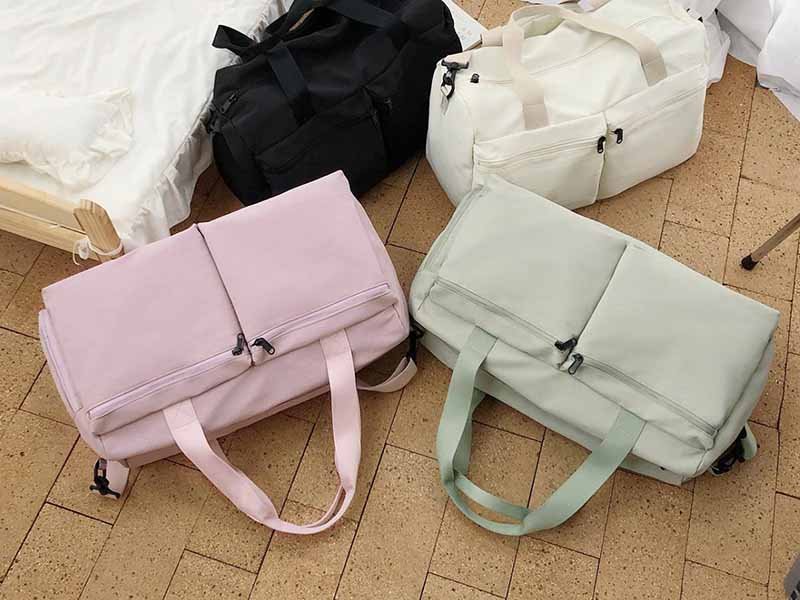
The strongest travel bag styles are those that match flexible travel behavior: travel backpacks, duffle bags, weekenders, garment duffles, travel totes, toiletry bags, and packing organizers. Consumers want soft, practical, cabin-friendly, and easy-to-carry products for short trips and mixed-use travel. Growth is not only about shape; it is about how well each style solves a specific travel problem.
Which Bags Fit Short Trips?
Short trips are one of the biggest reasons soft travel bags remain popular. For one- to three-day travel, many consumers do not want a full suitcase. They prefer a weekender, duffle, travel backpack, or large tote because these bags are easier to carry, easier to store, and more flexible in cars, trains, buses, and cabins.
The ideal short-trip bag usually sits between 25L and 45L. Smaller than that, it may feel like a daily bag. Larger than that, it may become uncomfortable or exceed common cabin-friendly expectations. A wide opening is important because short-trip users often pack quickly and want to see everything at once. A separate shoe pocket, wet pocket, or side zipper compartment can add strong practical value.
From a manufacturing view, short-trip bags need a good balance between soft packing and stable shape. If the bag is too soft, it collapses in photos and looks cheap. If it is too structured, it may become heavy and harder to store. The best design often uses reinforced bottom panels, medium-weight lining, and controlled piping or binding.
Are Duffle Bags Still Relevant?
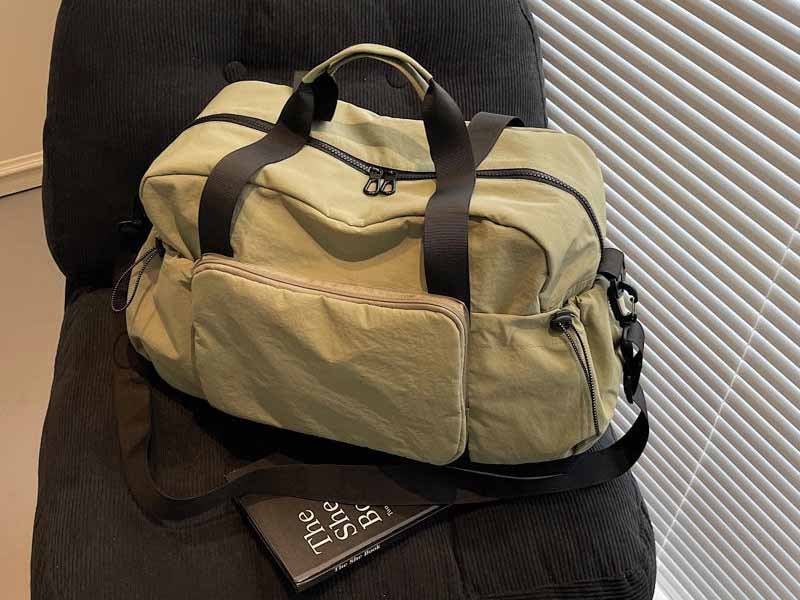
Duffle bags are still highly relevant because they offer large capacity, flexible packing, and casual movement. They are especially useful for gym travel, weekend trips, sports activities, road travel, and informal business-leisure trips. A duffle can be carried by hand, worn on the shoulder, placed in a car trunk, stored flat, or used as a backup travel bag.
The weakness of many duffle bags is not the category itself. It is poor construction. Handles, shoulder strap anchors, zipper ends, and bottom seams take heavy stress when the bag is full. If these points are not reinforced, the bag may fail even when the outer fabric looks strong.
A well-built duffle should include bartack stitching at stress points, strong webbing, smooth zippers, reinforced side panels, and durable lining. For higher-end products, leather trims, metal hardware, shaped piping, custom pullers, and branded lining can raise perceived value. For sports and outdoor products, water-resistant coating, rubberized logo patches, and easy-clean interiors may be more important than decoration.
How Are Travel Backpacks Evolving?
Travel backpacks are becoming soft suitcases for people who want hands-free movement. Modern designs often include clamshell openings, laptop compartments, hidden security pockets, breathable back panels, luggage sleeves, bottle pockets, cable pockets, and compression areas. This makes the backpack useful for flights, city travel, commuting, and digital work.
The key difference between a normal backpack and a travel backpack is packing logic. A school-style backpack usually has a vertical opening and simple compartments. A travel backpack often opens wider, sometimes like a suitcase, so users can pack clothing more neatly. It may also include a separate laptop area, quick-access pocket, and internal mesh dividers.
Comfort is the main technical challenge. A backpack may look premium but feel uncomfortable when loaded. Shoulder strap foam density, back-panel padding, air mesh, strap angle, chest strap placement, and weight distribution all affect the experience. For a 30L–45L travel backpack, testing with realistic load is more useful than checking the empty bag on a table.
| Travel Bag Style | Common Capacity Range | Best Use Case | Key Structure Details |
|---|---|---|---|
| Travel backpack | 25L–45L | Flights, commuting, digital work | Laptop sleeve, clamshell opening, trolley sleeve |
| Duffle bag | 30L–60L | Gym, weekend, sports, road trips | Reinforced handles, shoulder strap, shoe pocket |
| Weekender bag | 25L–45L | Lifestyle travel, boutique brands | Wide opening, stable base, premium trims |
| Garment duffle | 35L–50L | Business, weddings, formal travel | Suit section, hook system, wrinkle-reducing layout |
| Travel tote | 15L–30L | Personal item, cabin bag, daily travel | Zipper closure, inner pockets, luggage sleeve |
| Toiletry bag | 2L–8L | Cosmetics, grooming, accessories | Waterproof lining, hanging hook, elastic loops |
Which Styles Suit Business And Leisure Travel?
Business-leisure travel needs bags that look clean but function hard. A product may need to carry a laptop, shirt, charger, notebook, toiletries, and travel documents while still looking suitable in a hotel, airport lounge, office, or meeting room. This is why minimalist travel backpacks, structured weekenders, garment duffles, and soft briefcase-backpack hybrids are gaining attention.
Business users usually care about organization, speed, and appearance. They need quick access to laptops, passports, chargers, and documents. Leisure users care more about comfort, capacity, and flexible packing. A strong business-leisure bag must bridge both worlds without looking too technical or too casual.
Design details matter here. Matte hardware, clean zipper lines, muted colors, subtle logos, structured panels, and smooth lining can create a more professional look. But function cannot be sacrificed. A beautiful bag with poor compartments will not satisfy a frequent traveler. A good business-leisure travel bag should feel calm outside and highly organized inside.
What Materials Are Consumers Choosing?
Consumers are choosing materials based on weight, durability, appearance, sustainability, water resistance, and price. Nylon, polyester, Oxford fabric, canvas, PU, leather, RPET, and coated fabrics each serve different travel needs. The best material is not always the most expensive one. It is the material that matches the bag’s use, target market, carrying load, brand image, and production budget.
Which Fabrics Balance Weight And Strength?
Nylon and polyester are two of the most practical materials for travel bags because they can provide durability without excessive weight. Polyester is widely used for mid-market bags because it is cost-effective, color-stable, and easy to scale. Nylon is often used for higher-performance or premium travel bags because it usually offers better abrasion resistance and a smoother hand feel.
Oxford fabric is common in duffle bags, backpacks, and utility travel bags. It can be made from polyester or nylon yarns and is usually selected when buyers want a stronger woven texture. Common choices include 300D, 600D, 900D, and 1000D, depending on the target price and performance need. Higher denier can improve strength, but it may also increase weight and cost.
The fabric must also match the sewing structure. A thick coated fabric may need stronger needles and adjusted stitch density. A lightweight nylon may require careful tension control to avoid puckering. A canvas bag may need stronger seam allowance and edge finishing. Material selection is not only about appearance; it affects production efficiency, quality stability, and user experience.
Are Sustainable Materials Becoming Standard?
Sustainable materials are becoming more important, but they are not automatically standard for every travel bag. Many consumers like recycled and lower-impact materials, but brands still need to balance sustainability with cost, durability, color availability, MOQ, and documentation. A recycled fabric that looks good but fails in abrasion, coating, or colorfastness can still damage customer trust.
RPET polyester is one of the more practical options for travel bags because it can be used in backpacks, duffles, totes, pouches, linings, and packing organizers. Recycled nylon, organic cotton, water-based PU coating, FSC paper packaging, and reduced plastic packaging can also support a stronger sustainability story.
Brands should avoid vague claims. Instead of simply saying “eco-friendly travel bag,” it is better to specify material composition, recycled content, packaging choice, or available documentation. For B2B buyers, sustainability should be confirmed before sampling because it affects fabric sourcing, MOQ, price, testing, labeling, and lead time.
How Do Nylon, Polyester, Canvas, And Leather Compare?
Nylon feels modern, lightweight, and performance-driven. It works well for travel backpacks, technical duffles, foldable bags, and premium lightweight products. Polyester is more cost-friendly and widely used for commercial travel bags, promotional bags, and private label collections. Canvas gives a natural and casual look, making it suitable for weekenders, totes, and lifestyle travel bags. Leather or leather trims create a more premium and business-oriented image.
Each material has trade-offs. Nylon may cost more than polyester. Polyester may look ordinary if the texture or finish is too basic. Canvas can be heavier and may absorb dirt if untreated. Leather increases perceived value but also adds cost, weight, and care requirements. PU can create a leather-like look at a lower price, but quality varies greatly depending on thickness, backing, surface treatment, and flexibility.
Many successful travel bags use mixed materials. A polyester duffle with PU trims can look more refined. A canvas weekender with leather handles can feel more premium. A nylon backpack with rubberized pullers can feel modern and technical. The right combination often matters more than one material alone.
| Material | Common Use | Typical Strength | Practical Watch Point |
|---|---|---|---|
| Polyester | Mass-market backpacks, duffles, totes | Cost-effective, scalable, stable colors | Needs better texture or trims for premium positioning |
| Nylon | Travel backpacks, foldable bags, outdoor bags | Lightweight, abrasion-resistant, smooth feel | Higher material cost than basic polyester |
| Oxford fabric | Duffles, utility bags, backpacks | Strong woven structure, good durability | Coating and denier affect sewing and weight |
| Canvas | Weekenders, totes, lifestyle bags | Natural look, strong casual appeal | Heavier and may need anti-dirt treatment |
| PU / leather trim | Premium details, handles, logo patches | Improves structure and perceived value | Quality consistency and care requirements matter |
| RPET | Sustainable bags, linings, pouches | Good eco-positioning and broad use | Needs clear documentation and quality checking |
What Material Choices Affect Cost And Durability?
Cost and durability are affected by the full material system, not just the outer fabric. Fabric type, denier, coating, lining, foam, webbing, zipper, hardware, logo process, and reinforcement all influence final performance. A bag made with strong outer fabric can still fail if the zipper is weak or the strap anchor is poorly stitched.
A travel bag must be judged as a load-bearing product. For example, a 40L duffle may carry shoes, clothes, toiletries, bottles, and electronics. The bottom panel, side seams, handles, and shoulder strap anchors must all support that weight. If a buyer only upgrades the outer fabric but uses weak webbing or low-quality zippers, the real durability problem remains.
Material choice also affects MOQ and lead time. Stock fabrics are faster and more flexible for trial orders. Custom colors, special coatings, recycled fabrics, and premium hardware may require higher MOQ or longer sourcing time. Before sampling, buyers should confirm whether the goal is fast launch, premium positioning, sustainability, lower price, or long-term product-line development.
How Are Smart Features Changing Travel Bags?
Smart features are changing travel bags by adding security, tech organization, and travel convenience. Useful features include laptop protection, RFID pockets, hidden passport storage, tracker pockets, USB cable access, lockable zipper pullers, and anti-theft pocket placement. The best smart travel bags do not overload users with gadgets. They quietly solve real problems while keeping the bag simple, safe, and easy to manufacture.
Which Smart Features Are Useful?
The most useful smart features are practical, easy to understand, and low-risk in daily use. A padded laptop sleeve protects electronics. A hidden back pocket protects passports and wallets. A power bank pocket with cable access helps users charge devices. A tracker pocket gives peace of mind. RFID-blocking pockets can support business and international travel users.
Not every smart feature needs electronics. In many cases, “smart organization” is more valuable than “smart hardware.” A well-placed charger pocket, elastic cable loop, quick-access ticket pocket, and separate electronics section can feel smarter than a complicated built-in device. These features are easier to explain on product pages and less likely to create after-sales problems.
For custom brands, the best approach is to design features around actual user behavior. A digital nomad may need laptop and cable organization. A city traveler may need hidden pockets. A family traveler may need wet/dry separation. A business traveler may need document protection and a clean exterior. Smart design starts with practical use, not feature stacking.
Do Travelers Need Anti-Theft Functions?
Travelers do not always need heavy anti-theft systems, but many appreciate discreet security. Airports, train stations, hotels, hostels, conferences, and crowded tourist areas make people more aware of wallets, passports, phones, and laptops. A hidden pocket, rear-opening laptop compartment, lockable zipper puller, or RFID pocket can make the user feel more confident.
The anti-theft level should match the product type. A travel backpack may need a hidden back pocket and lockable zipper pullers. A crossbody travel bag may benefit from RFID material and slash-resistant panels. A weekender may only need an internal zipper pocket. A tote may need a full zipper closure instead of an open top.
Brands should be careful with claims. It is safer to say “hidden security pocket” or “lockable zipper pullers” if those features are present. Strong claims like “anti-theft” should be supported by actual material and structure. Over-promising can create customer complaints, especially if the product is used in real travel conditions.
Are RFID Pockets Still Valuable?
RFID pockets are still valuable for certain travel products, especially passport holders, travel backpacks, crossbody bags, business bags, and anti-theft collections. They may not be the only reason a customer buys a bag, but they can increase perceived security when combined with good pocket layout and clear product communication.
The key is placement. RFID-blocking material should be used where cards or passports are actually stored. If the pocket is too small, hidden in an awkward position, or not clearly explained, the feature loses value. Brands should also consider whether the target customer understands RFID protection. In some markets, it is a meaningful selling point. In others, comfort, capacity, and design may matter more.
From a production standpoint, RFID material adds cost and requires confirmation during sampling. It may change pocket thickness, sewing handling, and labeling. Buyers should decide early whether RFID is a core feature, an optional upgrade, or unnecessary for the product’s target price point.
How Can Brands Avoid Over-Designed Bags?
Brands can avoid over-designed bags by separating must-have features from nice-to-have features. A travel bag with too many pockets, panels, zippers, straps, and electronic add-ons can become heavy, expensive, and hard to use. Consumers like function, but they do not want to read a manual before packing a bag.
A simple feature filter helps. Does the feature solve a common travel problem? Can the customer understand it in one product photo? Does it increase production risk? Does it fit the target price? Does it make the bag heavier? If the feature does not clearly improve the user experience, it may be better removed or reserved for a premium version.
For most soft travel bags, reliable structure beats excessive features. Strong zippers, comfortable straps, good compartment layout, stable stitching, and clean finishing are still more important than trendy add-ons. Smart design should make the bag easier to use, not harder to understand.
How Does Design Influence Travel Bag Sales?
Design influences travel bag sales by shaping first impressions, usability, perceived value, and brand identity. Consumers notice silhouette, color, material texture, logo placement, pocket layout, and carrying comfort before they read detailed specifications. A good travel bag must look attractive online, feel practical in hand, and perform well during real trips. Strong design is not decoration; it is sales logic.
Is Minimal Design Becoming Stronger?
Minimal design is becoming stronger because it works across more travel situations. A clean black, navy, gray, olive, beige, or brown bag can fit airports, offices, hotels, gyms, and weekend trips. This makes minimalist bags attractive to business-leisure travelers, DTC lifestyle brands, and consumers who want fewer but better products.
Minimal design does not mean plain design. It means controlled details. A bag may use hidden pockets, matte hardware, tonal logos, smooth zipper lines, refined webbing, and clean panel transitions instead of loud decoration. The result feels more premium and easier to style.
However, minimal design exposes manufacturing quality. When there are fewer decorative elements, uneven stitching, poor zipper alignment, wrinkled panels, and cheap fabric become more obvious. For custom manufacturing, minimalist travel bags require accurate patterns, clean sewing, stable material handling, and careful logo placement.
Which Colors And Finishes Attract Buyers?
Color choices should match market positioning. Black remains the safest choice because it is practical, professional, and easy to match. Navy, charcoal, gray, olive, khaki, taupe, beige, and brown work well for travel and lifestyle products. Brighter colors can work for sports, beach, outdoor, youth, promotional, or family travel categories.
Finish can change perceived value as much as color. Matte nylon feels technical and modern. Heavy canvas feels natural and casual. PU trims add structure and a premium look. Rubberized pullers feel sporty. Metal hardware can look refined, but it may add weight and cost. A basic fabric can look better with the right trim system, zipper color, webbing, and lining.
Buyers should also think about dirt visibility, photography, inventory risk, and color matching. A light beige weekender may look beautiful online but show dirt more easily. A black bag is safe but less distinctive. A signature color can help brand recognition but may require more careful market testing.
How Do Logos Affect Brand Value?
Logos turn a functional bag into a branded product, but the logo method must match the bag. A premium weekender may use embossed leather patch, metal plate, woven label, or subtle embroidery. A sports duffle may use rubber patch, screen print, or heat transfer. A minimalist travel backpack may use tonal embroidery or a small woven label.
A poor logo process can weaken the whole product. A cheap-looking print on a premium material can reduce perceived value. A large logo on a business travel bag may feel too loud. A heavy metal logo on a lightweight backpack may feel unnecessary. Good logo placement should support the product’s personality.
Logo development should happen during sampling, not after production starts. Buyers should provide vector artwork, Pantone colors, logo size, placement, and preferred process. The manufacturer should test whether the logo works on curved panels, coated fabric, thick seams, or padded areas. A good logo is not only a design decision; it is also a production decision.
| Logo Process | Best For | Typical Visual Effect | Practical Note |
|---|---|---|---|
| Screen print | Promotional bags, simple totes, low-cost projects | Flat and clear | Best on smooth surfaces |
| Embroidery | Backpacks, canvas bags, premium casual bags | Textured and durable | Not ideal for very tiny details |
| Woven label | Travel backpacks, pouches, organizers | Clean brand detail | Easy to apply across product lines |
| Rubber patch | Sports, outdoor, technical travel bags | Modern and durable look | Mold or tooling may add cost |
| Debossed leather patch | Weekenders, leather-trimmed bags | Premium and subtle | Requires stable leather or PU quality |
| Metal logo plate | Premium travel bags | High perceived value | Adds weight and must be securely fixed |
Does Packaging Improve Customer Perception?
Packaging strongly affects customer perception, especially for e-commerce, retail, gifting, and premium travel products. A customer may first interact with the carton, polybag, dust bag, hangtag, insert card, barcode label, or branded wrap before touching the bag itself. Good packaging makes the product feel more organized, intentional, and trustworthy.
Packaging also protects the bag. A structured weekender can arrive crushed if packed poorly. A light-colored bag can arrive dirty without dust protection. A backpack can lose shape if compressed too tightly. A zipper puller or metal logo can scratch nearby material if not protected. Packaging is part of quality control, not just marketing.
For B2B buyers, packaging must match the sales channel. Amazon products may require barcode labels, carton labels, and FBA-friendly packing. Retail products may need hangtags, display-ready polybags, or branded inserts. Premium DTC brands may prefer dust bags, tissue paper, and cleaner unboxing. The right packaging reduces complaints and improves perceived product value.
How Can Brands Turn Trends Into Better Bags?
Brands can turn travel bag trends into better products by connecting consumer needs with manufacturing reality. Before sampling, buyers should confirm the target user, trip scenario, size, capacity, material, structure, logo method, packaging, quality standard, target price, order quantity, and delivery market. Good travel bags are not trend copies. They are trend-informed products engineered for real use and repeat production.
What Should Buyers Confirm Before Sampling?
Before sampling, buyers should confirm the product brief clearly. A useful brief includes target user, travel scenario, product size, capacity, material direction, compartment needs, logo artwork, color, packaging, quantity, destination market, and target price. Without these details, the first sample often becomes a guess instead of a serious development step.
For travel bags, size and capacity are especially important. A 30L backpack and a 45L backpack may look similar in concept, but they serve different users. A duffle with a shoe compartment needs a different pattern structure from a simple open duffle. A business weekender with leather trim requires different material control from a sports gym bag.
Buyers should also provide reference photos, tech packs, sample comments, or competitor links if available. A good manufacturer can then evaluate material, structure, sewing difficulty, MOQ, logo feasibility, packaging, and cost drivers before sampling. This reduces revision cycles and helps the final sample move closer to bulk production.
Which Details Affect Production Cost?
Production cost is affected by size, fabric, lining, padding, zipper quantity, hardware, webbing, pocket structure, reinforcement, logo process, packaging, testing, MOQ, and sewing complexity. A travel bag with many panels and compartments will cost more than a simple open duffle, even if both use similar outer fabric.
Buyers should identify which details truly create customer value. For example, upgrading the zipper, shoulder strap, handle reinforcement, and lining may improve user experience more than adding decorative panels. If the product is price-sensitive, the manufacturer can simplify pocket structure, reduce hardware, use stock fabric, or adjust logo process. If the product is premium, cost should be allocated to touchpoints the customer can see and feel.
MOQ also affects cost. Stock materials usually support faster and more flexible trial orders. Custom-dyed fabrics, special coatings, molded rubber patches, custom hardware, and unique packaging may require higher MOQ or longer lead time. Clear cost priorities help avoid unrealistic expectations during quotation.
How Does QC Protect Brand Reputation?
Quality control protects brand reputation by preventing avoidable defects from reaching customers. For travel bags, defects can quickly become serious complaints because the product is used under weight, movement, friction, and weather exposure. A loose strap, broken zipper, dirty lining, weak seam, wrong size, or poor logo placement can damage reviews and reduce repeat purchases.
A practical QC process should cover material checking, accessory checking, pre-production sample approval, cutting inspection, in-line sewing inspection, semi-finished inspection, final inspection, packaging inspection, and shipment preparation. Key checkpoints include dimensions, color, fabric surface, lining, zipper smoothness, hardware, stitching, handle strength, pocket position, logo accuracy, cleanliness, quantity, carton marks, and barcode labels.
For travel bags, stress points deserve special attention. Handles, shoulder strap anchors, zipper ends, bottom corners, side seams, and trolley sleeves should be reviewed carefully. These areas often determine whether the bag survives real use.
| QC Stage | What To Check | Common Risk | Why It Matters |
|---|---|---|---|
| Material inspection | Fabric color, coating, thickness, stains | Color difference, weak coating | Prevents visible defects before cutting |
| Accessory inspection | Zippers, buckles, webbing, hardware | Poor zipper movement, weak buckle | Protects user experience and safety |
| Pre-production sample | Size, structure, logo, packing method | Bulk not matching approved sample | Sets the production standard |
| In-line inspection | Stitching, seam allowance, pocket placement | Mistakes repeated across batch | Finds issues before final assembly |
| Final inspection | Dimensions, appearance, function, cleanliness | Defective finished goods | Reduces returns and complaints |
| Packaging check | Polybag, label, carton, barcode, quantity | Wrong labels or damaged packing | Protects shipment and channel compliance |
How Can Manufacturers Support Long-Term Product Lines?
Manufacturers support long-term product lines by helping brands build consistent material systems, color systems, logo methods, structure standards, packaging rules, and QC expectations. A brand should not treat every travel bag as an isolated project. Stronger results often come from developing a coordinated product family.
For example, a brand may start with one travel backpack, then add a duffle, toiletry bag, packing cube, travel tote, and shoe bag using the same fabric, lining, logo method, color palette, and packaging style. This makes the collection easier to recognize and easier to expand. It also helps reduce repeated development time.
Long-term product-line thinking benefits both sales and production. The brand can create bundles, seasonal colors, Amazon variations, retail displays, and DTC collections. The manufacturer can better understand the brand’s standards, preferred materials, packaging needs, and quality expectations. Over time, this creates smoother sampling, more stable bulk production, and better repeat-order efficiency.
A reliable OEM/ODM travel bag project is not just about making one good sample. It is about turning that sample into repeatable production, then turning one product into a stronger travel collection. For serious buyers, this is where supplier selection becomes a strategic decision, not only a price comparison. A factory-based partner with sampling, material sourcing, sewing coordination, quality inspection, packaging, and export delivery support can reduce development risk from first concept to repeat bulk order.
Conclusion: Better Travel Bags Start With Real User Problems
Travel bag trends are useful only when they lead to better products. Lightweight materials matter because travelers carry bags longer. Better compartments matter because people travel with electronics, cosmetics, documents, chargers, and clothing in the same bag. Sustainable materials matter when they are backed by real sourcing and quality control. Smart features matter when they solve practical problems. Minimal design matters when it fits daily life, business travel, airports, hotels, and weekend movement.
For brands and B2B buyers, the opportunity is clear: modern consumers are not asking for more complicated bags. They are asking for travel bags that feel easier, smarter, stronger, cleaner, and more aligned with how they actually move.
If you are developing a custom travel backpack, duffle bag, weekender, toiletry bag, garment bag, packing organizer, travel tote, or full travel bag collection, Szoneier can support your project from idea to production. Our team can help with material selection, structure development, sample making, logo customization, packaging planning, quality inspection, and export delivery.
Send your product photo, sketch, tech pack, logo file, target quantity, preferred material, and destination market to Szoneier. We can review your custom travel bag project and help turn modern consumer trends into production-ready bags for your brand.