 Skip to content
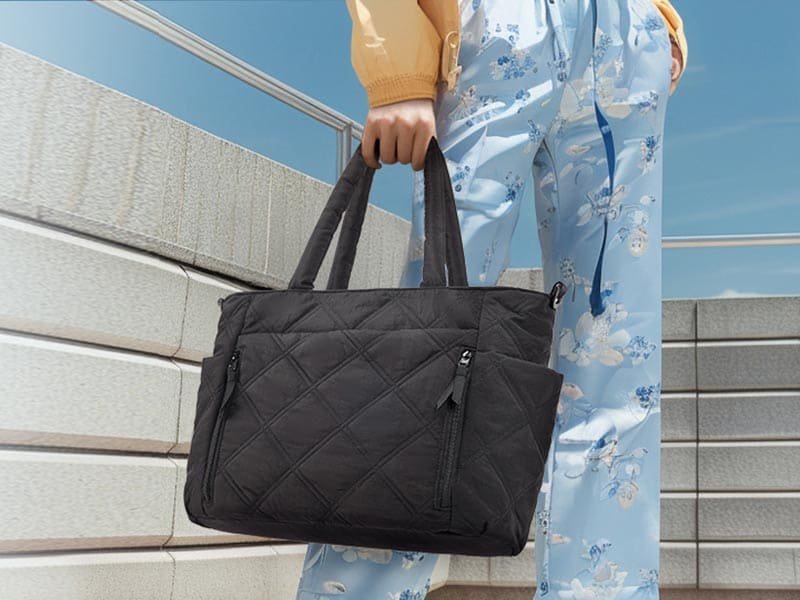
In today’s market, a tote bag with a secure zipper elevates a simple accessory into a premium product—keeping contents safe, extending functionality, and satisfying consumer demand for both style and security. But achieving that perfect balance of form and function isn’t accidental; it requires careful planning, precise material choice, and meticulous assembly.
To manufacture a high-quality zippered tote bag, begin by selecting durable fabrics (e.g., 600D polyester, canvas, neoprene) and robust zipper systems (metal or heavy‐duty coil). Draft accurate patterns with allowance for seams and zipper tape, prepare and baste the zipper into the bag’s opening, assemble the body with reinforced stress points, and conduct rigorous QC checks (tensile, cycle tests). Proper packaging and shipping complete the cycle for client delivery.
What Materials and Tools Are Needed to Manufacture a Zippered Tote Bag?
To craft a durable zippered tote, you need a sturdy outer fabric (e.g., 600D polyester, 16-oz canvas, or neoprene), a smooth lining (210D/420D nylon taffeta or cotton canvas), fusible or non-woven interfacing (200–300 g/m²), heavy-duty webbing (30–50 mm wide, 1 000 N breaking strength), and zippers (metal mold, coil, or plastic molded rated for 20 000+ cycles). Essential tools include industrial lockstitch machines with zipper feet, long-arm tables, edge guides, bias-tape binders, and heat-press or irons for fusing.
The foundation of a premium zippered tote bag lies in material selection and the right toolkit. At Szoneier Leather, we source from vetted mills offering:
Outer Fabrics
- 600D Polyester: Offers ≥ 40 000 Martindale rubs of abrasion resistance; PU-coated variants deliver 1 500 mm H₂O waterproofing. Cost: $3–$6 per yard.
- 16-oz Waxed Canvas: Natural cotton canvas treated with wax for 1 200+ mm H₂O hydrostatic head; develops attractive weathered patina. Cost: $8–$12 per yard.
- Neoprene (3–5 mm): Stretchy, insulating, machine-washable; ideal for fashion lines. Cost: $10–$15 per yard.
Lining & Structure
- 210D/420D Nylon Taffeta: Lightweight yet tear-resistant (20 N tear strength), available in branded colors. Cost: $2–$4 per yard.
- 8-oz Cotton Canvas: Soft hand, eco-friendly; ideal for natural-fiber collections. Cost: $5–$8 per yard.
- Interfacing:
- Fusible: 200–300 g/m² for body stability.
- Non-Woven: 100–150 g/m² for light structure.
Hardware & Reinforcements
Zippers:
Type Cycle Rating Tape Width Unit Cost Application Metal Mold 30 000 8–10 mm $2–$4 Luxury totes, leather bags Nylon Coil 25 000 5–7 mm $1–$2 Mid-range retail Plastic Molded 20 000 10–12 mm $1.5–$3 Outdoor, heavy-duty Webbing & Straps: 30–50 mm polyester or cotton webbing with 1 000 N+ breaking strength.
Reinforcement Patches: 400D nylon or leather under handle and zipper ends to prevent tearing.
Essential Tools & Equipment
- Industrial Lockstitch Machines: 1 500–2 000 SPM, with zipper and overedge attachments.
- Long-Arm Tables: Provide support for large zipper installations, preventing misalignment.
- Edge Guides & Binder Attachments: For applying piping or bias-tape finishes.
- Heat Press / Ironing Station: For fusing interfacing at 120–140 °C and flattening seams.
- Cutting Tools: Manual clicker presses or CNC cutters for precise pattern shapes.
- Measuring & Marking: Steel rulers, chalk rollers, digital thickness gauges (±0.1 mm accuracy).
Workflow Considerations
- Material Testing: Incoming fabrics undergo tensile (≥ 400 N) and tear (≥ 40 N) tests.
- Sample Kits: Maintain swatch libraries of each material and hardware for rapid prototype selection.
- Inventory Management: Track batch codes, ensuring consistency across production runs.
Investing in quality materials and specialized equipment not only reduces defects but elevates the perceived value of the tote—ensuring end users can rely on both durability and style.
Which Fabrics and Zipper Types Suit Tote Bag Production?
Choose fabrics based on intended use and margin goals: 600D polyester and waxed canvas for everyday durability, neoprene for stretch and fashion lines, and highdenier nylon for active/outdoor totes. Match with corresponding zipper types: metal mold for luxury, coil for mid-range, and plastic molded for rugged designs.
Choosing the right fabric-zipper combination is pivotal to a tote bag’s performance, aesthetics, and cost. Let’s explore the most popular options, their characteristics, and real-world applications.
1. Fabric Choices
| Fabric Type | Key Properties | Typical Uses | Cost per Yard (USD) |
|---|---|---|---|
| 600D Polyester | Abrasion ≥40K Martindale; PU-coated water repellency | Everyday totes; promotional bags | $3–$6 |
| 16-oz Waxed Canvas | Natural cotton, weathered patina, 1,200 mm hydrostatic head | Premium fashion totes | $8–$12 |
| Neoprene (3–5 mm) | Stretchy, insulating, machine-washable | Trendy/tech totes | $10–$15 |
| 420D Nylon with DWR | High tensile strength; 10,000+ mm water resistance | Outdoor/adventure totes | $5–$9 |
| RPET Polyester | Made from recycled PET bottles; OEKO-TEX® certified | Eco-friendly lines | $4–$7 |
- 600D Polyester remains the workhorse: its tight weave withstands daily abrasion and, with PU or PVC coatings, repels spills—ideal for commuter and promotional totes.
- Waxed Canvas elevates a tote’s story; each bag develops unique fade and scuff marks. It’s heavier but prized in premium markets.
- Neoprene suits fashion or tech-centric totes—its cushioning protects electronics and adds a modern silhouette.
- 420D DWR Nylon balances weight and performance for outdoor or gym bags, shedding water and resisting tears.
- RPET Polyester caters to sustainability-conscious brands, offering decent performance at moderate cost.
2. Zipper Types
| Zipper Type | Cycle Rating | Tape Width | Visual Aesthetic | Cost per Unit (USD) |
|---|---|---|---|---|
| Metal Mold | ≥30,000 cycles | 8–10 mm | Premium shine, weighty feel | $2–$4 |
| Nylon Coil | ≥25,000 cycles | 5–7 mm | Smooth, flexible operation | $1–$2 |
| Molded Plastic | ≥20,000 cycles | 10–12 mm | Chunky for rugged appeal | $1.50–$3 |
| Invisible Coil | ≥20,000 cycles | 3–5 mm | Discreet, minimal look | $2–$3 |
- Metal-Mold Zippers lend a luxury touch, matching high-end waxed-canvas or leather-trimmed totes. They are robust and age well alongside the fabric.
- Nylon Coil Zippers offer an excellent mid-range solution: cost-effective, flexible for curved openings, and suitable for daily-use bags.
- Molded-Plastic Zippers excel in outdoor or utility totes, handling dirt and moisture without corrosion—perfect for neoprene or DWR-coated nylons.
- Invisible Coil Zippers hide within seams, ideal for sleek fashion totes where minimal hardware is desired.
3. Matching Fabrics to Zippers
- Everyday Commute Tote: 600D polyester + nylon coil zipper strikes the best balance of durability, cost, and smooth function.
- Premium Fashion Tote: Waxed canvas paired with metal-mold zipper enhances perceived value and matches patina development.
- Tech-Protect Tote: Neoprene outer with invisible coil zipper secures gadgets in a minimalist design.
- Outdoor Adventure Tote: 420D DWR nylon with molded plastic zipper ensures water shedding and rugged reliability.
- Eco-Brand Tote: RPET polyester and recycled nylon coil zippers reinforce sustainability messaging.
How Do You Design and Draft Patterns for a Zippered Tote Bag?
Pattern drafting starts with defining bag dimensions (length × height × width), flap allowances for zipper tape (typically +10 mm), seam allowances (10–12 mm), and stressed-point reinforcements. Digital CAD nesting maximizes layout efficiency, reducing material waste by up to 10%.
Pattern drafting is the bridge between your design vision and a manufacturable product. Let’s walk through each step—seeing why accuracy and iteration are crucial, and how Szoneier Leather leverages both high-tech tools and hands-on expertise to get it right.
Defining Finished Dimensions
- Start with the desired external size of the tote. A common mid-size tote might be 40 cm long × 30 cm high × 12 cm deep. Sketch the bag flat, then note those measurements in millimeters.
- Account for volume needs—if clients will carry a 15″ laptop plus notebooks, bump the depth to 15 cm. A quick table helps:
| Use Case | Length (cm) | Height (cm) | Depth (cm) |
|---|---|---|---|
| Daily Commute | 40 | 30 | 12 |
| Laptop Focus | 42 | 32 | 15 |
| Beach/Shopping | 45 | 35 | 18 |
Adding Seam Allowances
- Once the exterior size is locked, add a 10–12 mm seam allowance around all pattern edges—this is the buffer the sewing machine will consume. For leather-trimmed sections, you may reduce allowance to 8 mm to minimize bulk.
- For the bottom gusset, extend a rectangle whose length is (bag length + 2 × seam allowance) and width is (bag depth + 2 × seam allowance).
Zipper Placement & Allowance
- The zipper opening needs an extra 10 mm on either side of the final opening width. So if the bag mouth is 40 cm wide, you cut the zipper tape to 40 cm + 20 mm = 402 mm.
- Draft a separate zipper placket piece if you plan a boxed end finish—this is typically a 5 cm–7 cm tall strip that sandwiches the zipper tape.
Digital Pattern Making & Nesting
- Import your hand-drawn patterns into CAD software (e.g., Gerber, Optitex) to refine curves and check measurements to ±1 mm accuracy.
- Use automated nesting algorithms to arrange pattern pieces on the digital fabric panel, achieving up to 95% material utilization. This reduces waste by as much as 10% compared to manual layouts.
Prototype & Fit Testing
- Before cutting expensive final materials, produce a muslin or calico mock-up. Sew the prototype on standard lockstitch machines, install a test zipper, and assemble handles.
- Evaluate functionality: Does the zipper align squarely? Does the bag stand when empty? Are the handles positioned ergonomically (typically 12–14 cm apart)?
- Gather feedback—testers carry weight up to 7 kg for an afternoon and note discomfort or misalignment. Adjust pattern pieces accordingly.
Final Adjustments & Grading
- Once the prototype passes, finalize your patterns and prepare graded sizes if offering multiple dimensions (e.g., small, medium, large). Use CAD grading rules to scale each piece proportionally.
- Export DXF files for CNC cutting or laser machines, guaranteeing precision across hundreds or thousands of units.
How Is the Zipper Prepared and Installed in the Tote Bag?
Zipper preparation involves cutting the tape to length (bag width + 20 mm), crimping end stops, and basting tape to the bag’s front and back panels. Installation uses a zipper foot on an industrial machine, followed by edge topstitching and end reinforcement with bartacks.
Installing a zipper seamlessly is a multi-step procedure:
Preparation:
- Length Calculation: Bag opening width (e.g., 40 cm) + 20 mm (10 mm extra each side).
- End Stops: Crimp metal or plastic stops 5 mm from cut ends; prevents slider from coming off.
Basting & Alignment:
- Temporary Stitch: Hand-baste or use a long-stitch machine to tack the zipper between exterior and lining panels.
- Centering: Ensure slider rests at one side; test track alignment by zipping and unzipping before permanent stitching.
Machine Stitching:
- Zipper Foot Attachment: Use a narrow zipper foot; stitch 3 mm from teeth on both sides.
- Stitch Density: 8–10 SPI for durability without puckering.
- Speed & Feed: 800–1,000 SPM ensures clean feed in long-arm machines.
Topstitching & Bar Tacking:
- Topstitch: 5 mm from seam on exterior for decorative effect and seam reinforcement.
- Bar Tacks: 6–8 mm wide bartacks at both ends under flap to lock seams—tested to 50 kgf pull strength.
Inspection & Testing:
- Cycle Test: 500 open/close cycles on each bag.
- Track Integrity: Visual check for track distortion or skipped teeth.
- Pull Test: Slider pull must require 2–4 N of force to open—ensuring smooth yet secure action.
In our factories, zipper specialists monitor this process, maintaining defect rates under 0.5%—a critical metric for brand customers who demand flawless zip performance.
How Do You Assemble the Tote Bag Body and Reinforce Stress Points?
Body assembly begins with sewing side and bottom seams on exterior and lining panels separately, then turning exterior right-side out, inserting lining, and stitching top edge. Stress points—handle bases, zipper ends, and bottom corners—receive additional reinforcement: bartacks, rivets, or leather patches.
Complete assembly involves:
Panel Stitching:
- Exterior: Sew side seams (10 mm allowance) and bottom seam, press open.
- Lining: Mirror exterior steps; include interior pockets before stitching.
Joining Exterior & Lining:
- Turn Exterior: Right side out; leave lining inside-out.
- Align Top Edges: Match raw edges; baste around perimeter.
- Top Stitch: Sew around entire top rim using 10 mm seam allowance; secure both layers together for clean finish.
Handle Installation:
- Handle Prep: Sew handles to reinforcement leather patches; backstitch 3×.
- Attachment: Position on exterior panel—typically 12 cm apart—bartack at 3 passes.
- Load Testing: Each handle must withstand 50 kgf for >10 seconds.
Stress-Point Reinforcements:
- Zipper Ends: Leather or nylon patch under bartack—prevents seam tear.
- Bottom Corners: Triangular leather gussets or rivets for abrasion resistance and structure.
Final Pressing & Shaping:
- Use clamshell heat press at 120 °C for 15 seconds to set seams and create crisp corners.
- Inspect shape—ensure bag stands flat and free from puckers.
By rigorously applying these steps, Szoneier Leather produces tote bags that not only look polished but endure daily loads of 5–10 kg for years.
What Quality Control Checks Ensure a Durable, High-Quality Zippered Tote?
Rigorous QC includes raw-material inspections, in-line seam and zipper tests, handle pull tests, and final stress simulations (bottom load, drop test, abrasion). Defect rates under 1% and batch traceability ensure consistent excellence for brand clients.
Quality control is woven into every stage:
| QC Stage | Test | Acceptance Criteria |
|---|---|---|
| Raw Materials | Fabric tensile & tear tests | Tensile ≥ 400 N; tear ≥ 40 N |
| Zipper Installation | Cycle & pull tests | ≥ 500 cycles; slider pull 2–4 N |
| Seams | Seam slippage & pull tests | Seam slippage < 2 mm; pull ≥20 kgf |
| Handles | Load tests | Handle holds 50 kgf > 10 sec |
| Final Inspection | Drop test & abrasion resistance | No fabric damage; Martindale ≥30,000 cycles |
- Material Incoming QC: Each roll of exterior fabric and lining is tested via tensile machines and color spectrophotometers (ΔE <2).
- In-Process Audits: Operators record seam stitch density and tension; random zipper installs undergo immediate cycle testing.
- Pre-Delivery Checks: Completed bags face a 1 m drop test from six angles, a 10-minute abrasion test, and a moisture-resistance check (spray nozzle, 3 minutes).
- Traceability: Each batch assigned a lot number, linking back to raw-material certificates and machine logs—ensuring swift root cause analysis if any defect arises.
This multi-tiered QC dramatically reduces returns (<0.5%) and gives brand clients confidence in reliability and reputation protection.
How Do You Package and Ship Zippered Tote Bags for Clients?
Professional packaging combines branded dust bags, cardboard shippers with protective inserts, and digital pick-and-pack sheets. Optimized carton sizes and pallet configurations minimize shipping damage and cost—ensuring clients receive pristine merchandise.
- Dust Bags & Wrapping:
- Material: 100% cotton twill dust bag with drawstring; printed brand logo in Pantone-matched ink.
- Function: Protects tote surfaces from scuffs and dust during transit and storage.
- Inner Protection:
- Tissue Paper Wrap: Acid-free tissue, 25 g/m², cradles each tote.
- Silica Gel Packets: One (10 g) packet inside each dust bag for moisture control.
- Carton Packing:
- Box Specs: Single-wall corrugated boxes (ECT 32), sized to snugly hold 5–10 totes.
- Inserts: Cardboard dividers or foam inserts to prevent shifting.
- Labeling & Documentation:
- Pick & Pack Sheets: Item codes, quantities, and carton assignments for warehouse staff.
- Shipping Labels: Compliant with international freight standards (ISO 6346 for containers).
- Freight Optimization:
- Carton Size vs. Pallet Count: Maximize carton per pallet layer (8 × 7 layout) for a 1.2 m × 1 m pallet.
- Weight Targets: Keep carton weight under 15 kg to ease handling and reduce damage risk.
- Logistics Partnerships:
- Sea & Air Options: FOB Shenzhen for sea; DAP/DAP for air freight, with bonded warehouse capabilities for JIT delivery.
- Insurance: All shipments insured to 110% declared value.
By controlling packaging and shipping end-to-end, Szoneier Leather ensures our brand clients receive tote bags in showroom condition—ready for retail or direct fulfillment.
Conclusion
Creating a high-quality zipper tote bag blends material science, precision pattern design, meticulous assembly, and rigorous quality control. From the first sketch to the final packed carton, every step influences the performance, longevity, and customer satisfaction of the finished product.
Ready to launch your zippered tote collection? Contact Szoneier today for bespoke manufacturing solutions and let’s turn your design ideas into best-selling reality.
manufacturer Categories
- Custom Tote Bags Manufacturer
- custom backpacks Manufacturer
- custom travel bags& Duffle bags manufacturer
- custom makeup bags & toiletry bags manufacturer
- custom cooler bags manufacturer
- custom drawstring bags manufacturer
- custom makeup bags & toiletry bags manufacturer
- custom golf bags manufacturer
- custom fireproof bags manufacturer
- custom dry bags manufacturer
- custom ski bags manufacturer
- custom gym & sports bags manufacturer
- custom laptop bags manufacturer
- custom tactical bags manufacturer
- custom beach bags manufacturer
- custom medical bags manufacturer
- custom camera bags manufacturer
- custom wetsuits manufacturer
- custom leather goods manufacturer
- more personalized products
Can't find the answers?
No worries, please contact us and we will answer all the questions you have during the whole process of bag customization.
Make A Sample First?
If you have your own artwork, logo design files, or just an idea,please provide details about your project requirements, including preferred fabric, color, and customization options,we’re excited to assist you in bringing your bespoke bag designs to life through our sample production process.
