 Skip to content
How to Make a Plush Toy: Materials, Steps & OEM Guide
- Eric
- January 29, 2026
- 8:45 am
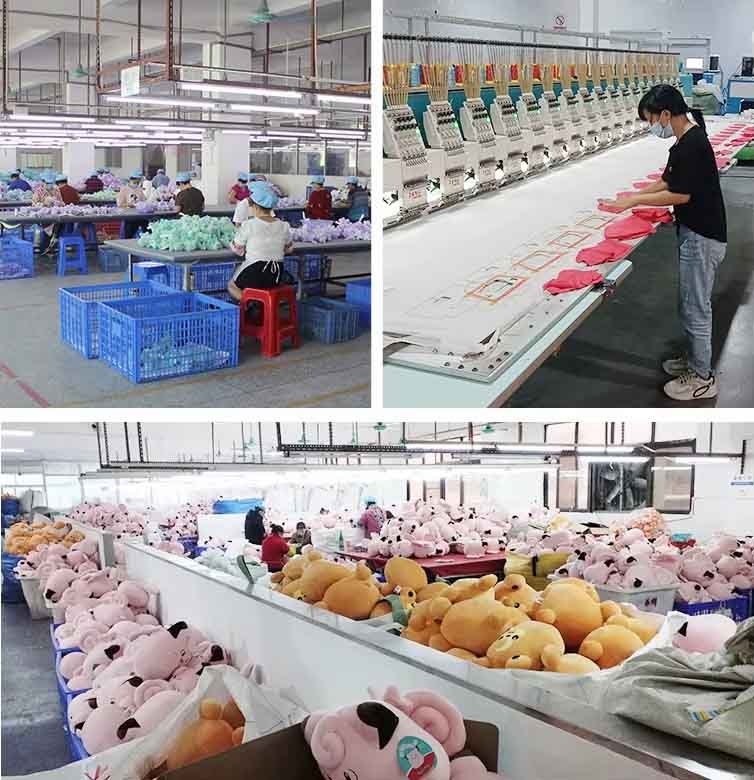
Plush toys look simple on the surface—soft fabric, cute shape, friendly face. But anyone who has tried to turn a plush idea into a real product quickly learns the truth: making a good plush toy is a technical process, not a craft project.
Two plush toys can look nearly identical in photos, yet feel completely different in hand. One keeps its shape after months on a shelf. The other collapses after shipping. One passes safety tests smoothly. The other gets stuck in retesting loops. The difference is rarely “luck.” It comes down to materials, structure, process control, and manufacturing experience.
Today, buyers searching “how to make a plush toy” fall into two very different groups. Some are hobbyists looking to sew at home. Others—brands, retailers, IP owners, and wholesalers—are trying to figure out how to develop plush toys that are safe, scalable, and commercially viable. This article is written for the second group.
Making a plush toy involves more than sewing fabric together. A brand-ready plush toy requires proper material selection, pattern engineering, controlled cutting and sewing, correct stuffing structure, and safety compliance testing. Professional plush production follows a step-by-step process—from concept and prototyping to mass production and quality control—to ensure consistency, durability, and market approval.
Behind every successful plush toy is a series of decisions most consumers never see. In the sections below, we’ll break down how plush toys are actually made in professional factories, what buyers should watch for at each stage, and how experienced manufacturers like Szoneier help brands avoid costly mistakes.
What Is a Plush Toy and What Makes One “Good”?
A plush toy is a textile-based stuffed product engineered for repeated handling, transport, and long-term display. A “good” plush toy maintains shape, feels consistent in hand, meets safety standards, and performs reliably across production batches. For professional buyers, quality is defined by structural stability, material consistency, low complaint rates, and repeatability—not appearance or softness alone.
What a Plush Toy Actually Is in Manufacturing Terms
In production reality, a plush toy is:
- A textile structure
- With distributed internal load
- Subject to gravity, compression, and friction
It is not a pillow and not a garment. It behaves closer to a soft structural object.
That means every plush toy is governed by:
- Fabric weight and stretch
- Stuffing density and rebound
- Seam placement and stress points
- Size-to-material balance
Ignoring this leads directly to deformation, collapse, and complaints.
Key Factors That Define a “Good” Plush Toy
Below are the criteria professional buyers actually use when evaluating plush quality.
| Evaluation Factor | What Buyers Look For |
|---|---|
| Shape retention | Plush keeps form after compression |
| Hand-feel consistency | Same feel across units |
| Material stability | Fabric and filling behave the same in bulk |
| Structural balance | No sagging head, waist, or limbs |
| Safety compliance | Smooth testing, no retesting |
| Repeatability | Same result in reorder |
If a plush fails in any of these, it will cause problems later—regardless of how good it looks initially.
What Details Make a Plush Feel “Premium” to Buyers
From internal QC records and buyer feedback, “premium” is driven by control, not excess softness.
A plush feels premium when:
- Fabric surface stays clean around seams
- Stuffing rebounds evenly after squeezing
- Weight feels intentional, not accidental
- Seams follow the intended silhouette
- No area feels hollow or overfilled
A common misconception is that softer equals better. In reality, controlled density is what separates premium plush from unstable plush.
What Are the Most Common Plush Quality Failures
Across thousands of shipped plush toys, the most frequent failures are remarkably consistent.
| Problem Observed | Root Cause |
|---|---|
| Plush collapses after shipping | Fabric too light for size |
| Shape differs from sample | Inconsistent stuffing density |
| Feels cheap | Low GSM fabric or over-soft fill |
| Head or limbs droop | Poor internal weight balance |
| Reorders don’t match | Unstable material sourcing |
Notably, very few failures are caused by sewing skill. Most are caused by early design and material decisions.
Which Materials Are Used to Make Plush Toys?
Plush toys are made from three core material groups: outer plush fabrics, internal stuffing, and functional accessories. The right combination determines hand-feel, shape stability, safety compliance, and repeatability in mass production. For B-end buyers, material selection is a performance and risk decision—not a cosmetic one. Most plush quality issues originate from material mismatch, not sewing defects.
Why Materials Decide the Outcome Before Production Starts
In professional plush manufacturing, materials account for most downstream results:
- How the plush feels
- Whether it keeps shape
- Whether it passes safety testing
- Whether bulk matches the sample
- Whether reorders stay consistent
From Szoneier’s internal data:
Over 70% of plush quality complaints trace back to material choices, not workmanship.
1. Outer Plush Fabrics:
Outer fabric defines the first impression, but more importantly, it controls structure, load, and surface behavior.
Most Used Plush Fabrics in Real Orders
| Fabric | Typical Use | Why Buyers Choose It | Common Risk |
|---|---|---|---|
| Minky | Baby & premium plush | Short pile, low shedding, easy testing | Too soft for large plush |
| Velboa | Character & IP plush | Smooth surface, clean embroidery | Less “fluffy” |
| Faux Fur | Animal & large plush | Strong volume & realism | Shedding, high loss |
| Fleece | Promotional plush | Cost control, fast sewing | Flat, low value feel |
| Velour | Gift & décor plush | Elegant surface | Marks under pressure |
Key Fabric Parameters Buyers Should Care About
Instead of asking “Is it soft?”, professional buyers look at:
| Parameter | Why It Matters |
|---|---|
| GSM (weight) | Determines shape retention |
| Pile height | Affects shedding & safety |
| Stretch direction | Impacts deformation |
| Surface density | Controls premium feel |
| Dye stability | Affects test results |
A plush that feels great but collapses later is not a good material choice.
2. Internal Stuffing: Where Most Plush Toys Fail
Stuffing is invisible—but it decides long-term performance.
Common Stuffing Options Used in Production
| Stuffing Type | Typical Use | Key Strength | Key Risk |
|---|---|---|---|
| PP cotton | Most plush toys | Stable, cost-effective | Over/under filling |
| Layered PP cotton | Medium–large plush | Shape control | Needs experience |
| Structured core fill | Large plush (80cm+) | Prevents collapse | Higher cost |
| Recycled fiber | Eco plush | Sustainability | Lower rebound |
Critical insight: Using the same stuffing density for all sizes is the fastest way to cause deformation complaints.
Size vs Stuffing Reality
| Plush Size | Recommended Approach |
|---|---|
| <30 cm | Soft, low-density fill |
| 30–60 cm | Balanced density |
| 60–100 cm | Layered structure |
| >100 cm | Core + surface filling |
Large plush without structure will always fail over time.
3. Accessories: Small Parts, Big Problems
Accessories are the highest-risk materials in safety testing.
Common Accessories Used in Plush Toys
- Eyes (embroidered, plastic safety eyes)
- Noses (embroidered or molded)
- Threads (high tensile polyester)
- Labels (soft woven or printed)
Safety-Driven Accessory Choices
| Application | Preferred Option | Reason |
|---|---|---|
| Baby plush | Embroidered eyes | Zero pull risk |
| General plush | Safety eyes | Must pass pull test |
| Branding | Soft woven labels | Skin-safe |
At Szoneier, baby plush defaults to no hard accessories, unless specifically approved.
4. Material Consistency: Why Reorders Often Fail
One of the most overlooked issues in plush sourcing is material repeatability.
Common buyer complaint:
“The second order doesn’t feel the same.”
Root causes include:
- Fabric GSM variation
- Different stuffing batches
- Changed dye lots
- New accessory suppliers
This is why professional factories rely on controlled material libraries, not open-market sourcing.
5. Cost Reality: Materials Affect More Than Unit Price
Buyers often focus on material cost per meter—but that’s incomplete.
Materials affect:
- Cutting loss
- Sewing speed
- Defect rate
- Testing cost
- Return rate
A cheaper fabric that increases scrap by 10% is not cheaper in real terms.
What Tools and Machines Do You Need to Make a Plush Toy?
Making plush toys at scale requires more than basic sewing tools. Professional production depends on cutting accuracy, sewing stability, stuffing control, and in-process inspection. Industrial cutting systems, specialized sewing machines, controlled stuffing equipment, embroidery machines, and quality inspection tools are essential for consistency and safety compliance. The right machines reduce defects, shorten lead times, and ensure bulk orders match approved samples.
1. Tools Used for Plush Toy Sampling and Prototyping
Sampling is not mass production, but it sets the foundation.
What Happens at the Sampling Stage
In a professional plush factory, sampling focuses on:
- Verifying structure
- Testing material behavior
- Evaluating hand-feel
- Identifying stress points
Speed is secondary. Accuracy is everything.
Core Tools Used in Sampling Rooms
| Tool | Why It Matters |
|---|---|
| Pattern drafting tools / CAD | Controls shape & seam logic |
| Manual cutting tables | Precise fabric orientation |
| Single-needle sewing machines | Flexible curve sewing |
| Hand stuffing tools | Feel testing & density control |
2. Cutting Machines: Where Quality Control Really Starts
Cutting is the first irreversible step in plush production.
Why Cutting Accuracy Is Critical
Plush fabrics:
- Stretch easily
- Shift pile direction
- Hide cutting errors until late
Poor cutting leads to:
- Shape inconsistency
- Misaligned pile
- Higher scrap rates
Machines Used in Professional Cutting
| Equipment | Purpose |
|---|---|
| Automatic cutting machines | Shape accuracy & repeatability |
| Layered fabric cutting systems | Efficiency with control |
| Faux-fur pile alignment tools | Visual consistency |
3. Sewing Machines: Not All Seams Are Equal
Plush toys are sewn under multi-directional stress.
Why Standard Sewing Is Not Enough
Plush seams must handle:
- Internal pressure from stuffing
- Repeated squeezing
- Gravity on large plush
Machines That Matter in Plush Production
| Machine | Function |
|---|---|
| Single-needle lockstitch | Core seam assembly |
| Double-needle machines | Stress seam reinforcement |
| Overlock machines | Edge stability |
| Zigzag machines | Stretch areas & curves |
4. Embroidery Machines: Where Brand Quality Shows
Embroidery is not decoration — it is brand execution.
Why Embroidery Quality Matters
Poor embroidery causes:
- Hard surfaces on baby plush
- Distorted facial expressions
- Thread breakage in bulk
Professional Embroidery Setup
| Feature | Impact |
|---|---|
| Multi-head embroidery | Consistency |
| Controlled stitch density | Softness + clarity |
| Thread tension control | Prevents puckering |
At Szoneier, embroidered eyes are the default for baby plush to eliminate small-part risk.
5. Stuffing Machines: The Most Underrated Equipment
Stuffing is where plush toys win or fail long-term.
Why Manual Stuffing Alone Is Risky
Manual stuffing:
- Varies by worker
- Changes throughout the day
- Causes unit-to-unit inconsistency
Controlled Stuffing Equipment
| Equipment | Benefit |
|---|---|
| Adjustable stuffing machines | Density consistency |
| Layered filling systems | Shape stability |
| Weight-based filling control | Bulk consistency |
Internal observation Plush made with controlled stuffing systems shows ~30% fewer shape complaints after shipping.
6. Quality Inspection Tools: Preventing Problems Before Packing
Quality is not checked only at the end.
Key Inspection Points
| Tool / Method | Purpose |
|---|---|
| In-line QC stations | Early defect detection |
| Seam stress testing | Prevent seam failure |
| Shape templates | Consistency checks |
| Metal detectors | Safety compliance |
A factory that relies only on final inspection is reacting — not controlling.
7. Machines and Compliance: An Often Missed Connection
Some machines directly affect safety outcomes:
- Poor cutting → loose fibers
- Inconsistent stuffing → seam stress
- Weak embroidery → thread pull risks
Professional equipment supports compliance, not just productivity.
How Do You Make a Plush Toy Step by Step?
A brand-ready plush toy is made through a controlled process: concept definition, pattern engineering, material confirmation, pilot cutting and sewing, assembly, staged stuffing and shaping, finishing, safety planning, and quality control before packing. The goal is not just to make one good sample, but to lock a repeatable method so bulk production matches the approved sample in shape, feel, and compliance.
The Real Plush Workflow
Most online “step-by-step” guides describe plush making like a craft project. In professional manufacturing, the step-by-step process exists for one reason:
To prevent bulk variation, delays, and quality disputes.
At Szoneier, we treat “how to make a plush toy” as a workflow that must answer three buyer questions:
- How do we control shape and hand-feel?
- How do we prevent defects and rework in bulk?
- How do we keep the second order the same as the first?
Below is the process as it actually runs in real OEM/ODM plush programs.
Step 1 — How Do You Define the Plush Toy Brief?
This is the most skipped step—and one of the most expensive to skip.
A production-ready brief includes:
- Finished size (cm)
- Target market (baby / retail / promo)
- Target order quantity
- Target cost range
- Reference image or competitor sample
Why it matters Without a clear brief, factories guess materials and structure, and the project becomes revision-heavy.
Step 2 — How Do You Turn Artwork Into a Pattern That Can Scale?
A plush pattern is not “drawing turned into fabric.” It is a 3D structure converted into 2D panels.
Key pattern decisions include:
- Seam allowance
- Turn openings placement
- Stress points reinforcement
- Symmetry control
What can go wrong
- Arms end up uneven
- Face shifts after stuffing
- Body twists due to stretch direction
Factory reality A weak pattern cannot be fixed by better sewing.
Step 3 — Which Materials Are Locked Before Sampling?
Professional sampling locks:
- Outer fabric family (minky/velboa/faux fur/fleece)
- Filling density strategy
- Eye/nose method (embroidery vs safety eyes)
- Thread type
Step 4 — How Do You Cut Plush Fabric Correctly?
Cutting is where bulk variation often begins.
Professional cutting controls:
- Pile direction (especially faux fur)
- Fabric stretch orientation
- Cutting loss allowance
Common bulk issue Samples are cut carefully; bulk cutting is rushed → shape changes.
Typical cutting loss
- Minky/velboa: ~3–8%
- Faux fur: ~12–18% (higher due to pile matching)
Step 5 — How Do You Sew and Assemble the Plush Toy for Strength?
Assembly is not one “sew together” step. It’s staged.
Typical assembly sequence:
- Sew face panels (highest accuracy zone)
- Assemble head
- Assemble body
- Attach limbs
- Join head + body
- Prepare turning opening
Stress points
- Neck seam
- Limb joints
- Tail base (if any)
Step 6 — How Do You Stuff in Stages?
Stuffing is the most underestimated step in plush manufacturing.
In professional production:
- Stuffing is done in layers
- Density is controlled
- Shape is manually “set” before closing
Typical stuffing strategy
- Softer surface layer
- Firmer core layer (especially for large plush)
Internal insight Shape complaints after shipping are most often caused by:
- under-filling
- inconsistent density
- lack of core structure
Step 7 — How Do You Close Openings and Finish the Plush?
Closures are selected based on:
- Toy size
- Seam visibility needs
- Safety requirements
Methods include:
- Ladder stitch (clean finishing)
- Machine closing (faster, less premium look)
Finishing includes:
- Thread trimming
- Surface brushing (for faux fur)
- Final shape correction
Step 8 — How Do You Check Quality Before Packing?
Professional QC is not only final inspection.
Key checks include:
- Shape template check
- Seam stress check
- Stuffing distribution check
- Visual symmetry check
Step 9 — How Do You Pack Plush Toys Without Ruining Them?
Packing affects plush shape more than buyers expect.
If using vacuum packing:
- Filling rebound must be tested
- Fabrics must handle compression without pile damage
- Rebound time should be confirmed
Step-by-Step Timeline
| Stage | Typical Time |
|---|---|
| Pattern + first sample | 7–15 days |
| Revision sample | 7–12 days |
| Pre-production sample | 5–10 days |
| Bulk production | 20–45 days |
(Actual timing depends on complexity, size, and order quantity.)
How Do You Make a Plush Toy Safe and Compliant?
Plush toy safety and compliance are determined before mass production begins. Material selection, fabric structure, accessories, and age grading decide whether a plush toy passes EN71, ASTM F963, or other market standards. Most failures come from early design or material choices, not sewing. Professional manufacturers plan compliance at the sampling stage to avoid retesting delays, redesign costs, and blocked market entry.
Why Safety and Compliance Are Not “Final Inspection Problems”
One of the biggest misunderstandings among buyers is thinking that safety happens after the plush toy is made.
In real manufacturing, compliance is decided:
- When fabric is selected
- When accessories are chosen
- When structure and age grading are defined
From Szoneier’s internal project reviews over multiple years:
- ~70% of compliance failures traced back to material or structure choices
- <15% were caused by workmanship
- The rest were labeling or documentation issues
Once a plush toy fails testing, factories cannot “adjust” it easily. They must replace materials or redesign, which means lost time and cost.
What Safety Standards Apply
Different Markets, Different Focus
| Market | Main Standard | What Usually Fails |
|---|---|---|
| United States | ASTM F963 / CPSC | Small parts, pull tests |
| European Union | EN71 | Fiber shedding, chemicals |
| UK | EN71 (UKCA) | Same as EU |
| Global brands | Multiple | Documentation consistency |
Where Plush Toys Fail Most Often
1. Fabric Choice: The #1 Risk Factor
Common problems:
- Long-pile fabrics shedding fibers
- Low-density plush collapsing under test stress
- Dark colors failing saliva/sweat migration
Buyer mistake Choosing fabric by touch or photo, not by test history.
Professional rule If a fabric has never passed testing for a similar plush size and age group, it is high-risk.
2. Accessories: Small Parts, Big Delays
Accessories cause disproportionate failures.
| Accessory | Common Issue |
|---|---|
| Plastic eyes | Pull test failure |
| Noses | Detachment risk |
| Decorative buttons | Choking hazard |
| Labels | Skin irritation |
Industry best practice
- Baby plush → embroidery only
- General plush → certified safety eyes + pull testing
One failed pull test can delay shipment 2–4 weeks.
3. Structure and Age Grading Mismatch
A plush toy is tested based on intended age group, not how it looks.
Common mismatch:
- Plush labeled “3+” but built like “0–3”
- Soft seams not reinforced for older kids
Result Unexpected mechanical failures during testing.
Age grading must match:
- Fabric type
- Accessory choice
- Seam strength
- Stuffing firmness
4. Chemical & Dye Issues Buyers Don’t See
Chemical failures are invisible until testing.
High-risk factors:
- Cheap dye systems
- Dark saturated colors
- Mixed dye lots
From internal data:
- Dark red / navy plush has 2–3× higher failure risk in saliva/sweat tests than light colors.
This is why baby plush often uses light pastel tones—not for aesthetics, but for compliance stability.
When Should Testing Be Planned
The safest testing workflow:
- Define target market(s)
- Lock materials & accessories
- Finalize structure & age grading
- Produce testing-ready sample
- Submit for testing
- Start bulk only after approval
Worst-case scenario Testing after bulk production → material waste + redesign + missed season.
How Compliance Impacts Cost and Timeline
| Scenario | Time Impact | Cost Impact |
|---|---|---|
| Pre-tested materials | No delay | No extra cost |
| Fabric test failure | +3–6 weeks | New materials |
| Accessory failure | +2–4 weeks | Rework + re-test |
| Structural redesign | +4–8 weeks | New sampling |
How Szoneier Controls Compliance Risk for Buyers
At Szoneier, compliance is managed proactively:
- Use of tested fabric families
- Limited accessory options for baby plush
- Early age grading decisions
- Safety considerations built into pattern design
- Testing planned before bulk scheduling
This approach reduces:
- Retesting frequency
- Unexpected redesign
- Launch delays
How Do Brands Turn a Plush Idea Into OEM/ODM Production?
Brands turn a plush idea into OEM/ODM production by moving through a structured process: idea clarification, feasibility review, material strategy, sampling and revision, safety planning, pilot production, and scalable mass manufacturing. Successful plush OEM/ODM projects depend on early alignment between brand goals and factory capabilities. Most failures happen not in production, but in unclear briefs, rushed sampling, and unrealistic cost expectations.
Step 1 — How Should Brands Present a Plush Idea to a Factory?
A plush idea does not need to be technical—but it must be specific enough.
What factories actually need from brands:
- Target plush size (cm or inches)
- Intended market (baby, retail, promo, collectible)
- Estimated order quantity (first + repeat)
- Target price range (not exact price)
- Reference images or samples
What causes problems “Please quote this” with only a picture and no context.
Reality Without size + market + price range, any quote is guesswork.
Step 2 — How Does a Factory Evaluate Feasibility?
A professional plush factory will push back before agreeing.
At Szoneier, feasibility review includes:
- Can this shape hold at the requested size?
- Are the requested materials compatible with safety standards?
- Is the target price realistic for the structure?
- Can materials be sourced consistently?
Step 3 — How Are Materials and Structure Strategically Chosen?
Once feasibility is confirmed, factories guide material strategy.
Decisions include:
- Fabric family (not just fabric sample)
- Stuffing density and structure
- Accessory method (embroidery vs plastic)
- Packaging impact (vacuum vs non-vacuum)
Step 4 — How Does Sampling Really Work in OEM/ODM?
Sampling is not about perfection. It is about locking the right direction.
Typical OEM/ODM sampling flow:
- First sample – structure & proportion
- Second sample – feel, shape, adjustments
- Final sample – testing & approval
From real data:
- Projects that allow 2–3 samples reach bulk faster
- Projects that demand “perfect first sample” slow down overall
Cost reality Sampling costs are small compared to the cost of fixing bulk mistakes.
Step 5 — How Is Safety and Compliance Integrated
Professional OEM/ODM projects plan compliance before bulk, not after.
Factories will:
- Match materials to target market standards
- Adjust structure to age grading
- Recommend safer accessory options
- Prepare testing-ready samples
Step 6 — What Is Pilot Production?
For medium to large orders, experienced brands use pilot runs.
Pilot production helps:
- Verify sewing consistency
- Confirm stuffing density
- Identify weak points before scale
- Align QC standards
Skipping pilot runs saves time only on paper. In reality, it increases rework risk.
Step 7 — How Does Mass Production Stay Aligned With the Sample?
This is where OEM/ODM capability shows.
Professional factories control:
- Fabric batches
- Stuffing density
- Sewing process order
- In-line QC checkpoints
At Szoneier, bulk production references:
- Approved sample
- Locked material list
- Defined QC standards
This ensures sample = bulk, not “similar to sample.”
Step 8 — How Do Brands Plan for Reorders and Scaling?
Good OEM/ODM is not about one order.
Brands that scale successfully:
- Use materials with stable supply
- Avoid experimental fabrics
- Document specs for reorders
- Optimize cost only after stability
From experience:
- The first order proves feasibility
- The second order proves scalability
Factories that support reorders are more valuable than factories that only chase first orders.
Common OEM/ODM Mistakes Brands Still Make
- Chasing the lowest quote
- Rushing sampling
- Changing materials late
- Ignoring safety early
- Treating factory as “just production”
Each mistake adds risk—not savings.
Why Brands Choose Szoneier for Plush Toy Manufacturing
Brands choose Szoneier because we reduce uncertainty in plush toy development and production. With over 18 years of hands-on experience, in-house material supply, structured sampling, and safety-aware manufacturing, we help brands move from concept to repeatable mass production with fewer delays, fewer defects, and fewer surprises. Our value lies in predictability, not promises.
1. 18+ Years of Plush Experience That Shows in the Details
Experience in plush manufacturing is not measured by years on paper. It shows up in how problems are handled before they happen.
At Szoneier:
- We’ve produced plush across multiple sizes, markets, and use cases
- We’ve seen the same failures repeat across factories — and know how to avoid them
- We understand which materials behave well in bulk and which don’t
This experience allows us to:
- Push back on risky designs
- Suggest safer material alternatives
- Save brands from expensive revisions later
2. In-House Material Supply = Consistency in Real Orders
One of the biggest frustrations for brands is:
“The second order doesn’t feel like the first.”
This almost always comes from unstable material sourcing.
Szoneier operates with:
- Controlled plush fabric sourcing
- Documented stuffing specifications
- Repeatable accessory supply
3. Sampling That Is Designed for Bulk, Not Just Approval
Many factories focus on making a great-looking sample. We focus on making a sample that can survive bulk production.
Our sampling process:
- Uses production-intended materials
- Follows bulk sewing logic
- Tests stuffing and structure realistically
As a result:
- Approved samples translate more accurately to mass production
- Brands spend less time “correcting bulk to match sample”
4. Safety-Aware Manufacturing, Not Last-Minute Testing
Safety is not a checkbox at Szoneier — it’s part of the design process.
We help brands by:
- Matching fabrics and accessories to target markets
- Designing plush structures that align with age grading
- Avoiding known high-risk materials early
This approach reduces:
- Retesting cycles
- Launch delays
- Compliance-related redesigns
For brands, this means faster approval and fewer headaches.
5. Flexible MOQ Without Sacrificing Process Control
Many brands assume that:
- Low MOQ = low control
- High control = high MOQ
At Szoneier, we support:
- Small pilot runs for new brands
- Medium orders for growing programs
- Scaled production for established brands
All with:
- The same material discipline
- The same QC standards
Flexibility does not mean chaos. It means experience.
6. Clear Communication During Development and Production
From a buyer’s standpoint, communication failures are often worse than quality failures.
We prioritize:
- Clear feedback during sampling
- Honest discussion about cost vs design
- Transparent timelines
- Problem-solving, not excuses
7. Built for Long-Term Partnerships, Not One-Off Orders
Brands that stay with Szoneier usually do so because:
- Their second order is easier than the first
- Their third order is more efficient than the second
We design plush programs for:
- Repeatability
- Scale
- Continuous improvement
That’s why many of our clients treat us not as a vendor, but as an extended manufacturing team.
Ready to Make Your Plush Toy a Real Product?
If you are serious about developing plush toys that:
- Feel right in hand
- Pass safety tests
- Scale in production
- Support your brand long-term
Then the next step is simple.
Send Szoneier your plush idea Request material suggestions or samples Get a clear, realistic production plan
We don’t just help you make a plush toy. We help you make it work in the real market.
manufacturer Categories
- Custom Tote Bags Manufacturer
- custom backpacks Manufacturer
- custom travel bags& Duffle bags manufacturer
- custom makeup bags & toiletry bags manufacturer
- custom cooler bags manufacturer
- custom drawstring bags manufacturer
- custom makeup bags & toiletry bags manufacturer
- custom golf bags manufacturer
- custom fireproof bags manufacturer
- custom dry bags manufacturer
- custom ski bags manufacturer
- custom gym & sports bags manufacturer
- custom laptop bags manufacturer
- custom tactical bags manufacturer
- custom beach bags manufacturer
- custom medical bags manufacturer
- custom camera bags manufacturer
- custom wetsuits manufacturer
- custom leather goods manufacturer
- more personalized products
Can't find the answers?
No worries, please contact us and we will answer all the questions you have during the whole process of bag customization.
Make A Sample First?
If you have your own artwork, logo design files, or just an idea,please provide details about your project requirements, including preferred fabric, color, and customization options,we’re excited to assist you in bringing your bespoke bag designs to life through our sample production process.
