 Skip to content
Explore Interactive Toys for Kids : Custom Plush Toy Guide
- Eric
- February 3, 2026
- 8:47 am
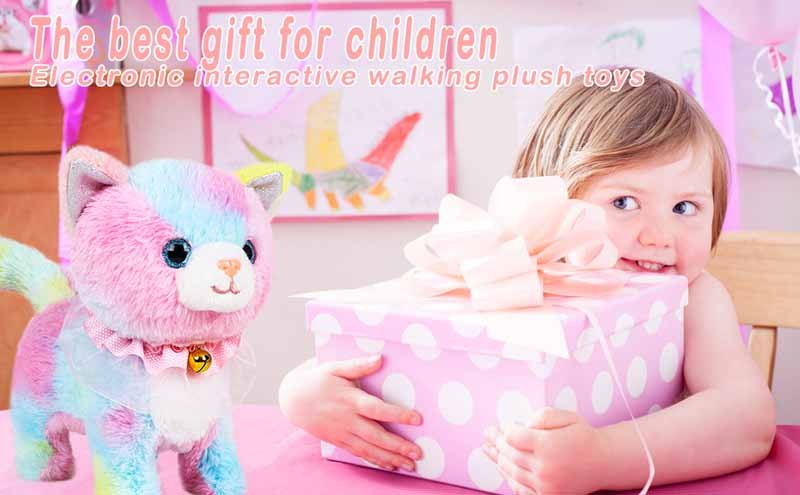
Interactive toys are changing what “good play” looks like. Parents don’t only want a toy that sits on a shelf; they want something that keeps a child engaged for more than a few minutes, supports language and social skills, and still feels safe and durable after weeks of use. Brands feel this pressure too—because children move on quickly, and the market punishes toys that are noisy, fragile, or confusing. The interesting part is that “interactive” doesn’t have to mean complicated electronics. Some of the most successful interactive toys for kids use simple cause-and-effect ideas: squeeze to play a sound, press a paw to trigger a phrase, pull a cord to reveal a surprise, or touch different zones to unlock different reactions. Interactive toys for kids are toys designed to respond to a child’s action—touching, squeezing, moving, speaking, or solving a simple task—so play becomes two-way instead of passive. Good interactive toys are easy to understand, repeatable in use, and stable in production. They can be plush or non-plush and may use electronics or simple mechanisms, as long as the response feels meaningful.
At Szoneier, many clients come with a clear goal: create interactive toys that feel natural, safe, and scalable—not “feature-heavy” toys that end up costly to repair or hard to mass produce. Let’s start with what interactive toys really are.
What are interactive toys?
Interactive toys are toys that give a response when a child does something—press, hug, shake, pull, speak, or complete a simple action. The response can be sound, motion, light, texture change, or a reveal. A well-made interactive toy is easy for kids to trigger, consistent in response, and durable enough to repeat that interaction hundreds or thousands of times without failure.
How interactive toys differ from traditional toys
The key difference is response.
Traditional toys rely almost entirely on imagination. Interactive toys add a feedback loop:
child action → toy response → child engagement.
This loop changes how children play and how long they stay interested.
From real market feedback, interactive toys typically:
- Hold attention longer per play session
- Encourage repeated interaction instead of one-time novelty
- Create stronger emotional attachment (especially plush interactive toys)
Here is a practical comparison brands often use during product planning:
| Aspect | Traditional toys | Interactive toys |
|---|---|---|
| Child action | free play only | action + response |
| Feedback | none | sound / motion / reaction |
| Engagement time | short to medium | medium to long |
| Replay value | depends on imagination | reinforced by interaction |
What actually makes a toy “interactive” in real use
In real projects, a toy is considered interactive only if the interaction is clear, intentional, and repeatable.
Factories usually check three practical conditions:
- Trigger clarity
- Can a child activate it without instruction?
- Large squeeze zones and obvious buttons perform best.
- Response reliability
- Does the toy respond every time?
- Inconsistent response is the fastest way to lose trust.
- Repeat durability
- Does it still work after hundreds or thousands of interactions?
If any of these fail, the toy may look interactive in marketing—but fails in real life.
| Check point | Pass sign | Fail sign |
|---|---|---|
| Activation | one simple action | requires precision |
| Response | instant, consistent | delayed or random |
| Durability | works after stress | stops responding |
Common types of interactive toys on the market
Interactive toys are not one category. For product planning, it helps to classify them by how they interact and what problems they solve.
Here’s a product-focused classification :
| Interactive toys type | How it interacts | Why parents buy it | Common risks |
|---|---|---|---|
| Sensory interactive toys | squeeze, crinkle, rattle | calm + explore | weak seams if not reinforced |
| Sound interactive toys | talking/singing | language + fun | battery door safety, speaker failure |
| Motion interactive toys | shake/move activation | active play | sensor sensitivity issues |
| Learning interactive toys | Q&A, simple tasks | early learning | too complex = low engagement |
| Plush interactive toys | hug/touch zones | emotional bonding | electronics placement, washability |
Why plush interactive toys matter: kids tend to keep plush longer because plush becomes a “companion,” not just a tool. That increases replay value and makes plush a strong choice for brands building long-term IP characters.
How age affects interactive toy design
Age suitability determines interaction depth and structure.
A simplified age-use guide:
| Age range | Interaction focus | Design priority |
|---|---|---|
| 0–12 months | sensory feedback | safety + softness |
| 1–3 years | cause-and-effect | big triggers |
| 3–5 years | language + pretend | clear sound |
| 5–8 years | learning + challenge | durable structure |
Factory reality: age affects everything—fabric choice, electronics placement, seam reinforcement, and testing standards.
Why interaction must be designed, not added later
One common mistake brands make is adding interaction after the toy shape is finished. This often leads to:
- Awkward button placement
- Weak seams around modules
- Poor sound output
- Higher defect rates
Experienced factories design interaction together with structure, not as an add-on.
Which interactive toys support development?
Interactive toys support child development when they encourage thinking, communication, movement, or emotional connection through clear and repeatable interaction. The most effective interactive toys focus on one or two development goals instead of trying to do everything at once, making play intuitive and age-appropriate.
Why “development value” matters to brands and parents
Parents rarely buy interactive toys just because they “do something.” They buy them because they believe the toy helps their child grow—whether that means talking earlier, moving better, or understanding emotions.
For brands, development value directly affects:
- Purchase justification
- Repeat buying
- Long-term trust
From a factory viewpoint, development value must be designed into the interaction, not added later through marketing.
Which interactive toys build thinking skills?
Thinking skills develop when children notice patterns, predict outcomes, and understand cause and effect. Interactive toys that support thinking usually follow simple logic rather than complex rules.
Examples of effective interaction logic:
- Press → sound plays
- Match → correct response
- Choose → different outcome
Good thinking-focused interactive toys:
- Encourage prediction (“What happens if I press this?”)
- Offer consistent feedback
- Avoid random responses that confuse children
| Interaction type | Thinking skill supported | Risk if poorly designed |
|---|---|---|
| Cause-and-effect buttons | logic, memory | toy feels “broken” |
| Matching sounds or shapes | recognition | too many options |
| Repeated sequences | recall | child loses interest |
Which interactive toys improve social play?
Social development depends on imitation, turn-taking, and emotional response. Interactive toys that “talk back” or react emotionally help children practice these skills.
Common social-play interactions:
- Greeting phrases (“Hello!”, “Good job!”)
- Call-and-response sounds
- Emotion-based reactions (happy/sad sounds)
Plush interactive toys are especially effective here because:
- Children treat plush as companions
- Soft texture encourages hugging and role play
- Emotional attachment increases repeated interaction
| Social feature | Development benefit | Design note |
|---|---|---|
| Voice responses | language practice | clear pronunciation |
| Emotional sounds | empathy | avoid overstimulation |
| Role-play prompts | imagination | simple phrases work best |
Which interactive toys train motor skills?
Motor skill development comes from physical interaction, not screens or passive listening.
Interactive toys support motor skills when they require:
- Pressing
- Pulling
- Grabbing
- Coordinated movement
Examples:
- Plush toys with multiple squeeze zones
- Toys that respond to shaking or movement
- Pull-cord interactive elements
| Motor action | Skill trained | Common failure |
|---|---|---|
| Squeezing | hand strength | weak stitching |
| Pulling | coordination | cord breakage |
| Button press | finger control | button too small |
Customer insight: motor-skill toys must survive repeated force. Poor reinforcement leads to early failure and returns.
How do interactive toys help learning?
Interactive toys help learning by turning abstract ideas—like language, numbers, or problem-solving—into physical, repeatable actions. When learning is built into play, children stay engaged longer and absorb concepts naturally, without feeling pressured or instructed.
Learning through play, not instruction
Children don’t learn best when they are “taught.” They learn best when they discover. Interactive toys work because they let children explore at their own pace.
Key learning principles used in interactive toy design:
- Repetition without boredom
- Immediate feedback
- Freedom to explore
Factories focus on making sure learning features are:
- Easy to trigger
- Consistent in response
- Durable under repeated use
How do interactive toys teach language?
Language learning is one of the strongest reasons parents choose interactive toys.
Effective language interactions include:
- Clear word pronunciation
- Short, repeatable phrases
- Call-and-response patterns
Plush interactive toys work well here because children often:
- Talk to them
- Repeat words back
- Use them in pretend conversations
| Language feature | Why it works | Risk |
|---|---|---|
| Repeated phrases | reinforces memory | too many phrases |
| Question prompts | encourages speech | unclear audio |
| Songs | rhythm learning | volume control |
How do interactive toys support STEM learning?
For young children, STEM learning is about basic concepts, not formulas.
Interactive toys support early STEM when they:
- Show cause and effect
- Introduce counting
- Encourage problem solving
Examples:
- Pressing buttons in order
- Matching shapes or sounds
- Simple “try again” feedback
| STEM concept | Interaction example |
|---|---|
| Counting | numbered button presses |
| Logic | correct/incorrect response |
| Problem solving | trial-and-error play |
How do interactive toys boost creativity?
Creativity grows when children can invent stories and roles. Interactive toys that leave space for imagination perform better long-term.
Creative-friendly features:
- Neutral characters
- Open-ended responses
- Role-play prompts
Plush interactive toys excel because:
- They don’t force one “right way” to play
- Children assign personalities and stories
- Interaction supports, not controls, play
| Creative element | Benefit |
|---|---|
| Soft form | emotional comfort |
| Limited scripted phrases | flexible storytelling |
| Gentle responses | imagination-led play |
How to choose interactive toys?
Choosing interactive toys means balancing play value, safety, durability, and production feasibility. The best interactive toys are easy for children to understand, safe for repeated use, and stable enough for mass production. Overly complex interaction often increases cost and failure risk without improving long-term engagement.
Why choosing interactive toys is harder than it looks
Many interactive toys fail not because the idea is bad, but because the selection criteria focus too much on features and not enough on real use.
Parents and brands usually care about:
- Will kids keep playing with it?
- Is it safe and durable?
- Does it feel worth the price?
- Can it be produced consistently?
Factories see a different side:
- Is the interaction reliable after 5,000 squeezes?
- Will stitching hold around electronic modules?
- Can this structure be assembled efficiently?
Good choices sit in the overlap between play value and production reality.
How safe are interactive toys?
Safety is non-negotiable, especially for younger age groups.
Key safety factors factories evaluate:
- Battery compartment security Must be fully enclosed and screw-locked.
- Module placement Electronics should sit away from the face and high-pressure zones.
- Stitching strength Interactive areas need reinforced seams.
- Material compliance Fabrics and fillings must meet regional toy safety standards.
| Safety area | What to check | Common risk |
|---|---|---|
| Battery | screw-fixed cover | snap-fit doors |
| Seams | reinforced stitching | seam splitting |
| Sound module | fixed position | shifting inside |
| Fabric | tested materials | unknown suppliers |
How materials affect interactive toys?
Material choice directly affects how interaction feels and how long it lasts.
Key material considerations:
- Softness vs structure Plush must be soft enough to hug, but structured enough to hold modules.
- Stretch behavior High-stretch fabrics can distort button positions.
- Wear resistance Interactive zones experience repeated pressure.
| Material type | Advantage | Risk |
|---|---|---|
| Minky | soft, premium feel | stretches under pressure |
| Velboa | stable surface | shows wear sooner |
| Faux fur | hides seams | traps sound |
| Cotton blends | breathable | less plush feel |
Factory note: interactive toys often require internal reinforcement layers, even when the outer fabric is soft.
How features add value to interactive toys?
Not all features add real value. Some only increase cost and risk.
Features that usually add value:
- Clear sound feedback
- Simple response patterns
- Multiple touch zones (not too many)
Features that often cause problems:
- Too many modes
- Complicated button combinations
- Overly loud or long audio
| Feature type | Value level | Risk level |
|---|---|---|
| Single squeeze response | High | Low |
| Multi-zone touch | High | Medium |
| Motion sensors | Medium | Medium |
| App connectivity | Low (for young kids) | High |
Are plush interactive toys good?
Quick answer (≤70 words) Yes, plush interactive toys are well suited for kids because they combine emotional comfort with interaction. They encourage repeated play, support social and language development, and generally feel safer and more approachable than hard toys when designed and produced correctly.
Why plush works especially well for interaction
Plush toys naturally invite:
- Hugging
- Talking
- Role play
When interaction is added, plush becomes more than a toy—it becomes a companion.
From real usage observations:
- Children keep plush toys longer than hard toys.
- Plush interactive toys are often used during quiet play.
- Emotional attachment increases replay frequency.
Are plush interactive toys safe?
Plush interactive toys can be very safe when designed properly.
Safety design priorities include:
- Internal module fixation
- Extra seam reinforcement
- Soft padding around electronics
- Secure battery enclosures
| Risk point | Proper solution |
|---|---|
| Module movement | internal pockets + stitching |
| Hard edges | foam or padding buffer |
| Battery access | screw-locked case |
| Washing concerns | removable module design |
Are plush interactive toys age-friendly?
Plush interactive toys adapt well across age groups.
| Age group | Why plush works |
|---|---|
| 0–2 years | soft, comforting |
| 2–4 years | simple interaction |
| 4–6 years | language and role play |
| 6+ years | character-based play |
The key is matching interaction depth to age, not changing the plush concept itself.
How plush interactive toys add learning value
Plush interactive toys support learning without feeling instructional.
They help with:
- Language repetition
- Emotional recognition
- Imaginative storytelling
Unlike rigid learning toys, plush allows children to control the story, which improves engagement.
| Learning area | Plush advantage |
|---|---|
| Language | conversational play |
| Emotion | empathy through role play |
| Creativity | open-ended use |
Work with Szoneier on Interactive Toys
If you are developing interactive toys—especially plush interactive toys—the difference between a short-lived novelty and a long-term product often lies in structure, materials, and production experience.
Szoneier has over 18 years of experience in:
- Interactive plush toy development
- Material sourcing and testing
- Internal structure and module placement
- Sampling, mass production, and quality control
Whether you start with:
- A concept idea
- A reference product
- Or an existing design that needs improvement
Our team can help you design, test, and produce interactive toys that are safe, engaging, and scalable.
Contact Szoneier to discuss your custom interactive toy project and request a quotation.
manufacturer Categories
- Custom Tote Bags Manufacturer
- custom backpacks Manufacturer
- custom travel bags& Duffle bags manufacturer
- custom makeup bags & toiletry bags manufacturer
- custom cooler bags manufacturer
- custom drawstring bags manufacturer
- custom makeup bags & toiletry bags manufacturer
- custom golf bags manufacturer
- custom fireproof bags manufacturer
- custom dry bags manufacturer
- custom ski bags manufacturer
- custom gym & sports bags manufacturer
- custom laptop bags manufacturer
- custom tactical bags manufacturer
- custom beach bags manufacturer
- custom medical bags manufacturer
- custom camera bags manufacturer
- custom wetsuits manufacturer
- custom leather goods manufacturer
- more personalized products

Can't find the answers?
No worries, please contact us and we will answer all the questions you have during the whole process of bags customization.
Make A Sample First?
If you have your own artwork, logo design files, or just an idea,please provide details about your project requirements, including preferred fabric, color, and customization options,we’re excited to assist you in bringing your bespoke plush designs to life through our sample production process.
