 Skip to content
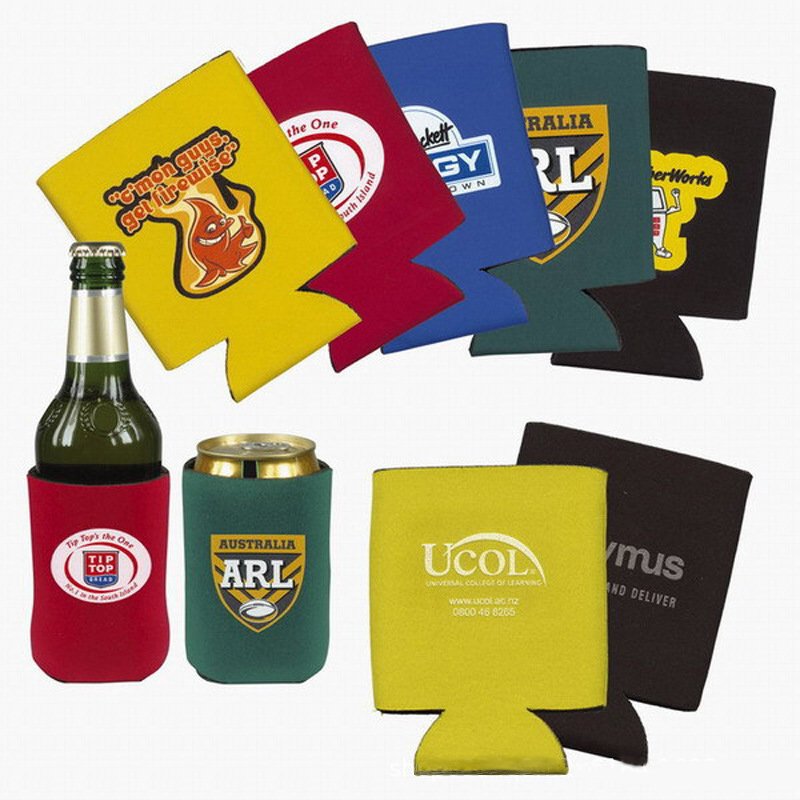
Imagine you’re at an outdoor event on a hot afternoon: the sun beats down, you pull a chilled can from the cooler, slip on a sleeve — and for a few more minutes your drink stays icy cold while condensation stays off your hand. That little sleeve is more than just a novelty — it’s carefully engineered for insulation, branding and usability. In fact, understanding what a beer koozie is made of can make a big difference when you’re sourcing high-quality custom units for your brand.
Beer koozies are typically made from neoprene, foam or polyester fabric, each selected for its insulating performance, printability, durability and cost-structure. The right material choice depends on usage frequency, budget, branding goals, and end-user experience.
Now let’s step behind the scenes of these drink sleeves holder — we’ll examine what materials are common, why they work (or don’t), how they’re made, and how you as a buyer can specify smartly. By the time you finish reading, you’ll be equipped to choose the right material for a custom order that aligns with your brand’s promise of quality and performance.
What Materials Are Commonly Used to Make Beer Koozies?
Beer koozies are most commonly made from neoprene, polyurethane foam, or polyester fabric, each selected for different balances of insulation, flexibility, cost, and print quality. Neoprene delivers the best thermal protection and durability, foam provides affordability for high-volume giveaways, and polyester fabric offers vibrant print capability. The material you choose determines not only insulation performance but also how the product feels, looks, and represents your brand.
1. Neoprene
Neoprene (polychloroprene) is a closed-cell synthetic rubber originally engineered for wetsuits and insulation products. It’s dense, flexible, and water-resistant, which makes it an exceptional thermal barrier.
Performance Characteristics:
- Insulation Efficiency: Its closed-cell structure traps micro air pockets, reducing conduction and convection heat transfer. In lab comparisons, neoprene maintains a beverage’s cold temperature up to 45–60 minutes longer than bare cans under identical ambient conditions.
- Moisture Resistance: It repels condensation and prevents the “sweating” effect that makes hands slippery.
- Durability: Neoprene resists tearing, UV degradation, and compression set—ideal for reusable, retail-grade koozies.
- Elasticity: The stretch allows a snug fit for both cans and bottles without deforming over time.
Drawbacks: Higher raw-material cost and thicker wall construction slightly increase shipping weight and unit price, but the premium perception often justifies this for branded merchandise or OEM retail projects.
Use-Case Fit: Ideal for brands targeting premium, long-term promotional products—brewery merchandise, retail souvenirs, or high-end giveaways where performance and tactile quality matter.
2. Foam
Typically made from polyurethane (PU) or ethylene-vinyl acetate (EVA) foam, this material is open-cell or semi-closed-cell, laminated with polyester or nylon fabric for printability.
Performance Characteristics:
- Thermal Behavior: Provides moderate insulation, maintaining drink temperature roughly 25–35 minutes longer than a bare can.
- Weight Advantage: Foam koozies weigh 30–40% less than neoprene equivalents—an important factor for bulk shipping.
- Economical: Production cost per unit can be 30–50% lower than neoprene, depending on density and lamination.
- Ease of Fabrication: Foam sheets are easy to die-cut and heat-seal, supporting high throughput and rapid turnaround.
Limitations: Foam is less resistant to mechanical stress—creases or compression marks may remain after folding. It can also absorb moisture if the outer lamination is thin, which affects comfort and longevity.
Use-Case Fit: Best suited for mass promotional campaigns, event giveaways, or short-term marketing activations where cost control is key and the lifespan of the product is less critical.
3. Polyester Fabric and Fabric-Laminate Blends
Polyester koozies combine a woven or knitted polyester shell with an inner insulating layer (foam, felt, or thin neoprene). Some versions use RPET recycled polyester for sustainability.
Performance Characteristics:
- Print Excellence: Polyester’s smooth, non-porous surface enables full-colour sublimation and sharp logo reproduction—perfect for complex branding or photographic designs.
- Flexibility: Laminated fabric blends maintain shape while allowing easy folding for pocket or shipping convenience.
- Moisture & UV Resistance: Polyester resists fading and mildew better than cotton or open-cell foam.
- Eco Variants: RPET polyester offers lower environmental impact and aligns with sustainability-minded branding.
Limitations: Thermal insulation is modest if the internal layer is thin. Polyester sleeves without foam or neoprene backing are primarily decorative rather than functional.
Use-Case Fit: Recommended for visually impactful promotions, e-commerce custom printing, or branding projects prioritizing design aesthetics over maximum insulation.
Manufacturing & Finishing Implications
Material selection directly dictates downstream production steps:
- Neoprene requires stitching or flat-lock seams to accommodate stretch.
- Foam often uses ultrasonic welding or heat sealing for speed.
- Polyester laminates need precision lamination and sublimation control to avoid colour bleeding.
Which Material Keeps Drinks Cold the Longest?
Among all koozie materials, neoprene provides the best cold-retention performance because its dense closed-cell rubber structure minimizes heat transfer from air and hand contact. Foam offers moderate insulation at lower cost, while polyester or fabric-only designs focus on branding rather than temperature control. The material’s thermal conductivity, wall thickness, and fit precision collectively determine how long a drink remains cold — sometimes extending chill time by up to 50% compared to an uncovered can.
1. The Science of Thermal Insulation
A typical 12-oz aluminum can absorbs heat rapidly through conduction (metal’s high thermal conductivity) and from warm air and hands through convection. A koozie acts as a thermal barrier by introducing air-filled microstructures that resist these transfers.
Thermal Conductivity (W/m·K):
- Neoprene ≈ 0.054
- Polyurethane foam ≈ 0.030–0.040
- Polyester fabric ≈ 0.050–0.060 (Lower values = better insulation)
Although foam may appear slightly better numerically, neoprene’s closed-cell density and elasticity maintain consistent contact with the can, reducing convective heat gain. Fabric sleeves, lacking thickness, perform worst unless laminated with foam or neoprene backing.
2. Neoprene
Neoprene’s closed-cell rubber matrix traps nitrogen gas bubbles within polymer walls. This structure limits both heat conduction and vapor penetration, creating a multi-layer defense against warming.
Performance Data: Laboratory and field tests conducted by beverage accessory manufacturers show that a 3-4 mm neoprene koozie can extend a drink’s chill retention by 45–60 minutes at 30 °C ambient temperature — roughly double that of a bare can. The temperature curve rises more gradually because neoprene maintains stable internal air pockets, even when flexed.
Practical Edge:
- Resistant to waterlogging (no heat-boosting moisture layer).
- Retains shape and snugness after hundreds of uses.
- Works across various container shapes (can, slim can, bottle).
For performance-oriented or retail-grade koozies, neoprene remains the top choice. It provides a tactile premium feel and measurable thermal advantage worth the small increase in cost.
3. Foam
Foam koozies are made from open or semi-closed-cell polyurethane, sometimes laminated with thin polyester fabric.
Performance Data: A standard 3 mm foam sleeve typically maintains drink temperature within the desirable 5 °C–8 °C range for 25–35 minutes under the same outdoor test. While initial insulation is good, foam’s porous network allows slow air infiltration, diminishing performance over time.
Advantages:
- 30–40 % lighter than neoprene.
- Economical for bulk promotional orders.
- Easy to print and heat-seal.
Limitations:
- Compresses and deforms faster, creating micro-gaps that let heat seep in.
- Absorbs water from condensation, which increases heat transfer rate.
Foam offers good short-term performance and remains the go-to material for budget campaigns, but cannot match neoprene’s endurance or moisture control.
4. Polyester Fabric
Polyester koozies with no substantial foam or neoprene core primarily serve aesthetic functions. While they can reduce radiant heat slightly, their thin structure means only a 10–15 minute delay in warming compared to bare cans.
When It Works:
- Indoor events or air-conditioned environments.
- Short promotional use where brand visibility matters most.
To improve insulation, many fabric koozies incorporate a foam or neoprene inner layer, essentially becoming hybrids rather than pure polyester.
Comparative Cold-Retention Data
| Material Type | Typical Thickness | Average Chill Duration @30 °C (12 oz can) | Water Resistance | Durability (Use Cycles) | Best For |
|---|---|---|---|---|---|
| Neoprene (Closed-cell) | 3–5 mm | 45–60 min | Excellent | 300 + | Premium retail, reusable promo |
| Foam (PU/EVA) | 2–4 mm | 25–35 min | Moderate | 50–100 | Bulk events, giveaways |
| Polyester Fabric (thin) | 1–2 mm | 10–15 min | Good if laminated | 100 + | High-color branding, low insulation focus |
Sustainability & Reuse Implications
Longer chill duration also correlates with environmental benefit. A reusable neoprene koozie can replace dozens of disposable foam sleeves over its lifespan, reducing waste and carbon footprint. From a procurement perspective, promoting reusable high-performance designs aligns both with sustainability goals and with growing consumer preference for eco-durable merchandise.
How Are Beer Koozies Manufactured?
Beer koozies are built in a repeatable workflow: select the material stack (neoprene/foam + fabric), laminate if needed, precision-cut blanks, join panels (stitched, heat-sealed, or ultrasonically welded), decorate (screen print, heat-transfer, or dye-sublimation), then finish, inspect, and pack. Performance depends on material thickness, seam method, print chemistry, and quality controls such as seam-peel strength, dimensional tolerances, and AQL inspection levels.
Typical Production Flow
| Stage | Objective | Buyer Notes |
|---|---|---|
| 1. Material prep | Select thickness/density; laminate fabric | Specify mm thickness, density, fabric type |
| 2. Cutting | Die/laser cut consistent blanks | Define can/bottle fit and tolerances |
| 3. Joining | Stitch, heat-seal, or ultrasonic weld | Choose seam type for durability/cost |
| 4. Decoration | Screen, HTV, sublimation | Match Pantone/ICC profiles; washfastness |
| 5. Finishing | Edge bind, shape/form, QC trim | Edge tape color, handle/zip options |
| 6. QC & pack | Test, inspect, pack/label | AQL plan, barcode/packaging specs |
Material Stack & Lamination
Manufacturing starts with the insulation core (3–5 mm neoprene or 2–4 mm PU/EVA foam) and optional outer fabric (polyester/nylon, often for print quality). Laminating fabric to the core (flame or adhesive lamination) stabilizes stretch, improves printability, and resists abrasion. Key specs to lock down in an RFQ: core thickness (±0.3 mm), foam density (e.g., 70–90 kg/m³), fabric weight (120–200 gsm), and adhesive type (low-VOC, heat-resistant). For eco programs, note RPET fabric or recycled neoprene availability. Proper lamination prevents delamination in wash/heat and preserves a smooth, brand-ready surface.
Precision Cutting & Pattern Control
Sheets are die-cut (steel rule), CNC knife-cut, or laser-cut into blanks. Pattern accuracy drives fit: too tight and seams strain; too loose and insulation suffers. Typical tolerances are ±1.5–2.0 mm on perimeter and ±1 mm on height. Registration marks align graphics to the cut line for full-wrap designs. For shaped products (bottles/slim cans), templates include notches for alignment and relief radii to avoid seam bulging. Buyers should specify container type (12 oz standard, slim can, long-neck bottle), finished circumference, and shrink/relax allowances for neoprene elasticity.
Joining Methods: Stitching vs Heat/Ultrasonic
Three joining routes are common:
- Stitching (flat-lock/zigzag): Best for neoprene; follows curves, preserves stretch. Targets: stitch density 8–10 SPI, seam allowance 4–6 mm, and seam tensile ≥12 N/cm.
- Heat-sealing: Uses thermal tapes/films to bond foam laminates; fast and clean edge, ideal for high-volume promos. Monitor peel strength and heat halo/print discoloration.
- Ultrasonic welding: Melts thermoplastic fibers in laminated stacks for a tight, stitch-free seam; great for polyester-laminated foam with crisp, minimal profile. Choose by end-use: stitched seams feel premium and flex-resistant; heat/ultrasonic reduces labor and speeds throughput for large orders.
Decoration Workflows: Screen, Sublimation, Heat Transfer
- Screen Printing: Durable spot colors on neoprene/foam; economical at scale. Control mesh count, ink deposit, and flash/curing to avoid solvent ghosting.
- Dye-Sublimation: For polyester-faced laminates; delivers full-bleed, photo-grade graphics. Calibrate press temp/time (e.g., 185–200 °C, 45–60 s) and ICC color profiles; pre-shrink panels to prevent post-press distortion.
- Heat-Transfer (DTF/HTV): Flexible for small runs or complex multicolor logos; ensure adhesive activation and washfastness ≥20 cycles. Critical buyer inputs: Pantone targets, print area, overprint on seams/curves, and required rub/abrasion resistance (e.g., ≥4 dry rub on the Gray Scale).
Finishing, Shaping & Edge Treatments
After joining/printing, parts are formed on mandrels or hot forms to stabilize shape. Edges may be left raw (heat-sealed), taped/bound (contrast binding for premium look), or beveled to reduce bulk. Options include pull tabs, zippers (for bottle suits), or base discs for flat-bottom stability. Trimming removes flash and stray threads; thread ends are heat-nipped to prevent unraveling. Specify finishing colorways, binding width (e.g., 10–12 mm), zipper gauge, and any accessory placements to maintain consistent retail appearance.
QA, Compliance, MOQ & Logistics
Quality plans typically apply AQL 2.5 (major) / 4.0 (minor), covering print defects, seam gaps, delamination, and size variance. Useful tests include: seam-peel ≥10–12 N/cm, logo adhesion cross-hatch ≥4B, dimensional tolerance ±2 mm, wash/soak 20 cycles with no delam or severe fading, and thermal retention (e.g., ΔT profile vs. bare can). Compliance may include REACH, CPSIA/Prop 65 labeling, OEKO-TEX for textiles, and low-VOC inks/adhesives. Operationally, foam heat-seal versions often support lower MOQs (100–300 pcs) and quicker runs; stitched neoprene tends to have higher MOQs (300–500 pcs). Typical timelines: sample 3–7 days, mass 10–20 days post-approval. Define carton pack-outs, barcode/UPC, polybagging, and shipping marks to streamline fulfillment.
Do Eco-Friendly or Recycled Koozie Materials Exist?
Yes. Eco-friendly koozies now use recycled neoprene, RPET polyester, cork fabric or biodegradable foam substrates. These alternatives cost more or require trade-offs, but are increasingly demanded by sustainability-driven brands.
Recycled Neoprene and RPET Polyester Options
With sustainability in focus, many brands now seek cooled merchandise that aligns with their environmental commitments. Recycled neoprene (made from previously used wetsuit material or other scrap) and RPET (recycled PET fabric) outer layers show up increasingly in custom orders. These materials still require testing for insulation performance, seam durability and print adhesion, but the eco-credential adds brand value. When sourcing, you should ask your factory: “What percentage of recycled/virgin material?” “Can we obtain certification (e.g., GRS, RCS)?” and “Are there performance differences compared to virgin neoprene?”
Biodegradable Foam and Cork Fabric Alternatives
Some experimental versions use biodegradable foams (e.g., plant-based polyurethane) or natural cork fabric as outer layers. These tend to cost more and may have slightly inferior insulation or durability, but for brands positioning around sustainability they can be worthwhile. You must ensure branding clients accept the trade-off (e.g., slightly thicker wall for same insulation) and document expected lifespan.
Cost and Lifespan Comparison: Traditional vs Eco-Friendly Koozies
From a buyer’s perspective, there is a cost premium for eco-materials, and this must be balanced with branding value, retail margin or promotional budget. For example:
- Traditional neoprene might cost US$1.20/unit at volumes, eco neoprene might cost US$1.40+.
- Insulation performance may drop by 5-10% unless wall thickness is increased.
- The lifespan for eco versions may be lower unless manufacturing quality is high. As the factory, you can offer tiered options: Standard (virgin neoprene), Premium (virgin neoprene + premium print), Green (recycled neoprene + eco print). Provide buyers with clear spec sheets and cost-vs-benefit models.
Multi-Angle Considerations
- Branding: For eco-aware brands, saying “Custom koozie made with recycled neoprene” can elevate positioning.
- Performance: Ensure you verify insulation performance and durability for eco materials—don’t assume equivalence without testing.
- MOQ: Eco materials may require higher MOQ or longer lead-times due to less common raw material availability.
- Logistics & Marketing: Supply chain tracking (e.g., documenting recycled content) may become part of purchase decision for high-end buyers.
Are All Koozies Waterproof and Washable?
Not all koozies are fully waterproof or machine-washable; performance depends on material choice, lamination method, seam quality and surface treatments. Buyers must specify cleaning and durability requirements in the order — especially for reuse products.
Waterproof Layers and Moisture Resistance Testing
Neoprene inherently resists water because it is closed-cell rubber-based. That means condensation from a chilled can won’t readily permeate or saturate the insulation layer. Foam versions may allow more absorption if the outer fabric is porous and seams are not sealed. Some manufacturers apply waterproof coatings or laminated outer fabrics to improve performance. As a custom order spec, you should ask: “Is the outer fabric water-repellent? Are seams sealed or stitched only? Has the product been tested for X hours of condensation and Y cycles of use?”
Cleaning and Maintenance Tips for Long-Term Use
If the koozie is sold as a reusable merchandise item, cleaning instructions matter:
- Neoprene: usually hand-wash mild soap, air dry; machine-washing may distort seams. Some suppliers state “hand-wash with mild soap and water, then air dry.”
- Foam/laminate: check print adhesion, colourfastness, seam integrity after washings. You as the factory should recommend cleaning instructions and mark them on hang tags or packaging. The better your aftermarket durability, the stronger your value-proposition for repeat-use custom orders.
Durability Testing — Shrinkage, Stitch Retention, and Colorfastness
Durability is not just about insulation but also appearance and fit over time. For example:
- Shrinkage or warping after washing or exposure to sunlight.
- Stitch or seam failure after repeated insertion/removal of cans or bottles.
- Fading or cracking of printed logos after handling or moisture exposure. When specifying custom koozies, include tests such as “after 50 cycles of can insertion, no seam gap,” or “after 20 hand-wash cycles, logo remains 95% original.” These documented specs give buyers confidence in your manufacturing quality.
How to Choose the Right Material for Your Custom Koozie Orders
Choosing the right koozie material depends on your intended use, brand positioning, and budget. Neoprene offers premium insulation and durability for reusable or retail-grade products, foam provides lightweight affordability for bulk promotions, and polyester-laminated fabric emphasizes vivid printing and design flexibility. Assess usage frequency, print detail, shipping weight, and sustainability goals before finalizing specifications with your manufacturer.
1. Define Your End Use: Promotional vs. Premium
Promotional or One-Time Events: For festivals, tradeshows, or giveaways, foam koozies make sense. They’re lightweight, compressible, and economical (often 30–50% cheaper than neoprene).
- Example: A 5,000-piece foam order at $0.35/unit suits event marketing where single-use is expected.
Retail or Long-Term Use: For breweries, lifestyle brands, or corporate gifts, neoprene is the standard. Its tactile quality, snug elasticity, and extended lifespan deliver perceived value that aligns with higher brand expectations.
- Example: A 1,000-piece neoprene order at $0.75/unit provides a luxury feel and superior insulation, ideal for resale or membership gifts.
2. Evaluate Material Performance Metrics
| Criterion | Neoprene | Foam (PU/EVA) | Polyester-Laminate |
|---|---|---|---|
| Insulation (Cold Retention) | ★★★★★ | ★★★★☆ | ★★☆☆☆ |
| Durability (Reuse Cycles) | 300+ | 50–100 | 150+ |
| Moisture Resistance | Excellent | Moderate | Good |
| Print Clarity | Matte, sharp | Basic, limited color | Glossy, full-color |
| Elasticity / Fit | High stretch | Moderate | Moderate |
| Cost Efficiency | Higher | Very cost-effective | Mid-range |
| Sustainability Options | Recycled neoprene | Biodegradable foam | RPET polyester |
3. Match Printing Technique to Material
Printing method compatibility is often overlooked yet crucial for consistent brand appearance:
| Print Method | Best Material | Benefits |
|---|---|---|
| Silkscreen Printing | Neoprene / Foam | Crisp logos, solid colors, durable ink adhesion |
| Dye Sublimation | Polyester-laminated surfaces | Photo-quality graphics, full-wrap printing |
| Heat Transfer (HTV/DTF) | Neoprene / Polyester | Works for multicolor small runs |
| Embroidery / Embossing | Neoprene | Premium tactile branding, long-lasting |
Tip: Always request a pre-production sample to verify Pantone color accuracy and print sharpness, as foam and neoprene absorb inks differently.
4. Balance Cost, MOQ, and Lead Time
Each material affects order logistics:
| Material | Typical MOQ | Sample Lead Time | Mass Production Lead Time |
|---|---|---|---|
| Foam | 100–300 pcs | 3–5 days | 7–10 days |
| Neoprene | 300–500 pcs | 5–7 days | 10–15 days |
| Polyester-laminate | 500–1000 pcs | 7–10 days | 15–20 days |
- Shipping Weight: Foam reduces freight cost (≈12 g/unit vs. 22 g for neoprene).
- Storage Volume: Foam folds flat, ideal for events or distribution packs.
- Premium Feel: Neoprene’s density and elasticity elevate perceived quality, justifying higher retail price points.
5. Consider Environmental and Brand Image Factors
Modern buyers increasingly care about sustainable sourcing. You can differentiate your product line by offering:
- Recycled Neoprene (Upcycled wetsuit rubber).
- RPET Polyester Laminate made from recycled plastic bottles.
- Biodegradable Foams using corn or soy-based polyols.
Request GRS or RCS certificates for verification. Though costs rise 10–15%, such products align with ESG-conscious markets, especially in North America and Europe.
6. Determine Structural and Ergonomic Details
The feel in the user’s hand defines perceived value more than specifications on paper:
- Thickness: 3 mm suits standard cans; 4–5 mm enhances insulation for outdoor use.
- Fit Tolerance: Maintain ±1 mm for diameter to prevent wobbling.
- Seam Type: Flat-lock or blind-stitch for premium neoprene; heat-seal for foam.
- Surface Texture: Smooth neoprene for printing, pebbled texture for anti-slip grip.
- Optional Add-ons: Zippered necks (for bottles), base discs, hanging hooks, or stitched labels.
Your supplier can simulate grip and compression tests to optimize comfort before production.
7. Align Material Choice With Brand Perception
- Craft breweries / lifestyle labels: choose neoprene or dual-layer fabric-neoprene blends for tactile and visual richness.
- Corporate giveaways: choose foam for high-volume, low-cost visibility.
- Eco brands: choose RPET fabric or recycled neoprene to reinforce sustainability storytelling.
- Youth-focused events: choose sublimated polyester with colorful designs for trend alignment.
Matching material with brand tone ensures the product communicates the same message your marketing campaigns do.
Conclusion
In the world of drink accessories, the simple koozie represents far more than a casual sleeve — it’s a fusion of functional engineering and brand storytelling. Choosing the right material, understanding insulation science, and aligning each production detail with your brand identity transform an everyday object into a lasting impression of quality. Whether you need a compact batch of 500 pieces for a launch event or a 50,000-unit global rollout, our team will tailor the perfect balance of design, cost, and durability.
Contact Szoneier today
Let’s create custom premium neoprene can coolers that keep every drink cold — and keep your brand remembered long after the last sip.
manufacturer Categories
- Custom Tote Bags Manufacturer
- custom backpacks Manufacturer
- custom travel bags& Duffle bags manufacturer
- custom makeup bags & toiletry bags manufacturer
- custom cooler bags manufacturer
- custom drawstring bags manufacturer
- custom makeup bags & toiletry bags manufacturer
- custom golf bags manufacturer
- custom fireproof bags manufacturer
- custom dry bags manufacturer
- custom ski bags manufacturer
- custom gym & sports bags manufacturer
- custom laptop bags manufacturer
- custom tactical bags manufacturer
- custom beach bags manufacturer
- custom medical bags manufacturer
- custom camera bags manufacturer
- custom wetsuits manufacturer
- custom leather goods manufacturer
- more personalized products
Can't find the answers?
No worries, please contact us and we will answer all the questions you have during the whole process of bag customization.
Make A Sample First?
If you have your own artwork, logo design files, or just an idea,please provide details about your project requirements, including preferred fabric, color, and customization options,we’re excited to assist you in bringing your bespoke bag designs to life through our sample production process.
