...

A Trusted China Manufacturer Since 2007!

Custom Fishing Tackle Bag Manufacturer | OEM/ODM Bag Factory in China

OEM/ODM fishing bags engineered around tackle storage, outdoor durability, carrying comfort, brand presentation, and repeat production requirements.
Szoneier develops custom fishing tackle bags for established fishing brands, outdoor companies, retailers, importers, and e-commerce programs.
  • Fishing-specific structure development
  • Materials for freshwater, saltwater, boat, and shoreline use
  • Standard sampling in 5–7 working days
  • MOQ from 200 pcs for selected structures
  • Logo, packaging, inspection, FBA, and global delivery support
  • Production capacity for trial orders, multi-SKU launches, and repeat programs
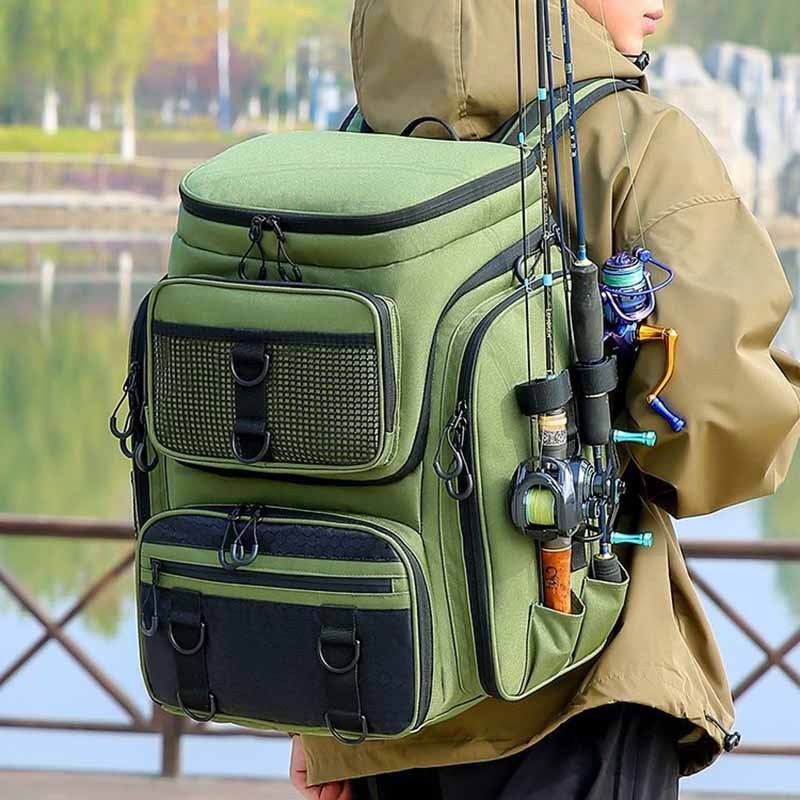
fishing backpack

Manufacturing Capacity for Fishing Bag Programs

Szoneier combines in-house development, controlled sewing production, quality inspection, packaging management, and export delivery for custom fishing gear projects.

18+ Years Experience

More than 18 years of experience covers material sourcing, pattern development, sample sewing, production planning, process inspection, retail packaging, and international shipment. Experience extends beyond ordinary backpacks into outdoor storage, waterproof bags, rod cases, tackle organizers, cooler bags, tool bags, and other functional sewn products.

20,000+㎡ Factory System

The manufacturing system covers sample development, material preparation, cutting, logo processing, sewing, semi-finished inspection, final inspection, packaging, and shipment preparation. Dedicated development and production areas allow project information to move from approved sample to bulk production with fewer communication gaps.

8 Sewing Lines

Eight sewing lines support different structures, order sizes, delivery schedules, and SKU combinations. Production planning can separate standard tackle bags, padded fishing backpacks, rod bags, cooler compartments, and heavier-duty outdoor products according to equipment, operator skill, and construction difficulty.

160+ Machines

More than 160 production and supporting machines cover cutting, sewing, bartacking, edge binding, logo application, inspection, and finishing. Equipment allocation depends on fabric thickness, reinforcement requirements, seam construction, zipper design, webbing load points, and expected monthly output.

120,000–200,000 pcs Monthly

Regular monthly production capacity ranges from approximately 120,000 to 200,000 pieces across custom bags and sewn soft goods. Capacity planning supports initial launches above 500 pieces, multi-SKU retail programs, seasonal fishing collections, and scheduled replenishment orders.

MOQ From 200 pcs

Selected fishing bag projects can start from 200 pieces when using available materials, mature constructions, standard accessories, and uncomplicated logo processes. Complex waterproof structures, custom-dyed materials, molded parts, specialized zippers, or newly developed hardware require separate MOQ evaluation. 

Built for Serious Fishing Gear Programs

A custom fishing tackle bag is developed around tackle tray dimensions, tool access, equipment protection, wet outdoor conditions, carrying load, fishing style, retail positioning, and long-term production consistency.

Fishing Gear Brands

Suitable for brands selling rods, reels, lures, line, terminal tackle, apparel, or fishing accessories. Development can cover coordinated backpacks, shoulder bags, sling packs, tray carriers, lure binders, rod bags, reel pouches, and branded storage accessories.
  • Product-family planning
  • Seasonal color development
  • Existing model upgrades
  • Long-term repeat production

Outdoor and Marine Brands

Suitable for outdoor, boating, kayaking, camping, and marine product companies entering the fishing category. Material and structure decisions can reflect exposure to spray, mud, sand, wet decks, saltwater, direct sunlight, and repeated equipment loading.
  • Boat and kayak storage
  • Wet and dry separation
  • Corrosion-aware hardware selection
  • Waterproof construction evaluation

Retailers and Importers

Suitable for retail chains, regional distributors, catalog companies, and import programs requiring clear specifications, stable bulk production, barcode management, master carton control, pre-shipment inspection, and planned delivery windows.
  • Multiple SKU coordination
  • Retail labeling
  • Carton marking
  • Inspection support

E-Commerce Brands

Suitable for Amazon, Shopify, and established online brands requiring product differentiation, package-volume control, FNSKU preparation, reliable replenishment, consistent photography samples, and reduced review risk.

  • FBA-ready packaging
  • Split shipment planning
  • Color and size variations
  • Product-improvement development

Control Common Fishing Bag Production Risks

Strong products come from measurable controls applied before sampling, during production, and before shipment.

Incorrect Tray Fit

Internal dimensions may look adequate on a drawing but still prevent smooth loading or removal. Zipper openings, seam allowances, divider thickness, fabric tension, and tray corner radius all affect usable space. Control method:
  • Verify actual tray dimensions
  • Reserve insertion clearance
  • Test loading direction
  • Confirm fit during sampling

Weak Load Points

A filled tackle bag becomes significantly heavier than an empty sample. Shoulder straps, top handles, side handles, D-rings, and webbing anchors require reinforcement based on real carrying loads. Control method:
  • Reinforcement patches
  • Box-X stitching
  • Bartack placement
  • Load-point inspection

Unsupported Waterproof Claims

Coated fabric may resist rain while needle holes, zipper openings, binding seams, and access panels still allow water entry. Finished performance must match construction and testing. Control method:
  • Define protection level
  • Select matching zipper construction
  • Review seam method
  • Confirm test standard

Hardware Corrosion

Saltwater, humidity, and wet storage can accelerate surface damage on zipper sliders, metal hooks, rivets, and D-rings. Hardware selection should reflect actual fishing conditions. Control method:
  • Material and coating review
  • Reduce unnecessary metal parts
  • Evaluate corrosion testing
  • Approve hardware samples

Sample-to-Bulk Differences

Uncontrolled material substitutions, changed foam density, altered webbing, or different zipper suppliers can cause bulk products to perform differently from the approved sample. Control method:
  • Approved BOM
  • Sealed reference sample
  • Pre-production sample
  • Incoming material checks

Packaging and Label Errors

Incorrect barcode position, missing warnings, mixed SKUs, unsuitable folding, or inaccurate carton marks can delay retail or warehouse receiving. Control method:
  • Packaging artwork approval
  • SKU separation plan
  • Carton label check
  • Final packing inspection
Reduce Project Risk

Custom Fishing Tackle Bag Product Range
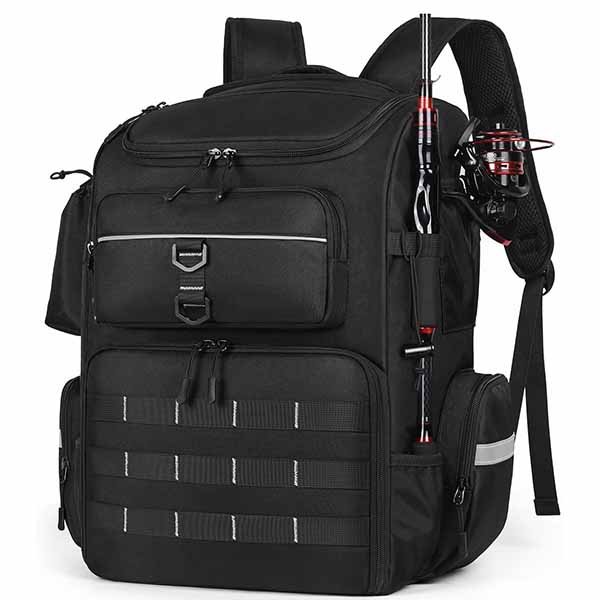
Develop one product or coordinate a complete collection around fishing style, equipment type, capacity, retail price, and target market.
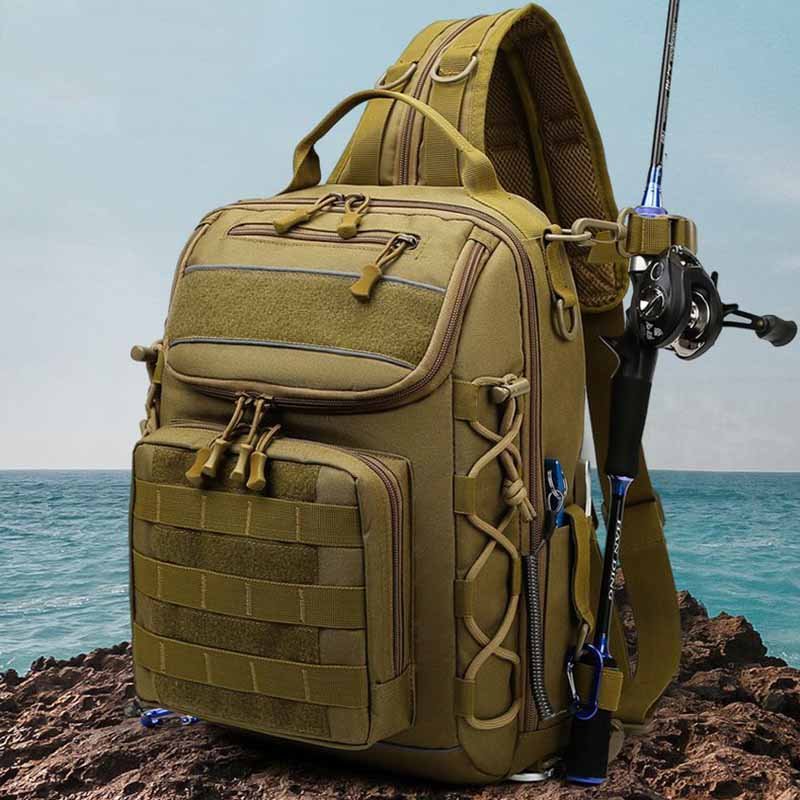
1. tackle backpacks

Tackle Backpacks

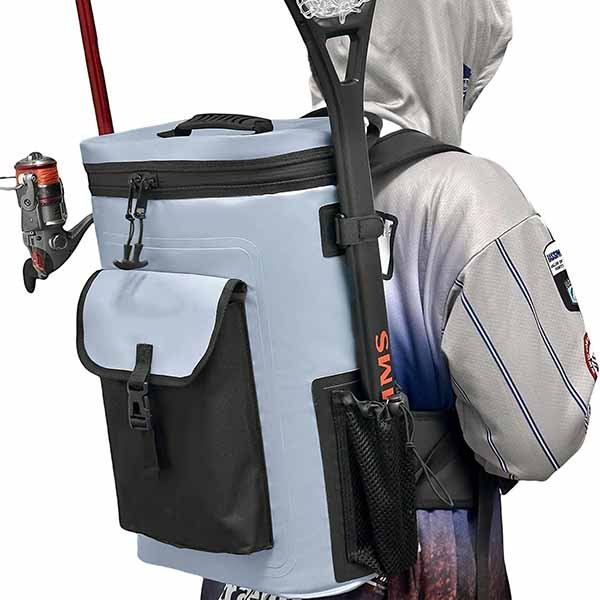
Structured backpacks designed around multiple utility trays, upper storage, side tool access, rod holders, bottle pockets, and padded carrying systems. Internal layouts can fit verified 3600-style or 3700-style trays, with exact dimensions confirmed from client drawings or physical tray samples.
2. shoulder tackle bags

Shoulder Tackle Bags

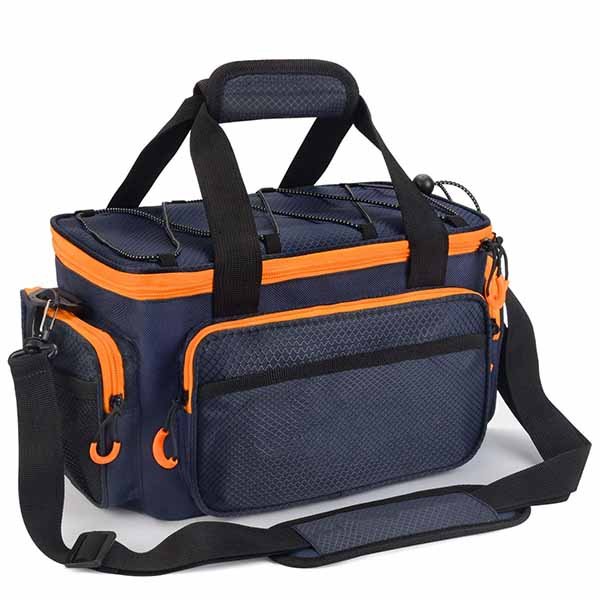
Wide-opening shoulder bags for fast access to trays, lures, tools, spare line, and personal gear. Options include molded bases, detachable padded straps, front organizers, dual-zip openings, reinforced handles, and side pockets for pliers or bottles.
3. sling fishing bags

Sling Fishing Bags

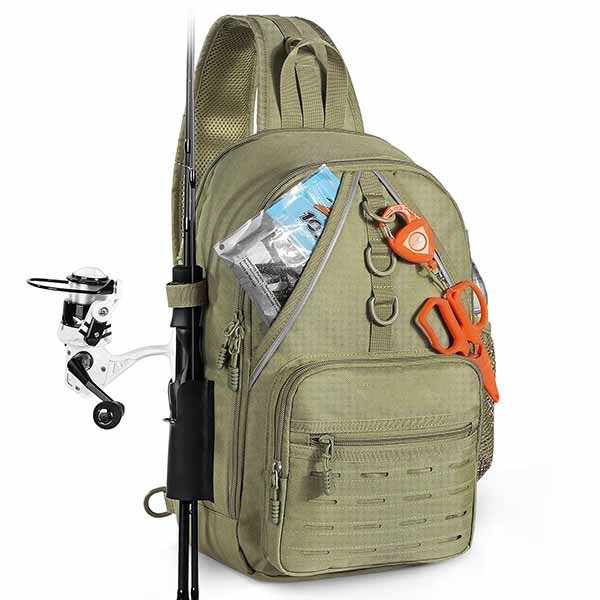
Compact single-shoulder designs allowing the bag to rotate from back to chest without full removal. Suitable for shoreline fishing, lure changes, light tackle, and mobile anglers. Development may include reversible straps, quick-access pockets, and tool attachment points.
4. fishing waist packs

Fishing Waist Packs

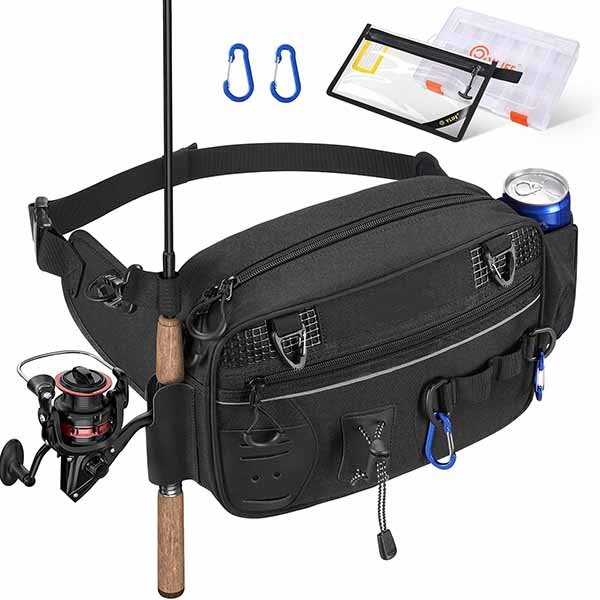
Low-profile waist and lumbar packs for fly fishing, wading, hiking, and lightweight tackle storage. Designs can include water-resistant compartments, foam fly panels, bottle holders, detachable pouches, drainage, and adjustable support belts.
5. tackle tray carriers

Tackle Tray Carriers

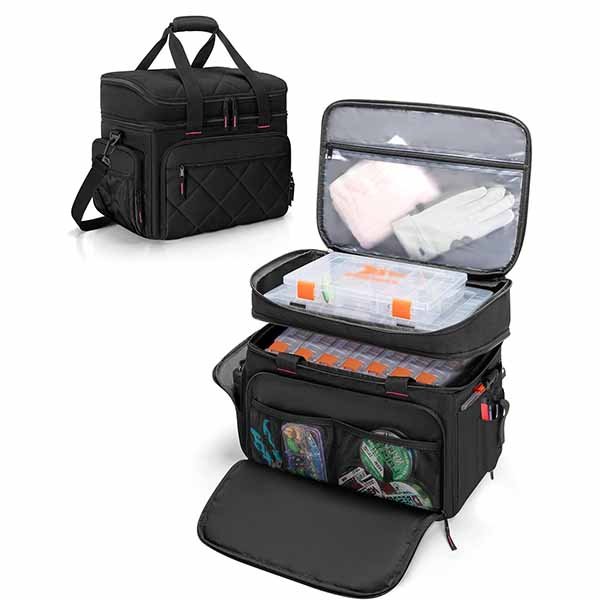
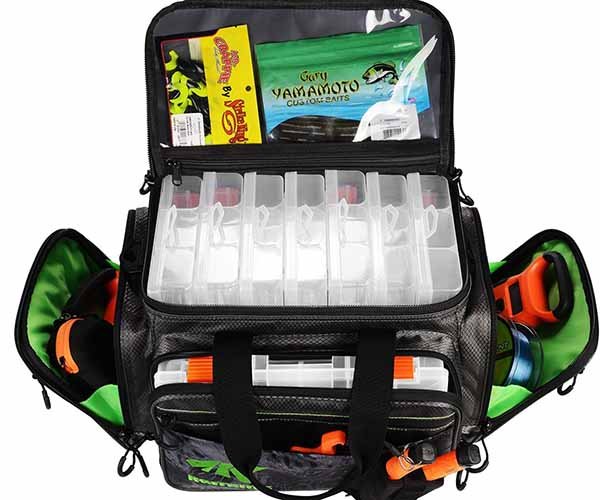
Purpose-built carriers developed around a fixed tray count and exact tray size. Common layouts hold two, four, six, or more utility trays, with additional storage for tools, line, gloves, terminal tackle, and personal items.
6. boat deck bags

Boat Deck Bags

Stable bags for boat decks, docks, and marine transport. Structure options include wide waterproof bases, grab handles, tie-down points, easy-clean surfaces, non-slip panels, top-opening access, and compartments designed to remain organized during movement.
7. kayak fishing bags

Kayak Fishing Bags

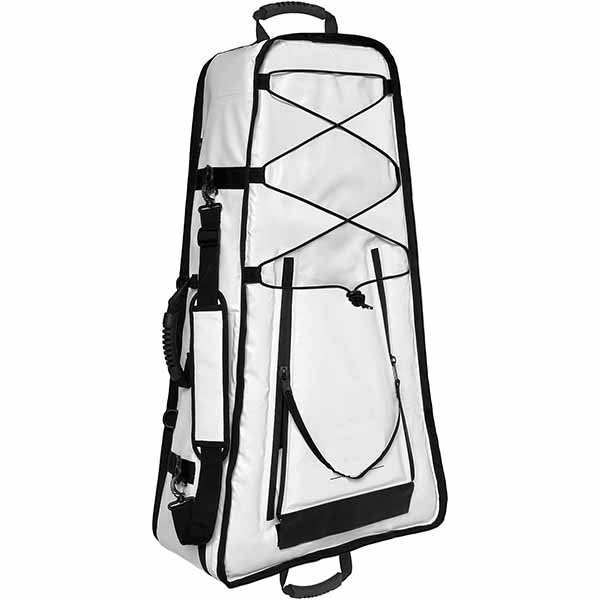
Compact bags and seat-back systems designed for restricted kayak space. Features may include bungee attachment, side anchoring, rod storage, hydration access, tool retention, drainage, and low-profile openings that remain accessible while seated.
8. rod and reel bags

Rod and Reel Bags

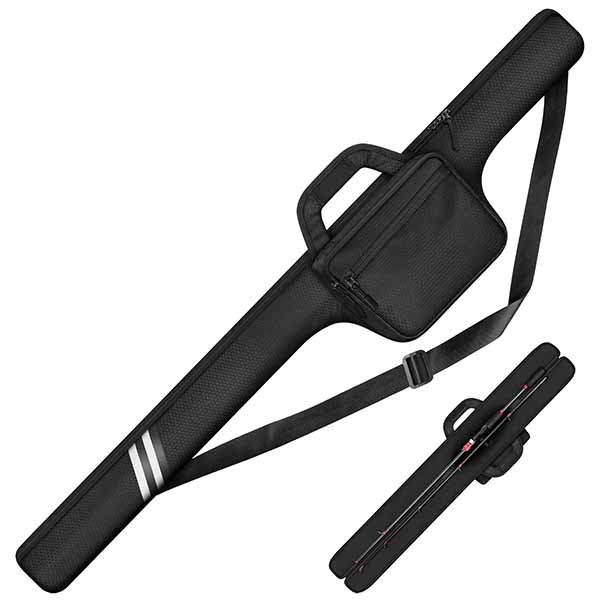
Padded solutions for rods, reels, leaders, and related equipment. Options range from soft rod sleeves to multi-rod carriers and semi-structured travel cases. Internal dividers, reel protection, abrasion panels, and reinforced end sections can be developed around equipment length.
9. lure binders

Lure Binders

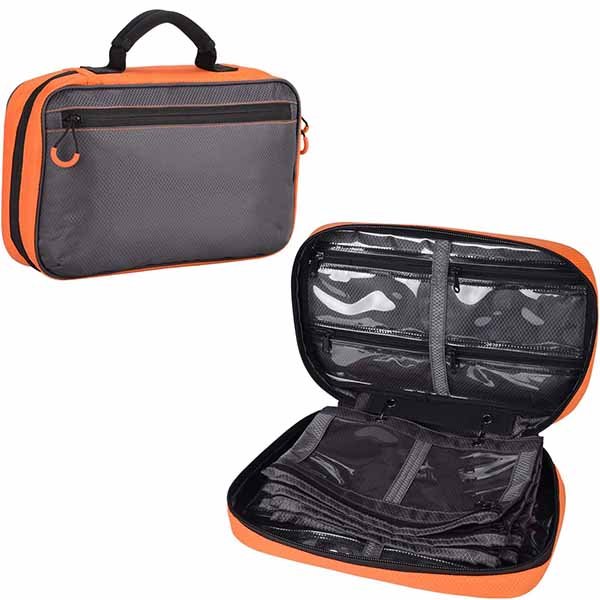
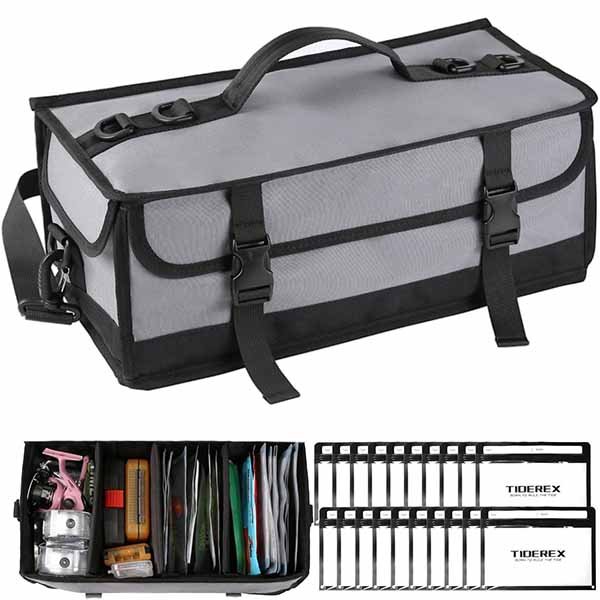
Book-style or roll-style organizers for soft lures, jigs, hooks, leaders, and terminal tackle. Removable sleeves, transparent pockets, corrosion-resistant eyelets, labeled dividers, and replaceable inserts can be specified for retail sets or brand collections.
10. fishing cooler bags

Fishing Cooler Bags

Combined tackle and cold-storage solutions for bait, drinks, or catch-related use. Designs can separate insulated and dry compartments while controlling leakage, condensation, liner cleaning, shoulder load, zipper access, and packaging volume.
11. rolling tackle bags

Rolling Tackle Bags

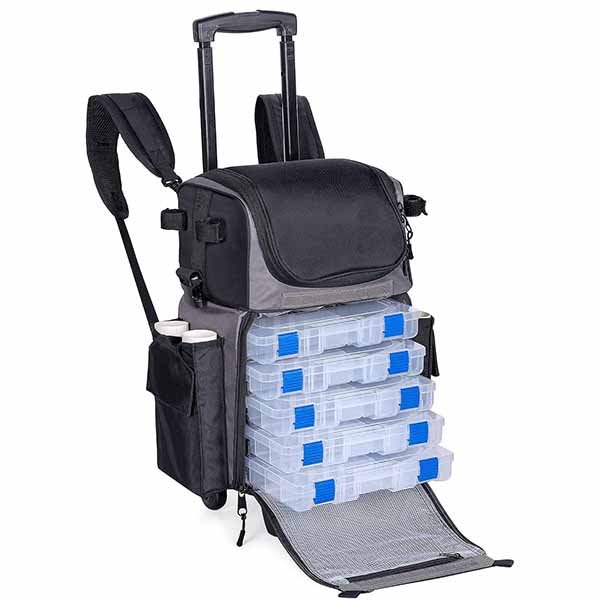
High-capacity wheeled systems for tournament fishing, travel, retail professionals, and anglers carrying several large trays. Development may include telescopic handles, reinforced wheel bases, skid plates, divided storage, and detachable upper bags.
12. waterproof tackle bags

Waterproof Tackle Bags

TPU- or PVC-coated structures using welded or reduced-seam construction for higher water protection. Suitable for boat, kayak, marine, and severe-weather applications. Waterproof level depends on material, seam construction, zipper selection, opening design, and final product testing.

Fishing Tackle Bag Specification Guide

Product FormatCommon Storage ArrangementReference Size RangeRecommended ConstructionCommon Use
Compact Sling Bag1–2 small trays plus tools8–14 L600D–1000D fabric, padded back, quick-access openingShoreline and mobile fishing
Standard Shoulder Bag4–6 medium trays18–28 LReinforced base, detachable strap, wide top openingFreshwater and general tackle
Large Tackle Backpack4–6 large trays plus upper compartment30–45 LStructured frame, padded harness, heavy-load reinforcementFull-day fishing and retail premium lines
Boat Deck BagOpen storage or removable dividers20–50 LCoated fabric, stable base, grab handles, tie-down pointsBoat and marine use
Kayak BagLow-profile modular storage10–30 LAttachment loops, drainage, compact accessKayak and seated fishing
Rod CarrierOne or several rods with reels90–180 cm lengthPadded walls, reinforced ends, abrasion-resistant outer fabricStorage, travel, and retail sets
Lure BinderRemovable pages or sleeves4–15 LCoated outer fabric, transparent sleeves, secure closureSoft lures, leaders, jigs
Waterproof Dry Tackle BagOpen storage, tray modules, or dividers15–45 LTPU/PVC laminated fabric, welded seams, waterproof closureBoat, kayak, and severe weather

Fishing-Specific Structure Engineering
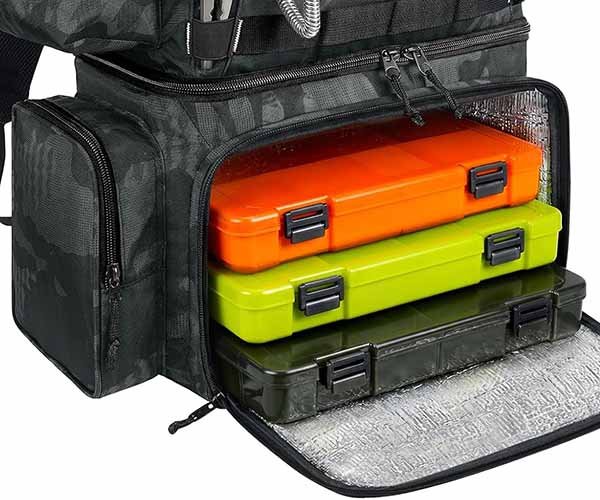
Good structure allows anglers to reach equipment quickly, carry heavy loads safely, protect valuable gear, and keep wet items away from dry storage.
1. tackle tray fit and removal clearance

Tackle Tray Fit and Removal Clearance

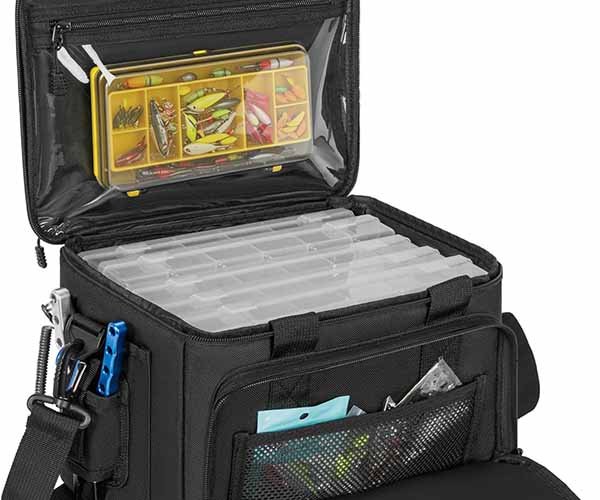
A tray compartment should be designed from actual external tray dimensions rather than a generic label such as “3600” or “3700.” Dimensions vary between brands, lid profiles, corner radii, latch designs, and production generations. Development checks include:
  • Tray length, width, and height
  • Number of trays per compartment
  • Vertical or horizontal loading
  • Opening width after zipper installation
  • Divider thickness and foam compression
  • Required finger clearance
  • Removal angle
  • Loaded fabric deformation
A compartment may measure wider than the tray yet still become difficult to use after seam allowance, binding, zipper tape, and internal padding reduce usable space. Szoneier can work from a physical tray, verified drawing, CAD dimensions, or an approved tray model supplied by the brand. Sampling should include repeated loading and removal rather than a single visual fit check. Bulk inspection can use an approved reference tray or a dimension-controlled fixture.
2. fast access tool organization

Fast-Access Tool Organization

Fishing tools are used frequently and should not disappear inside a large main compartment. Pliers, line cutters, hook removers, leader material, gloves, sunglasses, small lure boxes, and terminal tackle need separate access priorities. Structure options include:
  • Molded plier pockets
  • Elastic tool loops
  • Zippered front organizers
  • Transparent internal pockets
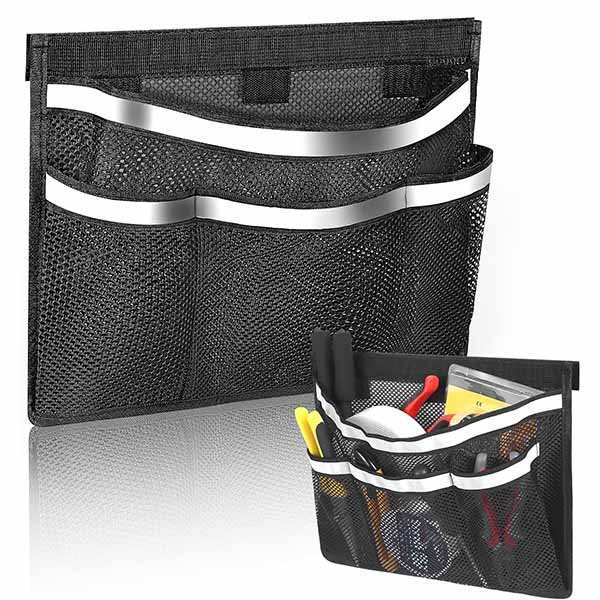
  • Mesh drop pockets
  • Hook-and-loop dividers
  • Key clips
  • Line spool holders
  • Exterior utility sleeves
  • Magnetic or covered access panels
Open tool slots offer speed but may lose equipment during transport. Zippered pockets provide retention but slow access. A balanced layout often combines secure storage for transport with several quick-access positions for active fishing. Pocket depth, elastic tension, drainage, and placement should be reviewed while the bag is worn or positioned on a boat deck.
3. wet and dry separation

Wet and Dry Separation

Fishing bags frequently hold damp gloves, bait containers, rainwear, wet towels, and tools exposed to water. Personal electronics, spare clothing, licenses, and packaged tackle may require dry storage. Possible solutions include:
  • Separate coated-liner compartments
  • Removable wet pouches
  • Welded internal pockets
  • Drainage eyelets
  • Ventilated mesh zones
  • Easy-clean bait compartments
  • Raised internal floors
  • Water-resistant document pockets
Drainage is useful only when holes are placed at the true lowest point during normal use. Ventilation can reduce retained moisture but may also allow water entry. Each decision should match the fishing environment and product claim. Insulated sections require additional evaluation for liner sealing, condensation, foam thickness, cleaning access, and food-contact requirements when relevant.
4. external gear retention

External Gear Retention

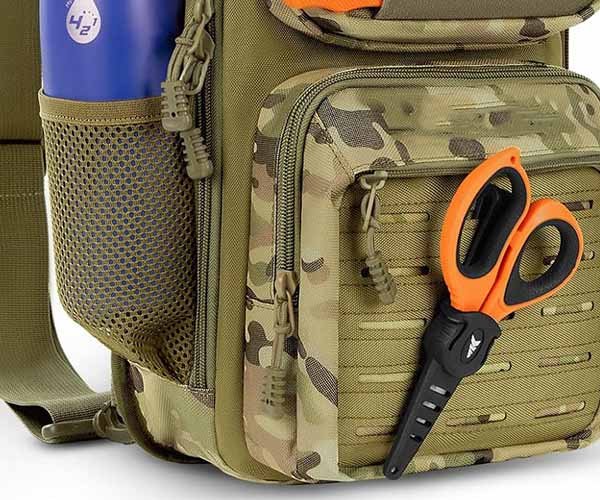
External attachment systems can improve capacity without enlarging the main bag. Common options include rod holders, plier sleeves, D-rings, daisy chains, MOLLE-style webbing, elastic cords, bottle pockets, landing-tool loops, and removable side pouches. Placement should consider:

  • Balance during carrying
  • Tool movement
  • Snag risk
  • Left- or right-hand access
  • Interference with zippers
  • Contact with the angler’s body
  • Kayak or boat clearance
  • Packaging compression

Rod holders require secure upper and lower retention. A shallow lower pocket alone may allow the rod butt to slip. Elastic upper straps need sufficient tension without damaging guides or handles. External features should solve a defined use problem rather than serve as decoration. 

Compare Fishing Tackle Bag Materials

MaterialMain StrengthWater ProtectionWeightRelative CostRecommended UseMain Consideration
600D PolyesterBalanced cost and durabilityCoating-dependentMediumEntry–MediumStandard shoulder bags, backpacks, promotional programsSuitable for broad use but not inherently waterproof
900D OxfordStronger body and structured appearanceCoating-dependentMedium–HeavyMediumTackle bags, rod bags, reinforced outdoor storageFabric construction varies by mill and coating
1000D PolyesterHigh abrasion resistance at controlled costCoating-dependentHeavyMediumLarge tackle bags, utility storage, heavy-use productsHigher weight and larger folded volume
420D/500D NylonLower weight with good tear performanceCoating-dependentLight–MediumMedium–HighPremium backpacks, lightweight sling bagsSurface abrasion resistance depends on weave and finish
1000D NylonStrong abrasion and tear resistanceCoating-dependentHeavyHighPremium fishing packs, tactical-style productsHigher material cost and heavier finished product
TPU-Coated FabricFlexible, clean surface, weldable constructionHigh with proper seamsMediumHighBoat bags, kayak bags, premium waterproof storageRequires suitable welding equipment and controlled seam design
PVC-Coated FabricDurable coating and strong water barrierHigh with proper seamsMedium–HeavyMedium–HighDeck bags, dry storage, value-oriented waterproof programsHeavier hand feel and low-temperature performance require evaluation
EVA ComponentsShape retention and impact protectionWater-resistant componentMediumMedium–HighMolded bases, protective panels, semi-hard casesMold cost, compression, odor, and packaging volume need review

Water Resistance and Waterproof Construction

Water protection should be specified by structure and expected exposure rather than by fabric name alone.

Water-Resistant Sewn Construction

Water-resistant bags usually use PU-coated polyester, Oxford, or nylon with conventional sewing. Protection may be improved through flap-covered openings, reversed coil zippers, coated linings, raised bases, and reduced top seams. Suitable use includes:
  • Shoreline fishing
  • Freshwater fishing
  • Light rain
  • Wet grass
  • Short outdoor exposure
  • General retail tackle bags
Needle holes, zipper gaps, bound seams, and uncovered openings can allow water entry. A water-resistant product should not be presented as submersible. Possible project tests include spray evaluation, controlled rainfall simulation, and limited surface-water exposure.

Enhanced Water-Protection Construction

A higher-protection sewn bag may combine coated outer material, water-resistant zippers, improved seam positioning, laminated internal panels, reinforced waterproof bases, covered access points, and selective seam sealing. Suitable use includes:
  • Boat spray
  • Kayak use
  • Repeated wet handling
  • Heavy rain
  • Marine transport
  • Premium outdoor collections
Performance depends on every entry point. A high-grade zipper cannot compensate for exposed needle holes or an unprotected lid seam. Project specifications should identify expected exposure duration, water direction, pressure, and acceptable moisture level inside the bag.

Welded Waterproof Construction

Welded products normally use TPU- or PVC-laminated fabric joined by high-frequency welding or compatible heat-welding processes. Construction removes many sewing needle holes and can support higher water protection.
Options include:

  • Roll-top closures
  • Welded zipper openings
  • Waterproof zippers
  • Welded internal pockets
  • Reinforced welded handles
  • Air-release valves
  • Removable rigid panels
  • Non-slip welded bases

Fully waterproof or submersible claims require validation on the finished product. Seam width, welding temperature, pressure, material thickness, zipper design, corner construction, and reinforcement method all affect performance.
Specialized materials, waterproof zippers, welded structures, and testing may increase MOQ, sample time, and cost.

Reinforcement, Hardware, and Carrying Systems

Fishing bags often carry dense equipment. Load engineering should be based on filled weight rather than empty-bag appearance.

Load-Bearing Construction

Primary handles and shoulder straps should connect to reinforced body panels rather than only to outer fabric. Depending on target load, reinforcement may use:
  • Extended webbing paths
  • Internal backing fabric
  • PE or PP support sheets
  • Box-X stitching
  • Multiple bartacks
  • Layered seam allowances
  • Reinforced bottom panels
  • Load-distribution yokes
Stress concentrates where flexible and rigid areas meet. Zipper ends, top-handle anchors, shoulder strap bases, and side-panel junctions require special attention. Prototype evaluation should include static loading, repeated lifting, and inspection for stitch elongation, fabric distortion, buckle movement, and seam opening.

Zippers, Buckles, and Adjustment Parts

Zipper size, slider material, chain type, coating, and opening radius affect daily performance. Large curved openings require smooth zipper paths and adequate seam support. Component options include:
  • Coil zippers
  • Molded-tooth zippers
  • Water-resistant coated zippers
  • Double sliders
  • Lockable pulls
  • Acetal buckles
  • Nylon adjustment parts
  • Metal or non-metal D-rings
  • Rotating hooks
  • Removable shoulder clips
Large metal components can add cost, weight, noise, and corrosion risk. Acetal hardware often offers a strong balance for wet outdoor use. Final component choice should reflect expected load, visual positioning, temperature, salt exposure, and replacement availability.

Corrosion-Aware Component Selection

“Rustproof” should not be used without a defined material and test basis. Salt spray, trapped moisture, fish residue, and poor drying conditions can damage lower-grade metal components. Control options include:
  • Stainless steel components for selected positions
  • Aluminum components
  • Coated alloy components
  • Plastic replacements
  • Reduced exposed metal
  • Project-specific salt-spray testing
  • Care instructions for marine use
Metal quality alone does not guarantee long-term performance. Surface treatment, edge damage, mixed-metal contact, cleaning, and storage conditions also matter.

Carrying Comfort and Weight Distribution

A large tackle backpack may carry several trays, drinks, tools, rain gear, and electronics. Shoulder comfort depends on more than foam thickness. Development factors include:

  • Strap width
  • Foam density
  • Shoulder curve
  • Mesh structure
  • Stitch placement
  • Sternum strap position
  • Back-panel support
  • Center of gravity
  • Upper and lower compression
  • Hip or waist support

Overly soft foam can collapse under load. Excessively thick foam increases package volume without improving support. The carrying system should be reviewed on a loaded sample. 

Logo Solutions for Fishing Tackle Bags

Logo placement should account for fabric coating, abrasion, water exposure, folding, pocket movement, product position, and retail visibility.
Silk Screen Printing

Screen Printing

A cost-efficient choice for bold logos on polyester, Oxford, canvas, and selected coated fabrics. Ink selection and curing conditions should match the substrate. Best suited to flat panels without heavy texture, seams, or foam underneath.
2. heat transfer

Heat Transfer

Suitable for multicolor artwork, gradients, smaller details, and flexible production quantities. Film compatibility, application temperature, pressure, and coated-fabric sensitivity require testing before bulk production.
3. embroidery (3)

Embroidery

Creates a textured, durable appearance on woven materials. Embroidery density, backing, thread type, water exposure, and panel distortion should be reviewed. Avoid heavy embroidery across waterproof membranes or welded zones.
4. woven labels

Woven Labels

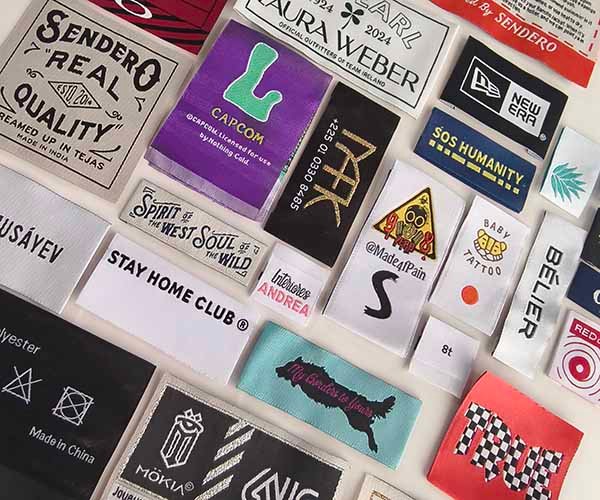
Useful for side seams, internal branding, care information, model identification, or subtle premium presentation. Fold type, edge finish, label density, wash resistance, and seam position can be customized.
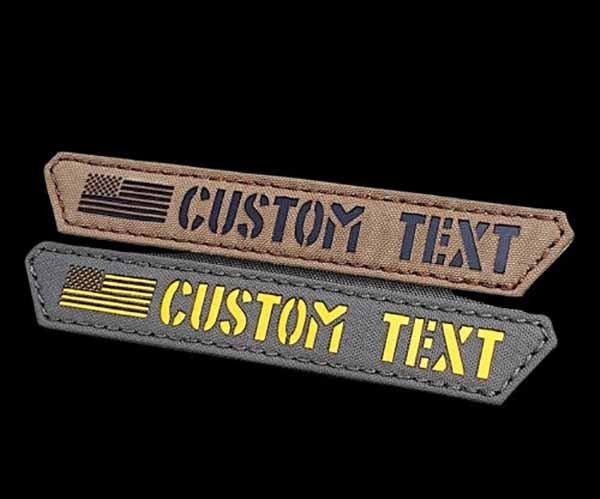
6. rubber silicone patch

Rubber Patches

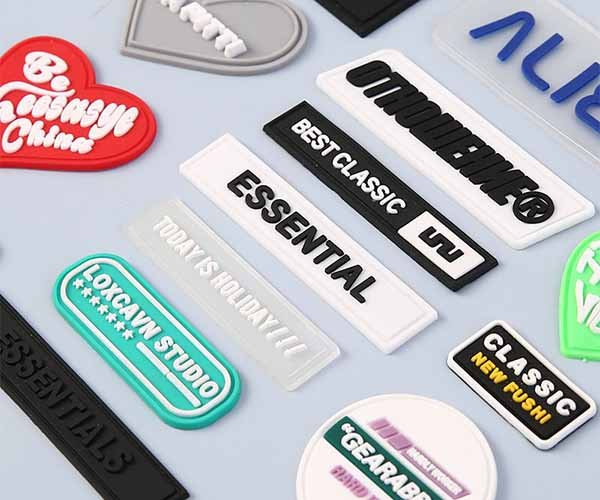
PVC, TPU, or silicone patches offer dimensional branding for outdoor products. Mold cost, minimum quantity, color count, patch thickness, attachment method, and low-temperature flexibility affect final selection.
20. reflective tags

Reflective Logos

Reflective transfer, print, webbing, or patch elements can increase visibility during low-light use. Reflective performance varies by material and should be confirmed from approved samples.
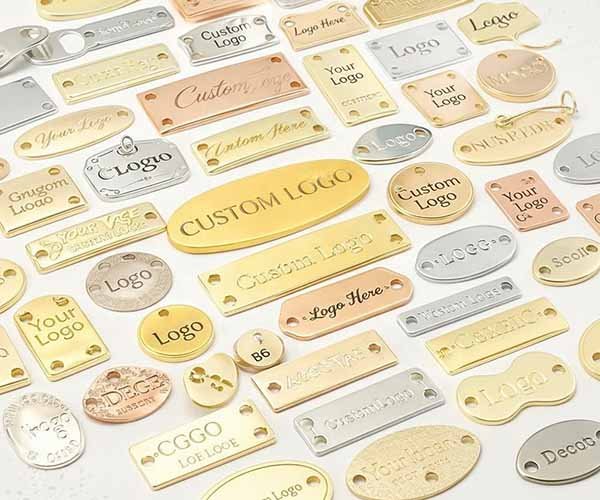
7. metal logo plate

Metal Badges

Metal plaques create a premium retail appearance but add weight and corrosion considerations. Attachment holes, backing washers, sharp edges, coating quality, logo depth, and saltwater exposure require evaluation.
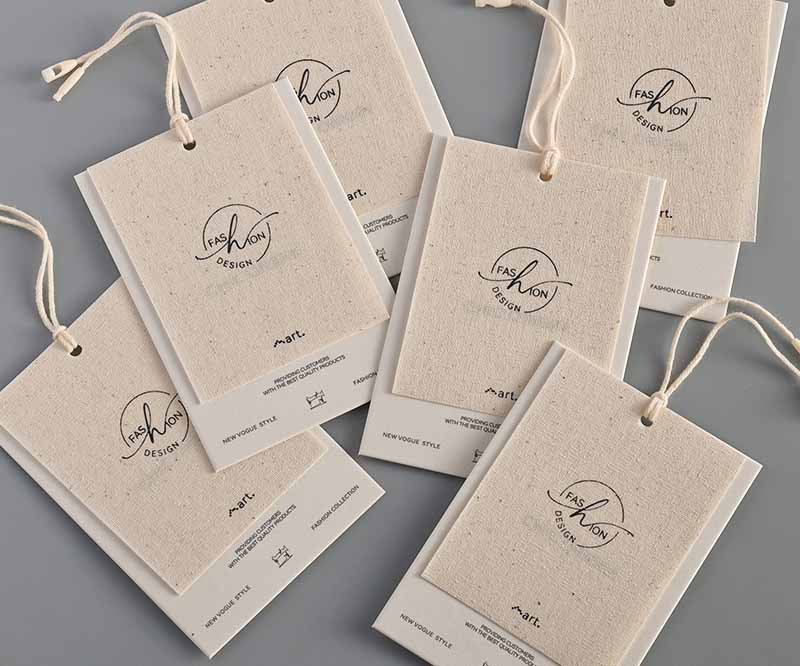
4. hangtags and labels

Branded Retail Sets

Brand presentation can combine hangtags, product cards, barcode labels, printed tissue, reusable storage bags, retail boxes, and master carton marks. Packaging should support product shape while controlling shipping volume. 

Start From an Idea, Drawing, or Existing Bag

Szoneier can begin development from detailed technical files or incomplete early-stage references.

Tech Pack Development

Provide dimensions, materials, components, artwork, construction notes, packing requirements, and target quantity. The team reviews manufacturability, material availability, seam logic, reinforcement, tolerance, MOQ, cost factors, and sample timing.
  • File review
  • Construction clarification
  • Material matching
  • Quotation preparation

Physical Sample Development

Send an existing product, competitor sample, or previous production model. The sample can be measured, photographed, structurally reviewed, and adapted for improved materials, dimensions, internal organization, logo, or packaging.
  • Measurement record
  • Structure analysis
  • Improvement proposal
  • New sample creation

Photo or Sketch Development

A clear photo, hand sketch, reference link, or product concept can become a development starting point. Missing dimensions and internal details are defined through use scenarios, tray requirements, target price, and intended sales channel.
  • Concept review
  • Dimension proposal
  • Material direction
  • Pattern development

Existing Product Upgrade

Existing products can be improved around field feedback, retail returns, online reviews, or new positioning. Common upgrades include stronger handles, better tray fit, smoother zipper access, more stable bases, reduced weight, and improved packaging.

  • Problem mapping
  • Structure revision
  • Cost balancing
  • Validation sample

Fishing Tackle Bag Sample Development

Standard samples generally require 5–7 working days after material and specification confirmation. Complex structures usually require 10–15 working days. Welded constructions, custom hardware, molded parts, special materials, or repeated revisions may require additional time.

Project Review

The team reviews product type, fishing environment, tray dimensions, target quantity, intended retail price, waterproof expectation, logo, packaging, and delivery country. Missing information is converted into a clear development checklist.

Material Selection

Outer fabric, lining, foam, webbing, mesh, zipper, buckles, reinforcement, base material, and logo process are proposed according to expected use and cost range. Available colors and supplier minimum quantities are checked before sampling.

Structure Confirmation

The project team confirms overall dimensions, compartment layout, opening direction, tray loading method, handle positions, shoulder system, rod holders, tool pockets, drainage, and branding locations.

Pattern Making

Pattern makers translate the approved structure into production pieces with seam allowance, binding allowance, fold positions, reinforcement layers, zipper paths, foam dimensions, and assembly marks.

Sample Sewing

Experienced sample makers assemble the first prototype. Construction follows the planned sequence so potential bulk-production difficulties can be identified during development rather than after order confirmation.

Internal Inspection

The prototype is checked for dimensions, tray fit, zipper operation, handle alignment, shoulder comfort, pocket function, stitching, reinforcement, logo appearance, and visual balance.

Photo and Video Review

Detailed photos and videos can be provided before sample shipment. Internal compartments, tray loading, zippers, straps, logos, and structural details are shown for early review.

Revision and Approval

Feedback is recorded by item. Approved changes are applied to the next sample or confirmed through agreed modification records. The final approved sample becomes the reference for BOM, production setup, and quality inspection.

MOQ, Cost, and Production Time Guide

MOQ starts from 200 pieces for selected projects. Orders from established brand programs commonly begin above 500 pieces per design or are distributed across coordinated colors and SKUs.

Project FactorEffect on MOQEffect on CostEffect on Time
Mature Sewn StructureLower MOQ possible with available materialsLower development costStandard sample 5–7 working days
New Multi-Compartment StructurePattern and sample evaluation requiredMore sewing time and reinforcementComplex sample 10–15 working days
Available Fabric and ColorSupports smaller initial runsBetter material efficiencyShorter material preparation
Custom-Dyed or Custom-Laminated FabricMill minimums may raise MOQDyeing, coating, testing, and wastageAdditional material lead time
Welded Waterproof ConstructionSpecialized material and process MOQ appliesWelding, waterproof zipper, tooling, testingLonger development and setup
Custom Molded Hardware or Rubber PatchMold and component minimums applyMold fee and component developmentTooling approval required
Multiple Colors or SKUsQuantity allocation affects efficiencyAdditional setup and packing controlMore production coordination
Retail Box or Complex PackagingPackaging supplier minimums applyPrinting, inserts, assembly, and larger freight volumePackaging production adds lead time
Standard Bulk ProductionDepends on order size and material readinessVolume-based cost structureApproximately 20–45 days
Complex or Welded Bulk ProductionDepends on process and capacity planHigher labor and material controlApproximately 35–60 days

Controlled Bulk Production From Approved Sample

Production starts from a frozen specification rather than verbal memory. Material, dimensions, construction, branding, packaging, and inspection requirements are transferred into controlled production files.

BOM and Production File Control

The bill of materials records approved outer fabric, lining, foam, webbing, zipper, sliders, buckles, thread, labels, reinforcement, logo components, packaging, and carton requirements.
Production files may include:
  • Approved dimensions
  • Pattern version
  • Color references
  • Logo artwork and position
  • Stitching notes
  • Reinforcement points
  • Pocket measurements
  • Tray-fit requirement
  • Packaging artwork
  • Carton configuration
  • Inspection criteria
Material substitutions should not occur without review. A visually similar fabric may have a different coating, weight, tear strength, color fastness, or hand feel.

Pre-Production Sample

A pre-production sample may be made from bulk materials before full sewing begins. It confirms material batch, color, logo, component selection, construction method, labels, and packaging.
The review focuses on differences introduced by bulk materials or production equipment. Approval can be recorded through physical sample, photos, video, measurement sheet, or a signed confirmation process.
For multi-SKU orders, one approved reference may be required for every meaningful construction, material, or color difference.

Cutting, Logo, and Sewing Control

Fabric is inspected and prepared according to coating direction, grain, print alignment, shade grouping, and usable width. Cutting files must account for reinforcement, foam, binding, zipper lengths, and logo position.
Logo work may occur before sewing. Position fixtures help control alignment across bulk production.
Sewing sequence influences finished shape and efficiency. Critical operations include:
  • Zipper installation
  • Handle anchoring
  • Shoulder strap connection
  • Base attachment
  • Binding
  • Internal divider assembly
  • Foam insertion
  • Rod-holder alignment
  • Pocket symmetry
First-piece review is completed before full-line production continues.

Finishing, Packing, and Shipment Preparation

Finished bags are trimmed, shaped, cleaned, and inspected. Zippers are operated, straps adjusted, pockets checked, and loose threads removed.
Packing control covers:

  • Hangtags
  • Care labels
  • Barcodes
  • FNSKU labels
  • Polybags
  • Warning labels
  • Tissue or shape support
  • Retail boxes
  • Carton assortment
  • Carton marks
  • Gross weight
  • Packing list

Large padded or semi-structured products need packaging designed to avoid permanent creasing, crushed foam, distorted back panels, or damaged molded bases.

Fishing Tackle Bag Quality Inspection

Quality control covers incoming materials, production stages, finished products, packing accuracy, and project-specific performance requirements.

Material Inspection

Outer fabric, lining, webbing, foam, zipper, buckles, labels, and logo components are checked against approved specifications. Inspection may include color, width, thickness, coating appearance, surface defects, and quantity.

Dimension Check

Finished dimensions are measured at defined points using agreed tolerances. Critical dimensions include overall size, tray compartments, opening width, pocket depth, strap length, rod-holder position, and label placement.

Tray Fit Check

Approved trays or controlled dimension fixtures are loaded into the finished product. Inspectors check entry clearance, removal clearance, zipper closure, compartment deformation, and tray count.

Zipper Function Check

Zippers are opened and closed through their full path. Inspection focuses on slider movement, corner resistance, tape alignment, end stops, puller attachment, and fabric catching.

Strap and Handle Check

Handle anchors, shoulder straps, buckle positions, webbing ends, bartacks, Box-X stitching, and reinforcement panels are inspected. Project-specific load tests may be arranged according to agreed requirements.

Stitching Inspection

Stitch density, skipped stitches, loose thread, seam alignment, binding coverage, puckering, backstitching, and reinforcement placement are reviewed during production and final inspection.

Water Protection Check

Testing is selected according to the declared product level. Options may include spray exposure, controlled rainfall, surface-water testing, seam evaluation, welded seam checks, or finished-product immersion tests.

Packaging Inspection

SKU, color, quantity, labels, barcode, FNSKU, polybag warning, hangtag, retail box, carton assortment, gross weight, carton marks, and packing list are checked before shipment. 

Factory Capacity Behind Every Fishing Bag Order

Szoneier operates as a factory-based custom bags and soft goods manufacturing partner in Shenzhen and the South China supply chain.

Development Team

The project structure includes international sales, product managers, bag designers, pattern makers, sample makers, and procurement staff. Cross-functional review helps connect product concept, material availability, manufacturing feasibility, cost, and delivery planning.

Sample Department

Eight sample specialists and twelve sample sewing stations support product development, revisions, photography samples, approval samples, and pre-production samples. Pattern makers have an average of more than ten years of related experience.

Sewing Production

Eight sewing lines and more than 120 production staff support standard bags, structured backpacks, reinforced outdoor products, cooler bags, rod bags, and other sewn soft goods.

Equipment System

More than 160 production and auxiliary machines support cutting, stitching, bartacking, binding, logo application, finishing, and inspection. Equipment selection follows material thickness and construction requirements.

Quality Team

Twelve QC staff coordinate incoming inspection, in-process checks, finished-product review, packaging inspection, inspection records, and support for third-party inspection when required.

Capacity Coordination

The manufacturing system includes more than ten controlled satellite partner factories for specialized categories, peak-season capacity, multi-SKU coordination, and repeat-order support. Sampling standards, materials, quality, communication, and delivery remain under Szoneier project management.

Packaging and Global Delivery Support

Packaging and logistics planning begins before bulk completion so product shape, labels, carton efficiency, warehouse requirements, and delivery timing remain aligned. 

Retail-Ready Packaging

Retail programs may require:
  • Brand hangtags
  • Product information cards
  • Care labels
  • Barcode labels
  • Color stickers
  • Reusable dust bags
  • Printed polybags
  • Retail boxes
  • Shelf-ready cartons
  • Master carton marks
Packaging should protect foam, back panels, molded bases, zipper shape, metal badges, and external tool holders. Excessive folding may reduce freight volume but create permanent creases or distorted structure.

Amazon and E-Commerce Preparation

Support can include:
  • FNSKU labels
  • Polybag warning labels
  • SKU separation
  • Carton labels
  • Packing lists
  • Carton weight control
  • Split replenishment
  • Air and sea shipment coordination
  • Shipment to FBA or third-party warehouses
Every SKU should be packed and labeled according to the latest files supplied for the order. Sample packaging approval is recommended before full packing.

International Shipping

Available logistics planning includes:
  • Express courier
  • Air freight
  • Sea freight
  • EXW
  • FOB
  • CIF
  • DAP
  • DDP evaluation
  • Multi-address shipment
  • Warehouse delivery
Transport selection depends on order volume, carton dimensions, launch date, destination, inventory plan, customs requirements, and cost target. DDP availability depends on destination, product details, shipment volume, and current logistics conditions.

Fishing Bag Development and Production Cases
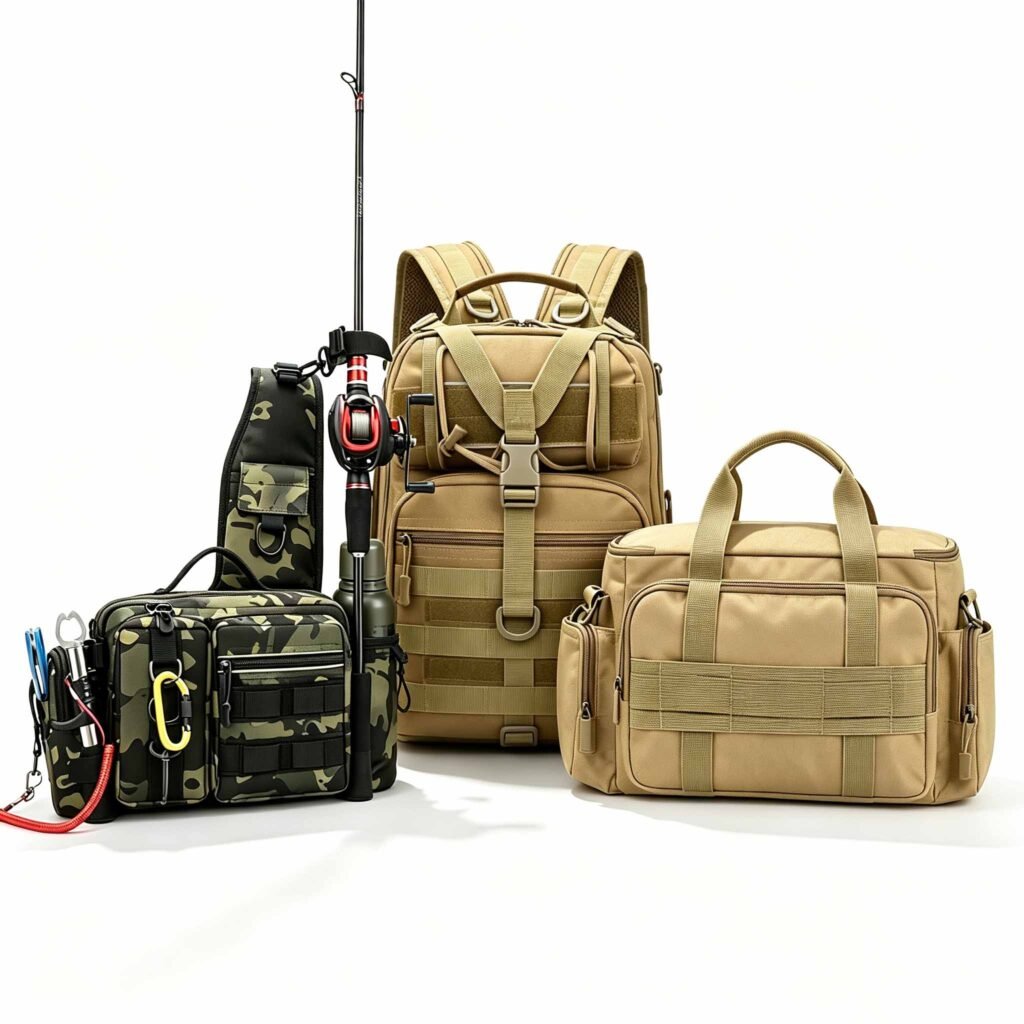
The following anonymized projects illustrate common development and production scenarios. Brand names remain confidential.
multi sku tackle bag

United States Fishing Brand — Multi-SKU Tackle Collection

  • Region: United States
  • Client Type: Established fishing accessories brand
  • Products: Tackle backpack, shoulder tackle bag, sling bag
  • Total Quantity: 4,800 pcs
  • SKU Count: 3 structures, 5 color-SKU combinations
  • Materials: 900D Oxford outer, 210D lining, reinforced webbing, coated base panels
  • Logo: Embroidery plus woven internal label
  • Packaging: Hangtag, barcode label, protective polybag, printed master carton
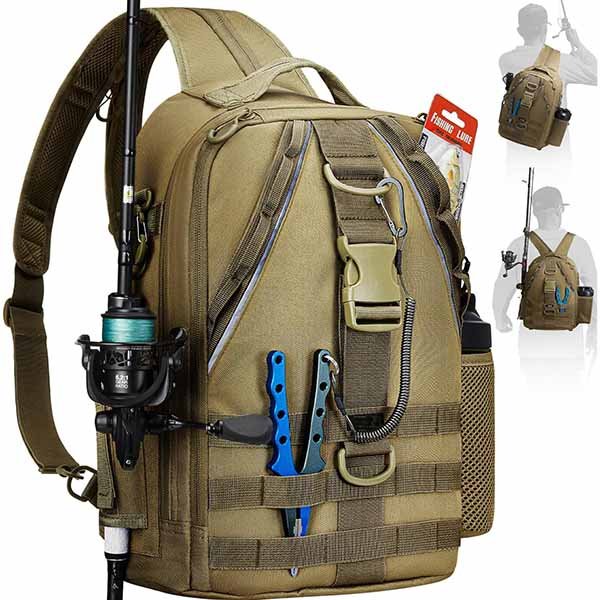
The brand wanted a coordinated collection compatible with its existing utility trays. The previous supplier had developed compartments from nominal tray names without checking the actual tray dimensions. Trays fitted when empty but became difficult to remove after bulk bags were fully loaded. Szoneier received physical trays and recorded all outer dimensions, latch projections, and lid shapes. Main compartments were revised to provide loading clearance without creating excess movement. Handle anchors received extended internal reinforcement, and plier pockets were moved away from the shoulder strap contact area. The first sample was completed in 7 working days. A revised approval sample required another 6 working days after feedback. Bulk production took 38 days after material confirmation. Inspection included dimension checks, tray-fit checks, zipper operation, handle reinforcement review, color-SKU verification, barcode inspection, and pre-shipment sampling. The collection launched through specialty retail and online channels. A replenishment order followed after the first selling season.
2. shoulder tackle bag

Amazon Private Label Program — Improved Shoulder Tackle Bag

  • Region: United States
  • Client Type: Established Amazon outdoor brand
  • Product: Medium shoulder tackle bag
  • Total Quantity: 2,600 pcs
  • Colors: Black and sand
  • Materials: 600D polyester, coated lining, molded base insert, acetal hardware
  • Logo: Heat-transfer logo and woven side label
  • Packaging: FNSKU label, warning polybag, model sticker, export carton
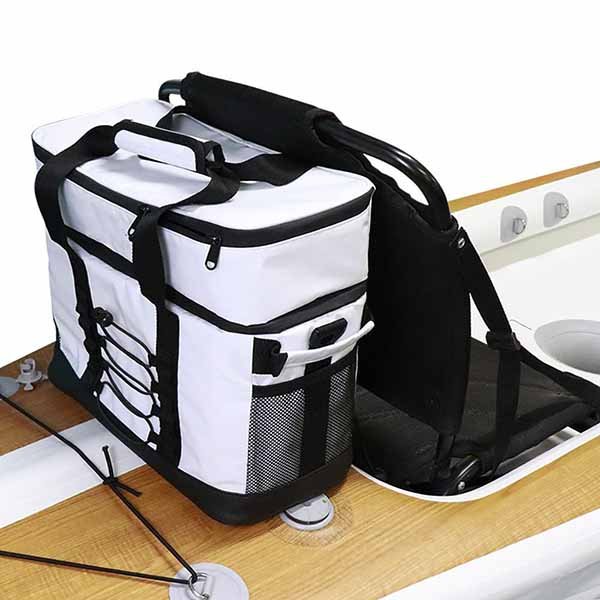
The existing model received repeated complaints about zipper resistance, an unstable shoulder pad, insufficient space for four medium trays, and excessive carton volume. Szoneier reviewed the original product and listing feedback. The zipper opening radius was enlarged, the tray compartment gained additional clearance, and the shoulder pad was redesigned with denser foam and anti-slip fabric. Internal structure was simplified to reduce unnecessary layers and package thickness. A development sample was completed in 6 working days. A photo and video review allowed several minor corrections before shipment. The approved sample was used to establish the bulk BOM and packaging standard. Production required 31 days. FNSKU, warning labels, carton labels, SKU separation, and packing-list quantities were checked before shipment. Part of the order moved by air for launch inventory, while the balance moved by sea for lower freight cost.
3. welded kayak deck bag

Australian Marine Brand — Welded Kayak Deck Bag

  • Region: Australia
  • Client Type: Marine and kayak equipment brand
  • Product: Welded kayak fishing deck bag
  • Total Quantity: 1,200 pcs
  • SKU Count: 2 sizes
  • Materials: TPU-laminated fabric, welded seams, reinforced attachment loops
  • Logo: Welded TPU patch
  • Packaging: Shape-support insert, protective bag, labeled export carton
The project required higher water protection than a conventional sewn tackle bag. The bag needed to attach behind a kayak seat, remain accessible while seated, and carry trays, tools, rainwear, and personal equipment. Development started from kayak-space dimensions and attachment-point measurements. The structure used a low-profile opening, welded body panels, reinforced anchor patches, and removable internal dividers. The base was shaped to remain stable without interfering with the seat. Sampling took 14 working days because welded seam settings and attachment reinforcement required repeated evaluation. Finished samples were checked for seam continuity, attachment strength, closure performance, and water entry under the agreed test method. Bulk production took 47 days. Inspection covered weld appearance, seam dimensions, attachment placement, closure function, logo patch alignment, and packing shape. The brand later added a smaller accessory pouch using the same material and visual identity.

Why Fishing Brands Work With Szoneier

A strong manufacturing partner should balance product development, manufacturing control, order flexibility, and long-term supply capability.

Fishing Product Development

Development goes beyond adding a logo to a stock bag. Tray dimensions, fishing style, access frequency, equipment load, wet conditions, carrying method, retail price, and packaging limitations are reviewed before pattern making.
  • Fishing-specific compartment planning
  • Material and component guidance
  • Existing product improvement
  • Multi-product collection development

Flexible Order Planning

Selected structures can start from 200 pieces, while established programs commonly begin above 500 pieces and expand into larger replenishment orders. Production planning can support single-SKU launches, multiple colors, and coordinated product families.
  • Trial-order support
  • Multi-SKU allocation
  • Seasonal production
  • Repeat-order capacity

Sample-to-Bulk Control

Approved samples are connected to bulk production through pattern records, BOM control, pre-production review, first-piece inspection, in-process checks, and final packing inspection.
  • Controlled specifications
  • Material traceability
  • Production-stage checks
  • Approved reference samples

Channel-Ready Delivery

Products can be prepared for retail, Amazon, Shopify, distributors, warehouses, and international import programs. Packaging, barcode, FNSKU, carton marking, shipment method, and delivery schedule can be coordinated within one project.

  • Retail packaging
  • FBA preparation
  • Multiple shipping methods
  • Replenishment planning

Fishing Tackle Bag Frequently Asked Questions
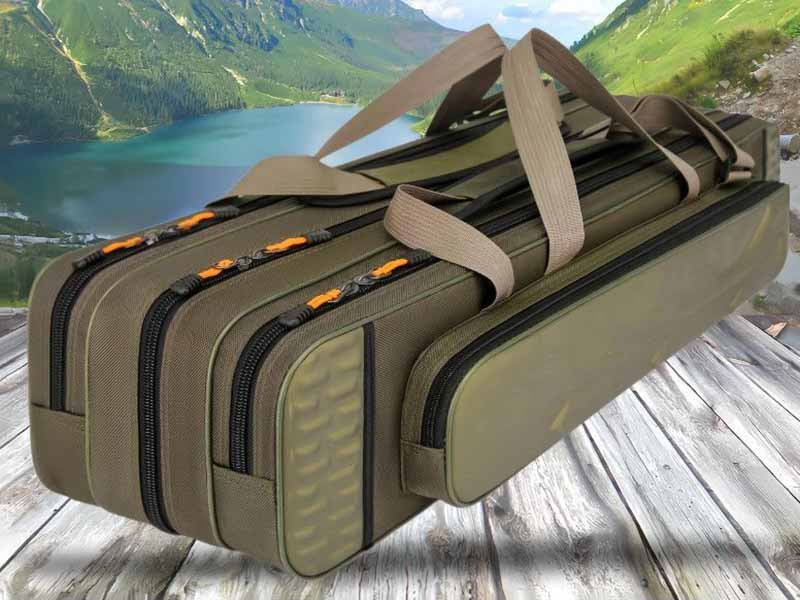
MOQ starts from 200 pieces for selected projects using available materials, standard accessories, mature structures, and uncomplicated branding. Orders involving custom-dyed fabric, welded waterproof construction, molded hardware, special zippers, complex packaging, or several low-quantity colors require separate evaluation.
Yes. Development should use the exact tray dimensions or a physical tray because sizes vary between brands and models. The sample process checks opening width, loading direction, removal clearance, tray count, zipper closure, and compartment deformation.
Yes, welded TPU or PVC structures can be developed for higher water protection. Final performance depends on fabric, welded seams, closure, zipper, reinforcement, and finished-product testing. A coated sewn bag should not be presented as fully waterproof without supporting construction and test results.
TPU-coated fabric, PVC-coated fabric, heavy polyester, and nylon can all be suitable depending on water exposure, abrasion, weight, cost, and required construction. Hardware and zipper selection also matter because saltwater may damage unsuitable metal parts.
Yes. An existing bag can be measured, structurally reviewed, and redesigned. Improvements may include stronger handles, better tray fit, revised pockets, lower weight, improved water protection, new branding, updated packaging, or reduced production cost.
Heat transfer, screen printing, welded TPU patches, selected rubber patches, and compatible printed graphics can be used. Embroidery may create needle holes and is usually unsuitable for critical waterproof zones. Logo compatibility should be confirmed through a material test.
Standard sewn samples generally require 5–7 working days after specifications and materials are confirmed. Complex structures usually require 10–15 working days. Welded products, custom hardware, molded parts, or newly sourced materials may require additional time.
Bulk production follows the approved sample, BOM, confirmed materials, pattern version, color references, logo files, packaging files, and inspection requirements. Incoming checks, first-piece review, in-process inspection, finished-product inspection, and packing checks reduce production variation.
Yes. Support can include hangtags, care labels, barcodes, retail boxes, FNSKU labels, warning polybags, carton labels, SKU separation, packing lists, carton marks, and shipment to Amazon or third-party warehouses.
DDP, FBA, express, air freight, sea freight, FOB, CIF, and DAP options can be evaluated according to destination, order volume, carton data, timing, and current logistics conditions. Final shipping terms are confirmed before dispatch.

Start Your Fishing Tackle Bag Project

Send Szoneier the information already available, even when the design is not fully complete. Our team can review product feasibility, identify missing specifications, recommend suitable materials, estimate sample timing, evaluate MOQ, and prepare a quotation direction. Helpful project information includes:
  • Product photo, sketch, link, tech pack, or physical sample
  • Fishing style and intended use
  • Tackle tray brand, model, or exact dimensions
  • Target bag dimensions and storage capacity
  • Preferred material and water-protection level
  • Expected carrying load
  • Logo artwork and branding method
  • Target quantity for each color or SKU
  • Retail, Amazon, Shopify, or distributor packaging requirements
  • Destination country
  • Target delivery date
  • Expected price position
tackle backpack

Ask For A Quick Quote

We will contact you within 24 Hours, please pay attention to the email with the suffix“@szoneier.com”

For all inquiries, please feel free to reach out at:

Ask For A Quick Quote

We will contact you within 24 Hours, please pay attention to the email with the suffix“@szoneier.com”

Contact Us

Send us a message if you have any questions or request a quote. We will be back to you ASAP!

For all inquiries, please feel free to reach out at:

Contact Us

Send us a message if you have any questions or request a quote. We will be back to you ASAP!

Exclusive Offer for First-Time Customers

For first-time customers, we will send you a free color card for you to choose.Once you have confirmed the fabric and color, our factory will make a free sample proofing for you.

For customers who frequently cooperate with us, we will send new color charts free of charge several times a year.

For all inquiries, please feel free to reach out at: