 Skip to content
How to Choose a Reliable Duffle Bags Manufacturer for Global Brands
- Eric
- February 27, 2026
- 8:30 am
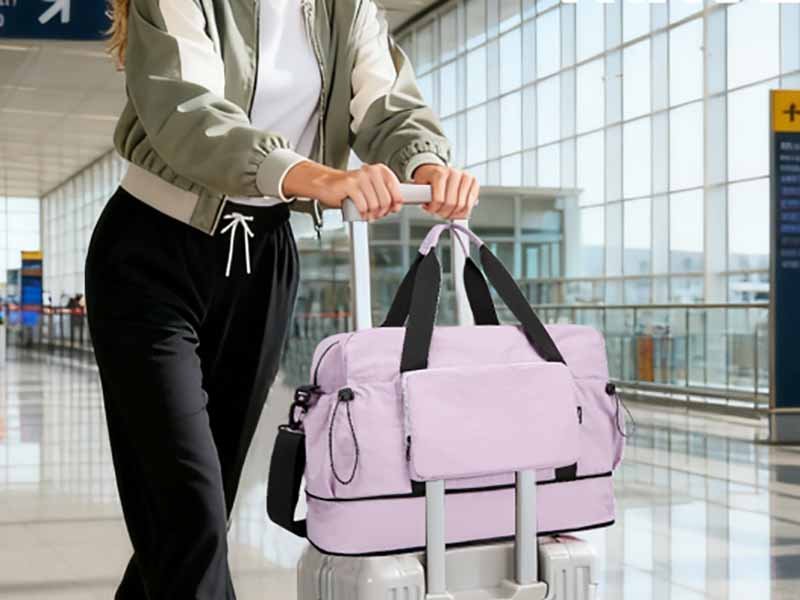
A duffle bag is “simple” only until you start scaling. At small quantities, almost any workshop can stitch a bag that looks fine in photos. The real test begins when you push volume, deadlines, and consistency—then hidden problems show up fast: zipper waves, crooked panels, color drift between lots, weak handle reinforcement, or a factory that suddenly can’t ship on time. Global brands don’t lose money because a bag looks bad in one sample; they lose money because 10,000 units behave differently than the sample.
A reliable duffle bags manufacturer is one that delivers the same construction, color, and performance across batches—supported by documented QC checkpoints, stable material sourcing, scalable production capacity, and predictable lead times. You should verify reliability using measurable indicators: defect rate, on-time delivery rate, material test reports, and sampling-to-bulk consistency controls.
Here’s the uncomfortable truth: most “factory problems” are really screening problems. If you know what to check early, you avoid expensive surprises later. Let’s walk through the checks global brands actually use.
What Makes a Duffle Bags Manufacturer Reliable?
A reliable duffle bags manufacturer is consistent under pressure: repeatable quality across batches, stable lead time, clear documentation, and fast problem resolution. Reliability shows up in numbers—low defect rate, high on-time delivery, controlled materials, and disciplined QC checkpoints—not in sales promises. If a factory can’t show process records and production controls, it’s guesswork.
Reliability is measurable, not a feeling
When brands evaluate a duffle bags manufacturer, they usually care about five things:
- Consistency across batches (same spec, same feel, same stitching)
- Defect prevention (not just fixing issues at final inspection)
- Schedule stability (materials + capacity planning)
- Traceability (which lot, which line, which operator, which materials)
- Responsiveness (how fast problems get contained and corrected)
A practical way to score reliability is to ask for these numbers (even estimates are useful—avoid factories that refuse to discuss them):
| Reliability metric for a Duffle Bags Manufacturer | What “good” looks like in practice | Why it matters |
|---|---|---|
| On-time delivery rate | ≥95% | A 7–14 day delay can kill seasonal launches |
| First-pass QC yield (no rework) | ≥90% | High rework means unstable processes |
| Final defect rate | ≤2–3% | Reduces returns, chargebacks, and rework |
| Sample-to-bulk variance incidents | ≤1 major issue per style | Predictability is the real value |
| Response time on issues | <24 hours with containment plan | Problems spread fast if not contained |
Reality check: If a factory has “perfect” numbers but no records, it’s marketing. Reliability needs evidence—inspection logs, test records, and a consistent sampling system.
Is Experience Important for a Duffle Bags Manufacturer?
Yes—but not because “years” magically create quality. Experience matters when it produces repeatable methods.
A duffle bags manufacturer with long-term category experience has usually solved common failure points that newer suppliers miss, such as:
- Handle/strap tear-out under heavy load
- Zipper distortion when panels are cut off-grain
- Seam slippage on slick linings
- Corner abrasion on travel and gym use
- Color drift between fabric lots and trims
What you should check is whether experience shows up as standardization:
- Do they have a consistent stitching spec (SPI, thread type, bartack positions)?
- Do they use reinforcement templates for strap anchors?
- Do they keep approved material swatches + hardware samples per style?
- Do they have a “golden sample” method (sealed reference sample)?
A quick scoring approach brands use:
| Experience check for a Duffle Bags Manufacturer | Pass standard |
|---|---|
| Dedicated duffle bag patterns/blocks | Yes, multiple base styles |
| Sample room capability | In-house, not outsourced |
| Process sheets per style | Cutting + sewing + QC points documented |
| Problem examples | Can show real fixes (not vague talk) |
If they can explain how they prevent strap tear-out or zipper waves, that’s experience you can trust.
Are Certifications Required for a Duffle Bags Manufacturer?
Certifications help—but they don’t replace real quality control. Think of certifications as a minimum gate, not a guarantee.
For global brands, a duffle bags manufacturer is often asked for:
- ISO 9001 (quality management system)
- BSCI / Sedex (social compliance, depending on brand policy)
- REACH (EU chemical restrictions—relevant for coatings, prints, PVC/TPU)
- CPSIA (US children’s product requirements—only if applicable)
- Material test reports from third-party labs (especially for prints, coatings)
What you should request is current, style-relevant documentation:
| Document from a Duffle Bags Manufacturer | What to look for |
|---|---|
| ISO certificate | Issuer + valid date + scope includes bags |
| Social audit report | Latest audit grade + corrective actions closed |
| REACH-related reports | For coatings/prints/PU, not just fabric claims |
| Material declarations | Supplier declarations + traceable batch/lot |
| QC records | In-process inspection logs, not only final |
If a factory only shows certificates but can’t show inspection records or material lot control, your risk is still high.
Which Capabilities Should a Duffle Bags Manufacturer Have?
A qualified duffle bags manufacturer must have multi-material expertise, structured pattern engineering, reinforcement control, in-house sampling, scalable sewing lines, hardware testing ability, and OEM/ODM customization support. The factory should be capable of producing different types of duffle bags—sports, travel, tactical, waterproof, premium leather, and more—without sacrificing quality consistency at volume.
Capability Is What Determines Whether Your Design Survives Mass Production
A duffle bag sample can look perfect in photos. But production capability determines whether:
- 10,000 units look identical
- Handles hold 20 kg without tearing
- Waterproof coating doesn’t peel
- Structure doesn’t collapse after shipping
- Zippers stay aligned under load
Many production failures happen because brands overestimate factory capability.
To evaluate properly, you must break capability into five layers:
- Product category expertise
- Material handling skill
- Structural engineering knowledge
- Production scalability
- Customization execution
Let’s break them down in detail.
Can the Duffle Bags Manufacturer Produce Different Types of Duffle Bags?
Not all duffle bags are built the same.
A strong duffle bags manufacturer should be able to produce multiple structural categories, including:
Common Types of Duffle Bags
| Type of Duffle Bag | Key Structural Requirement | Production Difficulty |
|---|---|---|
| Gym duffle bag | Reinforced handles + lightweight | Medium |
| Travel duffle bag | High load capacity + structure base | High |
| Waterproof duffle bag | Seam sealing / coated fabric | High |
| Tactical duffle bag | Heavy denier + MOLLE webbing | High |
| Weekender duffle | Shape retention + lining finish | Medium |
| Expandable duffle | Zipper engineering precision | High |
| Rolling duffle bag | Frame + wheel system | Very High |
| Leather duffle bag | Edge finishing + luxury stitching | High |
| Neoprene duffle | Stretch control + clean edge | Medium |
| Fire-resistant duffle | Specialized treated fabrics | High |
If a factory only produces basic polyester gym bags, it may not have the engineering ability for:
- Structured EVA-base travel bags
- Seam-sealed waterproof duffles
- Multi-compartment tactical bags
- High-end leather weekender bags
Ask directly:
- Which duffle bag types have you produced in the last 12 months?
- What is the heaviest load test you’ve conducted?
- Can you show reinforcement structure examples?
If they hesitate, capability may be limited.
Can the Duffle Bags Manufacturer Handle Multiple Materials Correctly?
Material capability directly affects defect rate.
Duffle bags commonly combine multiple materials:
- 600D / 900D polyester
- 1680D ballistic nylon
- 420D / 840D lightweight nylon
- TPU laminated fabric
- PU coated waterproof fabrics
- Neoprene panels
- Canvas (10oz–16oz)
- EVA molded bottom
- Leather / PU trims
- Mesh ventilation panels
Each material requires different machine settings.
Material Handling Capability Checklist
| Material | What the Manufacturer Must Control |
|---|---|
| TPU coated fabric | Needle hole minimization + seam reinforcement |
| 1680D ballistic nylon | Heavy needle + correct tension |
| Neoprene | Stretch control + clean binding |
| Leather | Edge painting + high SPI stitching |
| EVA board | Thickness control + base stability |
| Waterproof fabric | Seam tape compatibility |
Example:
If you produce a waterproof duffle bag, the factory must:
- Control stitch hole leakage
- Apply seam tape (if required)
- Avoid coating delamination
- Maintain flat panel cutting
Improper material handling leads to:
- Wrinkling panels
- Uneven surface
- Coating cracks
- Fabric distortion after packing
Does the Duffle Bags Manufacturer Have Structural Engineering Expertise?
This is one of the most overlooked areas.
Duffle bags fail mostly at stress points:
- Strap anchor
- Shoulder strap hook
- Zipper ends
- Base corners
- D-ring attachments
A professional duffle bags manufacturer should apply:
- Bartack reinforcement (8–12 stitches minimum)
- Box-X reinforcement pattern
- Multi-layer backing fabric
- Webbing load distribution
- EVA or PE support board
Load Capability Reference
| Duffle Bag Category | Recommended Load Capacity |
|---|---|
| Gym duffle | 8–12 kg |
| Travel duffle | 15–25 kg |
| Tactical duffle | 20–30 kg |
| Rolling duffle | 25–40 kg |
Ask the factory:
- What load test do you apply?
- Do you suspend test handles?
- How do you reinforce the base panel?
If the answer is unclear, structural capability may be weak.
Can the Duffle Bags Manufacturer Scale Production Without Quality Drop?
Scaling from 300 pcs to 10,000 pcs exposes weak factories.
Production scalability depends on:
- Number of sewing lines
- Skilled worker stability
- QC staffing ratio
- Cutting accuracy
- Material stock planning
Production Capacity Reference
| Factory Size | Monthly Duffle Bag Output |
|---|---|
| Small workshop | 3,000–8,000 pcs |
| Medium OEM factory | 20,000–50,000 pcs |
| Large-scale factory | 80,000+ pcs |
But capacity alone isn’t enough.
Ask:
- How many workers per line?
- How many QC per line?
- What is your peak season buffer?
Factories without production planning often:
- Delay shipments
- Rush stitching
- Increase defect rate under pressure
Does the Duffle Bags Manufacturer Support Professional OEM & Customization?
Customization capability separates real manufacturers from simple producers.
Modern duffle bag brands require:
- Embroidery logo
- Rubber patch logo
- Heat transfer print
- Reflective print
- Custom zipper pull
- Metal logo plate
- Custom lining pattern
- Branded woven labels
- Retail-ready packaging
A capable duffle bags manufacturer should control:
- Logo position tolerance (±3mm)
- Color consistency across batches
- Print durability (wash + abrasion)
- Packaging accuracy (barcode + carton mark)
Customization Control Table
| Custom Feature | Risk if Not Controlled |
|---|---|
| Embroidery | Misalignment |
| Rubber patch | Color mismatch |
| Screen print | Cracking |
| Metal plate | Rusting |
| Custom zipper pull | Mold inconsistency |
Factories that lack branding experience often struggle at this stage.
Does the Duffle Bags Manufacturer Have In-House Sampling?
In-house sampling capability reduces development time and errors.
A serious duffle bags manufacturer should provide:
- 5–10 day sampling timeline
- Pattern adjustment feedback
- Cost optimization suggestions
- Structure improvement input
If sampling is outsourced, expect:
- Longer lead times
- Less engineering input
- Higher communication error risk
How Does a Duffle Bags Manufacturer Control Quality?
A reliable duffle bags manufacturer controls quality through structured checkpoints: incoming material inspection, in-line production control, reinforcement verification, load testing, and final AQL inspection. Quality is not checked only at the end — it is built into each stage of cutting, sewing, assembly, and packing. The factory should be able to show inspection records, defect tracking, and corrective action reports.
Quality Control Is a System — Not a Final Inspection
Many factories say “we inspect before shipment.” That’s not enough.
If defects are only discovered at final inspection, you are already too late — labor, materials, and time are already consumed.
A serious duffle bags manufacturer divides QC into five stages:
- Incoming material inspection
- Cutting accuracy control
- In-line sewing inspection
- Reinforcement verification
- Final AQL inspection
Let’s break down each stage.
What Tests Should a Duffle Bags Manufacturer Perform?
Every duffle bag should pass structural and functional tests before shipment. The level of testing depends on the product type (gym bag, travel bag, tactical bag, etc.), but core tests remain similar.
Below are essential tests global brands commonly require:
Fabric & Material Tests
| Test | Standard Practice | Why It Matters |
|---|---|---|
| Fabric weight (GSM) check | ±5% tolerance | Prevents thin bulk material vs thick sample issue |
| Colorfastness test | Grade 4–5 | Prevents color bleeding on lining or clothing |
| Abrasion resistance | Martindale 10,000+ cycles | Ensures durability in travel/gym use |
| Coating adhesion test | No peeling | Important for PU/TPU coating stability |
If the duffle bag uses waterproof coating, the manufacturer should confirm:
- Hydrostatic head test (if applicable)
- Coating consistency across fabric rolls
Structural Strength Tests
Duffle bags often carry 8–20 kg loads. Weak reinforcement leads to returns.
| Test | Target Standard | Risk If Ignored |
|---|---|---|
| Handle pull test | 15–25 kg for 1 minute | Strap tear-out |
| Shoulder strap hook test | 200–300 cycles | Hook deformation |
| Bartack reinforcement check | Consistent placement | Load imbalance |
| Bottom board compression | No bending at rated load | Bag collapse |
For premium travel duffles, some brands require:
- 10 kg load test for 24 hours (suspension test)
- Drop test (from 50–80 cm)
If a factory cannot simulate load conditions, you are guessing about durability.
Zipper & Hardware Tests
Zippers are the #1 failure point in duffle bags.
| Test | Minimum Standard |
|---|---|
| Zipper cycle test | 500–1,000 cycles |
| Slider smoothness check | No snagging |
| Alignment check | No wave effect |
| Metal hardware salt spray test | 24–48 hours |
If the zipper tape color changes slightly between lots, the bulk order may look inconsistent. A reliable duffle bags manufacturer locks approved zipper lot codes before production.
How Does a Duffle Bags Manufacturer Prevent Defects?
Testing is reactive. Prevention is proactive.
A strong duffle bags manufacturer focuses on defect prevention, not just inspection.
Here are preventive controls you should verify:
Incoming Material Inspection
Before cutting starts, materials should be checked for:
- Color variance between rolls
- Coating bubbles
- Thickness differences
- Defective areas in fabric
Factories that skip this stage often end up cutting panels from flawed fabric, leading to bulk defects.
Ask for:
- Incoming inspection logs
- Fabric roll labeling system
- Approved material swatch reference
Cutting Control
Duffle bag panels must align precisely, especially on structured or coated fabrics.
Control methods include:
- Layer count limitation (avoid over-stacking)
- Pattern nesting control
- Panel measurement verification
Common cutting defects:
- Panel size mismatch
- Warped panels on coated fabrics
- Grain misalignment
A capable duffle bags manufacturer uses cutting templates and first-panel approval before batch cutting.
In-Line Inspection (Critical Stage)
This is where many factories fail.
During sewing, inspectors should check:
| Checkpoint | Frequency |
|---|---|
| Stitch density (SPI) | Every bundle |
| Strap anchor reinforcement | 100% check |
| Zipper alignment | Every 20–30 pcs |
| Panel symmetry | Random 10% |
If inspection only happens at final packing, defect rate will increase significantly.
AQL Final Inspection
Most international brands follow AQL 2.5 or 1.5.
| AQL Level | Typical Usage |
|---|---|
| 2.5 | Standard consumer products |
| 1.5 | Premium brands |
| 4.0 | Low-cost mass market |
A reliable duffle bags manufacturer should:
- Understand AQL standards
- Provide inspection report
- Accept third-party inspection
If a factory resists third-party inspection, that is a red flag.
How Do You Evaluate a Duffle Bags Manufacturer Before Ordering?
To evaluate a duffle bags manufacturer, verify factory capability, request samples, check material sourcing transparency, review quality control documentation, confirm production capacity, and test communication speed. A small trial order is often the safest way to validate performance before scaling.
Screening a Factory Before You Risk a Bulk Order
Many sourcing mistakes happen because brands rush into production after seeing a good sample.
A sample proves technical possibility — not bulk stability.
Here’s how experienced brands evaluate.
What Questions Should You Ask a Duffle Bags Manufacturer?
Before placing an order, ask direct operational questions — not marketing questions.
Good screening questions include:
Production & Capacity
- How many sewing lines for duffle bags?
- Monthly duffle bag capacity?
- Peak season lead time?
- How many workers per line?
Quality Control
- What is your average defect rate?
- How do you handle rejected units?
- Can you share an inspection report sample?
- What is your AQL level?
Materials
- Who supplies your zippers?
- Can you lock fabric lots?
- Do you test incoming materials?
Risk Management
- What happens if material delivery is delayed?
- Do you have backup suppliers?
- What is your compensation policy for major defects?
Factories that answer clearly and specifically are usually more structured.
How Do You Verify a Duffle Bags Manufacturer’s Factory?
There are three practical verification methods:
Video Audit
Ask for a live video tour:
- Cutting room
- Sewing lines
- QC station
- Warehouse
- Sample room
Look for:
- Clean layout
- Organized materials
- Clearly separated defective area
- Labeling system
Messy factories usually have messy systems.
Third-Party Factory Audit
For larger projects, consider:
- Social compliance audit
- Quality management audit
- Capacity verification
This is especially important for:
- Large retail brands
- Amazon private label scaling
- High-volume seasonal launches
Trial Order Strategy
Instead of jumping to 20,000 pcs:
- Start with 500–1,000 pcs
- Inspect 100% of shipment
- Measure defect rate
- Evaluate lead time accuracy
Then scale gradually.
This reduces financial risk dramatically.
Practical Risk Comparison
| Decision | Risk Level |
|---|---|
| Choosing lowest price without audit | Very High |
| Choosing certified factory but no trial | Medium |
| Sample + audit + trial order | Low |
| Long-term contract without evaluation | Extremely High |
How Do Cost & Lead Time Affect Your Duffle Bags Manufacturer Choice?
Cost and lead time directly impact profitability, inventory turnover, and launch timing. A reliable duffle bags manufacturer offers transparent pricing structure, stable material sourcing, realistic MOQ, and predictable production schedules. Extremely low prices or unusually short lead times usually indicate hidden risk in quality, materials, or capacity.
Typical Price Range for Custom Duffle Bags
Below is a realistic market reference for mid-quality export duffle bags (FOB China basis, for reference only — varies by material, size, and customization).
| Type of Duffle Bag | Estimated FOB Price Range (1,000–3,000 pcs) |
|---|---|
| Basic 600D polyester gym duffle | $4.50 – $7.50 |
| 1680D heavy-duty sports duffle | $7.00 – $12.00 |
| Waterproof TPU-coated travel duffle | $9.00 – $18.00 |
| Neoprene duffle | $8.00 – $15.00 |
| Leather / PU premium duffle | $18.00 – $45.00 |
If one supplier quotes 25–30% lower than the market average, investigate:
- Is the fabric thinner?
- Is reinforcement removed?
- Is hardware downgraded?
- Is labor subcontracted?
Extreme price gaps usually signal instability.
Is Low MOQ Important When Choosing a Duffle Bags Manufacturer?
Low MOQ (Minimum Order Quantity) is critical for:
- Startups testing new designs
- Amazon sellers validating market demand
- Seasonal or limited edition launches
- Brands entering new regions
However, very low MOQ (100–200 pcs) may mean:
- Higher unit cost
- Limited material choice
- Less efficient production
Here is a typical MOQ comparison:
| Factory Type | Typical MOQ per Color |
|---|---|
| Large-scale factory | 1,000–3,000 pcs |
| Mid-sized OEM factory | 500–1,000 pcs |
| Flexible development factory | 200–500 pcs |
A balanced duffle bags manufacturer offers:
- Scalable MOQ structure
- Trial order support
- Clear cost breakdown for small runs
At Szoneier, we support flexible MOQ structures for brands that want to test before scaling — without sacrificing production standards.
Can a Duffle Bags Manufacturer Guarantee Stable Lead Time?
Lead time instability damages retail schedules and online launch timing.
Typical lead time benchmarks:
| Production Stage | Standard Timeline |
|---|---|
| Sampling | 5–10 days |
| Material sourcing | 7–15 days |
| Bulk production | 25–40 days |
| Peak season extension | +7–15 days |
Reliable factories manage lead time through:
- Pre-booked material suppliers
- Stable worker teams
- Production planning software
- Backup capacity
Red flag warning signs:
- “No problem” answers without schedule breakdown
- Unrealistically fast bulk timeline
- No clear production calendar
A 10-day delay in a seasonal launch can reduce sell-through rate significantly. Stability is more valuable than speed promises.
Factory vs Trading Company — Which Is Safer for Duffle Bags?
Factories offer better cost control, direct communication, and process transparency. Trading companies offer sourcing flexibility but add markup and may lack production visibility. For long-term global brand development, working directly with a structured duffle bags manufacturer reduces quality risk and improves product consistency.
Comparison Table
| Factor | Factory | Trading Company |
|---|---|---|
| Price transparency | High | Medium |
| Direct QC access | Yes | Limited |
| Process visibility | Full | Partial |
| Development flexibility | Strong | Depends on supplier |
| Problem resolution speed | Faster | Slower |
| Cost markup | None | 5–20% |
Trading companies can be useful for multi-category sourcing, but for performance-driven duffle bags, direct factory partnership provides better control.
What Red Flags Should You Avoid in a Duffle Bags Manufacturer?
Avoid manufacturers who refuse third-party inspection, cannot explain their QC process, provide inconsistent samples, offer unrealistic pricing, or change key details mid-discussion. Lack of documentation and vague answers often signal operational instability.
High-Risk Warning Signs
1️⃣ No in-line QC explanation 2️⃣ No written specification confirmation 3️⃣ No material test reports 4️⃣ Frequent staff turnover 5️⃣ Poor response speed 6️⃣ Refusal to show production area 7️⃣ Sample different from quotation specs 8️⃣ Large price changes after sampling
A professional duffle bags manufacturer answers technical questions clearly and provides documentation without hesitation.
Why Global Brands Choose Structured Manufacturers Like Szoneier
Szoneier is a China-based bag manufacturer with over 18 years of experience in design, R&D, and production of custom duffle bags and related categories.
We support:
- Multi-material manufacturing (polyester, nylon, canvas, neoprene, TPU, PVC, leather, EVA)
- OEM & private label production
- Low MOQ development
- Fast sampling (5–10 days typical)
- Structured QC system with in-line inspection
- Material compliance documentation
- Stable production scheduling
- Short and reliable lead time
- 100% quality assurance policy
Our factory structure includes:
- Dedicated sample room
- Independent cutting department
- Reinforcement stitching control
- Hardware testing
- Packaging inspection control
- Multi-factory resource integration
We work with:
- Amazon sellers
- Sports brands
- Travel gear brands
- Gym equipment brands
- Promotional product distributors
- High-end private label clients
Our goal is not only to manufacture duffle bags — but to help brands scale safely.
Final Thoughts: Choosing the Right Duffle Bags Manufacturer Is a Risk Decision
A reliable duffle bags manufacturer is not simply the cheapest option — it is the most stable long-term partner.
When evaluating suppliers, focus on:
- Process control
- Material transparency
- QC structure
- Capacity realism
- Communication clarity
- Risk management
Global brands succeed when production becomes predictable.
If you are developing custom duffle bags for your brand — whether sports, travel, gym, tactical, or lifestyle — Szoneier can support your project from design to mass production with structured quality control and flexible MOQ.
Ready to Develop Your Custom Duffle Bags?
Contact Szoneier today to:
- Request a quote
- Review material options
- Develop a sample
- Optimize your cost structure
- Plan your production timeline
Let’s build duffle bags that perform consistently — not just look good in photos.
manufacturer Categories
- Custom Tote Bags Manufacturer
- custom backpacks Manufacturer
- custom travel bags& Duffle bags manufacturer
- custom makeup bags & toiletry bags manufacturer
- custom cooler bags manufacturer
- custom drawstring bags manufacturer
- custom makeup bags & toiletry bags manufacturer
- custom golf bags manufacturer
- custom fireproof bags manufacturer
- custom dry bags manufacturer
- custom ski bags manufacturer
- custom gym & sports bags manufacturer
- custom laptop bags manufacturer
- custom tactical bags manufacturer
- custom beach bags manufacturer
- custom medical bags manufacturer
- custom camera bags manufacturer
- custom wetsuits manufacturer
- custom leather goods manufacturer
- more personalized products
Can't find the answers?
No worries, please contact us and we will answer all the questions you have during the whole process of bag customization.
Make A Sample First?
If you have your own artwork, logo design files, or just an idea,please provide details about your project requirements, including preferred fabric, color, and customization options,we’re excited to assist you in bringing your bespoke bag designs to life through our sample production process.
