Skip to content
If you sell cooler bags online—or source them for retail, promotions, or delivery—you’ve probably seen this problem: two cooler bags look similar in photos, but customer feedback is completely different. One gets praised as “light and convenient,” the other gets returned because “it collapses,” “leaks,” or “doesn’t stay cold long enough.” That usually isn’t about the logo or color. It’s about structure.
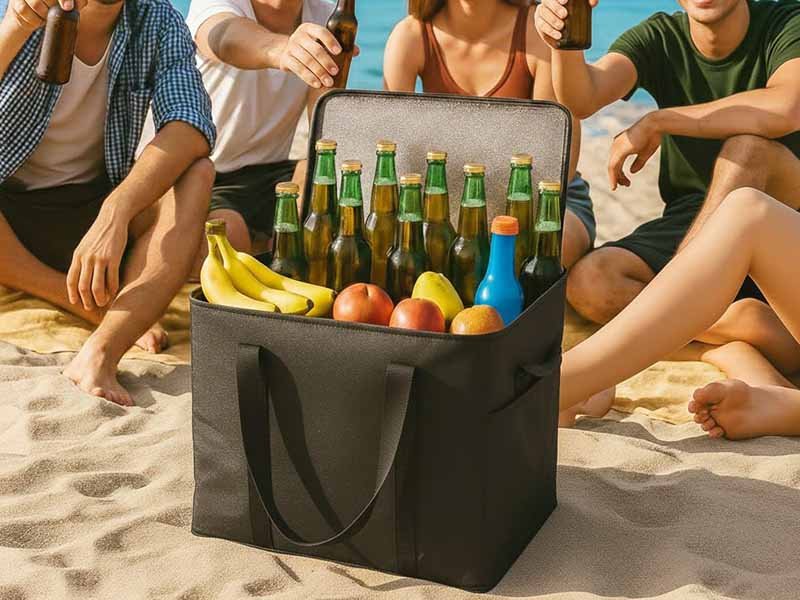
Soft-sided cooler bags win when you need something easy to carry, easy to store, and easy to ship in bulk. semi-rigid cooler bags win when you need stronger shape, better protection for food/drinks, and longer cooling performance—especially for outdoor use, car trips, or delivery routes. The “right” choice depends on how the end user moves, how long they keep items inside, and whether the bag gets thrown around in real life. Choose soft-sided cooler bags for daily lunch, short trips, promotions, and price-sensitive retail because they’re lightweight, foldable, and cost-efficient. Choose semi-rigid cooler bags for outdoor, long drives, delivery, and premium positioning because they keep shape, protect contents better, and usually hold cold longer. The best option depends on target usage time, leak risk, and shipping/storage needs.
Let me make it concrete: imagine a commuter who wants a cooler that disappears into a backpack after lunch—soft-sided makes sense. Now imagine a customer loading drinks into a trunk on a hot day—semi-rigid suddenly becomes the “no regrets” choice. That’s where most brands win or lose.
What Are Soft-Sided Cooler Bags?
Soft-sided cooler bags are insulated bags built with flexible textile shells + foam insulation + a liner. They’re designed for portability, not maximum rigidity. In practice, they’re the go-to choice for lunch, daily errands, and bulk orders where shipping volume matters.
Soft-Sided Cooler Bags: What customers care about first
When end users pick up a soft-sided cooler bag, they judge it fast. These are the things that usually decide satisfaction:
- Weight in hand: feels light, not bulky
- Carry comfort: handles/straps don’t cut into the shoulder
- Zip smoothness: zipper doesn’t snag around corners
- Leak control: melted ice doesn’t drip into the car or backpack
- Cleanability: inside wipes clean in 10 seconds
- Storage: folds or squashes flat when empty
- Cold time in real use: lunch stays cool until noon, drinks stay cold for a short outing
What materials are used in soft-sided cooler bags?
Soft-sided cooler bags look simple, but the material stack matters a lot. A small change (outer fabric denier, foam thickness, liner type, seam method) can move the product from “cheap promo bag” to “repeat-purchase daily cooler.”
1) Common outer materials and what they actually mean
| Outer Material | What it’s good for | What can go wrong | Best-fit products |
|---|---|---|---|
| 300D–600D Polyester | Good printing, stable color, low cost | Can scuff on rough use | promo coolers, lunch bags |
| 900D Polyester / Oxford | Better abrasion resistance | Slightly heavier, higher cost | retail coolers, travel |
| Nylon (420D/840D) | Strong, premium feel | Cost higher, color matching needs care | premium soft coolers |
| Canvas / Cotton | Lifestyle look, “natural” vibe | Stains easier, heavier | gift sets, eco themes |
| Neoprene | Soft, stretchy, naturally insulating | Not ideal for big-capacity bags | can coolers, small lunch |
| TPU/PVC coated fabric | Water-resistant, wipes clean | Can feel “plasticky” if too thick | wet environments, delivery |
2) Insulation layer: thickness is not a “small detail”
Most soft-sided cooler bags use PE foam or EPE foam. The thickness affects cold time and stiffness.
| Foam Thickness | Realistic use | Expected cold time (with ice pack) | Notes |
|---|---|---|---|
| 3–5 mm | light lunch bags | ~2–4 hours | portable, low cost |
| 6–8 mm | everyday coolers | ~4–6 hours | common “sweet spot” |
| 9–12 mm | heavier duty soft coolers | ~6–8 hours | bulkier, better hold |
(Cold time varies by ambient temperature, zip opening frequency, and ice pack size. But this is the pattern you’ll see in real use.)
3) Liner materials: where leaks and smell complaints come from
| Liner Type | Pros | Cons | Best use |
|---|---|---|---|
| Aluminum foil + foam | strong heat reflection | can crease, not always leakproof | short trips, basic coolers |
| PEVA | food-contact friendly, wipe clean | needs good seam sealing | lunch, grocery, delivery |
| TPU liner | good water resistance | cost higher | premium coolers |
| PVC liner | durable, cheap | some markets dislike PVC | value retail |
Real talk: most “leaks” complaints are not because the liner material is wrong. It’s because seams weren’t handled correctly (needle holes + no sealing) or the zipper edge wasn’t protected.
How do soft-sided cooler bags keep items cold?
Soft-sided cooler bags keep items cold through insulation + reflective barrier + closure control. But customers don’t experience those words—they experience outcomes. Here’s what actually changes the result:
What increases cold time
- Thicker foam (6–12 mm) → slows heat transfer
- Tight zipper / small gap → reduces warm air exchange
- Liner seam control → prevents meltwater leakage (leaks ruin user trust fast)
- Dark vs light outer fabric → darker colors can warm faster in direct sun
- Structured base panel → keeps ice packs from bending the liner
Common real-world scenarios
| Scenario | Bag size | Ice packs | Realistic performance |
|---|---|---|---|
| office lunch | 4–8L | 1 small | cold until lunch, sometimes afternoon |
| grocery run | 10–20L | 2 medium | good for short drive home |
| day picnic | 15–25L | 2–4 | good for half-day if opened occasionally |
| “hot car + sun” | any | any | performance drops fast if left closed in sun |
Important detail many brands miss: If the user opens the bag repeatedly, cold time drops sharply. That’s why closure style matters more than many expect.
Where are soft-sided cooler bags commonly used?
Soft-sided cooler bags are the “daily driver” category. They fit daily life because they’re easy to carry, easy to store, and usually lower cost.
Most common use cases (and why brands pick soft-sided)
- Lunch cooler bags: office, school, commuting
- high repeat usage, needs comfort + easy cleaning
- Promotional cooler bags: events, seasonal gifting
- needs big logo area + cost control
- Travel cooler bags: road trips, trains, flights
- needs packability + lighter weight
- Retail entry-level coolers: supermarkets, e-commerce
- needs price competitiveness + decent performance
- Light outdoor: picnic, beach day, short hikes
- needs portability + simple insulation
Why soft-sided is easier for bulk orders
| Factor | Soft-sided cooler bags | What it means for bulk buyers |
|---|---|---|
| Shipping volume | lower (can fold) | cheaper freight per unit |
| Carton efficiency | high | more units per carton |
| Production speed | fast | easier to hit deadlines |
| Style variety | very high | easy to create many SKUs |
| Printing options | many | flexible branding |
Soft-Sided Cooler Bags: The “Pros vs Cons” buyers actually feel
| What users like | What users complain about | How to avoid the complaint |
|---|---|---|
| light, easy carry | collapses when empty | add base panel / light structure |
| folds flat | looks “cheap” if too thin | choose higher denier + thicker foam |
| affordable | leaks after ice melts | seam sealing + better liner control |
| big logo area | zipper breaks | upgrade zipper spec + stress points |
| easy to make many colors | stains (canvas/cotton) | suggest coated options or darker shades |
What Are Semi-Rigid Cooler Bags?
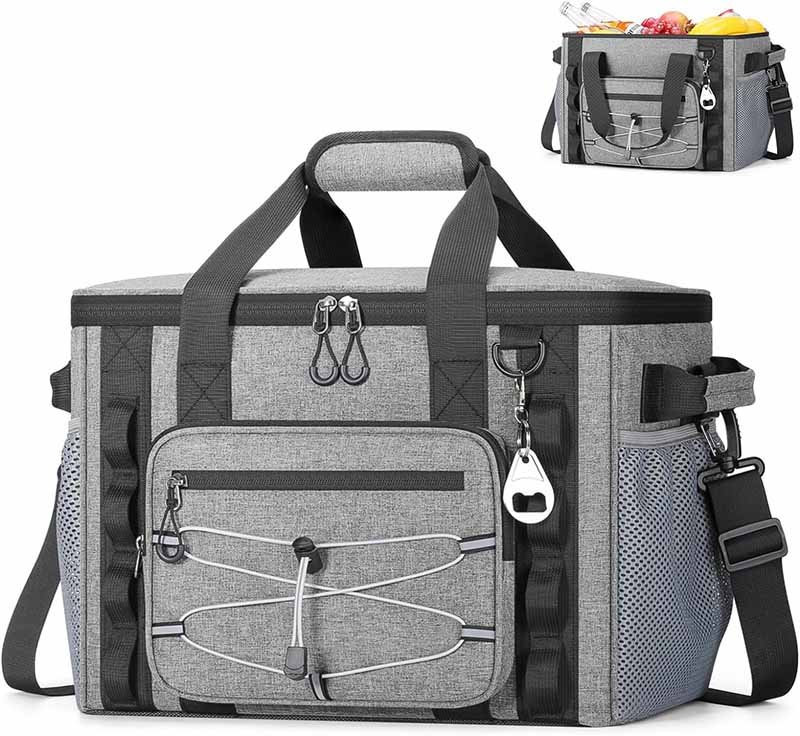
Semi-rigid cooler bags sit between soft coolers and hard coolers. They are not hard plastic boxes, but they are also not fully collapsible fabric bags. Their defining feature is built-in structural support, which allows the bag to hold its shape even when empty.
In real use, semi-rigid cooler bags are chosen when users need longer cooling time, better protection for contents, and a more “solid” feel, especially in cars, outdoor environments, or delivery scenarios.
What makes a cooler bag “semi-rigid” in real life?
From a factory and user perspective, semi-rigid means:
- The bag stands upright on its own
- Side walls do not collapse inward
- The bottom can support heavy drinks or ice
- The shape remains stable during transport
This structure usually comes from EVA panels, molded foam boards, or laminated stiff layers, hidden between the outer fabric and inner liner.
What makes a semi-rigid cooler bag different from soft-sided?
The difference is not just stiffness—it’s how the bag behaves after hours of real use.
Structural elements commonly used
| Structural Element | Purpose | User impact |
|---|---|---|
| EVA foam panels | Shape retention | Bag stays upright |
| Molded PE board base | Load support | Bottles don’t tip |
| Multi-layer foam walls | Thermal stability | Longer cold time |
| Reinforced zipper frame | Shape control | Zipper runs smoother |
| Fixed corners | Impact resistance | Less deformation |
Unlike soft-sided cooler bags, these components are not meant to bend or fold repeatedly. That’s why semi-rigid coolers trade flexibility for performance.
Which materials are used in semi-rigid cooler bags?
Semi-rigid cooler bags usually use stronger outer fabrics combined with thicker insulation and internal panels.
Common outer materials
| Material | Why it’s used | Where it works best |
|---|---|---|
| 600D–900D polyester | Balance of cost & durability | retail outdoor coolers |
| Nylon (840D / ballistic) | Abrasion & tear resistance | premium outdoor |
| TPU-laminated fabric | Water & stain resistance | delivery, wet use |
| PVC-coated fabric | Easy cleaning | car use, fishing |
Insulation & structure layers (inside)
| Layer | Thickness (typical) | Purpose |
|---|---|---|
| EPE / PE foam | 8–15 mm | thermal insulation |
| EVA sheet | 2–5 mm | rigidity & shape |
| Aluminum foil | — | heat reflection |
| PEVA / TPU liner | — | leak control |
Important detail: Once foam thickness exceeds 10 mm, structure becomes much more noticeable. Users immediately feel the difference when lifting the bag.
How do semi-rigid cooler bags perform in real use?
Semi-rigid cooler bags are designed for longer, rougher, and less predictable use.
Realistic cooling performance (with ice packs)
| Use scenario | Typical capacity | Cold duration |
|---|---|---|
| car trip (closed trunk) | 20–30L | 8–12 hours |
| outdoor picnic | 25–40L | 10–14 hours |
| beach / fishing | 30–50L | up to 16 hours |
| food delivery route | 15–25L | 6–10 hours |
Key reasons they outperform soft-sided bags:
- thicker insulation slows heat gain
- stable walls reduce air gaps
- rigid base keeps ice packs evenly placed
- less deformation means fewer liner creases
Users don’t describe this as “better insulation.” They describe it as “ice doesn’t melt as fast” or “drinks stay cold until evening.”
Where are semi-rigid cooler bags commonly used?
Semi-rigid cooler bags are chosen when failure has consequences—warm food, spilled drinks, or damaged packaging.
Common real-world use cases
Outdoor & camping
- users pack once, open less often
- bag sits on uneven ground
Car travel
- heavy bottles, shifting loads
- bag must stay upright
Food & grocery delivery
- temperature consistency matters
- leaks are unacceptable
Fishing & boating
- wet environment
- frequent cleaning required
Premium retail
- customers expect “solid feel”
Semi-rigid cooler bags: what users love vs what they complain about
| Positive feedback | Negative feedback | How factories fix it |
|---|---|---|
| holds shape well | heavier than expected | reduce EVA thickness |
| keeps items cold longer | bulky to store | offer collapsible hybrid |
| protects bottles | higher price | simplify outer fabric |
| doesn’t leak easily | stiff zipper corners | add curved zipper frame |
| feels “premium” | less color options | pre-dyed stock fabrics |
Soft-Sided vs Semi-Rigid Cooler Bags: Key Differences
At sourcing stage, many cooler bags look similar on screen. Problems usually appear after customers start using them—when ice melts, when the bag is half empty, when it sits in a car, or when it’s carried for more than ten minutes. The real differences between soft-sided and semi-rigid cooler bags show up in structure behavior, temperature stability, leakage risk, and long-term comfort.
1. Structure & Shape: What happens when the bag is not full?
This is one of the most common complaint triggers.
| Situation | Soft-Sided Cooler Bags | Semi-Rigid Cooler Bags |
|---|---|---|
| Empty or half-full | collapses inward | stays upright |
| Heavy bottles inside | sides flex | walls support weight |
| Set on car seat | tips easily | stays balanced |
| Ice shifts inside | liner bends | liner stays flat |
Why this matters:
- Collapsing walls push pressure onto the liner → higher leak risk
- Tipping causes bottles to hit zipper corners → zipper damage over time
Real customer feedback patterns:
- Soft-sided: “It loses shape when I don’t fill it.”
- Semi-rigid: “It stays solid even when half empty.”
2. Insulation Performance: Not lab numbers—real usage time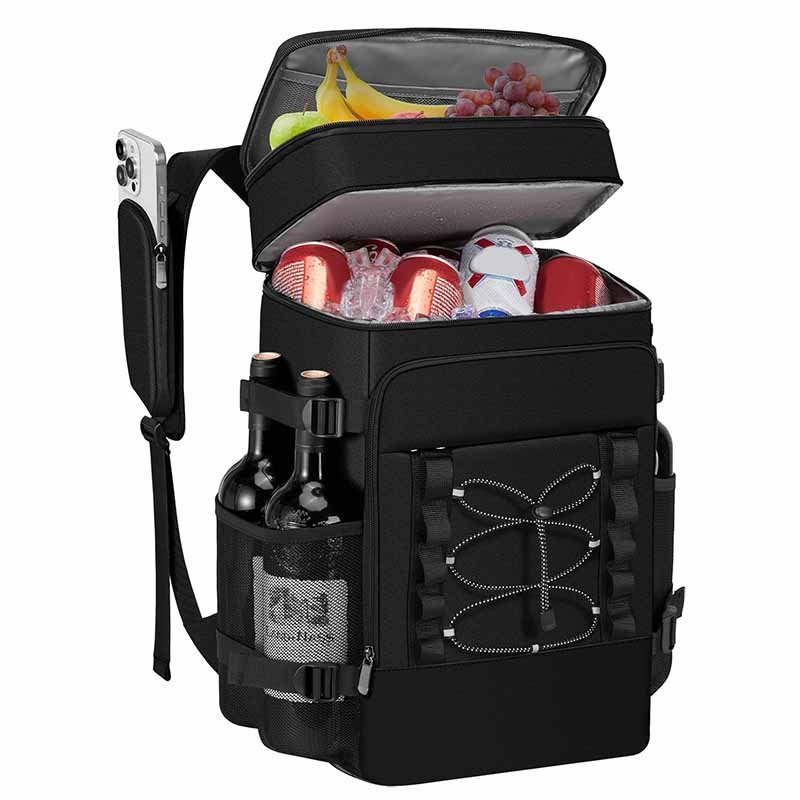
Most users don’t measure temperature. They judge by how long things still feel cold.
| Usage condition | Soft-Sided | Semi-Rigid |
|---|---|---|
| Office lunch | 4–6 hours | 6–8 hours |
| Picnic (shade) | 5–7 hours | 10–12 hours |
| Car trunk (summer) | 2–4 hours | 6–10 hours |
| Outdoor all day | not ideal | suitable |
Why semi-rigid lasts longer:
- thicker foam (often 10–15 mm vs 6–8 mm)
- rigid panels reduce air gaps
- ice packs stay flat instead of bending liner
Important reality: If the bag is opened frequently, both types lose cold faster, but semi-rigid slows the loss more consistently.
3. Leakage Risk: Where most returns actually come from
Leakage complaints are rarely about ice itself. They’re about liner deformation and seam stress.
| Risk factor | Soft-Sided | Semi-Rigid |
|---|---|---|
| Liner bending | high | low |
| Seam stress | higher | lower |
| Meltwater pooling | uneven | controlled |
| Zipper corner pressure | higher | lower |
What happens in real life:
- Soft-sided bags flex → liner creases → seam micro-gaps
- Semi-rigid bags hold liner flat → water stays contained
Factory fix cost difference:
- Improving leak control on soft-sided bags often means extra seam taping
- Semi-rigid bags naturally reduce leak points through structure
4. Weight & Carry Comfort: What users feel after 10 minutes
Structure always adds weight. The question is whether the user notices it.
| Factor | Soft-Sided | Semi-Rigid |
|---|---|---|
| Empty bag weight | lighter | heavier |
| Hand carry | comfortable | acceptable |
| Shoulder carry | better | can feel heavy |
| Long walking | easier | tiring |
Common feedback:
- Soft-sided: “Easy to carry, even when full.”
- Semi-rigid: “Feels solid, but heavy if I walk far.”
Key insight: Semi-rigid bags are better for set-down use (car, picnic table). Soft-sided bags are better for continuous carry.
5. Storage & Space: What happens when it’s not in use?
This point strongly affects urban users and small apartments.
| Storage situation | Soft-Sided | Semi-Rigid |
|---|---|---|
| Cabinet / drawer | fits easily | takes space |
| Closet storage | compresses | fixed volume |
| Travel packing | folds flat | bulky |
If storage convenience is part of the value proposition, soft-sided wins clearly.
6. Shipping & Logistics: What brands often underestimate
This is where sourcing decisions affect profit, not just product feel.
| Aspect | Soft-Sided | Semi-Rigid |
|---|---|---|
| Units per carton | higher | lower |
| Carton size | smaller | larger |
| Shipping cost/unit | lower | higher |
| Warehouse space | efficient | more space needed |
Typical factory observation: Semi-rigid cooler bags can increase freight cost per unit by 20–40%, depending on structure thickness.
7. Cost Range: Where the price gap comes from
| Cost element | Soft-Sided | Semi-Rigid |
|---|---|---|
| Materials | lower | higher |
| Labor | simpler | more complex |
| Sampling | faster | slower |
| Tooling | none | sometimes needed |
| Final unit cost | low–mid | mid–high |
Semi-rigid bags cost more not because of branding, but because of:
- extra layers
- structure materials (EVA, boards)
- bonding and reinforcement steps
8. Customer Satisfaction Over Time
| After months of use | Soft-Sided | Semi-Rigid |
|---|---|---|
| Shape retention | weakens | stable |
| Liner condition | more wear | less deformation |
| Zipper alignment | may shift | stays aligned |
| Overall feel | “convenient” | “reliable” |
This is why:
- soft-sided cooler bags excel in high-frequency, casual use
- semi-rigid cooler bags excel in low-frequency, high-demand use
Which Buyers Should Choose Soft-Sided or Semi-Rigid Cooler Bags?
Most sourcing mistakes happen because brands think in terms of product type, while users think in terms of how they live, move, and store things. The right choice depends on frequency, environment, and tolerance for weight and bulk.
Below is how this decision plays out in real life.
Who should choose soft-sided cooler bags?
Soft-sided cooler bags work best when portability matters more than structure.
They are the right choice if most of the following are true:
- The cooler is used daily or several times a week
- Users carry it by hand or inside another bag
- Storage space at home or work is limited
- Cold retention of 4–6 hours is enough
- Price sensitivity matters
- Shipping volume and freight cost need to stay low
- The bag is part of a promotion or multi-SKU retail line
Typical examples:
- office lunch coolers
- school meal bags
- grocery add-on items
- promotional giveaways
- commuter and travel use
User mindset: “I want something light, simple, and easy to live with.”
Who should choose semi-rigid cooler bags?
Semi-rigid cooler bags are for situations where failure is noticeable.
They are the better choice if most of these apply:
- The cooler is used occasionally but for longer durations
- It sits in a car, trunk, or outdoor environment
- Heavy bottles, cans, or ice are common
- Cold retention of 8–12+ hours is expected
- Leaks or collapse would cause frustration
- The product targets mid to high price points
Typical examples:
- outdoor and camping coolers
- car travel and road trips
- fishing and beach use
- grocery and food delivery
- premium lifestyle products
User mindset: “I don’t want to worry about it tipping, leaking, or warming up.”
Soft-sided vs semi-rigid by usage frequency
| Usage pattern | Better option | Reason |
|---|---|---|
| daily lunch | soft-sided | lighter, easier to store |
| weekend picnic | semi-rigid | longer cooling, better shape |
| travel (air/train) | soft-sided | compressible, lighter |
| car trips | semi-rigid | stable, spill-resistant |
| delivery routes | semi-rigid | temperature consistency |
| events/promotions | soft-sided | cost & branding flexibility |
A common mistake brands make
Many brands default to semi-rigid thinking it always feels “better.” In reality, that often backfires:
- users complain it’s too heavy
- it doesn’t fit cabinets or backpacks
- shipping costs rise unexpectedly
- return rates increase for casual-use customers
The opposite mistake also happens:
- soft-sided bags are chosen for long outdoor use
- customers complain about melting ice and collapsing shape
Good programs match structure to usage—not to marketing language.
How to Choose the Right Cooler Bags for Your Brand
Choosing the right cooler bag is not about copying competitors. It’s about aligning structure, materials, and cost with how your customers actually use the product.
Step 1: Define real usage, not “intended use”
Instead of asking “What is this for?”, ask:
- How long does food/drink stay inside?
- How often is the bag opened?
- Is it carried or set down most of the time?
- Is weight noticed after 10 minutes?
- Is leakage unacceptable or just inconvenient?
This determines structure more accurately than product category.
Step 2: Match insulation and structure to expectations
| Expectation | Recommended setup |
|---|---|
| short daily use | 6–8 mm foam, soft-sided |
| half-day outings | 8–10 mm foam, semi-rigid |
| full-day outdoor | 10–15 mm foam, semi-rigid |
| delivery | thick foam + rigid base |
Overbuilding raises cost and weight without improving satisfaction.
Step 3: Choose materials based on environment, not trends
| Environment | Better material choice |
|---|---|
| office / indoor | polyester, nylon |
| outdoor / sun | darker fabrics need thicker insulation |
| wet conditions | TPU / PVC coated |
| lifestyle retail | canvas, textured fabrics |
| food delivery | wipe-clean liners (PEVA / TPU) |
Step 4: Control the details that cause complaints
Most returns come from small details, not overall design.
| Complaint | Root cause | Prevention |
|---|---|---|
| leaks | unsealed seams | seam taping / welding |
| zipper failure | wrong zipper spec | reinforced corners |
| bag collapsing | no base panel | PE board or EVA base |
| smell | poor liner material | food-grade PEVA |
| hard to clean | fabric choice | coated or darker colors |
Step 5: Decide if you need one model or a range
Many successful brands do this:
- soft-sided version → entry-level, promo, daily use
- semi-rigid version → premium, outdoor, delivery
This allows:
- shared branding
- shared materials
- wider customer coverage
- better overall sales mix
Why Many Brands Choose Szoneier for Custom Cooler Bags
Szoneier is a China-based bag manufacturer with 18+ years of experience in developing and producing cooler bags across soft-sided and semi-rigid structures.
What brands typically value:
- experience with multiple insulation systems
- ability to combine polyester, nylon, neoprene, TPU, EVA
- low MOQ options for testing new designs
- fast sampling for structure and liner verification
- strict quality checks on seams, zippers, and liners
- support for custom logo, private label, OEM and ODM
Whether you are building:
- a lightweight lunch cooler
- a structured outdoor cooler
- a delivery-focused insulated bag
the goal is always the same: make the product fit real life, not just look good on screen.
Ready to Develop Your Custom Cooler Bags?
If you’re planning to launch or upgrade a cooler bag line, choosing between soft-sided and semi-rigid is one of the most important early decisions.
At Szoneier, we help brands:
- evaluate real usage scenarios
- choose the right structure and materials
- balance performance, weight, and cost
- develop samples quickly
- scale production with consistent quality
You can contact Szoneier to discuss:
- custom cooler bag design
- material and insulation options
- MOQ and sampling plans
- pricing and lead times
A well-chosen cooler bag doesn’t just hold temperature—it builds trust with your customers.