 Skip to content
In today’s marketplace, clear bags are no longer just a fashion novelty—they’re becoming an essential part of brand expression, venue requirements, and consumer preference. From stadium-approved totes to designer transparent handbags, the demand spans a wide spectrum of uses, materials and markets. Clear bags refer to totes, backpacks or pouches made from transparent or semi-transparent materials like PVC, TPU or laminated vinyl; they’re increasingly used by brands, events and security venues because they combine visibility, branding and regulation compliance. Choosing the right type—style, material and customization—is key for buyers who want functional, on-trend bags with brand impact. Imagine your brand logo front and center, the contents visible, the material shimmering under lights—and you know that every passer-by will see your message. Now keep reading as we dive into what defines clear bags, what types dominate, how to choose the right one, materials matters, regulatory needs, and how you can build a profitable custom clear bag line with an experienced manufacturer.
What Are Clear Bags
Clear bags are transparent or semi-transparent carry bags made from PVC, TPU, or vinyl that allow contents to be seen. They are used in fashion, retail, security, travel, and promotional industries because they combine visibility, safety, and branding. Modern clear bags balance regulatory compliance with stylish design, making them a top choice for events, workplaces, and brands seeking functional yet eye-catching products.
What Defines a “Clear Bag”?
A clear bag refers to any handbag, tote, or backpack made primarily of transparent or semi-transparent materials such as:
- PVC (Polyvinyl Chloride) – affordable, stiff, glossy, and ideal for structure.
- TPU (Thermoplastic Polyurethane) – softer, odorless, eco-friendlier, and non-yellowing.
- Vinyl or EVA film – lightweight and flexible, common for small pouches.
- Composite materials – clear panels combined with canvas, PU leather, or nylon trims.
The key characteristic is visibility — users (and security personnel) can see inside without opening the bag. Depending on brand positioning, transparency can be full, partial, or tinted (light-colored translucent films).
Structure and Components
A typical clear bag includes:
- Main transparent body panel
- Sealed edges or stitched trims
- Handles or straps (PVC, PU leather, or webbing)
- Zipper or magnetic closure
- Optional opaque inserts for privacy or branding contrast
At Szoneier, the standard bag thickness ranges from 0.3 mm to 0.6 mm PVC or TPU film for stability and long-term clarity, depending on usage (promotional vs. premium retail).
Why Are Clear Bags Popular?
Fashion Meets Function: Clear bags have crossed from utilitarian accessories to fashion-forward products. Luxury brands like Chanel and Valentino have used transparent vinyl in runway collections, reinforcing the aesthetic of openness and simplicity. According to fashion analysts, “clear is the new neutral”—it pairs easily with any outfit or color scheme.
Security and Event Regulations: The 2020–2025 growth in public security awareness has fueled global adoption.
- In the U.S., the NFL Clear Bag Policy requires attendees to carry see-through bags under specific dimensions (12″ × 6″ × 12″).
- Many airports and stadiums adopted similar guidelines, prompting promotional and travel brands to introduce clear models. This regulatory demand created a new, stable category in the bag industry.
Brand Visibility and Marketing: For promotional buyers, clear bags act as mobile billboards — the visible surface and inner contents keep a brand in constant view. Compared to opaque canvas or nylon bags, a clear bag’s interior presentation amplifies the impact of color-printed logos and inserted promotional materials. Event organizers often use clear totes to distribute branded merchandise, combining utility with marketing reach.
Consumer Behavior Insight: A 2024 survey by Retail Insight found that 42% of Gen-Z consumers prefer transparent accessories for “authentic, minimal, and customizable” style reasons. This means clear bags are not just security-driven—they align with lifestyle and emotional expression.
Are Clear Bags Still Trendy?
Absolutely, yes — but their market segmentation has matured. While the initial surge came from stadium and workplace security policies, the trend evolved into diversified categories:
| Market Segment | Clear Bag Style | Market Trend |
|---|---|---|
| Fashion / Retail | TPU or vinyl handbags | Premium aesthetic & designer collaborations |
| Event / Promotional | PVC totes & drawstrings | Stable demand; bulk customization |
| Corporate / Safety | Clear backpacks | Institutional requirements |
| Travel / Lifestyle | Clear pouches & cosmetic bags | Rising post-pandemic hygiene awareness |
Fashion publications such as WWD and Vogue reported that transparent totes, once a niche Y2K trend, now “represent openness and authenticity — a visual metaphor for the modern transparent lifestyle.” So while low-end plastic bags are phasing out, high-quality clear bags are evolving, supported by sustainability improvements and advanced TPU materials.
What Materials Are Typically Used in Transparent Bags?
Understanding material differences is key to making profitable sourcing decisions.
| Material | Transparency | Durability | Eco-Friendliness | Price Level | Ideal Use |
|---|---|---|---|---|---|
| PVC | High | Medium | Low | ★ | Promotions, giveaways |
| TPU | Crystal-clear | High | High (PVC-free) | ★★★ | Fashion, retail |
| Vinyl (EVA) | Medium | Medium | Moderate | ★★ | Cosmetics, travel pouches |
| PU + Clear Composite | Variable | High | Medium | ★★★ | Premium handbags |
PVC: Pros – Low cost, easily molded, waterproof. Cons – Can have odor, less flexible, prone to yellowing over time.
TPU: Pros – Softer, non-toxic, cold-resistant, and recyclable. Cons – Slightly higher cost but justified for long-term retail or premium brand lines.
EVA (Ethylene Vinyl Acetate): Pros – Lightweight, flexible, and non-toxic. Cons – Slightly cloudy compared to PVC or TPU.
PU/Clear Hybrid: Combines a clear body with PU leather trim or handles — delivering a sophisticated retail look with reinforcement.
The Emotional and Branding Value of Transparency
Transparency in product design mirrors transparency in business — a concept that resonates strongly with modern consumers. Clear bags let people show personality without words: what they carry becomes part of their identity. For brands, that’s invaluable. When customers proudly display your logo on a transparent tote, it becomes both a fashion accessory and a marketing medium.
Many Szoneier clients use clear bags for:
- Product launch kits (beauty, tech, eco products)
- Event giveaways at trade fairs
- Retail packaging replacements (eco alternatives to plastic bags)
- Corporate safety programs (workplace compliance bags)
With customization options like colored trims, metallic zippers, or printed inserts, even a simple clear bag can embody modern brand storytelling.
Which Types of Clear Bags Are Most Common?
The most common clear bag types include clear tote bags, clear backpacks, clear duffels, clear drawstring bags, clear cosmetic pouches, and stadium-approved bags. Each type serves a different function—from fashion and travel to events and security—and can be customized with PVC, TPU, or vinyl materials. The right type depends on your brand’s target audience, style, and regulatory requirements.
Choosing the Right Clear Bag Style for Your Market
Clear bags are now found in almost every product segment—from runway fashion to workplace security. Understanding the differences between each category helps sourcing teams align design, functionality, and price point. Below, we break down the six dominant types shaping today’s clear bag market.
1. Clear Tote Bags — The Universal Choice for Retail and Promotion
The clear tote bag is the most widely used style, offering versatility, branding space, and visual impact. Totes can range from minimalist flat-panel PVC designs for giveaways to reinforced TPU or composite totes for luxury retail. Brands love them because they combine practicality with high logo visibility.
Common Features:
- Open-top or zippered design with two carry handles
- Large printable surface for logos or patterns
- Optional trims: PU leather, canvas webbing, or metallic edge piping
- Capacity: 8–25 L
Typical Use Cases:
- Retail packaging replacement for fashion stores
- Event merchandise or trade-show giveaways
- Premium lifestyle or beach totes
- Corporate promotional gifts
Material Insight: For low-cost promos, 0.3 mm PVC is common; for luxury retail, 0.5–0.6 mm TPU is preferred for crystal-clear finish and durability.
2. Clear Backpacks — Function Meets Compliance
Clear backpacks are designed primarily for security and workplace regulations, but they have also become a youth and travel trend. They combine transparency with storage functionality, often reinforced with fabric trims and ergonomic straps.
Key Features:
- Multi-compartment structure with zippers and mesh pockets
- Adjustable padded shoulder straps
- Reinforced seams and thick base panel
- Capacity: 15–30 L
Market Segments:
- Schools and universities (clear backpack mandates)
- Stadium and workplace security checks
- Travel and airport screening convenience
Design Variants:
| Type | Material | Price Range (USD) | Primary Use |
|---|---|---|---|
| PVC Backpack (0.4 mm) | Glossy, semi-rigid | $3.00–$4.50 | Promotional / School |
| TPU Backpack (0.5 mm) | Flexible, odor-free | $5.00–$7.00 | Premium Retail / Travel |
| Hybrid Backpack (TPU + Nylon) | Textured trim & panel mix | $6.00–$8.00 | Lifestyle Brands |
Szoneier’s Competitive Edge: Our TPU backpacks feature non-yellowing film, reinforced stitching, and anti-crack testing (–20 °C)—critical for export markets in colder regions.
3. Clear Duffel Bags — Built for Travel and Sports
Clear duffels combine large capacity with event compliance, ideal for gym, team, or stadium use. They typically feature a rectangular body with dual handles and detachable shoulder strap.
Key Specifications:
- Material: 0.4–0.5 mm PVC/TPU
- Size: 45 × 25 × 25 cm (standard gym bag)
- Structure: Zippered main compartment + side pockets
- Load Capacity: 10–15 kg
Typical Applications:
- Stadium-compliant event duffels
- Gym and sports team kits
- Corporate travel giveaways
Design Tip for Buyers: Choose TPU film for high-end gym brands; it maintains elasticity and clarity over time, unlike low-grade PVC which can harden or yellow.
4. Clear Drawstring Bags — Lightweight and Budget-Friendly
Clear drawstring bags are the go-to option for mass promotions and stadium entry events. They’re easy to manufacture, low in cost, and ideal for quick-distribution campaigns.
Features:
- Simple open-top with drawcord closure
- Compact, foldable design
- Capacity: 5–12 L
- Available in PVC or eco TPU
Advantages:
- Cost-efficient (US $0.80–1.50 per unit in bulk)
- Great for large-scale events or giveaways
- Fast production (within 10 days)
Szoneier Example: A 2024 client in the U.S. ordered 20,000 clear drawstring bags for an NFL stadium event, produced in 12 days with 0.35 mm PVC and silk-screen logo printing — zero defect rate upon inspection.
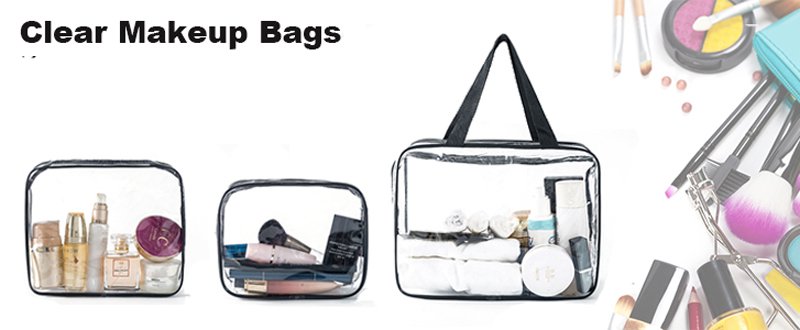
5. Clear Cosmetic and Travel Pouches — Compact Yet High-Value
These smaller pouches are favorites in beauty, airline, and promotional gifting markets. They combine hygienic design with visual merchandising value—perfect for displaying cosmetics or small items.
Typical Features:
- Transparent body with zipper or snap top
- Optional colored trim, embossing, or inner compartments
- Size range: 15 × 10 × 5 cm to 25 × 18 × 8 cm
- Material: soft TPU or EVA film
Market Insight: Airlines and cosmetic brands prefer clear pouches for travel-size compliance (TSA 3-1-1 rule). Premium cosmetic houses use thicker TPU with frosted transparency for a luxury finish.
6. Stadium-Approved Clear Bags — Built for Regulation Compliance
“Stadium-approved” bags have become a regulated product category, especially in North America. They must conform to venue transparency and dimension rules, typically no larger than 12″ × 6″ × 12″, and use fully see-through materials without opaque pockets.
Core Requirements:
- Clear PVC or TPU main body
- Limited to one logo area or trim color
- Reinforced seams for crowd use durability
- Easy visibility for security checks
Example Applications:
- NFL, NBA, or concert venues
- Corporate-sponsored sports events
- School and campus compliance
Material Comparison Table:
| Parameter | PVC | TPU | Hybrid TPU+Fabric |
|---|---|---|---|
| Transparency | ★★★ | ★★★★ | ★★★ |
| Durability | ★★ | ★★★★ | ★★★★ |
| Cost Efficiency | ★★★★★ | ★★★ | ★★★ |
| Eco Compliance | ★★ | ★★★★★ | ★★★ |
| Typical Lifespan | 1–2 years | 3–5 years | 4+ years |
7. Emerging Specialty Types: Innovation Beyond Basic Bags
As global buyers seek differentiation, new functional variants of clear bags have emerged:
| Bag Type | Function | Material | End Use |
|---|---|---|---|
| Smell-Proof Clear Bag | Odor control with activated carbon layer | TPU + carbon mesh | Cannabis, perfume, or food packaging |
| Fire-Resistant Clear Bag | Safety + transparency | Silicone-coated fiberglass | Document or electronics safety |
| Waterproof Dry Clear Bag | Submersible sealing for marine use | PVC Tarpaulin + TPU window | Outdoor, boating, beach |
| Clear Tool Bag | Workplace visibility | Heavy-duty PVC + reinforced trim | Construction or inspection sites |
Szoneier R&D Capability: We co-develop custom-use clear bags by integrating functional films (UV-resistant, anti-yellow, odor-proof), enabling buyers to tap into emerging market niches with small MOQ trial runs.
Comparative Guide: Clear Bag Types at a Glance
| Bag Type | Typical Size | Target Market | Unit Cost (USD) | MOQ | Branding Area | Trend Level |
|---|---|---|---|---|---|---|
| Clear Tote | 35×30×12 cm | Retail / Promotion | 2.5–5.5 | 100 pcs | Large | ★★★★ |
| Clear Backpack | 40×30×15 cm | School / Workplace | 3.5–7.0 | 200 pcs | Medium | ★★★ |
| Clear Duffel | 50×25×25 cm | Sports / Travel | 4.0–8.0 | 150 pcs | Large | ★★★ |
| Clear Drawstring | 35×45 cm | Event / Giveaway | 1.0–2.0 | 500 pcs | Medium | ★★★ |
| Clear Cosmetic Pouch | 20×15×6 cm | Beauty / Airline | 1.5–3.0 | 200 pcs | Small | ★★★★ |
| Stadium Bag | 30×30×15 cm | Event / Compliance | 2.0–4.5 | 300 pcs | Medium | ★★★★★ |
How Should Brands Choose the Right Clear Bag Type for Their Needs?
Brands should choose the right clear bag type by matching design, material, and structure with its intended use—fashion, travel, retail, or compliance. The right selection depends on bag capacity, closure type, venue regulations, and target audience. Lightweight PVC drawstring bags work best for mass events, while structured TPU totes or hybrid handbags suit premium retail. Aligning product function, cost, and brand image ensures performance and profitability.
1. How to Match Bag Type with End-Use (Event, Retail, Travel, Workplace)
Different applications demand specific technical and aesthetic qualities. Misalignment between use-case and design often leads to product failure (e.g., overengineered event bags or underbuilt travel bags).
a. Event & Promotional Use
- Goal: Mass visibility at low cost.
- Recommended Styles: Flat or gusseted PVC totes, drawstring bags.
- Material: 0.3–0.4 mm PVC or EVA; simple trim and silk-screen logo.
- Advantages: Lightweight, low unit cost (≈US$1–2), fast production.
- Szoneier Example: A 15,000-unit event bag batch for a U.S. sports client was produced in 10 days, achieving <1% defect rate and full-color logo print.
b. Retail & Fashion Lines
- Goal: Stylish transparency with premium feel.
- Recommended Styles: Structured clear tote, handbag, or clutch using TPU or PU composite.
- Material: 0.5–0.6 mm TPU, odorless and UV-stable.
- Finishing: Edge painting, colored trim, metal hardware, embossed logo.
- Advantages: Enhances brand perception, fits “transparent chic” trend.
- Target Margin: 3–5× landed cost at retail.
c. Travel & Outdoor Applications
- Goal: Durability, waterproofing, multipurpose capacity.
- Recommended Styles: Clear duffels, waterproof dry bags, or TSA pouches.
- Material: 0.5–0.6 mm TPU or laminated PVC; water-sealed zippers.
- Features: Padded base, reinforced handles, strong seams.
- Cost Range: US$4–8 (bulk).
- Use: Airlines, gym clubs, outdoor retailers.
d. Workplace / School Compliance
- Goal: Meet security transparency policies.
- Recommended Styles: Clear backpacks or totes meeting size limits.
- Material: Clear PVC (cost-effective) or TPU (for longer use).
- Specifications: 12″×6″×12″ per stadium/venue rule, strong stitching, zip closure.
- Advantages: Consistent repeat demand; easy resale to institutions.
2. How to Select Size, Capacity, and Structure for Functionality
Bag structure dictates comfort, safety, and usability. A clear bag can look great in pictures but fail in real use if proportions or reinforcement are off.
| Application | Recommended Volume | Structure | Handle/Strap | Key Closure |
|---|---|---|---|---|
| Event / Promotion | 5–10 L | Flat or small gusset | Nylon rope / PP webbing | Open top / Drawstring |
| Retail Tote / Fashion | 10–20 L | Box-bottom, reinforced corners | PU leather / Canvas webbing | Zipper / Snap |
| Travel Duffel / Gym | 20–35 L | Cylindrical / Rectangular | Double handle + shoulder strap | Zipper |
| Workplace / School | 15–25 L | Multi-pocket backpack | Padded straps | Dual zipper |
| Cosmetic / Pouch | <5 L | Flat rectangular | N/A | Zipper |
Technical Guidance:
- Gusset Width: Determines capacity and stability. Standard: 6–10 cm for retail totes.
- Reinforced Handles: Required for bags >15 L; recommended stitch pattern: X-box + bar tack.
- Weight Tolerance: Promotional bags ≈10 kg; travel or work bags ≥15 kg.
- Seam Sealing: For waterproof models, heat-welded seams outperform stitched seams.
3. How to Choose Customization and Branding Options
Customization determines how a bag connects with your brand identity. For clear bags, less is often more—too much printing reduces visual appeal, while strategic use of logo or trim color maximizes impact.
Printing & Decoration Methods
| Method | Description | Best For | Cost Impact |
|---|---|---|---|
| Silk Screen | 1–2 color direct print on PVC/TPU | Logo placement | Low |
| Heat Transfer / UV Print | Full-color image print | Promotional campaigns | Medium |
| Foil Emboss / Deboss | Metallic or texture branding | Premium fashion | High |
| Embroidery Patch / Label | Stitched logo patch on trim | Retail lines | Medium |
| Edge Piping & Trim Color | Contrast tone binding | Visual identity | Low |
Color Strategy
- Transparent body + colored trim (brand Pantone match) increases shelf visibility.
- Frosted TPU + metallic hardware = luxury perception.
- Dual-layer (clear + opaque inner pocket) provides partial privacy.
Add-on Elements
- Zipper Pullers: Custom metal with logo embossing.
- Inner Insert Bags: Fabric pouch for valuables (optional in luxury lines).
- QR / NFC Tags: Added to high-end lines for traceability and anti-counterfeit measures.
Material-Matching Strategy: Aligning Function and Cost
Each clear bag material comes with distinct trade-offs in appearance, feel, and longevity.
| Material | Durability | Cost | Appearance | Recommended For |
|---|---|---|---|---|
| PVC (0.3–0.4 mm) | Medium | ★ | Glossy, rigid | Events / Promotions |
| EVA (0.4 mm) | Medium | ★★ | Soft, flexible | Cosmetic pouches |
| TPU (0.5–0.6 mm) | High | ★★★ | Crystal clear, odorless | Retail / Fashion |
| PU + TPU Composite | Very High | ★★★★ | Semi-transparent, textured | Luxury brands |
Expert Insight:
- For mass-market giveaways, choose PVC or EVA (cost efficiency).
- For retail or sustainable markets, TPU or PU composite ensures repeat business and brand trust.
- For export to eco-sensitive regions (EU/US), specify REACH or phthalate-free compliance.
Balancing Aesthetics, Cost, and MOQ
Buyers often struggle between premium design ambition and realistic budgets. The key is value engineering — optimizing material and design while keeping cost per unit competitive.
| Design Element | Cost Influence | Optimization Tip |
|---|---|---|
| Material Thickness | +15–30% per +0.1mm | Use 0.4mm PVC for events; reserve 0.6mm TPU for retail. |
| Logo Printing Area | +5–10% | Limit to central logo zone; avoid full-body print. |
| Hardware & Zippers | +20–25% | Use standard YKK-style pulls unless luxury brand. |
| Packaging (polybag vs box) | +5–15% | For online retail, use thicker polybag + card insert. |
| MOQ | Directly affects per-unit cost | Combine multiple styles under one material order. |
Example: A client sourcing 5000 pcs of 0.5mm TPU totes reduced cost by 12% by switching to shared trims and pre-dyed film from Szoneier’s inventory.
Aligning Brand Positioning with Bag Selection
| Brand Type | Design Focus | Recommended Bag | Material | Approx. Cost/Unit (USD) |
|---|---|---|---|---|
| Luxury / Boutique | Minimalist elegance | Structured tote | TPU + PU trim | $6–9 |
| Fashion Retailer | Trend + function | Medium tote / clutch | TPU | $4–6 |
| Corporate / Event | High visibility | Flat tote / drawstring | PVC | $1–2 |
| Travel / Fitness | Strength + waterproof | Duffel / backpack | TPU | $5–8 |
| Cosmetic / Beauty | Hygiene + clarity | Zipper pouch | EVA / TPU | $2–4 |
Do Clear Bag Materials Impact Performance and Branding?
Yes, the choice of material—PVC, TPU, EVA, or hybrid composite—directly impacts a clear bag’s durability, transparency, eco-compliance, and brand perception. PVC offers cost efficiency for mass promotions, while TPU provides superior clarity, flexibility, and sustainability for premium retail lines. Choosing the right material ensures not only functional longevity but also consistent brand image and compliance with global regulations such as REACH and Prop 65.
1. PVC (Polyvinyl Chloride)
PVC remains the most common clear bag material, chosen for its affordability, easy welding, and rigid structure. It’s ideal for large-volume promotional orders, stadium bags, or low-cost retail packaging.
| Attribute | PVC (Standard) |
|---|---|
| Transparency | ★★★ (Clear, glossy) |
| Durability | ★★☆ (Moderate) |
| Flexibility | ★★ (Can stiffen over time) |
| Odor Resistance | ★☆☆ (May emit vinyl smell) |
| Cold Crack Resistance | Down to –5 °C |
| Eco Compliance | Limited (phthalates, DEHP concerns) |
| Cost (Bulk) | $1.8–$3.0 per unit |
| Lifespan | 1–2 years |
Advantages:
- Excellent for mass events or giveaways.
- Welds easily for RF heat sealing, reducing labor cost.
- Maintains shiny gloss finish that enhances print visibility.
Limitations:
- Can yellow or crack under UV exposure.
- Slight chemical odor may deter luxury buyers.
- Restricted use in EU markets without REACH or ROHS-compliant formulation.
Szoneier’s Practice: We use phthalate-free and REACH-certified PVC films, ensuring compliance for export to North America and Europe. Material is tested for anti-yellowing (500 hr UV) and odor control (<1.5 ppm VOC emission).
2. TPU (Thermoplastic Polyurethane) — Premium, Durable, and Eco-Friendly
TPU is the new gold standard for high-end clear bags. It offers superior elasticity, transparency, and environmental compliance, with a softer, more luxurious hand feel—ideal for fashion, beauty, and retail sectors.
| Attribute | TPU (Premium) |
|---|---|
| Transparency | ★★★★★ (Crystal clear) |
| Durability | ★★★★★ (Tear & abrasion resistant) |
| Flexibility | ★★★★★ (Soft-touch feel) |
| Odor Resistance | ★★★★★ (Odorless) |
| Cold Crack Resistance | –30 °C |
| Eco Compliance | PVC-free, REACH & ROHS ready |
| Cost (Bulk) | $4.0–$6.0 per unit |
| Lifespan | 3–5 years |
Advantages:
- Non-toxic and biodegradable options available.
- Maintains clarity under sun, heat, and cold.
- No plasticizer migration—suitable for cosmetics or medical markets.
- Supports advanced logo processes: UV print, hot stamping, or embossed branding.
Limitations:
- Higher raw material cost (+30–50% vs PVC).
- Requires specialized welding equipment (RF or ultrasonic).
Brand Impact: Brands using TPU achieve stronger market positioning—often perceived as “sustainable,” “luxury,” or “tech-lifestyle.” It aligns with global consumer shifts toward eco-luxury minimalism.
Szoneier Capability: We maintain TPU film inventory from 0.3–0.8 mm thickness, available in clear, frosted, smoky, or tinted finishes, allowing clients to create premium aesthetic variations without heavy retooling.
3. EVA (Ethylene-Vinyl Acetate) — Lightweight, Flexible, and Mid-Tier
EVA film balances cost and performance between PVC and TPU. It is softer, lighter, odorless, and recyclable, making it a favorite for cosmetic, toiletry, and travel pouches.
| Attribute | EVA |
|---|---|
| Transparency | ★★★☆ (Semi-clear, soft gloss) |
| Durability | ★★★ (Good flexibility) |
| Flexibility | ★★★★ |
| Odor Resistance | ★★★★ |
| Cold Crack Resistance | –20 °C |
| Eco Compliance | BPA-free, PVC-free |
| Cost (Bulk) | $2.5–$4.0 per unit |
| Lifespan | 2–4 years |
Advantages:
- Lightweight and travel-friendly.
- Easy to print or heat-seal.
- Excellent for cosmetics, amenity kits, and eco packaging lines.
Limitations:
- Slightly cloudy transparency vs PVC/TPU.
- Soft surface can scratch or deform with heavy load.
Szoneier Application: Common in airline amenity kits and travel pouches, EVA is paired with PU trims or recycled fabric edges to enhance durability and aesthetic balance.
4. Composite or Hybrid Materials — The Future of Clear Bags
To combine performance with branding flexibility, many manufacturers use hybrid composites, integrating transparent TPU/PVC films with textile or PU trims. This results in high structural integrity and modern aesthetics.
| Attribute | TPU + PU / TPU + Nylon Composite |
|---|---|
| Transparency | ★★★★ |
| Durability | ★★★★★ |
| Flexibility | ★★★★ |
| Eco Compliance | ★★★★ |
| Brand Value | ★★★★★ |
| Cost (Bulk) | $5.5–$8.0 per unit |
| Lifespan | 4–6 years |
Benefits:
- Combines clarity with reinforced edges and color contrast.
- Reduces visual fingerprints and stretch marks.
- Perfect for fashion retail, tech accessories, or boutique lines.
5. Technical Comparison Matrix
| Property | PVC | EVA | TPU | TPU + PU Composite |
|---|---|---|---|---|
| Transparency (1–5) | 3 | 4 | 5 | 5 |
| Durability (1–5) | 3 | 3 | 5 | 5 |
| Flexibility (1–5) | 2 | 4 | 5 | 5 |
| Odor-Free Rating (1–5) | 1 | 4 | 5 | 5 |
| UV Resistance | Fair | Good | Excellent | Excellent |
| Eco Compliance | Limited | High | Very High | High |
| Cost Efficiency | Excellent | Good | Moderate | Moderate |
| Branding Perception | Basic | Mid | Premium | Luxury |
6. Branding Implications of Material Choice
| Brand Tier | Recommended Material | Reason | Consumer Perception |
|---|---|---|---|
| Mass Promotion / Events | PVC | Low-cost, fast turnaround | Practical, functional |
| Mid-Market Retail | EVA or Clear TPU | Balance of eco appeal and softness | Clean, modern |
| Luxury / Fashion Retail | TPU or Hybrid TPU+PU | Crystal transparency, tactile softness | Premium, sustainable |
| Corporate Compliance | PVC / TPU | Regulatory conformity | Safe, trustworthy |
Insight: The material chosen communicates the brand’s values and audience.
- PVC = affordability and accessibility
- TPU = sophistication and innovation
- EVA = sustainability and simplicity
- TPU+PU hybrid = luxury and craftsmanship
Premium brands now market transparency as a metaphor for authenticity — using clear TPU as a physical symbol of trust and eco-awareness.
7. Environmental and Regulatory Considerations
With evolving global standards, clear bag materials must comply with:
- REACH (EU) – chemical and phthalate restrictions
- Prop 65 (California) – labeling for plasticizers
- RoHS – heavy metal control
- GRS / RCS – for recycled TPU or trim materials
Szoneier’s Compliance Commitment:
- All TPU and EVA lines are phthalate-free, BPA-free, and odorless.
- Optional recycled TPU (up to 30%) for sustainable collections.
- Export certification reports available upon request.
How Can Manufacturers and Brands Make Custom Clear Bags Profitable?
Brands can make custom clear bags profitable by optimizing material choice, design complexity, and order volume. Using efficient PVC or eco-TPU materials, sharing trims across styles, and working with experienced OEM partners reduces cost per unit. Strategic branding, compliance-ready designs, and multi-channel selling (retail, events, corporate gifts) further increase margins. Partnering with a manufacturer like Szoneier ensures low MOQ, quick sampling, and stable quality, boosting ROI across product lines.
1. Cost Structure Optimization: Knowing Where Your Money Goes
Profit begins with understanding your cost breakdown. For most clear bag projects, material cost dominates 40–55% of total spend.
| Cost Component | Share (%) | Optimization Strategies |
|---|---|---|
| Material (PVC/TPU/EVA) | 40–55% | Choose thickness wisely (0.4 mm for events, 0.6 mm for retail); standardize material rolls across models. |
| Labor & Assembly | 20–25% | Simplify structure; minimize multi-layer trims or complex curves. |
| Printing & Branding | 5–10% | Use single-zone logo printing; avoid full-surface prints. |
| Hardware & Accessories | 5–8% | Use standardized zippers or metal pulls; avoid custom molds for small runs. |
| Packaging & Logistics | 8–12% | Optimize carton sizing; use flat-pack designs for freight efficiency. |
Example (per unit, 500 pcs batch):
| Type | Material | Cost (USD) | Target Retail Price | Margin |
|---|---|---|---|---|
| Promotional Tote | PVC 0.35 mm | 2.20 | 8.50 | 286% |
| Premium TPU Tote | TPU 0.55 mm + PU Trim | 5.20 | 22.00 | 323% |
| Cosmetic Pouch | EVA 0.4 mm | 2.80 | 12.00 | 329% |
| Stadium Bag | TPU 0.5 mm | 3.50 | 15.00 | 328% |
2. MOQ and Sampling Strategy: Small Starts, Big Profits
Low MOQ (minimum order quantity) flexibility is essential for new brands testing market response. Traditional factories often require 1,000–3,000 pcs per model—locking up capital and limiting design variation. Szoneier supports MOQs as low as 100 pcs per design with free design mockups, enabling brands to test multiple SKUs and identify best-sellers before scaling.
Sampling Lead Time Optimization:
- Standard PVC bag sample: 3–5 days
- TPU fashion tote: 5–7 days
- Multi-style prototype set (3 designs): within 10 days
This agility helps brands launch faster, respond to seasonal trends, and keep marketing momentum—key factors in achieving early profitability.
3. Brand Differentiation: Creating Perceived Value
Profitability is driven not just by cost, but by perceived value—what the customer feels the bag is worth. Clear bags provide unique opportunities to express brand DNA through transparency, texture, and minimalism.
a. Logo & Color Strategy
- Use Pantone-matched trims to link the bag visually with brand identity.
- Apply silk-screen or UV logos inside the clear body for a “floating logo” effect.
- Add metal badges or embossed pulls for tactile luxury.
b. Structure & Functionality Add-Ons
- Detachable fabric pouch = privacy + dual-use = higher retail value (+25–30%).
- Colored zipper = brand recall.
- Reinforced base = premium feel without heavy material cost.
c. Storytelling & Packaging
- Use “eco-TPU” or “phthalate-free” as marketing hooks.
- Label examples: “Made with sustainable TPU film – odorless, long-lasting, crystal clarity.”
4. Multi-Channel Profit Model: Selling Smart, Not Just Manufacturing
Brands can diversify revenue streams by targeting different market channels with the same base design.
| Channel | Typical MOQ | Markup Range | Strategy |
|---|---|---|---|
| Retail (Online / Boutique) | 100–500 pcs | 3–5× | Focus on TPU tote or pouch, add storytelling packaging. |
| Corporate / Promotional | 500–5000 pcs | 2–3× | Simple PVC or EVA bags with logo; high volume, fast delivery. |
| Event / Stadium Supply | 1000–10000 pcs | 1.5–2× | Comply with regulations, standard size; minimize cost. |
| Private Label / OEM | 300–2000 pcs | 2–4× | Co-develop exclusive trims or hybrid materials. |
Szoneier’s Differentiator: We support mixed-channel batches — allowing a single production run to serve both event and retail clients by using the same film stock with different logo prints, saving 12–18% on total procurement cost.
5. Lean Manufacturing and Waste Reduction
Profit margins can shrink due to material waste and inconsistent QC. At Szoneier, we integrate lean production principles that directly enhance buyer ROI:
- Laser-cut panels → 3–5% material savings.
- Batch heat-welding → 15% faster assembly vs manual stitching.
- Shared trim inventory → reduces small-order accessory costs.
- Automated QC → eliminates rework, ensuring consistent clarity and seam quality.
Our internal case study (2024) showed that optimizing panel layout alone improved yield by 9.2%, equivalent to saving $0.25 per unit on a 10,000-bag order.
6. Compliance + Sustainability = Premium Pricing
Eco-certifications allow brands to command higher prices. More buyers, especially in Europe and North America, are willing to pay 10–20% more for PVC-free or recycled TPU clear bags.
Key Certifications:
- REACH / RoHS / Prop 65 compliance for chemical safety
- GRS (Global Recycle Standard) for recycled materials
- OEKO-TEX for fabric trims and linings
ROI Impact:
| Certification | Added Material Cost | Average Retail Price Uplift | ROI Change |
|---|---|---|---|
| REACH-compliant PVC | +3–5% | +10–15% | ↑ 8–10% |
| Recycled TPU (R-TPU) | +10–12% | +25–35% | ↑ 20–25% |
| GRS + OEKO-TEX trim | +7% | +30% | ↑ 23% |
Szoneier’s sustainable TPU line is already used by eco-fashion brands in Germany, Australia, and Japan — achieving repeat reorder rates > 85% due to stable performance and brand alignment.
7. Logistics and Packaging Efficiency
Transportation and packaging often add hidden costs. Smart logistics design enhances profit while keeping product presentation premium.
Szoneier Best Practices:
- Use flat-pack carton design for totes and backpacks → 40% more units per CBM.
- Apply protective film coating on TPU to prevent scratches during shipping.
- Offer custom barcode + FNSKU labeling for Amazon FBA clients.
- Partnered with overseas warehouses (CA & DE) for short-lead delivery, reducing DDP cost by 12–15%.
Example: A U.K. retailer saved $1,480 per container after Szoneier redesigned its clear tote packaging layout and pallet stacking plan.
8. Data-Backed ROI Model: Clear Bag Profit Simulation
| Parameter | PVC Event Tote | TPU Retail Tote | EVA Pouch |
|---|---|---|---|
| Unit Cost (FOB) | $2.20 | $5.20 | $2.80 |
| Retail Price | $8.50 | $22.00 | $12.00 |
| Gross Margin | 286% | 323% | 329% |
| Avg. Reorder Frequency | Every 3 months | Every 6 months | Every 4 months |
| Expected Annual ROI | 42% | 57% | 49% |
| Market Retention (Customer Loyalty) | 70% | 90% | 85% |
These data show that premium TPU lines generate longer-term profitability, while PVC promotional lines deliver fast cash flow — a balanced product portfolio combines both.
Ready to Develop Your Custom Clear Bag Line?
You’ve learnt what clear bags are, why they’re popular, which types dominate the market, how to choose the right one, the material implications, regulatory considerations and profitability levers. Now it’s time to translate that knowledge into action.
Contact us today to discuss your clear bag project:
Let’s create your next high-visibility clear bag line—engineered for quality, branded for impact and manufactured for success.
manufacturer Categories
- Custom Tote Bags Manufacturer
- custom backpacks Manufacturer
- custom travel bags& Duffle bags manufacturer
- custom makeup bags & toiletry bags manufacturer
- custom cooler bags manufacturer
- custom drawstring bags manufacturer
- custom makeup bags & toiletry bags manufacturer
- custom golf bags manufacturer
- custom fireproof bags manufacturer
- custom dry bags manufacturer
- custom ski bags manufacturer
- custom gym & sports bags manufacturer
- custom laptop bags manufacturer
- custom tactical bags manufacturer
- custom beach bags manufacturer
- custom medical bags manufacturer
- custom camera bags manufacturer
- custom wetsuits manufacturer
- custom leather goods manufacturer
- more personalized products
Can't find the answers?
No worries, please contact us and we will answer all the questions you have during the whole process of bag customization.
Make A Sample First?
If you have your own artwork, logo design files, or just an idea,please provide details about your project requirements, including preferred fabric, color, and customization options,we’re excited to assist you in bringing your bespoke bag designs to life through our sample production process.
