 Skip to content
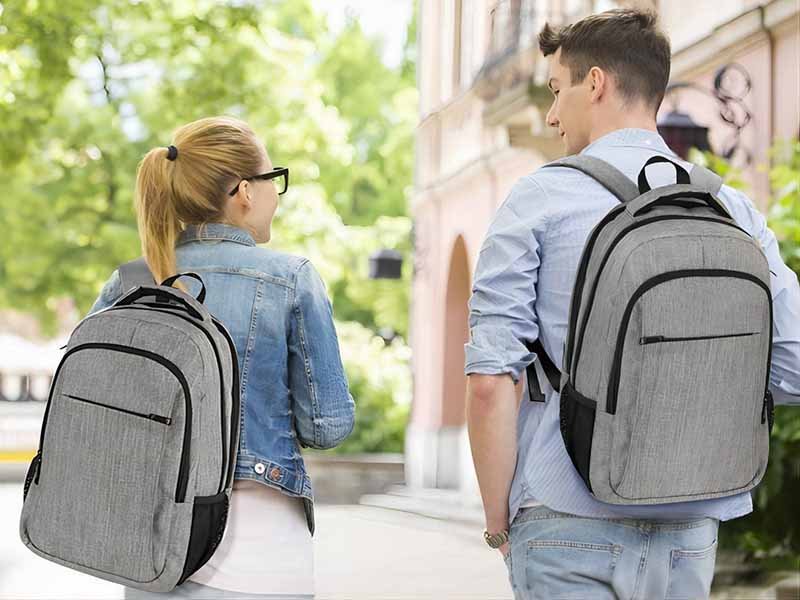
If you’ve ever shopped for a backpack — whether online or at a trade show — you’ve probably noticed something puzzling: two bags that look almost identical can have prices worlds apart. One sells for $25, the other for $95. Same zippers, similar fabric, same size. So what exactly makes one backpack “cheap” and the other “worth it”?
A good backpack price balances material quality, craftsmanship, features, and brand value within your intended use and budget. Basic polyester backpacks may cost around $15–30, while premium nylon or leather designs range from $70 to $200+. The right price depends on material grade, customization level, manufacturing location, and order volume—ensuring quality meets cost efficiency.
Most people assume price simply follows “brand name,” but in manufacturing, cost is a conversation about purpose: what you carry, where you go, and how long it should last. Behind every tag lies a hidden ecosystem of decisions—fabric sourcing, labor, design complexity, and production scale.
At Szoneier, where we’ve spent over 18 years engineering everything from rugged tool bags to minimalist travel packs, we’ve learned that “a good price” isn’t a number — it’s a balance. Sometimes the $40 backpack is overpriced; sometimes the $80 one is a bargain. Understanding why can save you thousands and make your next product launch a success story rather than a costly experiment.
What Determines the Price of a Backpack?
A backpack’s price is determined by the combined cost of materials, construction complexity, labor, and design features. Premium fabrics, advanced hardware, and skilled workmanship raise prices, while higher order volumes and simplified structures reduce them. Brand positioning and factory location also influence final pricing. Understanding these variables helps buyers evaluate whether they’re paying for true quality or unnecessary markups.
In the global bag manufacturing industry, backpack pricing isn’t arbitrary — it’s a precise equation built from dozens of small cost decisions. Whether you’re sourcing through a wholesaler or working directly with a factory like Szoneier, each component of that equation contributes to your final per-unit cost. Let’s break down the most important cost drivers one by one.
Material Selection
Materials typically account for 40–60% of total production cost, making them the single most influential factor in pricing. Common fabrics vary widely in both price and performance:
| Material Type | Typical Cost Range (per yard) | Characteristics | Common Use Case |
|---|---|---|---|
| Polyester (210D–600D) | $0.8 – $1.5 | Lightweight, affordable, good colorfastness | Promotional & school backpacks |
| Nylon (420D–1000D) | $1.5 – $3.5 | High tensile strength, abrasion resistance | Outdoor & tactical bags |
| Canvas / Cotton Blends | $2.5 – $4.0 | Natural texture, vintage aesthetic | Lifestyle & casual backpacks |
| PU / Leather / Synthetic Leather | $4.0 – $10.0+ | Luxury feel, premium look | Fashion & business backpacks |
| RPET (Recycled Polyester) | $1.8 – $3.0 | Eco-friendly, slightly stiffer texture | Sustainable product lines |
High-performance coatings (TPU, PVC, PU, or fireproof laminates) can further increase costs by 10–30%, especially when combined with waterproof zippers, reflective strips, or odor-proof linings.
Craftsmanship and Construction Complexity
After materials, labor and craftsmanship typically represent 25–35% of a backpack’s cost. This portion covers cutting, stitching, assembly, quality inspection, and packaging.
Each additional feature — whether a padded laptop sleeve, structured back panel, or multi-layered compartment — requires more sewing operations and time. For instance:
- A single-compartment polyester backpack may take 25–30 minutes of labor.
- A multi-pocket, structured travel backpack with foam padding and lining could take 60–90 minutes or more.
Factories like Szoneier optimize production by grouping similar operations (panel stitching, binding, zipper setting), but the more complex the design, the more line-time and labor skill it requires — directly increasing cost.
Hardware, Accessories, and Functional Add-ons
Zippers, sliders, buckles, hooks, Velcro, and webbing straps may seem minor but can add up to 15% of total cost when premium-grade hardware (e.g., YKK, SBS, or custom-plated metal) is used.
Special functions such as:
- USB charging ports
- Anti-theft hidden pockets
- Fireproof or smell-proof membranes
- Cooler bag insulation linings require additional materials and assembly layers.
For high-end buyers, these add-ons enhance perceived value and justify a higher retail price. But for private-label startup brands, trimming unnecessary extras can make pricing more competitive.
Branding and Customization Requirements
Customization adds value but also cost. Embroidered logos, silk-screen prints, woven patches, or molded rubber labels each involve separate processes.
Typical cost impacts:
- Screen printing: +$0.20–$0.50/unit
- Embroidery: +$0.50–$1.20/unit
- 3D rubber patch: +$1.00–$2.00/unit
- Custom zipper pull or hardware engraving: +$0.30–$0.80/unit
If your brand requires private packaging, hang tags, or barcoded labels, include these in cost planning. At Szoneier, we integrate logo and packaging customization in-house, reducing outsourcing and setup fees — an advantage for small or mid-sized brands managing tight budgets.
Factory Location and Labor Efficiency
Where your backpack is made matters. Labor costs in China, Vietnam, and Bangladesh differ significantly, but the efficiency of skilled workers and integrated supply chains often offsets hourly wage differences.
| Region | Labor Cost (USD/hr, avg) | Remarks |
|---|---|---|
| China (Guangdong / Fujian) | 2.5 – 3.5 | High efficiency, strong QC, mature accessory supply |
| Vietnam | 2.0 – 3.0 | Rapidly growing manufacturing base |
| Bangladesh | 1.0 – 1.5 | Lower cost but longer lead times, less specialization |
| Europe / USA | 12 – 20+ | High cost, used for niche or luxury production |
Order Volume and Economies of Scale
MOQ (Minimum Order Quantity) can make or break your price. For most factories:
- Under 300 pcs: 10–20% higher cost per unit (due to setup and material loss)
- 500–1,000 pcs: optimal balance of efficiency and flexibility
- 3,000+ pcs: enables bulk purchasing discounts, lower per-unit pricing
At Szoneier, we specialize in low MOQ customization — as low as 200 pcs — allowing new brands to test designs without overstocking, while still maintaining a professional production setup.
Packaging, Logistics, and Compliance
Finally, don’t forget secondary costs often overlooked by buyers:
- Export carton packaging & labeling (+$0.50–$1.00/unit)
- Quality control and inspection fees (varies by requirement)
- Certifications (REACH, OEKO-TEX, EN-71, fire-retardant tests, etc.)
- International freight and customs duties
How Much Do Backpacks Typically Cost by Category?
Backpack production cost varies by category: basic everyday backpacks may cost roughly USD 15-30/unit, mid-range travel/school backpacks around USD 30-70/unit, and high-end outdoor/technical or branded backpacks can cost USD 70+, even over USD 100 depending on features, materials and volume.
When you’re sourcing custom backpacks—whether for school, travel, outdoor, corporate gifting or premium branding—it’s essential to understand typical cost “bands” by category. These help you set realistic budgets, compare quotes fairly, and negotiate intelligently with factories like Szoneier. Below we break down the cost bands, typical specs, what drives the cost upward, and how you might position your product accordingly.
1: Basic Everyday / School Backpacks
Typical cost range (production FOB): ~USD 15-30 per unit (with reasonable MOQ, standard fabrics). Typical specs:
- Fabric: 210D-600D polyester or nylon (no heavy coatings)
- Hardware: Standard zipper, plastic buckle, one compartment + 1-2 pockets
- Minimal features: basic padding, simple back panel, no specialty linings
- Branding: simple printed logo or woven label Why cost is lower:
- Simpler structure → fewer parts, fewer operations
- Lower material grade → less expensive fabrics and hardware
- Minimal feature sets → fewer add-ons Considerations for your sourcing: If your quote is much above USD 30 for this type of bag, ask the factory to justify: higher fabric denier? additional compartments? special lining? On the other hand, a quote below USD 15 likely means corners are being cut—material or labor may be compromised.
2: Mid-Range Travel / School / Laptop Backpacks
Typical cost range: ~USD 30-70 per unit. (Some sources suggest up to USD 80 depending on features.) Typical specs:
- Fabric: 600D-1000D nylon or coated polyester, possibly water-resistant finish
- Hardware: Better zipper (YKK/SBS), metal components, more durable webbing
- Features: Padded laptop sleeve, multiple compartments, ergonomic back/shoulder straps, possibly USB port or side bottle pocket
- Branding: Embroidery, metal badge, woven patch, custom hang-tag Cost drivers upward:
- Upgrading fabric from e.g. 600D to 1000D adds cost
- Using metal hardware vs plastic
- Additional compartments and specialist pockets raise labor time
- Branded features, custom lining or better finishing add value
3: Premium Outdoor / Technical / Branded Backpacks
Typical cost range: USD 70+ per unit. In some cases USD 100-200+ depending on function, materials, brand positioning. Typical specs:
- Fabric: Premium materials such as 1000D or 1680D ballistic nylon, Cordura®, TPU/hypalon coating, waterproof membranes
- Hardware: Metal-zippers, custom die-cast buckles, molded components, perhaps frame or load-carrying suspension
- Features: Anti-theft compartments, external modular webbing (MOLLE), hydration pack compatibility, premium lining, high-tech padding, weatherproofing
- Branding: Boutique labels, limited editions, bespoke colorways, premium packaging Why cost is much higher:
- High-end materials cost multiples of standard fabrics
- More complex construction takes more labor and line-time
- Smaller production runs (often niche or branded) mean lower economies of scale
- Premium finishing, custom accessories and packaging all add cost For your brand sourcing: If you’re targeting this top tier, be prepared to accept a higher cost base, but ensure your pricing to retail allows a margin. As Szoneier, you can show clients where the extra cost resides (materials + labor + finishing + packaging) so they understand value rather than seeing “high price” as arbitrary.
Approximate Production Costs by Backpack Category
| Category | Production Cost Estimate | Typical Unit Specs |
|---|---|---|
| Basic Everyday | USD 15 – 30 | 210-600D polyester, 1 main compartment, printed logo |
| Mid-Range Travel/School | USD 30 – 70 | 600-1000D nylon/poly, padded laptop sleeve, multiple pockets |
| Premium / Technical | USD 70+ (often 100+) | 1000D+/TPU coating, heavy hardware, specialized features |
What Is a Reasonable Price for Different Materials?
Material choice strongly impacts backpack cost: budget materials (polyester) allow lower pricing; mid-materials (nylon 600D) cost more; premium materials (leather, Ripstop nylon, TPU laminate) raise cost significantly — so reasonable price correlates with material grade.
Are Nylon Backpacks Cheaper or More Durable per Dollar?
Nylon sits in that sweet-spot between cost and performance; it’s more expensive than the lowest grade polyester, but offers higher abrasion resistance, better feel, and longer lifespan. Many bag manufacturers cite higher fabric cost as a major driver. For example, one source notes: “raw materials are the most expensive part of building a backpack… nylon backpacks are popular among travellers because of their abrasion resistance… the price varies greatly depending on the type of material.” In terms of cost, material alone for nylon (depending on denier, coatings) can range roughly from USD 1.5 to 3+ per yard (or equivalent) in a large volume setting. For a typical day-pack in 600D nylon, the material cost might allow peer production cost of about USD 30-50 entirely (material + other categories). But if you go to 1000D Cordura or add laminate coatings, cost increases significantly.
Is Polyester the Best Budget Material?
Yes — polyester remains the go-to budget fabric for many standard backpacks because it keeps cost down while delivering acceptable performance for everyday use. One manufacturing overview states: “For a standard polyester backpack, the material costs can range from $1 to $5.” Given that, a backpack designed with 300D or 600D polyester, minimal coating, standard zippers, no luxury hardware, can perhaps yield a production cost as low as USD 15-25 per unit (given reasonable volume). This makes it attractive for promotional or school-bag segments. Trade-off note: The cheaper material means lower durability, less premium feel, likely fewer features. If your brand aims for “premium quality”, using standard polyester might undermine perceived value. So your “reasonable price” must be matched to material grade and market positioning: if you quote USD 20 but propose “premium nylon + features”, you risk under-budgeting and undervaluing the product.
How Much Do Canvas, Leather, or RPET Backpacks Usually Cost?
When you step into premium materials — such as canvas blends, leather, synthetic leather (PU), or eco-friendly fabrics like RPET (recycled polyester) — cost rises because of material acquisition, cutting complexity, finishing, and often shipping/import duties. For instance, one article notes: “High end leather for high end backpacks $50 or more per unit [material cost].” Here are some approximate ranges and what they mean for “good price”:
| Material Type | Relative Material Cost | Implication for Unit Cost (Production FOB) |
|---|---|---|
| Canvas / Cotton blend | Moderate | Production cost might rise to USD 40-60 depending on features |
| RPET / Recycled Polyester | Moderate–High (due to sourcing/traceability) | Expect about +10-30% over standard polyester cost |
| Leather / Genuine or full-grain | High | Material alone might push unit cost far beyond USD 70; production cost may be USD 80-120+ |
| Premium technical laminate (TPU, Hypalon, ballistic 1000D+) | Very High | Production cost might hit USD 100-200+ unit depending on features |
Material Choice vs Reasonable Price Range
| Material Grade | Typical Usage Segment | Estimated Production Cost Band* | Indicative “Good Price” Benchmark |
|---|---|---|---|
| Budget Polyester 300D–600D | Promo backpacks, school | USD 15-25 | FOB + markup USD 30-40 |
| Mid-Range Nylon 600D–1000D | Travel, laptop, brand bags | USD 30-50 | FOB + markup USD 60-90 |
| Premium Canvas / RPET | Lifestyle, eco-friendly | USD 40-70 | FOB + markup USD 80-130 |
| Leather / Technical 1000D+ | Premium, outdoor, luxury | USD 70-120+ | FOB + markup USD 150+ |
- Assuming reasonable MOQ (500-2,000 units) and standard features.
How Do Brand, Quality, and Purpose Change the Price?
Brand reputation, product quality, and intended purpose directly influence backpack pricing. Premium brands can charge more for perception and trust; higher quality requires costlier materials, construction, and testing; and specialized purposes — such as fireproof, waterproof, or cooler backpacks — demand functional materials that raise production cost. Together, these three dimensions define whether a backpack is a $25 mass item or a $150 performance product.
Do Branded Backpacks Justify Higher Prices?
Absolutely — and not merely because of marketing hype. A strong brand commands a premium because it carries trust, quality assurance, and after-sales service that justify a higher ticket price.
For example:
- A generic nylon travel backpack may retail for $45–60.
- The same-spec design under a premium brand (e.g., Samsonite, North Face) may retail for $100–180. That 2×–3× difference isn’t arbitrary — it reflects costs embedded in brand operations:
- Brand Equity: Established name = perceived reliability.
- Design Innovation: Branded models often feature unique patterns, patented structures, or ergonomic technologies.
- Warranty & After-Sales: Premium brands often offer multi-year warranty support.
- Marketing & Packaging: Presentation, e-commerce photography, influencer partnerships — all add cost.
How Does Quality Level Affect the Price?
Quality is quantifiable — not abstract. It is the sum of material selection, construction precision, and performance validation. In manufacturing terms, every increase in quality adds a corresponding cost ratio.
| Quality Factor | Description | Typical Cost Impact |
|---|---|---|
| Material Grade | Upgrading from 600D polyester to 1000D Cordura nylon | +20–40% |
| Stitch Density | Increasing seam per inch (SPI) for durability | +5–10% |
| Hardware Brand | Using YKK / Duraflex / SBS vs. unbranded | +10–15% |
| QC & Testing | Including tensile, waterproof, flame-retardant, or abrasion tests | +3–8% |
| Finishing Standards | Double-stitching, binding tape, reinforced bar-tack | +5–12% |
Are Specialty Backpacks (Fireproof, Anti-Theft, Cooler, Smell-Proof) More Expensive?
Yes — and often significantly so. Functional purpose adds both material complexity and engineering time. For example:
- Fireproof bags use aramid or fiberglass linings costing 5–8× standard fabric prices.
- Waterproof or dry bags require TPU or PVC lamination plus heat-sealed seams, increasing both material and labor cost by 20–40%.
- Cooler bags need insulation foam, food-grade PEVA liners, and leak-proof stitching.
- Smell-proof or anti-bacterial backpacks often use activated carbon or silver ion linings, adding $2–$5 per unit in material cost alone.
Thus, a simple $25 standard backpack can quickly become a $60–$90 specialty item with advanced functionality.
| Function Type | Key Added Material | Labor/Cost Increase | Example Use |
|---|---|---|---|
| Waterproof / Dry | TPU/PVC coating + sealed seam | +20–30% | Marine, hiking, motorcycle |
| Fireproof | Fiberglass / Aramid blend | +50–100% | Industrial, safety gear |
| Cooler / Thermal | PEVA + foam + leak-proof seams | +25–40% | Food delivery, camping |
| Smell-Proof | Activated carbon lining | +20–35% | Cannabis, gym gear |
| Anti-Theft | Lockable zippers + hidden pockets | +10–20% | Travel, commuting |
Does “Purpose-Driven” Design Always Mean Higher Cost?
Not necessarily. The key is design efficiency. If a purpose-built feature can be achieved with smart pattern design rather than expensive materials, cost remains manageable. For example:
- Adding elastic mesh for ventilation instead of a full molded back reduces cost.
- Using PU-coated nylon achieves waterproofness at half the cost of TPU lamination.
- Designing shared compartments can replace extra pockets, saving both materials and stitching time.
Brand, Quality & Purpose Cost Influence
| Category | Cost Impact | Typical Example | Price Range (FOB) |
|---|---|---|---|
| Entry-Level (Generic) | Low materials, minimal QC | Promotional / school bags | USD 15–30 |
| Mid-Range (Emerging Brand) | Balanced materials + brand logo | Travel / laptop backpacks | USD 30–60 |
| Premium Brand | Branded hardware, refined finishing | Lifestyle / luxury | USD 70–150 |
| Functional / Technical | Specialized fabrics, waterproof/fireproof | Outdoor, tactical, safety | USD 70–200+ |
How to Choose the Right Backpack Price as a Buyer or Brand?
Selecting the right price for a backpack is one of the most strategic decisions a buyer or brand will make. Price determines perceived quality, profit margins, and long-term competitiveness. Yet many sourcing teams mistakenly chase the lowest cost rather than the right value-to-spec ratio.
The process of pricing a backpack intelligently can be broken into five steps: defining your segment, clarifying specifications, gathering transparent factory quotes, benchmarking market expectations, and negotiating based on value—not fear of overpaying.
Let’s look at each in detail.
Step 1 — Define Your Market Position and End Use
Before you even look at quotes, define where your backpack lives in the market.
| Market Tier | Typical Retail Price | Target Production Cost (FOB) | Typical Buyer Profile |
|---|---|---|---|
| Budget / Promo | $25 – $45 | $12 – $20 | Gift, school, promotional |
| Mid-Range Brand | $60 – $120 | $30 – $50 | Lifestyle, travel, laptop |
| Premium / Outdoor | $150 – $300+ | $60 – $120+ | Tactical, luxury, sports |
Ask:
- Is your product functional or fashionable?
- Is it meant for bulk sales, or to build brand identity?
Tip: We encourage new brands to start mid-range (FOB $30 – $50) — flexible enough for customization yet still high-quality.
Step 2 — Clarify Your Specifications in Detail
Factories can’t quote accurately without a tech pack—even a simple one. Include:
- Material type & denier (e.g., 600D polyester vs 1000D nylon)
- Lining & padding details
- Hardware (zippers, buckles, logo plates)
- Logo method (printing, embroidery, silicone patch)
- Features (USB port, laptop sleeve, anti-theft pocket)
- MOQ and packaging requirements
Even a ± 10% change in fabric grade or hardware choice can shift unit cost by 15 – 25%.
Example: A 600D polyester bag may cost $28 FOB, while the same bag in 1000D nylon with YKK zippers can reach $42. Therefore, the “right price” begins with specification accuracy.
Step 3 — Request Transparent Factory Breakdowns
A professional factory quote should itemize these lines:
| Cost Component | Typical Share of FOB | Description |
|---|---|---|
| Fabric & Materials | 40 – 60% | Outer shell, lining, foam, webbing |
| Hardware & Accessories | 10 – 15% | Zippers, buckles, tags |
| Labor & Assembly | 20 – 30% | Cutting, sewing, QC |
| Branding & Packaging | 5 – 10% | Printing, embroidery, hangtags |
| Overhead & Profit Margin | 8 – 12% | Factory markup & risk buffer |
Step 4 — Benchmark Against Market and Competitors
Once you receive quotes, compare them not just numerically but contextually:
- Within Category: Is $35 reasonable for a 600D nylon travel bag? Yes—industry norm.
- Across Competitors: If a comparable supplier quotes $22, ask why—missing lining? Simpler construction? Unbranded hardware?
- Versus Retail Price: Your target FOB should ideally be 1/3 to 1/4 of expected retail price. Example: If you plan to retail at $90, production should land around $30.
If you’re an emerging brand, a slightly higher production cost is fine—quality differentiation builds trust faster than cheap pricing.
Step 5 — Negotiate Based on Value, Not Just Price
A strong buyer-factory relationship is a partnership, not a bidding war. During negotiation:
- Ask for alternatives, not just discounts. (e.g., “Can we use 210D lining instead of 300D to save $1?”)
- Offer volume commitments or seasonal orders to lower setup cost.
- Check if your supplier includes sampling or design in cost — many high-value factories (Szoneier included) offer free design and quick sampling to support clients at no extra charge.
- Prioritize total value (QC, lead time, communication) over a 1-dollar difference per unit.
Recognize Hidden Costs Before Finalizing Price
Even an attractive FOB can turn into a loss if you ignore secondary expenses:
- Sampling fees (if charged separately)
- Tooling or printing plate costs
- Freight & import duties
- Product testing / certifications (e.g., REACH, ROHS, EN-71)
- Warehouse repackaging or labeling
Smart buyers calculate Landed Cost = FOB + Freight + Duty + Logistics. That number —not FOB alone—determines true profit margin.
Case Study — Optimizing a Custom Backpack Quote
Client Brief: A UK brand wants a water-resistant 600D nylon laptop backpack with logo embroidery, MOQ 1,000 pcs.
| Item | Cost (USD/unit) |
|---|---|
| Material & Hardware | $18 |
| Labor & Assembly | $9 |
| Logo Embroidery + Packaging | $2 |
| Factory Overhead + Margin | $3 |
| Total FOB | $32 |
Retail target = $89; Margin ≈ 64%. Adjustment: If client increases order to 2,000 pcs, FOB drops ≈ $28 due to material volume discounts.
FAQ: Common Questions About Backpack Pricing
Is $20 a good price for a backpack? For very basic backpacks (simple structure, standard polyester, no logo customization) $20 production cost may be possible—but if you want moderate features, logo, decent hardware, expect higher. Are expensive backpacks worth it? If they deliver higher quality, durability, features, and branding value, yes—but you must verify specs justify cost. How much should schools or retailers pay for bulk backpacks? Typically production cost might be USD 15-30 for basic models under large MOQ; with customization or better materials cost rises. Do waterproof or fireproof backpacks cost more? Yes—specialty features like waterproof coating, fire-proof linings, or smell-proof membranes add material and labor cost thus raising the “good price” accordingly.
Conclusion
If you’re planning to source custom backpacks—whether for brand, promotion, retail or specialty use—understanding what constitutes a “good price” is key. It’s not simply “lowest possible” but “right cost for the right specs and margin.” Let’s talk about your next backpack project: tell us your fabric, feature, quantity and branding needs — we’ll help you find the sweet spot price that delivers quality and value. Contact us now to get a detailed quote and specification breakdown for your custom backpack order.
manufacturer Categories
- Custom Tote Bags Manufacturer
- custom backpacks Manufacturer
- custom travel bags& Duffle bags manufacturer
- custom makeup bags & toiletry bags manufacturer
- custom cooler bags manufacturer
- custom drawstring bags manufacturer
- custom makeup bags & toiletry bags manufacturer
- custom golf bags manufacturer
- custom fireproof bags manufacturer
- custom dry bags manufacturer
- custom ski bags manufacturer
- custom gym & sports bags manufacturer
- custom laptop bags manufacturer
- custom tactical bags manufacturer
- custom beach bags manufacturer
- custom medical bags manufacturer
- custom camera bags manufacturer
- custom wetsuits manufacturer
- custom leather goods manufacturer
- more personalized products
Can't find the answers?
No worries, please contact us and we will answer all the questions you have during the whole process of bag customization.
Make A Sample First?
If you have your own artwork, logo design files, or just an idea,please provide details about your project requirements, including preferred fabric, color, and customization options,we’re excited to assist you in bringing your bespoke bag designs to life through our sample production process.
