 Skip to content
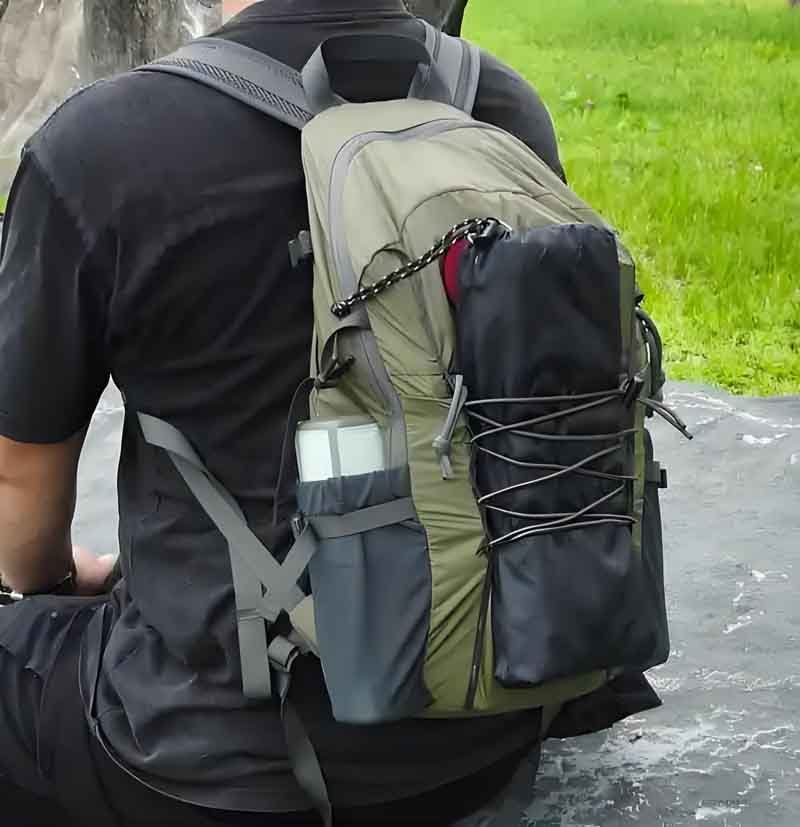
Choosing the right backpack can feel like navigating a maze of liters, inches, and obscure manufacturer specs. Is a “30 L” bag genuinely large, or merely average? Why do some backpacks measure volume in cubic inches, and others in liters? Finding clarity saves you from buying a pack too small to hold your laptop—or so enormous it’s a pain to carry.
A “standard” backpack typically ranges from 20 L to 30 L—equating to roughly 1,220–1,830 cubic inches—and measures about 18–20″ tall, 12–14″ wide, and 6–8″ deep. School backpacks often sit at 30–35 L to accommodate books and binders, while carry-on–compliant travel packs max out around 45 L (22″×14″×9″). Matching these benchmarks to your gear and body fit ensures comfort and functionality.
Imagine arriving at the airport with what you thought was a spacious “45 L” travel pack—only to have TSA deem it too large for overhead bins. I’ve been there: my bag had to be gate-checked, paperwork scattered, and my carefully packed laptop was unceremoniously handled. Let’s avoid that drama by decoding backpack sizes once and for all.
What Defines a “Standard” Backpack Size?
A “standard” backpack size typically refers to everyday packs in the 20–30 L range, with external dimensions around 18–20″ (45–50 cm) in height, 12–14″ (30–35 cm) in width, and 6–8″ (15–20 cm) in depth. Manufacturers derive volume by filling the main compartment with one-liter water pouches, then convert cubic inches to liters (1 L ≈ 61 cu in). These conventions create an apples-to-apples baseline, so consumers know what to expect from off-the-shelf or custom-made backpacks.
Establishing what “standard” means in backpack sizing requires understanding industry conventions, measurement techniques, and real-world usage patterns. Let’s unpack the details:
1. Volume Measurement Conventions
Water-Bag Filling:
Most brands measure internal volume by stuffing the empty pack with sealed 1 L water pouches until closure. Counting pouches yields the liter rating. While simple, this method can vary by pouch shape and compartment geometry, leading to ±5 % differences between brands.
Cubic Inches Legacy:Liters=61Cubic Inches
In North America, heritage outdoor and military-style packs often list capacity in cubic inches (cu in). Conversion uses the formula:
Liters=Cubic Inches61 \text{Liters} = \frac{\text{Cubic Inches}}{61}
For example, a 1 500 cu in pack equates to roughly 24.6 L.
CAD-Based Estimation:
Premium manufacturers—including custom shops like Szoneier—employ 3D CAD to model interior geometry, accounting for curved walls and tapered tops. This yields precise volume calculations but requires digital pattern data.
2. Typical External Dimensions
Standard everyday backpacks focus on a balance between capacity and ergonomic comfort. The most common dimension range is:
| Dimension | Metric | Imperial | Notes |
|---|---|---|---|
| Height | 45–50 cm | 18–20 in | Includes top handle; aligns with torso length |
| Width | 30–35 cm | 12–14 in | Accommodates laptops up to 15″ |
| Depth | 15–20 cm | 6–8 in | Slim enough for narrow aisles or subways |
These external measurements translate to a total external volume of 8 000–14 000 cu in (130–230 L), but internal usable volume (after subtracting material thickness and seam allowances) is 20–30 L for standard packs.
3. Internal vs. External Capacity
- Internal Usable Space: Includes main compartment, top/lid pocket, and any zippered mesh pockets.
- Excluded Storage: Side mesh pouches, hip-belt pockets, and external lash points typically are omitted from “official” volume ratings, so your “25 L” pack might actually offer 27–28 L when including these extras.
4. Why the 20–30 L Range?
- Daily Essentials: A 20 L pack comfortably fits a 13″ laptop, charger, documents, water bottle, and lunch box.
- Versatility: 30 L covers weekend carry-on needs or heavier gear without excessive bulk.
- Ergonomics: Packs larger than 30 L often require more robust frames and hip belts, shifting them into specialty or travel-pack categories.
5. Custom Variations on “Standard”
While 20–30 L is the off-the-shelf norm, brands often request bespoke deviations:
- Slightly Smaller (18 L): For minimalist commuters or youth.
- Midpoint (25 L): Balances tech gear and personal items for hybrid work-leisure models.
- Upper End (35 L): Adds extra space for gym gear or overnight essentials.
Szoneier’s OEM/ODM service allows clients to specify exact dimensions and volume targets—ensuring each “standard” backpack meets unique market demands rather than generic templates.
6. Implications
- Airline Compliance: A “standard” 30 L pack usually fits under airline seat dimensions but may exceed carry-on size if too deep.
- Classroom & Office: 20–25 L models slide easily into lockers and under desks.
- Urban Mobility: Slim profiles (6–7″ depth) reduce snag hazards on crowded commutes.
Which Backpack Volumes Are Most Common for Everyday Use?
Everyday backpacks typically span three volume brackets: 20 L for minimal commuters, 30 L for school and office use, and 40 L for those needing extra gear. A 20 L daypack packs essentials—laptop, charger, water—under 2 kg. A 30 L model adds space for books or a change of clothes. At 40 L, you accommodate gym gear or weekend spontaneity. Matching volume to daily routines prevents overpacking and ensures streamlined mobility.
Understanding these common volume ranges helps you pinpoint the perfect everyday companion:
- 20 L Packs: Minimalist & Lightweight
- Ideal Users: Commuters, cyclists, and urban walkers who carry only necessities.
- Capacity: Holds a 13″ laptop (in a slim sleeve), a 500 ml water bottle, a light jacket, and small personal items (wallet, keys, phone).
- Weight & Dimensions: Typically weigh 0.7–1.0 kg, measure ~18×11×6″.
- Design Features: Frameless or minimal internal stays; mesh shoulder straps for breathability; front quick-access pocket for transit cards or snacks.
- 30 L Packs: School & Office Workhorses
- Ideal Users: Students, office professionals, and parents juggling laptops, notebooks, and personal items.
- Capacity: 15″ laptop, three-ring binder, lunch box, water bottle, tech accessories, and lightweight umbrella.
- Weight & Dimensions: 1.0–1.3 kg, around 19×13×7″.
- Design Features: Padded laptop compartment, internal organizational sleeves for pens and small gadgets, side pockets for bottles, and moderate hip-belt or sternum strap for weight distribution.
- 40 L Packs: Versatile & Spacious
- Ideal Users: Gym-goers who need to pack shoes and attire, parents with diaper bags, or creatives carrying camera kits.
- Capacity: Fits gym clothes, sneakers, camera gear, or 2–3 days’ worth of clothing.
- Weight & Dimensions: 1.3–1.6 kg, roughly 20×14×8″.
- Design Features: Larger main compartment with zip-divider, detachable wet/dry pouch, external lash points for sunglasses or yoga mats, and robust frames or stays to support heavier loads.
- Matching Volume to Routine
- Avoid Overbuying: A 40 L pack for daily laptop and wallet invites overpacking—clutter grows, posture suffers.
- Prevent Underpacking: A 20 L bag for a full day at school feels cramped, risking damage to valuables forced into tight spaces.
- Lifestyle Sync: Evaluate typical daily load—tech items, workout gear, lunch prep—and select the bracket that covers 80–90% of your needs.
- Szoneier’s Custom Solutions
- Tailored Volumes: Brands can request bespoke sizes—e.g., 25 L commuter packs or 35 L parent-focused bags—optimizing internal layouts for specific target audiences.
- Prototype Testing: Szoneier produces “real-world” samples for field tests, confirming that 30 L truly holds four textbooks and a hydration bladder, or that 20 L stays light and comfortable on bike commutes.
By anchoring your choice in these common volume categories, you ensure your daily backpack feels neither like a burden nor like an overstuffed suitcase—setting the stage for comfortable, efficient days.
How Do You Measure Backpack Dimensions Accurately?
To measure backpack dimensions accurately, start with an empty, zipped-up pack laid flat. Measure height from the base seam to the top of handles, width across the widest front point, and depth by pressing the side gussets flat and measuring from front to back. Convert these external dimensions into volume by multiplying height × width × depth (in inches) to get cubic inches, then divide by 61 to estimate liters. This hands-on method validates manufacturer specs and reveals real-world capacity.
Accurate measurements bridge the gap between marketing claims and real-life performance. Whether you’re vetting off-the-shelf packs or commissioning a custom Szoneier design, here’s a detailed process to ensure your dimensions—and thus your volume expectations—are spot on.
1. Prepare Your Pack
- Empty It Completely: Remove all contents, including detachable pouches, hip-belt pockets, and hydration bladders.
- Fasten All Closures: Zip the main compartment, close lid flaps, tighten straps, and connect any buckles so the pack mimics its “in-use” shape.
- Lay It Flat: Place the pack on a stable surface, with the back panel down and straps tucked behind, to prevent distortion.
2. Measuring Height
- Include Handles: Measure from the bottom seam (not the feet or wheels) straight up to the highest point—usually the top handle or roll-top closure.
- Recording Tips: Use a rigid ruler or tape measure pressed against the pack to avoid “bowing.” Record in both inches and centimeters for universal reference.
3. Measuring Width
- Find the Widest Point: Typically across the shoulder-strap area or side pockets.
- Flatten Bulges: Lightly compress any mesh or fabric pockets so you measure the true straight-line width.
- Avoid Curves: Keep the ruler level; don’t follow the curved surface of the bag.
4. Measuring Depth (Gusset Thickness)
- Empty Gussets: Press the pack’s side panels flat to simulate minimal overstuffing.
- Measure Perpendicular: From the front face to the back panel, at the midpoint of the bag’s height (where depth is usually greatest).
- Expandable Sections: If the pack has roll-top or zip-expand panels, measure both compressed and fully expanded depths for min/max figures.
5. Calculating Volume
Cubic Inches Formula:Cubic Inches=Height (in)×Width (in)×Depth (in)
Cubic Inches=Height (in)×Width (in)×Depth (in) \text{Cubic Inches} = \text{Height (in)} \times \text{Width (in)} \times \text{Depth (in)}
Convert to Liters: Divide cubic inches by 61 to estimate liters (L).
Example:
- Height: 20″
- Width: 13″
- Depth: 8″
- Volume: 20 × 13 × 8 = 2,080 cu in ÷ 61 ≈ 34.1 L
| Dimension | Measurement | Notes |
|---|---|---|
| Height | 20″ (50 cm) | Includes top handle |
| Width | 13″ (33 cm) | Across side pockets, flattened |
| Depth | 8″ (20 cm) | Gussets pressed flat |
| Volume | 2,080 cu in | ≈ 34.1 L (usable ~32–33 L after seams) |
6. Accounting for Internal vs. External Space
- Seam Allowances & Linings: Subtract ~5% of calculated volume to account for fabric thickness, seam folds, and internal dividers.
- External Pockets: Measure separately if you wish to include all carry capacity—especially important for Szoneier’s custom designs that integrate hip-belt pouches or exterior sleeves.
7. Validating Manufacturer Specs
- Spot-Check Claims: Compare your measurements to the brand’s listed height, width, depth, and volume. Variances beyond ±10% suggest inflated specs or measurement inconsistencies.
- 3D CAD Confirmation: For bespoke projects, Szoneier uses digital pattern files to model true interior volume—eliminating guesswork before physical prototyping.
8. Practical Implications
- Fit & Comfort: Ensuring correct height relative to torso length avoids chafing; accurate depth ensures you don’t overpack and strain zippers.
- Compliance: For travel backpacks, confirming external dimensions prevents last-minute gate checks.
- Custom OEM Decks: When ordering from Szoneier, you can specify exact external dimensions to match your target market—whether that’s a sleek 18×11×6″ commuter pack or a roomy 22×14×9″ travel carry-on.
What Are Standard Backpack Sizes for Travel and Carry-On?
Most airlines cap carry-on dimensions at 22″×14″×9″ (≈45 L), so travel backpacks commonly range 35–45 L with external measurements under those limits. Personal-item backpacks—designed to stow under seats—max out around 18″×14″×8″ (≈20–25 L). Choosing a 40 L pack (21″×13″×8″) ensures you can fit clothing, toiletries, and a laptop without gate-checking. Always confirm specific carrier rules, but these benchmarks offer a reliable baseline for stress-free boarding.
Travel backpacks must balance capacity, comfort, and strict airline regulations. Here’s a detailed look at standard sizes, design considerations, and packing strategies:
Airline Carry-On Limits and Volume Translation
- Typical Dimension Cap: 22″ (height) × 14″ (width) × 9″ (depth), including handles and wheels where applicable.
- Volume Ceiling: ≈45 L externally; internal usable volume often 40–43 L once you account for seam allowances and pocket linings.
- Exceeding these measurements usually results in gate-checking fees, lost luggage risk, and travel inconvenience.
| External Size (in) | Approx. Volume (L) | Common Label |
|---|---|---|
| 20×13×7 | 35 L | Slim carry-on |
| 21×13×8 | 40 L | Standard travel pack |
| 22×14×9 | 45 L | Max-size carry-on |
Personal-Item Backpacks
- Under-Seat Dimensions: 18″×14″×8″ (≈20–25 L).
- Use Cases: Holds valuables—laptop, documents, in-flight essentials—without occupying overhead bin space.
- Design Features:
- Slim profile to slide beneath seats.
- Quick-access top pocket for passports and boarding passes.
- Padded laptop sleeves and RFID-blocking pockets for security.
Expandable vs. Fixed-Volume Designs
Roll-Top Packs:
- Unrolled: up to 45 L; rolled down: ~35 L.
- Benefits: Flexible capacity for souvenirs on return trips.
- Caveat: Roll-top bulk can exceed height limit if not compressed properly.
Zip-Expand Panels:
- Toggle between 40 L and 50 L modes via a gusseted zipper.
- Ensures carry-on compliance on outbound flights; extra capacity inbound.
Packing Strategies for Compliance
- Compression Straps: Cinch side straps to reduce depth by 1–2″.
- Wear Bulky Items: Travel jacket or boots on-plane to save pack space.
- Modular Packing Cubes: Organize clothing and streamline retrieval without overstuffing.
- Accessory Pouches: Detachable toiletry kits that fit under the top lid, preventing spill leaks inside the main compartment.
Material & Structural Considerations
- Lightweight Fabrics: 200–400 D nylon or polyester keeps empty weight under 1.2 kg for 40 L packs.
- Frame Support: Low-profile stays maintain shape under load without adding bulk.
- Durability vs. Weight Trade-Off: Water-resistant coatings and reinforcements at the base protect against airport floor scuffs.
Custom OEM/ODM Travel Packs by Szoneier
- Precisely Tuned Dimensions: Clients can specify exact external sizes—e.g., 21×14×8.5″ for niche carriers.
- Rapid Prototyping & Testing: Szoneier produces physical samples for fit-testing in airline overhead bins and under-seat spaces.
- Integrated Travel Features: Built-in TSA-approved lock zippers, hidden passport pockets, and detachable daypacks for excursion flexibility.
Are There Industry Guidelines for Youth and Adult Backpack Fits?
Youth backpacks cater to torso lengths of 30–38 cm and hip belts of 60–80 cm, with volumes capped at 20–30 L to prevent overloading. Adult S/M frames fit torsos 38–46 cm and waists 75–95 cm (25–35 L), while L/XL suits 46–53 cm torsos and 90–130 cm waists (30–45 L). Proper fit shifts 60–80% of load to hips, reducing shoulder strain. Custom OEM/ODM frames can fine-tune ranges for niche demographics.
Backpack comfort and safety depend as much on fit as on volume. Overloading or wearing an ill-fitting pack can cause muscle strain, poor posture, and reduced mobility—especially for growing children. Below we detail industry-accepted measurement methods, size ranges, and how brands can leverage custom manufacturing to nail the perfect fit.
1. Measuring Torso Length
- The distance from your spine’s C7 vertebra to your iliac crest determines where the shoulder straps anchor. If too long, the pack rides low and pulls on hips; too short, it digs into the neck and shoulders.
- Step-by-Step:
- Stand upright with feet shoulder-width apart.
- Have a friend locate your C7 vertebra—the bony lump at the base of your neck.
- From that point, measure down along the spine to the top of your hip bone (iliac crest).
- Record in centimeters; this is your torso length.
- Adjustment Range: Most premium packs offer 5–10 cm of adjustable harness length via sliding tracks or removable spacers, accommodating seasonal clothing layers or minor growth spurts.
2. Sizing Charts for Youth vs. Adult Packs
| Category | Torso Length (cm) | Hip Circumference (cm) | Typical Volume (L) |
|---|---|---|---|
| Youth | 30–38 | 60–80 | 15–25 |
| Adult S/M | 38–46 | 75–95 | 25–35 |
| Adult L/XL | 46–53 | 90–130 | 30–45 |
- Youth Models: Designed for ages ~8–14, these packs cap volume at 25 L to prevent overloading growing bodies. They typically forego heavy internal frames in favor of padded back panels.
- Adult S/M: Suited for most women and smaller men; balances 25–35 L capacity with moderate frames and hip belts.
- Adult L/XL: Targets taller or broad-shouldered users, offering 30–45 L and robust internal or hybrid frames to support heavier loads.
3. Hip-Belt Fit & Load Transfer
- Importance: A well-fitted hip belt transfers 60–80% of pack weight from shoulders to hips. Poor fit means shoulders bear most weight, leading to fatigue.
- Measurement: Wrap a tape measure around the top of your iliac crest, where the widest part of your hip sits. This circumference guides belt sizing.
- Adjustability: Look for removable or multi-width hip-belt pads to accommodate varying waist sizes—especially crucial for brands targeting both genders.
4. Gender-Specific vs. Unisex Designs
- Women’s Harnesses: Often feature narrower shoulder straps that angle inward toward the chest, higher sternum-strap placement, and shorter torso lengths.
- Men’s/Unisex Harnesses: Broader straps, deeper back panels, and lower sternum-strap positions.
- Custom OEM/ODM Advantage: Szoneier can produce subdivided harness geometries—tailored shoulder strap taper, sternum-strap track positions, and hip-belt shapes—without large MOQs, ensuring true gender-neutral or gender-specific fits.
5. Fine-Tuning Fit with Load-Lifters and Sternum Straps
- Load-Lifters: Small straps on top of shoulder straps that angle the pack body closer to the torso, improving balance and reducing sway.
- Sternum Straps: Stabilize shoulder straps, preventing them from slipping off the shoulders. Adjustable both vertically and horizontally, they accommodate varying chest widths.
6. Prototyping and Testing
- Physical Test Fitting: Szoneier’s rapid-prototype service lets brands produce small batches in multiple frame sizes for real-world fit tests—critical before committing to larger runs.
- Customer Feedback Loops: Field trials with representative users (students, hikers, commuters) reveal comfort hotspots and guide minor adjustments in strap geometry or belt width.
7. Continuous Improvement
- Post-Launch Data: Returns due to fit issues feed back into design refinements.
- Seasonal Updates: Adding extra clearance for winter layers or slimmer profiles for summer use.
How Should Your Activity Influence Your Backpack’s Size?
Your activity determines optimal pack volume: Day hiking and urban commutes require 15–25 L for essentials; weekend trips need 30–50 L to carry clothing and shelter; multi-day expeditions demand 50–70 L+ for gear, food, and safety kits. Choose volume that matches load weight—keeping carried weight under 20% of body weight for comfort—and prioritize specialized features like hydration ports, frame support, and external lash points.
Matching pack size to activity ensures efficiency, comfort, and safety:
- Day Hiking & Urban Daypacks (15–25 L)
- Use Cases: Under-8-hour outings, city commutes, school runs.
- Carried Load: 1–3 kg—water, snacks, electronics, light layers.
- Key Features: Frameless or minimal frames, hydration-bladder sleeves, hip-belt pockets for quick-access, ventilated back panels.
- Weekend Trips (30–50 L)
- Use Cases: Overnight camping, weekend getaways, ski weekends.
- Carried Load: 5–10 kg—sleeping bag, cookset, two days’ worth of clothing.
- Key Features: Bottom sleeping-bag compartments, panel or top loading, roll-top closures for variable capacity, side pockets for bottles or poles.
- Multi-Day Expeditions (50–70 L+)
- Use Cases: 3–7+ day backpacking, mountaineering, bike-packing.
- Carried Load: 10–20+ kg—shelter, food, fuel, technical gear.
- Key Features: Robust frames or stays, load-lifter straps, multiple compression points, detachable daypacks for summit pushes.
- Specialized Activities
- Photography: Custom dividers, side-access panels, tripod carriers—often 25–40 L for day shoots, 50–60 L for multi-day trips.
- Climbing & Mountaineering: Rope straps, ice-axe loops, haul handles—volumes typically 50–65 L.
- Travel & Business: Convertible daypacks (20–30 L) with detachable 10–15 L personal packs; 35–45 L carry-on models with laptop sleeves.
- Load-to-Body-Weight Ratio
- Rule of Thumb: Keep pack weight under 20% of body weight for multi-day comfort.
- Testing: Field-test loaded packs via stair climbs or hallway walks before committing to full trips.
- Szoneier Customization for Activities
- Volume Tuning: Adjust liters in 5 L increments to nail exact user needs.
- Feature Integration: Add hydrate ports, modular pockets, or insulated compartments for specific markets.
- Prototyping: Rapid sampling ensures the right size-function-feature balance before mass production.
Selecting the correct pack size based on activity transforms your gear from a burden into an enabler—fueling your next adventure or daily routine with comfort and confidence.
Ready to Design Your Perfect Custom Backpack?
With 18+ years of R&D and manufacturing expertise, Szoneier delivers private-label and OEM/ODM backpacks tailored to precise volumes, dimensions, and feature sets. From rapid prototyping and low MOQs to stringent quality control, we ensure your brand’s backpacks exceed customer expectations.
manufacturer Categories
- Custom Tote Bags Manufacturer
- custom backpacks Manufacturer
- custom travel bags& Duffle bags manufacturer
- custom makeup bags & toiletry bags manufacturer
- custom cooler bags manufacturer
- custom drawstring bags manufacturer
- custom makeup bags & toiletry bags manufacturer
- custom golf bags manufacturer
- custom fireproof bags manufacturer
- custom dry bags manufacturer
- custom ski bags manufacturer
- custom gym & sports bags manufacturer
- custom laptop bags manufacturer
- custom tactical bags manufacturer
- custom beach bags manufacturer
- custom medical bags manufacturer
- custom camera bags manufacturer
- custom wetsuits manufacturer
- custom leather goods manufacturer
- more personalized products
Can't find the answers?
No worries, please contact us and we will answer all the questions you have during the whole process of bag customization.
Make A Sample First?
If you have your own artwork, logo design files, or just an idea,please provide details about your project requirements, including preferred fabric, color, and customization options,we’re excited to assist you in bringing your bespoke bag designs to life through our sample production process.
