Skip to content
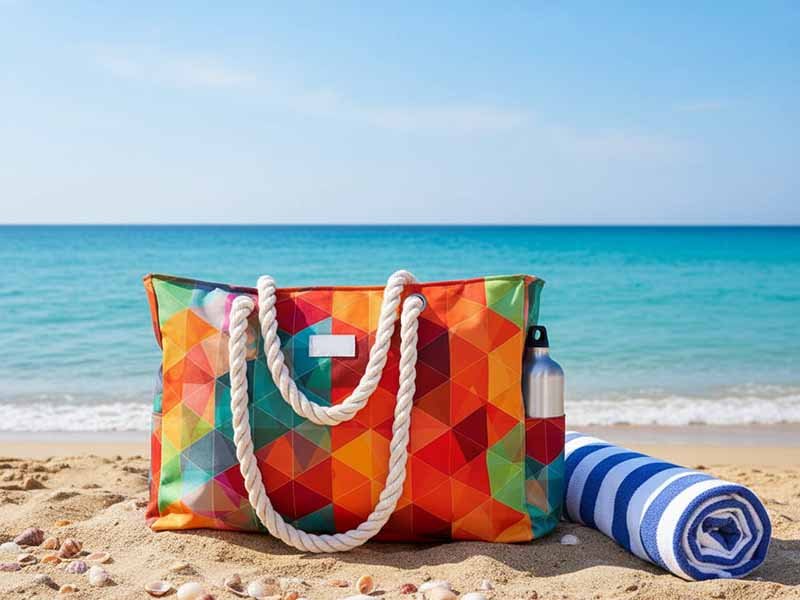
A good canvas beach bag looks simple, but the product itself is never simple. Customers take it to the beach, the pool, the boat, the supermarket, and the airport. They throw in wet towels, sunscreen, phones, books, snacks, water bottles, and sometimes even children’s toys. That means the bag is not only a fashion item. It is a daily-use load-bearing product that must survive friction, sunlight, salt air, moisture, repeated washing, and rough handling. The real difference between an average canvas beach bag and one that customers keep reordering usually comes down to a few practical manufacturing decisions: fabric weight, handle reinforcement, bottom support, printing method, and whether the bag has any moisture-resistant treatment. In cotton canvas, fabric weight is commonly measured in ounces per square yard, and heavier weights generally mean thicker and more durable material. Google also states that content created for search should be useful, reliable, and made for people first, which matters when brands build product pages meant to attract serious inquiries rather than empty traffic.
Canvas beach bags for coastal use are usually manufactured by choosing the right cotton canvas weight, cutting panels accurately, sewing with reinforced stress points, adding handles, pockets, linings, prints, and hardware, and then checking seam quality, shape consistency, and finish before packing. For many practical bag applications, medium to heavier duck canvas such as 10 oz, 12 oz, and above is widely used because it offers a workable balance of structure, durability, and production efficiency.
Many brands learn this the hard way. The first sample may look great on a table, but once the bag is filled with a 1.5 kg towel, a 1 kg water bottle, sunscreen, slippers, and a wet swimsuit, weak handles and soft body panels start to show their problems. A beach bag that feels fine in a showroom can fail fast in real life. That is why experienced factories do not only ask about bag size and logo artwork. They ask how the bag will actually be used, how much it needs to carry, whether the user prefers a soft body or a structured body, and whether the bag needs to handle wet conditions more gracefully. That is where solid manufacturing starts.
What Makes Canvas Beach Bags So Popular for Coastal Use?
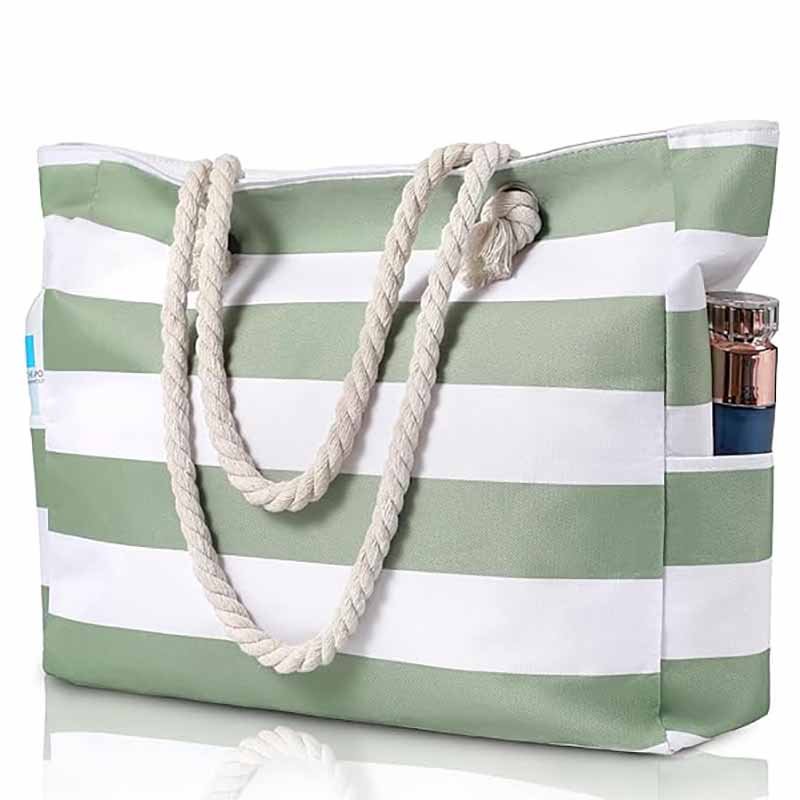
Canvas beach bags remain popular because they combine strength, reusability, natural texture, and broad customization options. Compared with many lightweight promotional bags, canvas gives better body, better abrasion resistance, and a more premium hand feel. Heavier canvas weights are generally more durable, while lighter weights are more flexible and lower in cost, so factories can tune the bag to the target market.
What is canvas in canvas beach bags?
Canvas used in beach bags is usually cotton duck or a cotton-based heavy woven fabric. In practice, factories often discuss canvas by weight, such as 10 oz, 12 oz, 14 oz, or 16 oz, because weight affects thickness, stiffness, printing performance, and long-term wear. Industry fabric guides consistently describe heavier ounce ratings as stronger and more durable, while lighter weights offer softer drape and lower material cost.
For beach bag manufacturing, canvas works well because it gives the bag shape without making it feel overly technical. A customer can fold it into a suitcase, carry it on the shoulder, or place it on a deck chair, and it still feels casual and easy to use. This matters commercially. Many end customers do not want a bag that looks like industrial equipment. They want something practical that still feels relaxed, clean, and stylish. Canvas sits in that middle zone very well.
From a product development standpoint, canvas also offers strong flexibility in decoration and structure. It can take screen printing, embroidery, woven labels, inside pockets, zipper tops, snap buttons, rope handles, cotton webbing, or contrast trim. This allows one factory platform to serve very different customers. A mass retailer may want a low-cost 10 oz printed beach tote. A boutique label may want a 14 oz striped bag with lining, zipper, and leather-look trim. A private-label brand may want a 12 oz body with custom hangtags and barcode-ready packaging. The base material can support all three.
A simple way to think about canvas selection is this:
| Canvas Weight | Hand Feel | Structure | Common Positioning |
|---|---|---|---|
| 8–10 oz | Softer | Light | Entry retail, promo, simple totes |
| 10–12 oz | Balanced | Medium | Mainstream beach bags |
| 12–14 oz | Stronger | Good | Better retail, lifestyle brands |
| 16 oz+ | Thick | Firm | Premium heavy-duty bags |
These weight bands are practical sourcing references rather than rigid rules, but they match how cotton duck is commonly categorized in fabric guides and bag material discussions.
Why are canvas beach bags good for daily beach use?
The biggest reason is that canvas handles repeated use better than many low-cost alternatives. A beach bag is almost never used gently. It is pulled by one handle, dragged across the car seat, pressed under other luggage, and exposed to sand, sunblock residue, and damp clothing. Heavier duck canvas is commonly chosen for durable bag applications because it offers more body and better wear resistance than lighter cloth.
Customers also like canvas because it is easy to understand. They can see the thickness. They can feel whether the bag is soft or sturdy. They can usually tell whether the handle attachment is trustworthy. That visible honesty is important in retail. A customer may not know stitching terminology, but they know when a bag feels weak. A good canvas beach bag gives confidence immediately.
For everyday use, most customers care about a short list of very real issues:
- Does it hold enough without looking oversized?
- Do the handles bite into the shoulder when the bag gets heavy?
- Will the bottom sag too much?
- Can it handle wet towels without becoming a mess?
- Will the print crack, fade, or look cheap after use?
- Can the bag still look presentable after a summer season?
Those are not abstract questions. They directly affect reorder rates, reviews, and brand trust. In many projects, a factory can improve the final product more by upgrading the handle construction and base structure than by changing the artwork. A nice print may win the first click, but daily function wins repeat sales.
In product planning, beach bags are often loaded more heavily than standard fashion totes. A realistic daily load might look like this:
| Item | Approx. Weight |
|---|---|
| Large towel | 0.8–1.2 kg |
| Water bottle | 0.5–1.0 kg |
| Sunscreen and cosmetics | 0.2–0.5 kg |
| Slippers or sandals | 0.3–0.7 kg |
| Wet swimsuit or clothing | 0.2–0.6 kg |
| Book or tablet | 0.3–0.7 kg |
A normal day at the beach can therefore push a bag into the 2.5 to 4.5 kg range very easily, and family use can go higher. That is exactly why handle reinforcement and seam quality matter so much.
Are canvas beach bags suitable for wet and sandy conditions?
Yes, but with an important limitation. Canvas performs well around sand and abrasion, yet untreated cotton canvas is not naturally waterproof. Waxed canvas and coated canvas are widely used when better moisture resistance is needed, because surface treatments can help repel water and improve wear performance.
In sandy conditions, canvas is usually practical. Sand can be shaken out, the fabric does not feel slippery, and the bag keeps a casual texture that many customers prefer over synthetic shine. In wet conditions, the situation is different. If the bag body is uncoated, water can soak in, the fabric gets heavier, and drying takes longer. That does not make canvas a poor choice. It just means the product has to be engineered honestly for the use scenario.
There are several common ways factories deal with coastal use:
- Use heavier canvas so the bag keeps structure even when loaded
- Add inner polyester lining for easier cleaning
- Apply wax or coating for better splash resistance
- Use elevated inner pockets to protect phones and keys
- Reinforce the bottom panel to reduce shape collapse
- Choose hardware that tolerates humid environments better
Waxed canvas is often chosen when the brand wants a natural, rugged look with improved water resistance. PU or similar coatings are often chosen when the goal is more obvious moisture protection and easier wipe-clean use. Waxed canvas is known for increased resistance to moisture and wear, while waterproof-canvas discussions also regularly point to coatings as the main way to improve water performance.
The right question is not whether canvas can go to the beach. Of course it can. The better question is what kind of coastal use the bag needs to survive. A dry-climate resort tote and a bag meant for wet swimwear, sunscreen leaks, and daily family use are not really the same product. Good manufacturers separate these use cases early, before sampling starts.
Which Canvas Beach Bag Materials Work Best?
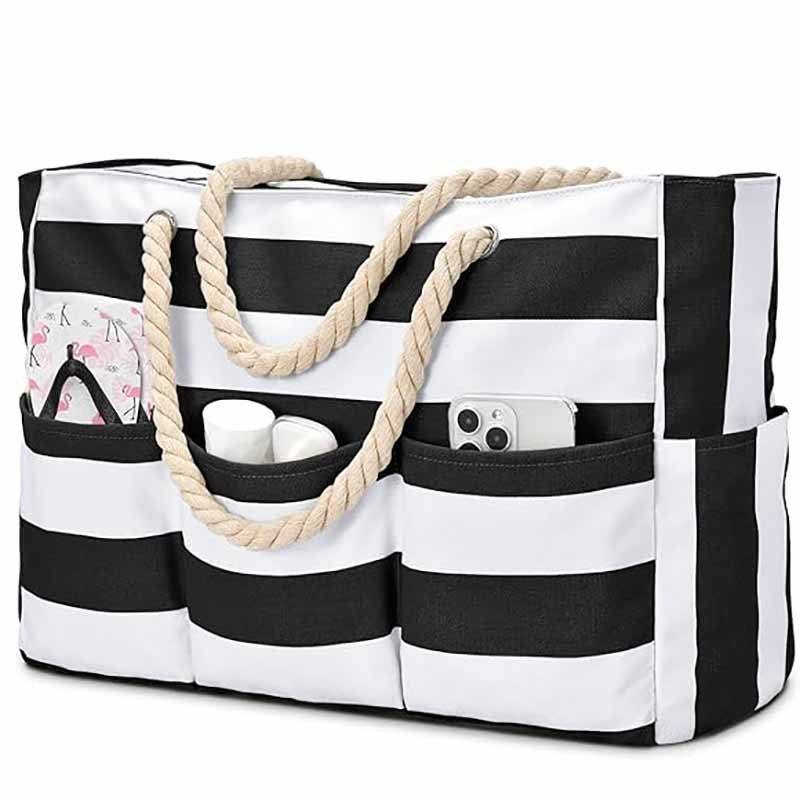
For most commercial projects, the best canvas beach bag material is not the heaviest one. It is the material that matches the target price, intended load, and desired look. In practical sourcing terms, 10 oz to 12 oz cotton duck is often favored for tote-style bags because it balances structure and flexibility, while heavier options are used when brands want a stronger body or a more premium feel.
Which canvas weight is best for canvas beach bags?
For many mainstream projects, 10 oz to 12 oz is a very workable range. Recent tote-focused material guidance points to 10 oz to 12 oz cotton duck as a strong balance point for carrying capacity and manageable flexibility, while broader fabric guides describe heavier ounce ratings as more durable.
That said, there is no single correct answer. The right weight depends on what the customer is selling.
If the brand wants a low-cost promotional beach tote, 8 oz to 10 oz may be enough.
If the brand wants a retail bag customers can use all summer, 10 oz to 12 oz is often safer.
If the brand wants a more premium silhouette with stronger body and less collapse, 12 oz to 16 oz makes more sense.
A practical sourcing comparison looks like this:
| Weight | Best For | Main Advantage | Main Risk |
|---|---|---|---|
| 8 oz | Budget giveaways | Lower cost | Too soft for heavy use |
| 10 oz | Basic retail totes | Affordable and useful | May sag under higher loads |
| 12 oz | Mainstream beach bags | Balanced structure | Slightly higher material cost |
| 14 oz | Better retail lines | Stronger body | Heavier to carry |
| 16 oz | Premium heavy-duty bags | More durable feel | Higher cost and stiffness |
The mistake many brands make is choosing fabric weight only by sample appearance. A 10 oz sample can look excellent when empty. The real question is how it behaves when used. That is why serious factories often do simple load tests during sampling. They fill the bag, hang it, carry it, and check where stress appears first. A beautiful empty bag can become a disappointing product very quickly if the body and handles were selected without real-use testing.
Are coated canvas beach bags more water resistant?
Yes. Coatings and wax treatments are among the main ways to make canvas more water resistant. Waxed canvas is widely described as more resistant to moisture and wear, while waterproof-canvas material guides emphasize coatings as the functional layer that repels water.
But water resistance is not a yes-or-no feature. It is a trade-off. Coating changes the hand feel, the appearance, the cost, the printing behavior, and sometimes the sewing behavior. Brands need to decide what matters most.
A natural uncoated canvas bag usually feels softer and more breathable.
A waxed canvas bag feels more textured, more rugged, and more distinctive.
A coated canvas bag often cleans more easily and handles splashes better.
Here is a simple comparison:
| Material Finish | Water Resistance | Visual Style | Cleaning Ease | Cost Level |
|---|---|---|---|---|
| Uncoated canvas | Low | Natural | Moderate | Lower |
| Waxed canvas | Medium | Rugged | Moderate | Medium |
| PU/coated canvas | Medium to high | Cleaner, smoother | Better | Medium to higher |
For coastal projects, full waterproof performance is not always necessary. In many cases, customers only need protection from damp towels, light splashes, sunscreen residue, and short contact with wet surfaces. That means the bag does not need to behave like marine gear. It just needs to handle normal beach life without looking worn out too quickly.
This is also where honest positioning matters. If a brand calls a bag “waterproof” when it only has light splash resistance, returns and complaints tend to follow. A better product page explains clearly whether the bag is uncoated, wax-treated, or lined for added resistance.
Which accessories improve canvas beach bag performance?
Accessories are often where a bag moves from ordinary to convincing. Fabric matters first, but accessories decide much of the real daily experience. For tote and bag reinforcement, box stitching and X-box stitching are commonly used because they spread stress across a larger handle attachment area, while bartack stitching is used to reinforce high-stress fabric zones with dense stitching.
The most important performance accessories usually include:
- cotton webbing or polyester webbing handles
- zipper or magnetic top closure
- inside zipper pocket
- bottle pocket or divider pocket
- reinforced bottom panel
- snap tab or key hook
- branded woven label or zipper pull
- lining that improves cleanup
Handle construction deserves special attention because it is a common failure point. Many low-cost bags fail not because the fabric is too weak, but because the handles are attached to too small an area or with poor reinforcement. Box stitching is commonly recommended because it distributes stress better, and bartack stitching is specifically used at high-stress areas.
For beach bags, the following accessory choices usually have the best return on cost:
| Accessory | Why It Matters | Cost Impact | Value to Customer |
|---|---|---|---|
| Wider handles | Better shoulder comfort | Low | High |
| Full top zipper | Keeps sand out better | Medium | High |
| Inner lining | Easier cleaning | Medium | High |
| Base insert | Better shape retention | Low to medium | High |
| Inside zip pocket | Protects small items | Low | High |
| Metal feet | Cleaner bottom surface | Medium | Medium |
In real factory work, these details often do more for market success than adding another graphic element. Customers notice whether the shoulder carry feels comfortable. They notice whether the bottom collapses. They notice whether keys and phones disappear into the main compartment. Those are the details that turn a beach bag into a product people keep using.
At Szoneier, this is exactly where custom development becomes valuable. A serious factory does not just ask for a logo file. It helps the client decide whether a 12 oz body is enough, whether webbing width should be 2.5 cm or 3.8 cm, whether the bag needs a zipper, whether the base should be reinforced, and whether the product is better as soft casual retail or more structured premium retail. That kind of product guidance is often what separates a repeat order from a one-time trial order.
Send your sketch, target size, estimated quantity, logo method, and price target to Szoneier, and we can help you build a canvas beach bag that fits real coastal use instead of just looking good in a sample photo.
How Is Canvas Beach Bag Manufacturing Done?
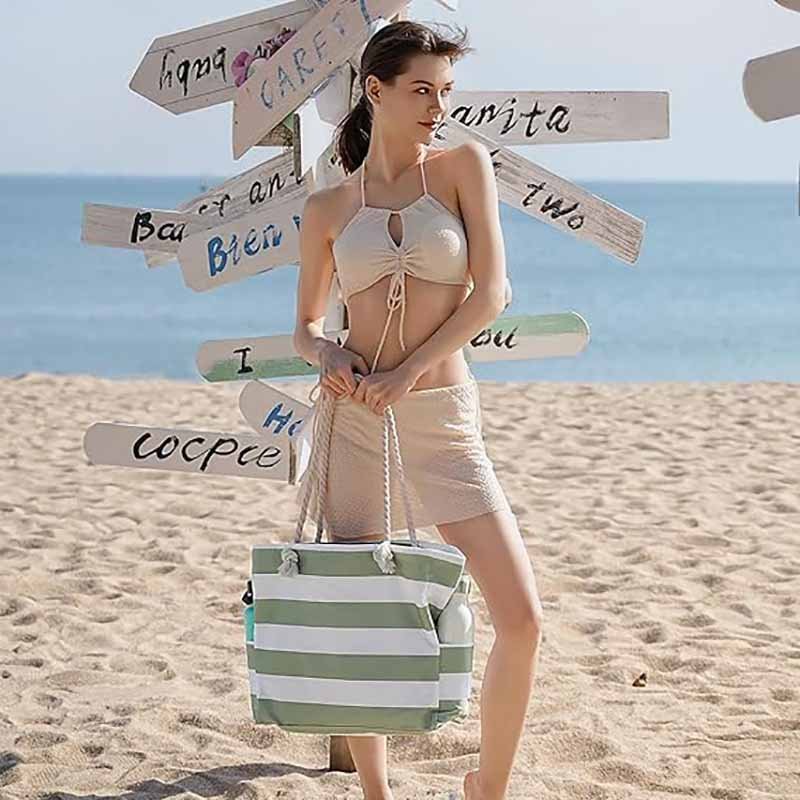
Canvas beach bag manufacturing is a structured process that starts from fabric selection and ends with final inspection and packaging. Each step—cutting, sewing, reinforcement, printing, and quality control—directly affects durability, appearance, and production cost. A well-managed factory process ensures consistency across bulk orders and reduces defect rates.
How are canvas beach bags cut and sewn?
The manufacturing process begins with fabric preparation and cutting. Once the correct canvas weight and color are confirmed, the fabric is pre-treated (if required), inspected for defects, and then laid out in multiple layers for cutting.
Factories typically use either:
- Manual cutting (for small orders or complex shapes)
- CNC or die cutting (for large-scale production with high consistency)
Precision during cutting is critical. Even a 2–3 mm deviation can affect final alignment, especially for bags with prints or structured panels.
After cutting, the panels move into sewing lines. This is where product quality starts to become visible. The stitching process usually follows this sequence:
- Body panels sewn together
- Bottom gusset attached
- Side seams reinforced
- Handles positioned and stitched
- Internal components added
Thread selection also matters. Most factories use polyester thread because it offers higher tensile strength and better resistance to moisture compared to cotton thread.
A practical comparison:
| Thread Type | Strength | Moisture Resistance | Usage |
|---|---|---|---|
| Cotton thread | Medium | Low | Decorative stitching |
| Polyester thread | High | High | Structural seams |
In real production, weak stitching is one of the top reasons for product failure. That’s why experienced factories maintain strict sewing standards, including stitch density (typically 6–10 stitches per inch) and consistent seam allowance.
How are canvas beach bag handles reinforced?
Handle reinforcement is one of the most important steps in canvas beach bag manufacturing. Most complaints about beach bags are not about fabric—they are about handles breaking or tearing away from the body.
Factories typically use three main reinforcement methods:
- Box stitching (square pattern)
- X-box stitching (cross reinforcement inside square)
- Bartack stitching (dense short stitches at stress points)
Among these, X-box stitching is widely used because it distributes load across a larger area, reducing stress concentration.
Here is a simple performance comparison:
| Method | Load Distribution | Durability Level | Common Use |
|---|---|---|---|
| Straight stitch | Low | Basic | Low-cost bags |
| Box stitch | Medium | Good | Standard retail |
| X-box stitch | High | Very good | Premium bags |
| Bartack | Targeted | Reinforcement only | Stress points |
Another key factor is handle material and width:
- 2.5 cm width → standard use
- 3.8 cm width → better comfort and load distribution
- Double-layer handles → higher strength
From production experience, increasing handle width by just 1 cm can reduce shoulder pressure significantly when carrying 4–6 kg loads.
For brands, this is a low-cost upgrade with high customer impact.
How are logos added in canvas beach bag manufacturing?
Branding is where the product becomes unique. The choice of logo method depends on design complexity, order quantity, and positioning.
Common logo methods include:
| Method | Best For | Cost | Durability |
|---|---|---|---|
| Screen printing | Simple logos, large volume | Low | Medium |
| Heat transfer | Full-color designs | Medium | Medium |
| Embroidery | Premium look | Higher | High |
| Woven labels | Branding details | Low | High |
Screen printing is still the most widely used for canvas beach bags because it offers good cost control for large orders. However, it requires proper curing to ensure the print does not crack or fade after repeated use.
For higher-end products, embroidery or woven labels are often added to enhance perceived value.
Factories like Szoneier usually recommend combining methods, for example:
- Screen print logo + woven label
- Embroidery logo + custom zipper pull
This layered branding approach improves both visibility and product quality perception.
How is quality checked in canvas beach bag production?
Quality control is not a single step—it runs throughout the entire production process.
A typical QC workflow includes:
- Incoming material inspection
- Check fabric weight, color consistency, defects
- In-line inspection (during sewing)
- Check stitching quality
- Verify handle alignment
- Monitor defect rates
- Final inspection (before packing)
- Check overall shape
- Load test handles
- Verify logo accuracy
- Check cleanliness and finishing
- Random sampling (AQL standard)
- Usually 2.5–4.0 defect tolerance level
Here is a practical QC checklist:
| Inspection Item | Standard |
|---|---|
| Stitch density | 6–10 stitches/inch |
| Handle strength | 5–10 kg load test |
| Fabric consistency | No visible defects |
| Logo quality | No fading or misalignment |
| Bag shape | Symmetrical |
Factories with strong QC systems can reduce defect rates to below 2–3%, which is critical for brands selling on Amazon or retail channels where reviews directly impact sales.
What Features Improve Canvas Beach Bag Durability?
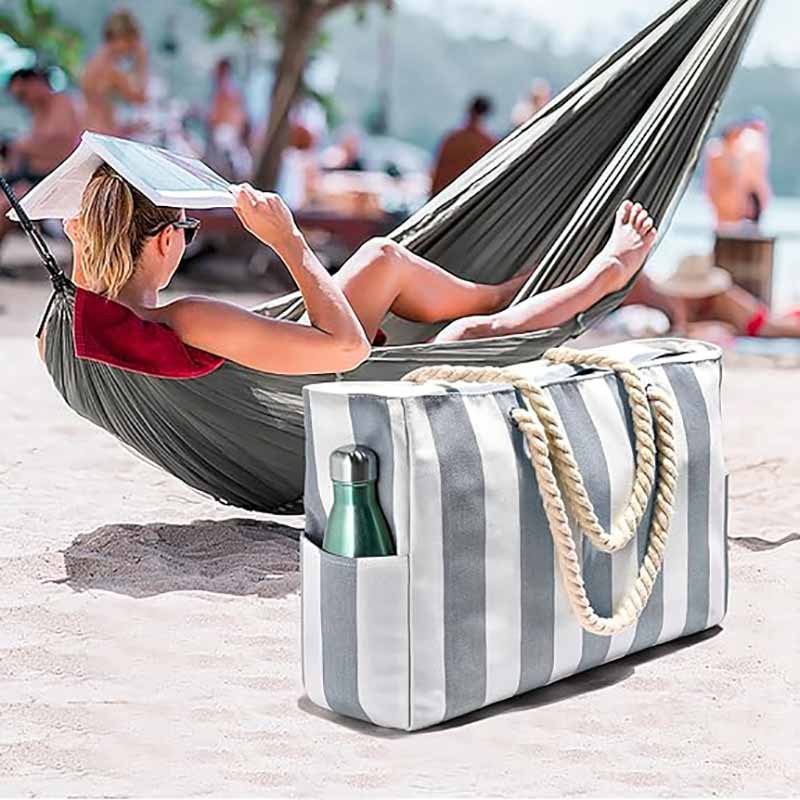
Durability in canvas beach bags comes from a combination of material choice, structural design, and reinforcement techniques. Features like thicker canvas, reinforced handles, structured bottoms, and proper stitching significantly extend product lifespan and improve user experience.
What makes canvas beach bags strong for heavy loads?
Strength in a canvas beach bag is not only about fabric thickness. It is a combination of:
- Fabric weight
- Stitching method
- Seam structure
- Load distribution design
A 14 oz canvas bag with poor stitching can fail faster than a 12 oz bag with proper reinforcement.
The key structural factors include:
- Bottom gusset → increases capacity and stability
- Side panels → improve shape retention
- Reinforced seams → prevent tearing
Typical load performance:
| Bag Type | Load Capacity |
|---|---|
| Basic tote | 3–5 kg |
| Reinforced beach bag | 5–8 kg |
| Heavy-duty bag | 8–12 kg |
For coastal use, most brands aim for at least 5–8 kg capacity to ensure reliability.
How do reinforced straps improve canvas beach bags?
Straps are the most stressed component of any beach bag. Reinforcement directly affects durability and comfort.
Key improvements include:
- Extended stitching area (handles sewn deeper into body)
- Double-layer straps
- Cross stitching (X-box)
- Bartack reinforcement at ends
These techniques reduce stress concentration and prevent tearing.
Another important factor is handle drop length (typically 20–30 cm). A poorly designed handle length can make the bag uncomfortable even if the material is strong.
From a customer perspective:
- Narrow straps → cut into shoulder
- Short straps → hard to carry
- Weak stitching → break risk
From a factory perspective, upgrading straps usually adds less than 5–8% cost but significantly improves product performance.
What designs reduce sand and moisture in beach bags?
Beach environments introduce two main problems: sand and moisture.
Design solutions include:
For sand:
- Zipper or snap closure
- Smooth inner lining
- Minimal internal seams
For moisture:
- Water-resistant lining
- Elevated inner pockets
- Drain holes (in some designs)
A common upgraded structure is:
- Canvas outer layer
- Polyester inner lining
- Reinforced base panel
This combination allows:
- Easier cleaning
- Better shape retention
- Improved resistance to damp items
Here is a comparison:
| Feature | Benefit |
|---|---|
| Inner lining | Easier cleaning |
| Zipper closure | Keeps sand out |
| Base reinforcement | Prevents sagging |
| Inner pockets | Protect valuables |
For brands targeting higher-end markets, these functional upgrades are often more important than adding more visual elements.
How to Choose a Canvas Beach Bag Manufacturer?
Choosing a canvas beach bag manufacturer is not just about finding the lowest price. It is about evaluating production capability, quality control, communication efficiency, and the ability to support customization at scale. A reliable factory should offer stable quality, flexible MOQ, fast sampling, and clear production timelines.
What should you check in canvas beach bag manufacturing factories?
When brands start sourcing, many focus only on unit price. In practice, experienced buyers evaluate factories based on a combination of technical capability and operational reliability.
Here are the key factors to check:
1. Material Expertise
- Does the factory understand different canvas weights (10 oz vs 16 oz)?
- Can they recommend suitable materials based on your price and positioning?
- Do they offer coated, waxed, or lined options?
2. Product Range Capability
- Can they produce multiple types of bags (tote, cooler, travel, etc.)?
- Do they handle both simple and complex designs?
3. Sampling Ability
- Can they produce samples within 5–7 days?
- Are samples accurate to final production standards?
4. Production Capacity
- How many units per month can they produce?
- Do they have multiple production lines?
5. Quality Control System
- Do they follow AQL standards?
- Can they provide inspection reports or videos?
Here is a practical evaluation table:
| Factor | Weak Supplier | Strong Supplier |
|---|---|---|
| Material knowledge | Limited | Professional guidance |
| Sampling speed | 10–15 days | 5–7 days |
| MOQ flexibility | High only | Flexible |
| QC system | Basic | Structured |
| Communication | Slow | Clear and fast |
Factories like Szoneier, with 18+ years of experience, typically perform better across these categories because they have handled a wide range of international clients and product requirements.
How do MOQ and sampling work for canvas beach bags?
MOQ (Minimum Order Quantity) and sampling are two of the most important factors for brands, especially startups and Amazon sellers.
Typical MOQ structure:
| Order Type | MOQ Range |
|---|---|
| Basic canvas bags | 200–500 pcs |
| Custom printed bags | 300–1000 pcs |
| Complex designs | 500+ pcs |
However, experienced factories often offer low MOQ solutions for new brands, sometimes starting from 100–200 pcs depending on design complexity.
Sampling process usually follows:
- Confirm design (size, material, logo)
- Create digital mockup
- Produce physical sample (5–7 days)
- Revise if needed
- Approve for mass production
Sampling costs vary:
| Sample Type | Cost Range |
|---|---|
| Simple sample | $30–$80 |
| Complex sample | $80–$150 |
Many factories, including Szoneier, offer free sample refunds after bulk order, which reduces initial risk for customers.
Lead time expectations:
| Stage | Time |
|---|---|
| Sampling | 5–7 days |
| Production | 20–30 days |
| Shipping | 7–35 days |
For brands planning seasonal products (like summer beach bags), timing is critical. Late delivery can mean missed sales windows.
Why do brands choose experienced canvas beach bag manufacturers?
Experience directly impacts product success, especially for functional products like beach bags.
Factories with long-term experience offer:
1. Faster Problem Solving
They can quickly identify weak points in design, such as:
- Handle stress issues
- Fabric mismatch
- Poor structure
2. Better Cost Control
They know how to optimize:
- Material usage
- Cutting efficiency
- Production workflow
3. Stronger Quality Stability
Consistent stitching, color matching, and finishing across bulk orders.
4. Customization Support
They can handle:
- Private label branding
- Packaging design
- Product upgrades
5. Reliable Delivery
On-time delivery rates above 95% are common in well-managed factories.
Here is a comparison:
| Aspect | New Factory | Experienced Factory |
|---|---|---|
| Sampling accuracy | Medium | High |
| Problem handling | Slow | Fast |
| Product suggestions | Limited | Practical |
| Production stability | Variable | Consistent |
Szoneier, with over 18 years of experience, supports brands from concept to final delivery, including:
- Free design support
- Low MOQ customization
- Fast sampling
- Full OEM/ODM services
- Stable quality control
This is especially important for brands that want to scale from small orders to large-volume production without changing suppliers.
Final Thoughts: Start Your Canvas Beach Bag Project with Szoneier
A successful canvas beach bag is not defined by how it looks in a photo. It is defined by how it performs after months of real use—carrying weight, handling moisture, resisting wear, and still maintaining its shape and appearance.
From fabric selection to handle reinforcement, from coating choices to structural design, every detail in manufacturing affects how customers experience the product. Brands that invest in the right materials and production methods usually see better reviews, higher repeat purchases, and stronger long-term growth.
If you are planning to develop or upgrade your canvas beach bag line, working with an experienced manufacturer can save you time, reduce risk, and improve product performance from the very beginning.
Szoneier supports global brands, importers, and Amazon sellers.
Whether you already have a design or just an idea, you can share your requirements with us:
- Size and structure
- Target price
- Logo method
- Order quantity
- Delivery timeline
Our team will help you turn it into a product that works in real coastal environments—not just in samples.
Send your inquiry to Szoneier today and start building your next best-selling canvas beach bag.