Skip to content
Camera bags are no longer simple accessories. For photographers, videographers, and content creators, a camera bag is a protective system, workflow tool, and daily companion. As camera gear becomes more compact yet more expensive, the expectations placed on camera bag brands have risen sharply. Users no longer ask only “Does it fit my camera?”—they ask “Can this bag protect my gear in real conditions, support my shooting style, and last for years?”
This shift has created a crowded global market filled with premium brands, niche specialists, lifestyle bag companies, and OEM manufacturers working behind the scenes. Some brands focus on outdoor durability, others on urban aesthetics, and many photographers struggle to understand who actually makes camera bags versus who simply markets them.
The best camera bag brands are those that consistently balance gear protection, ergonomic comfort, smart organization, and durable materials. Top companies design bags around real photography workflows, use impact-resistant padding and weatherproof fabrics, and maintain strict quality control. Choosing the right camera bag brand depends on your gear size, shooting environment, and whether you prioritize professional performance, travel versatility, or everyday style.
Yet many buyers still choose camera bags based on brand name alone—only to discover discomfort, poor protection, or limited customization later. In the sections below, we’ll break down what truly defines a great camera bag brand, explain who makes camera bags, and help you decide which companies are actually best for your needs, whether you’re a photographer, brand owner, or reseller.
What makes a good camera bag brand
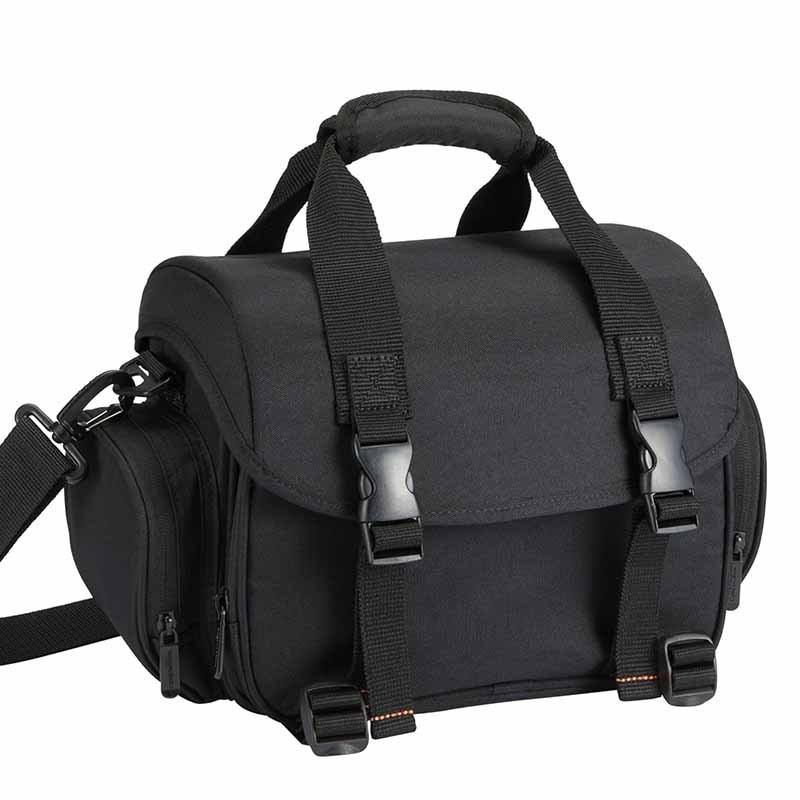
A good camera bag brand is defined by its ability to protect camera gear reliably, support real shooting workflows, and maintain consistent quality over time. The best brands focus on functional design, durable materials, ergonomic comfort, and rigorous quality control—not just appearance or marketing. A strong camera bag brand also adapts to different use cases, from travel and outdoor shooting to daily urban photography.
What core functions must every good camera bag brand deliver?
At its core, a camera bag brand must solve three non-negotiable problems: protection, access, and carry comfort.
Protection means more than padding. A good brand designs impact zones, suspended compartments, and internal structures that prevent cameras and lenses from absorbing shock when the bag is dropped or bumped. Access refers to how quickly and safely a photographer can reach gear—poor zipper placement or weak dividers can slow shooting or cause accidents. Comfort determines whether the bag can be worn for hours without shoulder, back, or neck strain.
Brands that fail in any one of these areas rarely retain long-term users.
How do good camera bag brands design around real photography workflows?
Strong camera bag brands design bags based on how photographers actually work, not how bags look on a shelf. They study how often users change lenses, how they move between locations, and how gear is packed during travel or street shooting.
This leads to practical design decisions: side or rear access panels, modular dividers, quick-release buckles, and balanced weight distribution. Brands that ignore workflow often produce bags that technically “fit” cameras but feel frustrating in real use. Over time, photographers gravitate toward brands whose designs feel intuitive rather than clever.
What materials separate good camera bag brands from average ones?
Material choice is a major indicator of brand quality. Good camera bag brands use abrasion-resistant fabrics, reinforced stitching, high-quality zippers, and stable padding foams that retain shape over time.
Common premium materials include ballistic nylon, Cordura fabrics, TPU-coated polyester, and water-resistant laminates. Equally important is how these materials are assembled. Even the best fabric performs poorly if seams are weak or stress points are not reinforced.
Brands that control material specifications and construction standards deliver more consistent quality than those that simply follow trends.
Why does comfort and ergonomics matter so much in camera bag brands?
Comfort is often underestimated until it becomes a problem. A camera bag that looks great but causes shoulder pain or poor posture will not survive long-term use.
Good camera bag brands invest in ergonomic strap design, breathable back panels, adjustable harness systems, and balanced load distribution. These features are especially important for photographers carrying heavy kits or traveling for extended periods.
From a brand perspective, comfort is one of the strongest drivers of repeat purchases and brand loyalty.
Who is considered the “best” camera bag company—and why there is no single answer
Many users ask, “Who is the best company of camera bags?” The reality is that there is no universal best brand—only the best brand for a specific use case.
A wildlife photographer, a street photographer, and a content creator all prioritize different features. The best camera bag brands succeed by specializing, not by trying to satisfy everyone. They clearly define their target users and design accordingly. Brands that lack focus often produce generic products that fail to excel in any category.
How does manufacturing quality influence brand reputation?
Behind every good camera bag brand is a capable manufacturing partner. Design alone is not enough—execution matters. Brands that work with experienced factories maintain tighter quality control, consistent stitching, reliable padding density, and stable lead times.
In contrast, brands that frequently switch suppliers or chase lower costs often suffer from quality drift. Over time, users notice inconsistencies, which damages trust.
For buyers and private-label brands, understanding a brand’s manufacturing discipline is just as important as its marketing image.
What signals indicate a camera bag brand you can trust long term?
Reliable camera bag brands show consistency across multiple product generations. Their bags improve incrementally rather than changing dramatically with each release. They also provide clear product information, realistic load ratings, and transparent warranty or support policies.
Most importantly, trusted brands listen to user feedback and refine designs accordingly. This feedback loop—design, test, revise, improve—is what separates enduring camera bag brands from short-lived trends.
Which are the top camera bags brands worldwide
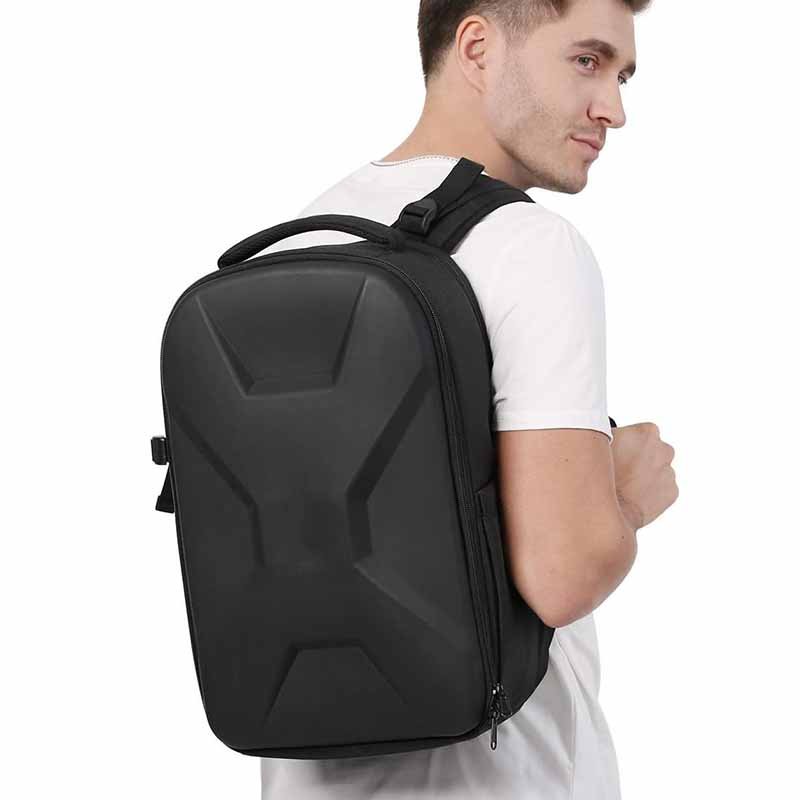
The top camera bag brands worldwide include photography-focused specialists, outdoor gear companies, and design-driven lifestyle brands. These brands stand out for their gear protection systems, ergonomic comfort, durable materials, and workflow-oriented design. The “best” camera bag brand depends on how and where you shoot—travel, outdoor, street, or professional assignments—rather than brand fame alone.
Peak Design
Peak Design is one of the most influential modern camera bag brands. It is known for modular systems, sleek aesthetics, and user-centric innovation. Its camera backpacks, slings, and everyday bags are designed to transition seamlessly between photography, travel, and daily carry. Peak Design appeals strongly to mirrorless users, urban photographers, and creators who value flexibility and design consistency.
Lowepro
Lowepro is a long-established camera bag brand trusted by professionals and enthusiasts alike. It focuses heavily on protection, durability, and outdoor performance. Lowepro bags are commonly used for travel, wildlife, and adventure photography, where weather resistance and impact protection are critical. The brand is known for practical designs rather than fashion-driven styling.
Think Tank Photo
Think Tank Photo is widely respected among professional photographers, especially those working in sports, news, and commercial photography. The brand prioritizes function, access speed, and load management. Its rolling cases, backpacks, and shoulder bags are built for heavy gear and frequent travel. Think Tank appeals to users who value reliability over appearance.
Manfrotto
Manfrotto, best known for tripods, also produces a strong range of camera bags. Its camera bags emphasize structure, protection, and compatibility with professional accessories. Manfrotto bags are often chosen by photographers who want brand integration across tripods, heads, and carry systems, especially in studio and travel environments.
Tenba
Tenba is a professional-grade camera bag brand with roots in filmmaking and broadcast. It is known for robust construction, understated styling, and durable materials. Tenba bags are popular with hybrid shooters who carry both photo and video gear, offering strong protection without overly tactical aesthetics.
Billingham
Billingham is a premium British camera bag brand recognized for classic styling and craftsmanship. Its bags are often made with waterproof canvas and leather trims, combining heritage aesthetics with functional protection. Billingham appeals to photographers who value discretion, longevity, and timeless design, especially for street and documentary photography.
WANDRD
WANDRD focuses on travel-oriented camera bags that blend adventure durability with modern aesthetics. The brand is popular among travel photographers and content creators who need weather-resistant materials, expandable storage, and carry-on-friendly designs. WANDRD bags emphasize versatility and rugged styling.
Shimoda Designs
Shimoda Designs specializes in outdoor and adventure camera backpacks. Its bags are engineered for long carry times, heavy loads, and harsh environments. Features like adjustable torso sizing and removable camera units make Shimoda particularly attractive to landscape and wildlife photographers working in remote locations.
Ona Bags
ONA Bags positions itself at the intersection of luxury and photography. Known for leather and premium fabric camera bags, ONA appeals to photographers who want their camera bags to resemble high-end fashion accessories. While not designed for extreme conditions, ONA bags excel in style-focused, urban photography use cases.
Thule
Thule is primarily an outdoor and travel gear brand, but its camera bags leverage the company’s expertise in protection and ergonomics. Thule camera backpacks are often chosen by travelers who prioritize durability, clean design, and comfort rather than photography-specific branding.
National Geographic Bags
National Geographic camera bags emphasize storytelling, travel, and heritage aesthetics. They often combine camera protection with lifestyle-friendly design. These bags are popular among travel photographers and enthusiasts who want functional camera bags without a highly technical look.
Targus
While not photography-exclusive, Targus produces camera and tech backpacks that appeal to users carrying cameras alongside laptops and accessories. The brand is known for affordability and functional organization, making it suitable for entry-level and hybrid users.
These top camera bag brands fall into three clear groups:
- Photography-first brands (Peak Design, Think Tank, Tenba, Lowepro)
- Outdoor / travel specialists (Shimoda, WANDRD, Thule)
- Lifestyle & premium design brands (Billingham, ONA, National Geographic)
There is no single “best” brand for everyone. The best camera bag brand is the one that matches your gear size, shooting environment, and carrying habits.
How do camera bag types differ by use case
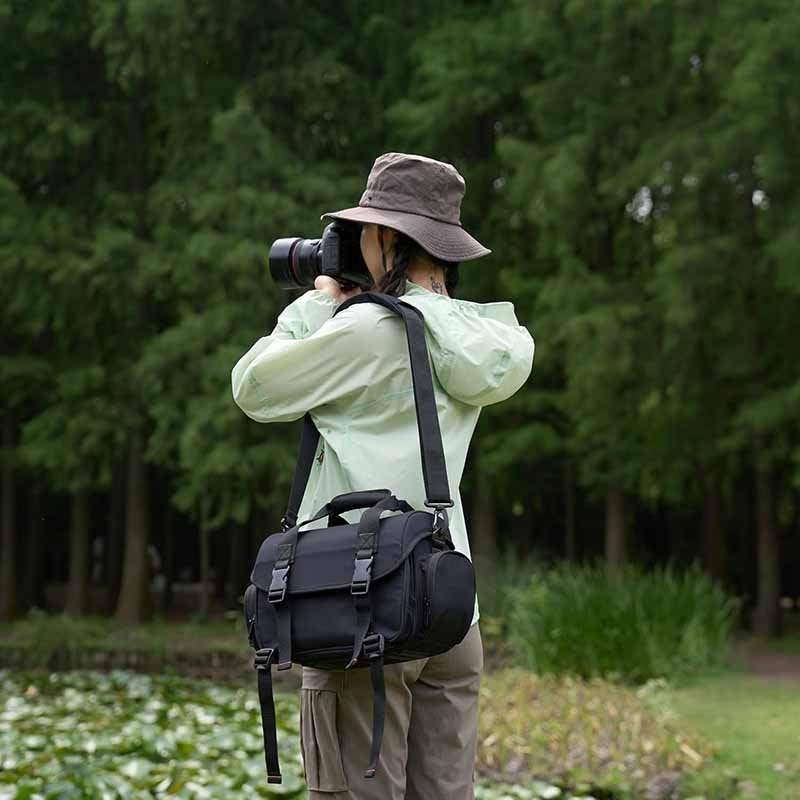
Camera bag types differ by use case based on gear volume, access speed, carry duration, and shooting environment. Travel and outdoor photographers need high-capacity, supportive backpacks; street photographers prioritize fast access and discreet designs; professionals carrying heavy kits require load stability; content creators favor flexible, hybrid layouts. Choosing the right camera bag type is more important than choosing a brand.
What camera bags are best for travel and outdoor photography?
Travel and outdoor photography typically demands camera backpacks designed for long carry times and unpredictable environments. These users often carry multiple lenses, extra batteries, tripods, and personal items over extended distances.
The best travel camera backpacks feature structured padding, ergonomic harness systems, and weather-resistant materials. Rear-panel camera access improves security in crowded areas, while adjustable dividers allow flexible gear layouts. Outdoor-focused designs often borrow from hiking backpacks, incorporating breathable back panels, load lifters, and reinforced base panels.
For these users, comfort and protection outweigh fast access. A poorly balanced bag can quickly lead to fatigue, making even a short shoot uncomfortable.
Which camera bags suit street, daily carry, and urban shooting?
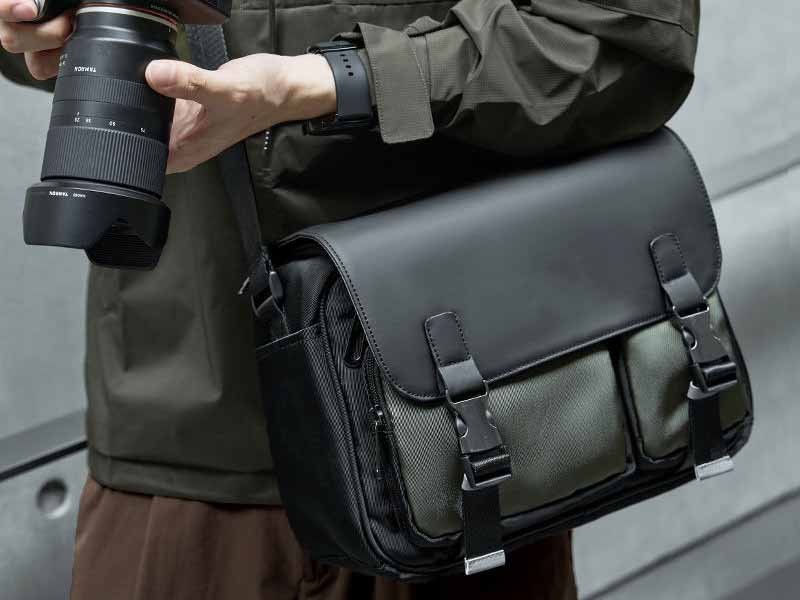
Street and urban photographers value speed, discretion, and mobility. Sling bags, messenger bags, and compact backpacks dominate this category because they allow quick, one-handed access to gear without removing the bag completely.
Slim profiles help the bag blend into everyday environments, reducing unwanted attention. These bags often sacrifice maximum capacity for convenience, carrying one camera body and a few lenses comfortably. Lightweight materials and soft padding improve agility in crowded settings.
For street shooters, a bag that slows access or looks overly technical can disrupt shooting flow and personal safety.
How do professional photographers choose bags for heavy gear?
Professional photographers working in sports, wildlife, weddings, or commercial shoots often carry heavy and expensive kits. In these cases, load management becomes critical.
Large backpacks with reinforced frames, rolling camera cases, or hard-sided transport bags are common choices. Key features include industrial-grade zippers, high-density padding, strong internal dividers, and durable outer shells. Professionals also consider airline compatibility and how bags integrate with other gear cases.
For this group, durability and reliability matter far more than aesthetics. A failure during transport can mean lost income.
Are there camera bags designed specifically for content creators and vloggers?
Yes, and this is one of the fastest-growing segments. Content creators often carry hybrid setups: mirrorless cameras, microphones, LED lights, laptops, gimbals, and power banks.
Bags designed for creators emphasize flexibility and modularity. Convertible backpacks, removable camera cubes, and tech-friendly compartments allow fast reconfiguration between shooting and editing. Easy access to accessories and dedicated laptop sleeves are essential.
These users need bags that support changing workflows, not fixed gear layouts.
How do camera bag needs differ for event and wedding photography?
Event and wedding photographers require bags that support frequent lens changes, quick access, and all-day comfort. Shoulder bags and compact backpacks are common, often used in combination.
Silent zippers, unobtrusive designs, and organized interiors help photographers work efficiently without drawing attention. Comfort matters over long hours, especially during ceremonies and receptions.
For these users, speed and ergonomics are more important than maximum protection or ruggedness.
What camera bags work best for hybrid travel and everyday use?
Many photographers want one bag for both camera gear and daily life. Hybrid camera–everyday bags use removable inserts or modular interiors, allowing the bag to transition between photography and general use.
These designs appeal to travelers, commuters, and casual shooters who don’t want multiple bags. The challenge lies in balancing protection with clean aesthetics and reasonable weight.
Brands—and manufacturers—that understand this hybrid demand tend to create more versatile, commercially successful camera bags.
What should you consider when buying a camera bag
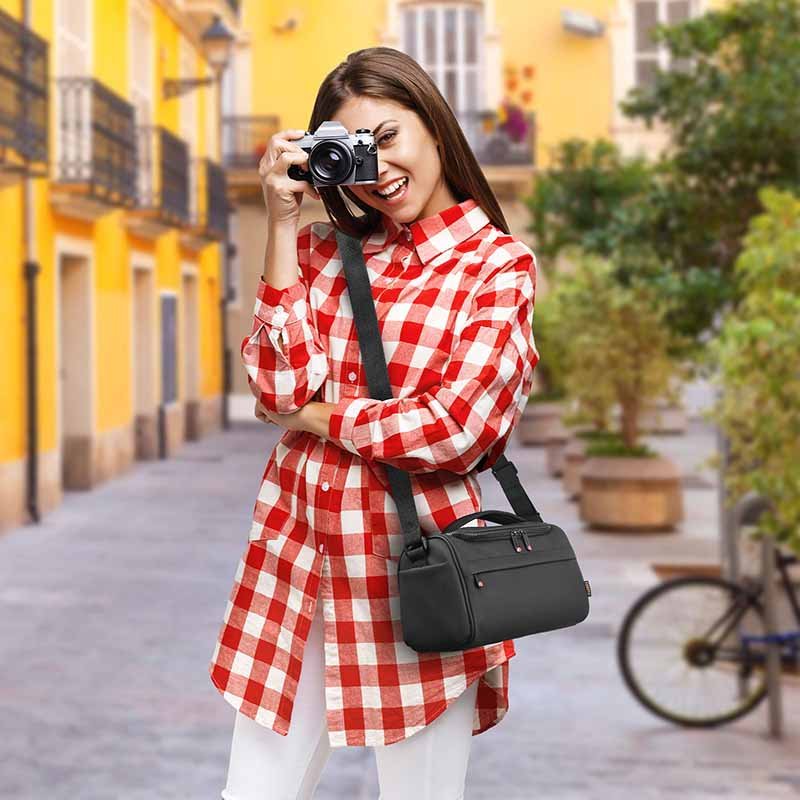
When buying a camera bag, you should consider gear protection, access speed, comfort, capacity, materials, and how the bag fits your shooting style. A good camera bag balances padding and usability, protects equipment in real conditions, and remains comfortable during long carries. The best choice depends on where and how you shoot, not just brand popularity or price.
How much protection does your camera gear actually need?
Protection is the first responsibility of any camera bag, but more padding does not always mean better protection. Effective camera bags use structured padding systems, often with multi-density foam or suspended compartments, to absorb shocks without adding unnecessary bulk.
Buyers should consider where impact is most likely—corners, base panels, and camera body zones—and whether the bag isolates gear from external pressure. Lightweight shooters may need moderate padding, while travel or outdoor photographers should prioritize reinforced shells and raised camera compartments. Bags that rely on loose inserts often shift during movement, reducing real protection.
How important is access speed for your shooting style?
Access speed directly affects shooting efficiency. Street, event, and documentary photographers often need quick, one-handed access, favoring sling bags or side-access backpacks. Travel or landscape photographers, by contrast, can tolerate slower access in exchange for better protection and comfort.
Buyers should test whether zippers open smoothly, whether dividers block access, and whether the bag can be opened safely while standing or kneeling. A bag that forces you to place it on the ground repeatedly may slow you down and increase risk in crowded or wet environments.
How do size, capacity, and layout affect daily usability?
Choosing the right size is more important than choosing the biggest bag. Over-sized camera bags encourage overpacking, leading to fatigue and disorganization. Under-sized bags limit flexibility and future gear upgrades.
Buyers should consider both current gear and realistic near-term additions. Internal layout matters as much as volume—adjustable dividers, vertical lens storage, and separated accessory zones improve efficiency. A well-organized medium bag often outperforms a poorly designed large one.
Why comfort and ergonomics should not be underestimated
Comfort issues rarely appear immediately, but they quickly determine long-term satisfaction. Shoulder strain, back heat buildup, and poor weight distribution are common complaints.
Good camera bags use ergonomic straps, breathable back panels, sternum straps, and balanced load placement. Backpack-style bags generally offer the best comfort for longer carries, while slings and messengers excel in short sessions. Buyers who travel or shoot for hours should prioritize ergonomics over appearance.
Do materials and weather resistance really matter?
Materials affect durability, weather protection, and aging. Premium camera bags often use ballistic nylon, Cordura, TPU-coated fabrics, or high-grade polyester, paired with reinforced stitching and quality zippers.
Weather resistance is especially important for travel and outdoor use. Integrated water-resistant fabrics and sealed zippers provide more reliable protection than removable rain covers alone. Even urban photographers benefit from spill and drizzle resistance during daily use.
How does carry style influence your buying decision?
Camera bags come in multiple carry styles—backpack, sling, messenger, shoulder bag, and rolling case. Each serves a different purpose.
Backpacks offer comfort and capacity, slings offer speed, messengers offer discretion, and rolling cases support heavy professional kits. Buyers should choose based on how long they carry the bag and how often they access gear, not on trends or looks.
Should you think about travel and airline compatibility?
For travelers, airline compatibility is critical. Many photographers overlook carry-on size limits until boarding. Camera backpacks designed to fit overhead bins reduce stress and protect gear.
Features like luggage pass-throughs, hidden pockets, and theft-resistant zippers improve travel usability. If you fly often, these considerations matter as much as padding and capacity.
How do price, brand, and long-term value compare?
Price alone is a poor indicator of quality. Some expensive camera bags prioritize style over function, while some mid-priced bags deliver excellent performance.
Buyers should evaluate cost over time, factoring durability, warranty, and adaptability. A well-made camera bag that lasts years is often cheaper than replacing poorly designed bags repeatedly. Brand reputation matters only when supported by consistent quality and user trust.
Which camera bag accessories and features improve usability
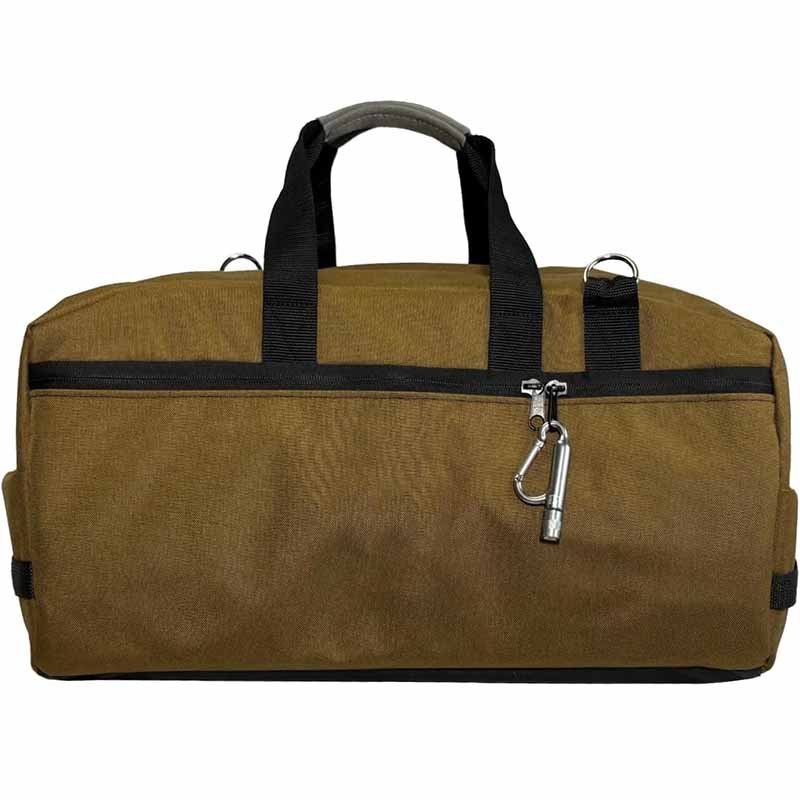
Camera bag usability is improved by modular dividers, quick-access openings, tripod carry systems, weather protection, ergonomic straps, and smart tech organization features. These accessories and design elements reduce friction during shooting, improve comfort over long carries, and protect gear in changing environments. The most useful features depend on shooting style, gear load, and how often equipment needs to be accessed.
Which internal dividers and modular systems matter most?
Internal dividers are the backbone of camera bag usability. High-quality camera bags use rigid, padded, hook-and-loop dividers that stay in place even when the bag is moved quickly. Adjustable dividers allow photographers to reconfigure layouts as gear changes—essential for users who switch between lenses, bodies, or video accessories.
Advanced bags include removable camera cubes, letting the bag convert into a normal backpack or travel bag. This modularity is especially valuable for travelers and content creators who want one bag for multiple purposes. Poor divider systems collapse over time, causing gear to shift and reducing protection.
How do quick-access openings improve shooting efficiency?
Quick-access features directly affect shooting speed. Side-access panels, top-loading flaps, or rear-panel openings allow photographers to reach cameras without fully removing the bag.
Street, event, and documentary photographers benefit most from one-handed access, while travel photographers often prefer rear-panel access for security. Well-designed quick-access systems use smooth zippers, wide openings, and internal layouts that don’t block gear retrieval.
Bags that force users to open the main compartment every time slow workflow and increase the risk of dropping gear.
Which tripod and external carry systems are actually useful?
Tripod carry systems are only useful when they are stable and balanced. The best camera bags feature centered tripod mounts, adjustable straps, and reinforced attachment points. Poorly designed systems pull the bag off-balance, causing shoulder strain.
External straps also support jackets, light stands, or compact gimbals. For outdoor photographers and videographers, these features expand carrying capacity without increasing bag size. Removable straps are preferred, allowing users to streamline the bag when not needed.
Are rain covers and weatherproof features essential?
Weather protection is a major usability factor. Integrated water-resistant fabrics, coated zippers, and sealed seams provide everyday protection without extra steps. While detachable rain covers are helpful, they are often forgotten or impractical in sudden weather changes.
Photographers working outdoors or traveling benefit from built-in weatherproofing that keeps gear dry during light rain, snow, or spills. Even urban users appreciate water resistance during commutes and unexpected weather.
How do ergonomic straps and harness systems reduce fatigue?
Comfort-focused features significantly improve long-term usability. Padded shoulder straps, breathable mesh back panels, sternum straps, and load-lifter straps distribute weight evenly and reduce pressure points.
Backpack-style camera bags benefit most from ergonomic harness systems, especially when carrying heavy gear for hours. Slings and messenger bags rely on wide, cushioned straps to prevent shoulder strain. Bags lacking ergonomic support may feel fine initially but cause discomfort over time.
Which tech and accessory pockets improve organization?
Modern photographers carry more than cameras. Usability improves with dedicated laptop sleeves, tablet pockets, cable organizers, battery holders, and SD card pockets. Clear organization reduces setup time and prevents loss of small but critical items.
Bags designed for hybrid workflows—photo, video, and editing—often include structured tech compartments separate from camera gear. This separation protects electronics while keeping accessories accessible.
Do anti-theft and security features really help?
Security features enhance usability in crowded or unfamiliar environments. Lockable zippers, hidden pockets, RFID-blocking compartments, and rear-panel access deter theft and provide peace of mind.
Travel and street photographers benefit most from these features, especially when shooting in busy cities. While security features don’t replace awareness, they reduce risk and allow users to focus on shooting rather than guarding their gear constantly.
How do small details improve everyday usability?
Often, small details make the biggest difference:
- Silent zippers for event photography
- Bright interior linings for visibility
- Key clips and anchor loops
- Luggage pass-through sleeves for travel
These details reduce daily friction and make bags feel thoughtfully designed. Brands that consistently include such features tend to earn strong user loyalty.
How do camera bag brands evolve with photography trends
Camera bag brands evolve with photography trends by adapting to smaller mirrorless gear, hybrid creator workflows, travel-focused shooting, and lifestyle-driven design expectations. Modern brands prioritize modular interiors, lighter materials, everyday aesthetics, and sustainability, while still maintaining protection and comfort. The most successful camera bag brands respond to how photographers actually shoot today—not how they shot ten years ago.
How has the shift from DSLR to mirrorless changed camera bag design?
The transition from bulky DSLRs to compact mirrorless systems has fundamentally reshaped camera bag design. While cameras have become smaller, photographers often carry more accessories—extra lenses, batteries, chargers, and tech gear.
As a result, camera bags are becoming slimmer but more intelligently organized. Brands reduce unnecessary bulk while improving divider efficiency and vertical storage. Padding is placed precisely where impact risk is highest instead of uniformly everywhere.
This shift favors manufacturers who understand internal structure and space optimization, rather than simply scaling down old backpack designs.
Why are hybrid photographer–creator workflows driving new bag formats?
Today’s photographers are often also videographers, vloggers, and content creators. They carry cameras alongside microphones, gimbals, LED lights, laptops, and power banks.
Camera bag brands now design for hybrid workflows, introducing modular camera cubes, flexible tech compartments, and fast reconfiguration. Bags must transition smoothly between shooting, editing, and travel.
Brands that fail to support this multi-role usage risk becoming irrelevant to a rapidly growing creator economy.
How is travel and mobility influencing camera bag evolution?
Photography is increasingly mobile. More photographers work while traveling, flying, or commuting daily. This has pushed camera bag brands toward carry-on-compatible sizes, lighter materials, and theft-aware designs.
Features like luggage pass-through sleeves, hidden pockets, rear-panel access, and compact silhouettes are now standard expectations. Even professional-grade camera bags are expected to look travel-friendly rather than purely technical.
Mobility has become a design requirement, not a bonus.
Why are camera bags becoming more lifestyle-oriented?
Modern photographers want camera bags that blend into everyday life. Loud branding, tactical styling, and overly technical appearances are falling out of favor—especially for street and travel photographers.
Brands respond with neutral colors, minimal logos, clean lines, and designs that function as both camera bags and everyday backpacks. This lifestyle shift broadens the camera bag market beyond professionals to casual shooters and commuters.
The challenge is balancing discreet aesthetics with real protection—something only experienced designers and manufacturers can execute well.
How is sustainability changing camera bag materials and manufacturing?
Sustainability is increasingly influencing purchasing decisions. Camera bag brands are experimenting with recycled fabrics, durable constructions, and longer product lifespans to reduce environmental impact.
However, sustainability must not compromise performance. Recycled materials require stricter quality control to maintain abrasion resistance and weatherproofing. Brands that rush into “eco” claims without engineering discipline often face durability issues.
The most credible brands focus on durability-first sustainability—bags that last longer and need fewer replacements.
Why modular and customizable designs are becoming more important
As gear setups diversify, one-size-fits-all bags no longer work. Modular systems—removable dividers, camera cubes, adjustable straps—allow users to tailor bags to their needs.
This modularity also benefits brands, enabling them to serve multiple user segments with fewer core designs. Manufacturers capable of precision sewing and modular integration gain a strong advantage in this trend.
How do brands respond faster to trends without sacrificing quality?
Speed-to-market matters, but quality cannot be compromised. Leading camera bag brands achieve this balance by working closely with experienced OEM manufacturers who can prototype quickly, test materials, and scale production reliably.
Brands that lack strong manufacturing partners often struggle to adapt, releasing trendy designs that fail in real-world use. In contrast, brands with solid engineering foundations evolve steadily and sustainably.
Conclusion
Choosing the right camera bag brand—or building your own—requires more than copying existing designs. It requires deep understanding of materials, construction, user behavior, and manufacturing discipline.
Szoneier, with over 18 years of experience in bag R&D, manufacturing, and global supply, supports brands, photographers, and sellers with custom camera bag solutions across multiple materials and styles. From camera backpacks and slings to travel and hybrid camera bags.
If you’re planning to launch or upgrade a camera bag line, contact Szoneier today to discuss OEM or private label customization and get a tailored quote.