Skip to content

Hockey bags are often treated as an afterthought—until they fail. A zipper breaks mid-season. The bottom panel rips after repeated rink use. Moisture builds up, and the smell becomes impossible to ignore. For players who train multiple times a week, travel frequently, or carry a full set of protective gear, the hockey bag isn’t just storage—it’s a critical piece of equipment.
Contact Szoneier today to discuss your hockey bag project, request samples, or receive a tailored quotation.
In 2026, the conversation around the best hockey bag brands has shifted. It’s no longer just about brand names or flashy designs. Players, parents, and teams are asking more practical questions: Which bags actually last multiple seasons? Which designs reduce odor and moisture? Which brands do NHL players trust—and why? At the same time, more private labels and clubs are exploring custom-made hockey bags that outperform off-the-shelf models. The best hockey bag brands combine durability, smart organization, and player-tested design. Brands like Bauer, CCM, and Warrior dominate the mainstream market, while premium and niche brands focus on ventilation, modular storage, and travel-friendly formats. Choosing the right hockey bag depends on your gear size, transport needs, and how often you train or travel—more than brand name alone.
Behind every “best” list is a deeper story: how hockey bags are engineered, how professionals actually use them, and why some designs quietly outperform famous logos. As we break this down section by section, you’ll start seeing hockey bags less as accessories—and more as performance tools that can be optimized, customized, and even re-engineered for your specific needs.
What makes a hockey bag “best” for real players

A hockey bag is “best” when it survives real usage, not just showroom testing. For real players, the best hockey bag combines load-bearing durability, effective ventilation, ergonomic carrying support, and smart internal space that fits full gear without compression. Performance depends less on branding and more on construction quality, material choice, and how well the bag matches training frequency, transport habits, and gear volume.
What performance requirements do real hockey players put on a bag?
Real hockey players don’t use their bags occasionally—they rely on them several times a week, often for years. This creates very different performance requirements than casual sports bags.
A “best” hockey bag must handle:
- Heavy static loads (pads, skates, helmet, sticks, apparel)
- Dynamic stress from lifting, dragging, and loading into vehicles
- Harsh environments like wet locker rooms, ice melt, parking lots, and concrete floors
For senior players, a fully packed hockey bag can exceed 20–25 kg (44–55 lbs). Bags that lack reinforced stitching, rigid base panels, or proper load distribution often fail within one or two seasons. Real players value bags that stay structurally stable when fully loaded—not ones that collapse or deform.
Why durability matters more than brand name for serious players
Brand recognition doesn’t stop a zipper from breaking. Real players judge a hockey bag by how it holds up after hundreds of open–close cycles and repeated exposure to moisture and abrasion.
Durability-focused hockey bags typically include:
- High-denier fabrics (900D–1000D) at stress zones
- Double or bar-tack stitching on handles and straps
- Reinforced bottom panels with coating or internal boards
For players training year-round, replacing a failed bag mid-season is both costly and disruptive. That’s why experienced players often prioritize construction quality over logo visibility, even choosing unbranded or custom-made bags if they last longer.
How ventilation and moisture control affect real-world usability
Sweat and moisture are unavoidable in hockey. Pads go into the bag wet. Gloves stay damp. Without proper airflow, bacteria grows quickly—leading to odor, fabric degradation, and even premature gear damage.
The best hockey bags integrate ventilation as a functional system, not a cosmetic feature:
- Mesh panels placed where air can circulate naturally
- Optional wet/dry separation to isolate soaked items
- Liners that resist moisture absorption and are easy to wipe clean
For real players, a bag that dries faster between sessions is more valuable than one that simply looks sleek. Over time, better ventilation directly extends both bag lifespan and gear lifespan.
What role does organization play for everyday hockey use?
Organization isn’t about having more pockets—it’s about reducing friction in daily routines. Players want to pack quickly, find gear easily, and avoid unnecessary digging.
Well-designed hockey bags provide:
- Wide openings for fast access
- Clear internal zones for skates, apparel, and accessories
- Enough space to avoid crushing pads or deforming helmets
Professional and high-frequency players often prefer simpler, larger main compartments rather than overly segmented interiors. Too many dividers can actually slow packing and trap moisture if not engineered correctly.
Why carrying comfort and transport style matter more than expected
A hockey bag isn’t just stored—it’s carried, dragged, lifted, and sometimes hauled long distances. Poor ergonomics lead to shoulder strain, back pain, and fatigue.
The best hockey bags account for transport reality:
- Padded, reinforced shoulder straps for carry bags
- Strong wheel systems for heavy or goalie setups
- Balanced weight distribution to prevent tipping
Players who train multiple times per week quickly feel the difference between a bag designed for occasional use and one engineered for long-term, high-frequency transport.
Do “pro-level” features really benefit non-professional players?
Yes—because “pro-level” usually means built for failure avoidance. Features designed for elite players—thicker fabrics, stronger hardware, better airflow—benefit anyone who trains seriously.
You don’t need to be an NHL player to appreciate:
- A zipper that doesn’t jam in winter
- A base that doesn’t tear after one season
- A bag that doesn’t smell permanently after six months
That’s why many recreational but committed players gravitate toward pro-style or custom hockey bags once they understand what actually causes bag failure.
Which hockey bag brands are most trusted right now

The most trusted hockey bag brands combine long-term durability, player-validated performance, broad market adoption, and pro-level deployment. Leading names include Bauer, CCM, and Warrior—the widely recognized “Big 3”—but specialized brands focused on ventilation, modular organization, and travel durability are gaining traction. Ultimately, trust comes from real-world durability and performance rather than logo visibility.
Who are the Big 3 hockey bag brands dominating the market?
When buyers ask “Which hockey bag brands should I consider first?”, three names consistently rise to the top:
1. Bauer
Market Position
- Long-established hockey equipment heavyweight with deep heritage in both North American and international hockey communities.
Bag Strengths
- Wide product range: from youth and recreational bags to pro-style wheeled versions.
- System compatibility: ergonomics designed to align with Bauer gear sets (gloves, shin guards, helmets).
- Retail accessibility: widespread availability at major hockey stores and online.
Real-World Perception Bauer bags are often chosen by clubs and organized leagues because they perform reliably across skill levels and usage intensities. While not always the most innovative, Bauer’s consistency makes it a default choice for many.
2. CCM
Market Position
- One of hockey’s oldest equipment brands with deep ties to professional leagues including the NHL.
Bag Strengths
- Durability focus: rugged construction and reinforced base panels.
- Balanced design: steady weight distribution and functional simplicity.
- Trusted by teams: often supplied in bulk for team programs.
Real-World Perception CCM bags are perceived as built for hard use. Many hockey programs choose CCM when durability and predictable performance matter more than styling.
3. Warrior
Market Position
- A strong contender focused on modern player needs with a reputation for lightweight performance gear.
Bag Strengths
- Modern ergonomics: comfortable carry straps, intuitive layouts.
- Design balance: lighter than some traditional bags while maintaining strength.
- Aesthetic appeal: modern styling that resonates with many players.
Real-World Perception Warrior bags often attract players seeking lightweight efficiency without sacrificing essential durability. They fit well for players focused on mobility and moderate travel.
Trusted Brands Beyond the “Big 3”
While Bauer, CCM, and Warrior dominate awareness, other brands deserve attention—especially for players with specialized needs.
Pacific Rink
- Specialty: heavy-duty travel and team bags.
- Strengths: reinforced wheels, strong base plates, excellent ventilation.
- Use case: teams and frequent travellers.
Pacific Rink focuses on robust engineering and performance durability, often surpassing many mainstream bags in long-distance travel tests.
Grit Hockey
- Specialty: tower-style, upright wheeled hockey bags.
- Strengths: vertical storage, easy access, and airflow.
- Use case: competitive players and heavy gear loads.
Grit is notable because its upright design is significantly different from traditional horizontal bags—and preferred by many serious players who travel extensively.
Conway & Banks (Premium and Custom Trends)
- Specialty: premium materials and bespoke organization options.
- Strengths: tailored internal compartments, luxury-grade textiles.
- Use case: performance-oriented players.
Although less mainstream, Conway & Banks and similar boutique brands gain traction by offering more thoughtful internal layouts and elevated materials that reduce wear and tear over time.
What hockey bag brands do NHL players actually use?
A common online question is: “Do NHL players universally use Bauer or CCM hockey bags?”
The answer is more nuanced.
Professional Usage vs Sponsorship
At the NHL level:
- Team issue bags may be standardized per team contract.
- Personal bags—especially travel or secondary bags—are selected based on performance, not sponsorship.
Many NHL players use a mix of:
- Bauer or CCM for team-provided bag systems
- Wheeled bags from Pacific Rink or Grit for road trips
- Custom setups with reinforced hardware for frequent travel
This demonstrates a key reality: professional players choose trusted performance, and often mix brands based on use case rather than loyalty to a single label.
Why brand trust matters more than marketing visibility
Most retail buyers see brand visibility and logo placement—what they see online or in ads. But seasoned players and peak-usage customers evaluate bags based on:
1. Failure avoidance
A zipper break during a cold season or wheel collapse on cement isn’t just inconvenient—it disrupts play schedules and increases gear damage risk.
2. Comfort and load management
Heavy gear demands thoughtful strap design, reinforced carry handles, and balance—especially critical when walking long distances or climbing stairs.
3. Odor and moisture management
Brands that integrate effective airflow and compartment separation help reduce bacterial build-up and extend both bag and gear life.
When a brand consistently performs across these metrics, it earns long-term trust. That’s why trusted brands are not just about who spends the most on advertising—real performance speaks louder than PR.
Comparative Summary Table (Brand → Strengths → Best For)
| Brand | Strengths | Best For |
|---|---|---|
| Bauer | Wide range, system-compatible, reliable | All skill levels, club teams |
| CCM | Rugged durability, simple layout | Heavy usage, bulk team order |
| Warrior | Lightweight, ergonomic | Mobility-focused players |
| Pacific Rink | Reinforced travel bags | Frequent travel, team logistics |
| Grit | Upright wheeled design | Competitive/travel hockey |
| Premium Boutique (e.g., Conway & Banks) | Tailored organization, elevated materials | Advanced players & long-term usage |
How to choose among these trusted brands
To make the best purchase decision:
- Assess your usage frequency
- Daily training and travel need higher durability.
- Consider your transport style
- Wheeled and upright styles reduce strain.
- Evaluate bag interior organization
- Clear zones and ventilation prevent odor and gear compression.
- Match bag size to gear volume
- Oversized bags reduce stress on seams and allow airflow.
By evaluating these criteria alongside brand reputation, buyers can choose bags with real performance value, not buzzwords.
What type of hockey bag should you buy—carry, wheeled, or backpack

Choosing the right hockey bag type—carry, wheeled, or backpack—depends on how often you train, how far you carry gear, and how much equipment you have. Carry bags are versatile and lightweight, wheeled bags reduce strain for heavy gear or travel, and backpack bags work best for youth players and short commutes. Serious players often own more than one style to match different use cases.
Choosing a hockey bag isn’t just about style or price—it’s about how you move your gear, how much you carry, and how often you use it. Hockey bags must support heavy gear loads, frequent transitions, and moisture exposure. Below is a breakdown of the three most common designs and how they perform in real life.
1. Carry Hockey Bags – Classic, Lightweight & Flexible
What a Carry Bag Is
Carry hockey bags are the traditional horizontal style that most players first encounter. They have one main compartment, a wide opening, reinforced handles, and sometimes shoulder straps.
Best For
- Local rink access
- Youth players and beginners
- Players who mostly drive to the arena
- Light to moderate gear volumes
Key Benefits
- Versatile form factor — works well for daily pickup games
- Lightweight — fewer structural elements keep weight down
- Simple organization — big internal space for all basic gear
- Lower cost — generally more affordable than wheeled bags
Limitations
- Carrying strain — when fully loaded, shoulder and back fatigue can set in
- No wheels — long walks or stairs become taxing
- Limited structure — can collapse when empty or loosely filled
Who should choose a carry bag? Beginner and recreational players, or anyone whose commute to practices is short and seated in a car. If you train a few times a week and don’t carry a huge equipment load, this style is reliable and cost-effective.
2. Wheeled Hockey Bags – Travel-Ready & Low Strain
What a Wheeled Hockey Bag Is
Wheeled hockey bags integrate wheels and a retractable handle system, similar to travel luggage. They come in horizontal and vertical (tower) styles.
Best For
- Players who travel frequently
- Competitive and elite players
- Goalies with heavy gear
- Long walks, stairs, airports, and bus terminals
Key Benefits
- Reduced physical strain — wheels bear most weight
- Large capacity options — handles and wheels support heavier gear
- Travel optimized — easier navigation through parking lots and terminals
- Vertical tower designs — improve access and airflow
| Feature | Carry Bag | Wheeled Bag | Backpack Bag |
|---|---|---|---|
| Ease of Transport | ⭐⭐⭐ | ⭐⭐⭐⭐ | ⭐⭐⭐⭐ |
| Gear Volume Support | ⭐⭐ | ⭐⭐⭐⭐ | ⭐ |
| Durability | ⭐⭐⭐ | ⭐⭐⭐⭐ | ⭐⭐ |
| Price | ⭐⭐⭐⭐ | ⭐⭐ | ⭐⭐⭐ |
| Best Use Case | Local | Travel & Heavy Loads | Commute/Youth |
Limitations
- Heavier when empty — wheels add baseline weight
- Bulkier footprint — sometimes hard to fit in small lockers or cars
- Potential wheel wear — low-quality wheels wear faster over time
Who should choose a wheeled bag? Intermediate to elite players, travel hockey teams, and anyone who regularly carries heavy gear over distances. Wheeled bags significantly reduce physical fatigue compared to traditional carry bags.
3. Backpack Hockey Bags – Mobility & Urban Commuting
What a Backpack Hockey Bag Is
Backpack hockey bags (or convertible hybrid bags) look like oversized backpacks but are designed to carry hockey equipment on your back. Some also include small wheels.
Best For
- Youth players with smaller gear loads
- Players who walk or use public transit
- Short commutes where hands-free mobility matters
Key Benefits
- Hands-free transport — ideal for walking or transit
- Even weight distribution — shoulders and back share the load
- Good for short distances — best for quick commutes
Limitations
- Limited capacity — not ideal for full senior gear sets
- Comfort depends on padding — weak straps cause discomfort
- Not optimized for heavy loads — best for lighter youth gear
Who should choose a backpack bag? Youth players, urban commuters, or secondary carry setups for supplemental items (like off-ice gear or casual jerseys).
Carry, Wheeled, or Backpack—Which one for you?
To decide smartly, match your choice with your training routine, gear volume, and movement patterns.
| Player Profile | Best Bag Type |
|---|---|
| Youth or beginner with short walks | Backpack |
| Recreational player with local commute | Carry |
| Frequent travel player with heavy gear | Wheeled |
| Competitive player going to tournaments | Wheeled or Tower |
| Multi-use gym/secondary bag | Backpack |
Real-World Scenarios That Influence Choice
Scenario 1: Multiple Daily Practices
If you train twice a day and walk between lots or parks, a wheeled bag saves your back and shoulders over time.
Scenario 2: Weekend Games with Travel
Travel bags with durable wheels and reinforced handles make airports and bus travel far easier.
Scenario 3: Urban Transit or Public Transport
Backpack style is ideal when trains, buses, or sidewalks are part of your commute—especially for youth players.
Common Mistakes Players Make When Choosing a Bag
- Choosing based on price only Low cost often means poor durability.
- Ignoring ventilation Moisture buildup damages gear faster, leading to odor issues.
- Picking wrong size Too large invites wasted space; too small leads to compressed gear and seam stress.
- Neglecting wheels quality Wheeled bags with cheap wheels fail early under heavy loads.
Best Practice Checklist Before Buying
Does the bag support the weight of your full gear set? Are wheels and handles robust if you choose wheeled? Is ventilation integrated for odor control? Do straps offer comfort for multi-session use? Does it match where and how far you travel?
What size hockey bag do you need for youth, senior, or goalie gear
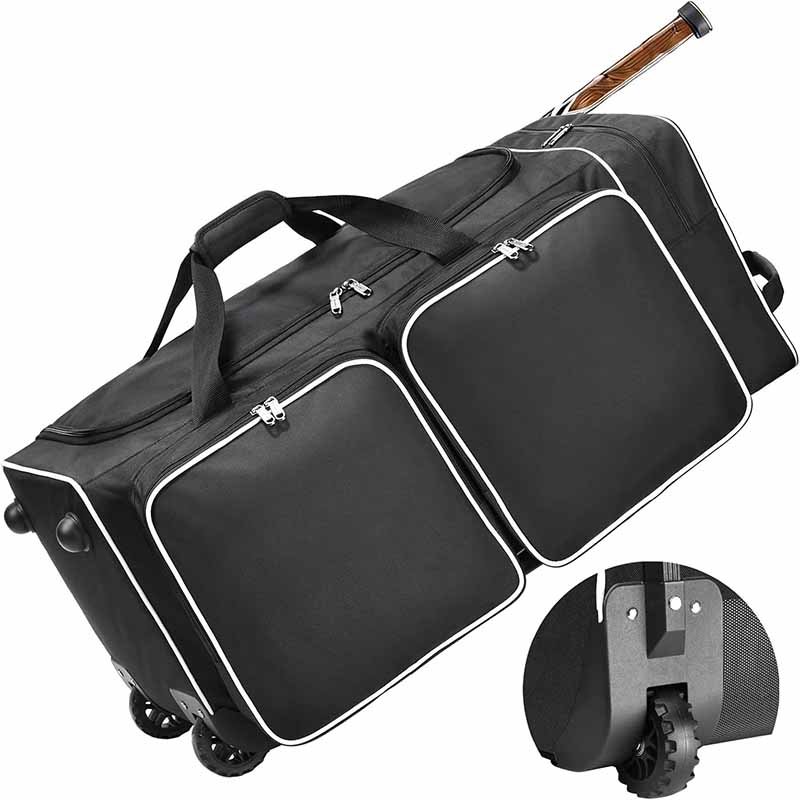
Choosing the right hockey bag size depends on your gear volume, frequency of use, and transport style. Youth players require compact, lightweight bags sized for partial gear. Senior players and teams need full-capacity bags designed to hold complete protective equipment. Goalie setups demand oversized bags with reinforced bases and wheels to support the heaviest, bulkiest gear.
Hockey bags vary widely in size because hockey gear itself varies enormously. A youth set rarely fills a full-size bag, while a senior player’s set—with pads, helmet, gloves, skates, and extras—can max out most standard bags. Understanding the right size helps you avoid wasted space, unnecessary weight, or structural stress that shortens bag life.
Youth Hockey Bag Sizes — Small Gear, High Maneuverability
What hockey bag size fits youth gear best?
Youth bags are designed for players roughly 12 and under, though size needs vary with growth and league level.
Common youth bag sizes:
- 24–30 inches (60–76 cm) in length
- Moderate depth and height suitable for junior helmets, shin guards, gloves, and skates
A typical youth set does not fill a full adult bag, so oversized bags lead to wasted space and gear shifting, which:
- Increases odor buildup
- Causes unnecessary wear on bag materials
- Makes handling awkward
Ideally, youth players use compact bags that balance storage with lightweight transport—especially if they walk, bike, or use transit to get to the rink.
Why size matters for youth players
- Better weight control Smaller bags keep overall weight manageable for young shoulders.
- Shorter packing time Less interior volume means less gear to organize.
- Enhanced ventilation performance Smaller internal volume improves airflow effectiveness.
Senior Hockey Bag Sizes — Full Gear, Frequent Use
What hockey bag size fits senior players best?
Senior players, competing in adult leagues or training regularly, almost always require full-capacity bags.
Common senior bag sizes:
- 36–42 inches (91–107 cm) for standard gear
- Up to 48 inches (122 cm) for players carrying extra accessories or backup equipment
At this level, bag size matters for:
- Full gear fit — helmet, shoulder pads, gloves, pants, shin guards, skates
- Extra storage — practice jerseys, towels, off-ice shoes, recovery gear
- Travel readiness — tournament clothes, snacks, hydration gear
A smaller bag leads to overstuffing and seam stress. A larger bag improves airflow, reduces compression damage, and extends both gear and bag lifespan.
How senior player preferences influence bag choice
Senior and competitive players often prefer:
- Wheeled bags (36–42″ or larger) for long walks and travel
- Tower upright bags for better airflow and compartmentalization
- Reinforced bases to manage larger loads
For adult gear setups over 25 kg (55 lbs), wheeled bags dramatically reduce physical strain compared to carry bags of equivalent size.
Goalie Hockey Bag Sizes — Extra Volume for the Bulkiest Gear
Why goalie bags are different
Goalies carry the heaviest and bulkiest equipment in hockey:
- Large leg pads
- Chest protectors with high volume
- Oversized gloves and blockers
- Specialized goalie skates
- Masks with cages, sticks with larger blades
Because of this, goalie bags must be oversized and reinforced.
Common goalie bag sizes:
- 42–52 inches (107–132 cm) in length
- Extra depth and width to fit leg pads flat (not folded)
A bag that’s too small forces gear compression, which can cause:
- Padding deformation
- Reduced protective performance
- Dysfunctional airflow and increased odor
How goalie bag construction supports size needs
Goalie bags typically include:
- Extended wheelbase to support wider loads
- Reinforced bases and frames to prevent collapse
- Wider openings for easier packing and unpacking
- Internal separators to divide pads from apparel
Without proper size and structure, a goalie bag fails quickly—especially under frequent travel conditions.
How to Read Hockey Bag Size Labels
Bag manufacturers typically label sizes in inches—measuring the longest dimension from end to end. For example:
- 30″ bags are intended for youth sets
- 36–42″ bags are standard adult sets
- 48″+ bags are oversize or goalie bags
However, length isn’t everything. Depth and internal layout determine how gear actually fits. A “42-inch” bag with shallow depth might still feel small if pads don’t lay flat.
Recommended Sizes by Player Type
| Player Type | Typical Bag Size | Recommended Bag Style |
|---|---|---|
| Youth | 24–30″ | Compact Carry or Backpack |
| Teen / Intermediate | 30–36″ | Mid-Size Wheeled or Carry |
| Senior / Adult | 36–42″ | Full-Capacity Wheeled / Tower |
| Goalie | 42–52″ | Oversized Wheeled / Reinforced Tower |
Real-World Examples
- Youth Travel Team: A 28″ carry bag with ventilation and light reinforcement is ideal for weekend tournaments.
- Adult League Player: A 40″ wheeled bag with clear division zones accommodates full gear and accessories.
- Goalie in Competitive League: A 50″ wheeled tower bag with reinforced base and oversized wheels dramatically reduces strain and holds pads flat.
Why Accurate Size Matters for Performance, Not Just Space
The right size hockey bag does more than hold gear:
Reduces seam and zipper stress Improves airflow and drying time Prevents gear compression damage Enhances travel comfort Extends the lifespan of both bag and equipment
How do you compare hockey bag materials and construction

To compare hockey bag materials and construction, focus on fabric durability, base reinforcement, stitching quality, zipper systems, and load-bearing design. High-quality hockey bags use 900D–1000D fabrics or coated materials, reinforced bottoms, double-stitched stress points, and heavy-duty hardware. Construction quality matters more than brand name, as poor stitching or weak bases cause most hockey bag failures.
Most hockey bags look similar at first glance—but their materials and construction quality determine whether they last one season or five. For real players, teams, and brands, understanding how bags are built is the key to choosing (or designing) a reliable product.
1. Hockey Bag Fabric Materials: What’s Actually Used
Which fabrics are most common in high-quality hockey bags?
Most trusted hockey bag brands rely on synthetic woven fabrics, chosen for abrasion resistance, tear strength, and moisture tolerance.
Common Fabric Types Explained
| Material | Typical Use | Real-World Performance |
|---|---|---|
| 600D Polyester | Entry-level bags | Lightweight but wears faster under heavy loads |
| 900D Polyester | Mid-range performance | Good durability, balanced weight |
| 1000D Polyester | Pro-level bags | High abrasion resistance, long lifespan |
| Tarpaulin / PVC-coated fabric | Bag bases & corners | Waterproof, easy to clean, very abrasion-resistant |
| Hybrid fabrics | Premium/custom bags | Combine strength zones with lighter panels |
What real players should know: Denier (D) measures yarn thickness—not quality alone—but higher denier fabrics generally survive rink floors, parking lots, and repeated dragging much better.
2. Base Construction: Where Most Hockey Bags Fail First
Why the bottom of a hockey bag matters more than any other area
The base of a hockey bag carries:
- Full gear weight (often 20–30 kg / 44–66 lbs)
- Repeated ground contact
- Moisture from melted ice and snow
Low-quality bags often use the same fabric for the base as the sides. High-quality bags do not.
Best-Practice Base Construction Includes:
- Double-layer fabric or coated tarpaulin
- Internal PE or PP board for rigidity
- Reinforced corner binding to prevent tearing
A strong base keeps the bag upright, protects zippers from stress, and prevents early fabric blowouts.
3. Stitching & Seam Engineering: The Hidden Strength Factor
How stitching quality determines bag lifespan
Stitching is the most overlooked part of hockey bag construction—and the most common failure point.
High-Quality Hockey Bags Use:
- Double or triple stitching at handles and straps
- Bar-tack reinforcement at stress points
- High-tensile polyester or nylon thread
Low-quality stitching fails even when fabric looks intact. Once seams split, bags are rarely repairable.
Real-world insight: Handles and shoulder straps experience dynamic load, not static weight. Reinforcement here is critical for frequent lifters and travelers.
4. Zippers & Hardware: Small Parts, Big Consequences
Why zipper systems deserve close attention
Zipper failure is one of the most frustrating hockey bag issues—especially in cold weather.
What to look for in reliable hockey bag zippers
- Heavy-duty coil or molded zippers
- Large zipper teeth for debris tolerance
- Metal or reinforced pulls
- Wide zipper tracks that resist spreading under load
Cheap zippers fail long before fabric does. High-end bags often overspec zippers to avoid mid-season breakdowns.
5. Structural Design: Load Distribution Matters
How good construction prevents deformation
A hockey bag is not just a fabric shell—it’s a load-bearing structure.
Better-engineered bags feature:
- Balanced panel layout to distribute weight
- Reinforced sidewalls to prevent sagging
- Wide openings that reduce zipper stress
Poor structural design causes:
- Collapsed shapes
- Zipper tension
- Uneven strap loading
Over time, this leads to cascading failures—even if materials are decent.
6. Ventilation Materials & Lining Choices
How materials affect odor control and hygiene
Interior linings and ventilation zones play a major role in long-term usability.
Better hockey bags include:
- Mesh panels placed in airflow paths
- Moisture-resistant liners that don’t absorb sweat
- Easy-wipe interior coatings
Inferior linings trap moisture, accelerate bacterial growth, and shorten both bag and gear life.
7. Wheeled Bag Construction: Extra Engineering Required
What separates durable wheeled bags from weak ones
Wheeled hockey bags add complexity:
- Wheels
- Axles
- Handles
- Frame reinforcement
High-quality wheeled bags use:
- Oversized wheels with solid hubs
- Reinforced axle housings
- Rigid base plates connected to frame
Cheap wheeled bags often fail at the wheel mounts—rendering the entire bag unusable.
Material vs Construction: Which Matters More?
Construction quality matters more than material alone.
A 1000D fabric bag with weak stitching will fail faster than a well-constructed 900D bag with reinforced seams and base.
Smart buyers evaluate both together
Fabric thickness and abrasion resistance Reinforcement at stress zones Stitching density and pattern Hardware durability Overall load distribution design
How do you clean, dry, and stop a hockey bag from smelling
To clean, dry, and stop a hockey bag from smelling, remove gear immediately after use, air-dry the bag fully, clean interior surfaces regularly, and use bags designed with ventilation and moisture-resistant liners. Odor comes from bacteria growing in damp environments, so airflow and drying speed matter more than deodorizing sprays. Proper habits and bag design together prevent long-term odor buildup.
Hockey bag odor isn’t just unpleasant—it’s a sign of bacterial growth, moisture retention, and material breakdown. Understanding why bags smell is the first step toward stopping it long-term.
1. Why do hockey bags smell so bad? (The real cause)
What actually causes odor inside a hockey bag?
Contrary to popular belief, sweat itself doesn’t smell. Odor forms when bacteria break down sweat proteins in warm, damp environments.
Hockey bags create the perfect conditions for this:
- Wet gear placed inside immediately after play
- Limited airflow once the bag is zipped closed
- Absorbent linings that trap moisture
- Repeated cycles without full drying
Within hours, bacteria multiply. Over weeks, odor embeds into fabrics and stitching. Over months, it becomes permanent if not addressed.
Key takeaway for players: Odor prevention is primarily about drying speed, not masking scent.
2. How to dry a hockey bag properly after every use
What is the best way to dry a hockey bag?
The most effective drying method is full ventilation + time.
Best daily drying routine
- Remove all gear immediately Never leave wet gear inside overnight.
- Fully open the bag Open main zippers completely; don’t “crack” them halfway.
- Place bag in a ventilated area A dry room with airflow is better than a closed garage.
- Stand the bag upright if possible Upright or tower positions improve airflow.
Avoid placing bags near heaters or direct sunlight, which can warp coatings and weaken stitching.
Why bag design affects drying speed
Hockey bags with:
- Mesh ventilation panels
- Elevated compartments
- Non-absorbent interior liners
…dry significantly faster than sealed fabric bags.
This is why many elite players prefer pro-style or tower bags—not for looks, but because they dry better between sessions.
3. How to clean a hockey bag safely (step-by-step)
How often should you clean a hockey bag?
- Light wipe-down: every 1–2 weeks
- Deep cleaning: every 2–3 months (or mid-season)
Step-by-Step Cleaning Guide
Step 1: Empty and vacuum
Remove debris like tape, turf pellets, and dirt.
Step 2: Spot clean interior
Use:
- Warm water
- Mild detergent or vinegar solution (1:3 vinegar:water)
Avoid bleach—it damages coatings and stitching.
Step 3: Wipe, don’t soak
Use a cloth or sponge. Never fully submerge the bag unless manufacturer-approved.
Step 4: Rinse with clean cloth
Remove soap residue.
Step 5: Air dry completely
Leave bag open until fully dry before reuse.
Important: Machine washing is not recommended for most hockey bags—it destroys structure, wheels, and coatings.
4. Do sprays, deodorants, and baking soda actually work?
Are odor sprays effective for hockey bags?
Sprays and deodorants can temporarily reduce smell, but they do not solve the root cause.
| Method | Effectiveness | Why |
|---|---|---|
| Odor sprays | Short-term | Masks scent, doesn’t kill bacteria |
| Baking soda | Moderate | Absorbs moisture, not bacteria |
| Charcoal packs | Moderate | Absorbs odor, not moisture |
| Proper drying | High | Removes bacteria growth conditions |
Best practice: Use deodorizing products only after proper drying—not as a replacement.
5. How to stop hockey bag odor long-term (prevention strategy)
Daily habits that actually work
Remove wet gear immediately Dry bag fully after every session Never store bag sealed when damp Wipe liners regularly Rotate between two bags if possible
Professional and NHL-level players often rotate bags or use separate transport and drying setups, significantly reducing odor buildup.
How ventilation and materials prevent odor at the design level
High-quality hockey bags reduce odor by design through:
- Moisture-resistant interior coatings
- Strategically placed mesh airflow zones
- Wet/dry separation compartments
Bags without these features rely entirely on user habits—making odor much harder to control.
6. Can you fix a hockey bag that already smells?
Is it possible to remove deep-set odor?
Sometimes—but not always.
What can help
- Repeated vinegar wipe-downs
- Extended air drying (several days)
- Enzyme cleaners (fabric-safe)
When odor is permanent
If bacteria has penetrated:
- Stitching
- Padding
- Absorbent liners
…odor often returns quickly. At that stage, replacement or professional refurbishment is the only reliable solution.
7. Why better hockey bags smell less over time
Odor is often blamed on players—but bag design plays a major role.
Better bags:
- Dry faster
- Absorb less moisture
- Are easier to clean
- Resist bacterial embedding
That’s why experienced players often say:
“A good bag doesn’t smell nearly as bad—even after years.”
Conclusion
The “best hockey bag brand” depends on how you play, how often you train, and how you move your gear. Big brands dominate visibility, but performance often comes from thoughtful engineering—not marketing.
For players, choosing the right bag means fewer failures, better gear protection, and less daily frustration. For brands, teams, and distributors, it means an opportunity to build something better—without retail compromise.
If you’re exploring custom hockey bags, private label development, or OEM manufacturing, Szoneier is ready to help you turn real usage needs into reliable, market-ready products.