Skip to content
Choosing a fishing bag on Amazon seems easy—until you face the overwhelming number of styles, materials, prices, and features. With thousands of listings and constantly changing seller quality, most buyers end up confused, comparing dozens of bags but still unsure which one truly matches their fishing style. The truth is simple: the right fishing bag can improve your efficiency, protect your gear, reduce frustration, and ultimately make every trip more enjoyable. But the wrong one? It can soak your tackle boxes, tear under weight, or fail halfway through the season. The best fishing bag on Amazon is the one that matches your fishing style, offers durable waterproof materials, provides organized storage for tackle and tools, and fits comfortably for long hours outdoors. Shoppers should compare hard vs. soft tackle bags, check fabric strength, evaluate pocket layout, verify waterproof construction, and consider use cases such as bank, kayak, or boat fishing. Choosing based on these criteria ensures better performance and longer product lifespan.
As a manufacturer with 18+ years of fishing bag and outdoor gear expertise, Szoneier has watched buyer behavior evolve dramatically on Amazon. Customer expectations are rising, reviews are more competitive, and design features have become increasingly specialized. To understand what truly matters, let’s break down each decision-making factor through a professional, engineering-based lens—starting with the most foundational question: what types of fishing bags are available, and how do they compare? Let’s dive in.
What Types of Fishing Bags Are Available on Amazon?
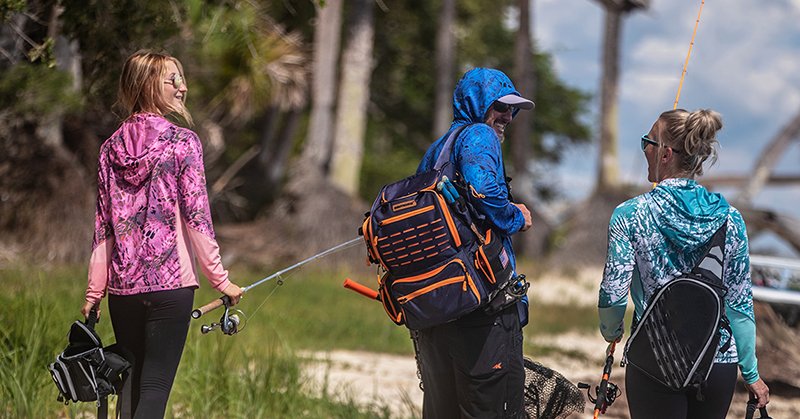
Amazon offers several types of fishing bags, including soft and hard tackle bags, fishing backpacks, sling bags, waterproof dry bags, and hybrid multifunction bags. Each bag type supports different fishing styles—from bank and kayak fishing to saltwater boat trips. Soft bags offer flexibility and light weight, while hard-shell bags provide maximum gear protection. Dry bags ensure full waterproofing, and backpacks offer hands-free mobility. Choosing the right type depends on environment, storage needs, and mobility requirements.
Choosing the right fishing bag type on Amazon is one of the most important decisions anglers make, because each design serves a different environment and fishing style. Amazon’s marketplace contains thousands of listings, but nearly all fall into a core group of categories—each with specific engineering traits, strengths, weaknesses, and use cases.
1. Soft vs Hard Tackle Bags (The Most Popular Amazon Category)
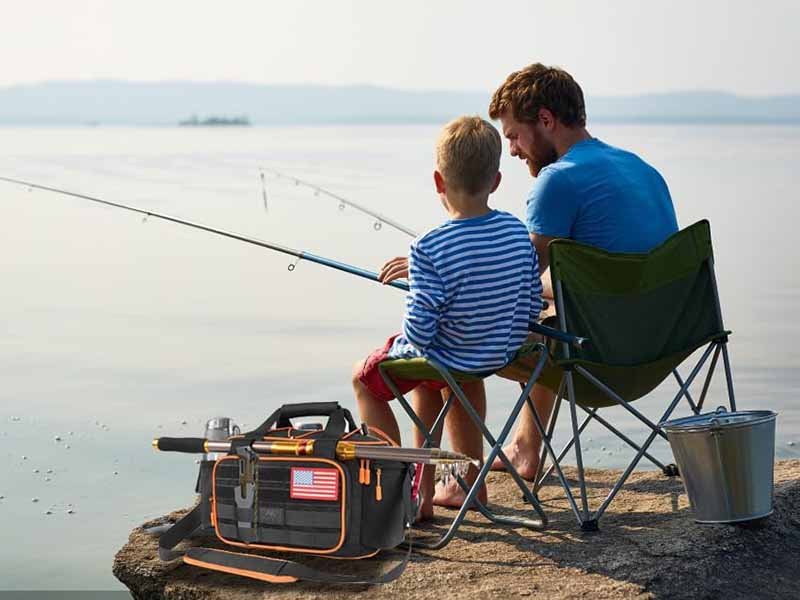
Tackle bags—whether soft or hard—remain Amazon’s top sellers because they store trays, terminal tackle, lures, and tools in an organized, accessible system.
Soft Tackle Bags
Soft tackle bags dominate Amazon because they’re lightweight, compressible, and easy to carry. Typical features include:
- 600D–900D nylon/polyester fabric
- Multiple exterior pockets
- Tray-compatible interior (3600 or 3700 box size)
- Padded shoulder strap
- Semi-rigid or padded side panels
Best for: bank fishing, walk-in spots, multi-purpose freshwater fishing. Advantages: light, ergonomic, affordable, flexible storage. Limitations: less protective during impacts; may lose shape over time.
Hard Tackle Bags
Hard tackle bags (EVA molded or plastic-frame designs) protect gear from crushing, drops, and boat movement. Typical features include:
- Rigid molded shell
- Stackable flat-bottom design
- Front-loading tray compartment
- Corrosion-resistant hardware
Best for: boat fishing, saltwater, rough handling. Advantages: structure, protection, long lifespan. Limitations: heavier, bulkier, less flexible for hiking.
2. Fishing Backpacks
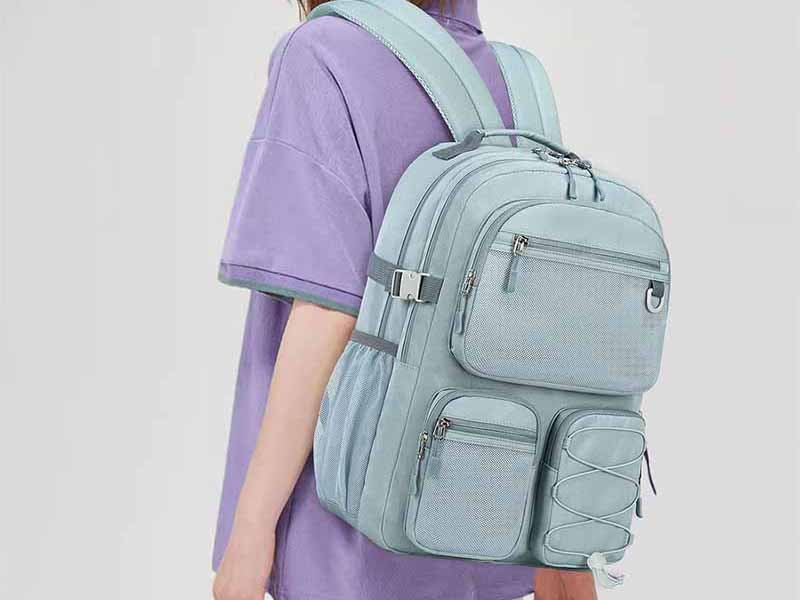
Backpack-style fishing bags combine mobility with organized storage—ideal for anglers who walk or hike to their spots.
Key features:
- Ergonomic shoulder straps
- Breathable mesh back panel
- Vertical tackle tray compartment
- Side rod holders
- Hydration compatibility
- Multi-zone pocket layout
Best for: bank fishing, mountain lakes, urban fishing. Why Popular on Amazon: comfort + storage capacity + hands-free mobility.
Backpacks are also common among kayak anglers who need compact but accessible storage.
3. Sling Bags / Shoulder Crossbody Bags
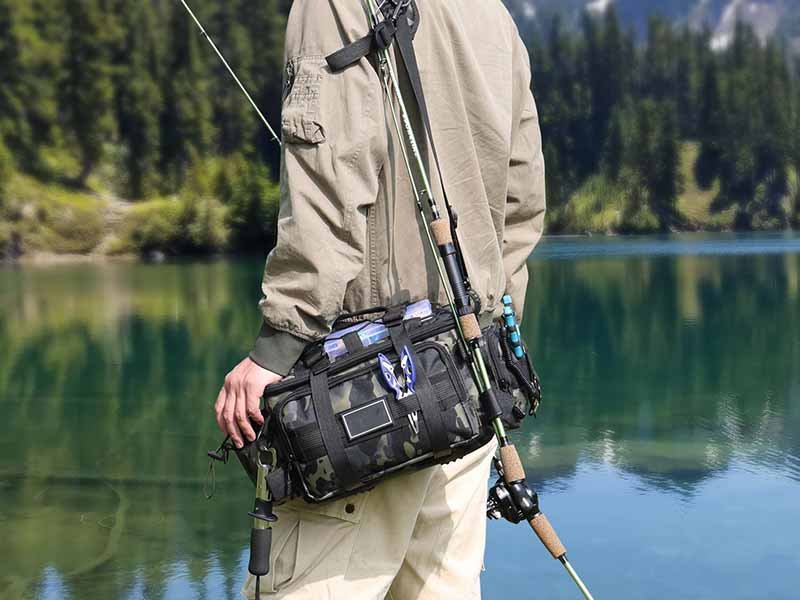
Small, lightweight, and designed for quick access, sling bags are among the fastest-growing Amazon categories.
What makes them popular:
- Crossbody design allows instant lure or tool access
- Compact size fits minimal tackle setups
- Very lightweight (typically under 1 kg)
- Ideal for short sessions or light lure fishing
Best for:
- Fly fishing
- Wading
- Casual evening fishing
- Traveling anglers
Pros: freedom of movement, speed, simplicity. Cons: limited capacity, not designed for heavy tackle loads.
4. Waterproof Dry Bags & Dry Backpacks
For kayak fishing, wading, saltwater conditions, and rainy environments, waterproof bags are essential.
Technical features of true waterproof bags:
- PVC or TPU laminated material
- Roll-top closure
- Welded seams (no needle holes)
- Waterproof zippers (if applicable)
- Reinforced bottoms
Common Amazon capacities: 10L, 20L, 30L, 40L 30L is the sweet spot for kayak anglers needing room but not bulk.
Best for:
- Kayak fishing
- Saltwater boat fishing
- Heavy rain environments
- Protecting electronics
Strength: guaranteed dryness. Weakness: less pocket segmentation; more “open space” storage.
5. Hybrid Multifunction Fishing Bags
Hybrid designs blend features from different bag types, appealing to anglers who want versatility.
Examples include:
- Backpack + tackle tray base
- Dry bag + external MOLLE pockets
- Semi-hard EVA tackle bag with backpack straps
- Cooler + fishing organizer combo
These have become very popular on Amazon because buyers want a one-bag solution for multiple fishing scenarios.
Why hybrids sell well:
- Adapt to freshwater + saltwater
- Serve bank + boat + kayak fishing
- Offer modular storage
- Provide premium aesthetics for gifting and retail
Most common features:
- Detachable pouches
- Expandable compartments
- Rigid bottom + soft shell
- Waterproof pocket integration
6. Boat Deck Bags (Structured & High-Capacity)
Boat fishing requires bags that stay upright, resist sliding, and withstand saltwater spray.
Boat bags typically include:
- Hard or semi-rigid frame
- Wide-mouth opening
- Anti-slip rubberized base
- UV-resistant fabric
- Corrosion-resistant zippers
- Oversized storage volume
Best for:
- Offshore saltwater fishing
- Multi-day charter trips
- Storing multiple large trays
These bags are engineered for deck stability and rapid access.
7. Travel-Ready Fishing Bags (For Multi-Day Trips)
Long-range anglers need bags that combine fishing function with travel durability.
Common features:
- Lockable zippers
- Luggage-style handles
- Padded laptop or electronics pocket
- Airline-friendly dimensions
- Removable accessory pockets
These bags appeal to Amazon buyers planning fishing vacations or international travel.
Quick Comparison
| Bag Type | Best For | Waterproof Level | Mobility | Capacity | Protection | Typical Price Range |
|---|---|---|---|---|---|---|
| Soft Tackle Bag | Freshwater, bank fishing | Medium | High | Medium–Large | Medium | $20–$60 |
| Hard Tackle Bag | Boat, saltwater | Medium | Low–Medium | Large | High | $40–$120 |
| Fishing Backpack | Bank, travel, kayak | Medium | Very High | Medium | Medium | $25–$80 |
| Sling Bag | Minimalist fishing | Low–Medium | Very High | Small | Low | $15–$40 |
| Dry Bag / Dry Backpack | Kayak, rain, saltwater | Very High | Medium | Small–Medium | High | $10–$60 |
| Hybrid Bag | All-purpose fishing | Medium–High | Medium–High | Medium–Large | Medium–High | $30–$100 |
| Boat Deck Bag | Offshore, large tackle loads | Medium–High | Low | Very Large | High | $50–$200 |
Which Materials Provide the Best Performance for Fishing Bags?
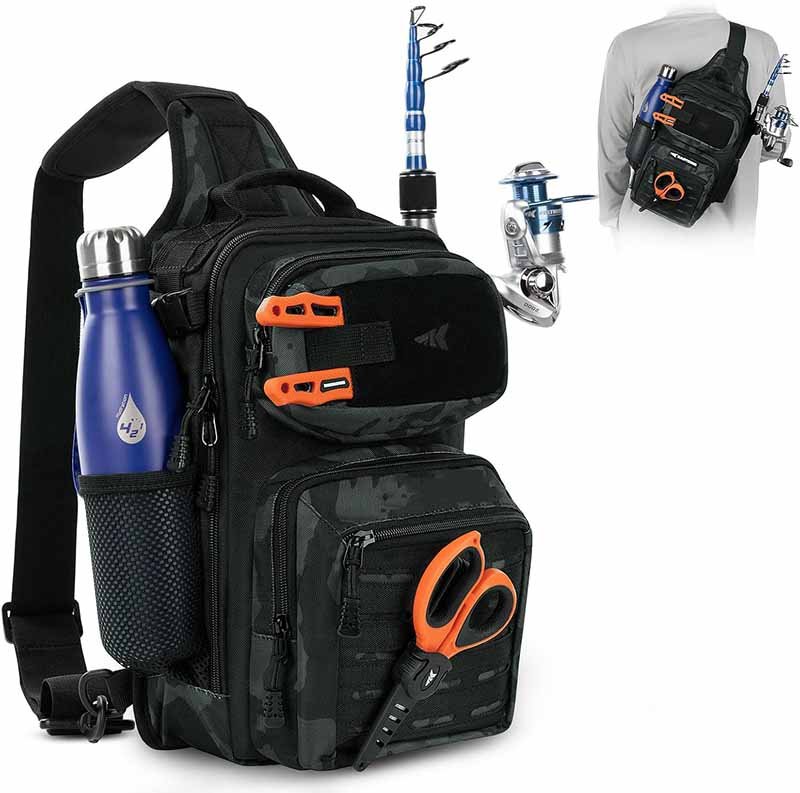
The best materials for fishing bags include high-denier nylon and polyester for durability, PVC and TPU laminates for waterproofing, ripstop fabrics for tear resistance, and corrosion-resistant hardware like coated zippers and stainless-steel rings. Nylon offers superior abrasion strength, polyester provides UV resistance, and TPU delivers lightweight waterproof performance. The ideal material combination depends on fishing style—kayak and saltwater anglers need full waterproofing, while bank anglers often prefer lightweight fabrics with reinforced stitching.
Choosing the right material is one of the most critical factors when buying a fishing bag on Amazon. Materials directly determine the bag’s durability, water protection, weight, UV resistance, tear resistance, and overall product lifespan. Many low-cost Amazon bags look similar in photos but perform very differently in real conditions due to material quality differences. Below is a complete guide of the best-performing fabrics and components, how they compare, and which fishing styles they serve best.
1. High-Denier Nylon (600D, 900D, 1000D)
Nylon remains the gold standard for fishing bags because it delivers exceptional abrasion resistance, strength, and durability under heavy loads.
Why Nylon Performs Well
- Highly abrasion-resistant
- Excellent tensile strength
- Absorbs impact and stretching loads
- Works well in both soft and semi-rigid bags
Common Grades on Amazon
| Nylon Grade | Durability Level | Best Use |
|---|---|---|
| 600D | Good | General freshwater fishing, lightweight tackle bags |
| 900D | Very Good | Heavy-duty tackle bags and backpacks |
| 1000D | Excellent | Rugged saltwater or offshore environments |
Ideal For
- Bank fishing bags
- Tackle backpacks
- Medium-weight tackle storage
- Hybrid bags combining flexibility + strength
Downsides
- Absorbs more water than polyester
- Slower to dry (unless PU-coated)
2. Polyester (600D, 840D, 1200D)
Polyester is extremely popular in Amazon listings because of its excellent UV resistance and stable color integrity.
Advantages of Polyester
- Superior UV resistance — does not degrade under sun exposure
- Maintains color vibrancy
- Absorbs less water than nylon
- Often lighter in weight
Common Uses
- Saltwater fishing bags with anti-UV requirements
- Sling bags and quick-access shoulder bags
- Lightweight travel-friendly fishing packs
Pros vs Cons
| Pros | Cons |
|---|---|
| UV-resistant, inexpensive, quick-drying | Slightly weaker abrasion resistance than nylon |
Best For:
Fishing in sunny climates, travel, kayak decks, outdoor shorelines, multi-day trips.
3. PVC (Polyvinyl Chloride) Laminated Fabric
PVC is the most common material used for fully waterproof fishing bags and dry bags.
Why PVC Is Popular
- 100% waterproof when seams are welded
- Thick, durable, and protective
- Stiff enough to stand upright
- Resistant to mud, rain, and saltwater splash
Typical thickness: 0.5 mm – 0.7 mm More premium bags use reinforced double-layer PVC panels at the base.
Ideal For
- Kayak fishing bags
- Dry backpacks
- Boat deck bags
Weaknesses
- Heavier than TPU
- Less flexible in cold temperatures
PVC is perfect when the absolute priority is waterproof performance.
4. TPU (Thermoplastic Polyurethane) Laminated Fabric
TPU is increasingly replacing PVC in high-end fishing bags due to its improved flexibility, environmental benefits, and cold-weather resilience.
TPU’s Key Advantages
- Lighter than PVC
- More flexible (crucial for roll-top closures)
- Durable in extreme temperatures
- Better environmental profile
- Long-term resistance to cracking
Typical Thickness
0.4 mm – 0.6 mm, depending on structure needs.
Best For
- Premium waterproof backpacks
- Kayak or rafting fishing trips
- Winter or cold-weather fishing
- High-end Amazon listings
Downsides
- Higher cost
- Requires precision welding during manufacturing
Szoneier often uses TPU for OEM orders from premium brands due to its modern performance characteristics.
5. Ripstop Fabric (Nylon or Polyester Base)
Ripstop fabric integrates thicker reinforcement threads in a grid pattern, preventing small tears from spreading.
Why Ripstop Matters
Fishing environments expose bags to hooks, branches, rocks, and sharp tackle. A ripstop grid (typically 3–5 mm spacing) means:
- Punctures stay small
- Fabric maintains structural integrity
- Tear propagation risk decreases dramatically
Best For
- Bank/river fishing
- Sling bags and backpacks
- Lightweight but durable tackle bags
Example Performance
Ripstop 420D often outperforms standard 900D polyester in tear resistance despite being lighter.
6. Reinforced Stitching, Bar-Tacking & Construction Quality
Even the strongest fabric fails if the construction is weak — especially where anglers load heavy tackle boxes.
Key Construction Features to Look For
- Bar-tack reinforcement at high-stress points
- Double-stitched or box-stitched seams
- Reinforced base panels for weight bearing
- Padded and laminated stress zones
Performance Benefits
- Prevents strap tearing
- Ensures load distribution
- Enhances bag lifespan
- Improves resistance against bursting seams
High-quality stitching is one of the biggest differences between $20 budget bags and $80+ premium Amazon sellers.
7. Hardware: Zippers, Buckles & Corrosion Resistance
Anglers often overlook hardware — but it is a major failure point.
Best Hardware for Fishing Bags
- YKK or SBS zippers
- Coated zippers for water resistance
- Stainless-steel or anodized metal rings
- Marine-grade plastic buckles
Saltwater vs. Freshwater
Saltwater destroys cheap metal quickly. Saltwater anglers must choose corrosion-resistant hardware — otherwise zippers seize within months.
8. Waterproof Coatings and Treatments
Many bags use coated fabrics; the quality of the coating impacts performance.
Common coatings include:
- PU (Polyurethane) — flexible, affordable, water-repellent
- PVC coating — waterproof and thick, but heavier
- DWR (Durable Water Repellent) — great for light rain
Key Buyer Tip
A bag may be made from “waterproof fabric,” but stitched seams are not waterproof unless taped or welded.
Material Comparison Table
| Material | Waterproof Level | Durability | Weight | UV Resistance | Best For |
|---|---|---|---|---|---|
| Nylon (600D–1000D) | Medium | ★★★★★ | Medium | ★★★☆☆ | Tackle bags, backpacks |
| Polyester (600D–1200D) | Medium | ★★★★☆ | Light | ★★★★★ | Sling bags, travel fishing |
| PVC Laminate | Very High | ★★★★★ | Heavy | ★★★☆☆ | Dry bags, kayak & boat |
| TPU Laminate | Very High | ★★★★★ | Light | ★★★★☆ | Premium waterproof bags |
| Ripstop Fabric | Medium | ★★★★☆ | Light | ★★★☆☆ | Lightweight fishing bags |
| PU Coatings | Medium | ★★★☆☆ | Light | ★★★☆☆ | General water resistance |
How Do You Evaluate Capacity, Compartments, and Storage Layout?
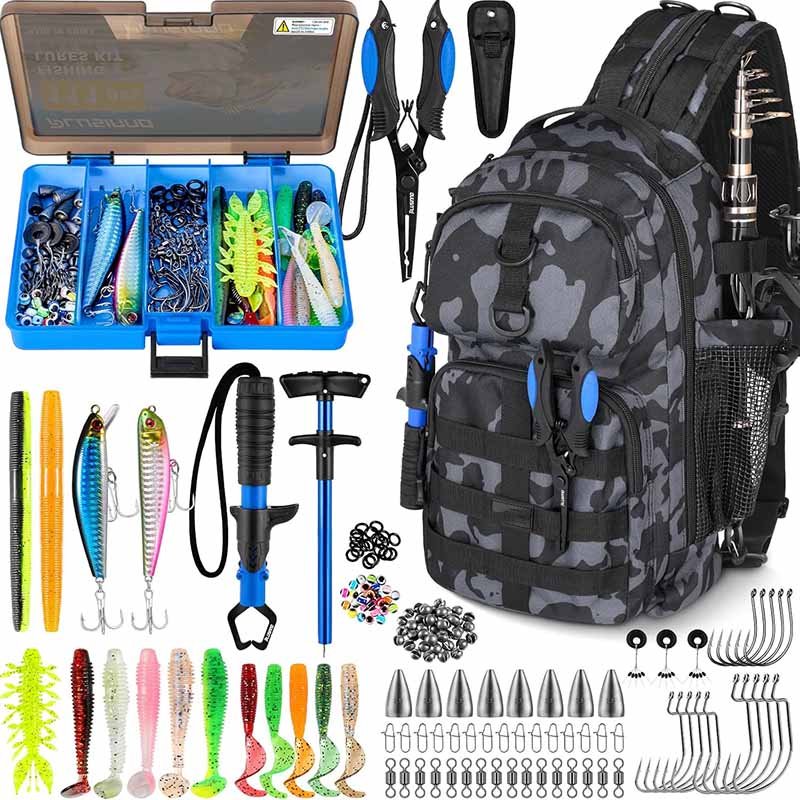
To evaluate a fishing bag’s capacity and storage layout, check its compatibility with standard tackle trays (3600/3700 sizes), the number and type of internal and external pockets, the accessibility of compartments, rod-holder integration, and whether the bag supports modular or expandable storage. Capacity should match your fishing style—larger bags for boat and multi-day trips, smaller bags for bank or kayak fishing. A good layout minimizes search time and keeps essential gear within quick reach.
Evaluating capacity and organization is crucial because fishing bags vary dramatically in how they store tackle, tools, electronics, bait, drinks, and emergency gear. Two bags with the same liter capacity can perform completely differently depending on the storage architecture, tray orientation, and access design. Amazon reviews reveal that poor storage layout is one of the top reasons anglers return bags—so understanding this topic prevents wasted money and frustration.
1. Tackle Tray Compatibility
Most modern fishing bags are built around 3600 or 3700-size tackle trays, the industry-standard modular boxes for lures, hooks, jigs, and rigs.
Standard Tray Sizes
| Tray Type | Dimensions (inches) | Common Use |
|---|---|---|
| 3600 | 10.8 × 7.2 × 1.5 | Compact freshwater setups |
| 3700 | 14 × 9 × 2 | Larger lure collections & saltwater gear |
Why Tray Compatibility Matters
A bag that holds three 3700 trays performs vastly differently from a bag that holds six 3600 trays. Trays determine:
- how many lures you can carry
- how organized your tackle stays
- how quickly you can swap gear
Amazon Buyer Tip
Check whether trays slide in horizontally (front-loading) or vertically (top-loading) — front-loading designs are much faster and prevent you from fully opening the bag during use.
2. Internal vs External Pocket Configuration
A well-designed fishing bag balances internal protection with external accessibility. Poor designs often overload the bag with too many pockets that conflict with each other when filled.
Internal Compartments (Protection + Organization)
Internal compartments are essential for:
- protecting delicate or expensive gear (reels, electronics, cameras)
- storing soft plastics
- keeping tackle dry
- separating wet/dry items
Key features to look for:
- Padded dividers
- Velcro-adjustable partitions
- Top-loading or clamshell opening
- Dedicated reel or spool pockets
Internal organization works best for anglers seeking structure and protection.
External Compartments (Speed + Convenience)
External pockets offer instant access during active fishing.
Ideal external pockets include:
- pliers/tool sleeves
- quick-grab lure pockets
- mesh pockets for gloves or towels
- side pockets for water bottles or leader spools
Gold Standard Layout
A high-performing Amazon fishing bag generally provides:
- 2–3 front pockets
- 2 side pockets
- 1 large top pocket
- 1 specialized quick-access pocket
This layout minimizes search time and supports rapid lure changes.
3. Rod Holders & On-the-Go Tool Integration
Tool management drastically affects convenience, especially when anglers switch lures frequently or target multiple species.
Essential features include:
- Rod-holding straps (kayak & bank fishing)
- Elastic loops + Velcro retention
- Daisy chains / MOLLE systems for attaching extra gear
- Dedicated plier holsters
- Carabiner rings for nets or hand towels
A fishing bag becomes significantly more functional when tools and rods remain accessible without removing the bag.
4. Expandable Compartments & Modular Storage
Modern fishing demands flexibility. Anglers may fish ultralight one day and load up for a full offshore trip the next. Bags with modular or expandable storage adapt effortlessly.
Modular Design Features
- MOLLE-compatible webbing
- Detachable pouches (for tools, jigs, terminal tackle)
- Removable tackle tray inserts
- Expandable gusseted compartments
- Stackable sections or pull-out drawers
Benefits
- Customize capacity for each trip
- Reduce weight for light fishing days
- Expand for saltwater/lure-heavy scenarios
Modularity is a major selling point on Amazon because it appeals to multiple fishing styles in one product.
5. Capacity in Liters vs Real-World Storage Performance
Bag volume (liters) is often misleading. A 30L bag with poor layout may hold less than a well-engineered 20L bag.
What Really Determines Storage Effectiveness:
- Tray compatibility
- Shape and opening style
- Compartment segmentation
- Internal rigidity or padding
- Vertical vs. horizontal space usage
- Whether pockets collapse inward
Amazon Buyer Reality
Most buyers overestimate how much they need. The best approach: choose capacity based on fishing style.
6. Matching Capacity to Fishing Style
Different fishing environments demand different storage architectures.
| Fishing Style | Recommended Capacity & Layout | Why |
|---|---|---|
| Bank Fishing | Backpack, 20–30L, external tool pockets | Mobility + access |
| Kayak Fishing | Compact 20–25L, waterproof, front-access trays | Limited deck space |
| Boat Fishing | 30–50L, rigid structure, multiple trays | High tackle volume |
| Wading/Fly Fishing | Sling bag or chest pack, 10–15L | Weight reduction |
| Travel Fishing | Hybrid backpack, 30–40L | Multi-gear transport |
Choosing the wrong size often leads to either unnecessary bulk or insufficient storage during a trip.
7. Opening Style & Accessibility
A fishing bag’s opening method dramatically impacts speed and ease of use.
Best-Performing Opening Styles
- Front-loading drawers (fastest tray access)
- Wide-mouth top openings (boat & kayak bags)
- Clamshell openings (for organization-heavy bags)
- Roll-top openings (for waterproof dry bags)
Poor Opening Styles
- Narrow zippers
- Deep vertical tunnels
- Pockets that fold onto each other
These slow down lure changes and lead to gear frustration.
8. Stability, Weight Distribution & Structural Support
A well-designed fishing bag distributes weight evenly so the angler remains comfortable.
Key Structural Elements
- Rigid bottoms (EVA molded or rubberized)
- Reinforced corners
- Panel-based walls
- Internal stiffeners
Structured bags maintain shape even when empty, preventing trays from collapsing into each other and improving long-term durability.
Are Fishing Bags on Amazon Really Waterproof?
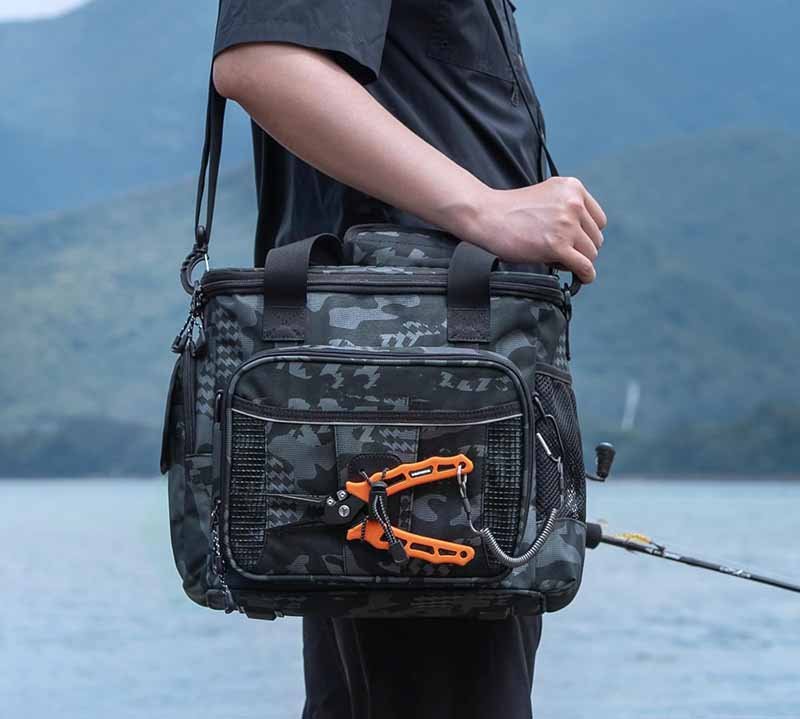
Not all fishing bags on Amazon are truly waterproof — many are merely water-resistant. Real waterproof bags use coated materials (like PVC or TPU), welded or fully seam-sealed seams (not simply stitched), and reliable closures (roll-top, waterproof zippers). Waterproof bags prevent water ingress even under rain, spray, or brief immersion. Always check fabric coating, seam construction, closure type, and IP/rain-proof rating before trusting a bag for kayak or saltwater fishing.
What Makes a Fishing Bag Truly Waterproof?
1. Waterproof Materials (PVC, TPU, Laminated Fabrics)
- PVC and TPU laminates: Materials like PVC tarpaulin or TPU-laminated nylon/polyester provide a strong water-impermeable barrier. PVC is widely used because it’s durable and fully blocks water ingress. TPU is gaining popularity in higher-end bags: lighter, more flexible, and resistant to cold temperatures.
- Laminated nylon or coated fabric: When a woven fabric (nylon, polyester) is combined with waterproof coating or laminate, it gains water resistance — but quality and treatment matter. Cheaper coatings may repel light rain, but won’t hold up under immersion or heavy spray.
In short: the fabric alone isn’t enough — but waterproof laminated or coated materials are a necessary foundation.
2. Seam Construction: Welded / Heat-Sealed / Taped vs Stitched
Seams are often the weak point. Even the most waterproof fabric fails if seams are simply stitched — each needle hole becomes a potential leak path.
- Welded (RF/high-frequency/heat-sealed) seams fuse fabric layers together without perforation, creating a monolithic waterproof barrier. This is the gold standard for true waterproof bags.
- Taped or fully-taped seams (stitched then sealed with waterproof tape) provide decent rain and spray protection — better than plain stitching but less reliable for immersion or heavy splash.
- Stitched-only seams (without tape/seal) should be avoided if you expect real waterproof performance — they almost always allow water ingress under pressure or prolonged exposure.
Many “waterproof” Amazon bags fall into the stitched or stitched-with-taped category — suitable for light rain or occasional splashes, but not for kayak, boat, or heavy marine use.
3. Closure System: Roll-Top, Waterproof Zippers, Sealed Flaps
Even with good material and seams, a poor closure can compromise waterproofing. Key closure types and their pros/cons:
| Closure Type | Effectiveness | Best Use |
|---|---|---|
| Roll-top closure | Very high — when rolled 3–4 times, creates watertight seal and expels air; often buoyant if sealed correctly | Kayaking, rafting, heavy rain, saltwater exposure (szoneier.com) |
| Waterproof / sealed zippers | High — especially when combined with laminated material & sealed seams; good for easier access | Waterproof backpacks or ventilated gear, frequent opening/closing needs (vancharlioutdoor.com) |
| Standard zippers or stitched openings + flaps | Low — likely to leak under spray or immersion | Everyday bags, light rain only |
For truly waterproof fishing bags — especially for kayak or boat fishing — a roll-top or waterproof zipper with sealed seams is strongly recommended over standard zippers or flap-only closures.
Real-World Scenarios — When Waterproof vs Water-Resistant Matters
| Use Case | What Happens with Water-Resistant Bag | Why Waterproof Bag Is Recommended |
|---|---|---|
| Kayak fishing / splash & spray | Water may seep through seams or zipper when paddle splashes or small waves hit bag | Waterproof bag remains dry; contents—including spare clothes, electronics—stay protected |
| Boat fishing / saltwater spray | Constant salt spray + occasional water pool may drip through, damaging metal parts or tools | Welded seams + PVC/TPU resist corrosion and block water ingress |
| Rainy trips / hiking between spots | Light rain may bead off, but steady rain or heavy showers may soak through | Waterproof closure + sealed seams keep gear dry |
| Immersion / near-submersion (e.g. capsizing) | Water-resistant bag will flood instantly | Waterproof dry bag may remain sealed and even float if properly sealed (publiclands.com) |
These scenarios reflect real feedback from anglers — many Amazon “waterproof” bags start leaking after the first heavy rain or saltwater exposure.
How to Verify Waterproof Claims When Shopping on Amazon
When evaluating a “waterproof” fishing bag:
- Check the product description — Look for terms like “welded seams,” “RF welding,” “heat-sealed,” “waterproof tarpaulin,” “PVC/TPU laminated.” Generic “waterproof fabric” is often a marketing term with no real waterproof build.
- Inspect closure type — Prefer roll-top, waterproof zippers, or sealed flaps over standard zippers.
- Look for testing standards / IP rating (e.g. IPX6, IPX7) — Though rare on Amazon, if present, it’s a good sign. IPX7 often means safe for immersion up to 1 m for ~30 min. (szoneier.com)
- Check reviews carefully — Look for feedback from kayak or boat users; complaints about leaking or water ingress are red flags.
- Consider materials and weight — Bags using PVC/TPU tarpaulin will often feel heavier or more rigid. That is normal — and often necessary for real waterproof performance.
Why Many “Waterproof” Amazon Bags Fail in Real Use
- Fabric-only claims: Many sellers emphasize “waterproof coating” but ignore seams and closure design. Waterproof fabric alone doesn’t stop leaks.
- Cheap stitched seams: Stitch holes allow water ingress; manufacturers rely on stitching to reduce cost. Over time, stitching weaves open slightly under tension, making leaks worse.
- Non-waterproof zippers: Standard zippers are not waterproof and will leak under spray or immersion.
- Lack of quality control: Low-cost mass-market bags often skip proper welding/taping or use subpar materials to cut cost — compromising performance.
- Misleading photos and reviews: Some listings reuse stock images or show the bag in dry conditions — real-world performance may differ significantly when exposed to water.
When a Waterproof Fishing Bag Is Essential — and When It’s Overkill
You should strongly consider a waterproof bag if:
- You kayak, canoe, or boat regularly (spray & splash inevitable)
- You fish in saltwater (corrosion + moisture risk)
- You often carry electronics, clothes, or important gear that cannot get wet
- You’re fishing in rainy or variable weather
Waterproofing is less critical if:
- You fish on dry land (pier, bank), seldom crossing water
- You only fish in light rain or drizzle
- You prioritize light weight, portability, and quick access over water protection
In such cases, a well-built water-resistant bag (nylon or polyester, taped seams, weather-resistant zippers) may suffice — but always understand the trade-off.
How Do You Choose the Right Fishing Bag for Your Style of Fishing?
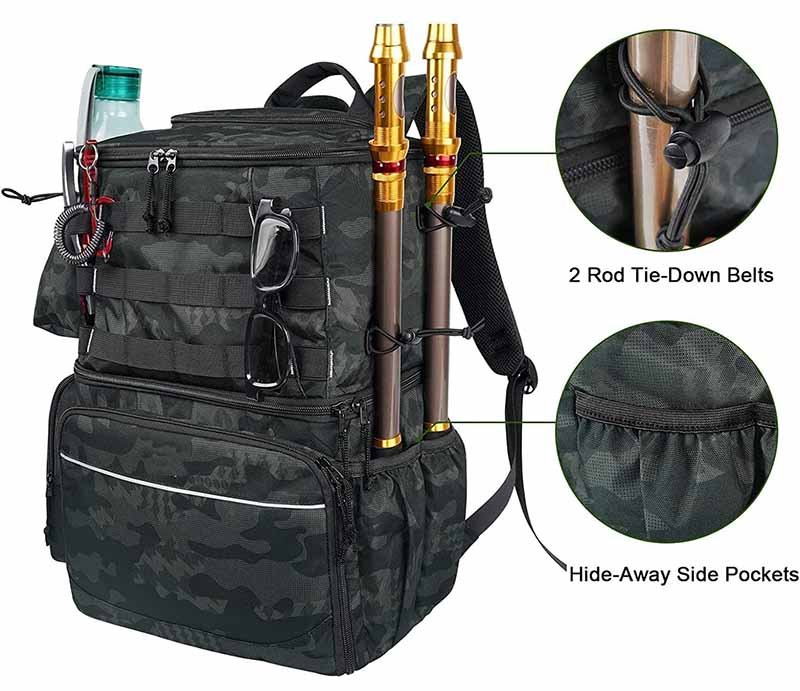
To choose the right fishing bag for your style of fishing, first match the bag type to how and where you fish—bank, boat, kayak, or travel. Then evaluate capacity, waterproof level, comfort (backpack vs shoulder), and material durability. Light bank anglers can use compact sling or soft tackle bags, while kayak and boat anglers need waterproof backpacks or hard tackle boxes. Always balance storage needs, mobility, and protection instead of chasing the “biggest” or “cheapest” bag.
1. Start With Your Primary Fishing Style
Most anglers make the mistake of starting from the bag (“this backpack looks cool”) instead of their fishing reality. The correct way is the opposite:
- Where do you fish most often?
- How far do you walk?
- How much gear do you really use on a normal day?
- How often do you face rain, waves, or saltwater?
Once you answer those questions honestly, 70% of your decision is already made. The bag type simply becomes a tool to support your habits, not something you must adapt to.
General rule of thumb:
- Bank / shore / pond anglers → light, mobile bags (sling, small backpack, soft tackle bag).
- Kayak / canoe anglers → compact waterproof backpack or dry-bag-style pack.
- Boat / offshore anglers → rigid or semi-rigid tackle bags/boxes with strong bases.
- Traveling anglers → hybrid bags that mix fishing storage with travel features (luggage sleeves, extra compartments).
2. Match Bag Type to Fishing Environment
Bank & Shore Fishing
For ponds, canals, rivers, or shore spots where you walk a bit but not extremely far:
Best choices:
- Sling bags
- Compact fishing backpacks
- Medium soft tackle bags with shoulder strap
These give you:
- Enough space for 2–4 tackle trays, terminal tackle, a drink, and tools.
- Good mobility for switching spots.
- Easy access to lures without putting the bag down every time.
Avoid oversized boat-style tackle boxes if you’re frequently hopping between shore spots—they’ll just slow you down and feel heavy and awkward.
Kayak & Canoe Fishing
Kayak fishing is a different world: space is limited and water exposure is high.
Best choices:
- Waterproof fishing backpacks
- Dry-bag-style fishing packs
- Compact hard or semi-rigid tackle crates that fit in tank wells
Key considerations:
- The bag must fit securely in your kayak (behind the seat, front well, or hatch).
- Waterproof or highly water-resistant construction is crucial; you sit low and will get splashed.
- Straps, buckles, and attachment points should be compatible with kayak bungees or tie-downs.
If you fish from a kayak with a standard school backpack or open soft bag, you’re one wave away from soaked gear.
Boat & Offshore Fishing
On a boat, your bag deals with:
- Rough decks
- Being kicked, stepped on, or stacked
- Saltwater spray
- Heavy, sharp tackle
- Best choices:
- Hard or semi-rigid tackle bags/boxes
- Structured soft bags with reinforced base and frame
- Waterproof tackle bags if you also carry clothes, electronics, or camera gear
Here, you’re less worried about carrying the bag long distances and more about:
- Protection of lures and tackle
- Stability on deck
- Easy access between casts or while moving spots
Harder, structured bags win in this environment because they hold shape, resist crushing, and protect your investment in tackle.
Travel & Multi-Purpose Fishing
If your fishing is often combined with business trips, family vacations, or flights:
Best choices:
- Hybrid fishing backpacks that can double as normal travel bags
- Soft tackle bag that fits into a suitcase
- Modular systems (separate pouches or removable tackle trays)
Look for:
- Carry-on friendly dimensions
- Pockets for documents, laptop, or clothes
- Removable tackle trays so you can “convert” from fishing mode to travel mode quickly
For travelers, the perfect fishing bag is often not the biggest or most rugged – it’s the one that blends into normal life while still organizing your tackle.
3. Align Capacity With Realistic Gear Use
Many anglers buy a bag “big enough for everything” and then regret it because it’s heavy and inefficient. Instead, choose capacity based on your typical session, not your entire tackle collection.
Think in terms of:
- Number of trays or boxes you carry (e.g., 2 small + 1 medium)
- Number of rods you bring (1, 2, or more?)
- Extra gear: rain jacket, snacks, camera, spare spool, tools
Rough capacity guidelines:
- Light / minimalist fishing → sling bag or compact backpack, 5–15L
- Standard day fishing → medium backpack or tackle bag, 15–25L
- Heavy or mixed-style fishing / travel → large backpack or hybrid system, 25–40L
If you regularly return from trips with gear you never touched, you’re likely overshooting capacity. A slightly smaller, well-organized bag will feel better, fish better, and be easier to handle.
4. Choose Carry Style for Comfort and Mobility
Your body and typical walking distance matter as much as the gear itself.
Backpacks
- Best for long walks, hikes, or when carrying heavier loads.
- Distribute weight across both shoulders and back.
- Good for bank, wade, or travel fishing.
Sling bags / crossbody bags
- Best for short sessions or lightweight setups.
- Swing to the front to access tackle quickly.
- Great for urban, canal, or quick after-work fishing.
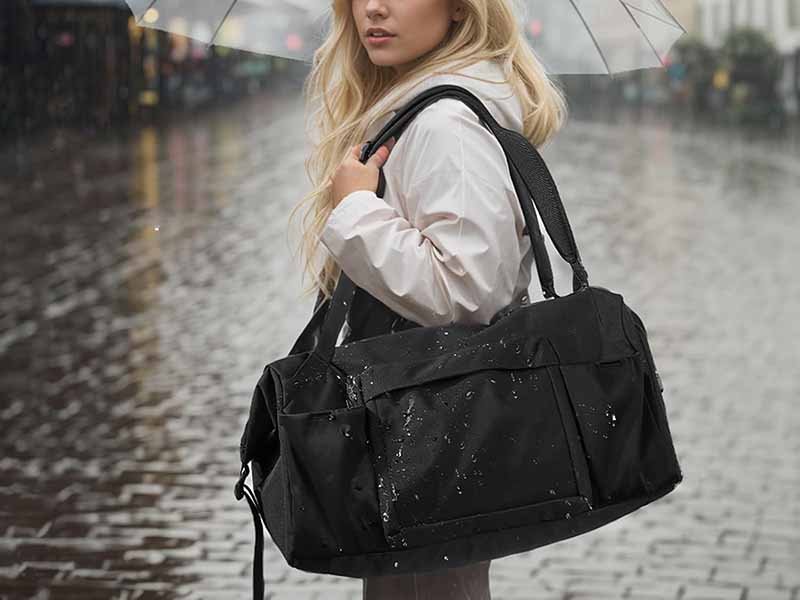
Shoulder / duffel-style tackle bags
- Best when you’re mostly stationary (boat, pier) or moving short distances.
- Easy to set down next to you and use as a “tackle station.”
If you often return home with sore shoulders or a tired back, your current bag style does not match your typical walking distance and weight load.
5. Consider Weather, Water, and Seasonality
Ask yourself:
- Do you often fish in the rain?
- Are you around waves or frequent splashes?
- Do you fish in cold conditions where wet gear becomes dangerous?
If yes, prioritize:
- Waterproof or at least highly water-resistant materials.
- Sealed or welded seams, not just stitched.
- Roll-top or protected zippers.
If no (mostly dry, fair-weather pond or lake fishing), you can:
- Prioritize comfort, access, and organization over full waterproofing.
- Use a standard backpack with separate dry pouches for sensitive gear.
Remember, you can also combine: a non-waterproof main bag plus a small internal dry bag for phone, keys, and important items.
6. Match Features to Your Personal Fishing Habits
Once style, environment, and capacity are clear, fine-tune features:
- Rod holders / straps if you walk with 2–3 rods.
- MOLLE webbing / attachment points for extra pouches or tools.
- Dedicated plier, knife, and tool slots for frequent lure changes.
- Cooler compartment if you keep drinks, snacks, or bait.
- Light-colored interior so you can see small items easily in low light.
Think about your “annoying moments” on past trips:
- Do you always lose track of pliers? → You need an external tool holder.
- Do you dig through a dark bag at dusk? → You need better interior color/organization.
- Is your drink always rolling around with the tackle? → You need a side bottle pocket or separate cooler section.
The best fishing bag feels like it was designed around your habits. If a product’s layout fights the way you fish, it doesn’t matter how “premium” it is.
Which Brands and Reviews Should You Pay Attention to on Amazon?
On Amazon, anglers should pay attention to fishing bag brands with consistent ratings, transparent product specifications, quality materials, and detailed customer reviews. Reputable brands such as Piscifun, KastKing, Plano, and Ugly Stik typically offer durable, well-engineered designs. Shoppers should analyze recent reviews, photo evidence, and recurring complaints to avoid low-quality listings. Look for brands with clear sizing charts, real-world testing photos, strong customer support, and updated product versions.
How to Judge Brands & Reviews on Amazon
When buying fishing bags on Amazon, choosing the right brand can be overwhelming. Thousands of listings—from national brands to private labels—compete for visibility, and product quality varies drastically. The smartest anglers focus less on brand “popularity” and more on consistency, engineering transparency, and review patterns that reflect real-world performance.
Below is a deep, structured guide to help buyers identify trustworthy brands and filter out low-quality ones.
1. Pay Attention to Established, Reputable Fishing Gear Brands
These brands have years of field testing, customer feedback loops, and product engineering behind them. Their fishing bags tend to be consistent in durability, material quality, and waterproof performance.
Piscifun
Known for tactical-style tackle backpacks and sling bags, Piscifun offers high-denier fabrics, strong zippers, and fishing-focused features such as plier holders, tool loops, and multiple tray-compatible compartments.
KastKing
Frequently praised for material quality and thoughtful compartments. KastKing bags balance affordability with engineering, making them reliable for both weekend and frequent anglers.
Plano
A leader in tackle storage. Plano bags often include premium tackle trays, rigid structures, and excellent organizational layouts.
Ugly Stik
Popular for ruggedness and durability. Their fishing bags typically use heavy-duty fabrics designed for hard use.
Spiderwire
Focused on anglers who want lightweight, mobile gear with modern designs and flexible compartments.
Flambeau
Specializes in tackle storage with anti-rust technology built into some trays. Great for saltwater anglers or those who store gear for long periods.
Custom/OEM Brands (often same factories as major brands)
Many “unknown” brands on Amazon actually source from the same factories producing for premium companies—especially for fishing backpacks, dry bags, and waterproof gear. These listings often offer exceptional value if you analyze specs carefully.
Why these reputable brands matter:
- You get reliable stitching, materials, and zippers
- Waterproof claims tend to be more accurate
- Better warranty and after-sales service
- More realistic product descriptions
- Consistent updates and improved versions
But brand alone doesn’t guarantee quality. This is where review analysis becomes essential.
2. How to Read Amazon Reviews Like a Pro Angler
Not all reviews are equal. Some are generic, outdated, or irrelevant to real fishing scenarios. Proper review analysis reveals the true durability, waterproofing, and usability of a fishing bag.
Here’s how to analyze reviews efficiently:
Prioritize “Recent Reviews” (Last 3–6 Months)
Amazon listings change suppliers or production runs over time. A bag with great reviews two years ago may be poor quality today.
Look for:
- Quality consistency over time
- Whether recent reviews mention improvements
- Whether materials or zippers have changed
Avoid:
- Listings with old reviews and minimal recent feedback
- Products with sudden quality drops after an update
Look for Photo and Video Reviews
These provide the closest thing to hands-on experience.
Pay attention to:
- Stitching quality
- Real fabric thickness
- Whether pockets, straps, and rod holders look as advertised
- Water test results (many anglers test waterproof claims)
- Tray compatibility (3600/3700 sizes)
Photo and video evidence reveals what manufacturers often hide in polished product images.
Identify Recurring Complaints (Patterns Matter)
A single negative review is normal. But patterns reveal product weaknesses.
Watch out for repeated mentions of:
- Broken zippers
- Tearing straps
- Thin fabric or weak seams
- Water leaking inside
- Misleading size (“smaller than advertised”)
- Poor structural stability
- Flimsy internal dividers
If more than 3–5 reviewers mention the same issue, it’s likely a real problem.
Evaluate Positive Reviews with Specific Details
Generic praise (“great bag!”) is low value. Detailed reviews indicate authentic user experience.
Look for:
- Specific fishing style used (kayak, boat, bank, saltwater)
- How much gear they fit
- Comfort during long walks
- Waterproof results
- Material performance over time
A high-quality bag will attract detailed praise from anglers who use it heavily.
3. Red Flags That Signal a Low-Quality or Untrustworthy Listing
Even if a product “looks good,” certain warning signs should make buyers cautious.
No real product photos—only CGI or ultra-polished images
Indicates low manufacturing confidence or misleading marketing.
Suspiciously low price compared to similar specs
Especially for waterproof bags; strong waterproof materials (PVC/TPU, welded seams) cost money.
Inconsistent sizing charts or unclear tray compatibility
Often signals poor engineering or lack of OEM experience.
Identical bag photos across multiple “different” brands
Common with mass-produced, low-QC factory items.
Sudden influx of 5-star reviews within a short time window
Suggests incentivized or artificial review boosting.
Customer photos showing defects within weeks
Means the bag won’t last long-term.
Avoiding these red flags prevents wasted money and disappointment.
4. Why Some Unknown Amazon Brands Are Still Excellent Choices
Not being famous doesn’t equal bad quality.
In fact, many top-performing fishing bags on Amazon come from OEM/ODM factories that also manufacture for well-known brands, especially in China, Vietnam, and Thailand.
These lesser-known brands often offer:
- Excellent value for the price
- Premium materials (600D/900D nylon, TPU laminated fabric, waterproof zippers)
- Updated designs based on recent consumer behavior
- Lighter-weight or more innovative layouts than traditional brands
Sometimes they deliver the same engineering quality as top-tier brands, at 30–50% lower price—because you’re not paying for marketing or retail markups.
For manufacturers like Szoneier, this is where you can dominate. Well-designed, high-QC private-label fishing bags can outperform brand-name products on Amazon if paired with accurate product descriptions and genuine durability.
5. Review Types That Are Most Useful to Anglers
Anglers should prioritize the following review categories:
Kayak fishing reviews
These highlight waterproofing and compact usability.
Saltwater fishing reviews
These reveal zipper corrosion, UV resistance, and seam durability.
Long-term use reviews (3–12 months)
These are gold. They reveal stitching strength, strap comfort over time, and real material lifespan.
Load-testing reviews
When buyers fill the bag with trays, tools, and drinks, you see how the bag performs under realistic weight.
Negative reviews that include solutions
Some anglers offer hacks or modifications — useful when choosing between two similar bags.
Conclusion
Choosing the right fishing bag on Amazon ultimately comes down to understanding your fishing style, storage habits, environment, and performance expectations. Today’s anglers demand more than just a simple gear-carrying sack — they expect durability, waterproof protection, ergonomic comfort, intelligent organization, and long-term reliability. The best fishing bags are those engineered with purpose: bags that support your movements, protect your gear in unpredictable weather, and keep everything organized so you can focus entirely on the water.
With 18+ years of professional bag manufacturing experience, Szoneier builds fishing bags not as commodity items, but as engineered tools tailored to meet the demands of modern anglers. Every development project begins with real-use scenarios, ergonomic studies, and material comparisons — ensuring that your custom or private-label fishing bags don’t just sell well, but also perform exceptionally in the hands of your customers.
Whether you want to launch a new Amazon brand, expand a retail fishing line, or upgrade your current OEM product lineup, Szoneier helps brands build fishing bags that anglers love, trust, and recommend — the kind that earn long-term 5-star reviews and dominate their category on Amazon.
Ready to Build Your Custom Fishing Bag Line?
Whether you’re looking to create a premium waterproof kayak bag, a tactical-style tackle backpack, a modular boat deck system, or a full collection of fishing storage solutions — Szoneier is your manufacturing partner.
Contact Szoneier today to start developing your fishing bag collection. Let’s turn your product idea into a high-performance bag that stands out on Amazon and in the real world.