 Skip to content
Bag Manufacturer for Amazon New Sellers — Launch Fast, Control Risk, Scale with Confidence
For Amazon new sellers, launching a bag product is not just about finding a factory—it is about controlling risk, cash flow, quality consistency, and FBA compliance from day one. Many first-time sellers fail not because of poor marketing, but because of manufacturing mistakes: high MOQs, unstable quality, missed timelines, or products that do not survive real customer use.
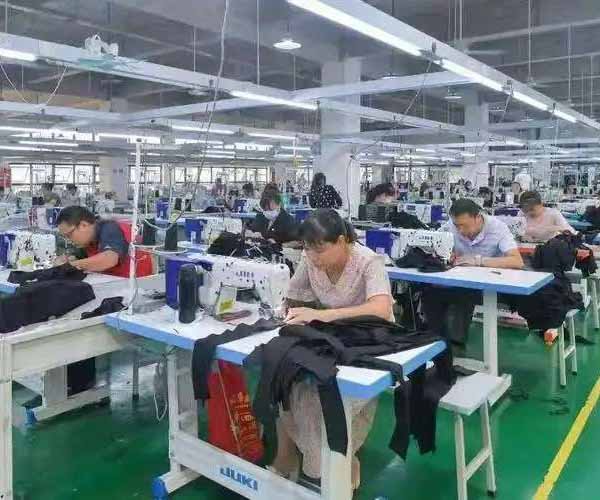
Szoneier is an OEM/ODM bag manufacturer based in Guangdong, China, with over 18 years of experience producing custom bags for global brands, private label sellers, and Amazon FBA businesses. Each year, we develop 300+ new bag samples, a significant portion of which are designed specifically for Amazon sellers launching new SKUs.
Unlike factories that only focus on bulk production, Szoneier supports low-MOQ pilot runs starting from 200 pcs, fast sampling (5–7 working days), and Amazon-ready production workflows. We help new sellers validate products, reduce early-stage risks, and build bag SKUs that are designed not just to launch—but to scale.
Why Amazon new sellers choose Szoneier
- Low MOQ from 200 pcs per style
- Fast sampling: 5–7 working days
- Experience with Amazon FBA packaging & labeling
- Multi-material bag expertise (nylon, polyester, canvas, PU, neoprene)
- Stable quality for repeat orders and scaling
Who This Bag Manufacturing Solution Is Designed For
Outdoor gear bag manufacturing solutions serve brands that require durability, organization, and system-level design rather than single-product production. Different buyer groups face distinct functional and commercial challenges.
Typical situation
- First or second Amazon product
- Limited budget and inventory tolerance
Main concerns
- High MOQ risk
- Cash flow pressure
- Unclear product differentiation
Szoneier support Low MOQ pilot runs and design optimization help sellers test the market before scaling.
Typical products
- Storage bags
- Travel bags
- Cosmetic bags
- Tool or organizer bags
Key challenges
- Transitioning from simple products to sewn goods
- Quality inconsistency
Szoneier advantage Strong experience translating simple product concepts into manufacturable bag designs.
Common issues
- Packaging non-compliance
- Labeling errors
- Product damage during shipping
Szoneier experience We regularly support sellers with FBA-ready packaging, labeling, and packing methods to reduce inbound issues.
What matters
- Repeatability
- Stable quality
- Predictable lead times
Szoneier discipline Approved samples and specifications are archived to ensure consistent reorders as sales grow.
Why Bag Manufacturing Is Especially Risky for Amazon New Sellers
For Amazon new sellers, bag manufacturing carries higher risk due to inventory exposure, visible quality defects, FBA compliance requirements, and the direct impact of early reviews on listing survival.
High Inventory Risk from Unproven Demand
Why this risk is unique to Amazon beginners
Most new sellers:
- Have limited capital
- Rely on one or two SKUs
- Cannot absorb slow-moving inventory
However, many factories still require 1,000–3,000 pcs MOQ, forcing sellers to gamble before demand is proven.
What usually goes wrong
- Overstock ties up cash
- No budget left for PPC
- Forced price cuts hurt listing health
Szoneier’s real approach
- Standard low MOQ from 200 pcs per style
- Most Amazon beginner clients start with 200–500 pcs pilot runs
- Structure and materials are simplified specifically to keep pilot orders feasible
Szoneier insight: Over the past years, a large portion of Amazon seller projects we support start with pilot orders under 500 pcs, then scale only after listing validation
Visible Quality Defects Lead Directly to Negative Reviews
Why bags are especially dangerous on Amazon
Unlike electronics or supplements, bag defects are immediately visible:
- Crooked stitching
- Broken zippers
- Weak handles
- Collapsed shape
Even a small defect often leads to:
- 1-star reviews
- Photos uploaded by buyers
- Permanent listing damage
Common factory mistake QC focuses on appearance, not function.
Szoneier’s Amazon-focused QC
- Stress-point inspection (handles, strap anchors, zipper ends)
- Zipper open/close testing
- Stitch density checks at load zones
This QC logic is designed around review risk, not just factory standards.
Packaging & FBA Compliance Mistakes Cause Immediate Losses
Typical new seller problems
- Missing suffocation warnings
- Incorrect FNSKU placement
- Over-sized packaging increasing FBA fees
- Bags damaged during inbound shipping
Why this hurts new sellers more
- FBA inbound rejections delay launch
- Extra relabeling costs eat margins
- Early stockouts kill momentum
Szoneier experience Szoneier regularly prepares FBA-ready bags, supporting:
- Polybag warning text placement
- FNSKU labeling guidance
- Carton labeling and pallet considerations
We also advise on folding methods to prevent deformation during shipping.
Cash Flow Pressure Amplifies Every Manufacturing Mistake
Amazon beginner reality
- Cash is locked in inventory
- PPC requires upfront spend
- Returns are refunded immediately
A single mistake in manufacturing can:
- Freeze cash for months
- Prevent restocking
- Force sellers to abandon a SKU
Szoneier’s risk-control mindset
- Clear cost breakdown before production
- Early warnings about unnecessary upgrades
- Honest feedback on which features can wait until version 2
This helps sellers survive the first launch, not just place an order.
Long Lead Times Destroy Launch Timing
Why timing matters
Amazon algorithms favor:
- Consistent availability
- Early sales velocity
Delays in sampling or production often cause:
- Missed seasonal windows
- Listing stagnation
Szoneier data
- Standard bag samples: 5–7 working days
- Simple revisions: 2–3 working days
- Pilot production timelines are clearly defined before deposit
This speed allows sellers to build listings and prepare PPC while production is ongoing.
Poor Communication Increases Risk for First-Time Sellers
New seller challenge
Many beginners:
- Don’t know correct bag terminology
- Can’t provide full tech packs
- Only have competitor links or photos
Risk with inexperienced factories
- Misunderstood specs
- Wrong materials
- Costly rework
Szoneier advantage With 18+ years of OEM/ODM experience, we:
- Translate ideas into manufacturable specs
- Flag high-risk designs early
- Explain trade-offs clearly before production
This guidance is especially critical for Amazon beginners.
Scaling Problems If the First Order Isn’t Structured Correctly
Hidden long-term risk
Some factories quote low prices for first orders but:
- Change materials later
- Can’t maintain consistency
- Can’t scale smoothly
Szoneier discipline
- Approved samples archived
- BOMs locked from pilot stage
- Reorders follow the same QC logic
This ensures sellers can scale from 200 pcs to thousands without quality shock.

Key Factors When Choosing a Bag Manufacturer for Amazon New Sellers
Amazon new sellers must prioritize low MOQ flexibility, quality stability, FBA compatibility, and supplier responsiveness to reduce early-stage risk and protect reviews, cash flow, and account health.
Low MOQ That Truly Supports Market Testing
Why this matters for new sellers
Amazon beginners usually test with:
- Limited capital
- One primary SKU
- Conservative inventory plans
Factories requiring 1,000–3,000 pcs force sellers into risky overstock.
Szoneier reality
- Standard low MOQ from 200 pcs per style
- Pilot runs commonly 200–500 pcs, aligned with Amazon test launches
- Same production discipline applied to pilot and bulk orders
This allows sellers to validate demand before scaling.
Quality Control Focused on Review-Sensitive Defects
Amazon-specific risk
For bags, defects are obvious:
- Broken zippers
- Crooked stitching
- Weak handles
One defect = one negative review.
Szoneier QC focus
- Stress-point inspection (handles, strap anchors, zipper ends)
- Stitch density verification
- Functional opening/closing checks
Each year, Szoneier produces thousands of bag units for Amazon sellers, and QC is designed around reducing early negative feedback, not just passing final inspection.
Fast & Reliable Sampling for Listing Preparation
Why sampling speed matters
Amazon sellers need:
- Product photos
- Video content
- Listing assets
Delays here delay launch.
Szoneier data
- Standard bag samples: 5–7 working days
- Simple revisions: 2–3 working days
- Multiple sample photos provided to support listing creation
This speed helps sellers build listings while production is being prepared.
Amazon FBA Packaging & Labeling Experience
Common new seller mistakes
- Missing suffocation warnings
- Incorrect carton labels
- Over-sized packaging increasing FBA fees
Szoneier support
- Polybag warning text placement
- FNSKU labeling guidance
- Carton size optimization to reduce dimensional weight
Szoneier regularly produces FBA-ready bags shipped directly to Amazon warehouses.
Clear Cost Structure & Scaling Transparency
Why this matters
Hidden costs kill margins when sellers scale.
Szoneier practice
- Clear unit price breakdown (material + labor + packaging)
- Transparent cost changes when moving from 200 pcs → 1,000 pcs+
- Early advice on which upgrades are worth delaying
This helps sellers plan profitable scale, not just first orders.
Communication & Amazon Seller Familiarity
New seller reality
You may not know:
- Exact specs
- Correct terminology
- Manufacturing limitations
Szoneier advantage 18+ years of OEM experience means:
- We translate seller ideas into manufacturable specs
- We flag high-risk requests early
- We guide, not just quote
Amazon-Oriented OEM/ODM Bag Development Workflow — A Low-Risk, Step-by-Step Process for New Sellers
This OEM/ODM workflow is designed specifically for Amazon new sellers, focusing on fast validation, low MOQ pilot runs, review risk control, and smooth scaling from first launch to repeat orders.
Step 1
Product Idea Validation & Amazon Market Context
What Amazon new sellers usually have
- Competitor ASIN links
- A rough idea (size, usage, target price)
- Limited technical knowledge
Common mistake Jumping straight into quoting without validating manufacturability.
Szoneier’s role
- Analyze competitor listings from a manufacturing perspective
- Identify which features are cost drivers vs marketing-driven
- Advise what can be simplified for the first launch
Szoneier experience
A large portion of Amazon beginner projects start with reference images only, and are converted into workable structures through this step.
Step 2
Structure Definition & Risk Simplification
Why this step is critical
Over-complex designs increase:
- Cost
- Defect rate
- Lead time
Szoneier practice
- Define a clear bag structure (panels, pockets, reinforcement zones)
- Remove unnecessary features in version 1
- Focus on functional stability, not visual complexity
Amazon-friendly principle
If a feature does not directly improve customer experience or reviews, it should be postponed.
Step 3
Material Selection Based on Amazon Risk Profile
New seller misconception Choosing the “strongest” or “thickest” material is safest.
Reality Over-spec materials:
- Increase unit cost
- Increase shipping weight
- Increase defect risk
Szoneier recommendations (based on Amazon projects)
- 600D polyester / nylon for most starter bags
- 420D polyester for light-duty organizers
- 12–16 oz canvas only with proper reinforcement
Material decisions are always tied to:
- Target price
- Expected usage
- Review sensitivity
Step 4
Branding & Customization Planning
Key Amazon principle
Branding should never compromise structure.
Szoneier guidance
- Recommend woven labels or small embroidery for first orders
- Define logo placement away from stress points
- Limit color combinations to avoid inconsistency
Szoneier data
Over 70% of Amazon beginner orders use simple branding methods in their first production run.
Step 5
Sampling & Prototype Development
Sampling timeline
- Standard samples: 5–7 working days
- Minor revisions: 2–3 working days
What the sample is used for
- Physical quality validation
- Listing photography
- Video and A+ content
Szoneier support Samples are produced using the same materials and construction logic planned for production, not “demo samples.”
Step 6
Sample Review & Amazon Risk Optimization
What we evaluate together
- Stitch consistency
- Zipper smoothness
- Handle and strap strength
- Shape retention
Typical optimizations
- Reinforce stress points
- Adjust padding thickness
- Simplify packaging
This step is crucial for reducing early negative reviews.
Step 7
Pilot Production - Low MOQ Test Order
Typical pilot size
- 200–500 pcs
Why this matters
- Validates production consistency
- Limits inventory exposure
- Provides real customer feedback
Szoneier discipline Pilot orders follow the same QC logic as bulk orders, not reduced standards.
Step 8
Quality Control Focused on Amazon Return Triggers
QC priorities
- Zipper performance testing
- Stress-point stitching checks
- Visual symmetry and shape
QC is designed to catch issues that cause returns, not just cosmetic flaws.
Step 9
FBA-Ready Packaging & Labeling Preparation
Amazon-specific requirements
- Polybag suffocation warnings
- FNSKU labels
- Carton labeling
Szoneier support We guide sellers on:
- Packaging size optimization
- Folding methods to prevent deformation
- Reducing dimensional weight where possible
Step 10
Final Inspection, Shipping & Launch Support
Before shipment
- Final inspection
- Packaging verification
Shipping options
- Direct to Amazon FBA warehouse
- Or via seller’s forwarder
Seller advantage Listings, PPC setup, and launch prep can happen while production is underway, reducing time-to-market.
Step 11
Post-Launch Feedback & Version Planning
What smart Amazon sellers do
- Monitor reviews
- Track return reasons
- Collect customer feedback
Szoneier’s role
- Analyze feedback from a manufacturing perspective
- Recommend structural or material upgrades
- Prepare version-2 improvements for scaling
Step 12
Scaling with Consistency
Key risk when scaling Quality drift between batches.
Szoneier control
- Approved samples archived
- BOMs locked
- Repeat orders follow the same QC checkpoints
This allows sellers to scale from 200 pcs to thousands without quality shock.
Best Bag Types for Amazon New Sellers
Amazon new sellers succeed faster when they start with bag types that have simple structures, stable demand, low defect sensitivity, and manageable manufacturing complexity.
Cosmetic & Makeup Bags
Why this category is extremely beginner-friendly
- Very low load-bearing requirements
- Simple sewing structure
- High repeat purchase demand
Common sub-styles
- Rectangular zipper makeup bags
- Flat cosmetic pouches
- Compartment makeup organizers
Szoneier production insight
Cosmetic and makeup bags represent one of the largest portions of first-order Amazon projects we manufacture each year.
Recommended first-launch specs
- 420D or 600D polyester
- 210D lining
- Woven label or small embroidery
Return risk
Very low, mainly cosmetic rather than functional.


Toiletry Bags / Dopp Kits
Why suitable for Amazon beginners
- Clear travel use case
- Slightly higher perceived value than makeup bags
- Still low structural complexity
Typical styles
- Single-compartment toiletry bags
- Simple internal pocket designs
Szoneier guidance
We usually recommend simplified structures for first launches, avoiding metal frames or hard inserts.
Best launch positioning
Unisex travel accessories with neutral colors.
Travel Organizer Bags & Packing Cubes
Why Amazon sellers like this category
- Sold as sets (3–6 pcs)
- Easy differentiation via size combination
- Strong perceived value
Manufacturing advantage
- Extremely low structural risk
- Consistent sizing across SKUs
Szoneier experience
Many sellers use packing cubes as:
- Their first sewn product
- A brand-entry SKU before expanding categories
Return risk
Very low.


Storage & Home Organizer Bags
Popular Amazon sub-types
- Closet storage bags
- Cable & electronics organizer pouches
- Car seat / trunk organizer bags
Why beginner-friendly
- Predictable usage
- Minimal stress points
- Less emotional buyer expectations
Szoneier recommendation
Excellent for sellers transitioning from:
plastic / injection products → fabric bags
Material note
600D polyester provides a good balance of durability and cost.
Pencil Cases & Stationery Pouches
Often overlooked, but very safe
- Simple structure
- Low cost
- Large Amazon demand
Typical styles
- Single zipper pencil pouches
- Multi-slot stationery organizers
Szoneier insight These are frequently used by Amazon sellers to:
- Test branding
- Validate packaging
- Build seller history before higher-risk products
Risk level
Very low.


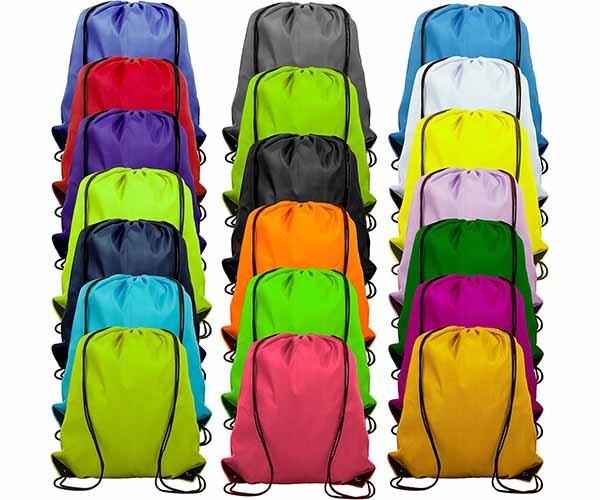
Drawstring Bags
Why they work
- Very simple structure
- Low sewing complexity
- High versatility
Important limitation
Only suitable as light-duty products.
Szoneier guidance
Avoid over-promising load capacity. Clear product descriptions reduce return risk.
Zipper Pouches & Utility Pouches
Typical use cases
- Cable pouches
- EDC organizers
- Small accessory bags
Why good for Amazon beginners
- Minimal reinforcement needed
- Easy to standardize
Szoneier experience
Zipper pouches are often combined with:
- Branding tests
- Color experiments
- Set-based listings


First-SKU Categories Szoneier Commonly Recommends
Based on real Amazon seller projects, Szoneier often recommends starting with:
- Cosmetic bags
- Toiletry bags
- Packing cubes
- Storage organizers
- Zipper pouches
These categories allow sellers to:
- Launch faster
- Reduce defect exposure
- Preserve capital
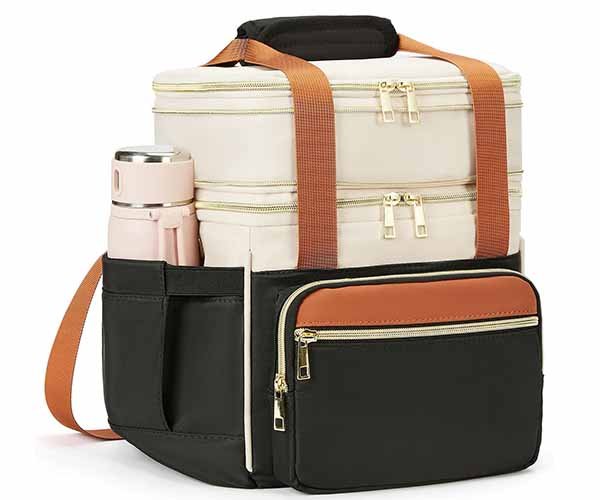
Lunch Bags
Why lunch bags attract Amazon beginners
- Clear daily-use scenario
- Strong repeat demand
- Easy listing positioning
Beginner-friendly lunch bag types
- Soft insulated lunch bags
- Simple box-shaped lunch totes
Why these work
- Moderate insulation requirements
- Limited structural load
- Clear customer expectations
Szoneier production insight
A significant portion of Amazon lunch bag projects we handle start with simplified insulation structures to control cost and defect risk.
Avoid at first launch
- Rigid frame lunch boxes
- Multi-layer complex insulation designs


nsulated Pouches & Cooler Sleeves
Why these are safer than full coolers
- Smaller size
- Lower insulation stress
- Easier shape control
Typical styles
- Bottle cooler sleeves
- Snack cooler pouches
Szoneier guidance We often recommend these as:
“Thermal category entry products”
before moving into full-size insulated bags.
Lightweight Backpacks
Why many beginners want backpacks
- Large market size
- High perceived value
Hidden risks
- Strap failure
- Load complaints
- Fit expectations
When backpacks are acceptable
- Small daypacks
- Lightweight promotional backpacks
Szoneier recommendation
Backpacks should not be a first SKU unless:
- Load is clearly limited
- Reinforcement is properly designed


Diaper Bags — Entry-Level vs. Complex Designs
Why diaper bags seem attractive
- High price point
- Emotional purchase
Reality
- Extremely demanding customers
- High functional expectations
Beginner-friendly versions
- Simple diaper organizer bags
- Lightweight stroller pouches
High-risk versions to avoid
- Multi-compartment backpack diaper bags
- Heavy insulation + structural frames
Szoneier insight
We advise new sellers to enter this category only after building experience with simpler bags.
Tool Pouches & Utility Bags
Beginner-safe versions
- Small tool rolls
- Zippered utility pouches
High-risk versions
- Heavy-duty electrician bags
- Rigid tool organizers
Szoneier manufacturing logic
Light-duty designs reduce:
- Stitch failure
- Load complaints
- Negative reviews


Gym Bags & Simple Duffel Bags
Why beginners consider them
- Popular lifestyle category
Common problems
- Handle tearing
- Zipper stress
Beginner-friendly approach
- Small duffel bags
- Lightweight gym totes
Szoneier advice
Avoid oversized duffels in first launch.
Drawstring & Promotional Bags
Why they work
- Simple construction
- Fast production
Important note
Margins can be thin. Success depends on:
- Volume
- Packaging efficiency

Bag Types Amazon New Sellers Should Avoid as First SKU
Based on Szoneier’s real OEM/ODM experience, new sellers should avoid these categories initially:
- Heavy-duty hiking backpacks
- Tactical MOLLE bags
- Wheeled duffel bags
- Large insulated cooler bags
- Bags with internal frames
These require:
- Advanced engineering
- Higher QC tolerance
- Larger budgets
| Bag Type | Structural Risk | Return Risk | Amazon Beginner Suitability |
|---|---|---|---|
| Cosmetic / Makeup Bags | Very Low | Very Low | ⭐⭐⭐⭐⭐ |
| Toiletry Bags | Low | Low | ⭐⭐⭐⭐ |
| Packing Cubes | Very Low | Very Low | ⭐⭐⭐⭐⭐ |
| Storage Organizers | Low | Low | ⭐⭐⭐⭐ |
| Pencil Cases | Very Low | Very Low | ⭐⭐⭐⭐⭐ |
| Lunch Bags (Simple) | Medium | Medium | ⭐⭐⭐ |
| Insulated Pouches | Low | Low | ⭐⭐⭐⭐ |
| Lightweight Backpacks | High | High | ⭐⭐ |
| Diaper Organizers | Medium | Medium | ⭐⭐⭐ |
| Heavy-Duty Tool Bags | Very High | Very High | ⭐ |
Materials & Construction for Amazon Bags - Beginner-Friendly Guide
For Amazon new sellers, choosing the right materials and construction methods is critical to control cost, reduce defects, and avoid negative reviews while maintaining acceptable durability and appearance.
Why Amazon New Sellers Should Avoid Over-Engineering
Common beginner mistake Trying to copy premium brand specs in the first order.
Result
- Higher cost
- Higher defect risk
- Longer lead times
Szoneier recommendation
Start with proven, stable material combinations, then upgrade once the product gains traction.
Most Recommended Outer Fabrics for Amazon Starter Bags
Based on Szoneier’s Amazon-focused production experience:
600D Polyester (Top Choice)
- Used in over 50% of Amazon bag projects we produce
- Good balance of cost, durability, and appearance
- Suitable for backpacks, organizers, travel bags
420D Polyester / Nylon
- Lighter weight
- Suitable for cosmetic bags and organizers
- Lower cost, but not for load-bearing designs
Canvas (12–16 oz)
- Used for lifestyle-style Amazon brands
- Requires internal reinforcement
- Slightly higher return risk if under-built
Szoneier insight
We rarely recommend 1680D for Amazon first launches due to weight and cost unless clearly required.
Padding, Structure & Shape Control
Common Amazon complaints
- Bag collapsing
- Poor shape retention
Szoneier solution
- 3–5 mm EVA for structure
- PE foam for lightweight cushioning
- Reinforcement only where needed
This keeps bags looking good in listing photos and in real customer use.
Linings & Interior Materials
Recommended for Amazon
- 210D / 300D polyester lining
- Easy to clean
- Stable supply
Avoid
Ultra-thin linings that tear easily and trigger returns.
Zippers, Webbing & Hardware
Top Amazon complaint sources
- Zipper jams
- Strap breakage
Szoneier practice
- Zippers selected based on usage frequency, not just size
- Webbing integrated into load paths
- Hardware tested during sample review

Try Before You Order – Free Sample Program
We offer free custom samples for qualified clients. Whether you’re testing a new market or validating design quality, our samples help you move forward with confidence.
Customization & Branding for Amazon Private Label Bags
For Amazon private label sellers, branding must balance visibility, durability, and manufacturing stability. Poor branding decisions increase defects, reviews risk, and cost, especially in early-stage low-MOQ production.
Why Amazon Bag Branding Is More Sensitive Than Sellers Expect
Amazon-specific reality
On Amazon:
- Customers inspect photos and real products closely
- Any inconsistency is quickly reported in reviews
- Branding defects are blamed on “cheap quality”
Unlike DTC brands, Amazon sellers cannot explain or educate customers after purchase.
Szoneier experience In our Amazon-related OEM projects, a significant number of early failures are not caused by bag structure, but by over-aggressive or poorly placed branding.
Key principle at Szoneier:Branding should never introduce new defect risk in a first launch.


Branding Strategy for Amazon New Sellers
Stage 1 — Brand Identification (First Order / Pilot Run)
Primary goal
- Build brand recognition
- Avoid manufacturing risk
Recommended methods
- Woven labels
- Small, low-density embroidery
Szoneier data insight
Over 70% of Amazon new seller orders we support use woven labels or minimal embroidery in their first production run.
Stage 2 — Brand Visibility Enhancement (After Reviews Stabilize)
What changes
- Slightly larger logos
- TPU / rubber patches
- Limited color accents
Why delay this
These methods:
- Increase production complexity
- Require stricter QC
- Raise unit cost
Stage 3 — Brand Differentiation & Premiumization
Examples
- Custom zipper pullers
- Branded linings
- Multi-material logo systems
When appropriate
Only after:
- Stable sales
- Predictable reorder cycles
Logo Methods — Amazon Suitability & Risk Analysis
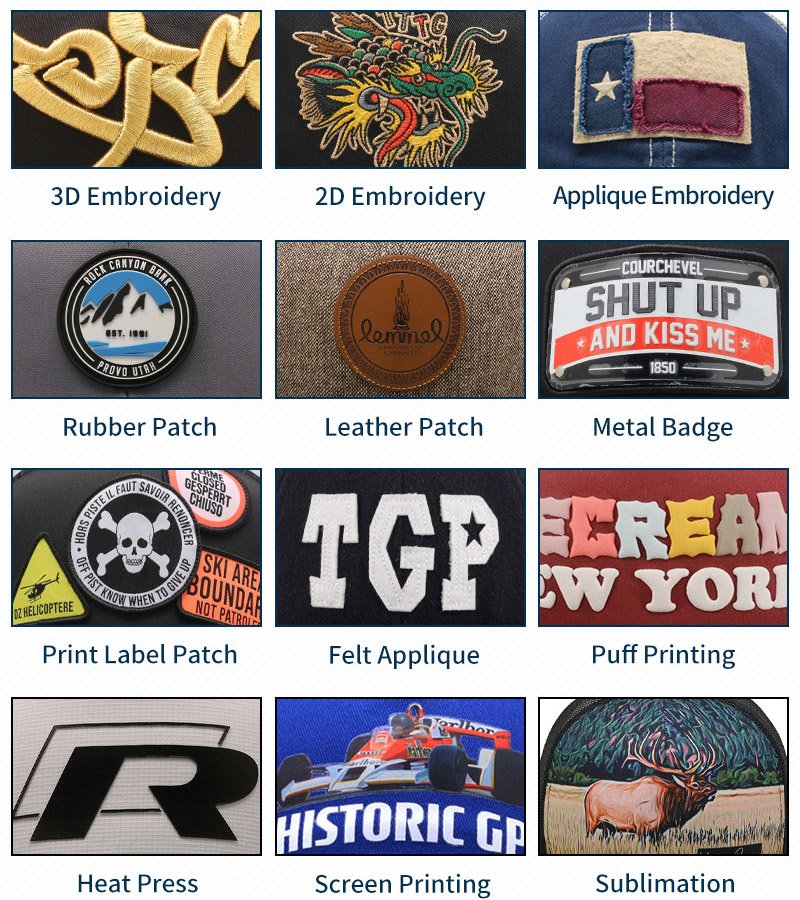
Woven Labels (Safest Option for Amazon Beginners)
Why Szoneier recommends this
- No impact on structure
- Very MOQ-friendly
- Consistent appearance
Best placement
- Side seams
- Interior panels
- Pocket edges
Return risk Very low.
Embroidery (Controlled Use Only)
Why sellers like it
- Premium look
- High durability
Hidden risks
- Fabric compression
- Stitch penetration into reinforcement layers
Szoneier control
- Applied only on non-load-bearing panels
- Stitch density adjusted per fabric type
TPU / Rubber Patches (Medium Risk)
Pros
- Strong brand visibility
- Outdoor-oriented look
Cons
- Mold cost
- Adhesion risk if misapplied
Szoneier guidance Recommended only after pilot validation or for sellers with clear brand identity.
Printing & Heat Transfer (Use with Caution)
Why risky on Amazon
- Cracking under flex
- Color mismatch complaints
Szoneier practice
Only recommended for:
- Flat panels
- Non-stress zones
- Short branding text or icons

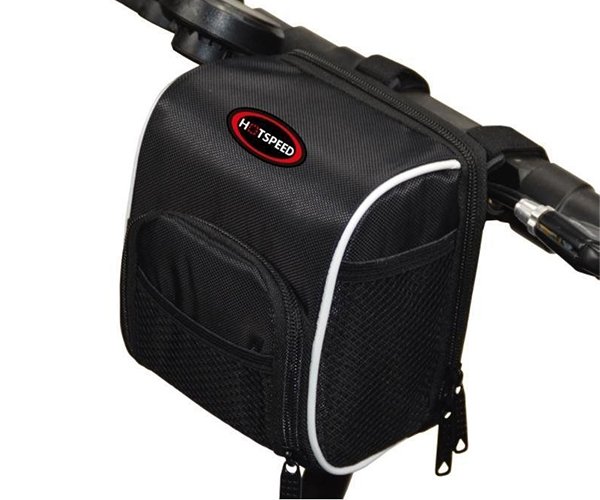
Logo Placement Rules That Protect Reviews
High-risk placement zones
- Shoulder strap anchors
- Handle reinforcement areas
- Zipper ends
- Bottom panels
Preferred placement zones
- Front body panels
- Pocket flaps
- Side panels
Szoneier method Logo placement is confirmed using:
- Physical samples
- Real load simulation
Not mockups alone.
Color Customization & Component Matching
Amazon buyer behavior Customers compare photos to received products closely.
Common complaints
- “Color not as shown”
- “Zipper doesn’t match”
Szoneier color control
- Limit color count in first order
- Match zipper tape, thread, and webbing to shell fabric
- Approve physical color swatches
This dramatically reduces color-related negative reviews.

Functional Branding Beyond Logos
Branding is not only visual.
Common functional branding elements
- Velcro ID panels
- Custom pocket layouts
- Signature color accents
Szoneier principle
Functional branding must:
- Integrate into load paths
- Avoid puncturing reinforcement layers
Branding & MOQ — Cost Reality for Amazon Sellers
New seller misconception “Small logos don’t affect cost.”
Reality Every branding method impacts:
- Labor time
- Defect rate
- QC workload
Szoneier transparency
We clearly explain:
- Which branding upgrades are worth doing now
- Which should wait until scale

Branding Failure Patterns Szoneier Commonly Fixes
From Amazon seller rescue projects, we often see:
- Oversized embroidery causing fabric distortion
- Logos placed across seam lines
- Mixed branding methods causing inconsistency
These are corrected by simplifying branding in early stages.
| Branding Method | Defect Risk | MOQ Friendliness | Amazon Beginner Suitability |
|---|---|---|---|
| Woven Label | Very Low | Very High | ⭐⭐⭐⭐⭐ |
| Small Embroidery | Low | High | ⭐⭐⭐⭐ |
| TPU Patch | Medium | Medium | ⭐⭐⭐ |
| Printing | Medium–High | High | ⭐⭐ |
| Metal Logo | High | Low | ⭐ |
Quality Control & Amazon Return Risk Reduction
For Amazon sellers, quality control must focus on functional defects that cause returns and negative reviews rather than cosmetic perfection alone.
01
Amazon-Sensitive Defect Areas
Most common return triggers:
- Broken zippers
- Loose stitching
- Weak handles
- Deformed shape
02
Szoneier’s QC Focus for Amazon Orders
QC priorities
- Stress-point stitching
- Zipper performance testing
- Strap pull checks
Even for 200–300 pcs pilot runs, QC standards remain consistent.
03
In-Process QC vs Final Inspection
Why in-process QC matters
Final inspection alone cannot catch structural issues.
Szoneier method
- Mid-production inspections
- Reinforcement verification
- Stitch density checks
04
Packaging QC for FBA Safety
Amazon risks
- Transit damage
- Over-compression
Szoneier controls
- Defined folding methods
- Carton size optimization
- Protection for padded structures
05
Why This QC Approach Protects Reviews
Result
- Fewer defects
- Fewer returns
- Higher star ratings
This directly supports Amazon seller growth.

How Amazon New Sellers Should Choose a Bag Manufacturer
Amazon new sellers should evaluate manufacturers based on risk control, low MOQ flexibility, Amazon compliance knowledge, and long-term scalability rather than price alone.
1. Can the factory support true low MOQ pilot runs?
Szoneier supports low MOQ from 200 pcs per style, allowing sellers to test demand without overstocking or cash flow pressure.
2. Do they understand Amazon-specific quality risks?
Bag defects directly cause negative reviews. Szoneier’s QC focuses on zippers, stitching, handles, and shape retention, the most common return triggers on Amazon.
3. Can they deliver samples fast for listing preparation?
Szoneier’s standard sampling time is 5–7 working days, helping sellers prepare product photos and listings without delays.
4. Do they understand FBA packaging and labeling rules?
Szoneier regularly supports polybag warnings, FNSKU labeling, and carton optimization, reducing inbound issues at Amazon warehouses.
5. Can they support scaling once the product succeeds?
Approved samples, BOMs, and specs are archived to ensure consistent quality from 200 pcs to several thousand units.
Case Studies — Amazon Seller OEM Bag Projects
These real-world Amazon OEM projects demonstrate how Szoneier helps new and early-stage sellers reduce manufacturing risk, launch faster, control quality, and build scalable bag products step by step.
First-Time Amazon Seller Launching a Cosmetic Bag
Seller profile
- First Amazon private label product
- Limited startup budget
- No prior bag manufacturing experience
Initial challenge
- Afraid of high MOQ
- No tech pack, only competitor listing references
- Concerned about early negative reviews
Szoneier’s solution
- Recommended a 200 pcs pilot run
- Simplified structure to a single-compartment cosmetic bag
- Selected 420D polyester + 210D lining
- Applied woven label branding to avoid defect risk
Execution highlights
- Sample completed in 6 working days
- Minor stitching reinforcement added after sample review
- Amazon FBA-ready polybag packaging prepared
Result (manufacturing-side)
- Stable first batch quality
- No major functional defects reported
- Smooth reorder preparation for next batch


Amazon Seller Transitioning from Simple Products to Bags
Seller profile
- Previously sold non-sewn products
- Expanding product line into bags
Problem faced
- Prior supplier produced inconsistent stitching
- Shape collapse during shipping caused returns
Szoneier intervention
- Reworked internal structure with 3 mm EVA support
- Upgraded zipper selection for smoother operation
- Defined folding and carton packing method
Production details
- Pilot order: 300 pcs
- Fabric: 600D polyester
Outcome
- Reduced deformation complaints
- Improved perceived quality consistency
- Seller proceeded to multi-SKU expansion
Amazon FBA Seller Launching a Lunch Bag
Seller profile
- US-based Amazon FBA seller
- Seasonal product planning
Key risks
- Insulation damage during shipping
- Packaging rejection at FBA warehouse
Szoneier’s role
- Designed a simplified insulation structure
- Controlled insulation thickness to balance weight and performance
- Optimized folding to protect shape during transit
Execution
- Pilot order: 300 pcs
- Sample revisions completed within 2 days
Result
- No FBA inbound issues reported
- Packaging passed Amazon checks smoothly


Amazon Seller Scaling a Storage Organizer SKU
Seller profile
- Small Amazon brand with 2 existing SKUs
- Seeking stable reorders
Challenges
- Quality drift between batches from previous factory
- Inconsistent materials
Szoneier’s solution
- Locked BOM from pilot stage
- Archived approved sample as reference standard
- Applied consistent QC checkpoints
Impact
- Improved batch-to-batch consistency
- Predictable lead times for replenishment
Amazon Seller Testing a New Category with Low MOQ
Seller profile
- Experienced Amazon seller testing a new niche
Goal
- Validate demand with minimal inventory risk
Szoneier approach
- Recommended 200 pcs test order
- Used existing material stock to reduce cost
- Minimal branding for faster turnaround
Result
- Faster launch cycle
- Data collected before committing to scale


Amazon Seller Replacing an Unreliable Supplier
Seller profile
- Amazon seller with active listings
- Facing increasing return rates
Problems
- Zipper failures
- Loose stitching
Szoneier fix
- Reinforced stress zones
- Upgraded zipper specification
- Increased in-process QC
Outcome
- Improved functional stability
- Reduced post-launch complaints
FAQ — Bag Manufacturing for Amazon New Sellers
Q1: What is your minimum order quantity for Amazon new sellers?
Our standard MOQ starts from 200 pcs per style, depending on design complexity and material selection. This low MOQ allows Amazon new sellers to test the market before committing to larger inventory volumes.
Q2: How long does it take to make samples?
For most bag styles, sampling takes 5–7 working days. Simple revisions usually take 2–3 working days, helping sellers prepare listings and marketing assets quickly.
Q3: Can you help if I don’t have a technical design or spec sheet?
Yes. Many Amazon new sellers only provide reference images or competitor listings. Szoneier translates ideas into manufacturable structures, material suggestions, and clear specifications.
Q4: Which bag materials are safest for Amazon beginners?
We usually recommend 600D polyester, 420D polyester, or 12–16 oz canvas for first launches due to stable quality, reasonable cost, and low return risk. Material selection always depends on the product category.
Q5: How do you reduce the risk of negative reviews caused by quality issues?
Our QC focuses on functional defects such as zipper failure, loose stitching, weak handles, and shape collapse—issues that most often trigger returns and negative reviews on Amazon.
Q6: Do you provide Amazon FBA packaging and labeling support?
Yes. We assist with polybag suffocation warnings, FNSKU labels, carton labels, and packing methods that comply with Amazon FBA requirements.
Q7: Can you ship directly to Amazon FBA warehouses?
Yes. Many of our Amazon seller clients choose direct shipment to FBA warehouses after inspection, reducing extra handling steps.
Q8: How is pricing structured for low MOQ orders?
Pricing is based on materials, structure complexity, branding method, and packaging. We clearly explain cost differences between 200 pcs pilot runs and larger orders to help sellers plan scaling.
Q9: What happens if I want to reorder or scale my product later?
Approved samples, BOMs, and specifications are archived, allowing consistent quality and smoother scaling from pilot orders to bulk production.
Q10: Can you help optimize the product to reduce Amazon fees?
Yes. We advise on size, weight, and packaging optimization to help reduce dimensional weight and FBA fees where possible.
Q11: Do you work with Amazon sellers outside the US market?
Yes. Szoneier supports Amazon sellers in North America, Europe, and other global markets, with experience handling different packaging and compliance expectations.
Q12: Is Szoneier suitable for long-term Amazon brand building?
Yes. Many clients start with small Amazon test orders and gradually build multi-SKU brands with us, benefiting from stable quality, consistent materials, and scalable production.
Ready To Elevate Your business Line?
Begin your journey with Szoneier bag now. We can assist in wholesaling or customizing Luggage and bags at the most competitive prices to enhance your brand.
Launch Your First Amazon Bag SKU with Szoneier
If you have:
- A product idea or competitor ASIN
- A target price range
- Questions about MOQ, materials, or FBA compliance
You can share your details with us. Our team will help you:
- Evaluate feasibility
- Recommend safe starter options
- Plan a low-risk pilot order
If you have any questions or need a quote, please leave us a message. Our experts will respond within 12 hours to assist you in selecting the ideal fashion products tailored to your needs.
- (+86)13423847456
- info@szoneier.com
Exclusive Offer for You
As a first-time buyer, you’ll receive a Free bags Color Card to help you select the right material and shade. Once confirmed, we’ll also provide a Free Sample made by our factory—no extra cost.
For our regular partners, we send New Color Charts multiple times a year—completely free—to support your latest collections.
