Skip to content
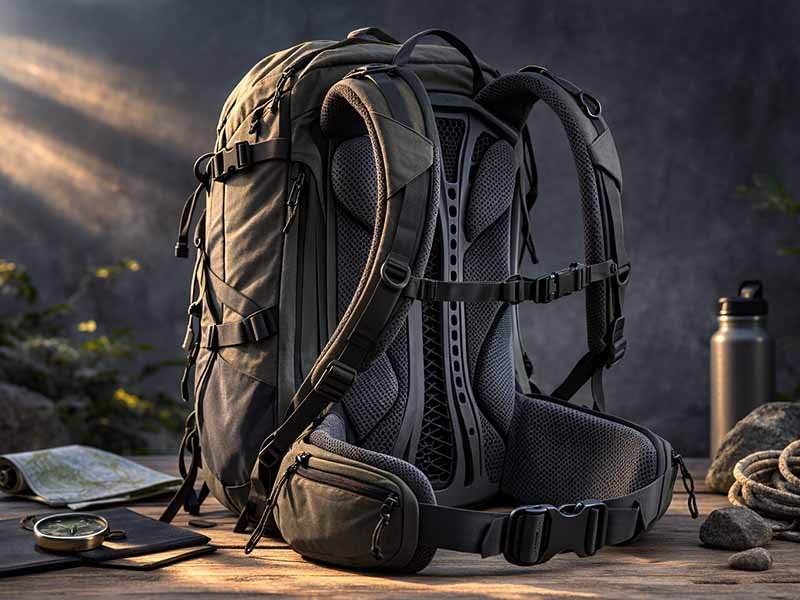
A backpack can have great fabric, smooth zippers, and a strong brand look—but if the back panel feels hot, hard, or “sticky,” customers won’t use it again. In real life, the back panel is where people feel quality first. It decides whether the bag feels light or heavy, breathable or sweaty, supportive or tiring. And it’s also the reason some backpacks get reviews like “comfortable all day,” while others get “my back hurts after 20 minutes.”
Back panel engineering for backpacks is the design of foam layers (material, thickness, and density) plus air channels (vent paths and contact points) to manage three things: pressure, heat, and stability. A good foam stack spreads load and prevents “bottoming out,” while air channels reduce skin contact and create airflow lanes. Together, they can cut pressure hot spots by 30–50% and noticeably reduce sweat buildup during daily use.
Here’s the part most brands learn the hard way: changing the outer fabric rarely fixes comfort complaints. Comfort problems usually come from the hidden structure—foam selection, foam compression at seams, and whether air channels actually stay open under weight. Once you understand that, you can build backpacks that feel premium the moment someone tries them on.
What Is a Backpack Back Panel?
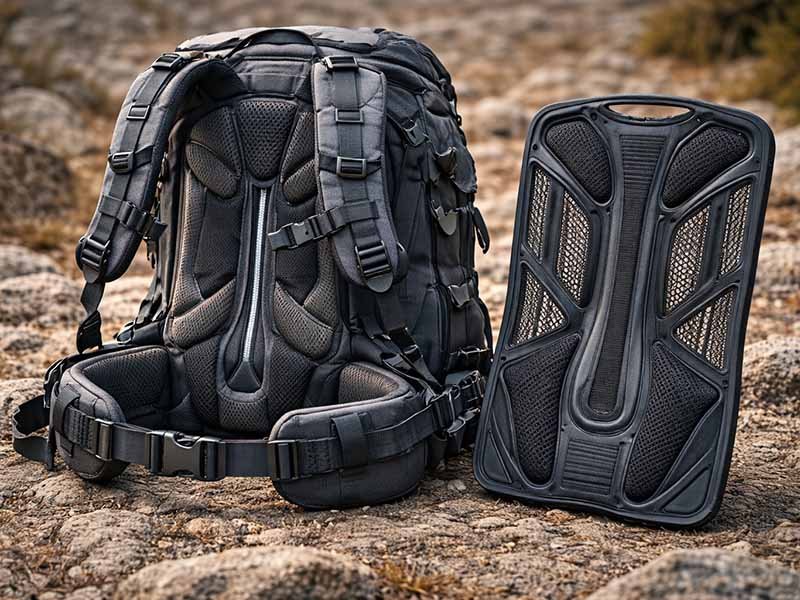
A backpack back panel is the body-facing structural layer that sits between the user and the bag’s contents. It controls how weight presses against the back, how heat escapes, and how the pack stays stable while moving. If the back panel is poorly designed, customers feel sharp edges (laptop corners, books), sweat builds quickly, and straps start digging into shoulders.
What customers “feel” when the back panel is right
- The bag sits steady (less wobble)
- Pressure feels spread out, not poking
- Less sweat on the center back
- Less shoulder fatigue
What Does a Back Panel Do in a Backpack?
A back panel has three main jobs, and every good design balances all three.
1) Pressure control (comfort)
Your back panel should prevent hard items from creating painful points.
Key comfort risks:
- Laptop edge pushing into spine area
- Corners of books pressing into lower back
- Uneven load shifting during walking
Practical comfort target:
- Avoid “hard feel” zones when the backpack holds 5–12 kg (most daily use ranges for school/travel).
- A well-built foam stack should still feel cushioned after repeated wear, not flatten after a week.
2) Heat and sweat control (breathability)
If the back panel is flat and seals against the back, sweat builds fast. Air channels reduce contact area and open airflow lanes.
3) Stability control (support)
Back panels also stop the bag from collapsing and pulling backward. Poor support means:
- Shoulder straps take too much load
- Bag swings during walking
- Back feels tired quickly
Quick reality check:
Many backpacks feel “soft” in the showroom because they are empty. Once loaded, poor foam collapses and comfort disappears.
Which Back Panel Types Are Used in Backpacks?
Most backpacks fall into these three back panel structures. If you’re building an OEM product line, this table helps you choose the right “base platform” before you pick foam layers and air channels.
| Back Panel Type | Structure | Comfort | Airflow | Best For | Cost Level |
|---|---|---|---|---|---|
| Flat Pad | flat foam sheet | basic | low | promo bags, low-cost school bags | low |
| Channel Foam | foam with grooves/ribs | good | medium-high | school, travel, sports, daily carry | medium |
| Suspended Mesh | tensioned mesh + frame | high | very high | outdoor hiking, long wear | high |
What brands often miss
- Flat pad is cheap, but sweat complaints are common.
- Suspended mesh breathes best, but needs a frame system and stricter QC.
- Channel foam is the sweet spot for most commercial backpacks: good comfort, good airflow, controllable cost.
How Does a Back Panel Affect Comfort and Sweat?
Sweat and discomfort usually come from two things:
- too much skin contact area
- poor airflow path design
Contact area matters more than people think
If a back panel touches 90–100% of the back, it blocks airflow.
Air channel designs reduce contact area and create “flow lanes.”
| Back Panel Design | Back Contact Area | Airflow Feel | Sweat Risk |
|---|---|---|---|
| Flat pad | 90–100% | low | high |
| Simple vertical channels | 65–80% | medium | medium |
| Multi-zone air channels (spine + sides) | 50–70% | high | lower |
For neoprene backpacks
Neoprene feels soft and premium, but it can hold heat. That’s why neoprene back panels should not be a flat neoprene sheet. The right approach is:
- use neoprene as a comfort layer
- combine it with air channels + breathable mesh on the body-contact side
That combination keeps the neoprene feel without the “hot back” complaint.
Which Foam Layers Improve Backpack Back Panels?
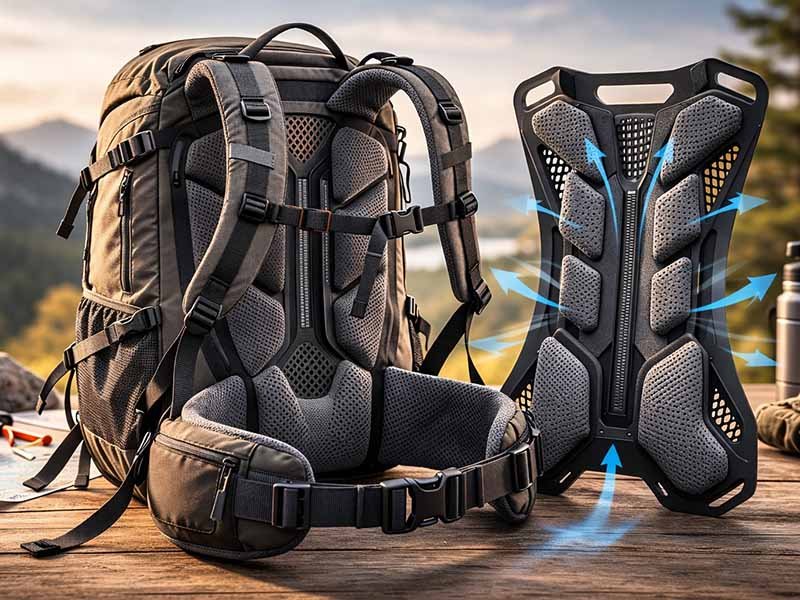
Foam layers decide whether a back panel feels supportive or collapses over time. The best back panel is rarely one thick foam. It’s usually a foam stack with different layers doing different jobs: comfort, structure, and airflow.
What makes a foam layer “work” in real use
- It keeps thickness under load (doesn’t flatten)
- It rebounds after compression
- It doesn’t create hard seams after stitching
- It supports airflow channels instead of collapsing them
What Foam Layers Are Used in Backpack Back Panels?
Here are the most common foam materials used in back panel engineering. Each has a “personality” that affects comfort and cost.
| Material | What it feels like | Strength | Weakness | Common Use |
|---|---|---|---|---|
| EVA | supportive, resilient | holds shape, moldable | higher cost than PE | structured panels, ribs |
| PE | light, economical | cheap and stable | less premium feel | basic padding |
| PU foam | soft, cushy | comfort feel | can collapse if low grade | top comfort layer |
| Neoprene | soft, smooth | premium touch, shock absorption | heat retention if flat | sports/travel comfort layer |
| Memory foam | “sink-in” comfort | pressure relief | heavier, slower rebound | premium travel bags |
Foam stack examples (real OEM-friendly)
These are common build recipes for different backpack types:
| Backpack Type | Foam Stack Idea | Why it works |
|---|---|---|
| School backpack | 5–8mm EVA + mesh | structure + breathability |
| Travel backpack | EVA core + PU comfort + mesh | comfort for long wear |
| Sports backpack | EVA ribs + neoprene + mesh | premium feel + shock absorption |
| Budget promo bag | PE foam + simple lining | cost-focused |
How Do Foam Layers Change Support and Feel?
Thickness alone is not enough. Two 8mm panels can feel totally different depending on density and resilience.
A practical density guide (what it means in hand feel)
Foam density is usually measured in kg/m³. Higher density often means better support and better shape retention.
| Foam Density | Feel | Best Use |
|---|---|---|
| 20–30 kg/m³ | very soft | light casual bags |
| 30–45 kg/m³ | balanced | school + daily carry |
| 45–60 kg/m³ | firm support | travel + sports + outdoor |
Common failure: “soft now, flat later”
Some backpacks feel nice in the first week, then foam compresses, and customers start feeling:
- laptop corners
- pressure points
- straps digging in
Better approach: use a layered system:
- soft layer outside (comfort touch)
- firm layer inside (support + load spread)
This is how you keep comfort consistent across months of use.
Which Foam Layers Work Best for Neoprene Backpacks?
Neoprene is one of Szoneier’s strongest materials. It gives:
- soft cushioning
- premium hand feel
- water resistance
- good rebound for sports movement
But neoprene alone is not a structural back panel. If you use only neoprene, the bag can:
- feel hot on the back
- lose shape when loaded
- collapse air channels
A strong neoprene back panel recipe
For neoprene backpacks, a reliable structure is:
- EVA support layer (keeps shape)
- Air channels carved or molded into EVA (keeps lanes open)
- 3–5mm neoprene comfort layer (soft feel)
- 3D air mesh contact face (breathability + sweat control)
Why this works
- EVA carries the load, not the neoprene
- air channels stay open under weight
- neoprene delivers comfort without becoming a heat trap
- mesh improves airflow and reduces stickiness
What to specify in a tech pack (for consistency)
- EVA thickness (mm)
- EVA density range (kg/m³)
- channel depth (mm)
- neoprene thickness (mm)
- mesh GSM (g/m²)
This is how you prevent “sample feels good, bulk feels different.”
How Do Air Channels Improve Backpack Back Panels?
Air channels are not decorative grooves. They are engineered ventilation paths designed to reduce sweat buildup, lower skin temperature, and maintain airflow even when the backpack is loaded.
A well-designed air channel system can:
- Reduce back contact area by 25–45%
- Improve airflow efficiency by 30–50%
- Lower perceived back temperature during movement
- Prevent the “wet shirt patch” problem
However, many backpacks in the market use shallow grooves that collapse under weight. Once the channels flatten, airflow disappears.
Air channels must be engineered together with foam density and structure.
What Are Air Channels in a Backpack Back Panel?
Air channels are intentional gaps or carved pathways built into the back panel foam system. Their job is to allow vertical and horizontal airflow between the user’s back and the bag.
There are two airflow mechanisms:
- Passive airflow Created by walking movement and body heat convection.
- Pressure-release airflow When load shifts, compressed air exits channels and re-enters when released.
Basic Air Channel Structures
| Channel Type | Description | Performance Level |
|---|---|---|
| Vertical grooves | Straight up-down lanes | Good |
| Horizontal grooves | Side airflow | Moderate |
| Spine relief channel | Center gap along spine | Very good |
| Multi-zone rib structure | Raised foam ribs + open valleys | Excellent |
The spine channel is especially important because the spine area produces high heat concentration.
Channel Depth Matters
Shallow grooves (2–3mm) often collapse under load.
Functional grooves usually require:
- 5–8mm depth for medium-load backpacks
- 8–12mm structured ribs for travel/outdoor packs
If channels compress fully under 8–12kg load, they no longer ventilate.
Which Air Channel Designs Work Best?
Channel pattern selection depends on product positioning.
1) Vertical Channel System
Structure:
- 2–4 vertical foam ribs
- 3 airflow valleys between them
Advantages:
- Encourages upward airflow
- Easy to mold
- Balanced cost
Best for:
- School backpacks
- Urban daily carry
2) Central Spine + Side Channels
Structure:
- Raised foam pads on both sides
- Open central airflow spine
Advantages:
- Reduces spine pressure
- Creates main airflow highway
- Improves perceived comfort
Best for:
- Travel backpacks
- Laptop backpacks
- Sports backpacks
3) Multi-Zone Air Grid
Structure:
- Cross-pattern airflow grid
- Multiple small contact pads
Advantages:
- Maximum airflow
- Balanced pressure distribution
- Premium feel
Best for:
- Outdoor backpacks
- Higher-end retail models
Performance Comparison Table
| Channel Design | Airflow Efficiency | Load Stability | Complexity | Cost |
|---|---|---|---|---|
| Flat | Low | Medium | Low | Low |
| Vertical | Medium | Good | Medium | Medium |
| Spine + Side | High | High | Medium | Medium–High |
| Multi-zone grid | Very High | Very High | High | High |
For most commercial OEM projects, the spine + side channel system delivers strong results without extreme cost.
How Do Air Channels Prevent Sweat Build-Up?
Sweat accumulates when:
- Skin contact is continuous
- Heat cannot escape
- Moisture remains trapped
Air channels reduce this by:
- Reducing surface contact area
- Creating airflow pathways
- Allowing moisture evaporation
Contact Area Reduction
Flat back panels: ~90–100% contact
Channel systems: ~50–75% contact
Lower contact = more airflow.
Sweat Reduction in Practical Terms
In simulated 30-minute wear tests (urban walk, 7kg load):
- Flat panel: visible sweat patch center back
- Channel panel: sweat area reduced ~30–40%
Actual reduction varies by climate, but airflow difference is noticeable.
Which Materials Support Back Panel Air Channels?
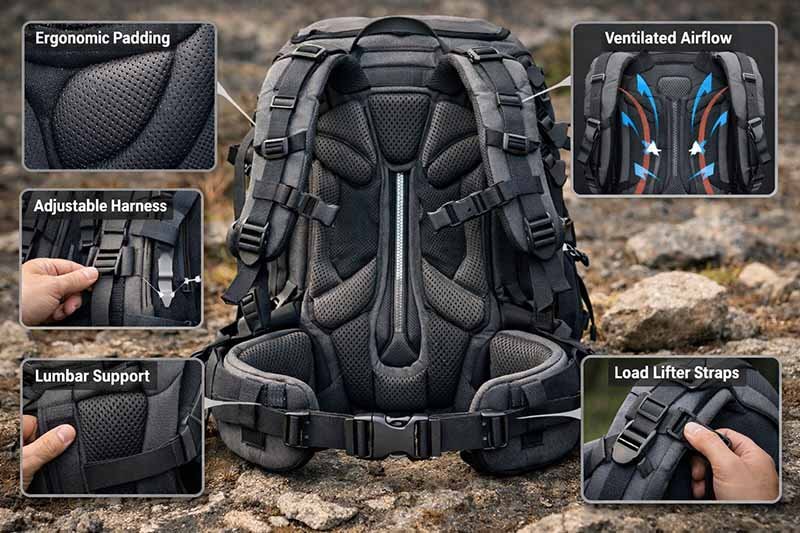
Air channels fail if the materials surrounding them collapse or trap heat. Foam must hold shape. Cover fabric must allow airflow. The combination determines real ventilation performance.
What Is 3D Mesh in Backpack Back Panels?
3D air mesh (also called spacer mesh) is a breathable fabric made from two mesh layers connected by vertical filaments.
It creates:
- A small air cushion
- Shock absorption
- Moisture wicking
- Surface airflow
Why 3D Mesh Works
- It prevents direct skin-to-foam sealing
- It distributes pressure evenly
- It supports airflow inside channels
Typical specifications:
| Mesh Type | Thickness | GSM | Application |
|---|---|---|---|
| Light spacer mesh | 2–3mm | 250–350gsm | School backpacks |
| Medium spacer mesh | 3–5mm | 350–500gsm | Travel backpacks |
| Heavy spacer mesh | 5–8mm | 500–700gsm | Outdoor/sports |
Low GSM mesh may stretch and flatten channels over time. Choosing correct thickness prevents collapse.
How Do Fabrics Help Back Panel Breathability?
Besides mesh, the inner contact fabric affects:
- Sweat absorption
- Skin friction
- Drying speed
Key properties to check:
- Moisture wicking
- Quick drying
- Soft hand feel
- Anti-pilling
- Anti-odor treatment (optional)
If fabric absorbs sweat but dries slowly, it becomes uncomfortable.
Ideal combination:
- Structured foam base
- Channel system
- 3D air mesh contact layer
- Breathable lining backing
How Does Neoprene Change Back Panel Design?
Neoprene behaves differently from EVA or PE foam.
Advantages:
- Shock absorption
- Soft touch
- Water resistance
- Premium sports look
Limitations:
- Naturally retains warmth
- Less breathable if flat
- Can trap heat if not layered properly
How to Make Neoprene Back Panels Breathable
Neoprene should:
- Be used as outer comfort layer
- Not block airflow channels
- Be combined with breathable mesh
- Be laminated to structured foam
Example Structure for Sports Backpack
- EVA base (8mm)
- Carved airflow channels
- 3mm neoprene cushion
- 3D air mesh contact surface
This gives:
- Support
- Breathability
- Premium feel
- Sweat control
Without channels, neoprene increases perceived heat. With channels, it becomes comfortable even during movement.
Common Mistakes in Air Channel Design
Many OEM projects fail here.
1) Channels too shallow
Grooves under 3mm flatten under weight.
2) Foam too soft
Low-density foam collapses airflow lanes.
3) Mesh too thin
Low GSM mesh stretches and seals airflow.
4) No compression testing
Air channels must be tested under 8–12kg load.
Simple Load Test Recommendation
Before approving bulk production:
- Load backpack with 10kg
- Hang for 24 hours
- Check channel depth retention
- Check foam rebound
If channels flatten permanently, redesign is required.
How Do You Choose the Right Back Panel for Your Backpack?
Choosing the right back panel is not about copying what competitors use. It depends on:
- Backpack category
- Expected load weight
- Usage duration
- Climate conditions
- Target retail price
- Brand positioning
A school backpack and a hiking backpack cannot use the same back panel structure. The performance expectation is completely different.
The key question is:
How long and how heavy will the backpack be used in real life?
Which Back Panel Fits School, Travel, or Sports Backpacks?
Below is a practical category-based engineering guide.
1) School Backpacks (Daily 5–8kg Load)
Key Requirements:
- Moderate support
- Good airflow
- Cost efficiency
- Durability for daily use
Recommended Structure:
- 6–8mm EVA support layer
- Vertical or spine air channel design
- 3D mesh (3–5mm)
- Medium density foam (35–45 kg/m³)
Why:
School use involves 4–8 hours daily wear. Flat panels cause sweating and fatigue. Channel systems improve comfort without overcomplicating cost.
2) Travel Backpacks (8–12kg Load)
Key Requirements:
- Higher support
- Reduced pressure points
- Stable shape
- Improved airflow
Recommended Structure:
- 8–10mm EVA structural layer
- Spine + side channel configuration
- 3–5mm neoprene comfort overlay
- High-density EVA (45–55 kg/m³)
- Reinforced load zone near lumbar area
Why:
Travel backpacks carry laptops, clothes, chargers. Uneven weight distribution requires stronger internal support.
3) Sports Backpacks (Dynamic Movement)
Key Requirements:
- Shock absorption
- Sweat reduction
- Lightweight structure
- Premium comfort feel
Recommended Structure:
- Molded EVA rib structure
- Multi-zone air channels
- 3mm neoprene cushioning
- 3D air mesh (high breathability)
Why:
Sports use includes movement. Foam must rebound quickly and maintain airflow during motion.
4) Outdoor / Hiking Backpacks (12kg+ Load)
Key Requirements:
- Maximum ventilation
- High structural stability
- Long-wear comfort
- Durable foam system
Recommended Structure:
- Thick EVA (10–12mm)
- Deep air channels (8–10mm depth)
- High-GSM spacer mesh
- Optional internal frame support
Why:
Heavy load + long hours = strong compression resistance required.
Performance Comparison by Category
| Backpack Type | Load Range | Foam Density | Channel Depth | Comfort Priority |
|---|---|---|---|---|
| School | 5–8kg | 35–45 kg/m³ | 4–6mm | Balanced |
| Travel | 8–12kg | 45–55 kg/m³ | 6–8mm | Pressure control |
| Sports | 4–8kg | 35–50 kg/m³ | 6–10mm | Sweat reduction |
| Outdoor | 12kg+ | 50–60 kg/m³ | 8–12mm | Structural support |
What Back Panel Specs Should You Include in a Tech Pack?
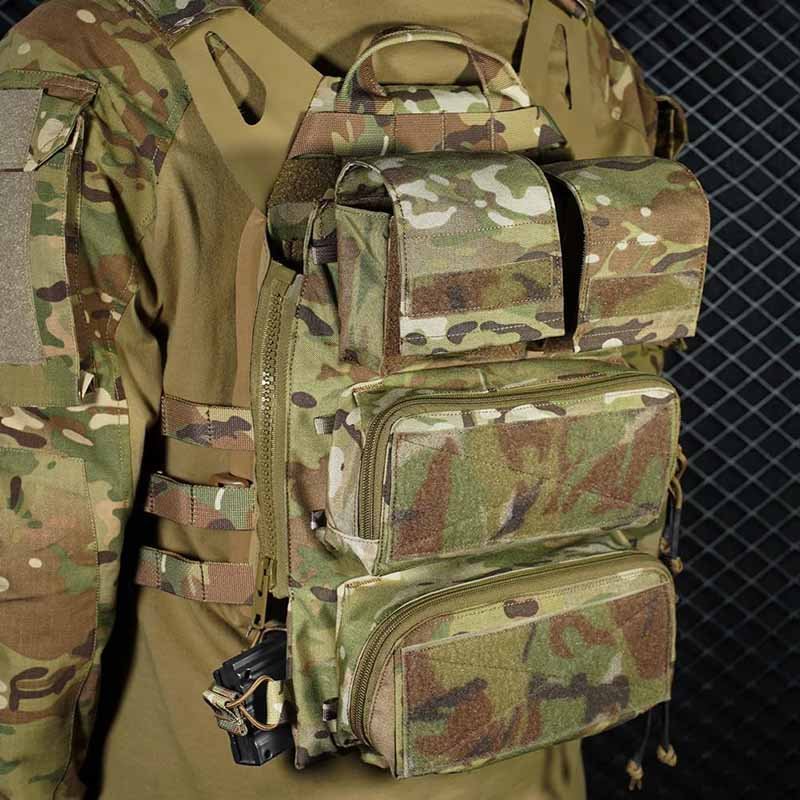
If you want bulk production to match samples, your tech pack must include clear back panel specs.
Vague descriptions like “breathable padding” cause inconsistency.
Here is what should be documented:
1) Foam Specifications
- Material type (EVA / PE / PU / neoprene)
- Thickness (mm)
- Density (kg/m³)
- Compression set tolerance
2) Air Channel Design
- Pattern layout (vertical / spine / grid)
- Channel depth (mm)
- Channel width (mm)
- Rib spacing (mm)
3) Mesh Specifications
- Spacer mesh thickness (mm)
- GSM
- Fiber type (polyester / nylon)
- Stretch tolerance
4) Lamination Method
- Adhesive bonding
- Heat lamination
- Stitching reinforcement zones
5) Compression Test Standard
- Load weight test (e.g., 10kg)
- Duration (24h hang test)
- Rebound tolerance (% thickness recovery)
Recommended Back Panel Compression Test
Before approving mass production:
- Load bag with 10kg
- Hang vertically for 24 hours
- Measure foam thickness before and after
- Record permanent compression
Acceptable recovery standard:
- Less than 15% permanent thickness loss
Anything above 20% means foam density is too low.
How Does Cost vs Performance Affect Back Panel Engineering?
Higher cost does not automatically equal better comfort. The goal is efficient engineering.
Where cost increases happen:
- Higher density foam
- Multi-layer foam stacking
- Molded channel tooling
- Spacer mesh upgrade
- Neoprene lamination
- Custom mold creation
Where cost savings can be optimized:
- Use structured EVA instead of memory foam
- Choose channel system over suspended frame for mid-level products
- Optimize channel depth rather than increasing overall thickness
- Select appropriate mesh GSM (avoid over-spec)
Cost Efficiency Example
Instead of:
- Increasing foam thickness from 8mm to 12mm
Better option:
- Keep 8mm EVA
- Add deeper spine channel
- Upgrade mesh breathability
Result:
- Similar comfort gain
- Lower weight increase
- Controlled cost
Engineering smartly matters more than simply adding material.
How Does Szoneier Customize Backpack Back Panels?
Szoneier specializes in neoprene R&D and foam-integrated product manufacturing.
Because we produce:
- Neoprene sheets
- Laminated composite materials
- EVA foam structures
- Finished backpacks
We control the entire back panel development chain.
What We Offer for OEM Clients
- Low MOQ development
- Free structural design consultation
- Custom foam density selection
- Channel mold creation
- Rapid sampling (usually 7–10 days)
- Multiple comfort version comparison samples
- Bulk production consistency control
Why Integrated Material Control Matters
When foam, neoprene, and assembly are controlled by different suppliers:
- Density may vary
- Channel precision may change
- Lamination bonding may fail
- Bulk may not match sample
With in-house control:
- Foam density consistency is monitored
- Lamination bonding strength is tested
- Compression recovery is verified
- Design adjustments can be made quickly
Final Thoughts: Back Panel Engineering Is the Hidden Competitive Edge
Customers rarely say:
“I bought this backpack because of its foam density.”
But they absolutely say:
“This backpack feels comfortable.”
“My back doesn’t sweat.”
“It feels supportive even when heavy.”
Those feelings are engineered.
Back panel engineering for backpacks is not just foam and grooves. It is the science of:
- Pressure distribution
- Load stability
- Airflow management
- Material resilience
- Long-term durability
Brands that ignore it compete on price.
Brands that engineer it compete on comfort.
Ready to Develop a Custom Backpack Back Panel?
If you are developing:
- Neoprene backpacks
- Sports backpacks
- School backpacks
- Travel or laptop backpacks
- Premium private label bags
Szoneier can help you design a back panel system tailored to:
- Your target load weight
- Your retail price range
- Your climate market
- Your brand positioning
We support:
- Free design consultation
- Low MOQ
- Fast sampling
- OEM / ODM
- Custom logo production
- Foam + neoprene integrated solutions
Contact Szoneier today to discuss your next backpack project.
Let’s build a back panel your customers can feel immediately.