Skip to content

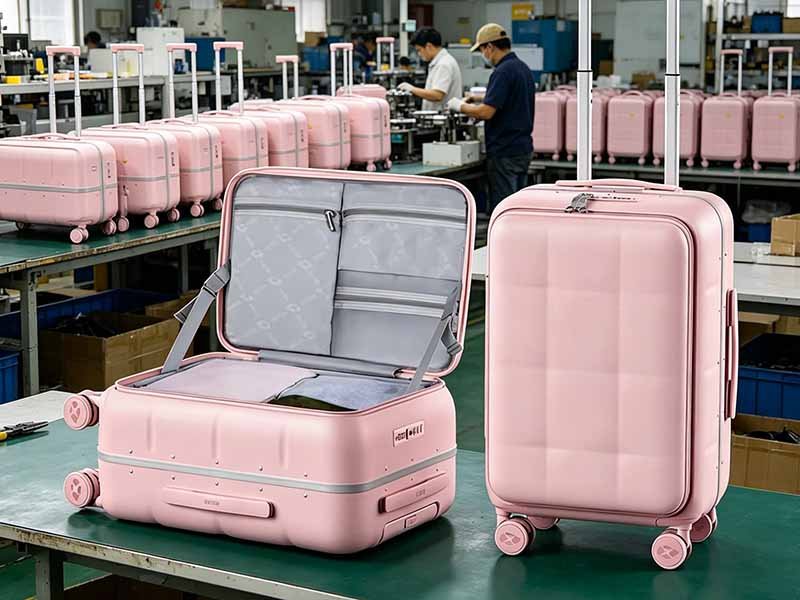
A factory can look convincing long before you know whether it is the right manufacturing partner for your product. A polished website, an attractive sample room, a confident salesperson, and rows of finished bags may create a strong first impression, yet none of those things alone proves that the factory can develop your design, control materials, reproduce an approved sample, manage multiple SKUs, maintain consistent sewing quality, and deliver repeat orders on schedule. That is why a live video factory tour has become an important step for brands that cannot immediately visit a factory in person.
During a video factory tour, brands should verify six things: factory identity, relevant product experience, actual production capability, quality-control procedures, realistic capacity, and operational transparency. A useful tour should move through sampling, materials, cutting, sewing, inspection, packing, and warehousing while allowing the brand to ask spontaneous questions and compare what appears on camera with quotations, samples, specifications, and earlier supplier claims.
The value of the tour comes from what happens when the presentation stops being predictable. Imagine the camera passing a cutting table stacked with fabric panels. Instead of moving on, you ask the host to stop, turn around, and explain what those panels are, how they are checked, and where they go next. That thirty-second conversation may tell you more about the factory than a ten-minute corporate video. A good tour is not about catching a supplier doing something wrong. It is about seeing whether the company’s story still makes sense when you look closely at the real manufacturing process.
What Should Brands Verify Before the Tour?

Before a video factory tour starts, brands should confirm the supplier’s identity, location, production scope, major capability claims, and the factory areas that will be available during the call. Prepare product details and a short verification list before the meeting. This turns the tour from an informal introduction into a structured review of whether the manufacturer can realistically support the project.
Confirm the Supplier Before the Camera Turns On
A useful video tour begins before the camera enters the workshop. Start by comparing the company name, operating address, quotation information, website details, and the entity that will eventually sign the manufacturing agreement or issue shipping documents. Small differences do not automatically indicate a problem because manufacturers may use separate operating, export, or affiliated entities, but the relationship between those entities should be clear and easy for the supplier to explain.
Write down the major claims made during the quotation stage. If the factory says it has an internal sample department, multiple sewing lines, experience with backpacks and cooler bags, structured quality control, strong material sourcing, or a certain monthly production range, those statements become practical checkpoints during the call. Instead of asking the supplier to repeat those claims, ask to see the departments, processes, equipment, or work-in-progress products that support them.
The same approach should be used for manufacturing processes. Ask which operations are performed internally and which are handled by specialist partners. Printing, embroidery, metal plating, molded hardware, coating, lamination, laboratory testing, and certain welding processes are often performed outside the main sewing factory. Outsourcing is not automatically a weakness. The important questions are who approves the specialist, who controls the specification, who checks the returned work, and who remains responsible if the result does not meet the approved standard.
| Claim to Verify | Evidence to Request | What It Helps Confirm |
|---|---|---|
| In-house sampling | Pattern room, prototypes, sample operators | Development capability |
| Sewing production | Active lines, relevant machines, operators | Real production resources |
| Material capability | Fabrics, lining, webbing, zippers, hardware | Material knowledge |
| Quality control | Inspection area, tools, records, defect handling | QC process |
| Similar experience | Comparable samples or permitted production | Product fit |
| Packing capability | Labels, cartons, polybags, packing stations | Delivery readiness |
When a supplier can connect its written claims with real areas, real people, and real processes, the rest of the tour becomes much easier to evaluate.
Prepare Product Questions Before the Call
A factory tour should be connected to the actual product you want to make. Sending only a general request to “show the factory” usually produces a general tour. A technical backpack project needs different evidence from a simple cotton tote, while a cooler bag requires more attention to insulation materials, lining, foam, structure, seam design, and leak-control methods. A leather handbag project brings different concerns again, including surface quality, reinforcement, hardware, edge treatment, structure, and workmanship.
Before the call, share enough information for the manufacturing team to prepare relevant examples. Useful information includes the approximate dimensions, expected order quantity, target market, main material, lining, zipper specification, hardware, webbing width, foam or board requirements, logo method, number of colors, number of SKUs, packaging format, and any testing requirement. A complete tech pack is helpful, but even a reference photo and clear product description can improve the quality of the tour.
If a quotation specifies a particular fabric, zipper size, webbing width, buckle type, foam structure, or logo process, ask to see similar components during the video call. This is particularly useful because it connects the commercial quotation with the physical supply chain. A salesperson can copy component names into a quotation, but a factory that genuinely understands the product should be able to explain how those components are used, what alternatives exist, and which choices affect cost, durability, appearance, or production difficulty.
Request a Production-Based Tour Route
The tour should follow the logic of manufacturing rather than the layout that is most convenient for the sales team. For custom bags and sewn soft goods, a useful route normally begins with product development and moves toward shipment. This might include the sample room, pattern-making area, material storage or display area, cutting department, sewing lines, semi-finished inspection, final inspection, packing, and finished-goods storage.
Szoneier supports scheduled video factory reviews that can include the sample room, pattern room, material area, cutting, sewing, QC, packaging, and other available production areas depending on project confidentiality. This type of route is useful because it allows a brand to follow the same sequence that its product would eventually move through during development and bulk production.
A live tour is more valuable than relying only on prerecorded factory footage because the viewer can ask reasonable, spontaneous questions. You may ask the host to return to a cutting table, show a machine more closely, explain an unfinished bag, or walk back to the inspection area. These requests should remain respectful. Factories often produce confidential designs, licensed products, or unreleased items that cannot be shown publicly. A professional manufacturer should protect those customers while still finding another way to demonstrate its capability through generic materials, anonymous samples, non-confidential projects, equipment, or production processes.
Is This a Real Factory?

A real manufacturing operation should show a logical connection between its company identity, people, materials, equipment, work-in-progress products, and production flow. No single signboard, workshop photograph, or sewing line proves factory ownership. Instead, brands should look for several independent details that support one another and match what the supplier has already claimed during quotation and project discussions.
Follow the Product Instead of the Showroom
A showroom tells you what a company can display. A production floor tells you what the company is actually doing. During the tour, look for physical evidence that connects different manufacturing stages. Cut fabric panels should appear near the cutting process, bundles may be waiting for sewing, partially assembled pieces should show how components are joined, finished products may be waiting for inspection, and inspected goods should eventually move toward packing.
A common sewn-bag workflow can include material preparation, cutting, logo processing, subassembly sewing, main assembly, reinforcement, trimming, inspection, and packing. The exact order changes according to product type. Embroidery or printing may happen before final assembly, while certain patches, labels, hardware, or decorative details may be applied later. Cooler bags may introduce insulation and lining processes, waterproof products may involve welding rather than conventional sewing in some areas, and structured products may require foam, board, or molded reinforcement.
What matters is whether the production sequence looks sensible for the products the factory claims to manufacture. If the company presents itself as an experienced backpack manufacturer but the tour shows only simple tote bags, ask whether backpack production is scheduled on another line or during another period. A factory does not have to be making your exact product on the day of the call. It should, however, be able to demonstrate relevant samples, patterns, equipment, materials, technical knowledge, and previous experience that support its claim.
Check Whether the People Match the Process
Manufacturing ability exists in people as much as it exists in machines. A factory may own advanced equipment, but without experienced pattern makers, sample makers, operators, technicians, production managers, and QC personnel, that equipment does not automatically create consistent products.
Ask who is responsible for pattern development, sampling, material sourcing, line management, inspection, and project coordination. You do not need to turn the tour into an employee interview. A short technical conversation is often enough. For example, show a sample developer a product photo and ask how they would construct the handle reinforcement, inner lining, zipper opening, foam structure, or shoulder strap. An experienced technician often begins discussing construction details immediately rather than simply responding that the product is “easy” or “no problem.”
The same principle applies on the production floor. Different machines and operators are suited to different processes. A walking-foot machine may be used for thick or multilayer materials, a high-post machine can improve access around three-dimensional structures, and a bartack machine is commonly used to reinforce localized stress points such as handle or webbing attachments. The useful question is not whether every worker can perform every operation. It is whether the factory has the right combination of people, equipment, training, and production organization for the product being discussed.
Understand the Factory and Partner Network
A serious manufacturing operation does not necessarily perform every single process under one roof. The bag industry relies on specialized supply chains. A sewing factory may use approved external partners for embroidery, screen printing, metal plating, molded buckles, coating, lamination, laboratory testing, specialty welding, or additional capacity during peak periods.
Szoneier operates a factory-based manufacturing system supported by controlled satellite partner factories while maintaining centralized standards for samples, materials, quality, packing, communication, and delivery. This type of structure can provide useful flexibility when projects involve multiple categories, unusual processes, seasonal demand, or repeat orders that need additional capacity.
The risk is not outsourcing itself. The risk is uncontrolled outsourcing. Ask whether partner factories work from the same approved sample, material specification, dimensions, logo requirements, and packing instructions. Ask who approves production before it begins and who performs final inspection before shipment. A managed network can strengthen manufacturing flexibility, while an unmanaged network can create inconsistent fabric, zipper, hardware, logo placement, sewing, packaging, or workmanship between production batches.
Which Production Capabilities Should You Check?

Brands should judge whether the factory can manufacture their specific product, not simply whether it owns a large number of machines. Review sampling, pattern development, material handling, relevant sewing equipment, reinforcement capability, production organization, and realistic capacity. The most important sign of capability is whether the factory can connect its people and equipment directly to your product structure, materials, quantity, and quality requirements.
Examine Sampling and Pattern Development
For custom products, the sample room is often one of the most revealing parts of a factory. A production line mainly reproduces an established standard, but the sample team must translate an idea, sketch, photograph, tech pack, or reference bag into something that can actually be manufactured. That process involves many decisions that are invisible when looking at a finished product.
Look for paper patterns, templates, partially assembled prototypes, material swatches, hardware samples, revised products, and development notes. Ask how the team decides seam placement, zipper length, pocket geometry, lining construction, reinforcement, foam thickness, webbing attachment, logo position, and manufacturing sequence. These details show whether the factory understands development rather than simply copying surface appearance.
Szoneier’s documented sampling process includes material confirmation, pattern making, sample sewing, internal checking, photo or video review, revision, and final approval. That sequence reflects an important manufacturing principle: every correction made during the sample stage is usually cheaper and easier than correcting the same issue after bulk production begins.
Consider a shoulder strap as a simple example. A lightweight 25 mm webbing strap used on a small promotional bag does not require the same reinforcement strategy as a 50 mm padded strap used on a heavily loaded travel or tool bag. A technically capable sample team should notice that difference before bulk production rather than waiting for a strength problem to appear later.
Match Equipment to the Product
Machine count by itself is a weak measure of production capability. A factory may own many machines that are perfectly suitable for simple pouches but insufficient for structured backpacks, thick tool bags, leather products, insulated cooler bags, or waterproof welded products. What matters is whether the equipment matches the material thickness, shape, reinforcement, seam type, and construction method required by the product.
| Production Need | Common Equipment or Process | Typical Application |
|---|---|---|
| General panel sewing | Lockstitch / flat sewing | Totes, pouches, linings |
| Thick multilayer sewing | Walking-foot sewing | Backpacks, tool bags, leather |
| Three-dimensional access | High-post sewing | Structured corners and shaped bags |
| Edge finishing | Binding machine | Backpacks, sports bags, tool bags |
| Stress reinforcement | Bartack machine | Handles, straps, webbing |
| Repeatable reinforcement | Computer sewing | Shaped or programmed stitch areas |
| Material preparation | Cutting tables and cutting equipment | Most sewn bag categories |
| Waterproof joining | RF/HF or heat welding where suitable | Certain PVC or TPU products |
Szoneier documents more than 160 production and support machines across sewing, cutting, reinforcement, binding, packing, and inspection-related processes. The useful part of a factory tour is not hearing that number. It is asking which machines would actually be used for your product and seeing whether the answer makes technical sense.
Material differences should also be considered. A lightweight 210D lining behaves differently from a heavy 1680D outer fabric. Neoprene handles differently from Oxford cloth, while leather, coated fabric, PVC, and TPU each introduce their own sewing, bonding, edge, or welding considerations. A competent manufacturer should be able to explain these differences without making every material sound interchangeable.
Test Capacity With Your Own Product
Monthly capacity is often presented as one large number, but real capacity is product-dependent. A line capable of producing large quantities of simple drawstring bags cannot automatically produce the same number of multi-compartment backpacks. Every zipper, pocket, reinforcement panel, binding operation, lining section, strap assembly, and accessory adds labor and process time.
The better question is not, “How many bags can you produce each month?” Ask, “How many units of this construction can your relevant lines realistically produce each week or month, given your current schedule?” This forces the discussion away from marketing capacity and toward real production planning.
Important variables include the number of sewing operations, labor minutes per unit, available operators, number of suitable lines, current line loading, material lead time, SKU count, color changes, logo processes, inspection requirements, and packing complexity. A 20,000-piece program with one style and one color is usually easier to schedule than the same quantity divided across ten SKUs, multiple colors, different barcode labels, and separate carton markings.
Szoneier documents eight sewing lines, more than 180 team members, more than 120 production-related staff, and a monthly production range of approximately 120,000 to 200,000 pieces depending on the project mix. The company also documents the ability to coordinate multiple orders in parallel. These figures are most useful when they are connected to a real product, order structure, and delivery plan rather than treated as a universal promise for every bag type.
How Is Quality Controlled?

Quality control should happen before, during, and after sewing. Brands should verify incoming-material checks, approved-sample control, cutting inspection, process inspection, final inspection, and defect handling. Strong manufacturing systems do not depend on final inspection to create quality. They use documented specifications and checkpoints to stop incorrect materials, dimensions, stitching, logos, hardware, and packaging before problems spread through the entire order.
Control the Approved Sample
The approved sample is one of the most important references in custom manufacturing because it connects product development with mass production. Once the brand approves the final sample, the factory should preserve the agreed material, dimensions, construction, hardware, logo, workmanship, and packaging information in a form that the production and QC teams can follow.
Ask what happens after sample approval. Does the production team receive a sealed or reference sample? Are material codes recorded? Are zippers, buckles, webbing, foam, lining, and hardware documented? Are important dimensions listed? Does the QC team use the same specification? If a component becomes unavailable, does production stop until an alternative is approved?
Useful product specifications may include fabric weight or denier, coating, lining type, zipper size, webbing width, hardware finish, foam thickness, reinforcement material, logo dimensions, label position, and packaging format. Common bag components may include zipper sizes such as #5, #8, or #10 and webbing widths around 20, 25, 38, or 50 mm, but those are only examples of commonly used component families. The correct specification must always come from the approved product rather than from a general industry habit.
A disciplined factory reduces informal decisions on the production floor. If a fabric shade, buckle, zipper, logo position, or reinforcement detail needs to change, the safest process is to communicate the change, approve it, and update the production reference before continuing.
Inspect Before Problems Multiply
The timing of inspection matters as much as the inspection itself. A handle reinforcement problem discovered after twenty units are sewn may require limited rework. The same problem discovered after ten thousand units are completed, labeled, packed, and waiting for shipment can create a major delivery delay and expensive corrective action.
That is why inspection should happen at several stages. Incoming fabric and components can be compared against approved references. Cutting panels can be checked for size and orientation. Early sewing can be reviewed against the approved sample. Semi-finished products can be measured before difficult-to-rework operations are completed. Final inspection then becomes a confirmation step rather than the first time the order receives serious attention.
| Inspection Stage | Typical Check | Practical Reference |
|---|---|---|
| Incoming materials | Fabric, color, zippers, hardware | Approved swatch or specification |
| Cutting | Panel size and orientation | Approved pattern |
| Early sewing | Construction and workmanship | Approved sample |
| Semi-finished | Measurements and placement | Project tolerances |
| Final inspection | Appearance, function, dimensions | Sample + inspection criteria |
| Packing | Labels, quantity, cartons, accessories | Packing specification |
Szoneier’s documented quality process includes material inspection, accessory inspection, pre-production sample confirmation, cutting inspection, sewing-process inspection, semi-finished inspection, final inspection, and packaging inspection. That type of multi-stage approach is especially important for custom products because once one incorrect detail is repeated across hundreds or thousands of units, the cost of correction rises quickly.
Brands should also be cautious with universal tolerances. Small pouches, large duffle bags, rigid EVA cases, leather handbags, and soft drawstring bags do not behave the same way. The project specification and approved sample should define the acceptable range rather than relying on one tolerance that is applied to every category.
Ask What Happens When Defects Appear
Every real manufacturing process produces occasional defects. A more useful question than “Do you have defects?” is “What happens when your team finds one?” A mature factory should be able to explain how the defective item is identified, separated, reworked or rejected, reinspected, and prevented from returning to the accepted production flow without control.
The next question is even more important: what happens when the same defect appears repeatedly? If several operators install the same zipper incorrectly, the problem may not be several careless workers. The pattern, positioning guide, work instruction, training, fixture, or first-piece approval may be wrong. Correcting only the finished product does not prevent the same problem from appearing again.
Common corrective actions can include stopping the relevant operation, checking earlier production, adjusting a template or guide, retraining operators, replacing defective components, confirming the approved sample again, increasing temporary inspection frequency, and reinspecting repaired goods before release.
A factory that can openly discuss defects often inspires more confidence than one that claims every order is perfect. Long-term quality management is not about pretending problems never happen. It is about detecting them early, understanding their cause, controlling the affected goods, and preventing the same problem from spreading through the rest of the order.
What Red Flags Should Brands Watch For?
The strongest warning signs are repeated inconsistencies rather than one unusual detail. Brands should pay attention when a supplier avoids live access, shows only offices or showrooms, refuses reasonable spontaneous requests, gives vague quality answers, hides outsourced processes, or presents production claims that do not match the people, machines, products, or workflow visible during the call. Several unresolved contradictions should trigger deeper verification.
Watch for a Tour That Is Too Controlled
An organized tour is normal. A completely scripted tour is less useful. Be cautious when the host insists on following only one fixed route and repeatedly avoids reasonable requests such as returning to a workstation, showing a different production line, visiting the inspection area, or looking more closely at materials.
There are legitimate reasons to restrict certain views. A factory may be producing confidential products, unreleased designs, licensed merchandise, or customer-specific packaging. A responsible manufacturer should protect those projects. The real test is whether the supplier offers another way to prove the same capability, such as showing generic materials, anonymous samples, equipment without customer products, or a non-confidential production line.
Another warning sign is heavy reliance on edited corporate videos when a live factory review has been requested. Promotional footage can be useful for orientation, but it does not show what is happening today. During the live call, make a few natural requests such as asking to see the cutting area, the machine used for handle reinforcement, a semi-finished product, or the location where final inspection happens.
A genuine manufacturing team should normally be able to explain its own processes even when certain customer-specific information remains off camera.
Look for Contradictions Rather Than Imperfection
Factories are working environments. They do not need to look like luxury retail spaces. A crowded workstation, an idle machine, a temporary material stack, or an unfinished sample does not automatically indicate poor management. What matters more is whether the factory’s explanations are consistent with what you see.
A supplier may claim extensive backpack expertise but struggle to explain shoulder-strap reinforcement. It may advertise a dedicated QC department but be unable to show where inspection happens. It may present itself as a large-volume manufacturer but have no clear answer about available lines, peak-season scheduling, or how large orders are allocated.
Other warning signals can include an unexplained quotation entity, changing factory addresses, production locations that do not match earlier information, equipment that cannot be shown despite being heavily promoted, unclear similar-product experience, vague material specifications, and delivery promises that remain identical regardless of order complexity.
None of these points alone proves dishonesty. Manufacturing operations are complicated, and reasonable explanations often exist. The concern increases when several inconsistencies appear together and each new question creates another unexplained difference.
Be Careful With Absolute Promises
Experienced sourcing teams become cautious when manufacturing answers sound too perfect. Claims such as “zero defects,” “any quantity is possible,” “every material is always available,” “every order can be finished very quickly,” or “every process is done internally” may sound reassuring, but real production has limits.
Fabric mills have lead times. Custom colors may require minimum order quantities. Molded hardware can require tooling. Sewing lines have finite capacity. Thick or technically difficult materials require specific equipment and operators. Peak seasons affect scheduling. Special packaging takes additional preparation. Printing, plating, embroidery, or testing may depend on specialist partners.
A more credible supplier explains these conditions instead of hiding them. For example, saying that a standard fabric is available while a custom Pantone dye requires mill confirmation may sound less impressive than promising immediate production, but it gives the brand useful information for planning.
This type of practical honesty matters because long-term manufacturing relationships are built around managing constraints. An accurate limitation discovered before sampling is much easier to handle than an unrealistic promise that becomes a missed launch date after the bulk order has already begun.
Is a Video Tour Enough to Approve a Supplier?
A video factory tour is an effective screening and verification tool, but it should not be the only basis for supplier approval. It can confirm that physical facilities, people, equipment, processes, and products appear consistent with the supplier’s claims. It cannot independently prove long-term quality, legal status, material test results, exact future capacity, compliance performance, or delivery reliability.
Know What Video Can and Cannot Prove
Video is particularly useful for physical and operational verification. It can show whether relevant production areas exist, whether appropriate equipment is present, whether people are actively working, whether the sample department is functioning, whether materials are being handled, whether the workflow makes sense, and whether inspection and packing are visible parts of the operation.
The tour can also reveal the strength of the technical team. Ask whether a sample developer, production manager, sourcing person, or QC representative can join part of the call. Technical questions often become more informative when the person responsible for the work answers directly instead of every question being routed through sales.
Video is weaker at proving long-term performance. One call cannot establish a year of on-time delivery history. It cannot independently verify financial stability. It cannot prove that every certificate applies to your exact production lot. It cannot guarantee future capacity or replace formal social-compliance auditing when a retailer requires it.
The correct conclusion after a successful tour is therefore not that the factory has been completely verified. The more reasonable conclusion is that the physical operation and manufacturing capability appear consistent enough to justify the next step, which may be a sample, a deeper document review, a third-party audit, or a pilot order.
Build an Evidence Chain Before Bulk Production
Supplier approval becomes more reliable when several forms of evidence support each other. A practical sequence can begin with company verification, followed by a live factory tour, material confirmation, development samples, sample revision, final approved samples, production specifications, pre-production confirmation, in-process QC, final inspection, and shipment control.
Each step answers a different question. Company information establishes who you are dealing with. The video tour helps confirm whether the physical manufacturing story is believable. The sample shows whether the factory can make the product. The specification ensures that everyone is working from the same standard. Production inspection then checks whether bulk output follows that agreed standard.
Szoneier supports video factory reviews, on-site visits, and third-party inspection as different verification methods rather than treating one method as a substitute for all others. This layered approach is useful because different projects carry different levels of risk. A simple promotional tote program may require a lighter verification process than a complex medical bag, technical backpack, industrial tool bag, waterproof product, or large retail program.
The cost of verification is usually easier to manage before production than the cost of discovering a serious problem after thousands of units have been produced, labeled, packed, and shipped.
Approve the Factory for the Project, Not in General
A manufacturer should rarely be classified simply as “good” or “bad.” The more useful decision is whether the factory is suitable for the specific product and commercial program you are planning.
One factory may be highly efficient at large promotional tote programs but less suitable for technical backpacks. Another may produce premium leather products very well but be commercially inefficient for a very large basic polyester program. Capability has to be matched with project requirements.
A practical internal review can consider product experience, material knowledge, sample-development ability, relevant equipment, production capacity, quality-control maturity, lead-time realism, MOQ compatibility, documentation, communication, packaging capability, and export experience.
Szoneier is positioned as a custom bags and soft goods OEM/ODM manufacturer supporting product development from materials and sampling through production, inspection, packaging, and export delivery. The company’s documented factory-based system includes more than 180 team members, eight sewing lines, more than 160 production and support machines, dedicated sampling and production areas, and controlled partner resources. Those resources are most meaningful when they can be connected directly to the requirements of an individual project.
A useful factory tour ultimately answers one simple question: does the supplier’s story remain consistent when you move from marketing language to the sample room, materials, machines, production floor, inspection process, packing area, and technical discussion?
Conclusion
A video factory tour should not be treated as a ceremonial step between quotation and sample approval. Used properly, it is a practical way to reduce uncertainty before a brand commits more money, inventory, and reputation to a manufacturing partner. The most useful tours verify real operations rather than simply showing attractive spaces, and they connect company claims with observable evidence across sampling, materials, production, quality control, capacity, and delivery preparation.
For custom bag projects, the details matter because apparently small differences in fabric, reinforcement, zipper construction, foam, hardware, stitching, pattern accuracy, and inspection can become significant once a product is multiplied across thousands of units. A strong manufacturer should be able to explain those details naturally, show where important processes happen, admit reasonable limitations, and demonstrate how an approved sample becomes controlled bulk production.
Szoneier uses video factory review as one part of a broader manufacturing and project-verification process. For brands that cannot immediately travel to China, that provides a practical opportunity to see relevant production capabilities, discuss the product with the manufacturing team, and decide whether the next step should be sampling, deeper verification, or production planning.
The most reliable sourcing decisions usually do not come from one impressive machine or one dramatic warning sign. They come from many small pieces of evidence pointing in the same direction. When the supplier’s documents, people, materials, sample capability, production floor, QC system, and answers all tell the same story, a video factory tour has done exactly what it should do.
Frequently Asked Questions
What should I ask during a video factory tour?
Ask questions that connect directly to your product and the supplier’s previous claims. Useful topics include who makes the samples, which materials are used, where cutting and sewing take place, which machines will be used for your product, how production capacity is calculated, where quality inspections happen, how defects are handled, which processes are outsourced, and how the factory keeps bulk production consistent with the approved sample. The most useful questions require the factory to show evidence rather than simply answer yes or no.
How can I tell if a supplier is a real factory during a video call?
Look for several pieces of evidence rather than relying on one sign or one production line. Compare the company identity and address with earlier documents, then follow the production flow through materials, cutting, sewing, inspection, packing, and storage. Ask spontaneous questions about machines, work-in-progress products, and current production. A genuine manufacturing operation should usually show a logical relationship between people, equipment, materials, products, and production processes, even when some customer-specific areas must remain confidential.
Is a prerecorded factory video enough to verify a manufacturer?
A prerecorded video can help you understand the general facility, but it should not replace a live review when the manufacturing decision is important. Edited footage does not allow you to choose what is shown, ask the camera operator to return to a particular workstation, inspect an unexpected detail, or speak directly with technical staff. A live, interactive tour provides stronger evidence because the brand can guide parts of the walkthrough and compare real-time observations with the supplier’s earlier capability claims.
What factory areas are most important for custom bag production?
The most useful areas normally include the sample room, pattern-making area, material area, cutting department, sewing workshop, quality-control area, packing area, and warehouse. The exact priority changes according to the product. A technical backpack project may require more attention to reinforcement, structured sewing, and load-bearing components, while a cooler bag project may need closer review of foam, lining, insulation, and seam construction. The best tour follows the manufacturing path of the specific product being developed.
How do I verify a bag factory’s production capacity?
Do not rely only on the factory’s largest monthly capacity figure. Ask how many relevant production lines are available, what type of products those lines normally handle, how many operators are assigned, what the current production load looks like, and how your order would be scheduled. Capacity should also be discussed in relation to product complexity, SKU count, color changes, material lead time, logo processes, QC requirements, and packaging. A simple tote and a complex backpack should never be treated as equal units of production effort.
Should I arrange a third-party factory audit after a video tour?
A third-party audit may be worthwhile when the order value is high, the product is technically demanding, retailer compliance is involved, long-term supply is planned, or your internal procurement policy requires independent verification. A successful video tour can help determine whether the factory deserves that additional investment, but it does not replace every type of audit. Product samples, documentation, testing, production inspections, and formal audits each answer different sourcing questions and can be combined according to project risk.
Can a video factory tour help prevent quality problems in bulk production?
A video tour cannot guarantee future quality, but it can reveal whether the factory has the systems needed to control quality. You can check whether approved samples are used, whether incoming materials are inspected, whether QC takes place during sewing rather than only after completion, whether defective products are separated, and whether final packing is checked. These observations help determine whether the factory is relying mainly on individual worker experience or operating a more structured process designed to keep bulk production consistent with the approved standard.