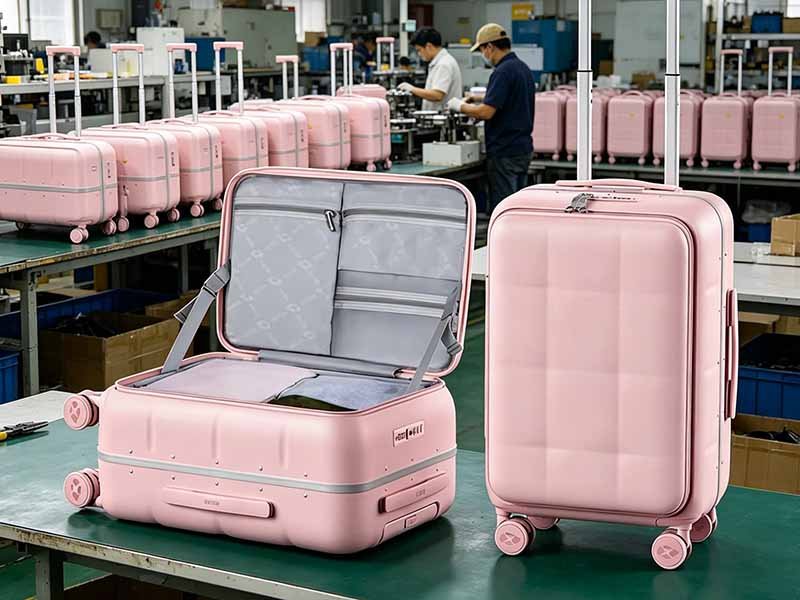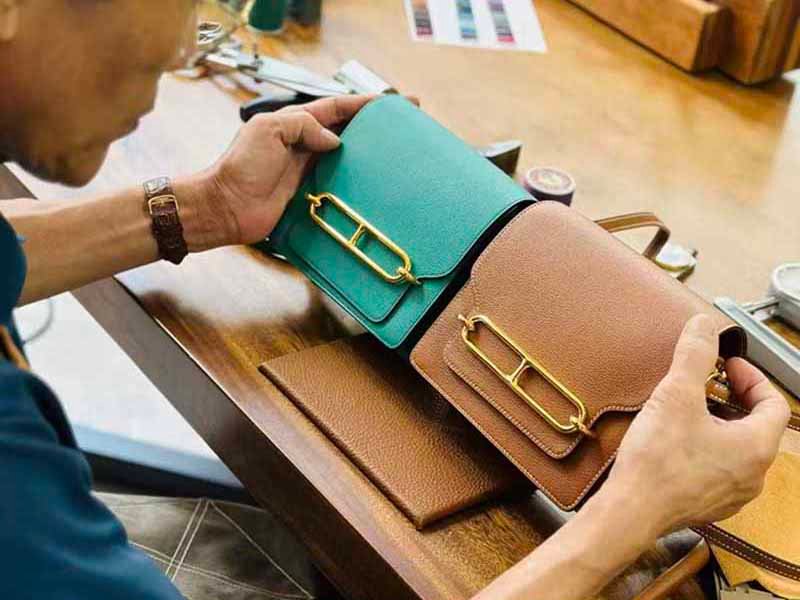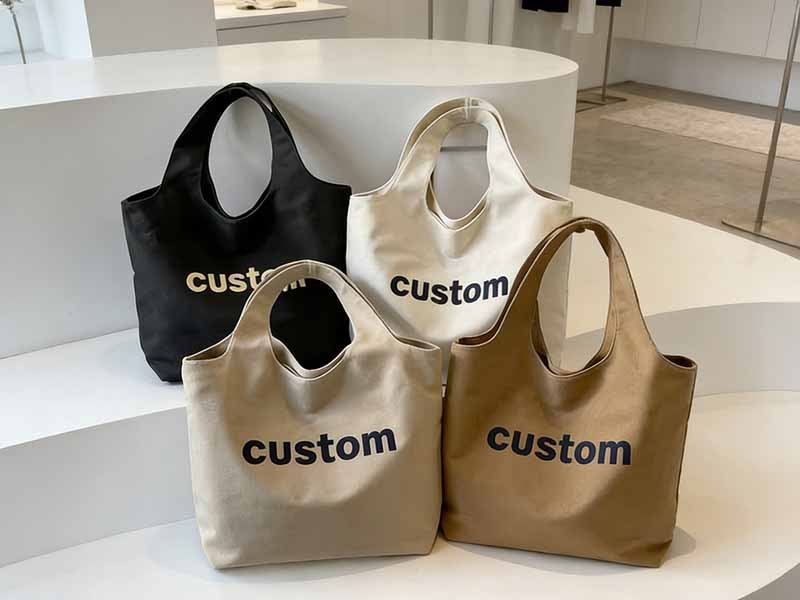
A buyer once asked a very honest question after receiving a custom bag sample quotation: “If the bulk unit price is only a few dollars, why does one sample cost so much?” It is a fair question. When you look at a finished tote bag, backpack, cooler bag, makeup pouch, travel bag, leather pouch, or promotional bag, it is easy to think the sample should simply be the bulk price multiplied by one piece. But custom bag sampling does not work like retail shopping. A sample is not only one physical bag. It is the first real test of your idea, material, structure, logo, sewing method, packaging, and production feasibility.
Custom bag samples are more expensive than bulk units because the sample stage carries development work that bulk production does not repeat for every piece. Pattern making, material sourcing, cutting, logo testing, sample sewing, internal checking, revision advice, packaging review, and communication time are concentrated into one or a few pieces. Bulk production lowers unit cost by spreading these fixed costs across hundreds or thousands of units.
For brands, the better question is not “Why is the sample expensive?” but “What risk does the sample remove before I spend money on bulk production?” A proper sample can stop the wrong fabric, weak handle, poor logo position, inaccurate size, unstable shape, or unsuitable packaging from becoming a 500-piece or 5,000-piece problem. In custom bag manufacturing, the sample is the small bill that protects the big order.
Why Are Custom Bag Samples More Expensive?
Custom bag samples cost more because they carry the development work that bulk units do not repeat. A sample may include material matching, pattern making, cutting, logo testing, sewing trials, internal checking, and buyer feedback. Bulk production becomes cheaper only after these details are approved and repeated across a larger quantity.
Sample Work
A custom bag sample is not simply one bag taken from a production line. In most cases, there is no finished production line yet. The sample is the first physical version of an idea, sketch, reference photo, tech pack, or existing product that the buyer wants to improve.
Before sewing starts, the factory usually needs to review several points: product size, fabric type, lining, zipper, handle length, pocket layout, logo method, packaging, target quantity, and delivery market. A tote bag may only need a few basic decisions, while a backpack, cooler bag, tool bag, medical bag, leather bag, or waterproof bag may require more technical review.
The sample maker also needs to think about whether the product can be repeated in bulk. A design may look good in a drawing but become difficult when real fabric thickness, seam allowance, zipper curve, padding, or handle reinforcement is involved. That early problem-solving time is part of the sample cost.
For buyers, this is important because the sample is not only a preview. It is the first checkpoint for product feasibility. A well-made sample helps both sides confirm whether the bag can be produced with the expected appearance, function, cost, and delivery plan.
One-Piece Labor
One sample often takes more labor per unit than a bulk unit. In bulk production, workers repeat the same sewing step many times. In sampling, the maker may stop frequently to check measurements, adjust the sewing order, test a corner, change a seam, or improve the structure.
For example, making one cosmetic pouch may require checking the opening width, zipper length, lining fit, bottom shape, logo position, and side seam. If the zipper does not sit smoothly, the sample maker may need to reopen the seam and adjust the pattern. This kind of work is normal in sampling but not efficient when measured as “cost per piece.”
A bulk unit is made after the correct route is known. A sample is made while that route is being discovered. That is why comparing one sample to one bulk unit can be misleading. One bulk unit is part of a repeated process. One sample is part of a development process.
Sample vs Bulk
The sample stage and the bulk stage have different purposes. A sample answers, “Can this bag be made correctly?” Bulk production answers, “Can this approved bag be repeated consistently?”
| Stage | Main Purpose | Typical Work | Cost Behavior |
|---|---|---|---|
| First sample | Test the idea | Pattern, material, structure, logo trial | Highest unit cost |
| Revised sample | Correct details | Size, shape, sewing, material, logo adjustment | Still high per piece |
| Approved sample | Set standard | Final confirmation before production | Development cost already absorbed |
| Bulk production | Repeat standard | Batch cutting, sewing, QC, packing | Lower unit cost |
| Repeat order | Reuse confirmed files | Existing pattern and process | Usually more stable |
A professional buyer should see sampling as risk control, not only as a product preview. If the sample catches a weak handle, wrong zipper, poor logo position, unsuitable fabric, or unstable structure, it may prevent the same problem from appearing across hundreds or thousands of pieces.
Hidden Setup
Many sample costs are hidden in setup. The factory may need to prepare a new paper pattern, purchase a small amount of fabric, source matching webbing, test a zipper, create an embroidery file, cut panels manually, and arrange one-off inspection. These tasks do not disappear just because the sample quantity is small.
In bulk production, setup cost is spread across the order. In sampling, it is concentrated into one or a few pieces. This is the simplest reason one sample may cost far more than one bulk unit.
A buyer who understands this can ask better questions. Instead of only asking, “Why is this sample expensive?” it is better to ask, “What work is included in this sample fee, and how will this sample help confirm bulk production?”
What Costs Are Inside a Sample Fee?
A custom bag sample fee may include product review, material sourcing, pattern making, cutting, logo setup, sewing, checking, revisions, sample photos, packaging review, and sometimes shipping. The exact cost depends on the bag’s material, structure, logo process, accessories, packaging, and how much development work is needed.
Pattern and Structure
Pattern making is one of the most important parts of custom bag sampling. A bag is not just a flat piece of fabric. It has body panels, side panels, bottom panels, handles, shoulder straps, lining, pockets, zipper openings, seam allowance, reinforcement points, and sometimes padding or frame support.
For simple bags, pattern work may be quick. For structured bags, it can take much longer. A backpack must consider shoulder strap angle, back panel shape, zipper opening, front pocket depth, lining fit, and load-bearing points. A cooler bag must consider insulation thickness, inner lining, seam bulk, and whether the bag can close neatly. A leather pouch may need edge finishing, skiving, lining, and hardware placement.
If the first pattern is wrong, the sample may look twisted, too flat, too bulky, or difficult to sew. Good pattern work helps reduce those problems before bulk production starts. It also helps the factory estimate the real sewing difficulty, material waste, and possible production risks.
Material Matching
Material is another major cost factor. Buyers often describe a material by look or feeling: “premium canvas,” “soft PU leather,” “waterproof fabric,” “thick nylon,” or “eco-friendly material.” The factory then needs to translate that description into a real material choice.
This may involve checking fabric weight, thickness, coating, color availability, MOQ, price, hand feel, durability, and whether the material can work with the chosen structure. A 600D polyester, 12oz canvas, 2mm neoprene, 0.8mm PU leather, TPU laminated fabric, or genuine leather will behave differently during cutting and sewing.
Even if the sample only uses a small amount of material, suppliers may still need to purchase a minimum length, sheet, panel, or roll. For custom colors or special functional materials, the minimum purchase can be much higher than the sample actually needs.
| Sample Cost Item | Common Range of Impact | Why It Matters |
|---|---|---|
| Pattern making | Medium to high | Needed for custom size, shape, pockets, and structure |
| Ready-stock fabric | Low to medium | Easier to source, but still needs matching |
| Custom color fabric | Medium to high | May require supplier MOQ or dyeing |
| Logo setup | Medium | Printing, embroidery, patch, or plate preparation |
| Custom hardware | Medium to high | Mold, plating, or supplier minimum may apply |
| Complex sewing | High | More panels, padding, lining, and reinforcement |
| Packaging sample | Low to medium | Hangtag, barcode, insert card, polybag, box |
| International shipping | Medium to high | Depends on size, weight, destination, and courier |
Logo Testing
Logo testing can be simple or complicated, depending on the method. A one-color screen print on cotton is usually easier than embroidery on neoprene, debossing on leather, heat transfer on coated fabric, or attaching a metal logo plate to a structured panel.
The sample stage checks whether the logo looks good on the real material. It also checks position, size, color, edge clarity, stitch density, heat resistance, adhesion, and whether the logo affects the bag’s shape. A logo that looks perfect in a digital mockup may be too large for the fabric panel or may wrinkle after sewing.
This is especially important for brand buyers. A bag may be functional, but if the logo looks cheap, crooked, too small, too bright, or poorly placed, the final product will not feel right to customers. In many custom bag projects, the logo is not a small decoration. It is the first thing the end user sees.
Packaging and Handling
Packaging can also be part of sample cost. For Amazon, Shopify, retail, promotional, and gift buyers, packaging is not just protection. It may include polybags, hangtags, barcode labels, warning labels, insert cards, retail boxes, carton marks, or FBA requirements.
A packaging sample helps confirm how the bag is folded, how the logo is displayed, how the barcode is placed, and whether the package protects the product during shipping. For soft bags, poor folding can create creases. For structured bags, tight packaging can deform the shape. For leather or PU bags, poor surface protection can cause marks.
Packaging does not always need to be finalized in the first sample, but buyers should discuss it early. If packaging is ignored until bulk production, it can create delays, extra cost, or warehouse problems later.
How Does Bulk Quantity Lower Unit Cost?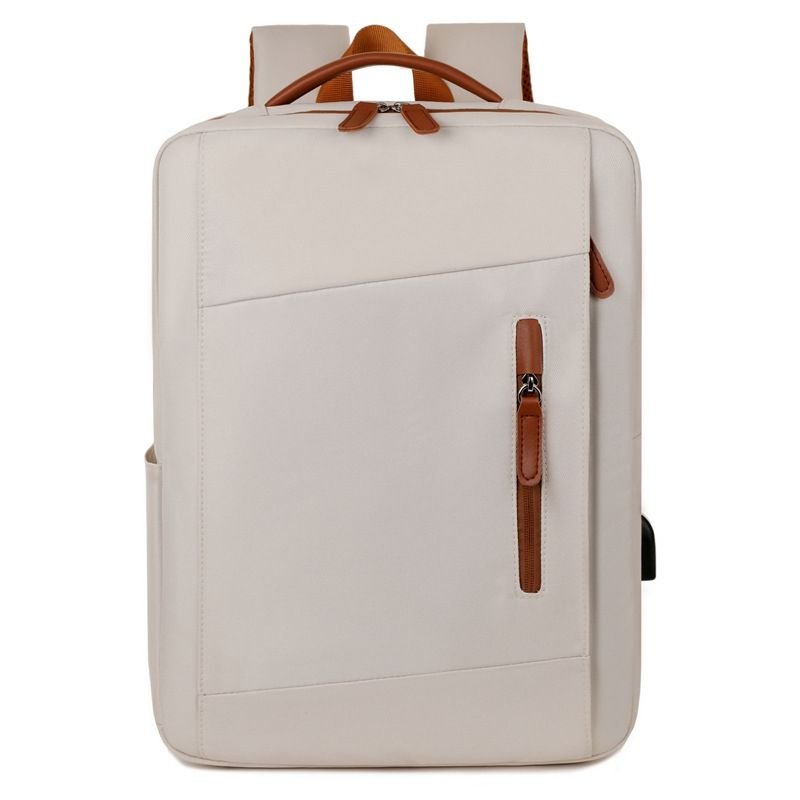
Bulk quantity lowers unit cost because fixed development and setup costs are spread across more pieces. After the sample is approved, the factory can buy materials more efficiently, cut fabric in batches, repeat sewing steps, inspect against one standard, and pack products faster. Higher quantity usually improves production efficiency.
Fixed Cost Spread
Every custom project has fixed work before production becomes efficient. The factory must understand the product, confirm materials, prepare patterns, test logo placement, plan sewing steps, and set inspection standards. These tasks are needed whether the final order is 200 pieces or 5,000 pieces.
When the quantity is small, each unit carries a larger share of that preparation. When the quantity is larger, the same preparation cost is spread over more units. This is why one sample may look expensive, while the bulk unit price becomes more reasonable.
For example, if a project requires several hours of development and setup, that work cannot be divided efficiently into one unit. But if the buyer orders 500 pieces, the cost impact per piece becomes much smaller. If the buyer orders 2,000 pieces, it becomes smaller again.
This does not mean a larger order magically removes cost. It means the production system can use time, material, labor, and management more efficiently.
Cutting Efficiency
Cutting is more efficient in bulk production. For one sample, fabric may be cut by hand or in a very small batch. The maker may need to check each panel carefully and adjust the shape manually. This takes time.
In bulk production, the factory can create a cutting layout, stack fabric layers, reduce waste, and cut multiple pieces at once. This improves speed and material usage. For simple bags such as tote bags, drawstring bags, shopping bags, and flat pouches, the efficiency gain can be obvious. For complex bags, cutting still improves, but the number of panels and fabric types may keep labor higher.
Cutting efficiency also depends on material. Canvas, polyester, nylon, Oxford fabric, PU leather, neoprene, TPU, and EVA all cut differently. Thick, stretchy, coated, or laminated materials may require more careful handling.
Sewing Rhythm
Sewing becomes faster when workers repeat the same process. In sampling, one person may handle many steps and solve problems while sewing. In bulk production, the process can be divided. One worker may sew handles, another may attach zippers, another may assemble lining, another may close the body, and another may trim threads or inspect the finished piece.
This repetition creates rhythm. Workers become familiar with the seam position, turning point, stitch length, zipper direction, reinforcement area, and finishing standard. The more stable the approved sample is, the easier it is to repeat.
| Quantity | Typical Cost Logic | Practical Meaning for Buyers |
|---|---|---|
| 1 sample | Development cost concentrated | Highest cost per unit |
| 50 pcs | Setup cost still heavy | Often not efficient for full custom work |
| 200 pcs | Common trial-order level for selected bags | Better for market testing |
| 500 pcs | More efficient material and sewing planning | Suitable for first serious batch |
| 1,000 pcs | Stronger production efficiency | Lower unit cost for many bag types |
| 3,000+ pcs | Better scale for custom materials or packaging | More room for cost optimization |
Repeat Orders
Repeat orders are usually more efficient because the factory can reuse approved patterns, material references, logo files, packing methods, and QC standards. This does not mean the price will never change, because material and labor costs can move. But repeat production usually has fewer unknowns.
For buyers building a long-term product line, this matters. The first sample and first order may require more communication and adjustment. The second order often becomes smoother. If the buyer keeps the same fabric, color, structure, logo, and packaging, the factory can plan more confidently.
This is one reason serious brands should think beyond one sample. The goal is not only to get one good piece. The goal is to create a production standard that can support repeat orders, new colors, new sizes, and future product expansion.
Which Bag Samples Cost More?
Bag samples cost more when they involve complex structure, special materials, custom accessories, difficult logo work, functional performance, or strict packaging requirements. Simple tote bags, drawstring bags, and basic pouches are usually easier. Backpacks, cooler bags, waterproof bags, leather goods, EVA cases, and tool bags usually require more development.
Simple Bag Types
Simple bags usually cost less to sample because they use fewer panels, fewer accessories, and fewer sewing steps. Common examples include cotton tote bags, canvas tote bags, polyester drawstring bags, simple shopping bags, flat pouches, dust bags, shoe bags, and basic cosmetic bags.
These products often use standard fabric, standard thread, simple seams, and basic logo methods. If the buyer chooses ready-stock materials and a simple print logo, the sample process is more direct.
However, a simple bag can become more expensive if the specification becomes more custom. A basic tote with heavy canvas, inside lining, zipper closure, inner pocket, reinforced handle, full-panel print, woven label, hangtag, and retail packaging is no longer a very simple sample. The product name may be “tote bag,” but the actual work is more involved.
Structured Bags
Structured bags usually cost more because they require more engineering. Backpacks, duffle bags, cooler bags, lunch bags, travel bags, baby bags, pet carriers, tool bags, medical bags, tactical bags, golf bags, and camera bags need more planning.
A backpack must carry weight and stay comfortable. A cooler bag must hold insulation and lining without becoming too bulky. A medical bag may need many internal compartments. A tool bag must handle stress at the seams and handles. A pet carrier needs ventilation, structure, safety, and comfort. These are not just appearance questions. They affect how the product works.
Structured samples also use more components: zippers, sliders, webbing, buckles, foam, lining, binding tape, mesh, elastic, hook-and-loop, hardware, labels, and reinforcement materials. Each component adds sourcing, testing, and assembly work.
Functional Bags
Functional bags often cost more to sample because they need performance checks. Waterproof bags may require TPU, PVC, coated fabric, waterproof zippers, welded seams, or special closure design. Cooler bags may require PEVA lining, aluminum foil lining, foam insulation, leak-resistant construction, and temperature-related performance expectations. RFID-blocking bags need shielding materials. Fire-resistant bags require careful material selection and should not be marketed with exaggerated claims without proper testing.
For functional products, buyers should be careful with cheap samples. A bag that looks right may not perform correctly. If the product claim matters to the customer, the sample stage should check the construction, not just the appearance.
| Bag Type | Sample Complexity | Typical Cost Drivers |
|---|---|---|
| Cotton tote bag | Low | Fabric weight, handle length, print logo |
| Drawstring bag | Low | Cord, corner reinforcement, print area |
| Cosmetic pouch | Low to medium | Lining, zipper, bottom shape, logo |
| Cooler bag | Medium to high | Insulation, lining, zipper, leak resistance |
| Backpack | High | Padding, straps, compartments, reinforcement |
| Leather pouch | High | Leather selection, skiving, edge finish, hardware |
| Waterproof dry bag | High | TPU/PVC material, seam method, closure |
| EVA case | High | Molded shell, zipper, lining, forming process |
Premium Details
Premium details can quickly raise sample cost. These include custom zipper pullers, metal plates, rubber patches, silicone labels, jacquard webbing, custom buckles, molded EVA shells, leather edge painting, waterproof zippers, special lining, multiple compartments, and retail gift boxes.
The key question is whether the detail supports the product’s selling point. If a premium logo plate helps the bag feel more suitable for retail, it may be worth testing. If custom hardware is not important for the first market test, standard hardware may be a better choice.
Experienced buyers often separate “must-have” and “nice-to-have” details before sampling. Must-have details should be tested early. Nice-to-have details can be added after the structure, material, and main cost are confirmed.
Is a High Sample Fee Reasonable?
A high sample fee can be reasonable when it reflects real development work, special materials, custom logo setup, complex structure, packaging, or revision support. Buyers should judge the fee by what it includes and what risk it reduces. The cheapest sample is not always the safest choice.
Reasonable Fee
A reasonable sample fee should be explainable. The factory should be able to tell you whether the fee includes pattern making, material sourcing, logo setup, sample sewing, packaging, revision, or shipping. If the product is complex, the fee should reflect that complexity.
For example, a basic canvas tote sample should not be priced like a structured waterproof backpack. At the same time, a leather pouch with custom hardware, lining, logo debossing, and edge finishing should not be expected to cost the same as a simple cotton bag.
Buyers should also understand that some sample fees are partly commercial. A factory may charge more to cover development time and filter serious projects. This is common in B2B custom manufacturing. If a buyer cannot accept any sample fee, the supplier may question whether the project has real bulk potential.
Cheap Sample Risk
A very cheap sample can create hidden risk. It may use available fabric that will not be used in bulk. It may skip proper pattern adjustment. It may use a temporary logo method. It may be made quickly by hand but not designed for repeat production. It may look acceptable in photos but fail when scaled.
The biggest risk is not receiving a poor sample. The bigger risk is approving a sample that cannot become a stable bulk standard. If the sample material is unavailable, the zipper is not bulk-ready, the sewing method is too slow, or the structure is too difficult to repeat, the buyer may face price changes, delays, or quality issues later.
A sample should help reveal the real production path. If it hides problems just to look cheap, it is not doing its job.
Buyer Questions
Before paying a sample fee, buyers should ask clear questions. These questions are not aggressive. They help both sides avoid misunderstanding.
| Question | Why It Matters |
|---|---|
| What exactly is included in the sample fee? | Clarifies development, logo, packaging, and shipping |
| Will the sample use bulk-ready materials? | Prevents mismatch between sample and production |
| Is the logo method final or temporary? | Avoids surprise setup changes later |
| How many revisions are included? | Controls future sample cost |
| Can the sample fee be deducted from bulk order? | Clarifies commercial policy |
| When will the final bulk price be confirmed? | Prevents unrealistic early estimates |
| What MOQ applies to this material and logo? | Links sample choice to real production |
| Will the approved sample become the QC standard? | Protects sample-to-bulk consistency |
Refund and Deduction
Some suppliers deduct part of the sample fee from a confirmed bulk order. Some do not. Both can be reasonable depending on the project. If the sample uses custom materials, special hardware, mold work, multiple revisions, or heavy development labor, full deduction may not be realistic.
The important point is clarity. Buyers should confirm the policy before paying: Is the fee refundable? Is it deductible? Is shipping separate? Are revisions included? Is logo setup included? Does the deduction require a certain order quantity?
A clear sample policy builds trust. A vague sample policy creates doubt. Professional buyers should not be afraid of paying a fair sample fee, but they should avoid paying unclear charges with no explanation.
How Do Samples Reduce Bulk Risk?
Samples reduce bulk risk by turning assumptions into physical standards. They help confirm material, size, shape, logo, zipper, stitching, structure, packaging, and user experience before mass production. An approved sample gives the buyer and factory one shared reference for production and quality inspection.
Physical Standard
A sample creates a physical standard that words and photos cannot fully replace. A buyer may describe a bag as “sturdy,” “premium,” “soft,” “lightweight,” or “structured,” but these words can mean different things to different people. A sample makes the expectation visible and touchable.
Once approved, the sample can guide production. The factory can compare bulk goods against the sample for size, shape, material, color, logo position, stitching, zipper, handle length, pocket layout, and packaging. This is especially important for custom products where small details affect the final customer experience.
Without a sample, the buyer and factory may both think they understand the product, but they may imagine different versions. That gap can become expensive in bulk production.
Quality Checkpoints
A good sample helps define what should be checked during production. For example, if the sample confirms a 30 cm handle drop, bulk inspection can check handle drop against that standard. If the approved logo is 8 cm wide and centered 5 cm below the zipper, QC can check that position. If the zipper on the sample runs smoothly, bulk inspection can check zipper movement across production.
Sample-based QC is more practical than vague quality language. Instead of saying “make it good quality,” the buyer and factory can agree on specific checkpoints.
Common sample-based checkpoints include:
Size and dimensional tolerance.
Fabric type, color, texture, thickness, and hand feel.
Lining structure and inner compartment layout.
Zipper size, zipper movement, slider direction, and puller finish.
Handle length, shoulder strap strength, and reinforcement points.
Logo size, color, position, clarity, and durability.
Stitching density, seam neatness, binding, and corner finishing.
Packaging method, folding style, barcode label, carton mark, and carton quantity.
This is how a sample becomes more than one product. It becomes a production reference.
Cost Protection
Samples protect the buyer’s budget. If a mistake is found in one sample, the cost is limited. If the same mistake appears in 1,000 units, the cost becomes much higher. Wrong material, poor logo placement, weak stitching, bad packaging, or incorrect size can lead to returns, discounts, delays, customer complaints, and lost sales.
For Amazon and Shopify sellers, sample approval can also protect reviews. A bag that looks good in listing photos but arrives with weak seams, wrong dimensions, or poor packaging may hurt customer ratings. For retail buyers, a poor bulk order can affect shelf presentation and reorder decisions. For promotional buyers, late or incorrect goods can damage an event campaign.
The sample stage is often the cheapest time to make changes. After fabric is cut and bulk sewing begins, changes become slower and more expensive.
Better Bulk Communication
Samples also make communication easier. Buyers can mark comments directly on the sample photos. Factories can send videos showing zipper movement, handle strength, shape, logo effect, or packaging method. Both sides can discuss real details instead of guessing from a drawing.
This is especially useful for overseas buyers working with manufacturers in China. Time zones, language differences, and technical terms can create misunderstanding. A clear sample reduces those gaps.
For serious custom bag projects, the sample is not a delay. It is the bridge between idea and production. It gives the buyer confidence, gives the factory a standard, and gives the bulk order a better chance of arriving as expected.
If you are developing custom tote bags, backpacks, cooler bags, lunch bags, makeup bags, cosmetic pouches, travel bags, duffle bags, gym bags, beach bags, leather goods, neoprene products, EVA cases, waterproof bags, tool bags, medical bags, or other sewn soft goods, Szoneier can help review your project from sample to bulk production.
Send your product photo, sketch, reference sample, tech pack, logo file, target quantity, packaging requirement, and delivery country to Szoneier. Our team can help evaluate materials, structure, sample cost, MOQ, bulk pricing factors, packaging, quality control, and shipping options.
Contact Szoneier to request a custom bag sample quotation and build a clearer path from first sample to stable bulk order.