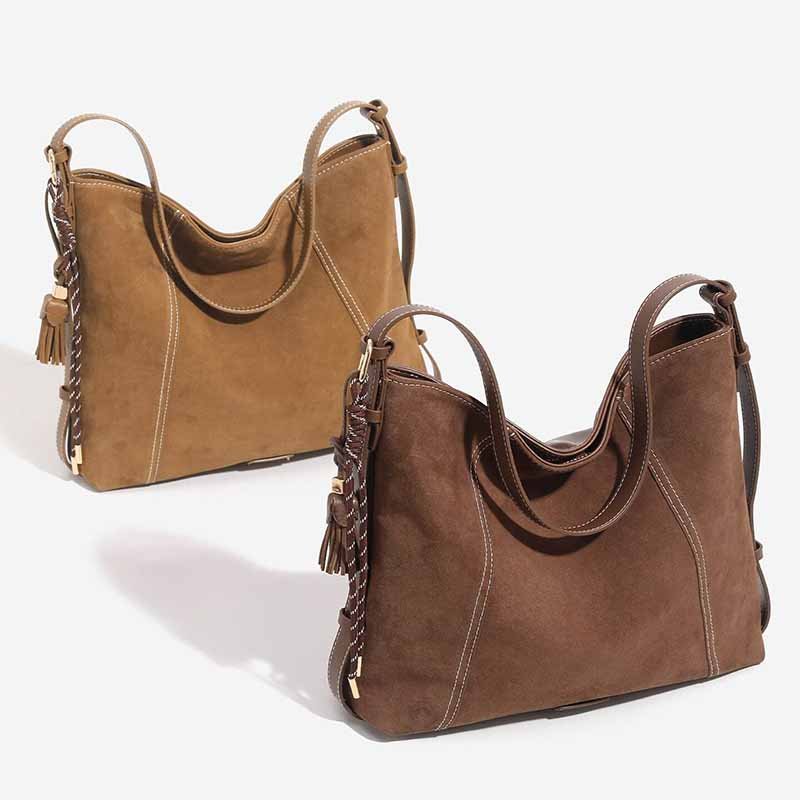
A hobo bag often looks effortless when it is hanging on a shoulder, but producing that relaxed shape requires careful control. The body has to fold naturally without looking weak. The strap has to remain comfortable after the bag is filled. The top opening must be wide enough for daily use, while the lining, zipper, pockets, and reinforcement layers must stay hidden inside a soft silhouette. A difference of only 10 to 20 millimeters in strap position, gusset depth, or zipper length can change the way the whole bag sits.
A hobo bag manufacturer produces curved, soft-structured shoulder bags in different sizes, materials, and carrying formats. Products may include mini hobo bags, classic shoulder bags, oversized carryalls, crossbody designs, convertible bags, and neoprene hobo bags. Manufacturing services can cover design adjustment, material selection, pattern making, sample development, logo application, sewing, inspection, packaging, and OEM or private-label production.
The finished product may look simple, but every successful hobo bag is built around dozens of decisions: how much weight it should carry, how soft the body should feel, where the strap should connect, whether the zipper should curve smoothly, and how the bag should recover after being packed or compressed.
One sample may look attractive on a table but twist when worn. Another may feel comfortable when empty but stretch after carrying five kilograms. Understanding what a manufacturer really produces means looking beyond the exterior and examining the engineering hidden inside the slouch.
What Is a Hobo Bag Manufacturer?
A hobo bag manufacturer develops and produces soft, curved shoulder bags for fashion collections, retail programs, travel use, sports applications, promotional projects, and private-label ranges. Work may include structural design, material sourcing, pattern development, sampling, cutting, stitching, reinforcement, logo application, inspection, packing, and production management.
A factory should not be judged only by whether it can sew a bag that resembles a reference photo. The more important test is whether it can convert the idea into clear specifications that remain consistent throughout production.
What Is a Hobo Bag?
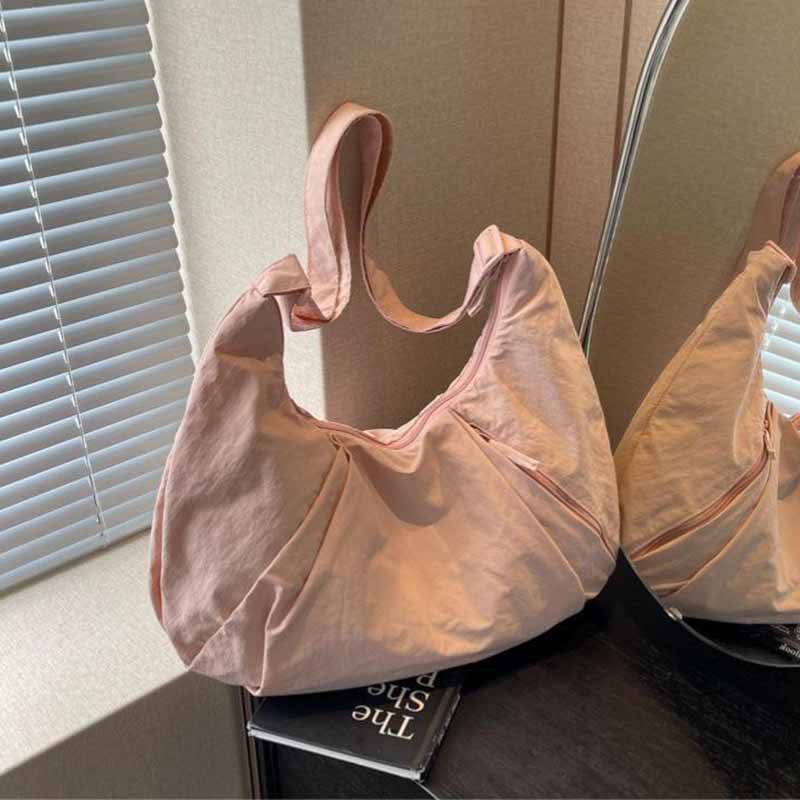
A hobo bag is a shoulder bag with a curved upper line, a relaxed body, and a silhouette that bends toward the center when carried. Most designs use one main strap, although longer crossbody straps, detachable handles, or convertible strap systems may also be added.
Several details separate a hobo bag from other soft bags:
- The body normally has a crescent, half-moon, or rounded profile.
- The opening is often integrated into the upper curve.
- The strap is connected close to the upper corners or side panels.
- The bag gains part of its shape from the items placed inside.
- The material is expected to bend without forming uncontrolled wrinkles.
- The base may be soft, lightly reinforced, or completely structured.
A tote normally stands more upright and uses two handles. A bucket bag usually has a vertical body and round base. A hobo bag is designed to follow the body and create a softer line.
The name alone is not enough for production. A factory still needs dimensions, strap drop, opening width, gusset depth, pocket layout, material thickness, hardware finish, lining construction, and intended load.
What Does the Manufacturer Handle?
A complete manufacturing service covers far more than sewing. Product development normally moves through several connected stages.
| Production Stage | Main Work | Information Required |
|---|---|---|
| Design review | Check shape, function, size, and construction | Sketch, photo, drawing, or reference sample |
| Material selection | Confirm surface fabric, backing, lining, and reinforcement | Appearance, hand feel, weight, target cost |
| Pattern development | Convert the shape into cuttable panels | Finished dimensions and structural details |
| Sample making | Test shape, fit, sewing, hardware, and usability | Color, logo, accessories, and packaging needs |
| Pre-production approval | Freeze measurements and workmanship | Approved sample and specification sheet |
| Bulk manufacturing | Cut, sew, assemble, inspect, and pack | Confirmed quantity and delivery plan |
| Final inspection | Check measurements, appearance, function, and packing | Approved quality standard |
An experienced factory also identifies risks before production. A long strap may need internal webbing. A large opening may require zipper reinforcement. A soft material may need backing around the pocket. A printed logo may crack when placed across a fold. Finding such problems during sampling costs far less than correcting them after several thousand pieces have been made.
What Information Is Needed?
A useful quotation depends on how clearly the project is defined. A photo can communicate style, but it rarely provides enough information for accurate pricing.
The factory normally needs:
- Finished width, height, and gusset depth
- Strap length, width, thickness, and drop
- Intended carrying method
- Main material and lining material
- Material thickness or weight
- Main closure type
- Number and position of pockets
- Hardware material and finish
- Logo size, position, and application method
- Color requirements
- Packaging format
- Estimated order quantity
- Required delivery date
- Target market
- Expected load capacity
A quotation based only on a reference image may later change when hidden details become clear. For example, adding a full lining, metal zipper, internal divider, reinforced base, woven label, custom puller, and printed gift box can change both cost and production time.
Providing the intended use is equally important. A soft fashion bag carrying a phone and cosmetics has very different construction needs from a travel hobo bag expected to hold a laptop, water bottle, clothing, and personal accessories.
What Makes a Reliable Factory?
A reliable hobo bag factory controls material behavior, dimensions, sewing accuracy, reinforcement, appearance, and repeatability. The approved sample should not be treated as a rough reference. It should become the physical standard for production.
Several areas deserve close attention:
- Measurement tolerances should be defined before cutting begins.
- Strap joints should be reinforced according to expected load.
- Curved zippers should open smoothly without visible waves.
- Lining panels should not pull the exterior out of shape.
- Hardware colors should remain consistent across the order.
- Logos should be positioned with measurable reference points.
- Packed bags should recover after storage and transportation.
- Carton size should prevent heavy compression or deformation.
For soft hobo bags, visual inspection alone is not enough. The bag should also be filled, carried, opened, closed, and suspended under load. A neat seam may still fail if the wrong thread, stitch density, or reinforcement method is used.
Szoneier combines more than 18 years of material development and finished-product manufacturing experience. Its work with neoprene and related laminated materials allows the development team to adjust surface fabric, thickness, stretch, density, backing, reinforcement, and sewing construction according to the desired bag shape.
Which Hobo Bags Do Manufacturers Produce?
Manufacturers can produce classic hobo bags, mini bags, oversized carryalls, crossbody styles, convertible designs, and neoprene versions. Each format requires different dimensions, reinforcement, strap construction, closure design, and internal organization. The right design depends on what the bag needs to carry, how it will be worn, and how soft or structured it should feel.
Hobo bags can be developed from an existing factory model or created from an original drawing. Changing the material alone is not always enough. A structure made for leather may not perform correctly in nylon, canvas, or neoprene without changes to seam allowance, reinforcement, edge treatment, and strap construction.
| Hobo Bag Style | Common Width | Common Capacity | Expected Load | Main Construction Concern |
|---|---|---|---|---|
| Mini hobo bag | 18–25 cm | 1–3 L | 1–2 kg | Opening width and small-part accuracy |
| Classic hobo bag | 28–38 cm | 5–10 L | 2–4 kg | Balanced slouch and strap comfort |
| Oversized hobo bag | 40–55 cm | 15–30 L | 5–10 kg | Load distribution and reinforcement |
| Crossbody hobo bag | 25–38 cm | 4–10 L | 2–5 kg | Strap angle and body stability |
| Convertible hobo bag | 28–45 cm | 8–20 L | 3–8 kg | Multiple attachment points |
| Neoprene hobo bag | 25–50 cm | 5–25 L | 2–8 kg | Stretch control and seam structure |
The figures above are planning ranges rather than fixed rules. Actual dimensions and load requirements should be confirmed during product development.
What Are Classic Hobo Bags?
A classic hobo bag normally has a medium-sized curved body, one shoulder strap, and enough capacity for daily essentials. Common closures include a top zipper, recessed zipper, magnetic snap, or short zipper combined with an open upper curve.
The main design challenge is controlling the slouch. Too much structure makes the bag stiff and bulky. Too little structure causes the body to collapse, expose the lining, or pull heavily around the strap joints.
Important construction decisions include:
- Whether the body uses two main panels or several shaped sections
- Whether the gusset continues around the base
- Whether the strap grows directly from the body
- Whether a separate strap is stitched to reinforced side tabs
- Whether the zipper follows the curve or sits on a recessed panel
- Whether the base needs light foam, board, or woven reinforcement
A classic daily hobo bag commonly measures about 30 to 38 centimeters wide, 22 to 32 centimeters high, and 8 to 15 centimeters deep. A shoulder drop of around 22 to 35 centimeters works for many designs, although winter clothing and regional carrying preferences may require a longer drop.
What Are Mini Hobo Bags?
Mini hobo bags reduce the curved silhouette into a compact accessory. Their small dimensions make proportion and usability especially important. Hardware that looks balanced on a full-sized handbag may appear oversized on a 20-centimeter bag. A narrow zipper opening may prevent a smartphone from fitting even when the outer body looks large enough.
Common mini bag specifications include:
- Width from 18 to 25 centimeters
- Height from 10 to 18 centimeters
- Gusset from 4 to 9 centimeters
- Capacity from about 1 to 3 liters
- Short shoulder strap or detachable crossbody strap
- One main compartment
- Small card pocket or slip pocket
- Lightweight zipper, snap, or magnetic closure
Small bags are not always easier to manufacture. Tight curves, short zipper sections, narrow bindings, and tiny seam allowances can require slower sewing and more precise handling. Logo size also needs control. An embroidery design that is too dense may stiffen the entire front panel, while a large metal plate may pull the soft body out of shape.
What Are Oversized Hobo Bags?
Oversized hobo bags are used for commuting, travel, shopping, gym visits, weekend packing, and high-capacity daily carry. Widths often range from 40 to 55 centimeters, with depths of 15 to 25 centimeters or more.
Capacity increases quickly as the gusset becomes deeper. Added space also increases the possible load, making reinforcement more important.
Areas requiring added strength include:
- Shoulder strap attachment points
- Upper zipper ends
- Side seams
- Base corners
- Internal bottle pockets
- Laptop sleeves
- Removable strap hooks
- Magnetic closure backing
A large bag should be tested under realistic weight. A sample intended for a five-kilogram load should not be evaluated only while empty. Filling it with evenly distributed weight reveals whether the strap stretches, seams open, hardware rotates, or the body becomes uncomfortable.
Material weight must also be considered. Thick leather can create an attractive premium appearance but may make an oversized bag heavy before use. Nylon, polyester, canvas, and neoprene can reduce empty weight, but each one needs a suitable support system.
What Are Crossbody Hobo Bags?
A crossbody hobo bag combines a soft curved body with a longer strap. The design may use a fixed strap, adjustable webbing, a buckle, slider, swivel hooks, D-rings, or removable connectors.
Simply adding a longer strap to a shoulder bag often produces poor results. Attachment points must be positioned so the body remains stable against the torso. Connections placed too close together can cause the bag to rotate. Connections placed too high can pull the zipper opening inward.
Useful strap planning data includes:
- Finished strap length
- Adjustable range
- Strap width
- Maximum expected load
- Hardware size
- Attachment angle
- Left-side and right-side orientation
- Whether the strap is removable
- Whether the bag must also work as a shoulder style
A 25-millimeter strap may be suitable for a compact bag, while a larger loaded bag may need a 32- to 50-millimeter strap for comfort. Padding, neoprene shoulder sections, double-layer webbing, or rolled fabric construction can improve pressure distribution.
What Are Convertible Hobo Bags?
Convertible hobo bags can be worn in two or more ways. Common formats include shoulder-to-crossbody, hand-carry-to-shoulder, tote-to-hobo, and shoulder-to-backpack designs.
Every carrying method adds structural demands. A loop used only for decoration may fail when it becomes a load-bearing attachment. Removable hooks require sufficient metal thickness and a secure connection to the body. Hidden backpack straps need storage space without creating uncomfortable bulk.
Convertible construction may include:
- Detachable long straps
- Adjustable short handles
- Foldable handles
- Hidden webbing loops
- Multiple D-ring positions
- Zippered strap storage
- Snap-adjusted side panels
- Removable shoulder pads
The factory should test every approved carrying mode. A bag may perform well over the shoulder but become unbalanced when converted to crossbody use. Strap length, attachment position, hardware orientation, and internal weight distribution all need evaluation.
Are Neoprene Hobo Bags Available?
Neoprene is well suited to hobo bags that need softness, cushioning, flexibility, and a clean modern profile. It can be laminated with polyester, nylon, jersey, or other surface textiles, creating many color, texture, stretch, and print options.
Common thickness ranges for bag applications include approximately 1.5, 2, 2.5, 3, and 4 millimeters. Thicker material does not automatically mean better quality. The correct thickness depends on size, panel shape, desired slouch, load, sewing method, and edge finish.
Neoprene hobo bags may include:
- Solid-color or printed exterior panels
- Perforated sections
- Bound or folded edges
- Recessed zippers
- Webbing-reinforced handles
- Internal woven reinforcement
- Removable base boards
- Polyester or nylon linings
- Embroidery
- Heat-transfer logos
- Rubber patches
- Woven labels
- Custom zipper pullers
Szoneier can develop the material and finished bag together rather than treating fabric selection and sewing as separate steps. Material density, stretch direction, surface lamination, panel size, seam type, handle reinforcement, and logo method can be adjusted during sampling.
For example, a 45-centimeter neoprene hobo bag may look soft and comfortable when empty, but the handle area can stretch once the bag is loaded. Internal webbing can carry the weight while the neoprene provides the desired appearance and hand feel. Such hidden reinforcement allows the finished bag to remain relaxed without depending on foam alone for strength.
Which Materials Are Used?
Hobo bags can be manufactured from leather, PU leather, canvas, nylon, polyester, recycled textiles, and neoprene. Material selection affects the bag’s shape, weight, durability, cleaning method, sewing process, logo options, and final price. A good material should support the intended silhouette while remaining comfortable under the expected carrying load.
The same pattern can behave very differently when made from another material. A leather body may hold a rounded shape with limited internal support, while a thin nylon body may collapse unless the lining, binding, or base is reinforced. Neoprene offers natural cushioning and body, but stretch must be controlled around straps, zippers, and loaded areas.
| Material | Common Specification | Main Strength | Main Limitation | Suitable Hobo Bag Use |
|---|---|---|---|---|
| Genuine leather | 1.0–2.0 mm | Premium feel and aging character | Higher weight and cost | Fashion and premium collections |
| PU leather | 0.7–1.5 mm | Consistent finish and color | Coating quality varies | Retail and seasonal styles |
| Canvas | 8–20 oz | Strong, natural texture | Can absorb water | Daily and casual bags |
| Nylon | 210D–1000D | Lightweight and abrasion-resistant | Often needs structure | Travel and sports styles |
| Polyester | 300D–900D | Stable, printable, cost-controlled | Less premium hand feel | Promotional and daily bags |
| Neoprene | 1.5–4 mm | Soft, padded, flexible | Needs stretch reinforcement | Fashion, fitness, and travel |
| Recycled fabric | Varies by yarn and weave | Supports recycled-material programs | Batch consistency needs control | Lifestyle and retail collections |
Material specifications should be confirmed through physical samples. A name such as “nylon,” “canvas,” or “neoprene” does not define thickness, weight, stretch, coating, density, or surface finish.
Is Leather Suitable?
Leather is suitable for hobo bags because it can combine softness with controlled structure. Full-grain, top-grain, split leather, suede, and corrected-grain leather each create a different appearance and performance level.
Soft cowhide between approximately 1.0 and 1.5 millimeters is often used for relaxed shoulder bags. Thicker leather may create a firmer silhouette but also adds weight and makes curved seams harder to turn. Thin leather can feel luxurious, although high-stress areas may require backing fabric or reinforcement tape.
Important leather decisions include:
- Animal source and leather grade
- Finished thickness
- Surface coating
- Grain consistency
- Color variation allowance
- Scratch resistance
- Edge-paint compatibility
- Folding and crease behavior
- Odor control
- Colorfastness
Natural leather can vary from hide to hide. Grain, scars, pores, and color depth may not be completely uniform. Clear acceptance standards should be agreed before cutting. For large orders, the factory should sort hides by color tone and surface quality to avoid obvious differences within one bag or one carton.
Leather strap joints often need skiving, folded edges, internal reinforcement, and controlled stitch distance. Excessive thickness can cause bulky seams, while over-skiving can weaken the attachment area.
Is PU Leather Suitable?
PU leather provides a consistent surface, broad color selection, and more predictable cutting yield than natural leather. It can be produced with smooth, pebbled, matte, glossy, metallic, printed, embossed, or suede-like finishes.
Quality varies significantly according to the base fabric, coating formula, thickness, hydrolysis resistance, and finishing process. Two PU materials may look almost identical during sampling but perform very differently after heat, humidity, folding, and abrasion exposure.
Specifications worth confirming include:
- Total material thickness
- PU coating thickness
- Base fabric construction
- Abrasion resistance
- Peel strength
- Cold-crack performance
- Hydrolysis resistance
- Colorfastness to rubbing
- Surface adhesion
- Restricted-substance compliance
A common mistake is selecting PU leather only from photographs. Surface texture may look attractive, but the material can feel too stiff, crease sharply, or peel around folded edges.
For hobo bags, softer PU usually produces a more natural drape. The material may still need reinforcement around the zipper, handle ends, magnetic snaps, and metal fittings. If edge paint is used, the factory should test adhesion and flexing before production because poor compatibility can cause cracking.
Are Canvas Hobo Bags Durable?
Canvas is durable and suitable for casual, work, travel, shopping, and lifestyle hobo bags. Cotton canvas offers a natural texture, while polyester-cotton blends improve dimensional stability and reduce shrinkage.
Canvas weight is commonly expressed in ounces per square yard. Lighter 8- to 10-ounce canvas works for soft daily bags, while 12- to 16-ounce fabric provides more body. Very heavy canvas may be suitable for utility styles but can become difficult to fold around tight curves.
Canvas performance depends on more than fabric weight:
- Yarn thickness
- Weave density
- Fiber composition
- Shrinkage rate
- Colorfastness
- Coating or washing treatment
- Seam strength
- Surface abrasion
- Printing compatibility
Washed canvas can create a soft vintage appearance, although washing may change measurements and color tone. Patterns should account for shrinkage, and the treatment should be tested before final dimensions are approved.
Canvas can support screen printing, embroidery, woven patches, leather labels, heat transfer, and direct digital printing. Dense embroidery should be backed to prevent the fabric from puckering. Light-colored canvas may also need stain-resistant treatment or protective packaging.
Why Is Nylon Used?
Nylon is used when low weight, tear resistance, abrasion resistance, and flexible packing are priorities. It is common in travel, commuter, sports, outdoor, and water-resistant hobo bags.
Common constructions include 210D, 420D, 500D, 600D, and 1000D nylon. Denier indicates yarn thickness but does not directly define finished fabric strength. Weave, coating, yarn quality, and finishing also matter.
A lightweight nylon bag may use:
- PU or TPU backing
- Water-repellent surface treatment
- Ripstop reinforcement
- Polyester or nylon lining
- Foam around the base
- Webbing inside the strap
- Binding along internal seams
- Reinforced zipper ends
Nylon is usually lighter than canvas or leather at a similar bag size. A 40-centimeter nylon hobo bag may weigh several hundred grams less than a leather version, which matters for travel and all-day use.
Water resistance should not be confused with waterproof construction. Coated nylon can resist light rain, but water may enter through seams and zipper openings. Waterproof performance requires seam sealing, suitable zipper construction, and carefully controlled assembly.
What Makes Neoprene Suitable?
Neoprene gives a hobo bag softness, cushioning, flexibility, and a rounded shape without requiring heavy padding. It is especially useful for fashion, fitness, beach, travel, and lifestyle collections.
Neoprene used for bags is usually laminated with a surface textile. The final material may include:
- Polyester jersey
- Nylon jersey
- Lycra-type stretch fabric
- Printed polyester
- Brushed fabric
- Textured surface fabric
- Recycled polyester lamination
Thickness commonly ranges from 1.5 to 4 millimeters. A 2-millimeter material may work for a compact fashion bag, while a larger carryall may need 2.5- or 3-millimeter material with hidden webbing reinforcement.
Density is as important as thickness. Low-density foam feels softer but may compress more quickly. Higher-density material offers better shape retention but may feel firmer. Stretch direction should also be controlled during panel cutting so the left and right sides behave consistently.
Neoprene edges can be bound, folded, covered with fabric tape, stitched flat, or left raw when the construction allows it. Raw edges create a clean modern look, but cutting accuracy becomes more visible. Uneven knife cutting, rough edges, or adhesive marks can reduce the finished appearance.
Are Recycled Materials Available?
Recycled polyester, recycled nylon, recycled neoprene alternatives, recycled linings, and recycled webbing can be used in custom hobo bags. Material claims should be supported by supplier documents and traceable specifications rather than relying only on marketing descriptions.
Useful records may include:
- Recycled-content certificates
- Transaction documentation
- Material composition reports
- Dye and finishing records
- Restricted-substance test reports
- Batch identification
- Supplier declarations
Recycled materials can show differences in hand feel, color consistency, and tensile strength depending on yarn source and manufacturing process. Samples should therefore be tested under the same construction planned for production.
A bag can also be designed to reduce unnecessary material without changing the exterior appearance. Efficient panel placement, fewer decorative layers, lightweight hardware, and simplified packaging may lower material use and shipping weight.
For projects using recycled fabric, Szoneier can coordinate the exterior, lining, webbing, labels, and packaging so the recycled-content plan is consistent across the whole product instead of being limited to one visible panel.
How Are Custom Hobo Bags Made?
Custom hobo bags are made through design review, material selection, pattern engineering, sample development, structural testing, bulk cutting, sewing, inspection, and packing. Each stage should be based on approved measurements and workmanship standards. The goal is not only to create an attractive sample, but to produce the same shape, function, and finish throughout the order.
A successful development process removes uncertainty before mass production. Dimensions, materials, color, logo position, hardware, stitch type, reinforcement, packaging, and acceptable tolerances should all be fixed through the approved sample and specification sheet.
| Development Step | Main Output | Common Time Range |
|---|---|---|
| Design review | Construction proposal and initial quotation | 1–3 days |
| Material sourcing | Swatches and accessory options | 2–7 days |
| Pattern development | First production pattern | 1–3 days |
| Sample making | Physical prototype | 5–10 days |
| Sample revision | Corrected shape and details | 3–7 days |
| Pre-production sample | Final manufacturing standard | 5–10 days |
| Bulk production | Finished order | 20–35 days |
| Inspection and packing | Shipment-ready cartons | 2–5 days |
Production times depend on material availability, design difficulty, order size, custom hardware, printing, testing, and packaging.
How Is the Structure Designed?
Structural design begins with the intended use. A small fashion bag and a high-capacity travel bag should not share the same internal support simply because their exterior shapes look similar.
The factory reviews:
- Finished size
- Capacity
- Expected load
- Carrying position
- Strap width and drop
- Opening length
- Gusset depth
- Pocket layout
- Closure method
- Base structure
- Required softness
The body curve is particularly important. A shallow curve creates a wider opening and a more horizontal appearance. A deeper curve creates a stronger crescent shape but may reduce access to the main compartment.
Strap placement affects both balance and comfort. Moving an attachment point by 10 to 15 millimeters can change how the bag hangs. Larger styles may need a full internal webbing path connecting one strap end to the other. This allows the webbing to carry the load while the exterior material creates the visual shape.
Pocket position also affects balance. A heavy phone pocket placed high on one side can cause the bag to tilt. Laptop sleeves, bottle pockets, and internal dividers should be planned according to weight distribution rather than added wherever empty space appears.
How Are Materials Selected?
Material selection should begin with performance, not appearance alone. The factory compares softness, thickness, stretch, weight, strength, surface finish, cleaning requirements, logo compatibility, and cost.
A useful selection process includes:
- Reviewing physical swatches
- Folding the material along the planned curve
- Testing seam thickness
- Checking color under different lighting
- Testing printing or embroidery
- Measuring stretch and recovery
- Evaluating surface abrasion
- Confirming lining compatibility
- Checking backing adhesion
- Comparing weight
A bag using several materials also needs compatibility testing. A stiff lining can pull a soft exterior out of shape. Heavy hardware can distort thin fabric. Dark lining material may transfer color onto a pale exterior under heat or humidity.
For neoprene bags, lamination quality requires close attention. The surface fabric should remain bonded after folding, sewing, and repeated handling. Adhesive penetration, bubbling, and edge separation should be checked during sampling.
The selected material should be recorded using a material code, supplier reference, color number, thickness, weight, and approved swatch. Descriptions such as “black neoprene” or “soft nylon” are too vague for reliable production.
How Are Patterns Developed?
Pattern development converts the design into flat panels that can be cut and sewn. The pattern controls finished dimensions, curve shape, seam placement, pocket position, zipper length, strap angle, and assembly sequence.
Patterns must account for:
- Seam allowance
- Material thickness
- Stretch direction
- Folding allowance
- Zipper shrinkage
- Binding width
- Foam compression
- Lining ease
- Hardware clearance
- Logo placement
Soft materials require different pattern compensation from rigid materials. Neoprene compresses under stitching and may stretch during feeding. Leather does not recover from needle holes, so seam placement must be accurate from the first stitch. Canvas may shrink after washing or steam treatment.
Digital pattern software can improve repeatability, but software does not replace physical trial. The first sample often reveals issues that are difficult to predict on screen, such as uneven slouch, zipper rippling, lining tension, or strap rotation.
After each correction, the pattern version should be updated. Mixing old and new pattern pieces can create measurement differences during production.
How Is a Sample Produced?
The first sample tests appearance, dimensions, construction, material behavior, and usability. It should be examined as a working product, not merely photographed from the front.
A complete sample review includes:
- Width, height, and depth
- Opening size
- Strap length and drop
- Empty weight
- Loaded appearance
- Zipper operation
- Pocket access
- Hardware function
- Logo position
- Sewing quality
- Interior finish
- Carrying comfort
- Recovery after compression
The sample should be loaded with items close to the intended use. A daily bag may be tested with a phone, wallet, cosmetic pouch, tablet, bottle, and umbrella. A travel bag may require five to eight kilograms of distributed weight.
Corrections should use measurements rather than vague comments. “Make the bag slightly smaller” can lead to different interpretations. “Reduce width from 38 to 36 centimeters and gusset from 14 to 12 centimeters” gives the pattern maker a clear instruction.
Szoneier provides design assistance and rapid sample development for custom neoprene products. Standard designs can often be sampled faster than products requiring new laminated materials, molded components, custom metal parts, or complex printing.
How Are Straps Reinforced?
Straps are among the highest-risk parts of a hobo bag because they carry the full load and are repeatedly pulled, twisted, and bent. Reinforcement should be selected according to bag size, material stretch, hardware, and expected weight.
Common reinforcement methods include:
- Internal nylon webbing
- Double-layer fabric
- Woven reinforcement tape
- Box-and-cross stitching
- Bar tacks
- Backing patches
- Rivets with washers
- Folded strap ends
- Reinforced D-ring tabs
A neat row of stitches does not guarantee strength. Stitch length, thread size, needle selection, seam distance, reinforcement shape, and material tear resistance all affect performance.
For a large neoprene hobo bag, the visible handle may be made from soft neoprene while a woven webbing core carries the load. The webbing can continue several centimeters into the bag body, spreading force over a larger area.
Metal hardware also needs evaluation. Thin D-rings can deform under load, while sharp edges can cut webbing. Swivel hooks should rotate smoothly without opening accidentally. Decorative rivets should not be used as the only load-bearing connection unless their strength has been verified.
How Are Pockets and Closures Added?
Pockets and closures improve function but also influence weight, cost, sewing time, and body shape. Every added component should solve a clear use problem.
Common pocket options include:
- Open slip pockets
- Zippered security pockets
- Phone pockets
- Bottle sleeves
- Key clips
- Laptop compartments
- Mesh pockets
- Removable pouches
- Card slots
- Wet-item sections
Large internal pockets should be supported so they do not pull the lining downward. Laptop sleeves may need foam, hook-and-loop closure, and a raised base. Bottle pockets need elastic recovery and enough depth to prevent tipping.
Closure options include top zippers, recessed zippers, magnetic snaps, drawcords, hook-and-loop fasteners, buckles, and open-top constructions. A full top zipper offers security but may reduce the relaxed shape. A recessed zipper preserves the upper curve but requires an added zipper panel.
Magnets need backing layers to prevent tearing. Strong magnets can pinch soft materials or interfere with nearby metal parts. Zippers should be selected according to tooth size, tape strength, slider quality, and curve radius.
How Is Quality Inspected?
Quality inspection should cover materials, dimensions, appearance, sewing, function, strength, branding, and packaging. Inspection at the end alone is not enough because many defects become difficult to correct after full assembly.
Control points may include:
- Incoming material inspection
- Color and texture comparison
- Cutting-panel checks
- First-piece approval
- In-line sewing inspection
- Measurement checks
- Logo position checks
- Hardware function tests
- Loaded carrying tests
- Final appearance inspection
- Packaging verification
Measurement tolerances depend on bag size and construction. Small bags often require tighter control because a 5-millimeter difference is more visible. Soft oversized bags may need slightly wider tolerances because the material does not lie completely flat.
Common defects include twisted straps, uneven curves, wavy zippers, puckered lining, loose threads, glue marks, mismatched hardware, inaccurate logos, weak bar tacks, and distorted packing.
Szoneier applies inspection throughout material preparation, cutting, sewing, assembly, and final packing. For custom neoprene hobo bags, attention is also given to lamination quality, foam recovery, edge cutting, stretch direction, panel symmetry, and handle reinforcement. The approved sample, confirmed specifications, and packaging requirements become the reference for the finished order.
What Can Be Customized?
A custom hobo bag can be adjusted in size, body shape, strap construction, internal layout, material, color, logo, hardware, lining, and packaging. Strong product development starts with the intended use, expected load, selling position, and target cost. Every custom feature should improve appearance, comfort, function, or product presentation rather than adding unnecessary complexity.
A hobo bag should not be customized as a collection of separate decorative choices. Material thickness affects the curve. Strap width affects comfort. Pocket position affects balance. Logo technique affects panel stiffness. Packaging affects how the bag recovers after shipping. All elements need to work together as one product.
Can Size and Shape Be Changed?
The width, height, gusset, opening, base, curve, and overall volume can all be adjusted. A factory can enlarge an existing design, reduce it into a mini style, create a deeper travel version, or reshape the body around a completely new drawing.
Useful dimensions include:
- Top opening length
- Maximum body width
- Finished body height
- Base width
- Gusset depth
- Strap drop
- Strap width
- Zipper length
- Pocket dimensions
- Hardware position
Changing only the exterior width does not create a properly scaled bag. The opening, gusset, strap, zipper, pockets, and hardware should be adjusted in proportion.
For example, reducing a 38-centimeter daily hobo bag to 23 centimeters may require:
- A shorter zipper with a smaller slider
- A narrower strap
- Reduced seam allowance
- Smaller logo artwork
- Thinner binding
- A shallower internal pocket
- Lighter hardware
- A narrower magnetic snap
The shape also needs to match the selected material. A deep crescent cut from thick neoprene may create excessive volume at the center. A shallow crescent made from thin nylon may appear too flat. Pattern development should therefore take place after the main material has been selected.
| Design Area | Small Hobo Bag | Daily Hobo Bag | Large Hobo Bag |
|---|---|---|---|
| Body width | 18–25 cm | 28–38 cm | 40–55 cm |
| Body height | 10–18 cm | 20–32 cm | 30–42 cm |
| Gusset depth | 4–9 cm | 8–15 cm | 15–25 cm |
| Strap width | 15–30 mm | 25–45 mm | 35–60 mm |
| Suggested capacity | 1–3 L | 5–10 L | 15–30 L |
| Planning load | 1–2 kg | 2–4 kg | 5–10 kg |
These figures are useful for early planning. Final dimensions should be checked using a physical sample filled with realistic contents.
Which Strap Options Are Available?
The strap controls how the bag feels against the shoulder and how the body hangs when loaded. Available options include short shoulder straps, long crossbody straps, adjustable webbing, padded handles, rolled handles, detachable straps, and convertible strap systems.
Common strap materials include:
- Matching body fabric
- Nylon webbing
- Polyester webbing
- Cotton webbing
- Neoprene with a woven core
- PU leather
- Genuine leather
- Braided cord
- Printed custom webbing
A narrow strap may suit a mini fashion bag, but it can create pressure when used on a loaded carryall. Wider straps spread the weight across a larger area. Soft padding can improve comfort, although excessive thickness may look bulky near the attachment points.
Strap testing should examine more than seam strength. The factory should check:
- Whether the strap twists
- Whether the bag slides from the shoulder
- Whether the edges feel rough
- Whether adjustment hardware moves under load
- Whether hooks rotate smoothly
- Whether the attachment angle keeps the body level
- Whether the strap stretches after repeated carrying
Neoprene shoulder sections can improve comfort, especially on travel, fitness, and daily-use bags. Internal webbing may still be needed because foam alone should not carry the full load.
Can Pockets Be Customized?
Pocket layout can be developed around the items the bag is expected to hold. A fashion-focused mini bag may need only one card pocket, while a commuter or travel version may require several organized storage areas.
Available pocket options include:
- Open slip pockets
- Zipper security pockets
- Phone compartments
- Key straps
- Card slots
- Bottle sleeves
- Tablet sleeves
- Padded laptop compartments
- Mesh sections
- Removable pouches
- Wet-item pockets
- Concealed exterior pockets
Pocket dimensions should be based on real objects. A phone compartment must account for protective cases. A bottle sleeve needs enough circumference and elastic recovery. A laptop section should match device size and allow room for padding.
A 13-inch laptop compartment, for example, may need an internal usable area of approximately 32 to 35 centimeters wide and 23 to 26 centimeters high, depending on padding and closure design. The compartment should not sit directly against an unreinforced base.
Large pockets can also change the bag’s center of gravity. A full bottle placed high on one side may cause the body to lean. Heavy-item pockets are often better positioned close to the center or base.
Which Closures Can Be Added?
The closure influences security, accessibility, cost, appearance, and the way the upper curve behaves.
Common choices include:
- Full top zipper
- Recessed zipper
- Short curved zipper
- Magnetic snap
- Drawcord
- Hook-and-loop closure
- Buckle strap
- Snap tab
- Open-top construction
A full zipper provides strong security but may make the upper edge feel more structured. A recessed zipper keeps the relaxed top line visible but adds two zipper panels and more sewing operations. Magnetic closures provide quick access, although they do not fully seal the opening.
Zipper size should match the product. Small coil zippers suit lightweight mini bags. Larger coil or molded-tooth zippers may be better for travel styles. The slider, puller, tape color, tooth color, and end construction can all be customized.
Curved zippers need careful installation. Excess tension creates waves, while insufficient support can cause the tape to fold inward. Reinforcement tape or backing material may be added behind the zipper seam to keep the opening smooth.
Which Logo Methods Can Be Used?
Logo application should be selected according to the material, artwork, order quantity, desired texture, and intended use. A method suitable for flat canvas may not work well on stretchy neoprene or heavily textured PU.
| Logo Method | Suitable Materials | Main Advantage | Main Consideration |
|---|---|---|---|
| Screen printing | Canvas, polyester, neoprene | Strong color coverage | Separate screen for each color |
| Heat transfer | Polyester, nylon, neoprene | Fine details and gradients | Heat and stretch must be tested |
| Embroidery | Canvas, nylon, neoprene | Durable raised appearance | Dense stitches may stiffen panels |
| Woven label | Most materials | Consistent detail | Requires stitched attachment |
| Rubber patch | Neoprene, nylon, canvas | Modern three-dimensional look | Mold cost may apply |
| Metal plate | Leather, PU, structured bags | Premium appearance | Needs internal backing |
| Debossing | Leather and PU | Clean understated finish | Visibility depends on surface |
| Sublimation | Polyester-faced materials | Full-panel color printing | Requires suitable polyester surface |
Logo dimensions should be confirmed in millimeters, along with exact placement. Instructions such as “centered on the front” can still lead to disagreement if the panel has a curve or pocket.
A measurable instruction may specify:
- Logo width: 60 millimeters
- Logo height: 18 millimeters
- Position: 45 millimeters below the zipper seam
- Horizontal alignment: centered on the front panel
- Color reference: approved Pantone number
- Technique: matte heat transfer
- Artwork format: AI, EPS, SVG, or high-resolution PDF
The decoration process should be tested on the actual material. Heat transfer can leave press marks on foam. Embroidery can compress neoprene or create puckering. Metal plates can pull against soft panels unless a backing patch is added.
Are Custom Colors and Prints Available?
Custom colors can be developed through dyed fabric, laminated surface textiles, printed panels, colored webbing, zipper tape, lining, piping, binding, and hardware finishes.
Color approval should use physical samples rather than relying only on screens. Display settings, lighting, surface texture, and material composition all influence visual appearance.
Useful color-control references include:
- Pantone Solid Coated
- Pantone Fashion, Home + Interiors
- Supplier color cards
- Approved lab dips
- Approved printed strike-offs
- Physical production swatches
Printed hobo bags can use repeating patterns, placement prints, gradients, photographic designs, geometric graphics, or all-over artwork. Seam placement should be considered during artwork preparation. A character face or central graphic can become distorted if it crosses a gusset seam or falls inside the curved zipper area.
For neoprene hobo bags, printing is commonly applied to the laminated polyester surface. Artwork resolution, print scale, panel direction, color density, and heat stability should be tested before cutting production material.
Can Hardware Be Customized?
Hardware can change the character of a hobo bag even when the body structure remains the same. Available components include zipper pullers, D-rings, O-rings, buckles, sliders, swivel hooks, magnetic snaps, rivets, feet, logo plates, and decorative chains.
Common finishes include:
- Shiny nickel
- Matte nickel
- Gunmetal
- Black
- Antique brass
- Light gold
- Rose gold
- Painted color finishes
Hardware should be selected by function as well as appearance. A small decorative ring may not support a large travel bag. Swivel hooks need sufficient thickness and spring strength. Rivets should include backing washers where needed.
Custom metal molds may be required for branded pullers, logo plates, buckles, or special-shaped rings. Mold cost, development time, plating minimums, and color consistency should be confirmed before final pricing.
For products sold in regulated markets, metal parts may also require testing for restricted substances. Requirements depend on market, product category, and intended age group.
Can Labels and Packaging Be Added?
Private-label production can include woven labels, printed labels, care labels, country-of-origin labels, barcode stickers, hangtags, tissue paper, dust bags, polybags, gift boxes, sleeves, insert cards, and shipping cartons.
Packaging should protect the hobo bag without crushing its shape. Large soft bags are often folded to reduce carton volume, but fold lines should not damage printed logos, edge paint, foam, or structured base panels.
Packaging options include:
- Flat packing
- Folded packing
- Light internal stuffing
- Shaped paper filling
- Individual polybags
- Recycled polybags
- Nonwoven dust bags
- Cotton dust bags
- Printed retail boxes
- Drawer boxes
- Mailer cartons
- Master export cartons
Carton planning affects freight cost. A few centimeters added to the packed size can increase total shipment volume across hundreds of cartons. The factory should balance protection, presentation, and shipping efficiency.
Labels should include the information required for the destination market. Depending on the product, information may cover material composition, care instructions, country of origin, company details, barcode, SKU, warning text, and recycling information.
How Do You Choose a Manufacturer?
Choose a hobo bag manufacturer by examining development ability, material knowledge, sampling accuracy, sewing quality, quality control, production capacity, communication, packaging experience, and delivery management. The lowest quotation does not always lead to the lowest final cost. Delays, unusable samples, material substitution, weak construction, and inconsistent production can create larger losses than a small difference in unit price.
A capable factory should ask detailed questions before quoting. Immediate pricing based on one image may overlook the lining, reinforcement, hardware, logo, packing, testing, and performance requirements.
What MOQ Should You Expect?
Minimum order quantity depends on material availability, color, printing, hardware, logo method, packaging, and production complexity.
A design using stock neoprene, standard webbing, available zippers, and a printed logo may support a lower order quantity than a project requiring:
- Custom-dyed laminated fabric
- New printed surface material
- Special foam thickness
- Custom metal molds
- Exclusive hardware plating
- Complex gift packaging
- Several colors in small quantities
- Multiple size versions
MOQ should be discussed by color and by design. An order of 500 pieces divided into five colors is not equal to one 500-piece color run. Cutting, thread changes, logo setup, material preparation, and packing all become less efficient when quantities are divided.
A useful quotation should state:
- MOQ per design
- MOQ per color
- MOQ for custom material
- MOQ for custom hardware
- MOQ for printed packaging
- Price breaks at higher quantities
- Sample charges
- Mold or setup charges
Szoneier supports low-quantity custom development and can recommend stock materials, shared components, and efficient logo methods when the project needs to control the opening order.
How Long Does Sampling Take?
A first hobo bag sample often takes approximately 5 to 10 working days after materials and specifications are confirmed. Development can take longer when custom fabric, printed panels, molded hardware, special packaging, or repeated structural adjustments are required.
A realistic sampling schedule may include:
| Sampling Work | Planning Time |
|---|---|
| Design review | 1–2 days |
| Material confirmation | 1–5 days |
| Pattern development | 1–3 days |
| Sample cutting and sewing | 3–7 days |
| Internal checking | 1–2 days |
| Revision sample | 3–7 days |
| Custom material or hardware | 10–30+ days |
Fast sampling should not mean skipping technical review. A rushed sample made with substitute materials may not predict production performance.
Before sample approval, check:
- Finished dimensions
- Body curve
- Strap drop
- Strap comfort
- Opening access
- Pocket position
- Loaded shape
- Zipper movement
- Logo quality
- Hardware color
- Interior finishing
- Packaging method
Szoneier provides rapid sample development, free design assistance, and sample support for custom projects. Reference photos, drawings, dimensions, logos, and target use help the development team shorten the first sampling cycle.
What Affects Production Time?
Bulk production often requires approximately 20 to 35 days after the final sample, materials, and packaging are approved. The schedule may increase for custom-dyed material, imported accessories, printed fabric, molded parts, laboratory testing, or complex retail packaging.
Production time includes more than sewing:
- Material ordering
- Color approval
- Lamination
- Printing
- Cutting
- Logo application
- Sewing
- Hardware assembly
- Cleaning
- Inspection
- Packing
- Carton preparation
Delivery planning should also account for sample approval, deposit payment, material preparation, testing, and transportation. A “30-day production time” does not mean the entire project can move from idea to warehouse in 30 days.
Seasonal projects should leave room for revision. One structural sample and one corrected sample may be required before the pre-production version is approved.
Which Quality Checks Matter?
Quality control should focus on appearance, measurements, function, strength, material consistency, and packaging.
Important inspection areas include:
- Body dimensions
- Strap length and width
- Panel symmetry
- Curve consistency
- Stitch density
- Seam alignment
- Reinforcement position
- Zipper function
- Hardware operation
- Logo placement
- Lining tension
- Pocket dimensions
- Surface cleanliness
- Color consistency
- Packaging accuracy
Useful performance checks may include:
- Loaded hanging test
- Strap pull test
- Zipper cycling
- Seam-strength testing
- Abrasion testing
- Colorfastness testing
- Lamination adhesion testing
- Foam recovery checks
- Hardware corrosion testing
- Carton drop testing
Testing requirements should match the product. A mini fashion bag does not need the same load target as a 25-liter travel hobo bag. A bag marketed for wet environments may need stronger colorfastness, corrosion resistance, and water-exposure checks.
For neoprene construction, the inspection team should pay special attention to:
- Surface lamination
- Foam thickness
- Density consistency
- Stretch direction
- Edge smoothness
- Bonding marks
- Panel recovery
- Seam compression
- Handle stretch
- Print cracking
Should You Request Samples?
A sample should be requested before approving custom hobo bag production. Photos and videos help review appearance, but they cannot fully communicate weight, softness, strap comfort, zipper resistance, material smell, interior access, or loaded performance.
During sample review, place the items expected to be carried inside the bag. Wear it over light clothing and a jacket. Open and close it repeatedly. Adjust the strap. Place it on a table after loading. Check whether the body returns to the desired shape.
Record corrections with dimensions and photos. A clear review may state:
- Increase opening length by 20 millimeters
- Move internal pocket 15 millimeters downward
- Reduce strap width from 45 to 40 millimeters
- Add webbing inside the handle
- Change zipper puller to matte black
- Move logo 10 millimeters toward the center
- Increase base reinforcement thickness
- Reduce lining volume around the side seam
The approved sample should be signed, dated, or otherwise identified. Final specifications should match the approved version so production staff do not rely on memory or scattered messages.
What Should an RFQ Include?
A detailed request for quotation produces more accurate pricing and reduces repeated communication.
Include the following information:
- Product drawing or reference images
- Finished dimensions
- Main material
- Material thickness or weight
- Lining requirement
- Strap type and dimensions
- Closure type
- Pocket layout
- Hardware finish
- Logo artwork
- Logo technique
- Color references
- Quantity per color
- Packaging method
- Destination country
- Required completion date
- Compliance or testing needs
Also explain the product’s use. Statements such as “daily fashion bag,” “fitness carryall,” “beach bag,” or “travel bag for a five-kilogram load” help the factory recommend suitable construction.
When a technical pack is not available, Szoneier can work from a sketch, reference product, photograph, or written concept. The design team can help define dimensions, materials, panel structure, logo placement, and packaging before sampling.
How Can Cost Be Controlled?
Cost control should begin during design rather than after the final sample is approved. Material, construction, labor, hardware, logo process, order quantity, packaging, and testing all affect price.
Cost can often be reduced without making the bag look cheap by:
- Using stock material colors
- Limiting unnecessary panel seams
- Selecting standard zipper sizes
- Using shared hardware across several styles
- Replacing custom metal logos with woven or rubber labels
- Simplifying hidden internal details
- Reducing excessive packaging volume
- Combining colors around available materials
- Standardizing lining across a collection
- Avoiding very small quantities per color
Removing necessary reinforcement is poor cost control. A slightly lower unit cost loses its value when straps stretch, seams open, or returned products damage the collection’s reputation.
A good manufacturer should explain which details drive cost and offer alternatives. For example, changing a molded metal puller to a custom rubber puller may reduce setup cost while keeping a distinctive appearance.
Is the Manufacturer Right for Your Project?
A suitable manufacturer should be able to explain how the material, pattern, stitching, reinforcement, logo, and packaging will work together. It should also provide realistic answers when a requested detail creates a production risk.
Before confirming an order, evaluate:
- Experience with similar materials
- Experience with soft curved bag construction
- Sample accuracy
- Pattern-making ability
- Material sourcing control
- Communication speed
- Revision handling
- Inspection procedures
- Production capacity
- Packaging support
- Delivery planning
- Documentation
Ask to see relevant material swatches, construction samples, logo examples, and packaging options. A factory experienced in rigid leather handbags may not automatically understand stretch management in neoprene. A general sewing workshop may reproduce the exterior shape but miss hidden reinforcement and lamination requirements.
Szoneier has more than 18 years of experience in neoprene material development and finished-product manufacturing. The factory supports custom hobo bags, shoulder bags, totes, travel bags, koozies, sports supports, medical supports, wetsuits, and other neoprene products.
Services include:
- Free design support
- Material and color selection
- Custom pattern development
- Rapid sampling
- Sample assistance
- Low-quantity customization
- OEM and ODM production
- Private-label branding
- Logo application
- Custom packaging
- Production inspection
- Shipment coordination
Start Your Custom Hobo Bag Project
A successful hobo bag begins with more than an attractive silhouette. Material softness, strap position, opening size, pocket balance, reinforcement, logo method, and packaging all influence how the finished product looks and performs.
Szoneier can help develop a custom hobo bag from a sketch, reference photo, existing sample, technical drawing, or early product idea. The team can recommend neoprene thickness, laminated surface fabric, strap reinforcement, zipper structure, internal layout, logo technique, and packing method according to the intended use and target price.
Send the following information to begin:
- Reference images or drawings
- Preferred size
- Intended use
- Material preference
- Logo artwork
- Required colors
- Estimated quantity
- Packaging requirements
- Destination country
- Target delivery date
Whether the project requires a mini fashion hobo bag, a soft daily shoulder bag, a high-capacity travel style, or a custom neoprene carryall, Szoneier can support the process from material development and sampling through manufacturing, inspection, and packing.
Contact Szoneier to request a quotation, discuss your design, receive material recommendations, and begin developing a custom hobo bag with your own logo.