Skip to content
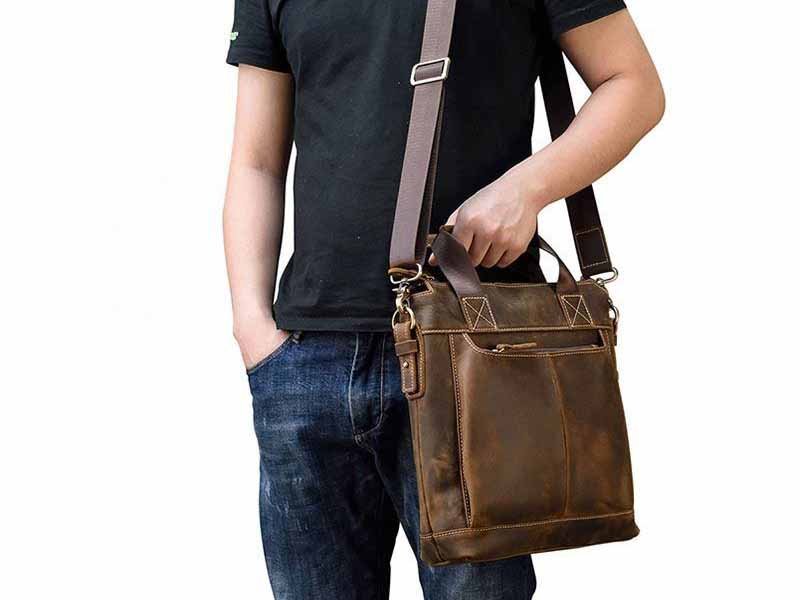
A leather bag can have excellent leather, clean edge paint, smooth zippers, and attractive hardware, yet still disappoint users if the handles stretch, twist, crack, or pull away from the bag body. Handles are touched more often than almost any other part of a bag. They also carry the full weight of laptops, documents, clothing, bottles, cosmetics, tools, or travel items through a relatively small attachment area.
Reinforced leather bag handles are manufactured by combining suitable outer leather with internal support materials, controlled skiving, secure bonding, load-distributing stitching, strengthened attachment tabs, backing patches, and properly selected hardware. The handle must then be checked under realistic carrying loads to confirm that it does not stretch excessively, deform, loosen, or damage the bag panel.
The strongest handle is not always the thickest one. A thick strip of leather attached to a weak upper panel can tear the panel before the handle itself breaks. A beautiful rolled handle can flatten if the internal core is too soft. A riveted handle can still fail if the rivet hole is too close to the leather edge. Reliable manufacturing depends on the whole carrying structure working as one system.
For sourcing teams, the important work happens before bulk production. Handle width, drop length, leather temper, reinforcement material, stitch pattern, attachment size, expected carrying weight, and test method should all be confirmed during sampling. A small change hidden under the lining can decide whether a bag remains dependable for years or becomes a return after several weeks of use.
Why Do Reinforced Leather Bag Handles Matter?
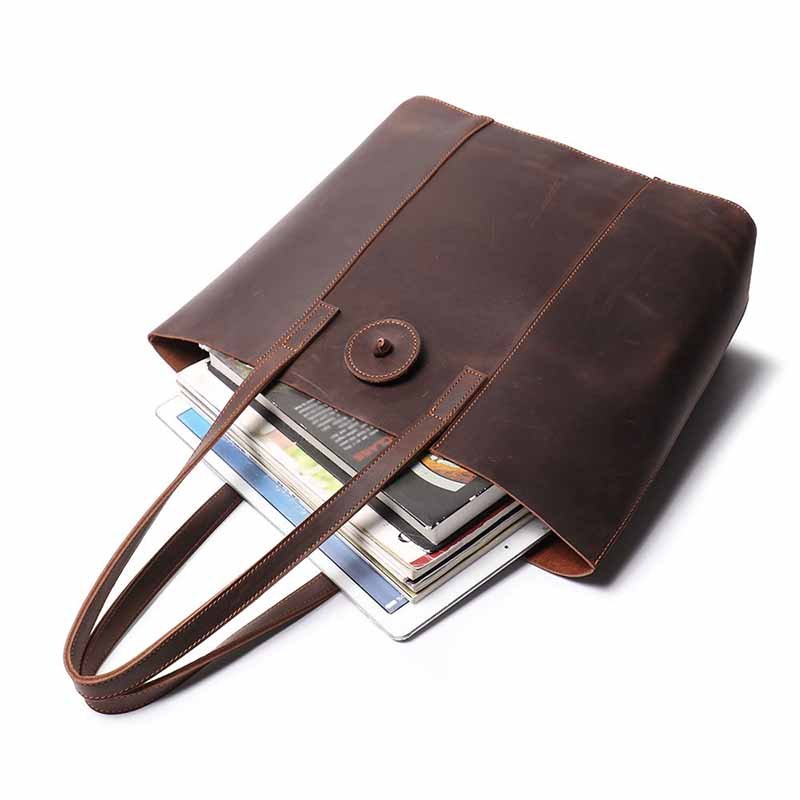
Reinforced leather bag handles matter because carrying pressure is concentrated at the grip and attachment points. Internal support spreads the load across a larger area, limits leather stretching, protects the bag panel, and reduces stress on stitches, rivets, hardware, and lining materials during repeated lifting.
What Weakens Reinforced Leather Bag Handles?
Most handle damage begins near the attachment area rather than in the center of the grip. When a bag is lifted, the load travels from the contents to the bottom and side panels, then upward to the handle anchors. If the attachment tab is too small or the panel behind it has no support, the force is concentrated into a narrow section of leather and stitching.
Common causes of weak reinforced leather bag handles include:
- Handle leather taken from loose or highly stretchable sections of the hide
- Excessive skiving around the attachment tab
- Reinforcement ending before the high-stress bending area
- Backing patches that are smaller than the visible handle base
- Stitch holes positioned too close to the leather edge
- Short stitch lines that concentrate the load
- Rivet holes larger than the rivet post requires
- Rivets installed without washers or supporting layers
- Uneven adhesive coverage between leather and reinforcement
- Sharp hardware edges rubbing against the leather
- Soft body panels carrying more weight than they were designed to hold
- Lining material being used as structural support when it is not strong enough
Leather also reacts to daily use. Repeated lifting stretches the fibers little by little. Hand oils can soften or darken the grip area. Heat can affect adhesive. Moisture can change the feel of natural leather. A handle that passes one quick lift may still perform poorly after months of repeated bending.
The transition between the flexible grip and the firm attachment tab needs particular attention. When a rigid reinforcing strip stops suddenly, the handle bends repeatedly along the same line. Cracking, creasing, or layer separation often appears at that point. Tapering the reinforcement or extending it farther into the anchor area creates a smoother transfer of force.
How Do Reinforced Leather Bag Handles Improve Durability?
Reinforced leather bag handles improve durability by creating a continuous load path. Instead of asking one layer of leather to carry the full weight, the construction divides the work among the outer leather, internal webbing or tape, core material, anchor tab, stitching, backing patch, hardware, and bag panel.
A dependable load path may work as follows:
- The user lifts the grip section.
- The leather cover transfers pressure to the internal support.
- The support limits stretching along the handle length.
- The attachment tab spreads force across a wider surface.
- Stitching or hardware secures the tab to the bag panel.
- A hidden backing patch distributes pressure behind the panel.
- The side or bottom structure carries the load through the bag body.
When one of these sections is missing, the remaining materials have to absorb more pressure.
Reinforcement also helps control appearance. Without internal support, a flat handle may become longer, curl at the edges, or wrinkle. A rolled handle may lose its circular profile. Attachment tabs may pull upward and cause the upper panel to pucker. These changes may not stop the bag from functioning immediately, but they make the product look older and less valuable.
The table below shows how reinforcement affects common performance issues.
| Performance Issue | Weak Construction | Reinforced Construction |
|---|---|---|
| Handle stretching | Leather carries the full load | Internal tape limits elongation |
| Anchor tearing | Force stays in a small area | Backing patch spreads the force |
| Rolled handle flattening | Soft core without support | Stable core holds the profile |
| Edge opening | Incomplete bonding or wide seam gap | Bonded layers and controlled stitching |
| Panel distortion | Small handle base | Extended tabs and internal support |
| Rivet pull-out | Rivet set through soft leather only | Rivet supported by washer and backing |
| Uneven handle length | Leather stretches differently | Grain direction and support are controlled |
| Premature cracking | Sharp bend at reinforcement end | Tapered transition reduces bending stress |
The objective is not to make the handle completely rigid. A handle still needs enough flexibility to move naturally and feel comfortable. Excessive reinforcement may create hard edges, uncomfortable pressure, bulky folds, or cracking near the attachment point. Good construction balances strength, flexibility, weight, and appearance.
Which Bags Need Reinforced Leather Bag Handles?
Most leather bags need some level of handle reinforcement, but the amount and method depend on how the bag will be used. A compact evening bag and a fully loaded leather weekender should not share the same internal structure simply because both have similar-looking handles.
Products that normally require stronger reinforcement include:
- Leather laptop bags carrying computers, chargers, documents, and accessories
- Business totes used for daily commuting
- Weekender bags carrying clothing and personal items
- Travel duffels exposed to lifting, pulling, and vehicle loading
- Doctor bags with rigid frames and concentrated weight
- Tool bags carrying dense or uneven loads
- Large shopping totes with wide openings
- Diaper bags carrying bottles, clothing, and baby supplies
- Camera bags carrying expensive, heavy equipment
- Convertible backpacks with handles used in several carrying positions
A small handbag may normally carry 1–3 kg, while a laptop tote can easily reach 5–8 kg after daily items are added. A travel or equipment bag may carry substantially more. Final test loads should always be based on the actual product design and intended use rather than copied from another bag category.
| Bag Type | Common Carrying Load | Main Handle Risk | Construction Priority |
|---|---|---|---|
| Small handbag | 1–3 kg | Shape loss and surface wear | Core balance and edge quality |
| Everyday tote | 3–6 kg | Stretching and panel puckering | Internal tape and wider anchors |
| Laptop bag | 5–8 kg | Repeated anchor stress | Backing patches and secure stitching |
| Business briefcase | 4–8 kg | Grip deformation | Structured core and stable mounts |
| Weekender bag | 8–15 kg | High load at side panels | Extended tabs or wraparound support |
| Travel duffel | 10–20 kg | Sudden pulling and twisting | Continuous reinforcement and strong hardware |
| Tool or equipment bag | Project-specific | Concentrated heavy loads | Full structural handle integration |
These ranges are development references, not fixed performance guarantees. Bag size, leather thickness, hardware, lining, bottom structure, and user behavior can change the final requirement.
Before confirming a handle, the manufacturer should know:
- The intended contents of the bag
- The expected normal carrying weight
- The highest load the bag may reasonably experience
- How often the bag will be lifted each day
- Whether the bag will be carried by hand or on the shoulder
- Whether the handles are fixed, removable, folded, or adjustable
- Whether the bag will be used for travel, work, retail, or fashion
- Whether the handle must stand upright or fold flat
- Whether comfort or rigid shape is the higher priority
A handle designed without this information may look correct but perform poorly in real use.
Which Reinforced Leather Bag Handles Are Best?
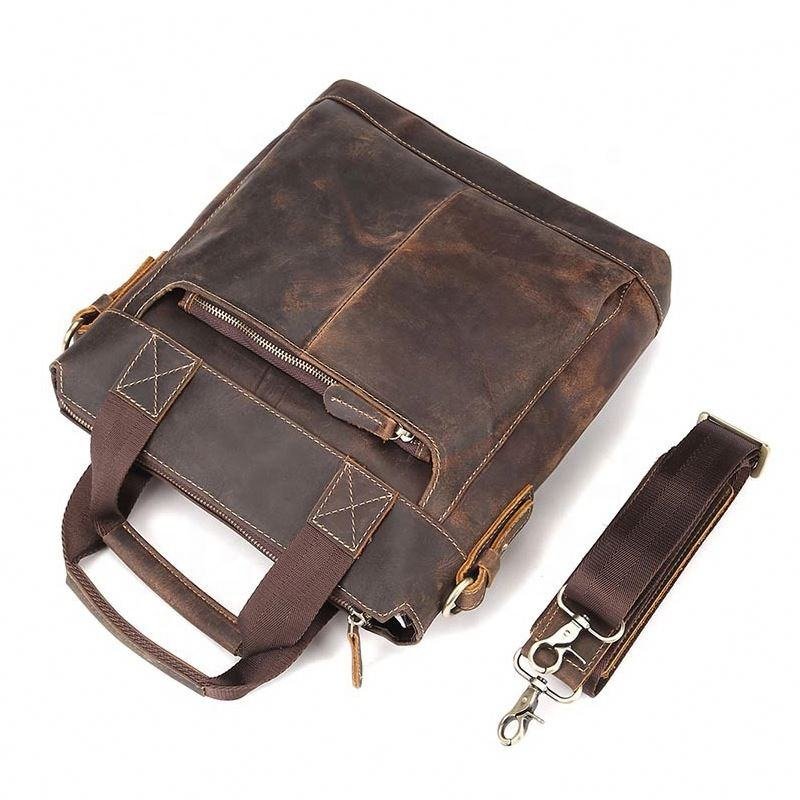
The best reinforced leather bag handles match the bag’s weight, carrying method, body construction, visual style, and expected service life. Flat handles suit many totes and business bags, rolled handles offer a refined grip, and extended or wraparound handles provide stronger load distribution for larger bags.
Are Flat Reinforced Leather Bag Handles Strong?
Flat reinforced leather bag handles can provide excellent strength because their wider surface distributes pressure across the hand and attachment area. They are commonly used on leather totes, laptop bags, briefcases, shopping bags, document bags, and casual handbags.
A flat handle is often made from:
- One folded leather strip with internal reinforcement
- Two leather layers bonded and stitched together
- Leather wrapped around polyester or nylon webbing
- Leather combined with microfiber or structural board
- Leather with a soft foam layer in the grip area
- Leather tabs connected to a hidden continuous strap
The finished width affects both comfort and appearance. Narrow handles may look elegant but can feel uncomfortable under heavier loads. Wider handles distribute pressure better but may appear oversized on a small bag.
Common development ranges include:
| Bag Application | Finished Handle Width | Handle Character |
|---|---|---|
| Small fashion handbag | 10–18 mm | Slim and decorative |
| Medium handbag | 15–25 mm | Balanced appearance and comfort |
| Business tote | 20–30 mm | Stable for daily carrying |
| Laptop bag | 25–35 mm | Wider load distribution |
| Travel bag | 25–40 mm | Stronger grip and structure |
The correct width also depends on leather stiffness and total handle thickness. A 25 mm handle made from soft leather may feel very different from a 25 mm handle made from firm vegetable-tanned leather.
Stretch control is one of the most important issues in flat reinforced leather bag handles. Natural leather can lengthen under sustained load, especially when cut from softer areas of a hide. A hidden polyester tape or thin webbing can reduce this movement while allowing the visible leather to remain flexible.
The reinforcement should continue far enough into the attachment tab. If it stops inside the grip, the handle may remain straight while the unreinforced ends stretch or tear. The strongest-looking section is not useful when the weakest point sits two centimeters away.
Are Rolled Reinforced Leather Bag Handles Comfortable?
Rolled reinforced leather bag handles are comfortable because the rounded profile fits naturally in the hand and avoids the sharp pressure created by thin flat edges. They are widely used on structured handbags, luxury totes, doctor bags, top-handle bags, satchels, and premium briefcases.
A rolled handle normally contains:
- An outer leather cover
- A cord, rope, tube, or shaped internal core
- Adhesive to stabilize the leather around the core
- A stitched or hand-laced closing seam
- Flattened or separately constructed attachment tabs
- Hidden reinforcement near both ends
The core determines the finished diameter, firmness, weight, and recovery. Cotton cord produces a different feel from synthetic rope. Foam creates softness but can compress. Plastic tubing keeps a clear shape but may feel hard. Layered leather offers a premium construction but may add weight and cost.
Common finished diameters may range from approximately 8 mm for a small handbag to 18 mm or more for a larger structured tote. The exact diameter should be evaluated with the intended load. A slim rolled handle may look refined but become uncomfortable when the bag is filled.
Comfort also depends on:
- Handle drop
- Core hardness
- Surface coating
- Seam position
- Total bag weight
- Distance between handle anchors
- Whether the handle rotates under load
- Whether metal rings allow natural movement
The core ends must be shaped carefully. A blunt core ending creates a visible lump and a hard bending point. During production, the core can be tapered gradually so the rolled grip changes smoothly into the flat attachment tab. This improves both appearance and flex resistance.
Rolled handles are not automatically stronger than flat handles. Their rounded shape mainly improves comfort and styling. Strength still comes from the reinforcement, stitching, anchor design, backing material, and bag-body construction.
Which Reinforced Leather Bag Handles Suit Heavy Bags?
Heavy leather bags need handles that transfer force into a large section of the bag body. Short decorative tabs attached only to the upper edge may not provide enough support for travel bags, large laptop totes, equipment bags, or weekenders.
Suitable constructions include:
- Extended attachment tabs running farther down the side panel
- Wraparound handles continuing beneath the bag
- Continuous webbing hidden inside leather handle covers
- Handle straps secured into side seams
- Large internal reinforcement patches
- Double-layer leather anchors
- Rivet-and-stitch combinations
- Hardware mounts supported by metal or rigid backing plates
- Padded grip wraps over structural carrying straps
Extended tabs are useful because they increase the stitch length and distribute load farther from the top opening. Wraparound handles provide even greater support because the carrying strap can continue down the sides and under the base. The bag body then carries the load through a much larger structure.
For heavier projects, the following development points should be confirmed during sampling:
| Development Item | Questions to Confirm |
|---|---|
| Intended load | What will the bag normally carry? |
| Test load | Will testing use the normal load or an additional safety margin? |
| Anchor length | Is the attachment area long enough to spread force? |
| Backing size | Does the hidden patch extend beyond the stitch line? |
| Stitch pattern | Does the layout distribute force without perforating the leather? |
| Hardware | Are rings, hooks, rivets, and buckles sized for the load? |
| Panel support | Is the body panel strong enough behind the handle? |
| Grip comfort | Can the user carry the loaded bag without sharp pressure? |
| Bottom structure | Does the base keep contents from pulling panels out of shape? |
| Repairability | Can the handle be replaced without damaging the complete bag? |
A strong handle attached to a weak body panel does not create a strong bag. Heavy-load designs need coordinated support from the handle, side panels, seams, lining, base, and hardware.
Handle drop also affects performance. A longer drop allows shoulder carrying but creates additional leverage at the anchor points. Long handles may swing more and twist the upper panel when the bag is placed down. Short handles create less leverage but may feel restrictive when the bag is full.
For custom manufacturing, a physical carrying trial should be completed with realistic contents. A sample may look balanced when empty but lean, collapse, or pull unevenly when loaded. Filling the sample reveals whether the handle position, opening, body structure, and center of gravity work together.
What Materials Strengthen Reinforced Leather Bag Handles?
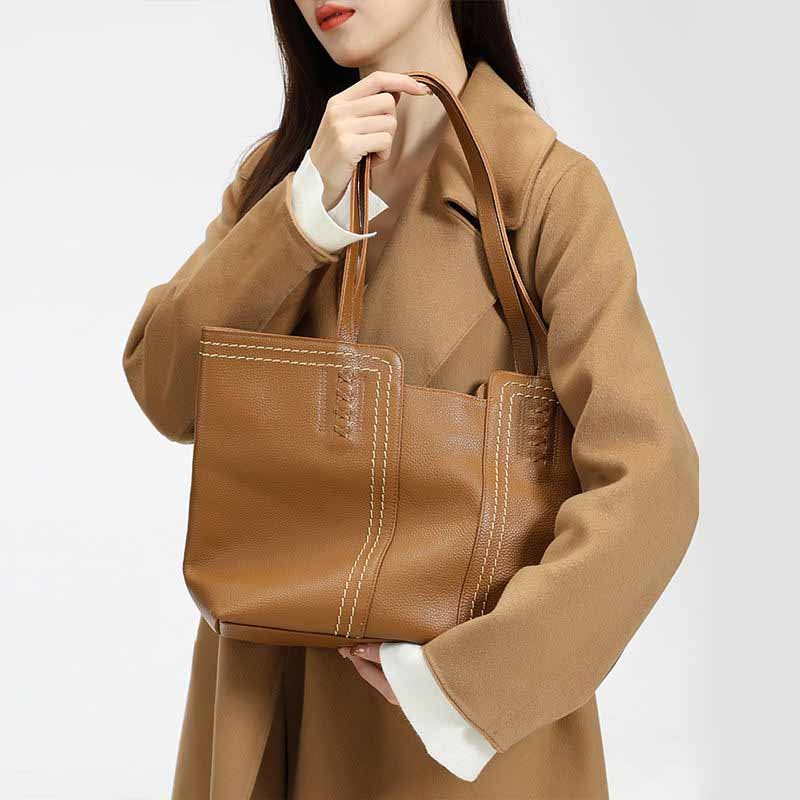
Reinforced leather bag handles rely on several materials working together. The visible leather gives the handle its color, texture, and premium appearance, while hidden tapes, webbing, cores, backing patches, thread, adhesives, and hardware carry much of the structural load. Material selection should be based on the bag’s expected weight, handle shape, flexibility, finish, and target retail level.
Which Leather Suits Reinforced Leather Bag Handles?
The outer leather affects much more than appearance. It influences grip comfort, stretch, edge quality, fold definition, stitch performance, and how the handle ages during daily use.
Common leather options include full-grain leather, top-grain leather, corrected-grain leather, split leather, suede, vegetable-tanned leather, chrome-tanned leather, and coated leather. Each option behaves differently when folded, wrapped, skived, stitched, and exposed to repeated hand contact.
Full-grain and top-grain leather are often selected for premium leather bag handles because the fiber structure remains relatively strong. They can develop an attractive surface character over time, but thickness and temper still need careful control. A soft full-grain leather may feel luxurious yet stretch more than expected if no internal support is added.
Vegetable-tanned leather works well for structured handles because it can hold a defined shape and develop a natural patina. It can also feel firm at first and may require edge finishing, conditioning, and accurate bending zones to avoid surface cracking.
Chrome-tanned leather normally offers greater softness and flexibility. It is suitable for fashion handbags, casual totes, and padded grips, but soft grades may require stronger internal webbing to control elongation.
Corrected or coated leather can provide consistent color and surface appearance across larger production runs. The coating should still be checked for flex resistance because the handle bends frequently and receives direct friction from hands, clothing, and accessories.
Important leather properties include:
- Tensile strength
- Tear resistance
- Elongation
- Flex resistance
- Surface rub resistance
- Coating adhesion
- Thickness consistency
- Grain direction
- Color fastness
- Resistance to hand oils and moisture
Leather thickness should be considered as part of the complete construction. A 1.4 mm leather layer may become thinner after skiving and compression. Two layers of 1.2 mm leather with internal webbing may produce a more stable handle than one 2.4 mm strip with no support.
| Leather Type | General Feel | Main Advantage | Main Concern |
|---|---|---|---|
| Full-grain leather | Natural and substantial | Strong fiber structure and premium aging | Natural variation requires careful matching |
| Top-grain leather | Smooth and refined | Good balance of strength and appearance | Surface finish must resist repeated flexing |
| Vegetable-tanned leather | Firm and structured | Holds shape well | Can feel rigid or crack at sharp bends |
| Chrome-tanned leather | Soft and flexible | Comfortable grip and easy folding | May stretch without internal support |
| Corrected-grain leather | Consistent surface | Stable color and scalable production | Coating quality affects long-term appearance |
| Split leather | Softer and economical | Useful for selected price levels | Lower tear resistance than stronger grain layers |
| Suede | Soft and tactile | Distinctive casual appearance | Higher risk of staining and surface wear |
Leather should be checked before cutting. Sections with loose grain, scars, excessive softness, uneven thickness, or strong directional stretch should not be used for high-stress handle parts.
Matched handle pairs should come from leather areas with similar firmness, grain, color, and thickness. One handle cut from a firm shoulder section and another from a loose belly section may stretch at different rates, even when both look identical during final inspection.
Do Cores Support Reinforced Leather Bag Handles?
Cores support reinforced leather bag handles by controlling shape, diameter, firmness, and compression resistance. They are especially important in rolled, padded, tubular, and structured handles.
A rolled leather handle cannot keep a clean circular profile through leather alone. The internal core creates the form, while the leather wraps around it. The core also helps distribute pressure across the user’s hand.
Common handle core materials include:
- Cotton cord
- Polyester rope
- Nylon cord
- EVA foam
- PU foam
- Rubber tubing
- Plastic tubing
- Layered leather strips
- Microfiber rolls
- Molded thermoplastic parts
Cotton cord offers a natural feel and can bond well with leather, but it may compress under repeated weight. Synthetic rope usually provides better dimensional consistency and moisture resistance. Foam improves comfort but may flatten permanently if its density is too low. Plastic tubing keeps a stable profile but can feel hard and may create visible end transitions.
Core density and diameter should match the bag size. A small handbag may use a narrow, firm core, while a larger tote may need a wider handle with a slightly softer grip.
| Bag Type | Common Core Character | Main Objective |
|---|---|---|
| Small top-handle bag | Narrow and firm | Maintain a refined profile |
| Structured handbag | Medium firmness | Balance shape and comfort |
| Business tote | Firm with moderate cushioning | Resist flattening under daily loads |
| Doctor bag | Dense and highly structured | Maintain a formal rounded shape |
| Weekender | Wider and cushioned | Reduce hand pressure under heavier loads |
| Travel bag | Structural strap with padded grip | Separate load support from comfort layer |
The core should not move inside the handle. Movement can create twisting, lumps, uneven diameter, and premature wear. Adhesive, stitching, and shaped transitions help keep the core aligned.
The core ending is one of the most sensitive areas. If the core stops suddenly, the leather folds repeatedly at the same point. A gradual taper reduces the thickness step and allows the handle to transition more smoothly into the flat anchor tab.
During sample development, the manufacturer should confirm:
- Core material
- Core diameter
- Core density
- Finished handle diameter
- Compression recovery
- End taper length
- Adhesive compatibility
- Resistance to heat and moisture
- Shape after repeated loading
A core that feels correct on an empty sample may still flatten after the bag is filled. Samples should therefore be evaluated under realistic weight before bulk production approval.
Is Webbing Used in Reinforced Leather Bag Handles?
Webbing is widely used inside reinforced leather bag handles because it limits stretching and carries load without adding excessive thickness. It is especially useful in flat handles, shoulder straps, long tote handles, extended anchors, and wraparound structures.
Common options include polyester, nylon, cotton, polypropylene, and high-density woven tapes.
Polyester webbing is a popular choice because it offers good dimensional stability, low moisture absorption, and consistent performance. Nylon webbing is strong and flexible but may stretch slightly more under sustained load. Cotton tape provides a soft, natural feel and bonds well with some adhesives, although it may absorb moisture and vary more between batches.
The width of the webbing should match the handle construction. It normally sits inside the folded leather edges rather than reaching the outer edge, where it could interfere with stitching or edge finishing.
The relationship between the leather and webbing matters:
- The webbing should not be wider than the internal flat area.
- Its edges should not create visible ridges.
- It should remain centered through the full handle length.
- It should extend into the attachment area where possible.
- Adhesive should prevent internal sliding.
- The weave should be dense enough to resist distortion.
- The thickness should not make the handle bulky.
A frequent weakness occurs when webbing reinforces only the middle grip. The grip then remains stable while the unreinforced attachment ends stretch. Extending the webbing through the anchor tabs produces a more continuous load path.
For heavy bags, the hidden webbing may continue below the visible leather tab or connect to internal side-panel reinforcement. In wraparound designs, one continuous strap may run down both sides and beneath the base.
| Webbing Material | Strength Character | Moisture Behavior | Common Application |
|---|---|---|---|
| Polyester | Stable and consistent | Low absorption | Totes, laptop bags, travel bags |
| Nylon | Strong and flexible | Higher absorption than polyester | Curved handles and flexible straps |
| Cotton | Soft and easy to bond | Absorbs moisture | Fashion bags and natural-material collections |
| Polypropylene | Lightweight and economical | Low absorption | Casual bags and price-sensitive products |
| High-density woven tape | Thin and strong | Depends on fiber | Premium handles requiring low bulk |
Webbing should not be selected only by width. Weave density, thickness, tensile behavior, edge hardness, and adhesion must also be checked. A stiff webbing can create an uncomfortable handle, while a loose weave may deform and provide less support than expected.
What Backing Materials Support Reinforced Leather Bag Handles?
Backing materials sit behind the handle attachment and spread force across the bag panel. These materials are usually hidden between the outer leather and lining, but they have a major effect on handle durability.
Common backing materials include:
- Full-grain leather patches
- Split leather reinforcement
- Microfiber board
- Polyester webbing
- Nylon webbing
- Nonwoven reinforcement
- Woven fabric
- Fiberboard
- Thin plastic sheet
- Metal plates or washers
The backing patch should generally extend beyond the visible stitch or rivet area. If it is exactly the same size as the handle tab, the stress may remain concentrated along the same edge.
Soft leather bags normally require flexible backing that moves with the body panel. Structured briefcases and framed bags may use firmer board or molded support. Very heavy attachments can require metal washers or plates, particularly around hardware posts.
The backing material should match the bag body. An overly rigid patch behind soft leather can create a visible rectangular outline. A soft patch behind a heavy travel-bag handle may not distribute enough force.
Useful development points include:
- Patch length and width
- Patch thickness
- Edge shape
- Distance beyond stitch lines
- Adhesive coverage
- Compatibility with lining
- Flexibility after assembly
- Resistance to tearing around rivet holes
Rounded corners can reduce concentrated stress and make the patch less visible from the outside. Sharp square corners may create pressure points under thin or soft leather.
How Are Reinforced Leather Bag Handles Made?
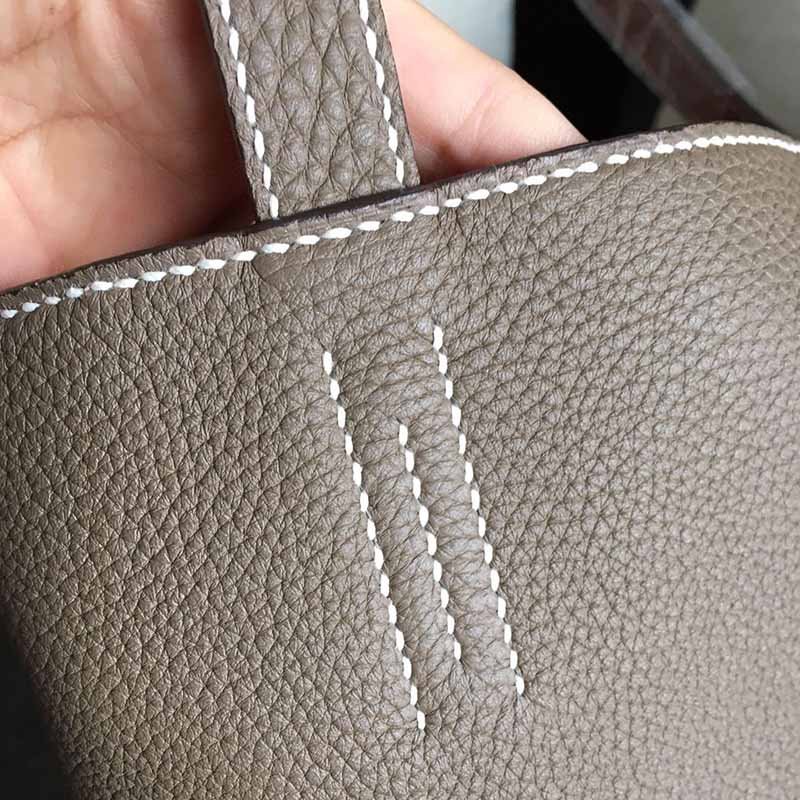
Reinforced leather bag handles are made through material inspection, pattern preparation, cutting, skiving, reinforcement placement, bonding, folding or wrapping, stitching, edge finishing, anchor assembly, and attachment. Each stage influences the handle’s final strength, symmetry, comfort, and appearance.
How Are Reinforced Leather Bag Handles Cut?
Cutting begins with a pattern that includes more information than the visible finished shape. The pattern must account for folding allowances, overlap, seam positions, skiving zones, core diameter, reinforcement width, anchor length, hardware holes, and edge finishing.
A handle pattern should define:
- Total cut length
- Finished handle drop
- Finished width or diameter
- Fold allowance
- Skiving width
- Stitch distance from the edge
- Reinforcement position
- Core start and stop points
- Anchor-tab dimensions
- Hole diameter and position
- Pair identification marks
Handle length should be measured from fixed reference points. Depending on the design, handle drop may be measured from the top edge of the bag to the inner center of the grip. The measurement method should remain consistent across samples and production.
Leather placement on the hide affects performance. Handles should generally be cut along a direction that minimizes unwanted stretch. The exact direction depends on the hide and product design, but inconsistent orientation can cause left and right handles to elongate differently.
Cutting methods include:
- Steel-rule die cutting
- Hand knife cutting
- Strap cutting machines
- CNC cutting
- Laser cutting for selected synthetic materials
- Pattern-guided rotary cutting
Die cutting is efficient for bulk production and helps maintain consistent shapes. Hand cutting provides flexibility during early sampling. CNC systems can improve accuracy for complex curves and low-volume development.
After cutting, handle pieces should be checked for:
- Length tolerance
- Width tolerance
- Symmetry
- Surface defects
- Grain consistency
- Color match
- Thickness
- Stretch direction
- Clean edges
- Correct hole position
For visible handle pairs, color and grain matching are important. A slight difference can become obvious because the handles sit close together and receive strong visual attention.
How Are Reinforced Leather Bag Handles Skived?
Skiving reduces leather thickness in selected areas so the handle can fold, wrap, overlap, and transition without becoming bulky. It is required in many flat, rolled, folded-edge, and anchor-tab constructions.
Common skiving areas include:
- Folded side edges
- Overlap seams
- Rolled-handle closing edges
- Core transition zones
- Anchor-tab ends
- Hardware fold-backs
- Layered junctions
Skiving should remove enough material to create a clean fold, but not so much that the leather loses tear strength. Excessive skiving can leave a thin, weak section near the stitch line. Insufficient skiving may create thick ridges, open edges, uneven stitching, and hard transitions.
The required thickness depends on the leather, construction, and number of layers. A handle made from two folded layers may require more aggressive edge reduction than a simple two-ply cut-edge handle.
Operators should control:
- Skiving width
- Final thickness
- Blade sharpness
- Feed speed
- Angle of reduction
- Transition smoothness
- Left-right consistency
A gradual skive is generally safer than an abrupt step. Gradual reduction helps distribute bending over a wider area and reduces the risk of cracking at one line.
Sample specifications should record hidden skiving details. Visual photos alone are not enough because two handles can look similar while containing very different remaining leather thicknesses.
How Are Reinforced Leather Bag Handles Layered?
Layering combines the visible leather with internal webbing, cores, padding, microfiber, or other support materials. The sequence depends on the handle type.
A flat layered handle may use:
- Outer leather face
- Internal polyester tape
- Optional foam grip layer
- Inner leather layer
- Adhesive
- Edge stitch or perimeter stitch
A rolled handle may use:
- Outer leather strip
- Internal cord or tube
- Adhesive around the core
- Closing seam
- Flat anchor inserts
- End reinforcement
A padded travel handle may use:
- Structural webbing
- Foam pad
- Leather cover
- Edge binding or folded edges
- Reinforced attachment points
Adhesive should be spread evenly and kept away from exposed surfaces. Too little adhesive allows layers to slide or bubble. Too much adhesive can harden the handle, stain leather, or squeeze out near the edges.
The adhesive must suit both materials. Leather-to-webbing bonding may require a different system from leather-to-foam or leather-to-plastic bonding. Drying time, tack time, pressure, and temperature all affect the result.
During layering, operators should check:
- Reinforcement remains centered
- Foam does not wrinkle
- Webbing does not twist
- Core diameter stays consistent
- Both handle ends remain equal
- Adhesive reaches the full required area
- Folded edges stay straight
- No air pockets remain between layers
Pressing tools, forming molds, jigs, and guide lines can improve consistency. Rolled handles may be placed in shaping molds while adhesive sets. Flat handles may be pressed between smooth plates to maintain even thickness.
How Are Reinforced Leather Bag Handles Stitched?
Stitching secures the layers and contributes to both appearance and load distribution. A strong handle requires the correct combination of thread, needle, stitch length, seam position, tension, and reinforcement.
Common thread options include bonded nylon, bonded polyester, waxed thread, and decorative cotton-blend thread. Bonded polyester performs well where moisture and color stability are important. Bonded nylon offers strength and flexibility but may react differently to sunlight and heat.
Stitch length should suit the leather thickness. Very short stitches create many needle holes and can weaken the leather like a perforated tear line. Very long stitches reduce the number of load-sharing points and may allow edges to separate.
Common concerns include:
- Stitching too close to the edge
- Uneven stitch length
- Loose bobbin tension
- Thread cutting into soft leather
- Needle marks outside the seam
- Skipped stitches at thick transitions
- Excessive backstitching
- Misaligned double rows
- Thread color variation
Stitch distance from the edge should remain consistent throughout the handle. On curved or rolled sections, guides and skilled operators are needed to avoid visible wavering.
The attachment area may use:
- Perimeter box stitching
- Box-and-cross stitching
- Parallel stitch rows
- Curved reinforcement seams
- Bar tacks
- Hidden stitching
- Rivet-and-stitch combinations
More stitching does not always mean greater strength. Too many intersecting stitch lines can perforate the leather. The pattern should distribute force while preserving enough material between needle holes.
| Stitch Issue | Possible Cause | Production Effect |
|---|---|---|
| Wavy stitch line | Poor guiding or variable feed | Low visual quality |
| Loose stitches | Incorrect thread tension | Layer movement and seam opening |
| Leather tearing along seam | Stitch too short or too close to edge | Reduced structural strength |
| Skipped stitches | Wrong needle or thickness transition | Incomplete seam security |
| Uneven double rows | Inaccurate guide setting | Poor symmetry |
| Thread abrasion | Sharp hardware or rough edge | Early stitch failure |
How Are Reinforced Leather Bag Handles Attached?
Handle attachment connects the carrying system to the bag body. The method should match the bag’s weight, body material, panel stiffness, hardware design, and visual style.
Common attachment methods include:
- Direct stitching to the outer panel
- Stitching into a top seam
- Extended tabs stitched down the side
- Riveted leather tabs
- Ring-mounted handles
- D-ring attachments
- Metal handle bases
- Screwed hardware mounts
- Wraparound straps
- Hidden internal anchors
Direct attachment works well when the tab is large enough and the body panel has internal support. Seam-inserted handles can create a clean appearance, but the seam allowance and internal reinforcement must carry the load.
Ring-mounted handles allow movement and reduce twisting in some designs. The leather loops holding the rings must still be reinforced because the ring concentrates force into a small contact area.
Rivets can strengthen an attachment, but correct installation is essential. Important variables include:
- Rivet diameter
- Post length
- Hole diameter
- Cap size
- Washer size
- Distance from leather edge
- Setting pressure
- Backing material thickness
- Rivet metal and finish
A rivet post that is too long may remain loose. A post that is too short may not lock correctly. Excessive setting pressure can crush the leather and coating, while insufficient pressure allows movement.
For fixed handles, left and right positions should be checked against a centerline. Unequal spacing causes visual imbalance and uneven loading. The handle bases should also sit at equal heights.
Before the lining is closed, the factory should inspect:
- Internal reinforcement size
- Rivet backs or washers
- Stitch completion
- Adhesive coverage
- Sharp hardware edges
- Loose thread ends
- Panel distortion
- Correct handle orientation
Photographs of the hidden reinforcement can be useful during custom development, especially when the visible finished product does not show how the handle is supported internally.
How Are Reinforced Leather Bag Handles Tested?
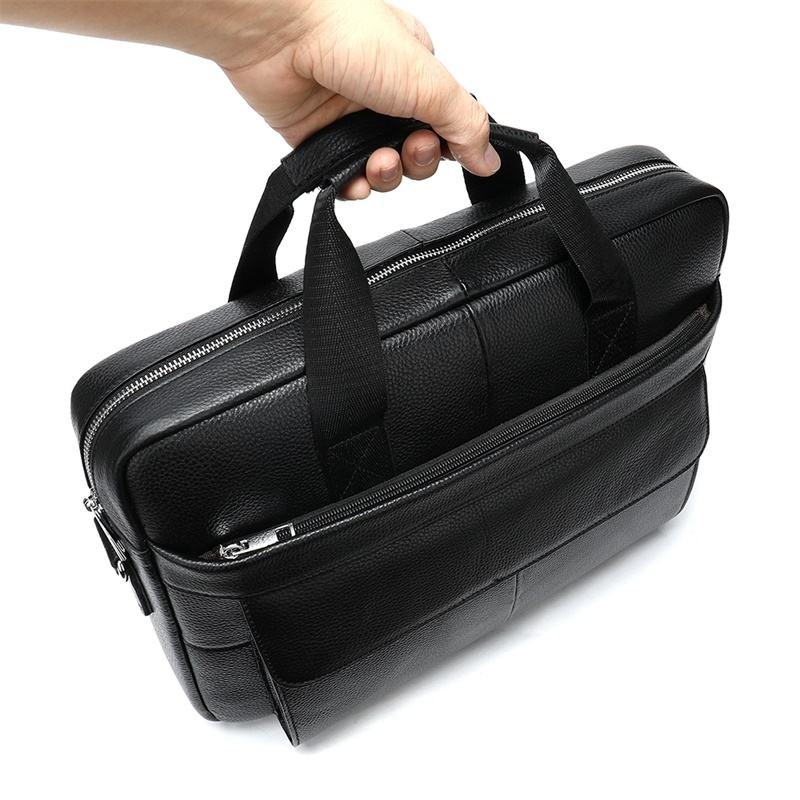
Reinforced leather bag handles should be tested as part of the finished bag rather than checked only as separate leather strips. Handle performance depends on the outer leather, internal support, stitching, hardware, attachment patch, bag panel, lining, and bottom structure working together. Testing should reproduce the weight, movement, pulling direction, and carrying frequency expected during actual use.
How Are Reinforced Leather Bag Handles Load-Tested?
Load testing checks whether reinforced leather bag handles can support a defined weight without tearing, stretching excessively, loosening, or permanently deforming the bag body.
The first step is to establish a realistic load level. The test should reflect what users are likely to place inside the bag rather than selecting an arbitrary number. A small handbag, laptop tote, travel duffel, and equipment bag require very different testing conditions.
A sample load plan may consider:
- Empty bag weight
- Intended product contents
- Normal carrying weight
- Maximum expected carrying weight
- Possible short-term overload
- Handle length and leverage
- Number of daily lifting cycles
- Whether one or both handles carry the load
- Whether the bag is lifted vertically or at an angle
The bag should be filled with evenly distributed weight. Loose metal plates or concentrated blocks can create unrealistic pressure unless the bag is designed to carry dense objects. Sandbags, fabric-filled weights, boxed loads, or representative products can produce a more realistic load distribution.
A static load test normally suspends the bag by its handles for a defined period. Before testing, inspectors record:
- Handle drop
- Handle length
- Anchor spacing
- Panel shape
- Stitch condition
- Rivet position
- Edge condition
- Leather surface condition
The same measurements are checked after the test. Inspectors look for permanent elongation, loose stitches, enlarged holes, panel puckering, rivet movement, leather whitening, coating cracks, and changes in handle shape.
| Bag Type | Development Load Range | Main Observation |
|---|---|---|
| Small handbag | 2–5 kg | Handle shape and anchor stability |
| Medium leather tote | 5–10 kg | Stretching and panel distortion |
| Laptop bag | 7–12 kg | Repeated anchor stress |
| Business briefcase | 7–12 kg | Grip deformation and hardware movement |
| Weekender bag | 12–20 kg | Side-panel support and seam stability |
| Travel duffel | 15–30 kg | Full carrying-system performance |
These figures are development references only. Final requirements should be agreed according to bag dimensions, materials, construction, market positioning, and intended contents.
A stronger test does not always mean a better test. Loading a fashion handbag with an unrealistic weight may damage the product in a way that has little connection to normal use. The objective is to verify suitable performance, not simply to produce the highest possible number.
Are Reinforced Leather Bag Handles Pull-Tested?
Pull testing applies controlled force to reinforced leather bag handles or attachment points to identify movement, deformation, and failure behavior.
Unlike a static hanging test, a pull test can focus on one handle, one anchor, one hardware connection, or one direction of force. It helps engineers understand where the carrying system begins to weaken.
Common pull directions include:
- Straight upward pull
- Outward pull from the side
- Diagonal pull
- Pull against one attachment tab
- Pull through a metal ring
- Opposing pull on both handle ends
- Pull on detachable hooks or buckles
The test force can be applied gradually with testing equipment or through controlled manual methods during early sample development. Instrumented testing provides more consistent measurements and records the force at which movement or failure begins.
A complete pull-test record should note:
- Force applied
- Direction of force
- Duration
- Handle tested
- Attachment method
- Material batch
- First visible movement
- Permanent deformation
- Final failure location
- Photographs before and after testing
The failure location provides useful manufacturing information.
If the leather breaks in the center of the handle, the outer leather or internal support may be too weak. If the stitch line tears through the tab, the seam may be too close to the edge or the stitch length may be too short. If the handle remains intact but pulls a section out of the bag panel, the internal backing patch is probably too small or too soft.
Rivet movement usually points to incorrect post length, poor setting pressure, oversized holes, or insufficient backing. Hardware opening or bending may show that the selected ring, hook, or connector is unsuitable for the required load.
Pull testing should not be limited to confirming whether the handle separates completely. Smaller changes can indicate future problems:
- Leather elongation
- Enlarged rivet holes
- Stitch tightening marks
- Edge paint cracking
- Core movement
- Panel creasing
- Lining tears
- Handle twisting
- Hardware rotation
- Adhesive separation
Correcting these problems during sampling is far less expensive than replacing handles after bulk production.
How Are Reinforced Leather Bag Handles Cycle-Tested?
Cycle testing checks how reinforced leather bag handles respond to repeated lifting rather than one continuous load. Daily use involves thousands of small movements, including lifting, setting down, swinging, twisting, and changing carrying positions.
A handle can survive a heavy static load and still fail during repeated use. Repeated movement may loosen rivets, enlarge stitch holes, flatten cores, wear edge paint, or separate bonded layers.
A cycle test may include:
- Filling the bag with a defined weight.
- Lifting the bag by the handles.
- Holding the load briefly.
- Lowering the bag.
- Repeating the movement for a set number of cycles.
- Inspecting the handles at planned intervals.
During development, cycle counts may be set according to product category and risk. A fashion handbag used occasionally requires a different test plan from a commuter laptop bag carried every working day.
Inspectors should examine the bag throughout the test rather than waiting until the end. Early inspection can reveal when a defect begins.
| Test Stage | Main Check |
|---|---|
| Before testing | Dimensions, stitches, hardware, surface condition |
| Early cycles | Initial stretching and layer movement |
| Midpoint | Stitch-hole growth and anchor deformation |
| Final cycles | Permanent elongation and structural damage |
| Recovery period | Whether foam, leather, and cores return to shape |
Recovery is important for padded and rolled handles. A handle may compress under load but recover after resting. Permanent flattening, however, can affect comfort and appearance.
Cycle testing can also expose differences between matched handles. If one handle becomes longer than the other, the leather sections may have different stretch behavior, reinforcement may be misaligned, or one anchor may be weaker.
For detachable handles, the test should include hardware movement. Hooks, rings, swivel connectors, and buckles should not open, jam, bend, or damage surrounding leather during repeated use.
What Defects Affect Reinforced Leather Bag Handles?
Defects in reinforced leather bag handles can be divided into visual, dimensional, structural, and functional problems. Some are visible immediately, while others remain hidden beneath the leather or lining.
Common visual defects include:
- Uneven handle width
- Mismatched leather grain
- Different color between handle pairs
- Crooked stitch lines
- Uneven edge paint
- Exposed adhesive
- Wrinkled leather
- Visible reinforcement ridges
- Dent marks from pressing
- Unequal handle curves
- Incorrect logo placement
- Scratched hardware
Dimensional defects include:
- Unequal handle length
- Incorrect handle drop
- Different anchor spacing
- Uneven handle diameter
- Incorrect tab length
- Misaligned rivet holes
- Different left and right stitch positions
Structural defects include:
- Missing internal webbing
- Webbing stopping too early
- Undersized backing patches
- Over-skived leather
- Incomplete adhesive coverage
- Loose rivets
- Unsupported hardware posts
- Sharp metal edges
- Cracked internal boards
- Incorrect core material
- Core ends without tapering
- Broken or skipped stitches
Functional defects include:
- Handle twisting under load
- Handle edges cutting into the hand
- Handles unable to fold naturally
- Hardware rubbing against zipper teeth
- Detachable hooks opening during use
- Handle anchors pulling the top panel upward
- One handle carrying more load than the other
- Grip section flattening permanently
- Handle blocking the bag opening
- Shoulder handles slipping easily
| Defect | Likely Cause | Corrective Action |
|---|---|---|
| Handle becomes longer | Weak leather or missing support tape | Add continuous webbing and control cutting direction |
| Anchor tab tears | Stitching too close to edge | Increase seam allowance and tab size |
| Bag panel puckers | Backing patch too small or too rigid | Adjust patch size, thickness, and edge shape |
| Rolled handle flattens | Core density too low | Use a denser or more stable core |
| Rivet becomes loose | Incorrect post length or setting | Match post length and setting pressure |
| Edge paint cracks | Sharp bending or poor coating flexibility | Improve edge preparation and coating system |
| Handle twists | Uneven layering or adhesive | Use alignment guides and controlled pressing |
| Stitch holes enlarge | Excessive load or short stitch length | Adjust test load, stitch length, and reinforcement |
| Leather wrinkles | Poor bonding or core mismatch | Improve adhesive coverage and core sizing |
| Hardware cuts leather | Sharp edges or incorrect loop size | Polish hardware and enlarge support area |
A product should not pass inspection simply because the handle remains attached. Permanent stretching, visible distortion, uncomfortable grip, loose hardware, or damaged leather may still lead to complaints and returns.
How Are Reinforced Leather Bag Handles Inspected?
Inspection should begin during material preparation and continue through cutting, skiving, assembly, attachment, and final packing. Waiting until finished goods inspection makes hidden construction problems difficult to correct.
Incoming material inspection should cover:
- Leather thickness
- Leather color
- Surface finish
- Grain consistency
- Stretch direction
- Webbing width
- Webbing thickness
- Core diameter
- Foam density
- Thread specification
- Hardware size
- Rivet post length
- Adhesive batch
The cutting stage should confirm:
- Pattern accuracy
- Pair matching
- Cutting direction
- Hole positions
- Tab dimensions
- Surface defects
- Quantity control
After skiving, inspectors should check:
- Skiving width
- Remaining thickness
- Smooth transitions
- Left-right consistency
- Edge strength
- Absence of blade cuts
During handle assembly, important checks include:
- Reinforcement placement
- Core position
- Adhesive coverage
- Handle width
- Handle diameter
- Layer alignment
- Grip symmetry
- End tapering
- Stitch appearance
Before the lining is closed, the internal attachment should be inspected. This stage is especially important because the backing patches, webbing extensions, rivet washers, and hidden seams will no longer be visible after assembly.
Photographic records can be useful for custom orders. Images may show:
- Backing-patch size
- Internal webbing position
- Rivet backs
- Stitch pattern
- Handle anchor placement
- Side-panel reinforcement
- Bottom connection in wraparound designs
Final inspection should cover appearance, dimensions, function, and carrying performance.
| Inspection Category | Main Items |
|---|---|
| Appearance | Leather match, stitching, edges, cleanliness |
| Dimensions | Length, width, drop, diameter, spacing |
| Structure | Reinforcement, anchors, rivets, hardware |
| Function | Lifting, folding, opening, closing, carrying |
| Symmetry | Left-right position and handle pair matching |
| Load response | Stretching, deformation, looseness |
| Packaging | Handle protection and shape retention |
Packaging should also protect reinforced leather bag handles. Handles can be damaged even after successful production if they are sharply folded, compressed, or pressed against hardware during shipping.
Common protection methods include:
- Wrapping handles in tissue or nonwoven material
- Adding foam sleeves around rolled handles
- Filling the grip area to retain shape
- Securing handles without creating sharp bends
- Separating hardware from leather surfaces
- Using paper supports inside structured handles
- Preventing cartons from being overfilled
A handle that arrives with permanent creases may be rejected even when the construction is technically strong.
How Are Reinforced Leather Bag Handles Approved?
Approval should be based on a complete sample specification rather than appearance alone. The approved sample becomes the reference for materials, dimensions, construction, workmanship, and performance.
A handle approval sheet should include:
- Leather type and color
- Leather thickness
- Finished width or diameter
- Handle drop
- Total handle length
- Core material
- Webbing type
- Reinforcement width
- Backing-patch dimensions
- Thread specification
- Stitch length
- Stitch distance from edge
- Hardware finish
- Rivet size
- Edge treatment
- Test load
- Test duration
- Accepted deformation limit
- Packaging method
The sourcing team should also confirm whether any changes are allowed during bulk production. Replacing webbing, foam, thread, hardware, adhesive, or backing material without approval may change performance even if the finished handle looks similar.
Golden samples should be stored carefully and clearly labeled. Production teams should compare bulk units against the same approved reference rather than relying on memory or photographs alone.
When several bag sizes are included in one collection, each size should be reviewed separately. A larger bag may require wider handles, longer anchors, stronger webbing, or larger backing patches even when the visual design remains consistent.
How Can Szoneier Develop Reinforced Leather Bag Handles?
Szoneier supports custom bag projects from initial handle design through material selection, sampling, reinforcement development, production, inspection, and packaging. With more than 18 years of manufacturing experience, our team develops leather, fabric, and mixed-material bags for international brands, importers, distributors, retailers, and private-label programs.
What Information Does Szoneier Need for Reinforced Leather Bag Handles?
Clear project information helps the factory recommend a suitable handle structure and prepare a more accurate quotation.
Useful files and details include:
- Bag sketches
- Technical drawings
- Reference photos
- Physical samples
- Bag dimensions
- Handle drop
- Handle width or diameter
- Leather preference
- Color references
- Logo artwork
- Expected order quantity
- Intended contents
- Carrying-weight requirement
- Target market
- Packaging needs
- Testing requirements
If no complete technical pack is available, Szoneier can work from reference images and product descriptions. Our design team can help organize the bag structure, handle proportions, logo position, material combination, and reinforcement direction.
For a laptop bag, for example, it is useful to know the maximum device size, charger space, document capacity, and whether the bag will also include a shoulder strap. For a weekender, the expected clothing capacity, travel use, and preferred carry method should be confirmed.
The more clearly the bag’s use is defined, the more accurately the handle can be developed.
Which Reinforced Leather Bag Handles Can Szoneier Customize?
Szoneier can customize a wide range of reinforced leather bag handles, including:
- Flat leather handles
- Rolled leather handles
- Padded leather handles
- Folded-edge handles
- Cut-edge handles
- Detachable handles
- Ring-mounted handles
- Riveted handles
- Extended-tab handles
- Wraparound handles
- Leather-covered webbing handles
- Leather and neoprene mixed handles
- Leather and fabric handles
- Adjustable shoulder handles
- Top grab handles
- Structured briefcase handles
Handle development can also include:
- Custom leather color
- Custom edge paint
- Embossed logos
- Debossed logos
- Printed logos
- Metal logo plates
- Custom rivets
- Custom rings
- Branded hardware
- Contrast stitching
- Decorative piping
- Padded grip sections
- Hidden webbing
- Internal reinforcement patches
Szoneier can adjust the handle structure according to the bag’s weight, appearance, use, and price level. A premium briefcase may use layered leather, a structured core, polished hardware, and fine edge paint. A travel bag may use continuous webbing covered with leather and connected to larger side-panel reinforcement.
How Does Szoneier Sample Reinforced Leather Bag Handles?
Sampling allows the handle to be evaluated before bulk production. The process normally includes material review, pattern development, prototype construction, fitting, load evaluation, and revision.
The sampling sequence may include:
- Review the bag concept and intended use.
- Confirm leather, webbing, core, thread, and hardware.
- Prepare the handle pattern and attachment structure.
- Produce the first sample.
- Check handle drop, grip comfort, symmetry, and appearance.
- Fill the bag with representative weight.
- Inspect stretching, panel movement, and anchor stability.
- Adjust reinforcement, dimensions, or materials if required.
- Produce the revised confirmation sample.
- Finalize production specifications.
During sampling, Szoneier can compare several options. A brand may request two handle widths, different core firmness levels, alternative leather thicknesses, or different attachment shapes.
Testing the alternatives on an actual bag gives more useful information than reviewing loose material swatches. Handle comfort, body balance, opening access, and visual proportion can only be judged properly when the bag is assembled and filled.
How Does Szoneier Control Reinforced Leather Bag Handles?
Szoneier applies quality checks throughout development and production rather than depending only on final inspection.
Control points can include:
- Leather and webbing inspection
- Pattern and dimension verification
- Cutting-direction control
- Skiving-thickness checks
- Core and reinforcement confirmation
- Adhesive and bonding checks
- Stitching inspection
- Hardware-setting checks
- Internal backing inspection
- Handle-position measurement
- Load checks
- Final appearance inspection
- Packaging protection
For custom projects, inspection requirements can be discussed before production. Brands may request additional measurement records, sample testing, pre-production approval, production photographs, or pre-shipment inspection.
Our team can also review potential risks before sampling, such as:
- Handles that are too narrow for the bag size
- Attachment tabs that do not provide enough support
- Soft leather likely to stretch
- Hardware that is too small for the intended load
- Handle drops that make shoulder carrying uncomfortable
- Reinforcement likely to show through the outer leather
- Packaging likely to deform rolled handles
Early review reduces repeated revisions and helps the finished bag perform closer to the intended use.
Request Reinforced Leather Bag Handles from Szoneier
Strong leather bag handles are built through careful decisions that users may never see. The visible leather is only one part of the structure. Webbing, cores, backing patches, stitching, rivets, hardware, body panels, and internal seams determine how the load travels through the bag.
Szoneier provides custom, private-label, OEM, and ODM manufacturing services for leather bags, neoprene bags, travel bags, laptop bags, totes, business bags, sports bags, protective products, and mixed-material accessories.
Our team can review your design, recommend suitable reinforcement methods, prepare a custom sample, and calculate pricing based on the confirmed structure and materials.
Build a leather bag whose handles remain comfortable, stable, and dependable long after the first sale.
Contact Szoneier to begin your custom reinforced leather bag project.