Skip to content
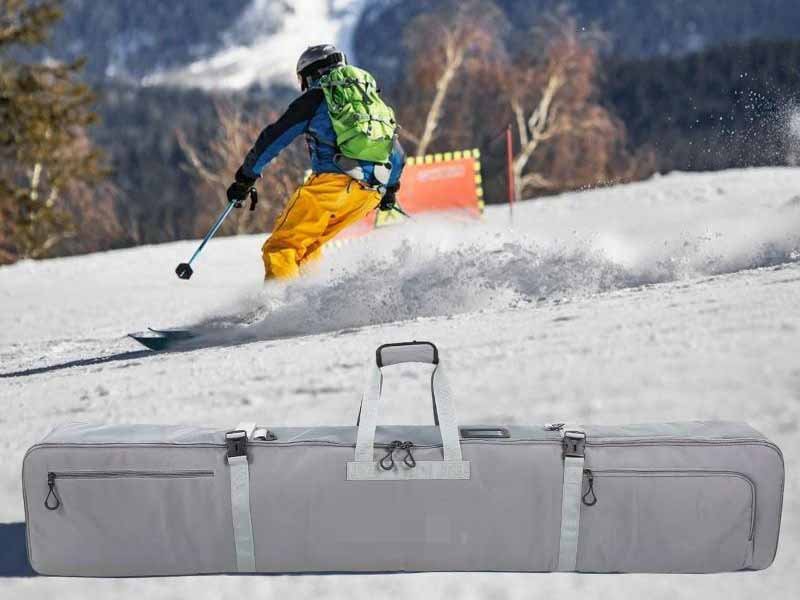
The ski industry has changed dramatically over the past few years. Skiers today are traveling more frequently, carrying more expensive equipment, and expecting higher product quality from the gear they buy. A pair of professional skis can easily cost between $600 and $1,500, while premium ski boots, helmets, goggles, and bindings can push the total equipment investment beyond $3,000. Because of this, consumers no longer see ski bags as simple accessories. They see them as protective equipment that safeguards a major investment.
Airline damage has also become a growing concern. Many skiers have experienced scratched ski surfaces, broken bindings, cracked edges, or damaged poles after flights. Thin ski sleeves made with low-cost fabrics often fail under pressure during baggage handling. As a result, demand for padded ski bags has increased rapidly across North America, Europe, and Japan, especially among travelers who regularly fly to ski destinations.
A professionally manufactured padded ski bag uses reinforced fabrics, thick foam cushioning, heavy-duty zippers, waterproof coatings, and structural support systems to reduce impact damage during transportation. Premium models also improve travel convenience with wheel systems, boot compartments, compression straps, and organized storage pockets.
For outdoor brands and retailers, padded ski bags have become one of the fastest-growing winter accessory categories. Customers purchasing skis often buy matching travel bags at the same time, making ski bags a high-value add-on product with strong profit potential.
At Szoneier, we have spent more than 18 years manufacturing neoprene and performance-based sewn products for global brands. Our experience includes ski bags, wetsuits, sports supports, medical braces, travel bags, and protective outdoor equipment. Through years of OEM and private label manufacturing, we have learned that the difference between an average ski bag and a high-performing ski bag usually comes down to small production details that many factories overlook.
Some buyers only compare pricing when sourcing ski bags. But experienced outdoor brands understand that poor stitching, weak handles, low-density foam, cheap zippers, or incorrect fabric selection can destroy customer trust after only one winter season. In contrast, a well-made padded ski bag can help a brand build long-term customer loyalty and stronger product reviews.
The reality is simple: when a traveler opens a ski bag after a 10-hour international flight and finds perfectly protected equipment inside, the value of good manufacturing becomes immediately obvious.
What Is a Padded Ski Bag?
A padded ski bag is a protective travel bag designed to carry skis safely during transportation and storage. Unlike standard ski sleeves, padded ski bags use foam cushioning, reinforced structures, durable fabrics, and heavy-duty hardware to protect ski equipment from impacts, scratches, moisture, and rough handling.
What Is a Padded Ski Bag Used For?
The main purpose of a padded ski bag is equipment protection. During travel, skis are exposed to many risks:
- Airport baggage handling
- Pressure from stacked luggage
- Dragging across rough surfaces
- Snow and moisture exposure
- Friction between skis and metal edges
- Long-term storage damage
Without proper protection, ski surfaces can become scratched, bindings may loosen, and edges may chip during transport.
Modern padded ski bags are designed not only for protection, but also for convenience. Many models now include:
| Feature | User Benefit |
|---|---|
| Foam padding | Reduces impact damage |
| Waterproof fabric | Protects against snow and moisture |
| Compression straps | Prevents skis from shifting |
| Wheel systems | Easier airport transport |
| Boot compartments | Better organization |
| Reinforced handles | Improved carrying durability |
| Large zipper openings | Faster packing and unpacking |
Ski bags are also becoming increasingly important for ski rental businesses, ski schools, and outdoor tour companies. Rental operators transport large amounts of equipment every season, and damaged skis directly reduce profitability. Durable padded ski bags help reduce equipment replacement costs over time.
In many markets, ski bags are no longer viewed as optional accessories. For frequent travelers, they are considered essential protective equipment.
How Does a Padded Ski Bag Work?
The protection system of a ski bag depends on multiple layers working together. A high-quality padded ski bag is carefully engineered to absorb impacts while remaining lightweight enough for travel.
Most professional ski bags contain the following structural layers:
| Layer | Function |
|---|---|
| Outer shell fabric | Abrasion and water resistance |
| Foam padding | Shock absorption |
| Inner lining | Scratch prevention |
| Reinforcement panels | Structural strength |
| Compression system | Equipment stabilization |
The outer layer usually uses polyester or nylon fabrics because these materials resist tearing and abrasion. Premium ski bags often use 600D to 1680D fabrics depending on durability requirements.
Inside the bag, foam padding cushions the skis during impacts. This foam can range from lightweight PE foam to high-density EVA foam. The thickness normally ranges between 5mm and 15mm depending on product positioning.
Compression straps are another important detail that many low-cost manufacturers ignore. Without proper stabilization, skis slide inside the bag during transport, creating internal friction damage over time.
Professional ski bag manufacturers also reinforce stress zones such as:
- Bottom corners
- Wheel bases
- Handle attachment points
- Shoulder strap anchors
- Zipper areas
These reinforcement systems are critical because these zones experience the highest pressure during transportation.
One of the biggest differences between cheap ski bags and premium ski bags is how the bag performs after repeated use. Many low-cost bags may look acceptable initially, but after one season, users often experience:
- Broken zippers
- Torn handles
- Flattened padding
- Fabric cracking
- Wheel damage
- Foam shifting
High-quality manufacturing prevents these issues through stronger materials and better structural engineering.
Is a Padded Ski Bag Worth It?
For serious skiers, the answer is usually yes. A padded ski bag often costs far less than replacing damaged equipment.
The table below shows average ski equipment replacement costs:
| Equipment | Average Price |
|---|---|
| Performance skis | $600–$1,500 |
| Ski boots | $300–$900 |
| Bindings | $150–$500 |
| Ski poles | $50–$200 |
| Goggles | $80–$300 |
Compared to these costs, investing in a durable ski bag becomes a practical decision.
There is also a growing trend toward ski tourism. More consumers are traveling internationally to destinations such as:
- Japan
- Switzerland
- Canada
- France
- Austria
- United States ski resorts
Long-distance travel increases the risk of equipment damage significantly. Airlines frequently stack ski bags beneath heavy luggage containers, placing enormous pressure on equipment.
A padded ski bag reduces several common travel problems:
- Impact damage
- Surface scratching
- Moisture exposure
- Equipment movement
- Organizational inconvenience
Another factor is customer psychology. Travelers carrying expensive sports equipment want confidence and peace of mind during transportation. A strong, thick, professionally designed ski bag creates that feeling immediately.
For outdoor brands, padded ski bags also create strong business opportunities because:
- Customers often purchase them together with skis
- Profit margins are usually higher than basic accessories
- Large surface areas support branding and customization
- Product demand continues growing in travel markets
This is why many ski retailers are expanding their custom ski bag collections every year.
Are Padded Ski Bags Only for Travel?
Travel is the primary use case, but ski bags are also important for home storage and seasonal equipment protection.
Many consumers store skis for 6 to 9 months every year during off-seasons. During storage, skis can still become damaged by:
- Dust
- Humidity
- UV exposure
- Accidental impacts
- Metal edge corrosion
A padded ski bag creates a safer storage environment while helping users organize equipment neatly.
Ski rental companies also rely heavily on padded bags during equipment transportation between:
- Resorts
- Rental warehouses
- Training camps
- Customer delivery services
Some customers even repurpose ski bags for carrying:
- Fishing rods
- Photography tripods
- Camping poles
- Hunting equipment
- Long outdoor gear
This multi-purpose functionality increases product value and broadens the market potential for outdoor brands.
Another growing trend is family ski travel. Parents increasingly prefer oversized padded ski bags capable of storing multiple skis and accessories together. This reduces luggage management stress during airport transfers.
The market is also shifting toward premium travel-focused designs with:
- Wheeled structures
- Adjustable lengths
- Heavy-duty waterproof bases
- Ventilated compartments
- Airline-friendly sizing
As ski travel continues growing globally, padded ski bags are becoming a standard part of winter sports equipment rather than a niche accessory.
Why Choose a Padded Ski Bag?
A padded ski bag provides stronger protection, better organization, easier transportation, and a longer equipment lifespan compared to standard ski covers. For travelers, it reduces the risk of costly ski damage during flights and road trips. For brands, it creates opportunities to offer higher-value products with stronger customer satisfaction and better long-term market positioning.
Why Does Padding Matter?
Padding is the most important protective element inside a ski bag. During transportation, skis experience repeated impact pressure from:
- Airport conveyor systems
- Baggage stacking
- Car trunk movement
- Hotel transport carts
- Hard floor dragging
- Sudden drops during handling
Without proper cushioning, direct pressure transfers immediately to the ski equipment itself.
The role of foam padding is to absorb and disperse shock energy before it reaches the skis. This greatly reduces the chance of:
- Surface scratches
- Edge chipping
- Binding pressure damage
- Structural cracking
- Cosmetic wear
The thickness and density of the padding determine the level of protection.
| Padding Thickness | Protection Level | Common Usage |
|---|---|---|
| 3mm–5mm | Basic | Local transportation |
| 6mm–8mm | Medium | Standard travel bags |
| 10mm–15mm | High | Airline ski travel |
| Multi-layer foam | Premium | Luxury ski bags |
However, thicker foam is not always better. Excessive padding creates several problems:
- Increased bag weight
- Higher shipping costs
- Reduced flexibility
- Bulkier storage
- Higher production cost
Professional manufacturers balance protection and usability carefully.
The type of foam also affects performance significantly.
| Foam Type | Features | Typical Application |
|---|---|---|
| PE Foam | Lightweight and economical | Entry-level bags |
| EVA Foam | Strong shock absorption | Premium ski bags |
| PU Foam | Soft cushioning | Comfort-focused products |
| Hybrid Foam | Multi-density protection | High-end travel bags |
EVA foam is widely preferred in premium ski bags because it maintains shape better after repeated compression. Low-density foam may flatten quickly after one season, making the bag feel cheap and less protective.
One important issue many buyers overlook is cold-weather performance. Some low-cost foams become stiff and brittle in freezing temperatures. Professional ski bag factories test foam flexibility under winter conditions to ensure long-term durability.
At Szoneier, we carefully select foam structures based on:
- Product price positioning
- Airline travel requirements
- Weight targets
- Customer usage habits
- Outdoor temperature conditions
This helps brands achieve the right balance between performance, comfort, and production cost.
How Does It Protect Skis?
A high-quality padded ski bag protects skis through a combination of structural design, material selection, and internal stabilization systems.
The most common causes of ski damage during transportation include:
| Damage Type | Main Cause |
|---|---|
| Surface scratches | Friction against hard objects |
| Edge chipping | Direct impact pressure |
| Binding stress | Heavy stacking weight |
| Water damage | Snow and moisture exposure |
| Structural bending | Uneven pressure distribution |
Professional ski bags reduce these risks through layered protection systems.
The outer shell acts as the first defense barrier. Heavy-duty polyester and nylon fabrics protect against abrasion, dragging, and tearing during rough handling.
The middle foam layer absorbs shock energy when impacts occur. This prevents direct pressure transfer onto the skis.
The inner lining minimizes friction between the skis and the bag interior. Premium linings also help reduce cosmetic damage to painted ski surfaces.
Internal compression straps are another critical feature. Without stabilization, skis shift constantly during transportation. Over time, this movement creates internal abrasion damage and unnecessary pressure on bindings.
High-end ski bags often include:
- Separate ski sleeves
- Pole compartments
- Reinforced tip protection
- Bottom skid guards
- Double-layer corner reinforcement
These details greatly improve long-term durability.
One of the most overlooked protection factors is seam construction. Weak stitching may fail under heavy loads, causing the entire structure to lose support.
Professional factories use:
- Reinforced stitching
- Bartack reinforcement
- Double-needle sewing
- Stress-point strengthening
to improve reliability.
Another major concern is waterproof performance. Ski equipment regularly encounters snow, slush, and wet environments. Waterproof coatings and water-resistant zippers help prevent moisture penetration that could damage bindings or metal edges.
Many outdoor brands underestimate how important travel reliability is to customers. A skier arriving at a mountain resort with damaged equipment often remembers that negative experience far longer than the original product price.
Do Skiers Need Extra Storage?
Modern ski travelers carry far more than skis alone. A typical ski trip may include:
- Ski boots
- Helmets
- Goggles
- Gloves
- Jackets
- Thermal clothing
- Socks
- Chargers
- Personal accessories
As a result, consumers increasingly prefer ski bags with organized storage systems.
One of the strongest market trends today is the demand for all-in-one ski travel bags.
Customers want:
- Fewer separate bags
- Faster airport movement
- Better organization
- Cleaner storage
- Easier packing
This is why premium ski bags now include multiple storage zones.
| Storage Feature | Purpose |
|---|---|
| Boot compartment | Separates dirty footwear |
| Mesh pockets | Organizes small items |
| Wet storage section | Holds snow-covered gear |
| Exterior pockets | Quick-access travel items |
| Helmet compartment | Prevents crushing damage |
However, adding more compartments creates manufacturing challenges.
More storage features increase:
- Sewing complexity
- Material consumption
- Labor time
- Product weight
- Production cost
Poorly designed layouts may also reduce carrying comfort.
Professional ski bag factories solve this problem through efficient structural engineering. Instead of simply adding pockets everywhere, experienced designers optimize:
- Weight distribution
- Accessibility
- Space efficiency
- Balance during carrying
Ventilation is another important factor. Wet ski equipment can create odor and moisture problems inside fully sealed bags. Many premium ski bags now include breathable mesh ventilation systems.
Family ski travelers often prefer oversized bags capable of storing multiple sets of equipment together. Meanwhile, minimalist skiers may prioritize lightweight compact designs.
This is why OEM customization has become increasingly important. Different customer groups require different storage solutions.
At Szoneier, we help brands develop layouts based on their target users rather than copying generic market designs.
Is It Better for Brands?
Padded ski bags offer excellent business opportunities for outdoor brands because they combine:
- High practical value
- Strong branding visibility
- Premium pricing potential
- Long product lifespan
- Growing travel demand
Compared to small accessories, ski bags provide much larger branding surfaces. This allows companies to create stronger visual identity through:
- Embroidery
- Rubber patches
- Heat transfer logos
- Woven labels
- Custom zipper pulls
- Printed linings
Brand visibility becomes especially important in ski resorts and airports where customers carry products publicly.
Another major advantage is higher average order value. Customers purchasing skis often buy:
- Ski bags
- Boot bags
- Goggles
- Protective accessories
- Travel organizers
at the same time.
This creates strong cross-selling opportunities for retailers and private label brands.
The table below shows why many outdoor brands are expanding ski bag product lines:
| Market Advantage | Business Impact |
|---|---|
| Premium appearance | Higher selling price |
| Travel demand growth | Larger customer base |
| Long product lifespan | Better customer trust |
| Large branding area | Stronger visual marketing |
| Seasonal product bundles | Increased sales opportunities |
Consumer behavior has also changed significantly in recent years. Buyers increasingly prefer:
- Durable products
- Premium travel solutions
- Organized storage systems
- Lightweight portability
- Airline-friendly designs
This trend allows brands to position ski bags as premium lifestyle products rather than simple accessories.
Customization also creates market differentiation. Instead of competing only on price, brands can develop unique products through:
- Exclusive colors
- Specialized materials
- Custom layouts
- Signature branding
- Premium packaging
At Szoneier, many customers begin with small custom ski bag projects before expanding into full winter sports collections.
Low MOQ manufacturing is especially important in ski markets because:
- Seasonal demand fluctuates
- Brands want to test new designs
- Inventory risks are higher
- Trend cycles change quickly
Flexible OEM factories help reduce these business risks.
Another growing opportunity is sustainability. Many outdoor consumers now prefer eco-conscious materials such as:
- Recycled polyester
- PVC-free coatings
- Sustainable packaging
- Long-lasting construction
Brands that combine durability with environmental responsibility often achieve stronger long-term customer loyalty.
The padded ski bag market is no longer only about protection. It has become a combination of travel convenience, outdoor lifestyle branding, and premium product experience.
Which Padded Ski Bag Materials Work Best?
The performance of a padded ski bag depends heavily on its materials. Even if two ski bags look similar on the outside, the actual durability, protection level, weather resistance, and lifespan can be completely different depending on the fabrics, foam structures, linings, webbing, and hardware used during manufacturing.
For outdoor brands, material selection is one of the most important decisions in product development because it directly affects:
- Product durability
- Customer satisfaction
- Weight and portability
- Waterproof performance
- Production cost
- Retail pricing
- Brand positioning
A low-cost fabric may reduce manufacturing cost initially, but if the bag tears after one season, the damage to brand reputation can be much greater than the savings.
Professional ski bag manufacturers carefully combine multiple materials together to balance performance, comfort, appearance, and long-term reliability.
Which Fabric Is Stronger?
The outer shell fabric is the first protective barrier of a ski bag. It must survive rough transportation environments including:
- Airport baggage systems
- Wet snow exposure
- Dragging on concrete floors
- Car trunk friction
- Cold winter temperatures
- Repeated folding and compression
The two most common materials used in ski bag manufacturing are polyester and nylon.
| Material | Main Advantage | Common Use |
|---|---|---|
| Polyester | Cost-effective and UV resistant | Mid-range ski bags |
| Nylon | Higher abrasion resistance | Premium ski bags |
Polyester is widely used because it offers:
- Good durability
- Stable color performance
- Lower production cost
- Better UV resistance
- Easier printing and customization
For many commercial ski bags, 600D polyester provides a good balance between cost and durability.
However, premium ski bags often use high-density nylon because it offers:
- Better tear resistance
- Stronger abrasion protection
- Longer outdoor lifespan
- Improved flexibility in cold weather
Ballistic nylon is especially popular in airline-focused ski travel bags because it handles heavy abuse more effectively.
Fabric density also matters greatly.
| Fabric Type | Durability Level | Typical Market |
|---|---|---|
| 420D Polyester | Basic | Entry-level products |
| 600D Polyester | Medium | Standard travel bags |
| 900D Polyester | High | Heavy-duty products |
| 1680D Nylon | Premium | Airline ski bags |
Higher denier fabrics generally provide stronger durability, but they also increase:
- Product weight
- Material cost
- Shipping expense
This is why professional product development always requires balance.
Another critical factor is fabric coating.
The most common coatings include:
| Coating Type | Function |
|---|---|
| PU Coating | Water resistance |
| TPU Coating | Strong waterproofing and flexibility |
| PVC Coating | Heavy-duty protection |
| DWR Finish | Water repellency |
TPU coatings are increasingly popular because they remain flexible under cold temperatures and provide better environmental performance compared to PVC.
Many low-cost factories use thin coatings to reduce costs, but these coatings often crack after repeated winter use. High-quality ski bag manufacturers perform cold-environment testing to ensure coating durability.
At Szoneier, material selection depends on:
- Customer budget
- Product positioning
- Target climate
- Travel frequency
- Desired lifespan
This helps brands create products that match their real market needs rather than simply chasing the lowest cost.
Is Neoprene a Good Choice?
Neoprene is one of the most versatile materials in sports product manufacturing. It is widely used in:
- Wetsuits
- Medical braces
- Sports supports
- Protective sleeves
- Water sports gear
- Outdoor accessories
Because Szoneier has over 18 years of neoprene manufacturing experience, we understand how neoprene can improve ski bag performance when used correctly.
Neoprene offers several important advantages:
| Neoprene Benefit | Performance Advantage |
|---|---|
| Natural cushioning | Better shock absorption |
| Water resistance | Improved moisture protection |
| Soft-touch texture | Premium product feel |
| Flexibility | Better packing comfort |
| Thermal insulation | Cold-weather performance |
Many consumers associate neoprene with premium sports products because of its soft and durable texture.
In ski bag manufacturing, neoprene is commonly used in:
- Handle wraps
- Protective panels
- Accessory pockets
- Shoulder padding
- Internal cushioning zones
Some premium ski accessories also use full neoprene construction for luxury product positioning.
However, neoprene also has limitations.
Compared to polyester and nylon, neoprene is:
- Heavier
- More expensive
- Less structurally rigid
- More difficult to sew
- Higher in shipping cost
This is why most professional ski bags combine neoprene with reinforced woven fabrics instead of using pure neoprene construction.
For example:
- Nylon provides structural strength
- EVA foam provides impact absorption
- Neoprene adds comfort and premium texture
This layered engineering approach creates better overall performance.
Another important advantage of neoprene is branding compatibility. It supports:
- Embossed logos
- Heat transfer graphics
- Screen printing
- Laminated branding
- Laser engraving effects
These branding techniques help premium outdoor brands create stronger product identity.
At Szoneier, many clients choose neoprene-enhanced ski bag designs specifically to create a more premium customer experience compared to standard polyester products.
What Padding Feels Better?
Padding quality strongly affects how customers judge a ski bag immediately after touching it.
Consumers quickly notice:
- Whether the bag feels protective
- Whether the structure feels cheap
- Whether the foam rebounds properly
- Whether the bag maintains shape
This psychological first impression is extremely important in retail environments.
The most common ski bag foam materials include:
| Foam Type | Feel | Durability |
|---|---|---|
| PE Foam | Lightweight | Medium |
| EVA Foam | Dense and premium | High |
| PU Foam | Soft | Medium |
| Multi-layer Foam | Structured | Very High |
EVA foam is widely considered one of the best options for premium ski bags because it:
- Maintains shape well
- Resists compression fatigue
- Provides stronger shock absorption
- Performs better under cold temperatures
Low-quality PE foam often flattens after repeated use, making the bag feel thin and less protective over time.
Another important factor is foam distribution.
Some factories use inconsistent foam thickness to reduce cost. This creates weak protection zones inside the bag.
Professional manufacturers carefully control:
- Foam density
- Foam thickness
- Edge coverage
- Compression resistance
- Layer alignment
Luxury ski bags sometimes use multi-density foam systems where different areas of the bag receive different protection levels.
For example:
- Bottom panels receive thicker reinforcement
- Ski tip zones receive impact padding
- Sidewalls receive flexible cushioning
- Wheel bases receive rigid support plates
This engineering approach improves both durability and portability.
Quilted padding designs are also becoming increasingly popular because they:
- Improve visual appearance
- Prevent foam movement
- Create more even cushioning
- Increase perceived value
Some premium ski bags also combine:
- EVA foam
- PE reinforcement sheets
- Honeycomb structures
- Molded protection panels
to create airline-grade travel protection.
At Szoneier, we often help brands optimize foam structures based on:
- Retail pricing goals
- Travel usage
- Weight targets
- Airline requirements
- Customer expectations
This prevents unnecessary over-engineering while still delivering reliable protection.
Is Waterproof Fabric Needed?
Ski environments naturally involve:
- Snow
- Ice
- Slush
- Rain
- Wet gloves
- Condensation
- Temperature fluctuations
Because of this, moisture protection is extremely important in ski bag manufacturing.
However, there is a major difference between:
- Water-resistant construction
- Fully waterproof construction
Many buyers assume full waterproofing is always better, but this is not necessarily true.
Completely sealed bags can create moisture retention problems after skiing. Wet equipment trapped inside the bag may cause:
- Odor buildup
- Mold growth
- Metal corrosion
- Fabric deterioration
Professional ski bag development focuses on balancing:
- Water protection
- Breathability
- Drying performance
The most critical waterproof zones include:
- Bottom panels
- Zipper seams
- External pockets
- Wheel bases
- Corner reinforcements
Water-resistant zippers are now widely used in premium ski bags because they significantly reduce snow and moisture penetration.
The table below shows common waterproof solutions:
| Waterproof Feature | Benefit |
|---|---|
| PU coating | Basic water resistance |
| TPU lamination | Advanced waterproofing |
| Seam reinforcement | Prevents leakage |
| Waterproof zippers | Protects openings |
| Raised base panels | Reduces ground moisture |
Outdoor consumers increasingly expect weather-resistant performance even in mid-range products.
Low-quality waterproof coatings often fail after:
- Repeated folding
- Cold-weather exposure
- UV exposure
- Abrasion damage
This is why material testing is extremely important.
At Szoneier, we evaluate waterproof materials based on:
- Cold-weather flexibility
- Coating adhesion
- Abrasion resistance
- Long-term durability
- Weight efficiency
This helps brands avoid product failures during real-world winter use.
Which Lining Protects Better?
Many buyers focus heavily on outer fabrics but overlook the importance of internal linings.
In reality, the lining directly contacts the ski equipment itself. Poor lining quality can create:
- Surface scratching
- Friction wear
- Moisture retention
- Fabric peeling
- Poor visual appearance
The most common ski bag lining materials include:
| Lining Material | Main Advantage |
|---|---|
| Polyester lining | Cost-effective |
| Brushed tricot | Soft surface protection |
| Fleece lining | Premium cushioning |
| Ripstop lining | Tear resistance |
Soft brushed linings are especially popular in premium ski bags because they help protect painted ski surfaces from cosmetic scratches.
Color selection also matters more than many brands realize.
Light-colored linings improve:
- Interior visibility
- Product appearance
- User organization
- Premium product perception
Dark linings may hide dirt better but often make smaller accessories difficult to locate inside the bag.
Some advanced ski bags now use:
- Moisture-resistant lining layers
- Anti-bacterial treatments
- Quick-dry interior materials
- Thermal insulation fabrics
to improve long-term performance.
Another overlooked factor is lining attachment quality. Poor sewing tension may cause:
- Wrinkling
- Foam shifting
- Fabric separation
- Internal bunching
Professional factories carefully manage sewing precision to maintain clean internal construction.
At Szoneier, lining selection depends on:
- Customer budget
- Protection level
- Product positioning
- Climate conditions
- Visual branding goals
The right lining system not only protects equipment better but also improves the overall customer experience every time the bag is opened.
How Is a Padded Ski Bag Made?
A professional padded ski bag is not simply a fabric shell with foam inside. High-quality ski bag manufacturing involves multiple technical production stages that directly affect durability, protection, comfort, and long-term product reliability.
Many buyers only see the finished appearance of a ski bag, but experienced manufacturers understand that hidden construction details determine whether the product survives years of winter travel or fails after a single season.
A complete ski bag manufacturing process normally includes:
- Product engineering
- Material sourcing
- Pattern development
- Fabric cutting
- Foam lamination
- Reinforcement sewing
- Hardware installation
- Quality testing
- Packaging inspection
Each production stage influences the final product performance.
How Is the Shape Designed?
The first stage of ski bag manufacturing is structural product development.
This process starts by analyzing:
- Ski dimensions
- Customer usage habits
- Travel environments
- Storage requirements
- Weight targets
- Product positioning
Different customer groups require very different ski bag structures.
| Customer Type | Preferred Design |
|---|---|
| Casual skiers | Lightweight and simple |
| Airline travelers | Thick padding and wheels |
| Families | Large storage capacity |
| Ski racers | Fast-access compartments |
| Rental companies | Heavy-duty durability |
Professional product designers create technical patterns that define:
- Bag dimensions
- Pocket placement
- Foam coverage
- Reinforcement locations
- Handle positions
- Wheel balance
Poor structural design creates major long-term problems such as:
- Uneven carrying weight
- Poor balance during rolling
- Weak stress zones
- Difficult packing
- Excess material waste
Digital pattern systems are now commonly used to improve manufacturing accuracy and reduce material waste.
Another critical issue is ergonomic comfort.
Professional ski bags are carefully engineered so that:
- Shoulder straps distribute weight evenly
- Handles feel balanced during lifting
- Wheels roll smoothly without dragging
- Compression straps stabilize internal movement
Many low-cost factories simply copy existing designs without understanding how real users interact with the product.
At Szoneier, we usually begin development by discussing:
- Customer market positioning
- Target retail pricing
- Expected usage frequency
- Preferred materials
- Branding goals
This allows us to create ski bag structures that match actual customer needs instead of generic factory templates.
Prototype sampling is extremely important during this stage. Even small adjustments to:
- Strap angle
- Pocket depth
- Foam positioning
- Handle spacing
can significantly improve the final user experience.
How Is Padding Added?
Padding installation is one of the most technical parts of ski bag production.
The foam must provide:
- Impact protection
- Shape stability
- Comfortable flexibility
- Long-term durability
without making the bag excessively heavy or bulky.
Most professional ski bags use layered construction:
| Layer | Purpose |
|---|---|
| Outer fabric | Abrasion protection |
| Foam layer | Shock absorption |
| Reinforcement panel | Structural support |
| Inner lining | Surface protection |
The foam is usually attached through:
- Lamination
- Quilted stitching
- Adhesive bonding
- Layered panel construction
Each method has different advantages.
Quilted stitching is very popular because it:
- Prevents foam shifting
- Improves visual appearance
- Creates even cushioning
- Enhances premium feeling
However, poor quilting may create uneven pressure zones if not engineered correctly.
One common issue in low-quality manufacturing is inconsistent foam thickness. Some factories reduce production cost by using thinner foam in hidden areas.
This creates weak protection zones that customers only discover after equipment damage occurs.
Professional factories carefully control:
- Foam density
- Foam thickness
- Layer consistency
- Edge alignment
- Compression resistance
High-impact zones often receive additional reinforcement including:
- Bottom panels
- Corners
- Ski tip zones
- Wheel bases
- Handle attachment areas
Luxury ski bags sometimes combine:
- EVA foam
- PE reinforcement sheets
- Molded protective shells
- Honeycomb support structures
to improve airline travel protection.
Cold-weather performance is another critical factor. Some foam materials become stiff and brittle under freezing temperatures.
At Szoneier, we test foam flexibility and resilience under winter conditions to ensure long-term outdoor durability.
How Are Straps Reinforced?
Straps and handles experience some of the highest stress during daily use.
During travel, ski bags are:
- Lifted repeatedly
- Dragged across rough surfaces
- Loaded into vehicles
- Carried through airports
- Pulled from conveyor systems
Weak handles are one of the most common customer complaints in low-cost ski bags.
Professional reinforcement systems include:
| Reinforcement Method | Purpose |
|---|---|
| Bartack stitching | Prevents tearing |
| Webbing anchors | Improves load strength |
| Multi-layer sewing | Reduces stress concentration |
| Reinforcement patches | Strengthens attachment points |
The choice of webbing material also matters greatly.
Cheap webbing often:
- Frays quickly
- Loses shape
- Absorbs moisture
- Weakens under heavy loads
Premium ski bags usually use high-density nylon webbing for:
- Better tensile strength
- Improved durability
- Stronger abrasion resistance
Padded shoulder straps are increasingly popular because ski equipment can become extremely heavy during travel.
Comfort-focused strap systems now include:
- EVA shoulder padding
- Adjustable chest straps
- Breathable mesh backing
- Anti-slip surfaces
Internal compression straps are equally important.
Without stabilization systems:
- Skis move excessively
- Bindings experience impact stress
- Internal friction increases
- Equipment organization becomes messy
Well-designed compression systems improve both protection and user convenience.
At Szoneier, strap durability testing is a major part of our quality control process because customers immediately notice weak carrying systems.
How Are Zippers Chosen?
Zippers may seem like a small detail, but they heavily influence overall customer satisfaction.
In winter environments, zippers face difficult conditions:
- Snow exposure
- Ice buildup
- Moisture penetration
- Cold temperatures
- Repeated heavy pulling
Cheap zippers are one of the fastest ways to destroy product credibility.
The most common zipper problems include:
- Teeth separation
- Slider breakage
- Jamming
- Water leakage
- Fabric tearing around zipper seams
Professional ski bag manufacturers usually select oversized zippers because they:
- Operate more smoothly
- Resist stress better
- Work better with gloves
- Improve long-term durability
The table below shows common zipper options:
| Zipper Type | Main Advantage |
|---|---|
| Standard nylon zipper | Cost-effective |
| Heavy-duty molded zipper | Better durability |
| Waterproof zipper | Improved moisture resistance |
| Double-pull zipper | Easier access |
Water-resistant zipper coatings are increasingly common in premium ski bags.
Another important issue is zipper path design.
Poor zipper placement may create:
- Difficult opening angles
- Uneven pressure
- Excessive strain during packing
Professional factories carefully engineer zipper curves and opening systems for smoother user experience.
Many premium ski bags also include:
- Lockable zipper heads
- Custom zipper pullers
- Branded hardware
- Anti-freeze coatings
to improve product value.
At Szoneier, zipper selection depends on:
- Product positioning
- Travel conditions
- Weight requirements
- Waterproof needs
- Customer budget
This ensures the hardware matches the performance expectations of the final product.
How Are Wheels Added?
Wheeled ski bags have become one of the fastest-growing categories in ski travel products.
Airline travelers increasingly prefer wheeled systems because ski equipment can become extremely heavy when combined with:
- Boots
- Helmets
- Clothing
- Accessories
However, wheel systems add major engineering complexity.
The wheel base experiences concentrated stress during:
- Dragging
- Stair lifting
- Rough ground impact
- Airport transportation
Weak wheel systems often fail quickly under repeated use.
Professional wheel construction includes:
- Reinforced wheel housings
- Thick base panels
- Impact-resistant materials
- Reinforced axle structures
The quality of wheel bearings also matters greatly.
| Wheel Feature | Customer Benefit |
|---|---|
| Smooth bearings | Easier rolling |
| Rubberized wheels | Reduced noise |
| Reinforced housing | Better durability |
| Wide wheel spacing | Improved balance |
Cheap plastic wheels may crack under cold temperatures or rough terrain.
Professional ski bag factories usually test wheel systems under:
- Heavy load conditions
- Repeated rolling cycles
- Cold-weather environments
- Impact simulation
Another critical issue is balance engineering.
Poor wheel placement may cause:
- Dragging
- Tipping
- Uncomfortable pulling angles
This creates user frustration during travel.
Premium wheeled ski bags often combine:
- Semi-rigid support plates
- Flexible fabric shells
- Reinforced base structures
to improve both portability and durability.
At Szoneier, we help brands choose wheel systems based on:
- Travel frequency
- Weight targets
- Product price level
- Airline usage patterns
This prevents unnecessary over-engineering while still maintaining reliable travel performance.
What Features Should a Padded Ski Bag Have?
Modern consumers expect ski bags to do much more than simply carry skis.
Today’s ski travelers want products that provide:
- Better protection
- Smarter organization
- Easier mobility
- Faster packing
- Cleaner storage
- Premium appearance
As a result, feature design has become one of the biggest factors influencing purchasing decisions.
What Size Fits Best?
Choosing the correct ski bag size is extremely important.
A bag that is too small may:
- Compress the skis excessively
- Damage bindings
- Create zipper stress
A bag that is too large may:
- Allow internal movement
- Increase impact risk
- Become difficult to carry
The most common ski bag sizes include:
| Ski Bag Size | Typical Use |
|---|---|
| 160cm | Short skis |
| 175cm | Standard skis |
| 190cm | Long skis |
| Adjustable length | Multi-size compatibility |
Adjustable-length ski bags are becoming increasingly popular because they:
- Fit different ski models
- Reduce excess movement
- Improve packing flexibility
- Reduce inventory complexity for retailers
Some oversized ski bags are designed to carry:
- Multiple skis
- Ski poles
- Boots
- Clothing
for family travel.
However, larger bags also increase:
- Product weight
- Airline fees
- Manufacturing cost
Professional product development requires balancing storage capacity with portability.
Which Pockets Are Useful?
Storage organization strongly affects customer experience.
Well-designed pocket systems help users:
- Separate wet gear
- Protect electronics
- Organize accessories
- Access items quickly
The most practical pocket systems include:
| Pocket Type | Main Function |
|---|---|
| Boot compartment | Separates dirty boots |
| Mesh pocket | Stores small accessories |
| Waterproof pocket | Holds wet equipment |
| Exterior pocket | Quick-access items |
| Helmet section | Prevents crushing damage |
Many customers now specifically search for ski bags with:
- Dedicated boot storage
- Helmet compartments
- Accessory organizers
because all-in-one travel convenience has become increasingly important.
However, adding excessive pockets may:
- Increase weight
- Complicate production
- Reduce carrying comfort
Professional manufacturers focus on efficient layout engineering rather than simply adding more compartments.
Do Boot Pockets Help?
Boot compartments are now considered one of the most valuable premium features in ski travel bags.
Ski boots regularly carry:
- Snow
- Water
- Dirt
- Salt residue
Without separation systems, moisture and contamination spread throughout the bag.
Dedicated boot compartments improve:
- Hygiene
- Organization
- Travel convenience
- Equipment protection
Ventilation is especially important.
Poor airflow may lead to:
- Odor buildup
- Mold growth
- Moisture retention
Premium ski bags often include:
- Ventilated mesh panels
- Waterproof boot liners
- Removable boot sleeves
to improve long-term usability.
For serious ski travelers, integrated boot storage often becomes a major purchasing factor.
Are Wheels Necessary?
Wheels greatly improve airport mobility, especially for long-distance travel.
A fully loaded ski bag may easily weigh:
- 15kg to 30kg
- or even more during family travel
Wheels reduce physical strain significantly.
However, wheel systems also increase:
- Product cost
- Structural complexity
- Product weight
- Repair risk
Minimalist users sometimes prefer lightweight non-wheeled bags for:
- Car travel
- Local ski trips
- Easier storage
This is why some brands now offer both:
- Wheeled versions
- Lightweight carry-only versions
to serve different customer groups.
How Can Logos Be Added?
Branding transforms a functional ski bag into a recognizable product identity.
The most common logo methods include:
| Logo Method | Appearance |
|---|---|
| Embroidery | Premium and durable |
| Screen printing | Cost-effective |
| Rubber patch | Technical outdoor look |
| Heat transfer | Complex graphic support |
| Woven label | Clean minimalist branding |
Outdoor consumers increasingly prefer subtle premium branding rather than oversized graphics.
Custom branding may also include:
- Branded zipper pullers
- Printed inner linings
- Custom webbing
- Packaging design
- Hang tags
At Szoneier, we help brands select branding systems based on:
- Product positioning
- Target customer group
- Budget requirements
- Outdoor durability needs
Strong branding not only improves product appearance but also increases long-term customer recognition and repeat purchasing behavior.
How to Customize a Padded Ski Bag?
Custom ski bag development allows brands to create products that match their market positioning, customer expectations, and price targets. Instead of competing directly with generic products already flooding online marketplaces, customized ski bags help brands build stronger identity, improve customer loyalty, and increase product value.
Today’s outdoor consumers are increasingly looking for:
- Unique designs
- Better organization
- Premium materials
- Lightweight travel solutions
- Durable construction
- Personalized product appearance
Because of this, OEM and private label ski bag manufacturing have become major growth areas in the winter sports industry.
At Szoneier, many clients begin with simple logo customization and later expand into fully customized ski travel collections.
What Can Be Customized?
Modern ski bag manufacturing offers far more customization flexibility than many buyers initially expect.
A professional OEM ski bag project may include customization of:
| Custom Area | Available Options |
|---|---|
| Fabric | Polyester, nylon, neoprene, TPU |
| Padding | EVA, PE, multi-layer foam |
| Size | Standard or custom dimensions |
| Structure | Wheeled or non-wheeled |
| Storage layout | Boot sections, helmet pockets |
| Branding | Embroidery, patches, printing |
| Hardware | Zippers, buckles, pullers |
| Packaging | Hang tags, polybags, gift boxes |
Some brands focus heavily on lightweight minimalist ski bags designed for younger travelers. Others prefer oversized luxury travel bags aimed at high-end winter sports customers.
Customization also allows brands to solve very specific user problems.
For example:
- Airline travelers often prioritize wheel systems and impact protection
- Families may want larger storage capacity
- Ski racers may require fast-access compartments
- Rental companies may prioritize durability and easy identification
Another growing trend is modular storage systems where customers can remove or rearrange internal sections based on trip requirements.
Color customization is also becoming increasingly important because outdoor brands now treat ski bags as lifestyle products rather than simple sports accessories.
At Szoneier, our development process normally starts with:
- Product references
- Technical sketches
- Customer ideas
- Material discussions
- Usage analysis
From there, we help optimize the product structure for both functionality and manufacturing efficiency.
Many first-time buyers assume customization is extremely difficult or expensive, but experienced factories can often simplify development significantly through existing production knowledge.
Which Logo Method Works?
Logo application is one of the most important parts of ski bag customization because branding directly influences product perception.
Different branding methods create very different customer impressions.
| Logo Method | Main Advantage |
|---|---|
| Embroidery | Premium appearance |
| Screen printing | Bright graphic colors |
| Heat transfer | Detailed artwork support |
| Rubber patch | Outdoor technical look |
| Woven label | Minimalist branding |
Embroidery remains one of the most popular options because it:
- Feels premium
- Lasts long-term
- Resists abrasion
- Performs well outdoors
However, embroidery also increases:
- Production cost
- Sewing time
- Fabric tension complexity
Large embroidered logos may distort lightweight fabrics if not engineered correctly.
Screen printing works well for:
- Bold graphics
- Large artwork
- Cost-sensitive production
But poor-quality printing may crack after long-term use in cold weather.
Rubber patches are becoming increasingly popular in premium outdoor products because they create:
- Rugged technical aesthetics
- Strong visual identity
- Modern outdoor appearance
Luxury ski brands often combine multiple branding techniques together for layered visual impact.
For example:
- Embroidered exterior logo
- Woven internal branding
- Rubber zipper pullers
- Printed lining graphics
This creates a more professional and high-value product presentation.
At Szoneier, we usually recommend branding methods based on:
- Product category
- Fabric type
- Target retail price
- Customer market
- Outdoor usage conditions
This ensures the logo not only looks good initially but also survives long-term winter use.
Can Colors Be Matched?
Color consistency is extremely important for private label outdoor brands.
Customers expect ski bags to match:
- Existing product collections
- Brand identity colors
- Seasonal product launches
- Marketing photography
Professional factories normally use Pantone color systems to control production consistency.
However, color matching in ski bag manufacturing is more difficult than many buyers realize because different materials absorb dye differently.
For example:
- Polyester fabric
- Nylon webbing
- Rubber patches
- Zippers
- Foam laminations
may all react differently to the same color reference.
This is why experienced manufacturers perform:
- Material dye testing
- Production color approval
- Sample verification
- Batch consistency inspection
before mass production begins.
Outdoor color trends have also changed significantly in recent years.
Current premium market trends include:
- Matte black
- Charcoal gray
- Olive green
- Deep navy
- Earth-tone neutrals
At the same time, alpine-inspired bright colors remain popular in:
- Youth markets
- Rental businesses
- Ski schools
- Racing products
Many luxury outdoor brands now prefer understated color schemes combined with small technical accents.
At Szoneier, we help brands evaluate:
- Color durability
- UV resistance
- Fabric compatibility
- Long-term appearance stability
because some colors fade faster under outdoor exposure than others.
What Is the MOQ?
MOQ stands for minimum order quantity.
MOQ requirements in ski bag manufacturing depend on:
- Product complexity
- Material sourcing
- Customization level
- Production setup cost
- Factory capacity
Many factories require high MOQs because ski bags involve:
- Large material consumption
- Specialized production lines
- Seasonal scheduling
- Hardware sourcing requirements
However, high MOQs can create serious problems for:
- Startups
- Small brands
- New product testing
- Seasonal collections
This is why flexible MOQ support has become increasingly important in OEM manufacturing.
At Szoneier, we support low MOQ development because many growing brands prefer testing products gradually before scaling larger production volumes.
The table below shows common MOQ influences:
| Product Type | Typical MOQ Difficulty |
|---|---|
| Basic ski bag | Lower |
| Fully customized ski bag | Medium |
| Specialized wheeled bag | Higher |
| Custom molded structure | Higher |
Smaller production runs may increase:
- Unit pricing
- Material sourcing cost
- Sampling complexity
However, lower MOQ production also helps reduce:
- Inventory risk
- Seasonal overstock
- Cash flow pressure
This is especially important in winter sports markets where demand can fluctuate significantly between seasons.
Professional factories help customers balance:
- MOQ
- Product pricing
- Production efficiency
- Inventory management
instead of simply pushing larger orders unnecessarily.
How Long Is Sampling?
Sampling is one of the most important stages in custom ski bag development.
A sample allows brands to evaluate:
- Material quality
- Product dimensions
- Foam structure
- Storage functionality
- Branding appearance
- Carrying comfort
- Wheel performance
before mass production begins.
Most ski bag samples require:
- 5–15 days for standard development
- Longer timelines for highly customized products
Several factors influence sample speed:
| Factor | Sampling Impact |
|---|---|
| Custom materials | Longer sourcing time |
| Complex structure | More development work |
| Special hardware | Additional procurement |
| Molded components | Extra tooling time |
Professional sampling is not simply about producing a visual prototype.
A good sample stage should identify:
- Structural weaknesses
- Material problems
- Weight imbalance
- Packing inefficiencies
- Comfort issues
before expensive mass production begins.
At Szoneier, we encourage clients to test samples under real conditions whenever possible, including:
- Carrying weight tests
- Airport simulation
- Cold-weather exposure
- Zipper operation testing
- Storage usability checks
Fast communication during sampling is extremely important because even small misunderstandings can create production delays later.
Experienced factories usually improve sampling efficiency by:
- Suggesting optimized materials
- Simplifying unnecessary structures
- Reducing manufacturing risks
- Improving cost control
This helps brands launch products faster and more successfully.
How to Find a Padded Ski Bag Manufacturer?
Choosing the right ski bag manufacturer is one of the most important decisions in product development.
A good factory can help improve:
- Product quality
- Customer satisfaction
- Brand reputation
- Production efficiency
- Market competitiveness
A poor factory may create:
- Quality complaints
- Shipping delays
- Weak construction
- Communication problems
- Long-term business losses
For outdoor products like ski bags, manufacturing experience matters significantly because winter sports products face much harsher usage conditions than ordinary bags.
What Factory Skills Matter?
Not all bag factories understand technical outdoor products.
Ski bags require expertise in:
- Cold-weather materials
- Foam engineering
- Waterproof systems
- Reinforced sewing
- Heavy-duty hardware
- Structural balance
Fashion bag factories may produce attractive products visually, but they often lack the technical knowledge needed for durable winter travel equipment.
Experienced outdoor factories understand:
- Stress-point reinforcement
- Impact protection
- Abrasion resistance
- Airline travel conditions
- Moisture management
At Szoneier, our background in:
- Neoprene products
- Sports supports
- Wetsuits
- Protective outdoor gear
- Performance travel products
gives us strong technical understanding of how outdoor materials behave under demanding conditions.
Another important factor is development capability.
Professional manufacturers should help customers:
- Improve designs
- Optimize materials
- Reduce production risks
- Control costs
- Solve technical problems
instead of simply copying reference photos blindly.
The best manufacturing partnerships are collaborative rather than transactional.
How to Check Quality?
Quality inspection should happen throughout production, not only at the final stage.
Professional ski bag quality control usually includes:
| Inspection Area | Key Focus |
|---|---|
| Fabric | Abrasion and coating quality |
| Foam | Density and thickness consistency |
| Stitching | Reinforcement strength |
| Zippers | Smooth operation |
| Wheels | Rolling durability |
| Webbing | Tensile strength |
| Logos | Appearance accuracy |
Some buyers make the mistake of evaluating quality only visually.
However, long-term performance testing is equally important.
Professional factories often perform:
- Load testing
- Pull-force testing
- Abrasion testing
- Cold-weather simulation
- Rolling cycle tests
to evaluate durability.
Weak quality management often causes:
- Handle tearing
- Zipper failure
- Foam shifting
- Wheel cracking
- Coating peeling
after only limited use.
At Szoneier, we emphasize stable long-term production quality because outdoor brands depend heavily on customer trust and product reliability.
What Questions Should You Ask?
Many buyers focus almost entirely on pricing during supplier selection.
However, asking the right technical questions is far more important.
Important factory questions include:
- What materials do you recommend?
- What foam density is used?
- How are stress points reinforced?
- Can you support low MOQ production?
- How long does sampling take?
- What quality inspections are performed?
- Have you produced ski bags before?
- Can you customize packaging?
- What waterproof systems are available?
Communication quality is also critical.
Factories with slow or unclear communication often create:
- Development delays
- Production mistakes
- Missed deadlines
- Sampling confusion
Experienced manufacturers normally provide:
- Clear production guidance
- Practical technical suggestions
- Honest material recommendations
- Transparent timelines
instead of simply agreeing to every request.
How Does OEM Work?
OEM ski bag manufacturing usually follows several stages:
| OEM Stage | Main Activity |
|---|---|
| Concept discussion | Product planning |
| Material selection | Fabric and foam decisions |
| Sample development | Prototype production |
| Sample approval | Final revisions |
| Mass production | Bulk manufacturing |
| Quality inspection | Final testing |
| Packaging | Shipment preparation |
Professional OEM factories help customers optimize both:
- Product performance
- Production efficiency
before mass production begins.
At Szoneier, we support:
- OEM manufacturing
- Private label development
- Custom packaging
- Material sourcing
- Branding support
- Fast sampling
for both growing brands and established outdoor companies.
Our development approach focuses on helping customers build products that are:
- Durable
- Functional
- Competitive
- Market-ready
rather than simply producing low-cost generic products.
Why Choose Szoneier?
Szoneier has more than 18 years of experience manufacturing:
- Neoprene products
- Sports bags
- Ski bags
- Wetsuits
- Medical supports
- Outdoor travel products
- Protective gear
for global customers.
We specialize in:
- OEM manufacturing
- Private label production
- Low MOQ customization
- Fast sample development
- Flexible material solutions
- Strict quality control
Our factory understands both:
- Outdoor product performance
- Brand development needs
which helps customers build stronger and more competitive products.
We support brands through:
- Free design assistance
- Material recommendations
- Product optimization
- Packaging customization
- Production management
Most importantly, we understand that long-term partnerships are built through:
- Reliable quality
- Honest communication
- Stable production
- Professional support
rather than short-term pricing alone.
Conclusion
The padded ski bag market continues growing as more consumers invest in ski travel, premium outdoor experiences, and better equipment protection.
Today’s customers expect far more than simple ski storage. They want:
- Reliable impact protection
- Organized travel systems
- Waterproof performance
- Comfortable carrying
- Durable construction
- Premium product appearance
For brands, this creates valuable opportunities to develop high-quality ski bags that combine functionality with strong visual identity.
However, manufacturing quality remains the key difference between products that succeed long-term and products that generate customer complaints after one winter season.
Details such as:
- Foam density
- Reinforcement structure
- Waterproof materials
- Zipper durability
- Wheel engineering
- Stitching quality
all directly influence customer experience.
Choosing the right manufacturing partner is therefore just as important as choosing the right design.
At Szoneier, we combine more than 18 years of neoprene and outdoor product manufacturing experience with flexible OEM and private label services to help brands create durable, professional, and market-ready padded ski bags.
our team can help turn your ideas into reliable products built for real outdoor performance.
Contact Szoneier today to start your custom padded ski bag project, request rapid samples, explore material solutions, and build ski bags your customers will trust season after season.