Skip to content
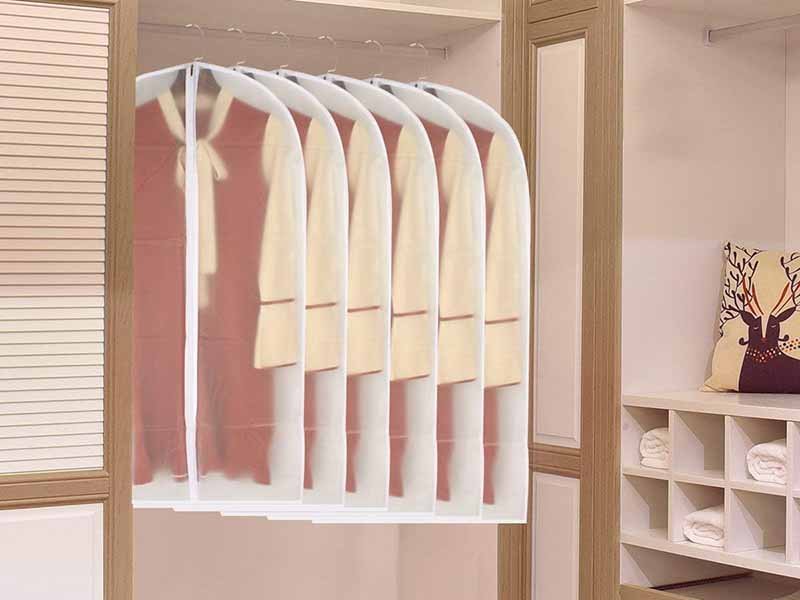
A garment bag is often treated as a small accessory, but in a tailoring shop it does much more than cover clothing. It protects the final garment, supports the customer’s first impression at pickup, and continues to represent the shop long after the fitting is finished. A perfectly tailored suit can lose part of its value if it is packed in a thin, noisy, poorly sized cover. A well-made garment bag does the opposite. It keeps the garment cleaner, helps reduce wrinkles during carrying, improves presentation, and adds another layer of professionalism to the service. For many tailoring shops, that matters because the garment is not only a product. It is the result of time, handwork, communication, fittings, and trust.
The way garment bag manufacturing works is simple in principle but much more technical in practice. A factory starts by looking at the garment type, the shop’s price level, the intended use, and the expected appearance. Then it develops the right combination of material, size, shape, zipper, opening style, handle structure, branding method, and packaging details. The goal is not just to make a cover. The goal is to create a useful product that matches how tailoring shops actually hand over, store, transport, and display garments.
That is why serious tailoring businesses ask more than basic questions. They want to know which materials feel more premium, which thickness gives better shape, whether breathable construction is better than fully sealed material, how wide a gusset should be for coats or gowns, how logo printing affects appearance, and how samples should be tested before bulk production. These are the details that separate a cheap cover from a garment bag that customers keep, reuse, and remember. And once a tailoring shop starts thinking this way, garment bag manufacturing becomes part of the overall service experience rather than an afterthought.
What Is Garment Bag Manufacturing?
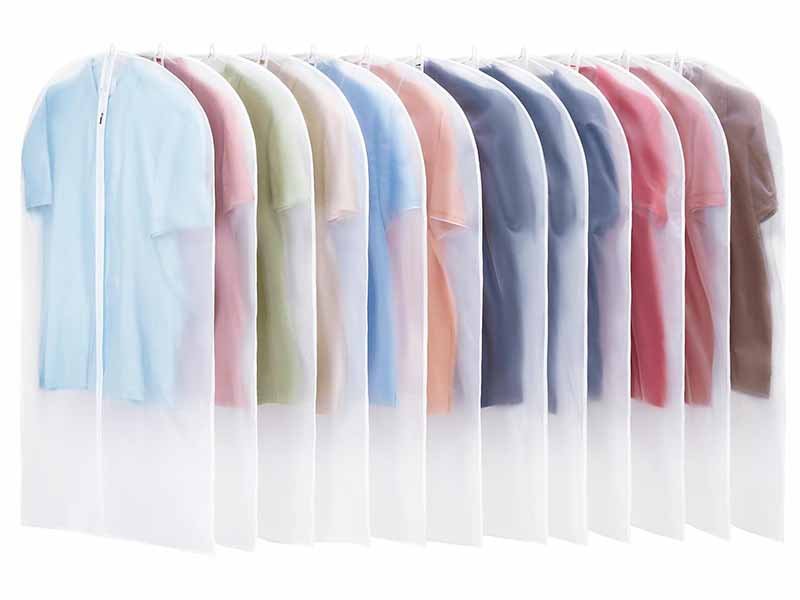
Garment bag manufacturing is the process of designing and producing protective bags for hanging garments such as suits, jackets, coats, dresses, uniforms, and formalwear. For tailoring shops, it usually involves custom size development, material selection, zipper and handle design, logo application, sample approval, and bulk production based on how the finished garments will be packed and presented.
A garment bag may look simple from the outside, but for tailoring shops it is a product with a very clear job. It needs to protect the garment from dust, light friction, handling marks, and short-term transport issues. It also needs to look appropriate for the value of the garment inside. A basic alteration shop, a premium bespoke tailoring studio, and a bridal tailoring business may all need garment bags, but the product requirements are not the same.
A tailoring shop that makes business suits usually wants a clean, structured, professional bag that protects pressed shoulders and keeps the garment presentable when the customer takes it home. A bridal shop often needs longer sizes, more width, softer internal contact, and better volume control for dresses with lace, tulle, or layered fabric. A uniform supplier may care more about consistency, durability, and identification features such as a clear name window or pocket. This is why real garment bag manufacturing starts with application, not with stock material.
What makes Garment Bag Manufacturing different?
Garment bag manufacturing is different from ordinary bag production because it is built around a hanging shape, not a boxed or folded product. That changes the pattern, structure, opening style, stress points, and material behavior.
A tote bag or pouch mainly holds items inside a cavity. A garment bag needs to work around the shape of clothing. That means the hanger opening must align correctly, the shoulders must not be squeezed, the zipper length must be practical, and the bag must hang well without twisting or collapsing too much. Even a small mistake in proportion can affect the customer experience.
There is also a stronger presentation requirement. In tailoring, packaging is part of the handover moment. Customers often judge quality not only by stitching and fit, but also by how the finished piece is delivered. A soft, smooth, properly sized, neatly printed garment bag creates a very different impression from a thin disposable cover with weak seams and a rough zipper. For many tailoring shops, that difference directly affects whether the purchase feels standard or premium.
Another important difference is repeated visibility. A garment bag is not always thrown away. Many customers use it again for storage, travel, event preparation, or dry cleaning. That gives the tailoring shop repeated exposure in the customer’s daily life. A well-made bag can stay in a closet for years. In that sense, it is not just packaging. It becomes a long-term service extension and a quiet advertising tool.
From a production point of view, garment bag manufacturing also requires more control over material softness, drape, width, seam finishing, zipper quality, and printing placement. Large logos may look attractive in artwork, but on a flexible surface they need to be positioned carefully. A gusset may sound like a small feature, but for bulky garments it can decide whether the bag feels functional or frustrating. The best factories understand these details early, before the sample stage becomes costly.
Who needs Garment Bag Manufacturing most?
The businesses that benefit most from garment bag manufacturing are usually those that sell garments with higher value, stronger presentation needs, or frequent transport requirements.
This includes:
- Bespoke tailoring shops
- Made-to-measure suit studios
- Bridal tailoring and dress alteration shops
- Formalwear rental and retail businesses
- Uniform tailoring programs
- Luxury clothing boutiques
- Premium dry-cleaning partners
- Costume and performancewear workshops
Not every tailoring business needs the same level of customization, but most can benefit from using a better garment bag than a generic market cover. A small tailoring shop may not need the most expensive material, but it still gains value from the right size, a durable zipper, a comfortable handle, and a clean printed logo. A more premium tailoring brand may want stronger fabric weight, neater edge binding, and a more refined appearance that matches the garment price.
Interestingly, medium-sized shops often gain the most practical value. Very large brands may already have fixed packaging systems. Very small shops may focus only on cost. But growing tailoring businesses usually care about both image and budget. They want packaging that looks polished without creating unnecessary inventory pressure. That makes custom garment bag manufacturing especially useful for them.
How garment bag needs change by business type
| Business Type | Main Garments | Main Concern | Recommended Direction |
|---|---|---|---|
| Bespoke suit shop | Suits, jackets, trousers | Presentation, wrinkle control, repeat use | Reusable non-woven or fabric bag with full zipper and handle |
| Bridal tailor | Wedding dresses, formal gowns | Length, width, volume, clean appearance | Long garment bag with gusset, stronger zipper, optional window |
| Alteration shop | Mixed customer garments | Cost control, practicality, simple branding | Standard reusable garment bag with one-color logo |
| Uniform tailor | Workwear, schoolwear, ceremonial uniforms | Batch consistency, labeling, storage efficiency | Durable bag with clear pocket or ID area |
| Luxury atelier | High-end garments | Premium feel, detail quality, brand image | Heavier material, refined print, stronger finishing |
| Formalwear rental | Suits, tuxedos, occasionwear | Durability, transport, repeated handling | Reinforced seams, practical zipper, easy-carry handle |
What tailoring shops usually care about before placing an order
Most tailoring shops do not start by asking about material chemistry. They start with practical business questions. These are usually the issues that matter most:
- Will the bag size really fit our suits, coats, or dresses?
- Does the material look cheap or does it feel appropriate for our price level?
- Can the logo stay clean after repeated use?
- Is the zipper smooth enough for daily opening and closing?
- Will the bag hang well in a small fitting room or storage area?
- What is the minimum order quantity?
- Can the factory provide samples quickly?
- How stable is the production quality from one batch to the next?
- Can the factory adjust size, gusset depth, window shape, and printing position?
- Is the lead time realistic for seasonal or urgent orders?
These questions show why garment bag manufacturing should be treated as a service solution, not just a commodity product. The right factory does not only quote a price. It helps the client decide what makes sense based on garment type, market level, target customer, and budget.
Which Materials Fit Garment Bag Manufacturing?
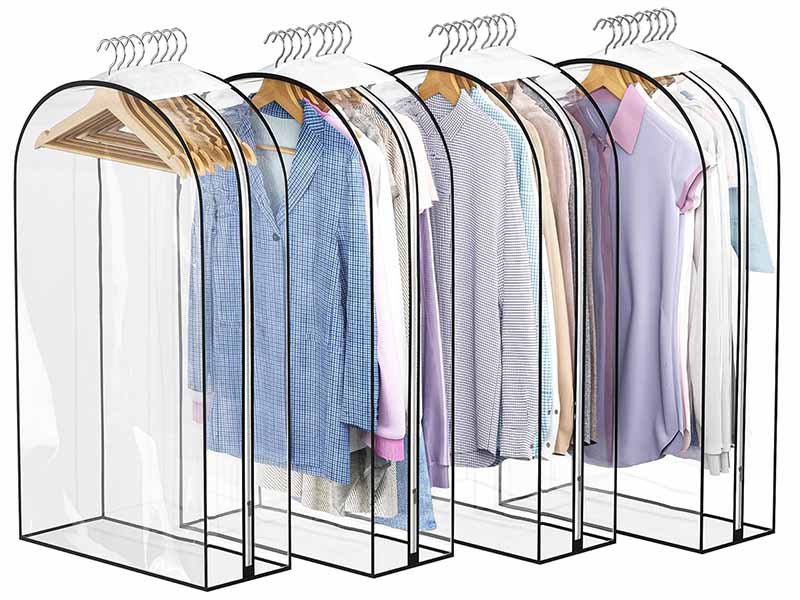
The best material for garment bag manufacturing depends on the garment type, how long the bag will be used, the climate, the brand image the tailoring shop wants to present, and the budget. Common options include non-woven polypropylene, cotton, canvas, PEVA, PVC, vinyl, polyester, and recycled materials. Each one solves a different problem, and none is perfect for every shop.
Material choice has a bigger effect on product perception than many customers expect. Two garment bags can have nearly the same shape and still feel completely different because of fabric weight, surface texture, stiffness, transparency, seam finish, and zipper quality. That is why material selection should never be based on price alone.
For tailoring shops, a garment bag usually needs to balance five things:
- Appearance
- Protection
- Reusability
- Cost
- Ease of production
If the material is too thin, the bag may look temporary. If it is too rigid, it may be harder to fold, store, or hang naturally. If it is too sealed, it may not be ideal for longer storage. If it is too premium for the actual market, it can push packaging cost beyond what makes sense. Good garment bag manufacturing is really about choosing the right compromise, not chasing a perfect material that does everything.
Is non-woven best for Garment Bag Manufacturing?
For many tailoring shops, non-woven polypropylene is the most practical starting point. It is one of the most widely used materials because it balances cost, appearance, printability, and everyday performance reasonably well.
A good non-woven garment bag can look clean, feel lightweight, and support repeated use. It works especially well for suit shops, uniform programs, alteration chains, and brands that want custom packaging without moving into much higher material cost. It is also flexible in production because it can be cut, stitched, and printed in many common factory setups, which helps with development efficiency.
Still, not all non-woven bags are equal. The difference between a 70 gsm non-woven bag and a 120 gsm version can be very noticeable in hand feel, shape retention, and perceived value. Lower-weight material may reduce cost, but it can also make the bag feel flat and disposable. A better-weight non-woven fabric often gives a more stable structure and better logo presentation.
Common non-woven weight reference
| Fabric Weight | Feel and Appearance | Typical Use |
|---|---|---|
| 60–70 gsm | Light, soft, economical | Entry-level garment covers, cost-sensitive use |
| 80–90 gsm | Balanced feel, practical structure | Standard tailoring shop garment bags |
| 100–120 gsm | More stable, better shape, stronger appearance | Premium reusable garment bags |
| 120 gsm+ | Heavier hand feel, more substantial look | Higher-end presentation or structured designs |
The material alone does not guarantee a good result. The finished quality depends on how the factory combines fabric weight with stitching, zipper selection, edge binding, pattern proportion, and logo process. A poorly made non-woven bag can still look cheap. A well-made one can look professional and reliable.
For many clients, non-woven works because it supports the middle ground they actually need: better than disposable plastic, more affordable than full cotton or heavy canvas, and customizable enough for private label use.
Are breathable fabrics better in Garment Bag Manufacturing?
In many cases, yes, especially when the garment may stay in the bag for longer periods. Breathable construction can help reduce the risk of trapped moisture, odor buildup, and unpleasant storage conditions, especially in humid environments or closets with limited airflow. That is why cotton, canvas, and non-woven materials continue to be widely preferred for many garment storage applications.
For tailoring shops, this matters more than it first seems. Not every customer wears the garment immediately. A wedding dress may stay covered for weeks. A suit may hang until an event or business trip. A winter coat may be stored between seasons. In these situations, a fully sealed material may look protective, but it is not always the best long-term choice.
Breathable materials also tend to feel more refined and less disposable. Cotton and canvas, in particular, create a stronger premium impression, although they come with higher unit cost and often higher shipping weight. Non-woven remains attractive because it provides some breathability while staying more cost-efficient.
That said, breathability should not be treated like a marketing slogan without context. Some customers also want visibility. Some shops want a transparent window so staff or end users can identify garments quickly. Some transport situations need more splash resistance. The better solution is often a hybrid design.
Examples of balanced material solutions
- Non-woven body + clear PEVA window Good for shops that need quick garment identification without making the whole bag sealed.
- Cotton body + reinforced zipper area Good for premium tailoring shops that want breathable storage and a more upscale presentation.
- Non-woven body + piping + stronger handle Good for businesses that need practical daily use and a cleaner overall appearance.
- PEVA front + fabric back Good for short-term transport use where appearance and partial visibility both matter.
This is where factory experience becomes useful. Instead of pushing one material for every order, a skilled manufacturer looks at how the customer will really use the product and develops the material mix around that.
Does waterproof matter in Garment Bag Manufacturing?
Water resistance matters, but it is often misunderstood. Most tailoring shops do not need a fully waterproof garment bag. What they usually need is protection from dust, light rain exposure during carrying, accidental splashes, and everyday handling. In that sense, water-resistant materials or partially protective construction can be very useful. Full waterproofing is usually more important for specific travel or transport scenarios than for normal in-shop handover.
Materials such as PEVA, vinyl, PVC, or coated polyester can help create a smoother, more closed surface. These materials are often chosen when the client wants a cleaner wipeable finish, a more visible structure, or better short-term moisture protection. But they also come with tradeoffs. If a garment is stored for a long time in a poorly ventilated sealed cover, that may not be ideal for the clothing inside. Textile care guidance generally favors breathable storage over sealed plastic for longer-term closet use.
The better question is not whether waterproofing is good or bad. The right question is where and how the bag will be used.
When more moisture protection makes sense
- The garment is delivered to customers by car or courier
- The local climate is rainy
- The bag is used for short-term event transport
- The customer often carries the garment outdoors
- The shop wants a wipe-clean outer surface
When breathability matters more
- The garment may stay stored for weeks or months
- The product is premium formalwear or bridalwear
- The local climate is humid
- The customer is likely to reuse the bag at home
- The tailoring shop wants a more textile-like feel
This is why many good garment bag projects end up using balanced construction rather than extreme design. A tailoring shop may choose a breathable main body with a small clear window, or a stronger zipper cover with a softer body fabric. Practical design usually wins over exaggerated features.
Material comparison for tailoring-shop garment bags
| Material | Main Strength | Main Limitation | Best Match |
|---|---|---|---|
| Non-woven PP | Cost-effective, reusable, printable | Entry versions can feel light or flat | Most tailoring shops |
| Cotton | Breathable, premium, soft hand feel | Higher cost, heavier shipping | Premium tailoring and luxury presentation |
| Canvas | Strong, durable, upscale texture | Bulkier and heavier | High-end garment storage and branding |
| PEVA | Smooth, clean, moisture resistant | Less breathable than fabric options | Bridal, travel, short-term transport |
| PVC/Vinyl | Structured, visible, wipeable | Less suitable for long storage in some cases | Display, identification, short transport |
| Polyester | Practical, durable, flexible construction | Premium feel depends on finish | Mixed commercial use |
| Recycled rPET | Sustainability story, reusable | Quality varies by construction | Eco-positioned tailoring brands |
What clients should confirm before approving a material
Before confirming bulk production, it is smart to check these points with the factory:
- Exact material type
- Fabric weight or thickness
- Surface finish
- Printing compatibility
- Color consistency
- Odor level after production
- Zipper compatibility with the selected fabric
- Wrinkle behavior after folding
- Sample appearance under natural light
- Whether the bag feels aligned with the garment value
These details matter because material decisions affect not only function, but also how customers interpret the tailoring shop’s overall standard.
For a company like Szoneier, this part of the process is especially important. A factory with long experience in flexible materials and custom sewn-product development is usually better positioned to judge how fabric behavior, thickness, handling comfort, construction method, and visual finish work together in the final product. That helps clients avoid a common mistake: choosing material only from a swatch card instead of judging how the full finished bag will actually perform.
How Does Garment Bag Manufacturing Design Work?
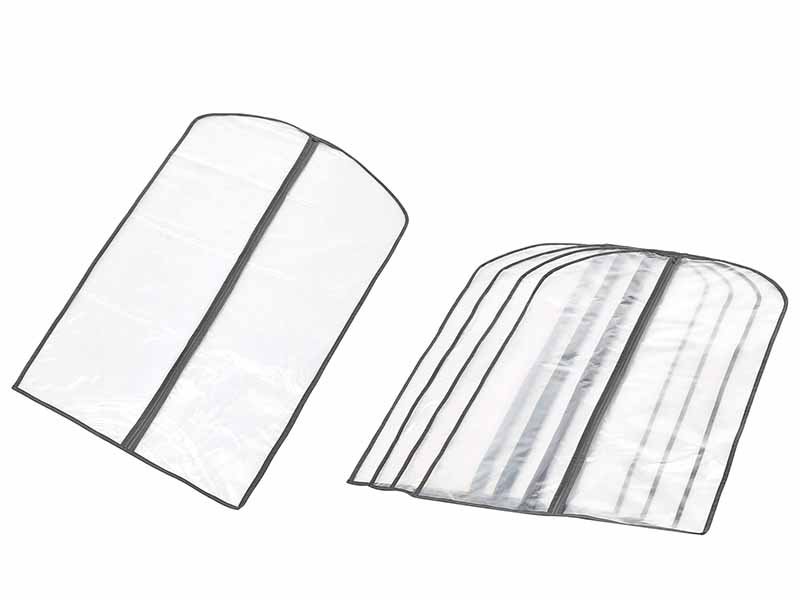
The design stage in garment bag manufacturing is where most of the real value is created. A well-designed garment bag fits the garment naturally, hangs properly, feels comfortable to carry, and looks aligned with the tailoring shop’s positioning. A poorly designed one, even if made from good material, can feel awkward, collapse in shape, or fail in daily use.
Good design is not about making the bag look complex. It is about making the bag work smoothly in real situations: fitting rooms, storage racks, customer pickup, car transport, and home closets. That is why experienced manufacturers always start with the garment type and usage scenario before drawing the pattern.
What sizes matter in Garment Bag Manufacturing?
Size is the first and most critical decision. A garment bag that is too small compresses the garment, damages structure, and creates wrinkles. A bag that is too large becomes inconvenient to carry and store.
Most tailoring shops work with a few standard garment categories, and each one has its own size range.
Common garment bag size reference
| Garment Type | Recommended Length | Recommended Width | Notes |
|---|---|---|---|
| Suit / Blazer | 100–110 cm | 55–60 cm | Standard for most tailoring shops |
| Long Coat | 110–130 cm | 60–65 cm | Extra length prevents folding |
| Wedding Dress | 150–180 cm | 65–75 cm | Often requires gusset for volume |
| Evening Dress | 130–160 cm | 60–70 cm | Depends on fabric layers |
| Uniform | 95–110 cm | 50–60 cm | Focus on consistency and storage |
Length is important for preventing bottom folding. Width affects how well the shoulders and sleeves sit inside the bag. If the width is too tight, the garment will press inward and lose its shape. If it is too wide, the bag may look loose and unstructured.
For tailoring shops, the best approach is not to guess. It is to measure a few typical finished garments and allow extra tolerance for comfortable placement. A good manufacturer will help adjust the size slightly based on fabric thickness and bag structure.
Which features improve Garment Bag Manufacturing?
Once the basic size is set, the next step is deciding which features actually improve usability. Not every feature adds value. Some only increase cost without improving function.
The most useful features are those that directly affect daily handling:
- Full-length zipper Makes it easy to open and place garments inside without bending or forcing.
- Top hanger opening (reinforced) Allows smooth hanging without tearing the fabric around the hook area.
- Carry handles Essential for customer pickup and short-distance transport.
- Gusset (side expansion) Adds depth to accommodate coats, suits with structure, or dresses with volume.
- Clear window panel Helps identify garments without opening the bag.
- Name card pocket Useful for uniform programs or multi-order shops.
- Bottom fold or loop Helps shorten long bags for travel or easier carrying.
Each feature should be selected based on actual use. For example, a bridal shop may prioritize gusset and length. A suit shop may prioritize structure and clean appearance. A uniform supplier may prioritize labeling and durability.
Adding too many features can make the bag feel overdesigned and increase production complexity. The goal is to keep it functional, not complicated.
How do zippers and handles help Garment Bag Manufacturing?
Zippers and handles are often underestimated, but they are the most frequently used parts of the garment bag. If they fail, the entire product feels unreliable.
A good zipper should:
- Open and close smoothly without catching
- Match the length of the bag properly
- Be strong enough for repeated use
- Be aligned straight to avoid twisting
Zipper quality is often determined by material (nylon coil vs. plastic tooth), slider quality, and stitching precision. Even a good zipper can perform poorly if it is not sewn correctly.
Handles also need careful consideration. A thin stitched handle may be enough for light garments, but for heavier items like coats or multiple garments, reinforced handles are much more reliable.
Zipper and handle recommendations
| Feature | Entry Level | Standard | Premium |
|---|---|---|---|
| Zipper Type | Basic nylon coil | Reinforced nylon coil | Heavy-duty or branded zipper |
| Zipper Length | Partial opening | Full-length opening | Full-length with smooth track |
| Handle Type | Single stitched strap | Double-layer handle | Reinforced padded handle |
| Attachment | Simple stitch | Cross-stitch reinforcement | Reinforced panel attachment |
For tailoring shops, this is where customers notice quality. A smooth zipper and comfortable handle make the bag feel well-made. A rough zipper or weak handle creates frustration immediately.
What clients should confirm in the design stage
Before moving to sampling, it is important to confirm:
- Final size (length, width, gusset)
- Zipper type and opening style
- Handle position and strength
- Logo size and placement
- Material thickness
- Window or pocket details
- Overall shape when hanging
This stage is where most problems can be avoided early. A small adjustment in design is much easier than correcting a full production run.
For Szoneier, this step is usually handled through detailed communication and sample development. Instead of offering fixed templates only, the factory can adjust structure based on real garment measurements and client requirements. That flexibility is especially valuable for tailoring shops with unique product lines.
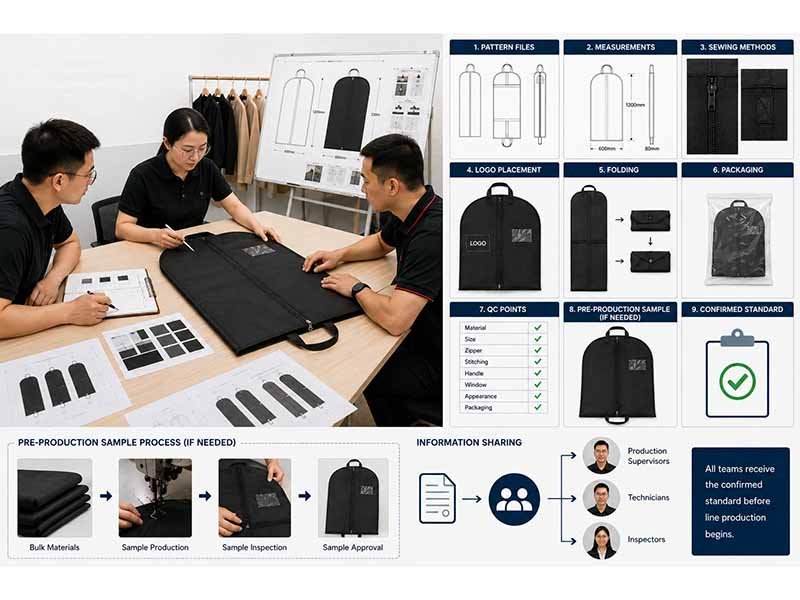
How Does Custom Garment Bag Manufacturing Work?
Custom garment bag manufacturing is a step-by-step process that turns an idea into a finished product ready for real use. For tailoring shops, understanding this process helps avoid delays, reduce mistakes, and achieve a better final result.
A reliable factory does not just produce bags. It guides the client through development, sampling, adjustment, and production with clear communication at each stage.
How does logo printing fit Garment Bag Manufacturing?
Logo printing is one of the most visible parts of the garment bag. It directly affects how the tailoring shop is perceived by customers.
There are several common logo methods:
- Silk screen printing Cost-effective, clean, suitable for simple logos
- Heat transfer printing Good for multi-color designs and detailed graphics
- Embroidery Premium look, more durable, higher cost
- Rubber or patch logo Adds texture and branding depth
- Foil stamping (limited materials) Used for special visual effects
Logo method comparison
| Method | Cost Level | Appearance | Best Use |
|---|---|---|---|
| Silk screen | Low | Clean and simple | Most tailoring shops |
| Heat transfer | Medium | Detailed and colorful | Fashion-oriented brands |
| Embroidery | High | Premium and textured | Luxury tailoring |
| Patch logo | Medium–High | Strong branding | Custom design focus |
For most tailoring shops, silk screen printing is the most practical option. It balances cost and appearance well. However, premium brands may prefer embroidery or patch logos to create a stronger visual impression.
Logo placement is also important. A centered logo near the upper area of the bag is common because it remains visible when the bag is hanging.
Does low MOQ help Garment Bag Manufacturing?
Minimum order quantity (MOQ) is one of the most important concerns for tailoring shops, especially small and medium businesses.
A lower MOQ allows:
- Testing new designs without high risk
- Adjusting branding over time
- Managing inventory more easily
- Reducing upfront investment
However, MOQ is influenced by:
- Material type
- Printing method
- Bag complexity
- Factory production setup
Typical MOQ reference
| Product Type | MOQ Range |
|---|---|
| Simple non-woven garment bag | 300–500 pcs |
| Custom size with printing | 500–1000 pcs |
| Complex structure (gusset, window) | 1000+ pcs |
| Premium materials (cotton, canvas) | 500–1000 pcs |
Factories like Szoneier usually support flexible MOQ options, especially for long-term clients or growing brands. This is important because it allows tailoring shops to start small and scale gradually.
How does sampling support Garment Bag Manufacturing?
Sampling is one of the most important steps before mass production. It allows the client to see, touch, and test the product in real conditions.
A proper sample should confirm:
- Actual size and fit with real garments
- Material feel and thickness
- Zipper smoothness
- Handle strength
- Logo clarity and position
- Overall appearance when hanging
Sampling timeline example
| Stage | Time |
|---|---|
| Design confirmation | 1–3 days |
| Sample production | 5–10 days |
| Shipping to client | 3–7 days |
| Feedback and revision | 3–5 days |
In total, the sampling process usually takes around 2–3 weeks depending on complexity and communication speed.
Skipping or rushing this step often leads to problems in bulk production. A well-tested sample reduces risk and ensures the final product meets expectations.
How is quality checked before bulk shipment?
Quality control is the final step that ensures consistency across the entire order. A reliable factory will check:
- Material consistency
- Size accuracy
- Stitching quality
- Zipper function
- Logo printing quality
- Packing condition
Common quality checkpoints
- Random inspection during production
- Final inspection before packing
- Carton drop test (for shipping safety)
- Visual check for defects
For tailoring shops, consistent quality is critical. Customers may not accept variation in size, color, or print quality across batches.
Szoneier’s experience in custom manufacturing helps maintain this consistency. With structured production processes and inspection systems, the factory ensures that each batch matches the approved sample as closely as possible.
Why Does Garment Bag Manufacturing Matter?
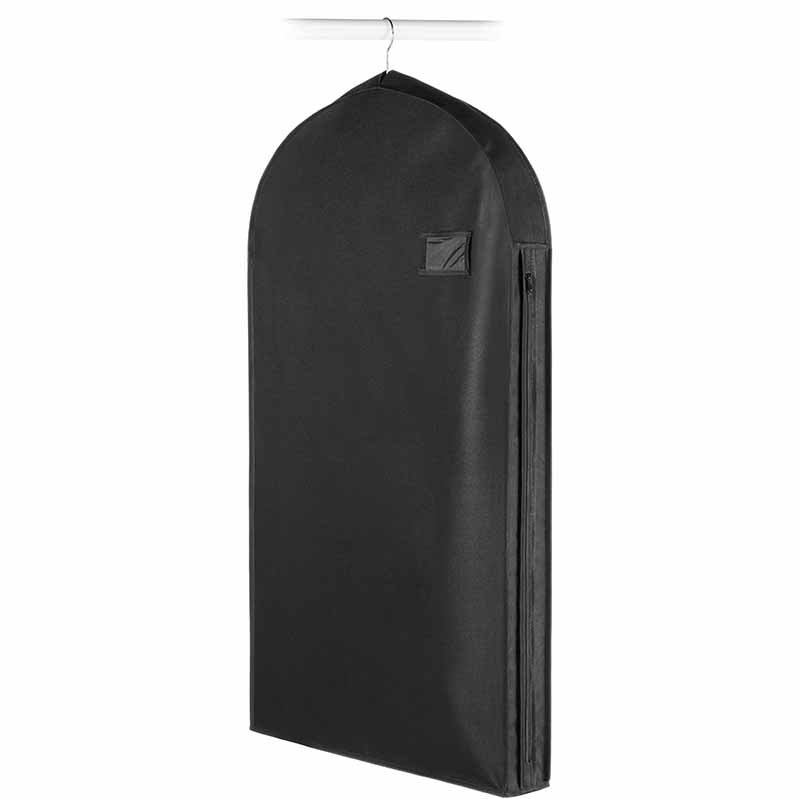
Garment bag manufacturing matters because the bag is not just a cover. For tailoring shops, it is part of product protection, part of customer experience, and part of how the business is remembered after delivery. A suit, dress, coat, or uniform may take days or weeks to develop, fit, alter, and finish. If the final handover feels careless, some of that value is lost. If the handover feels polished, the entire order feels more complete.
Many tailoring businesses focus heavily on front-end work such as fitting, fabric selection, style discussion, and garment construction. That makes sense. Those are core parts of the service. But the final packaging stage still affects how customers judge quality. A clean, well-sized, reusable garment bag helps the garment arrive home in better condition, protects the pressing and silhouette, and leaves the customer with a stronger sense that the shop pays attention to detail.
This matters even more in categories where presentation is emotional. Wedding garments, formalwear, made-to-measure suits, graduation outfits, stage wear, and premium uniforms are not ordinary purchases. Customers often connect them with important moments. In these cases, a garment bag is doing more than protecting fabric. It is supporting the handover of something the customer has already assigned emotional and financial value to.
How does Garment Bag Manufacturing build brand value?
A custom garment bag builds brand value because it stays visible long after the sale. A paper shopping bag may be used once. A garment bag can stay in a closet for years, travel to events, go to dry cleaners, and appear every time the customer moves a suit or dress. That repeated visibility makes it one of the most practical forms of quiet branding available to a tailoring business.
For many tailoring shops, this is especially useful because customer acquisition can be expensive. Word of mouth, repeat orders, and referrals still matter a great deal in tailoring. A branded garment bag supports all three.
It helps in several ways:
- It makes the first pickup feel more complete
- It reinforces the shop name without extra explanation
- It gives customers something useful, not disposable
- It can make the shop look more established and professional
- It improves the chance that others see the brand during reuse
A customer carrying a branded garment bag into a hotel, wedding venue, office building, or dry cleaner is effectively extending the shop’s visibility into real-life spaces. That kind of exposure is not loud, but it is relevant and credible.
Brand value also comes from consistency. If a tailoring shop uses the same logo, colors, material style, and overall finish across every order, it starts to feel more organized and more trustworthy. Customers often read consistency as professionalism. They may not say it that way, but they feel it.
How a custom garment bag supports business value
| Business Effect | How the Garment Bag Contributes | Practical Result |
|---|---|---|
| Stronger first impression | Clean handover, polished appearance | Higher perceived quality |
| Better brand recognition | Logo and visual consistency | Easier customer recall |
| More repeat exposure | Reused in closets, travel, dry cleaning | Extended brand visibility |
| Higher service value | Packaging feels part of the full experience | Greater satisfaction |
| Better referral potential | Bag is seen by friends, family, staff | Indirect promotion |
Brand value is not only about appearance. It is also about matching the packaging to the level of garment inside. If a shop sells premium tailored suits but hands them over in low-grade disposable covers, the packaging creates a mismatch. Customers notice that even when they do not mention it directly. Good garment bag manufacturing helps remove that mismatch.
Is reusable Garment Bag Manufacturing a better choice?
In most cases, yes. Reusable garment bags usually create better value than single-use covers because they offer longer service life, better presentation, and more branding exposure.
For tailoring shops, a reusable bag has several advantages:
- It feels more substantial in hand
- It supports repeated opening and closing
- It reduces the chance of immediate disposal
- It keeps the logo in the customer’s daily environment
- It aligns better with modern expectations around durability and reduced waste
A reusable bag can also improve the way customers judge the order overall. Many people today are more careful about what they keep and what they throw away. If the garment bag feels useful, it becomes part of the value of the purchase rather than just part of the packaging.
That said, reusable does not always mean expensive. A well-made non-woven garment bag with the right fabric weight, zipper, and handle can still be cost-effective while offering clearly better performance than throwaway plastic covers. The key is choosing a design that matches the shop’s real order volume and price range.
Reusable garment bag vs single-use cover
| Factor | Reusable Garment Bag | Single-Use Cover |
|---|---|---|
| Customer perception | Higher quality | Low-value, temporary |
| Brand exposure | Long-term | Very limited |
| Durability | Good to excellent | Weak |
| Function | Storage, travel, protection | Basic covering only |
| Environmental impression | Better when used repeatedly | Often seen as wasteful |
| Cost per unit | Higher | Lower |
| Value over time | Stronger | Limited |
There are still situations where a single-use cover makes sense, especially for low-cost volume operations or internal garment protection during transport between production steps. But for most tailoring shops dealing directly with customers, reusable garment bag manufacturing is the stronger long-term choice.
How can good Garment Bag Manufacturing support growth?
Good garment bag manufacturing supports business growth because it improves the quality of the customer experience without requiring the shop to change its entire operating model. It is a realistic upgrade. A tailoring business does not need ten new showrooms or a large ad budget to benefit from better packaging. It can improve perceived value through one practical product used at every handover.
Growth support comes from four areas:
- better presentation
- stronger retention
- improved operational clarity
- more premium positioning
First, better presentation helps a tailoring shop look more established. This is important for shops that want to move from basic alteration work into higher-value custom work. Customers often decide whether a business feels premium from a combination of signals, not one single factor. Garment bags are part of that signal system.
Second, strong packaging supports retention. If customers keep using the garment bag, the shop remains visible. This increases the chance of future alterations, repeat tailoring work, event-based orders, or referrals.
Third, a better-designed garment bag can improve operations. For example:
- clear windows can help identify garments faster
- label pockets can support order handling
- stronger handles reduce damage during movement
- consistent sizes make storage easier
- durable zippers reduce after-sale complaints
These details may seem small, but over hundreds or thousands of orders they affect workflow and professionalism.
Fourth, garment bag quality can support price positioning. A tailoring shop that wants to move upmarket often needs every visible touchpoint to look more refined. Better fabrics, neater printing, more stable structure, and cleaner packaging all help tell that story.
Where garment bag quality affects growth
| Growth Area | Packaging Impact | Why It Matters |
|---|---|---|
| Customer retention | Bag remains in use after purchase | Keeps the shop visible |
| Referral value | Others see the branded bag | Supports natural word of mouth |
| Price positioning | Better packaging supports premium feel | Helps justify higher service value |
| Daily operations | Easier identification and handling | Improves efficiency |
| Market perception | Consistent look across orders | Builds trust and professionalism |
For growing tailoring businesses, this is often one of the most efficient upgrades available. It is visible, usable, repeatable, and directly tied to the finished product.
What tailoring shops should ask before choosing a manufacturer
Choosing the right factory matters just as much as choosing the right bag design. A strong manufacturer should not only quote a product. It should help reduce risk and improve decision-making.
Before placing an order, tailoring shops should ask questions like these:
Production capability
- Can you make custom sizes based on our real garments?
- Can you produce both standard and gusseted garment bags?
- What materials do you regularly work with?
- Can you support custom logo methods such as silk print, heat transfer, embroidery, or patches?
Sampling
- How long does sample development take?
- Can you revise the sample after feedback?
- Can you match our target material weight and color?
- Will the sample represent the same construction used in bulk production?
MOQ and pricing
- What is the MOQ for simple designs?
- What changes increase MOQ?
- How does pricing change by fabric weight, zipper type, and printing method?
- Can you support smaller trial orders for new projects?
Quality control
- How do you inspect stitching, size, logo position, and zipper performance?
- Do you check material consistency between batches?
- How do you handle defects before shipment?
- Can you provide photos or inspection records before delivery?
Lead time
- How fast can you make samples?
- What is the production time for bulk orders?
- How do you handle urgent projects?
- What is the shipping arrangement and packaging method?
A factory that answers these questions clearly is usually easier to work with in the long term. This matters because custom packaging is rarely a one-time decision. Most tailoring shops adjust over time. They may change logo size, bag shape, material weight, or presentation level as the business grows. A capable manufacturer should be able to grow with them.
A practical development path for tailoring shops
For tailoring shops that want to start custom garment bag development without taking on too much risk, a phased approach usually works best.
Step 1: Start with your core garment
Choose the product you handle most often. For many shops, that is a suit, blazer, or long dress. Build the first bag around that category.
Step 2: Confirm basic structure
Decide the core specifications:
- size
- material
- zipper
- handle
- logo
- whether a gusset or window is needed
Step 3: Make one sample and test it in real use
Do not judge only from flat photos. Put a real garment inside. Hang it. Carry it. Open and close the zipper repeatedly. Look at how the logo appears in normal lighting.
Step 4: Adjust what affects daily use
Small changes matter:
- a slightly wider shoulder area
- a smoother zipper
- a stronger handle attachment
- a better logo position
- a more suitable material thickness
Step 5: Place a manageable first order
Choose a quantity that matches real usage. Avoid over-ordering just to chase a slightly lower unit price.
Step 6: Review customer response
After the first production run, pay attention to what customers and staff actually notice:
- Do customers reuse the bag?
- Does the bag feel aligned with garment value?
- Are there any issues in storage or transport?
- Does the logo remain attractive after repeated use?
This approach helps tailoring shops make better packaging decisions based on real experience rather than assumptions.
Why Szoneier can be a useful manufacturing partner
Szoneier is not just a supplier of sewn products. The company brings more than 18 years of experience in material development and custom manufacturing, especially in neoprene-related product development and a wide range of soft goods such as bags, koozies, sports supports, medical supports, wetsuits, and other flexible sewn products. That background matters because garment bag manufacturing is also a soft-product discipline. It requires a strong understanding of material behavior, cutting accuracy, sewing quality, structure, and custom branding.
For tailoring shops, this translates into several practical advantages:
- support for custom development rather than only stock shapes
- experience with different flexible materials and construction methods
- low MOQ options for developing brands and medium-size shops
- fast sampling for quicker product testing
- free design support for layout and practical adjustments
- short lead times for production planning
- free samples in suitable cases
- ability to support custom logo, private label, OEM, and ODM projects
A tailoring shop does not only need a factory that can sew a bag. It needs a factory that understands how material choice, size, structure, and appearance affect the finished product in real use. This is where a more experienced product-development partner becomes valuable.
Final Thoughts
Garment bag manufacturing for tailoring shops works best when it starts with the garment, not the bag. The right project begins by asking what the clothing needs, how the customer will carry and store it, how the tailoring shop wants to be perceived, and what level of packaging makes business sense.
When those questions are answered properly, the result is much more than a protective cover. It becomes a useful product that helps the garment stay cleaner, look better, travel more safely, and keep the tailoring shop visible long after pickup.
A well-made garment bag can help a tailoring business look more polished, feel more established, and deliver a more complete customer experience. It can support daily operations, improve presentation, strengthen repeat visibility, and help the shop move toward a more premium position without unnecessary complexity.
For tailoring shops that want to improve packaging in a practical way, custom garment bag manufacturing is one of the clearest upgrades available.
Request a Custom Garment Bag from Szoneier
If you are planning to develop custom garment bags for suits, dresses, coats, uniforms, or other tailoring-shop products, Szoneier can help you turn your idea into a finished product with the right balance of material, structure, branding, MOQ, and production efficiency.
Szoneier is ready to support your project with free design assistance, fast sampling, short lead times, and custom manufacturing experience built over more than 18 years.
Reach out to Szoneier with your garment type, target size, material preference, logo artwork, and estimated quantity, and start building a garment bag that truly fits your business.