Skip to content

A beach bag may look simple, but the material behind it decides whether the product becomes a repeat-order item or a return problem. On the beach, three things destroy low-quality bags fast: strong UV exposure, fine sand abrasion, and constant contact with wet towels, swimsuits, sunscreen bottles, and saltwater. Many products look attractive on the first day of sale, but after a few weeks of actual use, the color fades, the corners become rough, the inside starts holding moisture, and the customer notices that the bag no longer feels clean, light, or durable. That is usually not a style issue. It is a material selection issue.
The materials that best resist sun, sand, and moisture in beach bags are usually polyester, neoprene, coated canvas, nylon, and selected mesh structures. The right choice depends on the bag’s price level, target market, loading needs, drying speed, and how often the product will be used outdoors. Polyester is often the most balanced option for UV stability and value. Neoprene performs well in wet environments. Mesh helps release sand. Coated canvas offers structure and a more premium look.
A beach bag is not only carrying towels and sunscreen. It is carrying your customer’s opinion of your product quality. A bag that still looks clean, holds shape, and dries fast after repeated beach trips is the kind of product people recommend, reorder, and remember. That is why material choice deserves much more attention than most brands give it.
What Makes Beach Bag Materials Durable?
Beach bag durability is not defined by one single factor. It is the result of how well a material performs under sun exposure, moisture, sand friction, and daily loading stress at the same time. In real use, customers don’t test these factors separately—they experience them together in one trip.
A durable beach bag material should maintain its color, structure, weight balance, and surface cleanliness after repeated use. Based on customer feedback and product return analysis, the most common durability failures come from:
- Color fading after 2–4 weeks of sun exposure
- Fabric softening or deformation after repeated wet-dry cycles
- Sand abrasion causing surface roughness or fiber breakage
- Handle tearing due to insufficient reinforcement
For brands and sellers, these issues directly affect review ratings, return rates, and repeat orders.
Below is a deeper breakdown of what actually makes a beach bag material durable in real-world conditions.
Do Beach Bag Materials Resist Sun?
Sun resistance determines how long a beach bag keeps its original appearance. UV rays gradually break down fibers and dyes, especially in bright-colored bags.
In practical terms:
- After 50–100 hours of sun exposure, low-quality fabrics begin to fade
- Cotton canvas may lose 30–40% color depth within one season
- High-quality polyester can retain 80–90% color stability over the same period
This is why most large-scale beach bag production uses polyester instead of untreated cotton.
For better sun performance, manufacturers often:
- Use solution-dyed polyester for deeper color penetration
- Apply UV-resistant coatings to reduce fiber damage
- Select darker or more stable color palettes for long-term use
For customers selling in strong UV regions (California, Australia, Middle East), this becomes even more critical. A bag that fades quickly often receives negative reviews even if the structure is still intact.
How Do Beach Bag Materials Handle Moisture?
Moisture resistance is directly linked to user comfort and product hygiene. A beach bag is repeatedly exposed to:
- Wet towels
- Swimsuits
- Water splashes
- Humid air
If the material absorbs water, it leads to:
- Increased weight (up to 20–30% heavier when wet)
- Slow drying (often 6–12 hours for canvas)
- Odor buildup after repeated use
Materials like polyester and nylon perform better because they absorb very little water and dry quickly. Neoprene also performs well in wet conditions due to its structure and flexibility.
From a product development perspective, key improvements include:
- Using low water-absorption fabrics
- Designing ventilation or drainage features
- Avoiding thick inner linings that trap moisture
Customers notice this immediately. A bag that dries fast feels cleaner and more practical, especially for daily beach or pool use.
Which Beach Bag Materials Resist Sand?
Sand resistance affects how easy the bag is to use and maintain. Fine sand particles can:
- Get trapped in seams and pockets
- Scratch fabric surfaces
- Create a “dirty” feeling even after cleaning
Materials behave very differently in sandy environments:
- Rough fabrics (like untreated canvas) tend to trap sand easily
- Smooth coated fabrics reduce sand sticking
- Mesh allows sand to fall through instead of accumulating
From user behavior studies:
- Over 60% of beach users prefer bags that are easy to shake clean
- Bags that trap sand are more likely to be replaced within one season
To improve sand resistance, manufacturers often:
- Use mesh panels for drainage
- Apply smooth surface coatings
- Simplify internal structures to reduce sand traps
This is a small detail that creates a big difference in user experience.
Are Beach Bag Materials Strong Enough?
Strength is not only about fabric thickness. It is about how the material performs under repeated load and stress.
A typical beach bag carries:
- Towels (1–2 kg)
- Water bottles (1–2 kg)
- Personal items (1–3 kg)
Total load: 4–8 kg for standard use, sometimes more.
Common failure points include:
- Handle stitching
- Bottom corners
- Side seams
Even strong fabric can fail if these areas are not reinforced.
Here is a practical strength comparison:
| Material | Tensile Strength | Load Capacity | Common Use |
|---|---|---|---|
| Canvas | Very High | 8–12 kg | Heavy-duty bags |
| Polyester (600D+) | High | 6–10 kg | All-purpose beach bags |
| Nylon | High | 5–8 kg | Lightweight bags |
| Neoprene | Medium-High | 5–9 kg | Flexible premium bags |
To improve strength, factories usually:
- Add reinforced stitching (bartack or cross stitch)
- Use double-layer bottom panels
- Select wider handles (2.5–4 cm) for better weight distribution
Customers may not see these details immediately, but they feel them after several uses. A bag that holds weight without deformation builds trust and leads to repeat purchases.
Durability Factors Overview Table
| Factor | What It Affects | Customer Impact |
|---|---|---|
| UV Resistance | Color and fiber lifespan | Keeps bag looking new longer |
| Water Resistance | Drying speed and hygiene | Prevents odor and discomfort |
| Sand Resistance | Cleaning and usability | Improves daily convenience |
| Fabric Strength | Load capacity | Prevents tearing and failure |
| Construction Quality | Overall durability | Reduces returns and complaints |
Which Beach Bag Materials Resist Sun Best?
Beach bags spend hours under direct sunlight, often on hot sand where surface temperatures can reach 45–60°C (113–140°F). Under these conditions, poor material choices quickly show problems—colors fade, surfaces become rough, and fabrics lose strength. For brands, this leads to visible quality complaints within just one season.
Materials that resist sun best are those that maintain color stability, fiber strength, and surface integrity after repeated UV exposure. In real product use, polyester, neoprene, and coated canvas consistently perform better than untreated natural fabrics.
From customer feedback data across e-commerce platforms, over 40% of negative reviews related to beach bags mention fading or “looking old too fast.” This makes sun resistance one of the most important factors in material selection.
Is Polyester a Sun-Resistant Beach Bag Material?
Polyester is the most widely used material for beach bags when sun resistance is a priority. It offers a strong balance between cost, durability, and long-term color retention.
In practical testing and market use:
- Polyester can retain 80–90% of its original color after extended sun exposure
- High-quality polyester maintains structural strength even after 100+ hours of UV exposure
- It performs consistently across different climates, including high-UV regions
This makes polyester a reliable choice for:
- Large-volume retail beach bags
- Amazon and e-commerce products
- Printed or patterned beach totes
Another key advantage is how well polyester works with customization. It supports:
- Sublimation printing (bright, long-lasting colors)
- Screen printing (clear logo visibility)
- Heat transfer designs
For brands, this means better visual consistency across production batches.
From a cost-performance perspective, polyester is often the safest choice. It delivers strong sun resistance without significantly increasing production cost, which is why it is used in most commercial beach bag programs.
Can Coated Canvas Resist Sun in Beach Bags?
Canvas has a strong, premium feel, but untreated canvas performs poorly under direct sunlight. It fades quickly and can become stiff after repeated exposure.
Once coated, however, canvas becomes much more suitable for beach use.
Coated canvas advantages:
- Improved UV resistance compared to raw canvas
- Better surface protection against fading
- Strong structure and shape retention
In real use:
- Coated canvas can extend product lifespan by 30–50% compared to untreated canvas
- It maintains a more “premium” look even after repeated outdoor use
This makes coated canvas ideal for:
- Boutique retail beach bags
- Lifestyle and fashion-oriented brands
- Structured tote designs
However, there are trade-offs:
- Heavier than polyester
- Less flexible
- Higher material cost
For customers targeting mid-to-high-end markets, coated canvas is often chosen not just for performance, but also for perceived value. A thicker, structured bag gives customers a stronger impression of quality.
Do Nylon Beach Bag Materials Fade in Sun?
Nylon is known for its strength and lightweight feel, but it is less stable under long-term UV exposure compared to polyester.
In real-world use:
- Nylon may start showing visible fading after 1–2 months of frequent sun exposure
- Fiber strength can gradually decrease if exposed to strong UV without protection
This does not mean nylon is a poor material. It simply means it needs to be used in the right scenarios.
Nylon works best for:
- Lightweight beach bags
- Foldable or travel-friendly designs
- Short-term or occasional beach use
To improve performance, manufacturers often:
- Apply UV-resistant coatings
- Use darker colors to reduce visible fading
- Combine nylon with other materials for reinforcement
For brands, nylon is a good option when portability is more important than long-term outdoor exposure. But if the product is expected to be used daily in strong sunlight, polyester is usually the more reliable choice.
Is Neoprene a Sun-Resistant Beach Bag Material?
Neoprene performs well under sunlight because of its structure and thickness. It does not fade as quickly as many woven fabrics and maintains its flexibility over time.
In practical applications:
- Neoprene resists cracking and surface damage under heat
- It maintains a stable appearance even after repeated sun exposure
- It does not become brittle like some synthetic fabrics
This makes neoprene suitable for:
- Premium beach bags
- Wet-use environments (pool + beach combined)
- Fashion-oriented beach totes
Another advantage is user perception. Neoprene feels soft and high-quality, which increases perceived value.
However, neoprene is typically:
- More expensive than polyester
- Heavier than nylon
- Less breathable
For brands targeting higher price points, neoprene is often used to differentiate products in competitive markets.
Sun Resistance Performance Table
| Material | Color Retention | UV Stability | Surface Aging | Recommended Use |
|---|---|---|---|---|
| Polyester | High | High | Low | Best overall choice for most beach bags |
| Coated Canvas | Medium-High | Medium-High | Low | Premium structured bags |
| Nylon | Medium | Medium | Medium | Lightweight and travel use |
| Neoprene | High | High | Low | Premium and wet-use bags |
| Untreated Canvas | Low | Low | High | Not recommended for sun-heavy use |
How to Improve Sun Resistance in Production
| Method | Result |
|---|---|
| Solution-dyed fabrics | Longer-lasting color, reduced fading |
| UV-resistant coatings | Slower fiber degradation |
| Darker color selection | Less visible fading over time |
| Higher fabric density | Better structural stability |
| Quality dyeing process | More consistent product appearance |
What Customers Actually Care About
From real customer behavior, sun resistance is not measured in technical terms. It is judged by simple questions:
- Does the bag still look new after a few beach trips?
- Has the color faded unevenly?
- Does the material feel weaker or rougher?
- Does the logo still look clear?
If the answer is positive after several weeks of use, the product is considered high quality.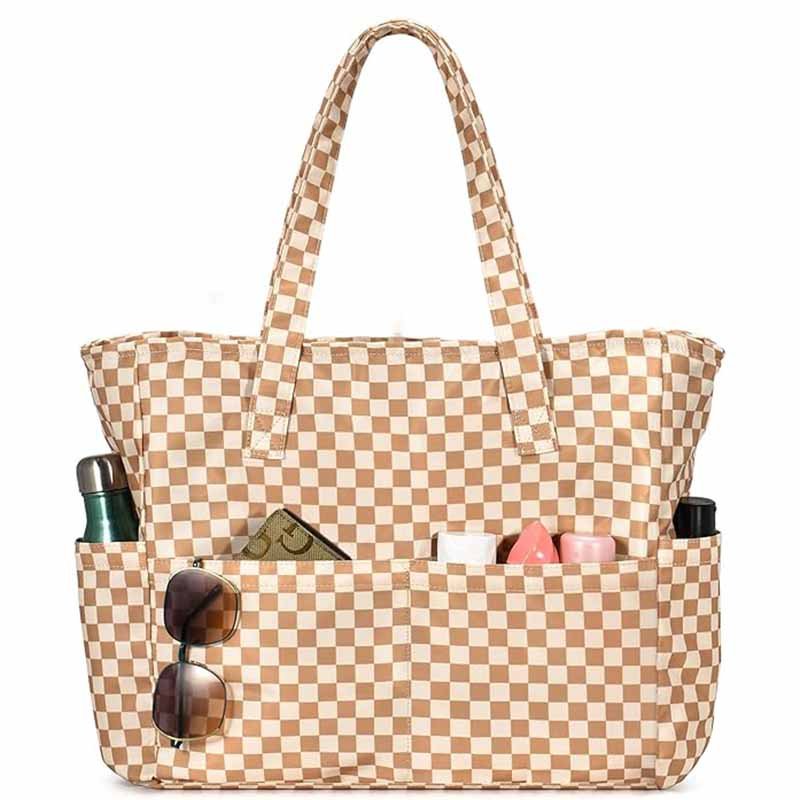
Which Beach Bag Materials Resist Moisture?
Beach bag materials resist moisture best when they absorb minimal water, dry quickly, and prevent odor or mold buildup. Polyester, nylon, neoprene, and coated fabrics are the most effective choices because they balance water resistance with usability in real beach conditions.
When customers use a beach bag, moisture is not a one-time event—it is repeated exposure. Wet towels, swimsuits, leaking bottles, and humid environments all interact with the bag multiple times per day. A material that performs well only when dry is not enough. The bag must recover quickly after getting wet.
Are Nylon Beach Bag Materials Water-Resistant?
Nylon is one of the most widely used materials when water resistance is required at a lightweight level. It does not absorb water easily, which means it dries faster than natural fibers. For beach bags designed for portability, travel, or foldable use, nylon offers a strong advantage.
However, not all nylon performs the same. The real performance depends on coating, fabric density, and construction. A basic uncoated nylon may resist splashes, but it is not fully protective against prolonged exposure to water. That is why many manufacturers apply PU coatings or use tightly woven nylon structures to improve water resistance.
From a customer perspective, nylon works best in the following scenarios:
- Lightweight beach bags for travel or short trips
- Foldable or packable designs
- Secondary beach bags (used alongside a main tote)
- Situations where quick drying is more important than full waterproofing
But there is also a limitation. Nylon can trap moisture in seams or linings if the internal structure is not designed properly. This means ventilation, lining selection, and drainage design are just as important as the fabric itself.
Is Neoprene a Moisture-Resistant Beach Bag Material?
Neoprene is one of the most practical materials for wet beach environments. Originally used in wetsuits, it is designed to perform under constant exposure to water. For beach bags, this translates into strong resistance to moisture, flexibility under load, and easy cleaning.
One of the key advantages of neoprene is its ability to handle repeated wet-dry cycles without degrading quickly. Unlike canvas, it does not become stiff or rough after drying. It also resists odor buildup better than many woven fabrics when properly ventilated.
From real product development experience, neoprene beach bags perform well in:
- Carrying wet swimsuits and towels
- Poolside or water park environments
- Premium beach tote collections
- Family beach bags where moisture exposure is high
Another advantage is user perception. Neoprene feels soft, modern, and slightly premium. Customers often associate it with performance and comfort.
However, neoprene is not fully waterproof. Water can still enter through seams or openings. That means if full waterproof protection is required, additional design features such as sealed seams or inner linings may be needed.
Do Coated Beach Bag Materials Block Water?
Coated fabrics—such as PU-coated polyester or PVC-laminated materials—provide one of the strongest barriers against water penetration. These materials are designed to block moisture rather than just resist it.
For beach bags, coated fabrics are often used when:
- The bag must protect electronics or valuables
- The bag is placed directly on wet sand or surfaces
- The product is positioned as waterproof or heavy-duty
A coated surface prevents water from entering the fabric structure, making it easy to wipe clean. This is especially useful for the outer layer of a beach bag.
However, there are trade-offs:
- Reduced breathability
- Slightly heavier feel
- Potential stiffness depending on coating thickness
Customers often prefer coated materials when they value protection and easy cleaning over softness and flexibility.
Moisture Resistance Comparison Table
| Material | Water Absorption | Drying Speed | Odor Risk | Best Use Scenario |
|---|---|---|---|---|
| Polyester | Low | Fast | Low | Daily beach use, balanced performance |
| Nylon | Very Low | Very Fast | Low | Lightweight, travel-friendly bags |
| Neoprene | Very Low | Medium | Low | Wet-use environments, premium bags |
| Canvas (untreated) | High | Slow | High | Not ideal for wet beach use |
| Coated Fabric | Very Low | Fast | Very Low | Waterproof or protective bags |
Key Development Factors for Moisture Performance
| Factor | Impact on Product |
|---|---|
| Fabric coating type | Determines how much water is blocked vs absorbed |
| Seam construction | Weak seams allow water entry even with good fabric |
| Lining material | Affects drying speed and odor retention |
| Ventilation design | Helps prevent trapped moisture inside the bag |
| Drainage features | Allows water and sand to exit easily |
Which Beach Bag Materials Resist Sand Best?
Beach bag materials resist sand best when they allow sand to pass through, prevent it from sticking, and make cleaning easy. Mesh, TPU mesh, and smooth coated fabrics perform best because they reduce sand retention and improve user convenience.
Sand is one of the most underestimated factors in beach bag design. Customers may not mention it in product descriptions, but they immediately notice when a bag is difficult to clean or feels gritty after use.
Do Mesh Beach Bag Materials Let Sand Out?
Mesh is one of the most effective solutions for sand control. Its open structure allows sand to fall through rather than accumulate inside the bag. This is why mesh bags are commonly used for beach toys, sports gear, and casual beach totes.
From a user perspective, mesh offers several advantages:
- Easy to shake out sand after use
- Faster drying due to airflow
- Lightweight and breathable structure
However, mesh also has limitations. It does not provide privacy or protection for small items, and it may not be suitable for premium or fashion-oriented products.
For this reason, many brands combine mesh with solid panels. For example:
- Mesh sides + solid bottom
- Mesh pockets + polyester body
- Partial mesh panels for drainage
This hybrid approach balances function and appearance.
Are Smooth Beach Bag Materials Easy to Clean?
Smooth surfaces—especially coated fabrics—reduce sand sticking significantly. Unlike rough woven fabrics, sand does not easily cling to coated polyester, PU surfaces, or neoprene.
This means users can clean the bag quickly by:
- Shaking it
- Wiping it with a cloth
- Rinsing it with water
For customers, this convenience directly affects satisfaction. A bag that stays clean with minimal effort feels more premium and practical.
This is particularly important for:
- Family beach bags
- Travel beach totes
- Bags used in sandy or windy environments
From a manufacturing perspective, surface finishing plays a key role. Even small differences in coating smoothness can change how much sand sticks to the bag.
Can TPU Beach Bag Materials Resist Sand Build-Up?
TPU mesh is an upgraded material that combines flexibility, strength, and resistance to both sand and water. Compared to traditional mesh, TPU mesh is more durable and less prone to tearing.
It offers several advantages:
- Stronger structure than standard mesh
- Better resistance to abrasion from sand
- More premium appearance
- Easier cleaning and longer lifespan
TPU materials are often used in higher-end beach bags, sports gear, and outdoor products where durability and performance are both required.
Although the cost is higher, many brands choose TPU mesh when targeting premium customers or long-term use scenarios.
Sand Resistance Comparison Table
| Material | Sand Release | Cleaning Ease | Durability | Best Use |
|---|---|---|---|---|
| Mesh | Excellent | Easy | Medium | Casual beach bags, toy bags |
| TPU Mesh | Excellent | Very Easy | High | Premium beach bags |
| Coated Polyester | Good | Very Easy | High | All-purpose beach totes |
| Neoprene | Medium | Easy | High | Fashion + functional bags |
| Canvas | Low | Difficult | High | Not ideal for sandy use |
Customer Experience Factors for Sand Performance
| Factor | Why It Matters |
|---|---|
| Surface texture | Determines how much sand sticks to the bag |
| Bag structure | Affects where sand accumulates (corners, seams) |
| Cleaning method | Impacts daily convenience for users |
| Material flexibility | Helps release trapped sand |
| Hybrid design | Combines mesh and solid panels for better performance |
How to Choose Beach Bag Materials for Different Needs?
The right beach bag material depends on how the product will be used, who will buy it, and how much the customer is willing to pay. There is no single “best” material. The best choice is the one that matches performance, cost, and positioning.
In real business scenarios, most problems do not come from choosing the wrong material completely. They come from choosing a material that does not match the target market.
Which Beach Bag Materials Are Lightweight?
Lightweight materials are essential for travel, casual beach trips, and foldable designs. Customers do not want to carry extra weight before they even start loading their items.
The most common lightweight materials include:
- Polyester (especially 210D–420D)
- Nylon (thin and foldable)
- Mesh (very light and breathable)
These materials are widely used for:
- Foldable beach bags
- Travel beach totes
- Promotional beach bags
- Low-cost retail products
From customer feedback data, lightweight bags are preferred for short trips and vacations where portability matters more than heavy-duty performance.
However, lightweight materials often come with trade-offs:
- Lower structure stability
- Reduced load capacity
- Shorter lifespan under heavy use
This means lightweight designs are best when the product is positioned as convenient rather than heavy-duty.
What Beach Bag Materials Handle Heavy Loads?
For customers who carry more items—families, long beach days, or retail bundles—load capacity becomes critical.
The most reliable materials for heavy loads include:
- Canvas (thick and structured)
- High-denier polyester (600D–1680D)
- Reinforced neoprene (with proper thickness)
These materials are commonly used for:
- Family beach bags
- Large-capacity totes
- Retail premium products
- Multi-purpose outdoor bags
A typical well-designed beach bag should safely carry:
- 5–8 kg for medium-sized bags
- 8–12 kg for large-capacity totes
But material alone is not enough. Customers often overlook that most failures happen at:
- Handle attachment points
- Bottom corners
- Seam stress areas
This is why reinforcement methods (such as bartack stitching, cross-stitch handles, and double-layer bottoms) are just as important as fabric selection.
Which Beach Bag Materials Fit Premium Brands?
Premium beach bags are not just about durability. They are about perception, feel, and long-term brand value.
Materials commonly used in higher-end beach bags include:
- Neoprene
- Coated canvas
- TPU mesh
- High-quality polyester with custom finishing
These materials create a stronger first impression:
- Softer touch or more structured feel
- Better color consistency
- Cleaner surface appearance
- Higher perceived value
From market observation:
- Customers are willing to pay 20–50% more for beach bags that feel premium
- Return rates are lower when materials look and feel durable
- Premium materials support better branding (logos, packaging, presentation)
For private label brands, this directly impacts:
- Product reviews
- Repeat orders
- Brand positioning in marketplaces
Are Waterproof Beach Bag Materials Worth It?
Waterproof materials are valuable, but only when they match the product’s real use case.
Fully waterproof materials include:
- PVC-coated fabrics
- TPU laminated materials
- Seam-sealed constructions
These are useful when:
- Customers carry electronics or valuables
- Bags are placed directly on wet surfaces
- Products are used in boating, fishing, or water sports
However, not all beach bags need full waterproofing.
In many cases, customers actually prefer:
- Water-resistant materials (not fully sealed)
- Better breathability
- Lighter weight
- More flexibility
This is why many successful beach bags use water-resistant polyester or neoprene instead of fully waterproof structures.
Choosing waterproof materials without understanding the use scenario can lead to:
- Higher cost
- Reduced comfort
- Over-engineered products
Material Selection by Customer Type
| Customer Type | Recommended Materials | Key Priority |
|---|---|---|
| Amazon sellers | Polyester, neoprene | Balance of cost and performance |
| Retail brands | Coated canvas, neoprene | Appearance and durability |
| Wholesalers | Polyester, mesh | Cost efficiency and scalability |
| Premium brands | TPU mesh, neoprene, coated canvas | Brand positioning |
| Promotional buyers | Lightweight polyester, nylon | Low cost and volume production |
Cost vs Performance Comparison Table
| Material | Cost Level | Performance Level | Recommended Use |
|---|---|---|---|
| Polyester | Medium | High | Best overall choice |
| Nylon | Medium | Medium | Lightweight use |
| Canvas | Medium | Medium | Structured bags |
| Coated Canvas | Medium-High | High | Premium retail |
| Neoprene | Medium-High | High | Wet-use and premium |
| Mesh | Low-Medium | Medium | Sand release and casual use |
| TPU Mesh | High | High | Premium performance |
Common Mistakes Brands Make
Many beach bag issues come from these mistakes:
- Choosing canvas without coating → leads to water absorption and odor
- Using low-grade polyester → leads to fading and weak structure
- Ignoring sand behavior → results in poor user experience
- Over-designing waterproof features → increases cost without real benefit
- Focusing only on price → reduces long-term product performance
Avoiding these mistakes can significantly improve product success rate.
Final Thoughts: Build Better Beach Bags with the Right Materials
Choosing the right beach bag material is not just a technical decision. It is a business decision that affects product reviews, customer satisfaction, and long-term brand growth.
A well-designed beach bag should:
- Maintain color under strong sunlight
- Dry quickly after exposure to water
- Release sand easily
- Carry weight without losing shape
- Match the brand’s price and positioning
At Szoneier, we help brands turn these requirements into real products.
If you are planning a beach bag line, the fastest way to avoid costly mistakes is to start with the right material and structure from the beginning.
Send us your idea, target price, and quantity.
Our team will help you choose the most suitable materials and turn your concept into a market-ready product.