Skip to content
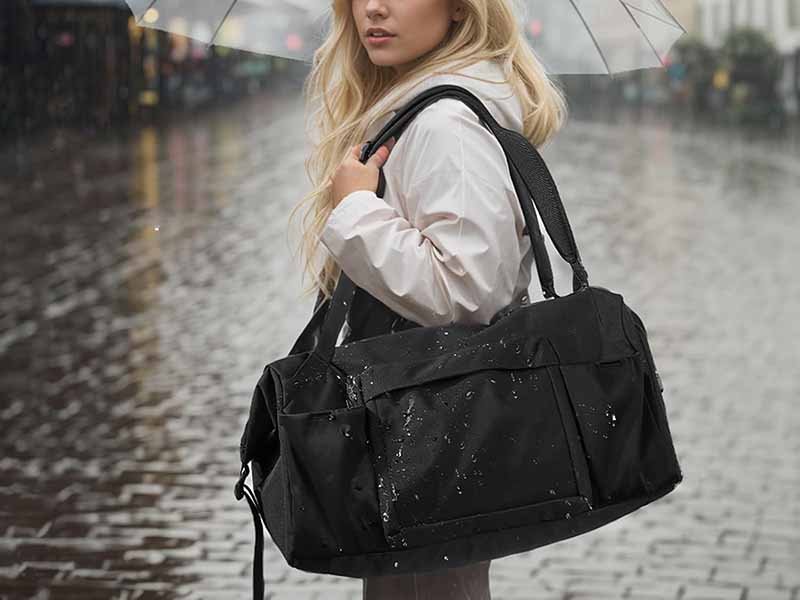
A sports duffle bag looks simple on the outside, but good manufacturing is never simple. The difference between a bag that lasts two months and one that survives two years usually comes down to details most customers never see at first glance: the denier of the fabric, the thickness of the webbing, the reinforcement hidden under the handles, the stitch density around the zipper, the foam structure in the base, and the way wet and dry items are separated inside the bag. In today’s market, customers do not only want a nice-looking gym bag. They want a bag that can carry shoes, clothes, water bottles, sports gear, and sometimes even a laptop, without tearing, sagging, leaking, or looking worn out after repeated use.
Sports duffle bag manufacturing is the complete process of turning a product idea into a finished functional bag through material selection, pattern development, sample making, cutting, sewing, reinforcement, logo application, inspection, and packaging. It is not only about making bags; it is about controlling durability, storage design, comfort, cost, and consistency at scale. A reliable factory does this by matching the right fabric, structure, and production method to the real use scenario of the bag.
That is why many sports bag projects succeed or fail long before bulk production starts. A gym bag with the wrong zipper gauge, weak shoulder strap anchors, or low-grade lining may look acceptable in photos, but real users expose its weakness very quickly. One of the most common situations in this industry is that a new seller chooses a low-cost sample, places a bulk order, and only discovers after shipment that the side panels collapse, the bottom warps under load, or the odor from sweaty clothing stays trapped inside. By the time the complaints arrive, the damage is already done. This is exactly why understanding sports duffle bag manufacturing matters before a single piece goes into production.
What Is Sports Duffle Bag Manufacturing?
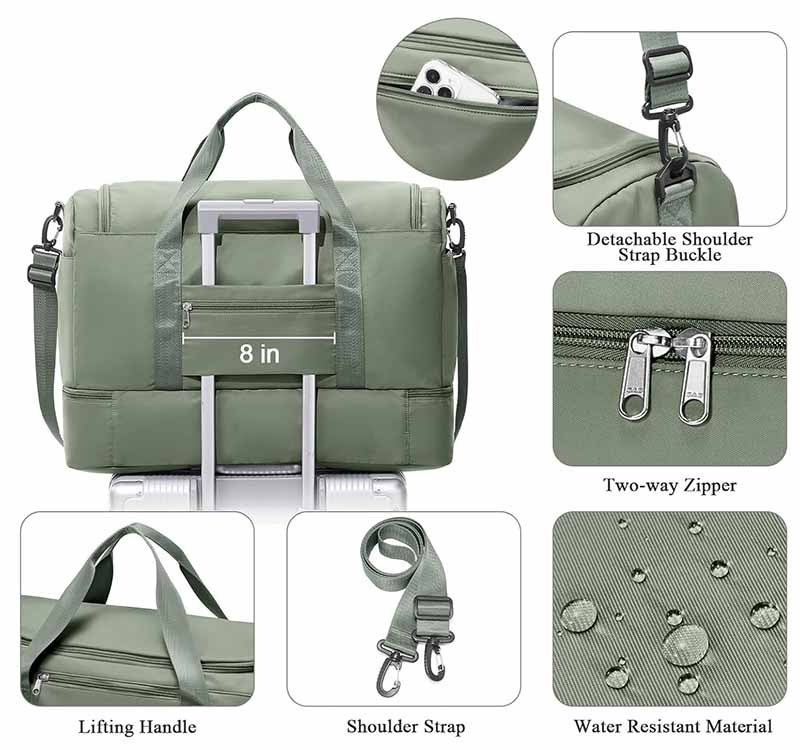
Sports duffle bag manufacturing is the process of developing and producing duffle bags for active use, with special attention to weight-bearing strength, storage layout, comfort, moisture handling, and repeated daily wear. It combines design, engineering, material selection, and quality control so the bag performs well in the gym, on the field, during short trips, and in everyday movement.
What defines sports duffle bag manufacturing
Sports duffle bag manufacturing is defined by function first. A true sports duffle bag is not made the same way as a fashion handbag, a casual tote, or a low-cost giveaway bag. It has to carry heavier loads, deal with moisture, and maintain its shape through frequent opening, closing, lifting, dragging, and compression. That changes the whole production logic.
A strong sports duffle bag usually needs several structural decisions from the beginning:
- a body fabric that can handle abrasion from lockers, car trunks, and rough floors
- webbing handles strong enough to carry the full load without stretching or tearing
- zipper systems that can survive repeated daily opening under tension
- reinforced sewing at key stress areas such as strap joints, handle bases, and side panel connections
- a bottom structure that reduces sagging when shoes or bottles are placed inside
The manufacturing goal is not just to “make a bag.” It is to create a product that still works after hundreds of use cycles. In many projects, the real test is not whether the bag looks good when packed for photography, but whether it still holds up after 6 months of actual use.
For that reason, professional factories usually study the intended use before finalizing the structure. A gym bag used for fitness studios needs different priorities from a team training bag, a swim bag, or a sports travel duffle. The first may need separate shoe storage and odor control. The second may need larger volume and stronger base panels. The third may need better water resistance and faster-drying linings. Manufacturing decisions should reflect those differences early, not after the sample is already approved.
Why sports duffle bag manufacturing matters
This matters because poor manufacturing creates expensive problems very fast. Customers notice failures quickly in sports bags because these products are used under heavier, rougher, and more repetitive conditions than many casual bags. A weak seam might survive light daily carry, but it often fails when the bag is filled with shoes, towels, sportswear, and accessories.
The cost of low manufacturing quality is usually much bigger than the factory price difference. A cheaper bag may save a small amount during production, but can lose much more later through returns, replacement costs, low reviews, and damaged trust. For online sellers in particular, one weak production run can affect ranking, conversion, and repeat order rates.
The table below shows how manufacturing quality often affects business results.
| Production Level | Common Problems | Estimated Return Risk | Impact on Sales |
|---|---|---|---|
| Low-cost uncontrolled production | Broken straps, jammed zippers, loose threads, shape collapse | 15%–30% | Negative reviews, poor repeat orders |
| Mid-level production | Minor inconsistency in sewing, materials, or finishing | 6%–12% | Acceptable, but unstable long term |
| Professional controlled production | Better reinforcement, inspection, and consistency | Below 5% | Stronger reviews, better reorder confidence |
For many customers, the real question is not “Can this factory make sports bags?” Most factories can. The better question is “Can this factory make sports bags that still perform after real use?” That is where experience becomes valuable. Szoneier has more than 18 years of bag development and manufacturing experience, and that matters because sports duffle bag projects often require small but important adjustments in fabric choice, handle construction, lining layout, logo application, and sample optimization before mass production begins.
What types exist in sports duffle bag manufacturing
Sports duffle bag manufacturing covers many product types, and each type changes the production details. Some customers use “sports duffle bag” as a broad category, but factories usually separate projects by use case, because the end use determines the right size, materials, and construction method.
The most common categories include:
- gym duffle bags
- training duffle bags
- travel sports duffle bags
- waterproof sports duffle bags
- yoga and fitness bags
- team sports gear bags
- swim duffle bags
- premium lifestyle sports bags
Each type has different production needs. A compact gym duffle may focus on light weight and clean style. A team sports bag may need larger volume, stronger handles, and side ventilation. A swim bag may require coated fabric, water-resistant zippers, and a wet compartment. A premium branded sports bag may need softer hand feel, better lining, neater edge finishing, and more advanced logo work.
The table below gives a practical view.
| Bag Type | Common Capacity | Main Focus | Manufacturing Priority |
|---|---|---|---|
| Gym duffle bag | 20L–35L | Daily training use | Lightweight structure, shoe pocket |
| Team sports bag | 40L–65L | Heavy gear storage | Strong webbing, reinforced seams |
| Travel sports duffle | 35L–55L | Multi-use and transport | Shape retention, strong base |
| Waterproof duffle | 20L–60L | Wet conditions | Coated fabric, sealed construction |
| Premium sports bag | 25L–40L | Image and daily use | Fabric texture, finish quality, branding |
This is why experienced factories do not push the same bag structure for every customer. A good supplier should help define which category the project really belongs to before quoting, sampling, or selecting materials.
How sports duffle bag manufacturing differs
Sports duffle bag manufacturing differs from other bag categories in one important way: the load is dynamic. This means the bag is not just holding items; it is being lifted, swung, dragged, compressed into lockers, pushed into car trunks, and opened multiple times a day. That creates pressure on seams, zipper ends, handle joints, and the bottom panel.
Compared with backpacks, duffle bags usually have:
- wider top openings
- fewer rigid body supports
- larger central storage areas
- more strain on top handles and shoulder strap points
- higher risk of body collapse if the structure is weak
Compared with tote bags, sports duffle bags usually require:
- stronger fabrics
- heavier zippers
- internal compartment planning
- better moisture handling
- more complex accessory combinations
This is also why good sports duffle bags often include hidden reinforcements that casual bags do not use. These may include:
- bartack reinforcement at handle joints
- foam or PE board in the bottom panel
- double-layer fabric on side handles
- piping or edge shaping for better body structure
- load-distribution stitching where webbing meets the bag body
When customers compare quotations from different factories, these internal details often explain the price gap. Two bags may look similar in photos, but one may include stronger webbing, thicker zipper tape, better lining, and reinforced shoulder connections. Those hidden differences usually decide whether the bag feels cheap, average, or reliable in the customer’s hands.
Which Materials Are Used in Sports Duffle Bag Manufacturing?
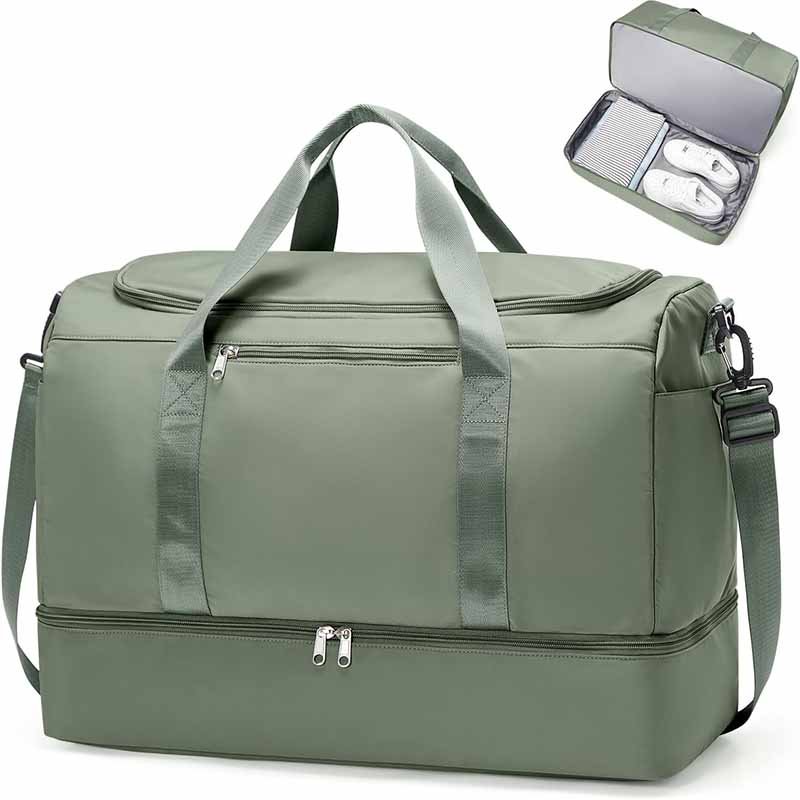
Sports duffle bag manufacturing commonly uses polyester, nylon, canvas, neoprene, PU, PVC, TPU, EVA, mesh, and different lining materials. The right material choice depends on the product’s price target, expected load, moisture exposure, hand feel, and visual positioning. Material decisions directly affect durability, weight, shape, water resistance, and long-term customer satisfaction.
Which fabrics are used in sports duffle bag manufacturing
The most widely used outer materials in sports duffle bags are polyester and nylon, but real production often involves a wider mix depending on the target market. Material selection should never be based on trend alone. It should match how the bag will actually be used and what price level the customer wants to achieve.
Common outer materials include:
- polyester
- nylon
- canvas
- neoprene
- PVC
- TPU laminated fabrics
- PU leather or synthetic leather accents
- mesh inserts for ventilation
Each material serves a different purpose. Polyester is widely used because it balances cost, printability, and acceptable strength. Nylon is preferred when higher tear resistance, lighter weight, and a more premium technical feel are required. Canvas works well for lifestyle-oriented sports bags where texture and appearance matter as much as performance. Neoprene is used in special projects that want softness, stretch, or a smoother fashion-sport look.
Below is a clear comparison.
| Material | Strength Level | Water Resistance | Hand Feel | Cost Level | Common Use |
|---|---|---|---|---|---|
| Polyester | Medium to high | Good with coating | Stable, practical | Lower | Mass-market gym bags |
| Nylon | High | Good with coating | Smooth, technical | Medium to high | Premium sports bags |
| Canvas | Medium | Lower unless treated | Natural, textured | Medium | Lifestyle sports bags |
| Neoprene | Medium | Good | Soft, flexible | Medium to high | Fashion fitness bags |
| TPU laminated fabric | High | Very high | Technical, modern | Higher | Waterproof sports bags |
A professional factory should explain not only the outer material, but also the lining, padding, mesh, webbing, zipper grade, puller material, and logo method. Customers often focus only on the main body fabric, but in practice, a weak lining or low-grade zipper can cause as many complaints as poor outer fabric.
How nylon performs in sports duffle bag manufacturing
Nylon is one of the strongest and most trusted materials for sports duffle bag manufacturing, especially when the product is meant to feel more durable and more premium. It is often chosen for customers who want a cleaner technical look, stronger abrasion resistance, and lighter body weight than standard polyester offers.
In production, nylon is often used in forms such as:
- 210D nylon for lightweight lining or light-duty outer use
- 420D nylon for medium-weight sports bags
- 840D nylon for stronger premium duffle bags
- 1680D nylon for heavy-duty performance-focused projects
The reason nylon performs well is simple: it usually offers higher tear strength relative to weight. That makes it useful for bags that need to carry shoes, gear, bottles, and training accessories without becoming too heavy themselves. This is especially valuable for sports travel bags and more rugged gym bag designs.
Still, nylon is not automatically the best choice for every project. It often costs more than polyester. Some nylon fabrics also require proper finishing to improve UV stability and moisture performance. For entry-level retail projects where price sensitivity is high, switching to nylon may increase cost faster than the market can accept.
In other words, nylon is excellent when the product position supports it. It works best when the customer wants stronger performance, a more premium feel, and lower bag weight, and is willing to invest a little more in material quality.
How polyester compares in sports duffle bag manufacturing
Polyester remains one of the most commonly used materials in sports duffle bag manufacturing because it is practical, stable, and cost-effective. For many customers, especially those developing large-volume orders or price-sensitive collections, polyester delivers a good balance between performance and budget.
A lot of sports bags on the market use:
- 300D polyester for lighter-weight bags
- 600D polyester for mainstream gym and travel use
- 900D or 1200D polyester for stronger, more rigid body bags
- cationic polyester for improved visual texture and heather effect
Polyester is popular for several reasons:
- it usually holds color well
- it performs well in digital printing and transfer printing
- it can be coated for better moisture resistance
- it keeps factory costs more stable in larger runs
For many gym bag projects, 600D polyester with PU backing is one of the most common combinations because it offers acceptable durability, decent water resistance, and a competitive price point. This is one reason why it appears so often in commercial sports bags.
But polyester also has limits. Under the same construction logic, it may not match nylon in tear resistance and premium hand feel. If the bag is designed for heavier sports use, larger capacity, or upscale positioning, polyester needs stronger structural support from the rest of the bag, such as better reinforcement, stronger webbing, thicker lining, or upgraded zipper systems.
The right comparison is not “polyester or nylon, which is better?” The better question is “Which one fits the product goal better?” For many projects, polyester is the smart commercial choice. For others, nylon is the right upgrade.
What coatings are used in sports duffle bag manufacturing
Outer fabrics alone do not decide water resistance. In sports duffle bag manufacturing, the coating or lamination layer is often what determines how the bag handles sweat, rain, wet floors, and repeated contact with damp clothing or shoes. This is one of the most misunderstood areas in bag development. Many customers focus on fabric thickness and forget that a thick fabric without the right backing can still underperform in wet conditions.
The three most common backing or waterproofing solutions are:
- PU coating
- PVC coating
- TPU lamination
Each option changes the final bag in a different way.
| Coating Type | Main Benefit | Main Limitation | Suitable Use |
|---|---|---|---|
| PU coating | Flexible, lighter, economical | Lower waterproof performance than full laminate | Mainstream gym bags |
| PVC coating | Strong water barrier, firm body feel | Heavier, less flexible | Utility and rugged bags |
| TPU lamination | Better waterproofing and cleaner premium feel | Higher material cost | Premium waterproof sports bags |
PU coating is common in standard sports duffle bags because it improves moisture resistance without making the bag stiff or expensive. PVC is useful when a firmer body and stronger water barrier are needed, but it can add weight and reduce softness. TPU is often chosen for higher-end projects where waterproof performance, smooth finish, and better flexibility all matter.
Still, coating alone is not enough. If the zipper opening, stitching holes, shoe compartment venting, or seam construction are weak, the bag will never perform as a truly water-protective product. A good factory should discuss coating as one part of a complete construction system, not as a standalone selling point.
How denier affects sports duffle bag manufacturing
Denier is one of the clearest technical indicators customers should understand before developing a sports duffle bag. In simple terms, denier helps describe the thickness and weight of the yarn used in the fabric. Higher denier often means a heavier and more robust fabric, but that does not automatically mean it is always better.
In sports duffle bag manufacturing, common denier ranges include:
- 210D for lightweight panels or linings
- 420D for medium-light sports bags
- 600D for mainstream gym and casual sports use
- 840D for stronger premium duffle bags
- 1680D for heavy-duty and more rugged structures
The right denier depends on the balance between:
- target weight of the bag
- expected load
- product price
- market style
- softness versus structure
A 600D polyester bag may be perfect for a daily gym bag that carries clothes, shoes, and small accessories. A 1680D structure may be better for a large gear bag, but may feel too stiff or heavy for a lighter urban fitness bag. Going too heavy can also create problems. It increases material cost, raises shipping weight, and may make the bag less comfortable to carry.
This is where factory experience matters. Szoneier works with many fabric options including cotton, canvas, polyester, nylon, neoprene, PVC, TPU, EVA, jute, and leather-based constructions, which allows more flexibility when customers want to balance price, durability, and style instead of being pushed into one standard material solution. The best sports duffle bag is usually not the one with the heaviest fabric. It is the one with the most appropriate material combination for its real use and target market.
How Does Sports Duffle Bag Manufacturing Work?
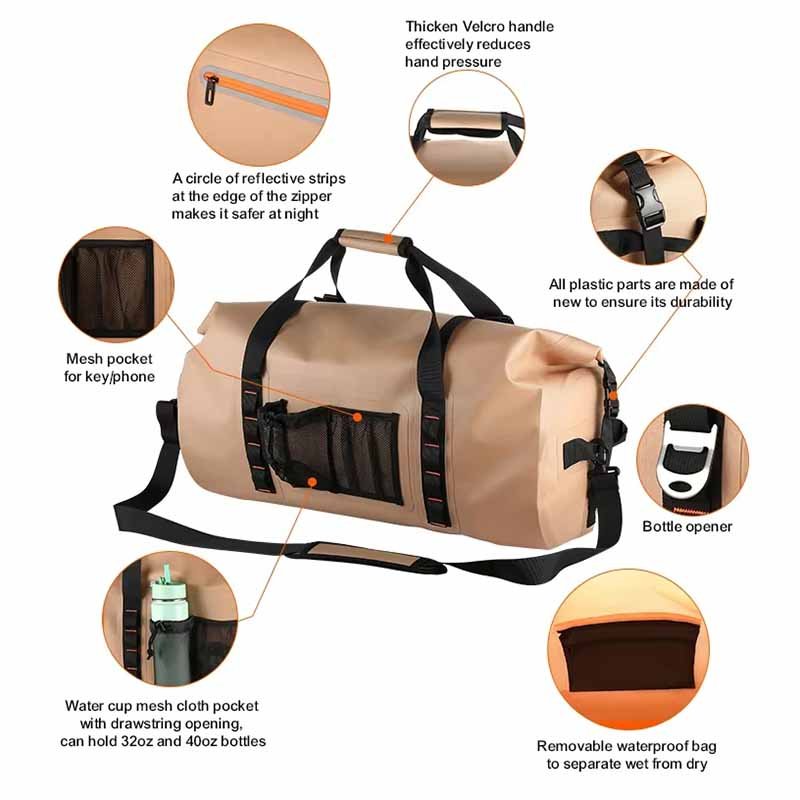
Sports duffle bag manufacturing follows a structured process that includes design development, material sourcing, pattern making, cutting, sewing, assembly, and quality inspection. Each step affects the final product’s durability, appearance, and consistency. A reliable factory controls every stage to reduce defects, improve efficiency, and ensure that bulk production matches the approved sample.
How design starts in sports duffle bag manufacturing
The process always begins with a clear product definition. Without this step, production becomes trial-and-error, which increases cost and delays.
In real projects, design usually starts from one of these:
- reference samples from the market
- sketches or 3D renderings
- tech packs with measurements and materials
- brand concept (target price + target customer + usage scenario)
A professional factory will not jump directly into sampling. Instead, it will confirm:
- bag dimensions (length, width, height)
- capacity (e.g., 25L, 40L, 55L)
- compartments (shoe pocket, wet pocket, laptop sleeve)
- carrying system (shoulder strap, handles, backpack straps)
- fabric and color options
- logo method (printing, embroidery, patch, rubber logo)
At this stage, many problems can already be avoided. For example:
- a 40L bag with only one zipper opening may not be practical
- a shoe compartment without ventilation can trap odor
- a thin fabric may not support a large capacity design
Factories like Szoneier often help optimize designs before sampling. This reduces unnecessary revisions and improves success rate.
How cutting works in sports duffle bag manufacturing
Once the design is confirmed, the next step is pattern making and cutting. This stage determines whether the bag will maintain its shape and whether all parts align correctly during sewing.
The process includes:
- creating digital or manual patterns
- grading sizes if multiple sizes are required
- testing pattern efficiency to reduce material waste
- preparing cutting markers
Fabric cutting methods include:
- manual cutting (for small MOQ or sampling)
- CNC cutting (for precision and large volume)
Cutting accuracy is critical. Even a 2–3 mm deviation can lead to:
- uneven panels
- zipper misalignment
- twisted structure after sewing
Here is a comparison of cutting methods:
| Cutting Method | Accuracy | Speed | Suitable For |
|---|---|---|---|
| Manual cutting | Medium | Slower | Samples, small orders |
| CNC cutting | High | Fast | Bulk production |
| Laser cutting | Very high | Medium | Special materials (TPU, EVA) |
Professional factories also check fabric defects before cutting, such as color variation, coating inconsistency, or weaving flaws. Skipping this step often leads to visible issues in finished bags.
How stitching is done in sports duffle bag manufacturing
Sewing is the core of sports duffle bag manufacturing. This is where durability is built or lost.
A standard duffle bag may involve:
- 20–40 individual sewing operations
- multiple thread types (polyester thread, nylon thread)
- different stitch types depending on stress areas
Key stitching techniques include:
- single stitch for basic seams
- double stitch for reinforcement
- bartack stitching for load-bearing points
- binding for internal edge finishing
Critical stress points include:
- handle attachments
- shoulder strap anchors
- zipper ends
- side panel connections
- bottom panel seams
If these areas are weak, the bag will fail quickly under load.
Typical reinforcement standards:
| Area | Reinforcement Method | Expected Strength |
|---|---|---|
| Handle joint | Bartack + cross stitch | 15–25 kg load |
| Shoulder strap | Box stitch + bartack | 20–30 kg load |
| Bottom panel | Double layer + foam | Shape retention |
| Zipper ends | Reinforced stitching | Prevent tearing |
In higher-end production, factories may also use:
- thicker thread (e.g., 210D–420D thread)
- tighter stitch density (6–10 stitches per inch)
- additional reinforcement layers
These details are rarely visible in product photos but directly impact product lifespan.
How QC is handled in sports duffle bag manufacturing
Quality control is not a single step at the end—it runs through the entire process.
A well-managed factory usually applies:
- Incoming material inspection
- fabric color consistency
- coating quality
- accessory strength
- In-line inspection during production
- stitching quality
- alignment accuracy
- logo placement
- Final inspection before packing
- appearance check
- functional testing (zippers, straps)
- measurement verification
- Random sampling inspection (AQL standard)
Common AQL levels:
| Level | Defect Tolerance |
|---|---|
| AQL 2.5 | Strict (high-end brands) |
| AQL 4.0 | Standard commercial |
| AQL 6.5 | Lower-cost production |
Typical QC checklist includes:
- load test (simulate real usage weight)
- zipper smoothness test (50–200 cycles)
- stitching pull test
- logo durability check
- odor and cleanliness inspection
Factories like Szoneier maintain internal QC systems to reduce defect rates and ensure consistency across orders.
What Features Define Sports Duffle Bag Manufacturing Quality?
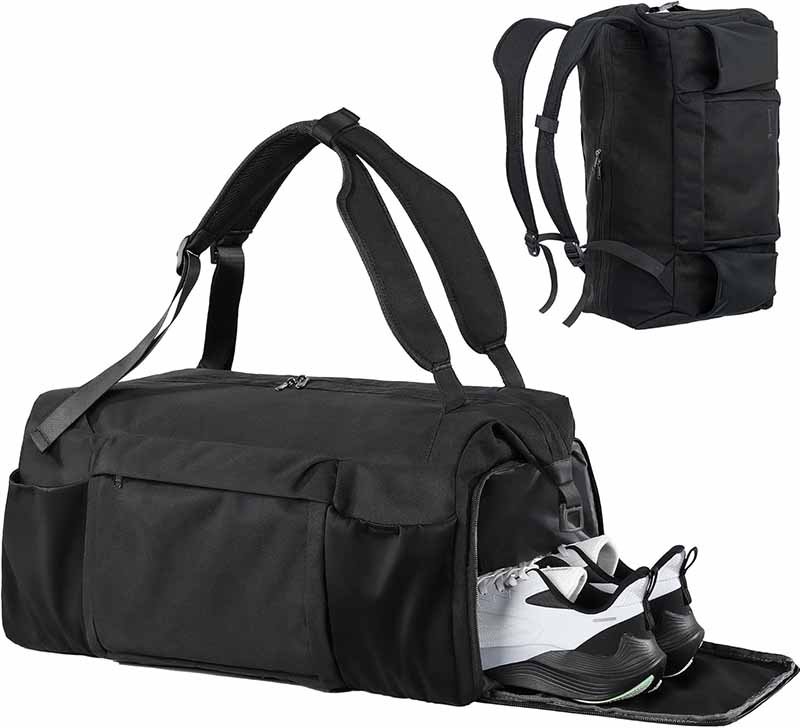
High-quality sports duffle bag manufacturing is defined by strong structure, durable materials, reinforced stress points, practical storage design, and comfort in carrying. A good bag maintains its shape, handles weight without damage, resists moisture, and remains functional after repeated use.
What structure matters in sports duffle bag manufacturing
Structure determines how the bag behaves when loaded. A poorly structured bag collapses, while a well-designed one holds its shape.
Key structural components include:
- bottom panel (often reinforced with PE board or foam)
- side panels (support overall shape)
- top opening (zipper structure and frame)
- internal compartment layout
A strong bottom panel is especially important. Without it:
- the bag sags under weight
- items shift during transport
- overall appearance looks cheap
Common bottom structures:
| Structure Type | Feature | Use Case |
|---|---|---|
| Single fabric | Lightweight, flexible | Entry-level bags |
| Double-layer fabric | Improved strength | Mid-range bags |
| PE board insert | Shape retention | Premium bags |
| EVA molded base | Maximum structure | High-end sports bags |
How durability is built in sports duffle bag manufacturing
Durability is not a single feature—it is a combination of multiple factors working together.
Main durability elements:
- fabric strength (denier + coating)
- stitching quality
- reinforcement design
- hardware quality (zippers, buckles, D-rings)
For example, zipper selection is often overlooked. A low-quality zipper can fail even if the fabric is strong.
Common zipper types:
| Zipper Type | Strength | Use |
|---|---|---|
| #5 zipper | Light duty | Small bags |
| #8 zipper | Medium duty | Standard gym bags |
| #10 zipper | Heavy duty | Large duffle bags |
Durability also depends on how components are connected. A strong fabric with weak stitching will still fail.
What waterproofing is used in sports duffle bag manufacturing
Water resistance is important for sports bags because of:
- sweat from clothing
- wet shoes
- outdoor conditions
Waterproofing methods include:
- PU coating (basic water resistance)
- PVC coating (strong barrier)
- TPU lamination (premium waterproofing)
But real performance depends on the full design:
- are seams sealed or not
- is the zipper water-resistant
- is there a separate wet compartment
Many “waterproof” bags are only water-resistant because stitching holes allow water entry.
How comfort is designed in sports duffle bag manufacturing
Comfort is often underestimated but strongly affects user experience.
Key comfort factors include:
- shoulder strap padding (5–10 mm foam recommended)
- handle grip design
- adjustable strap length
- weight distribution
Poor design can cause:
- shoulder strain
- uncomfortable carrying
- uneven load balance
Well-designed bags include:
- detachable padded shoulder straps
- breathable mesh padding
- ergonomic handle placement
How to Choose Sports Duffle Bag Manufacturing Partner?
Choosing the right sports duffle bag manufacturing partner directly affects product quality, delivery reliability, and long-term business growth. A strong factory should not only produce bags but also support product development, control consistency, and adapt to your brand’s scaling needs.
What to check in sports duffle bag manufacturing factories
Not all factories operate at the same level, even if their product photos look similar. The real difference appears in structure, consistency, and problem-solving ability.
When evaluating a factory, focus on these key areas:
- Experience in sports bag production Factories with real experience understand stress points, material selection, and functional design. They can identify potential issues before production.
- Material sourcing capability A strong factory should offer multiple fabric options such as polyester, nylon, TPU, EVA, neoprene, and leather combinations, rather than pushing only one standard material.
- Sampling capability A professional supplier can complete samples within 5–7 days and adjust quickly based on feedback.
- Production capacity and stability Check if the factory can handle both small MOQ and large repeat orders without quality variation.
- Quality control system Ask about inspection process, defect control, and internal standards.
Here is a practical comparison:
| Factory Type | Strength | Risk |
|---|---|---|
| Trading company | Easy communication | Limited control over production |
| Small workshop | Low cost | Unstable quality |
| Mid-size factory | Balanced | Limited scalability |
| Experienced manufacturer | Strong control + development support | Slightly higher cost |
A reliable partner should be able to explain why a design works or fails, not just accept orders blindly.
How MOQ works in sports duffle bag manufacturing
MOQ (Minimum Order Quantity) is one of the most important factors for brands, especially for startups or product testing stages.
Typical MOQ ranges:
| Product Type | MOQ Range |
|---|---|
| Simple duffle bags | 100–300 pcs |
| Custom logo bags | 200–500 pcs |
| Complex structure bags | 300–1000 pcs |
However, factories like Szoneier support low MOQ starting from 50 pcs, which is especially useful for:
- new product testing
- Amazon sellers launching new listings
- brands validating designs before scaling
MOQ also depends on:
- fabric type (stock vs custom dyed)
- logo method (printing vs custom mold)
- accessory customization
Lower MOQ usually means slightly higher unit cost, but it significantly reduces risk during the early stage.
How customization works in sports duffle bag manufacturing
Customization is where a product becomes a brand, not just a generic item.
A professional factory should support multiple customization options:
1. Material customization
- fabric type (polyester, nylon, TPU, canvas, etc.)
- fabric thickness (denier selection)
- color matching (Pantone)
2. Structural customization
- size and capacity
- compartment layout
- strap design
- shoe or wet pocket
3. Branding customization
- screen printing
- embroidery
- rubber patches
- woven labels
- metal logos
4. Packaging customization
- polybags
- zip bags
- custom boxes
- hangtags and inserts
Here is a quick overview:
| Custom Area | Options |
|---|---|
| Logo | Print, embroidery, patch, metal |
| Material | Polyester, nylon, TPU, canvas |
| Structure | Compartments, size, straps |
| Packaging | Standard or retail-ready |
The key is not how many options exist, but how well the factory can combine them into a manufacturable product without causing delays or defects.
How OEM works in sports duffle bag manufacturing
OEM (Original Equipment Manufacturing) allows brands to create products under their own name while the factory handles production.
A typical OEM workflow looks like this:
- Idea or reference submission
- Design confirmation and material selection
- Sample development (5–7 days)
- Sample revision (if needed)
- Bulk production (25–35 days)
- Quality inspection
- Packaging and shipping
Timeline reference:
| Stage | Time |
|---|---|
| Sampling | 5–7 days |
| Sample revision | 3–5 days |
| Bulk production | 25–35 days |
| Shipping | Depends on method |
A strong OEM partner will also:
- suggest cost optimization options
- identify structural risks early
- improve durability without over-increasing cost
This is especially important for long-term product lines where consistency matters more than one-time production.
Work With Szoneier to Build Your Sports Duffle Bag
At the end of the day, sports duffle bag manufacturing is not just about producing a product—it is about building something that performs reliably in real use, supports your brand positioning, and keeps customers coming back.
Szoneier has over 18 years of experience in bag development, material sourcing, and manufacturing. We work with a wide range of materials including cotton, canvas, polyester, nylon, neoprene, PVC, TPU, EVA, jute, and leather, allowing us to match different product levels—from entry market to premium collections.
What makes the difference is not only production capacity, but how each project is handled:
- low MOQ starting from 50 pcs
- fast sampling within 5–7 days
- stable production timelines
- support for OEM, private label, and custom design
- in-house quality control to ensure consistency
Whether you are developing your first sports duffle bag or scaling an existing product line, the right manufacturing partner can help you avoid costly mistakes and move faster with confidence.
If you are planning a new project, now is the right time to take the next step.
Send us your design, idea, or reference product today, and let Szoneier help you turn it into a reliable, market-ready sports duffle bag.