Skip to content

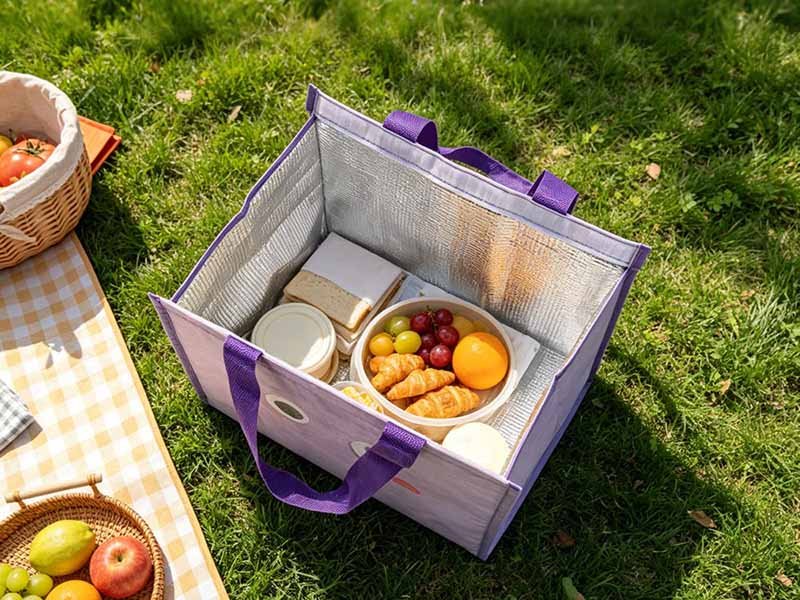
A cooler bag is easy to understand from the outside, but much harder to judge from the inside. Many products look similar on an e-commerce page. They may use the same black fabric, the same zipper shape, and the same silver inner lining. But once people actually use them, the difference shows up fast. One bag still keeps drinks cool after a long drive. Another turns into a bag of warm cans and melted water before lunchtime. That gap usually comes down to one thing: ice retention performance.
For consumers, ice retention is about convenience and freshness. For brands, wholesalers, and importers, it is much more serious. It affects product positioning, customer reviews, repeat orders, and return rates. If a cooler bag cannot hold low temperatures for a reasonable period, it will be seen as low value no matter how attractive the outer design looks. Good ice retention is not created by one shiny lining or one thick panel alone. It comes from the full insulation system, including foam structure, reflective lining, zipper closure, bag size, seam construction, and real-life usage conditions.
Most standard soft cooler bags keep ice cold for about 3 to 6 hours, while better-designed insulated cooler bags can hold ice for 6 to 12 hours or more, depending on insulation thickness, bag structure, external temperature, and how the ice is packed. In other words, ice retention is not just about the material list. It is about how all the materials work together.
This is why two cooler bags with similar photos can perform very differently in real use. A family taking drinks to the beach, a parent carrying milk and snacks, a grocery store offering frozen-item delivery, or a private label brand selling lunch coolers online all care about the same result: how long the bag can actually stay cold. That question sounds simple, but the answer is where product quality begins. Once you understand what controls ice retention, you can judge cooler bags with much more confidence—and design better ones too.
What Is Cooler Bag Ice Retention?
Cooler bag ice retention refers to the amount of time a cooler bag can keep ice from melting too quickly and maintain a low internal temperature. It is one of the clearest ways to judge whether an insulated bag is truly functional or only looks insulated. In simple terms, stronger ice retention means the bag can hold cold conditions longer and protect the contents better during travel, work, shopping, or outdoor use.
For real customers, this matters because a cooler bag is rarely bought just for appearance. People buy it to solve a temperature problem. They want drinks to stay cool, food to stay fresh, dairy to stay safe, and frozen goods to survive the trip home. That means ice retention is not a small technical detail. It is the performance feature that decides whether the bag does its job.
What does cooler bag ice retention mean?
Ice retention means the cooler bag’s ability to slow down melting and keep the inside temperature lower than the outside environment for as long as possible. It is not the same as refrigeration, and it does not mean the ice stays fully frozen forever. Instead, it measures how well the bag delays heat from entering.
In real use, this performance depends on a combination of factors, not just one material. Customers often assume the silver lining is doing all the work, but the real situation is more complex. A cooler bag holds cold better when several design elements work together:
- foam insulation thickness
- insulation density
- reflective inner lining
- zipper closure quality
- bag capacity and shape
- outside temperature
- direct sun exposure
- how often the bag is opened
- how much ice is added
- whether the contents are pre-chilled
That is why the same bag may perform differently in different situations. A cooler bag used indoors in an air-conditioned office will usually keep ice much longer than the same bag sitting in a hot car trunk at 35°C.
The table below gives a clearer way to understand what ice retention usually means in the market.
| Cooler Bag Level | Common Ice Retention Range | Real Use Result |
|---|---|---|
| Basic promotional cooler bag | 1–2 hours | Enough for short errands only |
| Entry-level lunch cooler bag | 2–4 hours | Works for short daily use |
| Standard retail cooler bag | 4–6 hours | Suitable for lunch, grocery, commuting |
| Upgraded insulated cooler bag | 6–8 hours | Better for outdoor trips and family use |
| Premium performance cooler bag | 8–12+ hours | Stronger for delivery, picnics, long transport |
This range helps customers set realistic expectations. A soft cooler bag is not a hard cooler box, but a well-made soft cooler can still perform very well if the internal structure is designed properly.
How long does cooler bag ice retention last?
This is the question almost every customer asks first, and the honest answer is: it depends on the construction. There is no single number that fits every cooler bag, because insulation results change based on materials and conditions. Still, manufacturers can estimate performance based on foam thickness, lining type, bag volume, and test conditions.
For most sewn soft cooler bags, the following range is practical:
| Insulation Structure | Estimated Ice Retention | Best Use Case |
|---|---|---|
| Thin lining with little or no foam | 1–2 hours | Short transport, giveaways |
| 3–5 mm insulation | 2–4 hours | Basic lunch bags |
| 5–6 mm insulation | 3–5 hours | Everyday lunch and snack bags |
| 6–8 mm insulation | 4–6 hours | Grocery bags, family use |
| 8–10 mm insulation | 6–8 hours | Food delivery, picnic coolers |
| 10 mm+ upgraded structure | 8–12+ hours | Premium outdoor coolers |
These figures are based on reasonable real-life conditions, not unrealistic marketing claims. They can go up or down depending on how the bag is used.
A few examples make this easier to understand:
- A small lunch cooler with 5 mm foam and two ice packs may hold cold well until lunchtime.
- A medium grocery cooler bag with 6–8 mm insulation may keep frozen food safer on the trip from store to home.
- A larger picnic cooler may need thicker insulation because more internal air volume means more space that needs to stay cold.
- A food delivery cooler bag often needs stronger insulation and tighter sealing because it is opened repeatedly and exposed to outdoor conditions.
Many product pages promise big numbers without explaining the test conditions behind them. That creates confusion for importers and end users. A serious factory should talk about insulation performance in realistic terms and match the structure to the use case.
At Szoneier, cooler bag development usually starts with the client’s target market and actual use scenario. That matters more than chasing oversized claims. A commuter lunch bag, a supermarket cooler, and a delivery bag should never use the same insulation logic.
Why is cooler bag ice retention important?
Ice retention matters because it directly affects the user experience. People rarely complain that a cooler bag looks too simple if it performs well. But they quickly complain if the drinks get warm, the food spoils, or the frozen products soften too fast. That is why ice retention is one of the strongest factors behind good or bad reviews.
From a customer point of view, stronger ice retention gives several practical benefits:
- keeps drinks cold longer
- protects fresh food during transport
- slows spoilage risk
- improves convenience for commuting and travel
- reduces the need to add extra ice
- supports better performance in summer conditions
From a business point of view, it also affects:
- product rating on Amazon or Shopify
- repeat order potential
- return rates
- price positioning
- brand credibility
- customer trust in insulation claims
Below is a simple way to connect usage needs with performance expectations.
| Usage Scenario | What Users Expect | Why Ice Retention Matters |
|---|---|---|
| Office lunch bag | Cold lunch until noon | Daily reliability |
| Kids school lunch bag | Snacks stay cool | Food freshness and safety |
| Grocery insulated bag | Frozen products survive drive home | Prevent early thawing |
| Picnic bag | Drinks stay cold outdoors | Comfort and convenience |
| Delivery bag | Temperature stays stable during transport | Service quality |
| Promotional retail bag | Feels useful, not cheap | Better brand impression |
A lot of cheaper cooler bags fail because they are designed around appearance and price first, not around temperature performance. They may look acceptable in photos, but once used in warm conditions, the weakness becomes obvious. That hurts the end user and also hurts the brand that sells it.
How do customers judge cooler bag ice retention in real life?
Most end users do not cut the bag open or ask about foam density. They judge performance through simple daily experience. That is why manufacturers and private label brands need to think about ice retention in real-life terms, not only technical terms.
Customers usually notice ice retention through questions like these:
- Are my drinks still cold after two or three hours?
- Is the lunch still fresh when I open the bag?
- Did the ice packs still feel cold after the commute?
- Did frozen food stay protected on the drive home?
- Did the bag sweat or leak when the ice melted?
- Did the bag lose shape and feel thin after a few uses?
This means ice retention is closely connected to perceived quality. Even if the user never says the words “thermal performance,” they are still judging it.
The table below shows how user perception often links to insulation structure.
| User Experience | Likely Insulation Issue |
|---|---|
| Ice melts too fast | Foam too thin or missing |
| Bag feels warm quickly | Weak insulation barrier |
| Condensation leaks out | Poor lining or seam design |
| Bag collapses easily | Insulation has weak structure |
| Product feels cheap | Low-density foam or thin inner layer |
This is one reason Szoneier treats insulation design as part of overall product engineering, not just lining selection. Especially for custom cooler bags, the inside structure often determines whether the product becomes a successful long-term item or just a low-cost short-term SKU.
What affects ice retention beyond the insulation material?
This is where many customers make wrong assumptions. They think ice retention depends only on how thick the foam is. Foam is very important, but it is only one part of the result. Several other factors can improve or reduce holding time even if the same insulation material is used.
Important factors include:
- Bag size: larger bags contain more air space, which can warm up faster if not filled properly
- Ice quantity: more cold mass usually means longer retention
- Ice form: block ice often melts slower than small cubes
- Pre-chilled contents: already-cold products help reduce thermal load
- Closure quality: poor zipper gaps let warm air in quickly
- Opening frequency: every opening causes rapid temperature loss
- Outer fabric color: darker colors absorb more heat in direct sun
- Sun exposure: shade and direct sunlight can produce very different results
- Transportation environment: air-conditioned car, office desk, and beach sand all create different performance outcomes
A practical comparison makes this clearer:
| Same Cooler Bag, Different Use Method | Possible Ice Retention Result |
|---|---|
| Filled with block ice, pre-chilled drinks, kept in shade | Strong performance |
| Filled with a small amount of ice, warm drinks, opened often | Much weaker performance |
| Carried indoors for lunch | Longer holding time |
| Left in direct summer sun for hours | Faster ice melt |
This is why the best manufacturers do not talk about insulation as one isolated layer. They consider the full product system and the actual environment where the bag will be used.
For brands developing custom cooler bags, this matters a lot. If the final customer is a commuter, school parent, grocery shopper, or food delivery operator, the structure should be chosen around that real usage pattern.
How Szoneier approaches cooler bag ice retention in product development
Szoneier has more than 18 years of experience in bag R&D, manufacturing, and custom production, and this experience matters because cooler bags are not only sewing products. They are also performance products. The design has to balance insulation, shape, weight, cost, durability, and end-market expectations.
In custom cooler bag development, Szoneier usually reviews the following points first:
- target use scenario
- expected cold-holding time
- product size and shape
- outer fabric type
- insulation thickness
- reflective lining requirement
- leak resistance level
- logo method and branding position
- MOQ and price target
- shipping and packing efficiency
For many commercial projects, a common development range is 5 mm to 8 mm insulation, depending on the bag category. Smaller lunch bags may stay in the lower part of that range, while grocery, picnic, or delivery bags may need stronger insulation support.
The goal is not to make every bag as thick as possible. The goal is to make the bag perform well for the customer’s real use while still remaining attractive, portable, and cost-effective.
That is especially important for private label clients, Amazon sellers, and growing brands. A cooler bag that performs honestly and consistently will always build more trust than one that looks premium online but disappoints after one outing.
How Does Cooler Bag Ice Retention Work?
Cooler bag ice retention works by slowing down the rate at which external heat reaches the ice stored inside the bag. Ice melts when heat energy enters the cooler bag faster than the insulation system can block or reduce it. The job of an insulated cooler bag is not to create cold temperatures like a refrigerator, but to delay heat transfer for as long as possible.
When a cooler bag is properly designed, it reduces three main types of heat transfer:
- Conduction – heat moving through solid materials
- Convection – warm air entering and circulating inside the bag
- Radiation – heat from sunlight or warm surfaces
The insulation structure inside a cooler bag acts as a barrier that slows all three of these processes. Foam layers reduce conduction, reflective lining reduces radiation, and tight closures reduce convection.
A cooler bag that controls all three heat paths effectively can maintain ice much longer than one that relies on only a single insulation feature.
How does insulation affect cooler bag ice retention?
Insulation is the most important element controlling ice retention. In soft cooler bags, insulation usually comes from closed-cell foam materials placed between the outer fabric and the inner lining.
Closed-cell foam works because it contains thousands of small sealed air pockets. Air is a poor conductor of heat, so when air becomes trapped inside these pockets, heat moves through the foam very slowly.
The thicker and denser the foam layer is, the more resistance it provides against heat entering the bag.
The relationship between foam insulation thickness and cooling performance can be illustrated with the following comparison.
| Foam Insulation Thickness | Approximate Ice Retention |
|---|---|
| 3 mm foam | 1–2 hours |
| 5 mm foam | 2–4 hours |
| 6–8 mm foam | 4–6 hours |
| 8–10 mm foam | 6–8 hours |
| 10 mm+ foam | 8–12 hours |
These values are general ranges for soft cooler bags under moderate outdoor conditions.
However, insulation thickness is not the only factor. Foam density and material quality also affect performance. Higher-density foam maintains its structure better and reduces heat transfer more effectively.
For many commercial cooler bags, manufacturers recommend 6–8 mm foam insulation, which provides a good balance between temperature retention, flexibility, and cost.
How do foam layers improve cooler bag ice retention?
Foam layers serve as the primary thermal barrier in a cooler bag. Their role is to block heat traveling through the bag walls.
Without foam insulation, a cooler bag becomes little more than a fabric container with reflective lining. Heat from the surrounding environment can quickly pass through thin materials and reach the ice inside.
Foam insulation slows this process by creating a thicker wall between the outside environment and the cold interior.
Foam layers also provide additional benefits beyond insulation:
- improve the bag’s structural stability
- protect containers from impact
- prevent the bag from collapsing
- maintain a more stable internal temperature
When foam insulation is combined with reflective lining and tight closures, the cooler bag becomes much more efficient at maintaining cold temperatures.
Do foil liners help cooler bag ice retention?
The shiny silver lining inside many cooler bags is usually a laminated aluminum foil layer. This material plays a supporting role in ice retention.
Foil lining helps reflect radiant heat, especially heat coming from sunlight or warm surroundings. Instead of absorbing this heat, the reflective surface sends a portion of it away from the bag interior.
Foil lining also provides a protective barrier between the foam insulation and the items stored inside the bag. This makes cleaning easier and helps prevent moisture from reaching the foam layer.
A typical cooler bag structure often includes the following layers:
| Layer | Function |
|---|---|
| Outer fabric | Protects bag and provides durability |
| Foam insulation | Main thermal barrier |
| Reflective foil lining | Reflects radiant heat |
| Inner film layer | Prevents leaks and improves hygiene |
The foil lining alone cannot maintain strong ice retention, but when combined with foam insulation, it improves overall thermal efficiency.
Which Factors Affect Cooler Bag Ice Retention?
Even when two cooler bags use similar materials, their ice retention performance can still vary significantly. Several design and environmental factors influence how quickly ice melts inside a cooler bag.
Understanding these factors helps customers select the right cooler bag and helps manufacturers design products that meet real-world usage needs.
Does insulation thickness affect cooler bag ice retention?
Insulation thickness is one of the strongest factors affecting ice retention.
A thicker insulation layer increases the distance heat must travel before reaching the ice inside the bag. Because heat transfer slows as insulation thickness increases, ice melts more slowly.
However, insulation thickness also affects other aspects of product design, including:
- bag weight
- flexibility
- packing size
- shipping cost
For most soft cooler bags, insulation thickness is chosen carefully to balance performance and practicality.
The following table shows how insulation thickness relates to common product categories.
| Cooler Bag Category | Typical Foam Thickness |
|---|---|
| Promotional cooler bag | 3–4 mm |
| Everyday lunch bag | 5–6 mm |
| Grocery cooler bag | 6–8 mm |
| Picnic cooler bag | 6–8 mm |
| Food delivery cooler bag | 8–10 mm |
| Outdoor cooler bag | 10 mm+ |
Increasing foam thickness improves insulation performance, but after a certain point the improvement becomes smaller while the product becomes heavier and more expensive.
For many retail cooler bags, 6–8 mm insulation offers the best balance.
Does cooler bag size affect ice retention?
Yes, the size of the cooler bag also influences how long ice lasts.
Larger cooler bags contain more internal air volume. Air warms faster than ice, so if the bag is not packed efficiently, the extra air space can increase heat transfer inside the bag.
This means that a large cooler bag that is only partially filled may lose cold temperatures faster than a smaller, well-packed cooler bag.
Efficient packing helps reduce this problem.
Customers can improve performance by:
- filling empty space with ice packs
- using block ice instead of small cubes
- placing cold items close together
- minimizing unused internal space
Manufacturers sometimes design internal compartments or tighter bag shapes to reduce unnecessary air volume.
Does outside temperature affect cooler bag ice retention?
External temperature plays a major role in ice retention performance.
The higher the temperature difference between the outside environment and the inside of the cooler bag, the faster heat will try to enter the bag.
For example:
| External Temperature | Ice Retention Impact |
|---|---|
| 20°C indoor environment | Longer cooling duration |
| 25°C outdoor environment | Moderate cooling duration |
| 30°C summer weather | Faster ice melting |
| 35°C+ direct sunlight | Very rapid heat transfer |
Direct sunlight can significantly increase heat absorption, especially when the cooler bag uses darker outer fabrics.
For this reason, users can improve ice retention by keeping cooler bags:
- in shaded areas
- inside vehicles rather than direct sunlight
- away from hot surfaces such as sand or asphalt
Does bag opening affect cooler bag ice retention?
Every time the cooler bag is opened, cold air escapes and warm air enters. This process causes rapid temperature change inside the bag.
Frequent opening is one of the most overlooked factors affecting ice retention.
For example, a cooler bag opened every few minutes during a picnic or delivery route will lose cold temperature much faster than one that stays sealed.
Reducing unnecessary opening helps maintain a stable internal environment.
Some high-performance cooler bags improve retention by using:
- tighter zipper systems
- leak-resistant closures
- roll-top sealing structures
These features reduce air exchange and help maintain colder temperatures for longer periods.
How Can You Improve Cooler Bag Ice Retention?
Cooler bag ice retention does not depend only on the insulation materials inside the bag. The way the bag is packed, the type of ice used, and how the bag is handled during use can significantly influence cooling performance.
Many people assume that if a cooler bag does not keep ice long enough, the bag itself must be poor quality. In reality, usage habits often play a major role. With a few simple adjustments, the same cooler bag can sometimes keep ice cold for several hours longer.
Understanding how to pack and use the cooler bag properly helps maximize its insulation potential.
How should you pack ice for better cooler bag ice retention?
The arrangement of ice and stored items inside the cooler bag directly affects how evenly cold temperatures are distributed.
Ice works best when it surrounds the contents rather than sitting only on the bottom. Cold air naturally sinks downward, so placing ice at the top can also improve cooling performance.
A practical packing method includes:
- placing ice packs or ice blocks at the bottom
- placing food or drinks in the middle
- adding additional ice packs at the top
- filling empty spaces with smaller cold items
Reducing empty air space inside the bag is also important. Empty space allows warm air to circulate more easily, which accelerates ice melting.
The following packing comparison illustrates the difference.
| Packing Method | Cooling Result |
|---|---|
| Ice only at bottom | Uneven cooling |
| Ice around contents | Balanced cooling |
| Ice top and bottom | Stronger cold retention |
| Bag half empty | Faster temperature rise |
Efficient packing is one of the easiest ways to extend ice retention without changing the bag itself.
Do ice packs improve cooler bag ice retention?
Ice packs are commonly used in cooler bags because they melt more slowly than loose ice cubes. Unlike crushed ice, which melts quickly due to its larger surface area, solid ice packs or frozen gel packs maintain their structure longer.
Block ice also lasts longer than small cubes for the same reason.
Here is a comparison of different cooling materials.
| Cooling Material | Melting Speed | Practical Use |
|---|---|---|
| Ice cubes | Fast | Short trips |
| Crushed ice | Very fast | Quick cooling only |
| Block ice | Slow | Longer cooling duration |
| Gel ice packs | Moderate to slow | Convenient reusable option |
Using multiple ice packs distributed throughout the bag usually produces better results than using one large pack in a single location.
Another helpful technique is pre-freezing drinks or food containers before placing them inside the cooler bag. When items start cold, the ice does not need to absorb as much heat from them.
How does opening the bag affect cooler bag ice retention?
Opening the cooler bag frequently allows cold air to escape and warm air to enter. Each time the bag is opened, the internal temperature begins to rise.
This effect becomes more noticeable during outdoor activities such as picnics, camping, or food delivery operations where the bag may be opened many times.
For example:
| Opening Frequency | Ice Retention Impact |
|---|---|
| Rarely opened | Longest cooling time |
| Opened every hour | Moderate cooling loss |
| Opened frequently | Rapid temperature rise |
Reducing unnecessary openings helps maintain a stable cold environment inside the bag.
Some cooler bag designs improve retention by using:
- double zipper systems
- roll-top closures
- waterproof sealing layers
These designs reduce warm air entry and help the cooler bag maintain temperature stability.
How Do Manufacturers Design Cooler Bags with Strong Ice Retention?
Manufacturers must balance multiple factors when designing cooler bags. The goal is to create a product that provides reliable insulation while remaining lightweight, flexible, and cost-effective.
Insulation performance comes from a combination of materials and construction techniques rather than a single component.
What materials improve cooler bag ice retention?
Several materials commonly appear in cooler bag insulation systems.
The most widely used insulation materials include:
| Material | Function |
|---|---|
| PE foam | Main insulation barrier |
| EVA foam | Higher durability insulation |
| Aluminum foil lining | Reflects radiant heat |
| PEVA lining | Leak resistance and food safety |
| TPU lining | Premium waterproof barrier |
Foam materials provide the primary insulation by slowing heat transfer through the bag walls.
Reflective foil lining helps reduce radiant heat from sunlight and warm environments.
Inner lining materials such as PEVA or EVA help prevent water leakage and make the bag easier to clean.
When these materials are layered together, they create a multi-layer insulation structure that improves cooling performance.
How do layered structures improve cooler bag ice retention?
A well-designed cooler bag uses multiple insulation layers to reduce different forms of heat transfer.
A common cooler bag structure includes:
| Layer | Purpose |
|---|---|
| Outer fabric | Durability and protection |
| Foam insulation layer | Thermal barrier |
| Reflective foil layer | Heat reflection |
| Inner lining | Waterproof and hygienic surface |
Each layer contributes to the overall insulation system.
The foam layer slows conductive heat transfer through the bag walls.
The reflective layer reduces radiant heat from sunlight.
The inner lining helps maintain a sealed interior environment.
This layered approach allows cooler bags to maintain cold temperatures much longer than single-layer designs.
How does Szoneier develop cooler bags with strong ice retention?
Szoneier has more than 18 years of experience in bag manufacturing and neoprene material development, providing customized cooler bag solutions for international brands, distributors, and private label businesses.
When developing insulated cooler bags, Szoneier focuses on several critical factors:
- insulation thickness selection
- foam density optimization
- reflective lining materials
- zipper sealing performance
- leak-resistant lining design
- bag size and internal layout
For many commercial cooler bags, Szoneier recommends insulation thickness between 6 mm and 8 mm, which provides reliable cooling performance while maintaining flexibility and reasonable shipping weight.
Szoneier also offers extensive customization options, including:
- custom cooler bag shapes
- neoprene cooler bags and sleeves
- insulated lunch bags
- insulated grocery bags
- beverage cooler bags
- promotional insulated bags
Clients can customize products with their own logos, colors, and branding through OEM or private label production.
With rapid sampling, low MOQ customization, and strict quality control, Szoneier helps brands develop insulated products that perform well in real-world use rather than relying only on marketing claims.
Final Thoughts
Cooler bag ice retention is determined by the combined effect of insulation materials, structural design, and user habits. Foam insulation slows heat transfer, reflective lining reduces radiant heat, and good bag sealing helps maintain internal temperature stability.
Understanding these factors allows customers to choose cooler bags that truly perform well for their intended use, whether for daily lunch storage, grocery transport, outdoor activities, or food delivery services.
For brands and distributors developing their own insulated bag products, careful insulation design is essential. The right combination of foam thickness, lining materials, and construction methods can significantly improve cooling performance and customer satisfaction.
Szoneier specializes in custom cooler bag manufacturing and neoprene insulated products, offering flexible OEM and private label solutions for international clients. With over 18 years of experience in bag development and material engineering, the team supports clients from concept design to final production.
If you are planning to launch custom cooler bags, insulated lunch bags, neoprene beverage coolers, or other insulated products, the Szoneier team is ready to help.
You are welcome to contact Szoneier to discuss your project, request product samples, and receive a quotation for customized insulated bag manufacturing.