Skip to content
A travel bag is not judged only by fabric, zipper brand, or logo position. In real use, customers notice something more basic first: how the bag opens, how fast they can pack it, and how easily they can reach what they need. That is why the comparison between clamshell travel bags and top-load travel bags matters so much. One design opens like a suitcase and feels neat, visible, and easy to manage. The other loads from the top and often feels lighter, simpler, and better suited to rougher travel. Both can sell well, but not in the same way, and not to the same customer.
In today’s travel market, clamshell travel bags usually sell better in carry-on, city travel, and business-travel categories because they are easier to pack, easier to organize, and easier to use in hotels and airports. Top-load travel bags still perform strongly in hiking, outdoor, and long-haul gear categories because they handle tall loads, flexible stuffing, and rough conditions more naturally. The better-selling design depends on the travel scene, target price, and customer habits. Smart brands do not ask which structure is “best” in general. They ask which one solves the customer’s most common packing problem.
That question changes product direction, review quality, return rate, and repeat orders. A traveler pulling clothes from the bottom of a narrow top-opening bag may get annoyed on day two of the trip. Another traveler carrying a heavy weekend load on uneven ground may feel that a structured clamshell bag is the wrong tool. The opening style is not a small detail. It shapes the whole user experience. For brands planning a new travel collection, this choice often decides whether the product feels merely acceptable or surprisingly right.
What Are Clamshell Travel Bags?
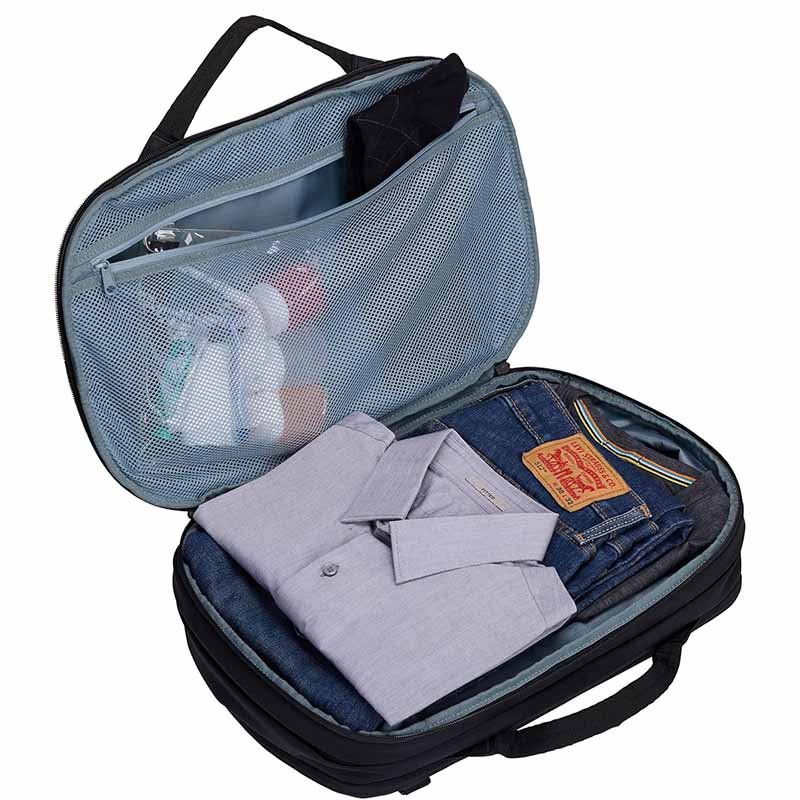
Clamshell travel bags are backpacks or travel bags designed with a full or three-sided zipper opening that allows the bag to open completely flat, similar to a suitcase. Instead of loading items from a small opening at the top, users can open the entire main compartment and clearly see everything inside. This structure makes packing faster, keeps items organized, and reduces the need to dig through layers of clothing or gear.
For travelers who frequently move between airports, hotels, trains, and short city trips, the clamshell structure solves a very common frustration: reaching items at the bottom of a deep backpack. When the bag opens fully, the inside layout becomes visible immediately, allowing travelers to arrange clothing, electronics, and accessories in a clear system.
In practical terms, a clamshell travel bag behaves more like a hybrid between a suitcase and a backpack. The traveler gains the packing convenience of luggage while still enjoying the mobility of a backpack.
Why the Clamshell Structure Became Popular
Over the past decade, travel habits have changed significantly. Many travelers now prefer carry-on only travel, avoiding checked luggage whenever possible. This shift increased demand for backpacks that can pack as efficiently as small suitcases.
Clamshell travel bags fit this trend perfectly. Because the bag opens flat, travelers can pack items in horizontal layers rather than stacking them vertically.
A typical packing layout might look like this:
| Item Category | Packing Method in Clamshell Bag |
|---|---|
| Shirts and pants | Folded in packing cubes |
| Shoes | Placed at bottom or separated compartment |
| Toiletry bag | Positioned near divider pocket |
| Laptop and tablet | Stored in padded sleeve |
| Chargers and cables | Organized in internal pockets |
| Travel documents | Hidden security pocket |
This layout reduces packing confusion and helps travelers keep the bag organized throughout the trip.
Travel gear retailers often observe that bags with clamshell openings receive fewer complaints about accessibility compared with traditional top-loading backpacks. Customers can easily locate items without unpacking the entire bag.
Common Design Characteristics of Clamshell Travel Bags
Although clamshell travel bags vary widely in size and style, most share several structural features that support the open-flat design.
| Design Feature | Purpose |
|---|---|
| Perimeter zipper opening | Allows bag to open flat |
| Internal divider panel | Separates clothing and accessories |
| Compression straps | Prevent items from shifting |
| Laptop compartment | Protects electronics |
| Multiple internal pockets | Organizes small items |
| Reinforced edge panels | Maintains bag shape when opened |
The zipper path is one of the most important engineering elements. Because the zipper travels along three sides of the bag, manufacturers must ensure the surrounding panels remain strong enough to prevent distortion when the bag is opened repeatedly.
To maintain structure, many clamshell travel bags include foam reinforcement or laminated fabric panels that keep the bag stable even when fully opened.
Typical Capacity and Dimensions
Most clamshell travel bags are designed within the carry-on size range used by major airlines. This makes them especially attractive for travelers who want to avoid checked baggage fees.
The most common capacities include:
| Capacity | Typical Use |
|---|---|
| 20–25 liters | Daily commuting or short trips |
| 28–35 liters | Weekend travel |
| 35–40 liters | Carry-on travel backpacks |
| 40–45 liters | Extended travel with minimal luggage |
A 35–40 liter clamshell backpack is often considered the ideal size for airline carry-on travel. It provides enough space for clothing, shoes, electronics, and accessories while still fitting in overhead compartments.
Why Travelers Prefer Clamshell Travel Bags
Many travel bag buyers discover the benefits of clamshell designs only after using one. Once travelers experience the convenience, they rarely want to return to narrow top-loading bags for urban travel.
Several practical advantages explain this preference.
1. Faster Packing
Because the bag opens fully, travelers can place items quickly without pushing them through a small opening.
2. Better Organization
Internal divider panels allow users to separate clothing from accessories.
3. Easy Access to Items
Items stored at the bottom of the bag remain visible and accessible.
4. Convenient Hotel Use
The bag can open flat on a bed or luggage rack, allowing travelers to access clothing without unpacking everything.
5. Improved Security
Hidden internal pockets allow passports or valuables to remain protected inside the bag.
These benefits make clamshell travel bags particularly attractive for:
- business travelers
- digital nomads
- students studying abroad
- frequent flyers
- short-trip travelers
Manufacturing Considerations
From a manufacturing perspective, clamshell travel bags require careful construction. The wide opening means the bag body must maintain its shape even when fully opened.
Factories typically reinforce the bag using:
- foam padding between fabric layers
- strong lining materials
- reinforced stitching along the zipper path
- high-quality zipper systems such as SBS or YKK
These reinforcements ensure the bag maintains durability while providing the wide opening that travelers expect.
Manufacturers with experience in travel gear development often adjust panel thickness, zipper placement, and internal divider construction during the sampling stage to ensure the bag opens smoothly without collapsing.
Why Many Travel Brands Use Clamshell Designs
Because of the practical benefits, many modern travel brands design their flagship backpacks around clamshell structures. The design aligns well with current travel behavior, where customers prioritize organization, mobility, and convenience.
For brands launching a new travel bag line, clamshell structures often perform well in categories such as:
- carry-on travel backpacks
- business travel backpacks
- laptop travel backpacks
- digital nomad travel bags
When combined with durable materials such as polyester, nylon, neoprene, or TPU-coated fabrics, clamshell travel bags can provide both strong protection and convenient packing.
For companies developing private label travel bags, working with an experienced manufacturer helps ensure that the zipper path, internal structure, and reinforcement panels are engineered correctly. These structural details determine whether the bag feels solid and easy to use—or awkward and unstable.
A well-designed clamshell travel bag does more than open wide. It creates a packing system that makes travel smoother, faster, and more organized for the user.
What Are Top-Load Travel Bags?
Top-load travel bags open mainly from the top, with gear packed vertically from bottom to top. They remain a strong choice in outdoor, trekking, and rugged-use categories because they handle tall loads well, waste less opening space, and often feel more stable when carrying bulky or irregular gear. They do not usually win on packing visibility, but they still sell well where durability and carrying performance matter more than quick access.
How Do Top-Load Travel Bags Work?
A top-load travel bag has one main entry point at the top of the bag. The user drops gear into the main compartment from above, often through a zipper, a drawcord collar, a flap lid, or a mix of these elements.
This design sounds basic, but it shapes the whole bag architecture:
- the body is often taller and narrower
- the opening is more compact
- the side panels stay cleaner and stronger
- the load sits in a more vertical column
- the bag can be compressed effectively with side straps
This is why top-load construction remains common in hiking and trekking packs. The load can stay closer to the back and stack upward in a way that supports movement. Outdoor users also often carry items that do not fit neatly into a flat suitcase layout:
- jackets
- sleeping layers
- food pouches
- climbing accessories
- compact gear bags
- wet or dirty equipment
A top-load structure accepts that kind of stuffing more naturally. That flexibility is one reason some experienced travelers still prefer it, especially when the trip includes walking long distances, changing terrain, or variable packing volume. Discussions among one-bag and outdoor users frequently mention the same benefits: narrower balance, fewer zipper-related concerns, and easier compression of tall loads.
From the manufacturing side, top-load bags often have a simpler main opening, but that does not automatically mean easier production. A strong top-load bag still needs careful patterning around the collar, lid, shoulder anchor points, and side compression system. If those details are weak, the bag will sag, pull backward, or feel unstable under weight.
Why Are Top-Load Travel Bags Popular?
Top-load travel bags stay popular because they solve a different problem from clamshell bags. They are not built primarily for neat flat packing. They are built for carrying performance, flexibility, and simplicity.
Customers usually choose top-load bags for reasons like these:
| Reason | Why It Matters |
|---|---|
| Better for tall, soft loads | Jackets, outdoor layers, and gear can be stuffed more freely |
| Cleaner external structure | Fewer large wraparound zippers can mean fewer exposed failure points |
| Good load compression | Side straps and top closure help control shifting |
| Outdoor visual language | Customers associate this form with trekking and rugged use |
| Easier expansion | A top opening can handle overflow gear more naturally |
These bags are especially strong in categories such as:
- hiking daypacks
- overnight trekking packs
- adventure travel backpacks
- sports gear backpacks
- expedition-inspired travel bags
There is also a pricing angle. Many customers in outdoor segments are willing to trade convenience of access for confidence under load. They do not mind reaching down into the main compartment if they trust the carry system more. In those categories, the bag is judged less like a suitcase and more like equipment.
For brands, that means top-load travel bags can still sell very well when the positioning is clear. Problems start when a bag is marketed to urban carry-on users but behaves like an outdoor pack. Then the customer expects quick suitcase-style access and feels disappointed.
So the design itself is not the issue. Misalignment between product structure and customer scenario is the issue.
When Are Top-Load Travel Bags a Better Choice?
Top-load travel bags are the better choice when the customer’s trip includes heavier carry, less frequent unpacking, or more outdoor movement. They are also useful when product design needs to emphasize rugged character over neat compartmental display.
A simple comparison makes this clearer:
| Travel Situation | Better Structure |
|---|---|
| Weekend city trip | Clamshell |
| Business carry-on | Clamshell |
| Multi-stop hotel travel | Clamshell |
| Day hiking with extra layers | Top-load |
| Mixed outdoor travel | Top-load |
| Carrying bulky soft gear | Top-load |
In practical terms, top-load bags are usually better when:
- the user does not need to access the full bag often
- the load changes size during the trip
- the product must feel outdoorsy and gear-focused
- compression and vertical load control matter more than flat visibility
This explains why top-load travel bags remain commercially relevant even though clamshell models dominate many travel-influencer lists. The two structures serve different behaviors. One serves organized access. The other serves flexible carry.
For Szoneier, this matters during product consultation. A customer asking for a “travel backpack” may actually mean one of three very different products:
- a flight-friendly carry-on pack
- an outdoor-ready adventure pack
- a hybrid travel backpack with partial clamshell plus top access
Those are not the same development projects. The zipper path, foam support, panel shape, harness design, and internal organization all change depending on the answer. That is why sample development should begin with use-case definition, not just dimensions and logo placement.
Clamshell vs Top-Load Travel Bags: What Are the Key Differences?
Clamshell travel bags and top-load travel bags are built around two completely different access philosophies. A clamshell bag prioritizes visibility and organization, while a top-load bag focuses on flexible packing and vertical load stability. The differences affect packing speed, comfort, durability, and even long-term customer satisfaction. Understanding these structural differences helps brands design travel bags that match real travel behavior instead of just following trends.
Which Travel Bags Pack More Efficiently?
Packing efficiency depends on how well a bag allows users to organize different items without wasting space or creating access problems. In most urban travel situations, clamshell travel bags perform better because they allow horizontal packing similar to a suitcase.
Travelers typically pack a combination of clothing, electronics, and accessories. When these items are stacked vertically in a narrow compartment, the result is often inefficient space usage and slower access. With a clamshell structure, items can be arranged side-by-side, creating a clearer packing layout.
A typical packing comparison illustrates the difference:
| Packing Element | Clamshell Travel Bags | Top-Load Travel Bags |
|---|---|---|
| Clothing arrangement | Flat layers | Vertical stacking |
| Packing cubes | Highly compatible | Limited visibility |
| Shoe storage | Often separated | Mixed with other items |
| Item visibility | High | Low |
| Repacking speed | Fast | Slower |
For example, a traveler packing a 35-liter clamshell travel backpack can usually place two packing cubes, a pair of shoes, and a toiletry pouch in organized zones. In a top-load bag of the same capacity, those items often sit on top of each other, which means accessing the bottom layer requires partial unpacking.
However, packing efficiency changes when the contents are irregular. Bulky jackets, sports equipment, or outdoor gear do not always fit neatly into flat layers. In these cases, a top-load bag allows the user to push and compress items into unused space.
That is why clamshell travel bags dominate urban travel markets, while top-load travel bags still hold strong positions in outdoor gear categories.
For manufacturers, this difference also affects internal construction. Clamshell bags require more internal structure such as divider panels and compression straps. Top-load bags often rely more on vertical space and compression systems.
Which Travel Bags Are Easier to Access?
Access speed is one of the most noticeable differences between these two designs. Clamshell travel bags usually allow users to see all packed items immediately after opening the bag.
When the bag opens fully, travelers can identify and retrieve items within seconds. This becomes extremely useful in common travel scenarios:
- airport security checks
- hotel unpacking
- searching for chargers or cables
- accessing travel documents
A top-load bag requires users to reach downward into the compartment. If the desired item is at the bottom, several items may need to be removed first.
A simplified comparison shows how access differs in real travel use:
| Situation | Clamshell Travel Bags | Top-Load Travel Bags |
|---|---|---|
| Access bottom item | Immediate | Requires digging |
| Access laptop | Often dedicated sleeve | May require unpacking |
| Access clothing | Organized layers | Mixed stacking |
| Access small items | Multiple pockets | Often in lid pocket |
That difference directly affects user satisfaction. Many negative product reviews about travel backpacks mention difficulty finding items quickly.
However, top-load bags compensate with simpler external structure. Because they do not rely on long wraparound zippers, they can feel structurally cleaner and sometimes lighter. Some experienced travelers prefer this simplicity because it reduces mechanical complexity.
When brands design travel bags, the question becomes: Is the bag meant to be accessed frequently, or mainly carried between destinations?
Frequent access favors clamshell. Long carry with minimal access favors top-load.
Which Travel Bags Handle Heavy Loads Better?
Load distribution is where top-load travel bags often perform better. The vertical packing structure keeps weight aligned closer to the user’s back, which improves balance when carrying heavier loads.
Hiking backpacks have used top-loading structures for decades because the design supports tall internal frames and efficient weight transfer.
Key load management differences can be summarized below:
| Load Factor | Clamshell Travel Bags | Top-Load Travel Bags |
|---|---|---|
| Weight distribution | Moderate | Strong |
| Load compression | Limited | Excellent |
| Stability when walking | Good | Better |
| Carry comfort with heavy gear | Moderate | High |
When a bag carries more than 12–15 kilograms, structural factors such as compression straps, frame sheets, and shoulder strap positioning become critical.
Top-load bags often integrate:
- vertical compression straps
- load lifters
- internal frame support
- taller center-of-gravity design
These features allow the bag to remain stable while moving across uneven terrain.
Clamshell travel bags, on the other hand, are usually optimized for lighter loads typical of airline carry-on travel. They may include padded laptop compartments and structured walls, which improve protection but can slightly reduce compression flexibility.
For brands targeting airport travel, business travel, and digital nomads, heavy load capacity is rarely the main selling point. But for outdoor adventure travel, carrying comfort becomes a primary purchasing factor.
Understanding these load dynamics helps brands avoid design mismatches.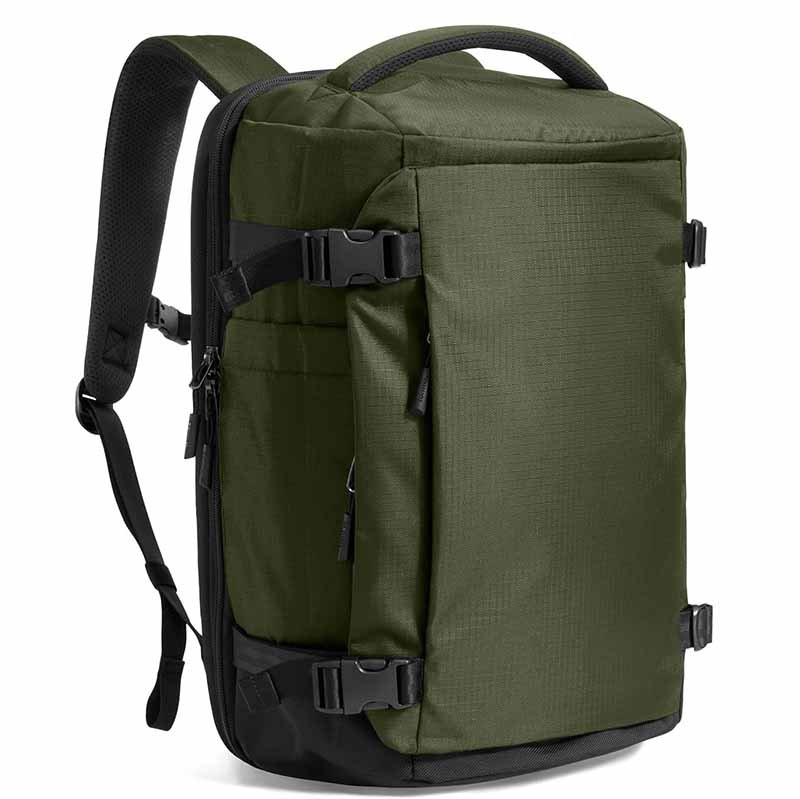
Which Travel Bags Sell Better Today?
Clamshell travel bags currently dominate the urban travel and carry-on segments, while top-load travel bags remain strong in outdoor and adventure travel markets. Sales performance depends largely on the travel scenario, price range, and target customer group.
Online marketplaces, outdoor retailers, and direct-to-consumer travel brands show different demand patterns for these designs.
Are Clamshell Travel Bags Trending in Urban Travel?
In recent years, clamshell travel bags have gained significant popularity among urban travelers and digital nomads.
Several factors contribute to this trend:
- Growth of carry-on-only travel
- Increasing reliance on laptops and electronics
- Demand for organized packing systems
- Popularity of travel gear review channels
Most airline carry-on backpacks between 30L and 45L capacity now use clamshell-style openings because they mimic suitcase packing while remaining backpack-friendly.
A typical urban travel bag often includes:
- padded laptop sleeve
- tablet pocket
- clothing compartment
- cable organizers
- quick-access passport pocket
These features work best when the bag opens widely.
The growth of remote work and location-independent professionals has also influenced bag design. Many travelers now carry multiple electronic devices and accessories, which benefit from organized storage layouts.
As a result, clamshell travel bags often appear in product categories such as:
- digital nomad backpacks
- flight carry-on backpacks
- tech travel backpacks
- hybrid suitcase-backpacks
From a marketing perspective, these bags also photograph well and demonstrate easily in product videos, which helps online conversion rates.
Why Do Outdoor Brands Still Use Top-Load Travel Bags?
Despite the popularity of clamshell bags, outdoor brands continue to rely heavily on top-load designs.
Outdoor travel presents different requirements compared with urban travel. Gear can include:
- insulated clothing
- camping equipment
- food supplies
- hydration systems
- climbing tools
These items vary widely in shape and volume. A top-load bag allows users to pack and compress irregular gear more effectively.
Outdoor backpacks also emphasize durability and structural reliability. Long zipper paths used in clamshell bags can potentially create more exposure points to dust, water, or mechanical stress.
Top-load backpacks often include additional outdoor-oriented features:
| Feature | Purpose |
|---|---|
| Floating lid pocket | Quick access storage |
| Compression straps | Stabilize load |
| Hydration sleeve | Water system compatibility |
| Gear loops | Equipment attachment |
| Weather flaps | Improve rain resistance |
For hiking and trekking markets, these functional features often matter more than packing visibility.
This explains why outdoor brands continue to design backpacks with top-load structures even while urban travel backpacks shift toward clamshell openings.
Which Travel Bags Sell Better Online?
Sales performance varies depending on the platform and audience.
In e-commerce environments where customers rely heavily on product photos and demonstration videos, clamshell travel bags often convert more easily. The open layout clearly shows organization and capacity.
A simplified comparison of common sales channels shows the difference:
| Sales Channel | Stronger Selling Style |
|---|---|
| Travel gear websites | Clamshell |
| Direct-to-consumer brands | Clamshell |
| Outdoor retailers | Top-load |
| Hiking equipment stores | Top-load |
| Laptop travel backpacks | Clamshell |
Clamshell designs are easier to communicate visually. When the bag opens wide in a product image, customers immediately understand how it works.
Top-load bags may require more explanation because their benefits relate more to carrying performance and outdoor durability.
However, both designs can sell successfully when positioned correctly.
Brands that understand their target users tend to develop more successful travel bag collections.
For example:
- A commuter-focused backpack line may emphasize clamshell access and electronics protection.
- An adventure travel line may emphasize compression systems and rugged top-load designs.
Manufacturers like Szoneier, with more than 18 years of bag development experience, often work closely with brands during the design stage to determine which structure aligns best with the product concept. Material choice, zipper systems, and internal layouts are then adjusted accordingly to support the intended travel scenario.
How Do Brands Design Clamshell or Top-Load Travel Bags?
The decision to design a clamshell travel bag or a top-load travel bag rarely comes down to personal preference. For brands developing new travel gear, the structure must match the real behavior of the customer. A bag that performs well for airline travelers may not work for hikers, and a product built for outdoor adventure may feel inconvenient during short city trips.
Experienced product teams usually evaluate three factors before choosing a structure:
- Travel scenario – airport, city commuting, outdoor exploration, or mixed travel
- Target load weight – lightweight travel gear versus heavy equipment
- Customer packing habits – organized packing versus flexible stuffing
Once these factors are clear, the structure becomes easier to determine. A brand focusing on urban travel backpacks usually prefers clamshell access because it improves packing speed and product presentation. A brand targeting adventure travelers may lean toward top-load construction because it supports taller loads and rugged environments.
For manufacturers, these decisions influence pattern engineering, zipper selection, reinforcement areas, and internal layout design.
How Do Manufacturers Develop Clamshell Travel Bags?
Developing a clamshell travel bag requires careful attention to structure because the opening spans a large section of the bag body. If the design lacks reinforcement, the bag may collapse or feel unstable when fully opened.
Most factories follow a structured development process.
Step 1 — Concept Definition
At the concept stage, designers determine the bag’s intended use:
- carry-on travel
- business travel
- digital nomad travel
- weekend travel
Capacity usually ranges between 28L and 45L, which fits most airline carry-on restrictions.
Step 2 — Internal Layout Planning
Because clamshell bags emphasize organization, internal structure becomes a key selling feature.
Typical layout includes:
| Internal Component | Function |
|---|---|
| Mesh divider panel | Separates clothing from accessories |
| Compression straps | Stabilizes packed items |
| Laptop sleeve | Protects electronics |
| Hidden pocket | Passport and valuables |
| Elastic organizers | Chargers and cables |
Designers must ensure the bag remains balanced even when fully open. Divider panels and compression straps prevent items from spilling when the bag is opened flat.
Step 3 — Structural Reinforcement
Clamshell bags rely on longer zipper paths than most backpacks. That means the surrounding panels must be reinforced to prevent distortion.
Factories often add:
- foam laminated panels
- reinforced edge binding
- zipper backing tape
- structural lining materials
These elements keep the bag stable when opened and closed repeatedly.
Step 4 — Prototype Sampling
After pattern drafting, factories create a physical sample to test:
- zipper smoothness
- opening angle
- packing capacity
- load balance
Sampling typically takes 5–7 days depending on material availability.
At Szoneier, development teams often adjust panel curvature and foam thickness during this stage to ensure the bag opens smoothly without losing shape.
How Do Factories Produce Top-Load Travel Bags?
Top-load travel bags appear simpler, but their engineering focuses heavily on load stability and carrying comfort. Because the bag loads vertically, the center of gravity and compression system must be designed carefully.
The production process usually includes the following stages.
Step 1 — Vertical Load Design
Top-load bags must support taller load structures. Designers calculate the bag height, width, and depth so the packed weight stays close to the user’s back.
Most travel-oriented top-load bags fall between 30L and 50L capacity.
Step 2 — Closure System Selection
Top-load bags may use several types of closures:
| Closure Type | Characteristics |
|---|---|
| Drawstring collar | Lightweight and flexible |
| Zipper opening | More structured access |
| Roll-top closure | Water resistance |
| Lid-cover design | Extra storage pocket |
Outdoor backpacks often use drawstring collars with floating lids because this design allows quick expansion and compression.
Step 3 — Compression Structure
Compression straps play a larger role in top-load bags than in clamshell designs. These straps reduce internal movement and keep the bag balanced during walking.
Common compression features include:
- side compression straps
- bottom gear straps
- adjustable lid straps
- load lifter straps near the shoulder harness
These elements prevent the bag from feeling bulky when partially filled.
Step 4 — Harness Integration
Because top-load bags often carry heavier loads, factories pay close attention to the harness system.
Key ergonomic components include:
- padded shoulder straps
- breathable back panels
- sternum straps
- adjustable hip belts
These features improve carrying comfort during longer walks.
How Can Brands Customize Travel Bags for Different Markets?
The global travel bag market is not uniform. Customer expectations vary widely depending on region, travel style, and price point.
Brands often customize bag structures according to these market patterns.
| Market Segment | Preferred Bag Structure |
|---|---|
| Business travel | Clamshell |
| Airline carry-on travel | Clamshell |
| Urban commuting | Clamshell |
| Hiking and trekking | Top-load |
| Adventure travel | Top-load |
| Hybrid travel | Combination design |
Hybrid designs are becoming increasingly common. These bags combine a clamshell main compartment with top-access pockets or secondary openings. The goal is to balance organization with flexible storage.
Customization may also include:
- material selection
- internal compartment design
- waterproof coatings
- branding methods
- zipper systems
- hardware color options
Manufacturers like Szoneier often support brands during this process by providing design suggestions based on production experience. With more than 18 years of bag manufacturing experience, Szoneier works with a wide range of materials including polyester, nylon, neoprene, canvas, and TPU-coated fabrics. This flexibility allows brands to adapt travel bag designs to different markets and price levels.
How Szoneier Helps Brands Develop Custom Travel Bags
Developing a successful travel bag requires more than simply selecting a shape. The bag must combine structure, materials, and user experience in a balanced way.
Szoneier has spent more than 18 years designing and manufacturing travel bags for global clients, including private label brands, e-commerce sellers, and outdoor gear companies. The company operates a structured product development system that supports clients from concept to mass production.
The development workflow usually includes the following stages.
Design Consultation
The first step is understanding the intended product position. Clients typically share information such as:
- target market
- expected retail price
- capacity requirements
- travel scenario
- preferred materials
This information helps engineers determine whether a clamshell structure or top-load structure will perform better.
Material Selection
Different travel bags require different materials. Szoneier’s internal material resources allow brands to choose fabrics based on durability, weight, and appearance.
Common materials include:
| Material | Application |
|---|---|
| 600D polyester | Lightweight travel backpacks |
| 1680D nylon | Heavy-duty travel bags |
| Neoprene | Soft structure travel bags |
| Canvas | Vintage travel style bags |
| TPU coated fabric | Waterproof travel bags |
Prototype Development
Once materials and structure are confirmed, a prototype sample is produced. Sampling usually takes 5–7 working days, allowing brands to evaluate design details and packing capacity before moving to mass production.
Quality Testing
Before large-scale production, travel bags undergo multiple quality checks, including:
- zipper durability testing
- load bearing testing
- seam strength testing
- abrasion resistance testing
These tests ensure the bag performs reliably under real travel conditions.
Mass Production
After final approval, production begins. Typical production lead times range from 20–30 days depending on order volume and material complexity.
Conclusion: Choosing the Right Travel Bag Structure
Clamshell travel bags and top-load travel bags both have strong positions in the travel gear market. The difference lies not in which design is universally better, but in which design matches the user’s travel behavior.
Clamshell travel bags dominate the urban travel segment because they offer:
- better packing organization
- faster access to items
- compatibility with modern travel habits
Top-load travel bags remain highly effective for outdoor travel because they provide:
- flexible packing space
- strong load stability
- better compression for heavy gear
For brands planning a new travel bag collection, the most important step is identifying the real user scenario before selecting the structure.
If you are developing a custom travel bag, private label backpack, or OEM travel gear product, working with an experienced manufacturer can significantly shorten the development process.
With over 18 years of manufacturing experience, Szoneier supports brands worldwide with:
- custom travel bag design
- private label production
- low MOQ customization
- fast prototype sampling
- reliable mass production
If you are planning to develop clamshell travel bags, top-load travel bags, or hybrid travel backpacks, you can contact the Szoneier team to discuss your product ideas and request a prototype sample. A well-designed travel bag begins with the right structure—and the right manufacturing partner.