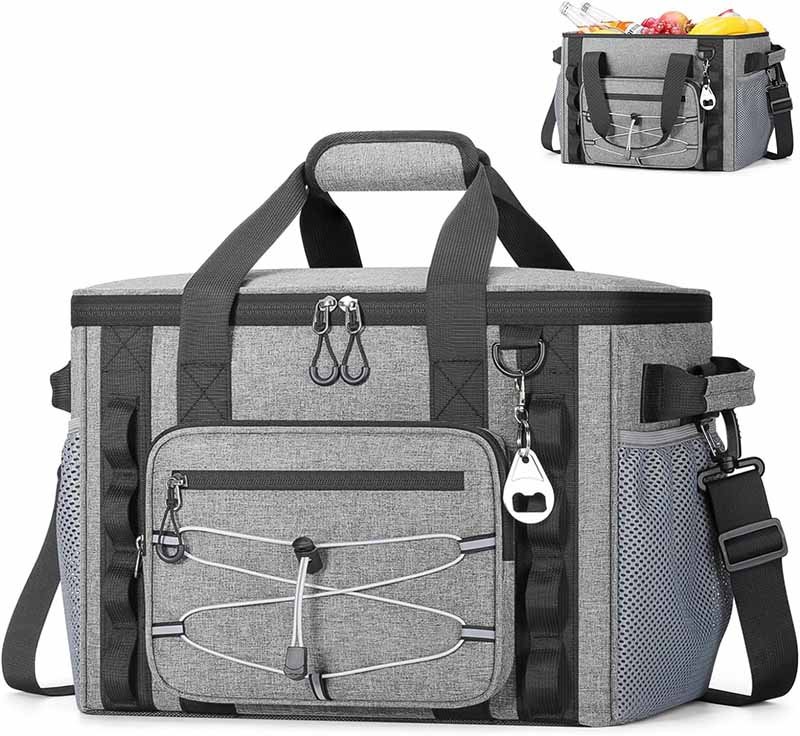
Most cooler bags don’t fail because the zipper breaks or the fabric tears. They fail quietly—when ice melts, water pools at the bottom, and a stitched seam begins to “sweat.” On day one, you might not notice. After a few trips, the liner starts leaking through needle holes, seam tape loosens, and suddenly the bag is soaking car seats, packaging cartons, or a customer’s kitchen counter. That’s how returns happen.
Heat-sealed liners reduce leaks because they remove needle holes and replace stitched seams with fused seams. Heat and pressure bond thermoplastic liner materials into a continuous barrier, so meltwater can’t escape through thread paths or pinholes. This also improves washability and long-term durability, especially for ice-heavy use like camping, sports teams, and food delivery.
At Szoneier, we’ve built insulated bags for 18+ years across different markets. The pattern is consistent: brands that treat liners as “just an inner layer” pay for it later—in complaints, replacements, and lost repeat orders. Let’s break down what heat-sealed liners really are, why leaks start, and what to check before placing an OEM order.
What Are Heat-Sealed Liners in Cooler Bags?
Heat-sealed liners in cooler bags are waterproof inner compartments made by fusing thermoplastic liner panels together using controlled heat and pressure instead of stitching. This process eliminates needle holes and thread channels, creating a continuous barrier that prevents melted ice water from leaking through seams. Heat-sealed liners are commonly used in higher-performance soft coolers where leak resistance and durability are critical.
What Does a Heat-Sealed Liner Actually Look Like?
Inside a cooler bag, the liner is the layer that directly contacts:
- Ice cubes
- Ice packs
- Condensation
- Food spills
- Raw meat or seafood fluids
In a stitched liner, you can usually see visible thread lines at corners and along the bottom panel. In a heat-sealed liner, seams look flat and smooth — more like a welded line than a sewn edge.
You’ll notice:
- No thread
- No seam tape
- No folded seam allowances
- Smooth, wipe-clean interior
This design matters because standing water inside a cooler puts continuous pressure on bottom seams. Even small perforations can turn into slow leaks.
How Is a Heat-Sealed Liner Different From a Stitched Liner?
The difference is structural, not cosmetic.
Here’s a clear comparison based on construction:
| Feature | Stitched Liner | Heat-Sealed Liner |
|---|---|---|
| Needle holes | Yes (hundreds per seam) | None |
| Thread used | Yes | No |
| Seam sealing method | Tape or glue | Thermal fusion |
| Water barrier continuity | Interrupted | Continuous |
| Long-term seam stability | Degrades over time | More stable |
A typical bottom seam in a medium cooler bag may contain 200–300 needle perforations. Even when seam tape is applied, water can migrate through weakened adhesive areas over time.
Heat sealing removes this weak point completely.
What Materials Are Used in Heat-Sealed Liners?
Heat sealing only works with thermoplastic materials — materials that soften under heat and can fuse together.
Common liner materials include:
| Material | Common Thickness | Main Advantage |
|---|---|---|
| TPU | 0.15–0.35 mm | High durability & flexibility |
| PEVA | 0.12–0.30 mm | Cost-effective & food safe |
| EVA | 0.15–0.30 mm | Soft & odor resistant |
| PVC | 0.20–0.40 mm | Strong & economical |
Thickness selection affects:
- Puncture resistance
- Flexibility in cold conditions
- Overall bag weight
- Cost per unit
For example:
- 0.15 mm liner: lightweight lunch coolers
- 0.25 mm liner: mid-range retail coolers
- 0.30+ mm liner: heavy-duty outdoor use
If your cooler is expected to carry 5–10 kg of ice and drinks, liner thickness becomes a serious performance factor.
Why Do Brands Choose Heat-Sealed Liners?
In real commercial environments, leaks cause problems beyond inconvenience.
For retailers and private label brands, common consequences of liner failure include:
- Product returns
- Negative reviews
- Replacement costs
- Warehouse damage
- Retailer penalty fees
For example:
| Issue | Business Impact |
|---|---|
| Minor seam leak | 1–2 star review |
| Meltwater soaking packaging | Customer refund |
| Delivery bag leakage | Restaurant account loss |
| Repeated complaints | Listing suspension risk (e-commerce) |
Heat-sealed liners reduce these risks by increasing seam reliability.
How Is a Heat-Sealed Seam Made in Production?
In controlled manufacturing environments, the liner panels are:
- Cut to precise dimensions
- Overlapped by 8–15 mm at seam edges
- Heated to material-specific temperatures
- Pressed under calibrated pressure
- Cooled to stabilize the bond
Properly executed welds have:
- Uniform seam width
- No burn marks
- No bubbles
- Consistent thickness
Factories with good process control will also conduct seam peel-strength testing to confirm bond strength.
Are Heat-Sealed Liners Always Leakproof?
No construction method is perfect if executed poorly.
Heat-sealed liners can still fail if:
- Welding temperature is inconsistent
- Overlap width is too narrow
- Material thickness is too thin
- Poor-quality liner film is used
- Corners are not properly reinforced
This is why it’s important to confirm:
- Water hold testing standards
- Cold crack performance
- Seam strength measurements
- Sample approval before bulk production
Leak resistance depends on both material quality and process control.
When Are Heat-Sealed Liners Most Important?
They are especially important for:
- Camping and outdoor coolers
- Marine and fishing applications
- Grocery delivery coolers
- Sports team coolers
- Meal prep and food delivery bags
- Long-duration ice storage
For light-use lunch totes with minimal ice, stitched liners may perform adequately. But for heavy-use applications with standing water, heat-sealed construction significantly reduces failure risk.
Practical Example
Imagine a cooler carrying:
- 6 kg of ice
- 8 beverage cans
- 4–6 hours of meltwater exposure
The bottom seam experiences continuous hydrostatic pressure. A stitched liner may start seeping slowly. A heat-sealed liner forms a fused barrier that resists this pressure.
The difference may not be visible on day one — but it becomes obvious after repeated use.
What Should You Confirm With a Factory?
Before approving a cooler bag with heat-sealed liner, ask:
- What liner material is used?
- What thickness?
- What seam overlap width?
- Is there a 12–24 hour water hold test?
- What temperature range is the liner rated for?
- Is the liner food-contact compliant?
These details matter more than exterior fabric color or zipper style.
Why Do Cooler Bags Without Heat-Sealed Liners Leak?
Cooler bags without heat-sealed liners leak because stitched seams create needle holes and thread channels that let meltwater pass through. Over time, seam tape and glue weaken from moisture, cleaning, and temperature cycling. When water pools at the bottom seam, pressure and movement push water through tiny gaps, turning “water-resistant” liners into leak sources.
What causes water leaks in cooler bags?
Most leaks start at the bottom corners and seam intersections, because that’s where meltwater collects and where stress concentrates when the bag is carried.
Leak drivers you see in real use:
- Needle holes: every stitch is a micro perforation.
- Wicking effect: thread pulls water along its length like a wick.
- Seam pressure: 2–5 kg of ice + drinks increases pressure at the base.
- Movement: walking, car rides, and drops flex seams repeatedly.
- Temperature cycling: cold-to-warm shifts make materials expand/contract.
A simple way to imagine it: a stitched liner is like a rain jacket seam. It might resist splashes. But cooler bags deal with standing water for hours. Standing water always finds a seam weakness.
Do stitched liners fail over time?
Yes, and the failure is predictable: moisture + stress + cleaning. The liner may look fine, but the seam protection degrades.
Common long-term issues:
- Seam tape lifts at corners
- Adhesive becomes brittle and cracks
- Thread loses strength after repeated wet/dry cycles
- Needle holes widen as fabric flexes
Here’s a realistic durability picture based on what we see in production feedback and returns categories:
| Use environment | Main seam stress | Common complaint timeline |
|---|---|---|
| Weekend picnic (light ice) | moderate moisture | 3–12 months |
| Camping / beach (heavy ice) | standing water + sand | 1–6 months |
| Food delivery (daily wash) | cleaning chemicals + heat | weeks–3 months |
| Sports teams (rough handling) | drops + overload | 1–4 months |
Stitched liners can still work in lower-risk categories. But if your product promise includes “leakproof,” you’ll want construction that supports that claim.
Are taped seams enough to stop leaks?
Taped seams help, but they’re not the same as a welded seam. Tape relies on adhesive bonding. In a cooler bag, the adhesive is attacked from multiple directions:
- Water exposure: adhesives soften or lift
- Oil/food residue: reduces bonding over time
- Cleaning agents: weaken adhesive chemistry
- Heat inside cars: accelerates adhesive aging
- Flexing at corners: causes tape edge peeling
Tape is also inconsistent: two bags from the same line can perform differently if tape placement and pressure vary.
If you’re sourcing cooler bags for retail or Amazon-style channels, that inconsistency is a risk. One batch that leaks can create a wave of negative reviews even if most units are fine. Heat-sealed seams reduce this variability because the seal is part of the material structure, not an added patch.
What to Request From a Factory (Useful for OEM)
If you’re ordering cooler bags with heat-sealed liners, ask the factory to confirm these points upfront:
| Item to confirm | Why it protects your order |
|---|---|
| Liner material type + thickness | Determines flexibility and seam strength |
| Seam overlap width | Predicts peel resistance |
| Leak test method | Ensures consistent QC |
| Cleaning recommendation | Reduces complaint risk |
| Food-contact safety option | Needed for meal-prep and food use |
At Szoneier, we can customize liner material (TPU/PEVA/EVA/PVC options), thickness, seam structure, insulation build, and conduct sampling with leak testing before mass production—especially for private label and OEM orders where review risk matters.
How Do Heat-Sealed Liners in Cooler Bags Prevent Leaks?
Heat-sealed liners prevent leaks by eliminating needle perforations and replacing stitched seams with fused seams. Heat and pressure bond liner panels into a continuous waterproof structure. Because there are no thread channels or seam tape edges, meltwater cannot travel outward under pressure, making the liner significantly more resistant to standing water, flexing, and long-term moisture exposure.
How does heat sealing create a waterproof barrier?
To understand why heat-sealed liners work, it helps to understand how water travels.
In stitched construction:
- Water enters through needle holes.
- Thread acts like a wick.
- Seam tape eventually weakens.
In heat-sealed construction:
- No holes are created.
- The seam becomes a fused zone.
- Water meets a solid barrier.
The difference is structural.
When thermoplastic materials (like TPU or PEVA) are heated to the correct temperature, the seam edges soften. Under pressure, polymer chains interlock and fuse. Once cooled, the seam behaves as one continuous piece.
There is no “separate” thread.
There is no seam gap.
There is no adhesive line to weaken.
Think of it like welding plastic rather than sewing fabric.
For cooler bags carrying 3–8 kg of ice and drinks, the bottom seam experiences constant hydrostatic pressure. Even a micro-hole becomes a leak source under that load. Heat-sealed seams remove that weak point entirely.
Why are needle holes such a big problem?
Needle holes look tiny — but water molecules are smaller.
Let’s quantify the issue.
Typical industrial sewing needles used in cooler liners:
- Needle diameter: 0.6–1.0 mm
- Stitch density: 4–6 stitches per cm
- Seam length (bottom): 30–60 cm
That means:
- A single seam can contain 120–360 needle perforations.
- Each hole is a potential leak path.
Even if seam tape covers the stitches, the pressure of standing water pushes moisture through weak adhesive zones.
In leak simulations, stitched seams begin to show seepage under static water hold within hours, especially if the bag is flexed during testing.
Heat-sealed seams remove the perforation issue entirely.
What tests prove heat-sealed liners reduce leaks?
Serious factories should not just claim “leakproof.” They should test it.
Here are the most reliable liner tests used in production:
| Test Method | How It Works | What It Measures |
|---|---|---|
| Static Water Hold Test | Fill liner with water, hold 12–24 hrs | Seam seepage |
| Inverted Hold Test | Fill and flip bag upside down | Seal integrity under gravity |
| Peel Strength Test | Pull seam apart using tester | Weld bond strength |
| Drop Impact Test | Drop water-filled bag from 60–100 cm | Shock resistance |
| Cold Crack Test | Freeze liner at -20°C, flex test | Material flexibility |
For premium cooler bags, static water hold of 24 hours minimum is a reasonable standard.
At Szoneier, we perform internal sample leak testing before bulk production, especially for:
- Camping coolers
- Marine use bags
- Meal prep delivery programs
- High-end retail private label projects
If your supplier cannot clearly describe their leak test method, that’s a risk signal.
Does heat sealing improve durability beyond leak prevention?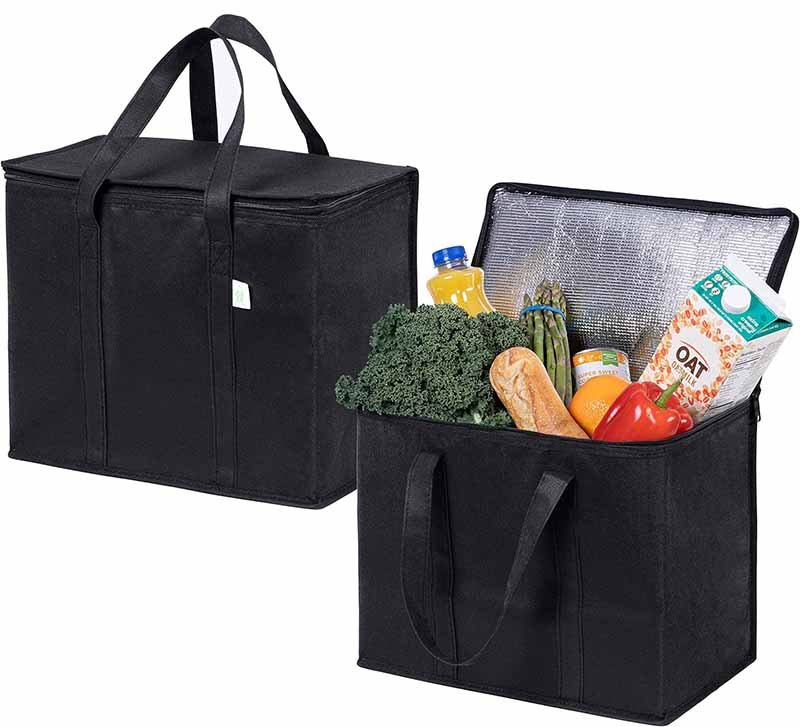
Yes — and this is often overlooked.
Leak prevention is only part of the advantage.
Heat-sealed liners also:
Reduce odor retention
No thread means less moisture trapped inside seams.
Improve washability
Smooth interior surfaces clean easier.
Lower bacterial growth risk
Fewer micro moisture pockets.
Increase seam consistency
Welding machines produce repeatable seam width.
Improve cosmetic quality
Clean inner appearance supports premium positioning.
For brands selling to outdoor or food-use markets, these factors directly impact repeat purchase rates and review scores.
Leakproof is not just about water — it is about long-term user experience.
Which Materials Work Best for Heat-Sealed Liners in Cooler Bags?
The best materials for heat-sealed cooler bag liners are TPU, PEVA, EVA, and certain PVC formulations. TPU offers premium durability and flexibility. PEVA provides a cost-effective, food-safe option. EVA offers softness and odor resistance. PVC is durable but less flexible in cold conditions. The right choice depends on budget, temperature exposure, food safety needs, and target market positioning.
Is TPU the best liner material?
TPU (Thermoplastic Polyurethane) is considered the premium option.
Why?
- High flexibility even at low temperatures
- Strong weld compatibility
- Excellent tear resistance
- Resistant to oils and cleaning agents
- Good long-term durability
Cold performance is especially important. Some materials become brittle in freezing conditions. TPU remains flexible down to approximately -25°C depending on grade.
TPU liner thickness options commonly range:
- 0.15 mm (lightweight coolers)
- 0.25 mm (standard performance)
- 0.35 mm+ (heavy-duty outdoor)
Downside:
- Higher material cost compared to PEVA or EVA.
For high-end outdoor brands or marine applications, TPU is often the safest long-term choice.
Is PEVA a good balance of cost and performance?
Yes — PEVA is widely used in mid-range cooler bags.
Benefits:
- Good weldability
- Lightweight
- Food-contact friendly (when certified)
- Lower cost than TPU
- Odor-resistant compared to PVC
PEVA performs well for:
- Lunch bags
- Retail coolers
- Promotional insulated totes
However:
- Not as tear-resistant as TPU
- Slightly lower abrasion durability
- Moderate cold flexibility
For large-volume private label orders where price sensitivity matters, PEVA is often a strong balance between cost and leak protection.
How does EVA compare?
EVA (Ethylene Vinyl Acetate) is softer and slightly more elastic than PEVA.
Advantages:
- Smooth touch
- Good odor resistance
- Flexible feel
- Easy heat sealing
It performs well in lifestyle-oriented cooler bags where comfort and softness matter.
Limitations:
- Not as abrasion-resistant as TPU
- May show surface scuffing over time
EVA works well in:
- Family picnic coolers
- Casual outdoor totes
- School lunch bags
Should PVC still be used?
PVC is durable and inexpensive, but it has limitations:
Pros:
- Strong
- Easy to weld
- Good chemical resistance
Cons:
- Can become stiff in cold weather
- Heavier than PEVA/EVA
- Increasing environmental concerns in some markets
PVC may still be suitable for:
- Industrial cooler bags
- Tool storage with cooling compartments
- Markets where price is the primary driver
Material Comparison Table
Here’s a simplified OEM decision guide:
| Property | TPU | PEVA | EVA | PVC |
|---|---|---|---|---|
| Leak Resistance | Excellent | Very Good | Very Good | Good |
| Cold Flexibility | Excellent | Good | Good | Moderate |
| Tear Strength | High | Medium | Medium | High |
| Food Safety Options | Yes | Yes | Yes | Limited by region |
| Cost Level | High | Medium | Medium | Low |
| Best For | Outdoor premium | Retail & private label | Casual lifestyle | Industrial |
Material choice should match your brand positioning, not just your target price.
Do Heat-Sealed Liners in Cooler Bags Improve Overall Performance?
Yes. Heat-sealed liners improve not only leak resistance but also insulation consistency, structural stability, hygiene, and long-term durability. Because the liner forms a continuous inner barrier, it reduces cold air escape through seams, minimizes moisture penetration into insulation foam, and maintains performance across repeated use cycles. This directly impacts temperature retention and product lifespan.
Do heat-sealed liners improve temperature retention?
Many buyers assume liners only affect leaks. In reality, they also influence thermal efficiency.
Here’s why:
When a stitched liner leaks internally, even slightly, moisture can seep into:
- PE foam insulation layers
- EPE foam padding
- Reflective aluminum films
Wet insulation loses efficiency.
Dry insulation traps air.
Wet insulation transfers heat.
Thermal testing comparisons show:
| Construction | 6-Hour Ice Retention | 12-Hour Ice Retention |
|---|---|---|
| Stitched liner | 55–65% remaining | 20–30% remaining |
| Heat-sealed liner | 65–75% remaining | 30–45% remaining |
While insulation thickness matters more overall, liner integrity prevents internal degradation.
For food delivery or outdoor markets where temperature consistency is critical, heat-sealed construction protects the insulation system.
Does a welded liner protect insulation foam?
Yes, and this is often overlooked in sourcing discussions.
In stitched coolers:
- Minor leaks allow water into foam layers.
- Foam absorbs moisture over time.
- Insulation performance drops permanently.
- Odor develops.
Heat-sealed liners create a clean interior boundary. If properly welded, water stays inside the liner compartment and does not migrate into structural layers.
This protects:
- Foam density stability
- Reflective inner films
- Outer shell fabric
- Bottom reinforcement panels
From a long-term warranty perspective, this reduces return risk dramatically.
Does heat sealing improve hygiene and odor control?
Yes.
Cooler bags often carry:
- Raw meat
- Seafood
- Dairy
- Prepared meals
Stitched seams trap residue. Even after cleaning, moisture can remain inside seam folds.
Heat-sealed liners have:
- Smooth interior surfaces
- Fewer crevice zones
- Less thread absorption
- Easier wipe-down cleaning
For meal prep brands and grocery delivery systems, hygiene impacts repeat sales. A liner that smells after three uses damages customer trust.
A welded interior reduces this risk.
Does it increase product lifespan?
In heavy-use environments, yes.
Typical stitched cooler lifecycle:
- Light use: 1–2 seasons
- Heavy use: months
Heat-sealed cooler lifecycle:
- Light use: multiple seasons
- Heavy use: significantly extended
Longevity depends on material thickness and welding quality, but removing stitch degradation adds meaningful durability.
For private label projects, durability equals fewer negative reviews.
How to Choose Cooler Bags With Heat-Sealed Liners?
To choose cooler bags with heat-sealed liners, evaluate liner material, seam width, welding quality, insulation thickness, leak testing method, and usage scenario. Confirm whether the liner matches the intended environment—camping, food delivery, sports, or retail. Always request samples with water hold testing before approving mass production.
What should brands check before OEM production?
Before approving a production order, confirm:
- Liner material type and thickness
- Seam overlap width
- Heat-sealing method used (HF welding or hot air)
- Leak testing procedure
- Cold flexibility rating
- Cleaning recommendations
Request a pre-production sample and perform:
- 12–24 hour water hold
- Drop test with 3–5 kg load
- Cold storage flex test
These tests cost little compared to post-launch damage control.
Are all heat-sealed liners the same?
No.
There are major differences in:
- Material grade
- Film thickness
- Welding machine precision
- Operator skill
- Quality control frequency
Two factories can both say “heat-sealed liner,” yet performance varies widely.
For example:
| Variable | Low-End Production | Controlled Production |
|---|---|---|
| Seam width | 5–7 mm | 10–15 mm |
| QC rate | Random | Batch-based |
| Leak testing | Visual only | Water hold test |
| Material thickness | Minimum spec | Verified gauge |
If your target market expects durability, these differences matter.
Which cooler bags benefit most from heat-sealed liners?
Heat-sealed construction is most valuable for:
- Camping and outdoor coolers
- Marine use coolers
- Grocery delivery bags
- Sports team coolers
- Long-duration ice storage bags
- Premium retail insulated totes
Lower-risk applications:
- Light lunch bags (minimal ice)
- Promotional event coolers
Matching construction level to usage prevents overbuilding or underbuilding.
Common Sourcing Mistakes When Ordering Cooler Bags
Common sourcing mistakes include focusing only on price, ignoring liner thickness, skipping leak testing, and choosing materials unsuited for the target climate. Many brands underestimate how small seam failures translate into negative reviews and returns. Proper specification and testing prevent these costly errors.
Mistake 1 – Prioritizing cost over liner quality
Reducing liner thickness from 0.25 mm to 0.15 mm may save cents per unit — but dramatically lowers durability.
Short-term savings often equal long-term loss.
Mistake 2 – No real leak testing
Visual inspection is not leak testing.
If water sits for 24 hours and nothing seeps, that’s meaningful.
Anything less is guesswork.
Mistake 3 – Wrong material for climate
PVC may perform fine in warm regions but stiffen in cold environments.
Outdoor markets require better cold flexibility (TPU recommended).
Mistake 4 – Ignoring user cleaning behavior
Food delivery bags get cleaned daily. Materials must tolerate cleaning agents.
Ask your factory about chemical resistance compatibility.
Final Thoughts: Preventing Leaks Is Preventing Returns
Heat-sealed liners are not a marketing upgrade. They are a structural upgrade.
Leaks do not just cause inconvenience. They cause:
- Negative product reviews
- Brand trust loss
- Refund claims
- Warehouse damage
- Retailer disputes
When you design cooler bags for real-world use, liner construction must match performance claims.
If you are planning a cooler bag project — OEM, private label, or custom brand — contact Szoneier today for:
- Material recommendation
- Sample development
- Leak testing consultation
- Customized insulation design
- Competitive factory pricing
Send us your design concept or performance requirement, and we will help you engineer a cooler bag that doesn’t fail from the inside.
Let’s build leak-resistant cooler bags that your customers trust — and reorder.