 Skip to content
Technical Fabric Bag Manufacturer — Engineering Bags with Performance-Driven Materials
Technical fabric bags are not defined by appearance, but by how materials perform under real-world conditions. Unlike conventional bags that rely on standard woven fabrics, technical fabric bags integrate engineered textiles, composite layers, and functional treatments to meet higher demands for durability, protection, weight control, and environmental resistance.
Szoneier is a professional OEM/ODM bag manufacturer based in Guangdong, China, with over 18 years of experience in developing and producing bags that rely on technical fabrics rather than purely decorative materials. Each year, our team develops 300+ new bag samples, many of which involve performance-driven fabrics such as high-density nylon, ripstop structures, laminated systems, insulated composites, and specialty functional textiles.
We do not treat technical fabrics as catalog selections. At Szoneier, technical fabric application is an engineering discipline—integrating material behavior, structure compatibility, manufacturing feasibility, and scalability control. This approach allows us to help brands, Amazon sellers, and product developers reduce failure risks, improve consistency, and create bags that perform reliably throughout their lifecycle.
Why brands choose Szoneier as a technical fabric bag manufacturer
- 18+ years of multi-material bag manufacturing experience
- Proven application of technical & composite fabrics
- 300+ samples developed annually with production-intent materials
- In-house sampling & engineering review
- Fabric decisions validated for scale, not just prototypes
What Defines a Technical Fabric Bag?
A technical fabric bag is defined by material performance and engineering intent, not by style. Its fabrics are selected and tested to meet specific functional and environmental requirements.
Beyond Standard Woven Fabrics
Unlike conventional bags, technical fabric bags rely on:
- High-density or reinforced weaves
- Coated or laminated textile systems
- Composite structures combining multiple layers
Szoneier perspective
In many projects, technical fabrics are introduced not to make the bag look different, but to ensure it survives real use.
Performance-Driven Material Selection
Technical fabric bags are designed to address:
- Abrasion and impact
- Moisture and weather exposure
- Repeated folding and compression
- Load concentration
At Szoneier, fabric selection always starts from performance targets, not appearance.
Integration with Bag Structure
Technical fabrics must work with structure, not against it.
Szoneier experience
We frequently adjust:
- Fabric stiffness
- Coating thickness
- Lining compatibility
to ensure fabric performance holds up when sewn, folded, and loaded.
Who Needs a Technical Fabric Bag Manufacturer?
Technical fabric bag manufacturing is essential for brands and sellers whose products must withstand demanding use conditions, meet functional performance claims, and remain consistent when scaled to mass production.
Outdoor & Gear Brands Operating in Real-Use Environments
Typical buyer profile
- Outdoor gear brands
- Hiking, camping, tactical, or adventure-focused brands
Why standard bag manufacturers fail Outdoor products face:
- Abrasion from rocks, ground, and equipment
- Moisture, mud, and temperature variation
- Repeated folding, compression, and loading
Many standard factories select fabrics based on:
- Appearance
- Denier rating
without validating field behavior.
How Szoneier supports these brands
- Use-scenario mapping before fabric selection
- Application of ripstop nylon, high-density nylon, TPU-laminated fabrics
- Selective reinforcement in high-abrasion zones
Szoneier experience
A significant portion of outdoor projects we handle require technical fabric optimization after early prototypes, because catalog fabrics fail under real field use.


Tool, Utility & Equipment Brands with High Localized Stress
Typical buyer profile
- Tool brands
- Industrial equipment brands
- Utility storage product developers
Core challenge
- Extreme abrasion at bottom panels
- High stitch stress near handles and corners
- Heavy, uneven loads
Why technical fabric manufacturing is required Using a thicker fabric everywhere:
- Increases weight
- Raises cost
- Does not solve localized failure
Szoneier’s engineering approach
- High-density structural fabric for main panels
- Abrasion-resistant composite fabrics only in contact zones
- Stitch density and reinforcement optimized for technical fabrics
Result
Longer service life without unnecessary over-engineering.
Amazon & E-commerce Sellers Making Performance Claims
Typical buyer profile
- Amazon private label sellers
- DTC brands selling functional bags
Unique risk
- Fabric issues are quickly exposed through reviews and photos
- Returns and negative ratings permanently affect listings
Common fabric-related complaints
- “Material tore after a few uses”
- “Fabric feels cheap”
- “Water resistance not as described”
Why Szoneier is a good fit
- Preference for stable, mass-proven technical fabric systems
- Samples made with production-intent materials
- Fabric batch consistency control for repeat orders
Szoneier observation
In e-commerce projects, fabric-related issues account for a large share of early returns, making technical fabric selection a risk-management decision.


Brands Developing Functional or Protective Bags
Typical buyer profile
- Insulated bag brands
- Protective storage bag developers
- Multi-layer travel and equipment bag brands
Fabric challenges
- Multiple layers interacting under load
- Coating cracking due to folding
- Insulation losing integrity over time
Szoneier capability
- Experience engineering composite fabric systems
- Validation of fabric–insulation–structure compatibility
- Testing fold endurance before mass production
Key insight
Functional bags fail more often due to material interaction, not sewing quality alone.
Brands Scaling from Lifestyle to Performance Categories
Typical buyer profile
- Lifestyle brands expanding into outdoor or utility segments
- Fashion brands adding functional SKUs
Hidden risk
Fabrics that work well in lifestyle products often:
- Lack abrasion resistance
- Lose shape under load
Szoneier’s role
- Re-evaluating fabric assumptions
- Upgrading fabric systems without redesigning the entire bag
- Maintaining brand aesthetics while improving performance
This helps brands enter new categories without reinventing everything.


Buyers Planning Long-Term SKUs & Repeat Orders
Typical buyer profile
- Brands building evergreen products
- Sellers planning repeat orders or SKU families
Why technical fabric manufacturing matters
- Fabric inconsistency across batches can destroy SKU stability
- Silent material changes are common in low-control factories
Szoneier’s control system
- Approved fabric swatches archived
- Supplier specifications locked
- Batch verification before production
Szoneier operational reality
Consistency over time is often more difficult than achieving good performance once — and it is where many manufacturers fail.
Buyers Seeking Engineering Support, Not Just Production
Typical buyer profile
- Product developers
- Engineering-driven brands
- Buyers with clear performance requirements
What they need
- Fabric behavior explanation
- Trade-off analysis
- Risk identification before production
Why they work with Szoneier
- 18+ years of technical bag manufacturing experience
- Fabric decisions embedded into OEM/ODM workflow
- Ability to say “this fabric is not suitable” when necessary
This positions Szoneier as a manufacturing partner, not just a supplier.

Why Technical Fabric Bag Manufacturing Is More Complex
Technical fabric bag manufacturing involves greater complexity in material behavior, structural interaction, testing requirements, and production stability—areas where standard bag manufacturing experience is often insufficient.
Technical Fabrics Behave Differently Once Sewn, Folded, and Loaded
What many buyers don’t realize
A technical fabric that looks excellent on a roll can behave very differently once it is:
- Cut
- Sewn
- Folded repeatedly
- Loaded under real weight
Why this adds complexity
Technical fabrics often have:
- Higher stiffness
- Coatings or laminations
- Multi-layer constructions
These characteristics amplify stress at:
- Seams
- Fold lines
- Corners
Szoneier experience
Across years of OEM/ODM projects, many early failures we see are not due to “bad materials”, but because fabric behavior under structure was underestimated.
Fabric–Structure Interaction Becomes a Critical Engineering Variable
In standard bags
- Fabric and structure are loosely coupled
- Minor mismatches may not cause failure
In technical fabric bags
- Fabric stiffness directly affects seam stress
- Coating thickness influences fold endurance
- Lining compatibility impacts shape retention
Szoneier’s engineering response
- Evaluate stitch density vs fabric density
- Adjust reinforcement placement
- Modify lining selection to support technical fabrics
Key insight
Technical fabric failure is often a system failure, not a material failure.
Coatings and Laminations Introduce Hidden Failure Modes
Common coating-related risks
- Cracking after repeated folding
- Delamination from base fabric
- Stickiness in heat or humidity
Why standard factories struggle
Many factories rely on:
- Supplier datasheets
- Visual inspection
without validating long-term flex behavior.
Szoneier practice
- Coating thickness matched to fold frequency
- Flex and fold checks during sampling
- Material systems adjusted for target climate
This reduces post-delivery complaints significantly.
Technical Fabrics Magnify Sewing & Process Sensitivity
Why sewing becomes more complex
Technical fabrics often:
- Are thicker or stiffer
- Have coated surfaces that resist needles
- Require precise tension control
Common issues in inexperienced factories
- Needle damage to coatings
- Inconsistent stitch tension
- Reduced seam strength
Szoneier capability
With long-term experience in multi-material bags, our teams:
- Adjust needle type and stitch parameters
- Optimize sewing speed and tension
- Train operators specifically for technical fabrics
Manufacturing reality
Technical fabrics expose process weaknesses much faster than standard fabrics.
Testing Must Simulate Real Use, Not Just Lab Conditions
Why lab specs are insufficient
Supplier tests often measure:
- Tensile strength
- Abrasion cycles
But they rarely reflect:
- Daily folding
- Localized abrasion
- Load concentration
Szoneier’s testing philosophy
- Focus on use-condition simulation
- Evaluate fabric behavior after sewing and assembly
- Identify failures before mass production
This shifts testing from “documentation” to risk prevention.
Scaling Technical Fabric Bags Is Harder Than Making One Good Sample
The hidden challenge
A technical fabric that works in:
- One sample
- One batch
may fail when:
- Fabric batch changes
- Coating formulation varies
- Production speed increases
Szoneier control system
- Approved fabric swatches archived
- Supplier specifications locked
- Batch-to-batch verification before production
Szoneier operational insight
Maintaining consistency across repeat orders is often more difficult than achieving performance once.
Cost, Weight, and Performance Trade-Offs Are Less Forgiving
In standard bags
Over-specification mainly increases cost.
In technical fabric bags
Over-specification can:
- Increase weight
- Reduce usability
- Cause new failure points
Szoneier approach
We engineer for right-spec, not max-spec:
- Reinforce only where needed
- Optimize fabric systems holistically
- Protect both performance and margins

Szoneier’s Engineering Approach to Technical Fabric Bags
Szoneier applies an engineering-driven approach to technical fabric bags by integrating use-scenario analysis, fabric system design, validation testing, and production scalability into one unified OEM/ODM workflow.
We Start from Use Scenarios, Not Fabric Catalogs
How many factories work
- Start from available fabrics
- Recommend what is “commonly used”
How Szoneier works
Every technical fabric project begins with use-scenario engineering, including:
- Where and how the bag will be used
- Load type (static carry vs dynamic movement)
- Contact surfaces (ground, metal, tools, body)
- Environmental exposure (rain, humidity, cold, heat)
- Expected product lifespan
Szoneier practice
Across 300+ new samples developed annually, we have learned that fabric problems are usually predictable once usage is clearly defined.
We Engineer Fabric Systems, Not Single Materials
Why single-fabric thinking fails
Technical performance rarely comes from one material alone.
Szoneier fabric system concept
Each technical bag is built around a fabric system, typically consisting of:
- Structural base fabric
- Coating or lamination layer
- Lining or backing fabric
- Local reinforcement fabrics
Instead of saying “use 900D nylon”, we ask:
- Where does the load concentrate?
- Where does abrasion actually occur?
- Where can weight be reduced safely?
Result
More balanced performance, lower unnecessary cost, better long-term reliability.
We Validate Fabric–Structure Interaction Early
Hidden risk in technical bags
Many failures occur after sewing, not before.
Szoneier validation focuses on
- Stitch density vs fabric density compatibility
- Seam stress distribution
- Coating behavior at fold lines
- Panel deformation under load
These checks are done during sampling, not after mass production.
Engineering insight
Most technical fabric failures are system interaction failures, not material defects.
We Use Production-Intent Materials from the First Sample
Common industry shortcut
- Samples made with “similar” materials
- Bulk production uses different batches or suppliers
Szoneier rule
If a fabric cannot be used in mass production, it will not be used in samples.
All samples are made with:
- Actual suppliers
- Final coating thickness
- Intended sewing parameters
This eliminates the classic gap between sample success and bulk failure.
We Test for Real Use, Not Just Lab Numbers
Why lab data is insufficient
Datasheets rarely reflect:
- Repeated folding
- Localized abrasion
- Combined stress scenarios
Szoneier testing philosophy
- Simulate how the bag is actually used
- Observe fabric behavior after sewing
- Identify early warning signs
Our testing is designed to answer one question: “Will this fabric system survive real users?”
We Design for Scalability, Not Just Prototype Performance
The hard truth
A fabric system that works once may fail when:
- Batch changes occur
- Production speed increases
- Operators change
Szoneier scalability controls
- Approved fabric swatches physically archived
- Supplier specifications locked
- Incoming batch verification before production
Operational insight
Scaling technical fabric bags is often harder than designing them — and this is where many factories fail.
We Optimize Trade-Offs Instead of Over-Specifying
Common buyer instinct
“Stronger fabric is always better.”
Szoneier engineering view
Over-specification can:
- Increase weight
- Reduce flexibility
- Introduce new failure points
We optimize:
- Performance vs weight
- Durability vs usability
- Cost vs long-term stability
Engineering principle
The best technical fabric bag is right-specified, not max-specified.
We Apply Experience-Based Judgment, Not Just Rules
Why experience matters
Technical fabric engineering involves:
- Pattern behavior
- Operator handling
- Material aging
These factors cannot be fully captured in manuals.
Szoneier advantage
With 18+ years of bag manufacturing experience, spanning:
- Outdoor gear bags
- Tool and utility bags
- Insulated and composite fabric bags
we bring failure memory into every new project — preventing repeat mistakes.

Types of Technical Fabrics Used in Bag Manufacturing
Technical fabrics used in bag manufacturing are best understood through performance and structural behavior. Szoneier classifies these fabrics based on how they perform under load, abrasion, folding, and real-use conditions.
Why Technical Fabrics Should Be Classified by Function, Not Name
Common buyer confusion
Many buyers think technical fabric choice is about:
- Nylon vs polyester
- 600D vs 900D
Szoneier engineering reality In real manufacturing, what matters is:
- How the fabric behaves once sewn
- How it interacts with structure and reinforcement
- How it performs over time
That’s why Szoneier classifies technical fabrics by functional role, not marketing names.


High-Density Structural Technical Fabrics (Load-Bearing Layer)
Typical materials
- 420D / 500D / 840D Nylon
- 600D / 900D High-Density Polyester
- Heavy Canvas (16 oz / 18 oz / 20 oz / 24 oz)
What makes them “technical”
- Tight weave density
- High stitch-holding strength
- Stable panel behavior under load
Szoneier usage data
In many outdoor, tool, and gear bag projects, high-density structural fabrics form the main body panels, while other technical fabrics play supporting roles.
Engineering insight
A well-woven 600D high-density polyester often outperforms poorly constructed higher-denier fabrics.
Reinforced & Tear-Control Fabrics (Damage Containment Layer)
Typical materials
- Ripstop Nylon (210D / 420D / 600D)
- Reinforced polyester weaves
Primary function
- Stop small tears from propagating
- Improve survivability in field use
How Szoneier applies them
- Lightweight ripstop for areas with high tear risk but low abrasion
- Reinforced ripstop in mid-weight utility bags
Key judgment
Ripstop is not a universal upgrade — it is applied where tear risk exceeds abrasion risk.


Abrasion-Resistant Technical Fabrics (Contact-Zone Protection)
Typical materials
- Abrasion-resistant woven fabrics
- Composite fabrics with protective surface layers
Where they are used
- Bottom panels
- Corner zones
- Tool-contact surfaces
Szoneier strategy
Instead of upgrading the entire bag, we:
- Identify high-wear zones
- Apply abrasion-resistant fabrics locally
This reduces:
- Overall bag weight
- Unnecessary material cost
while extending service life.
Coated Technical Fabrics (Water & Surface Protection Layer)
Common coating systems
- PU-coated fabrics
- PVC-coated fabrics
- TPU-laminated fabrics
Szoneier selection logic
- PU: balanced flexibility and cost
- TPU: superior cold resistance and adhesion
- PVC: extreme abrasion resistance, limited flexibility
Manufacturing reality
Coating thickness is matched to:
- Fold frequency
- Climate conditions
- Expected lifespan
Wrong coating choice is a major cause of early failure.

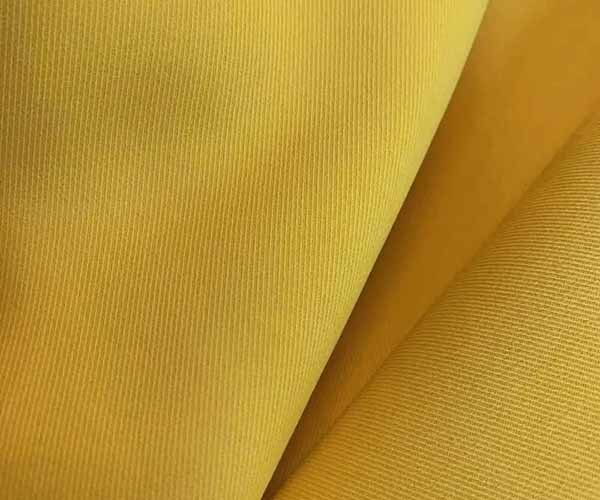
Laminated & Composite Fabric Systems (Multi-Performance Integration)
What defines a composite fabric
A system combining:
- Structural base fabric
- Coating or membrane
- Optional insulation or reinforcement
Szoneier applications
- Insulated outdoor bags
- Protective equipment bags
- High-performance storage products
Engineering principle
Performance comes from layer interaction, not from any single layer.
Insulating & Cushioning Technical Fabrics (Thermal & Impact Control)
Common materials
- Neoprene
- Spacer fabrics
- Foam-backed textiles
Szoneier usage
- Insulated compartments
- Impact-sensitive storage areas
These materials are:
- Applied selectively
- Supported by structural fabrics
to prevent deformation and excess weight.


Stretch, Soft-Touch & Comfort-Oriented Technical Fabrics
Typical uses
- Internal pockets
- Accessory compartments
- Body-contact areas
Engineering constraint
Stretch fabrics must always be:
- Backed
- Limited in load-bearing roles
Szoneier rule
Comfort fabrics never replace structure — they complement it.
Mesh & Breathable Technical Fabrics (Ventilation Control)
Common applications
- Ventilated compartments
- Moisture-release zones
Szoneier evaluation criteria
- Abrasion tolerance
- Recovery behavior after stretching
Low-quality mesh is one of the fastest-failing materials in bags.


How Szoneier Combines Multiple Technical Fabrics in One Bag
Most technical fabric bags use:
- 3–5 different technical fabrics
- Each assigned a specific role
Szoneier engineering logic
- Structural fabric carries load
- Reinforcement manages stress
- Coating protects environment
- Comfort fabrics enhance usability
This system-level approach prevents over-engineering and failure.
High-Density Structural Technical Fabrics
High-density structural technical fabrics form the load-bearing backbone of technical fabric bags. Their real performance depends on weave density, yarn quality, and how they interact with seams, panels, and reinforcement systems.
What “High-Density” Really Means in Bag Manufacturing
Common misunderstanding
Many buyers equate “high-density” with:
- Higher denier
- Thicker hand feel
Szoneier engineering definition
In real bag manufacturing, high-density refers to:
- Tight weave construction
- Consistent yarn spacing
- High stitch-holding capacity
- Low panel deformation under load
Szoneier insight (18+ years of production experience)
A properly woven 600D high-density fabric often performs better than a loosely constructed 900D fabric in long-term use.

Core High-Density Structural Fabrics Used by Szoneier
Szoneier regularly engineers technical fabric bags using the following production-proven structural fabrics:
High-Density Polyester Fabrics
- 600D High-Density Polyester
- 900D High-Density Polyester
Typical applications
- Main body panels of utility bags
- Outdoor and travel bags
- Amazon performance-driven SKUs
Engineering characteristics
- Stable shape retention
- Good abrasion-to-weight ratio
- Cost-effective for scalable production
Szoneier usage note
600D HD polyester is one of the most frequently used structural fabrics in our OEM projects due to its balance of durability, weight, and cost.
High-Density Nylon Fabrics
- 420D Nylon
- 500D Nylon
- 840D / 1000D Nylon
Why nylon is chosen
- Higher tensile strength than polyester
- Better fatigue resistance under repeated stress
Szoneier application logic
- Nylon is preferred in dynamic load scenarios (backpacks, outdoor gear bags)
- Polyester is preferred in cost-sensitive but durability-critical projects
Engineering trade-off
Nylon offers performance advantages, but requires tighter process control during sewing.
Heavy Canvas Structural Fabrics (Measured in Ounces)
Unlike synthetic fabrics, canvas is measured by weight per square yard (oz).
Common canvas weights used by Szoneier
- 12 oz canvas – light structural use
- 16 oz canvas – standard heavy-duty bags
- 18 oz canvas – reinforced lifestyle & utility bags
- 20–24 oz canvas – maximum structural rigidity
Canvas advantages
- Excellent stitch-holding
- Natural rigidity
- Strong aesthetic + durability perception
Szoneier experience
Canvas above 20 oz must be carefully matched with:
- Sewing parameters
- Panel size
- Reinforcement layout
Otherwise, excessive stiffness can create seam stress issues.
Structural Role of High-Density Fabrics in a Bag System
High-density structural fabrics typically serve as:
- Main load-bearing panels
- Shape-defining components
- Base layer for coatings or laminations
They are NOT intended to:
- Absorb impact alone
- Provide waterproofing by themselves
- Replace reinforcement fabrics
Engineering principle
Structural fabrics carry load, while other technical fabrics manage stress, protection, or comfort.
Stitch-Holding & Seam Performance (Critical but Overlooked)
Why seams fail before fabrics In most bag failures:
- Fabric does not tear first
- Seams fail due to stress concentration
Szoneier seam evaluation focuses on
- Stitch density vs fabric density
- Yarn pull-out resistance
- Edge stability under load
We routinely adjust:
- Stitch count
- Seam allowance
- Reinforcement placement
to match the selected high-density fabric.
Fabric Density vs Weight Optimization
The wrong approach
“Use the thickest fabric everywhere.”
Szoneier’s optimization logic
- Use high-density fabrics only where structural load exists
- Combine with lighter fabrics where load is minimal
Result
- Lower overall bag weight
- Better user experience
- Reduced material cost
This approach is used in many of Szoneier’s multi-fabric technical bag projects.
High-Density Fabrics & Coating Compatibility
High-density fabrics are often combined with:
- PU coatings
- TPU laminations
- PVC layers
Szoneier compatibility checks
- Coating adhesion on dense weaves
- Flex behavior after coating
- Fold endurance at seam intersections
Common failure we prevent
Coating cracking caused by pairing overly dense fabrics with inflexible coatings.
Climate & Market Considerations
High-density fabric performance varies by market:
- Cold climates: overly stiff fabrics + rigid coatings can crack
- Humid regions: poor coatings can delaminate
- Hot environments: PVC-heavy systems may soften
Szoneier adjustment Fabric systems are adapted based on:
- Target geography
- Storage and shipping conditions
- End-user behavior
Typical Szoneier Applications of High-Density Structural Fabrics
Based on our OEM/ODM project mix, high-density fabrics are most often used in:
- Outdoor gear bags
- Tool & utility bags
- Performance travel bags
- Amazon private-label functional bags
In most cases, these fabrics are paired with 2–4 other technical fabrics to form a complete system.
Common Mistakes Buyers Make with High-Density Fabrics
- Choosing denier instead of density
- Over-specifying fabric thickness
- Ignoring seam compatibility
- Assuming canvas is always “stronger”
- Mixing dense fabrics with incompatible coatings
Szoneier role
We help buyers avoid these mistakes before sampling, not after product failure.

Reinforced & Tear-Control Technical Fabrics
Reinforced technical fabrics limit tear propagation and improve damage tolerance in high-stress or high-risk usage environments, making them essential for performance-driven bags.
1. Ripstop Fabrics
Why ripstop matters
- Prevents small tears from spreading
- Improves field survivability
Szoneier usage
- 210D–420D ripstop nylon for lightweight gear bags
- 600D ripstop polyester for utility and organizer bags
Ripstop is applied where tear risk is higher than abrasion risk.
2. Reinforced Weaves & Bottom Panels
Instead of upgrading the entire bag, Szoneier often:
- Applies reinforced fabrics only to bottom or corner zones
- Combines standard fabrics with abrasion-resistant panels
Engineering principle
Targeted reinforcement reduces weight and cost while improving real durability.
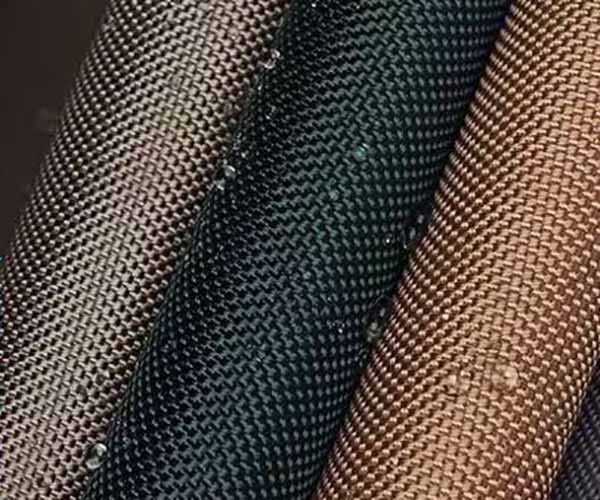
Coated & Laminated Technical Fabric Systems
Coated and laminated fabrics add water resistance, abrasion protection, and environmental durability to technical bags. Their effectiveness depends on coating chemistry, thickness, and flexibility.

PU-Coated Technical Fabrics
Why PU is widely used
- Flexible
- Cost-effective
- Broad performance range
Szoneier application
PU-coated fabrics are used in:
- Outdoor gear bags
- Travel and equipment bags
Coating thickness is matched to fold frequency and stiffness, not chosen blindly.

TPU-Laminated Fabrics
Where TPU excels
- Superior flexibility
- Better cold resistance
- Improved long-term adhesion
Szoneier usage
TPU is selected for:
- Premium outdoor bags
- Technical insulated bags
TPU is introduced only when performance gain justifies cost increase.

PVC-Coated Fabrics
Advantages
- High abrasion resistance
- Strong waterproofing
Limitations
- Heavy
- Reduced flexibility in cold environments
Szoneier position
PVC is used only when application demands it, such as tool or industrial bags.
Composite & Multi-Layer Technical Fabric Systems
Composite technical fabrics combine multiple layers to achieve performance goals that single-layer fabrics cannot meet, especially for protection, insulation, and structural stability.
1. What Makes a Fabric System “Composite”
A composite fabric typically includes:
- Structural base fabric
- Protective coating or lamination
- Reinforcement or insulation layer
Performance emerges from layer interaction, not from any single component.
2. Szoneier Applications of Composite Systems
Composite fabrics are commonly used in:
- Insulated outdoor bags
- Protective equipment bags
- Heavy-duty gear storage bags
Szoneier engineers these systems to ensure:
- Layer bonding stability
- Fold endurance
- Manufacturability at scale

Specialty Functional Fabrics in Technical Bags
Specialty fabrics provide localized functionality such as insulation, stretch, or soft-touch protection and are applied strategically within technical fabric bag designs.
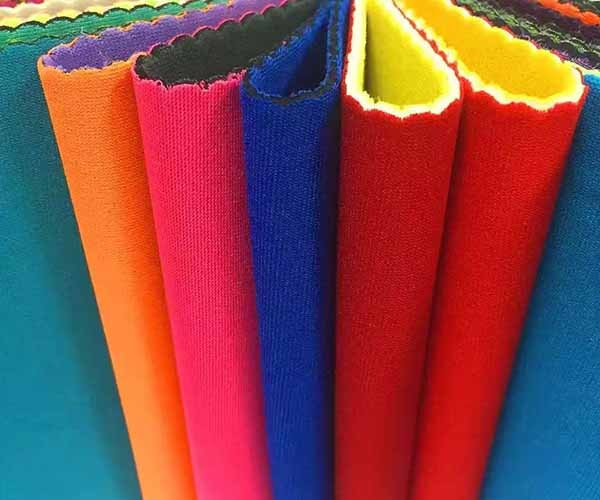
Neoprene & Spacer Materials
Used for:
- Shock absorption
- Thermal insulation
- Soft protection
Szoneier limits their use to functional zones to avoid unnecessary weight.

Stretch & Soft-Touch Fabrics
Applied in:
- Accessory pockets
- Internal organization areas
These fabrics are always backed by structural layers to prevent deformation.

Mesh & Breathable Fabrics
Used in:
- Ventilated compartments
- Comfort zones
Selected based on abrasion tolerance and recovery behavior.
OEM/ODM Workflow for Technical Fabric Bag Manufacturing
Manufacturing technical fabric bags requires an engineering-driven OEM/ODM workflow. Szoneier integrates fabric analysis, system design, testing, and scalability control into every development stage.
Stage 1
Technical Requirement & Use-Scenario Engineering
Before fabric selection, Szoneier defines technical requirements, including:
- Expected load range (light / medium / heavy)
- Load behavior (static carry vs dynamic movement)
- Abrasion exposure (ground contact, tool contact, body friction)
- Folding frequency and compression behavior
- Environmental exposure (humidity, rain, cold, heat)
Szoneier insight
In over 18 years of bag manufacturing, most technical fabric failures we see are predictable once use scenarios are clearly mapped.
Stage 2
Fabric System Architecture Design
Instead of selecting a single fabric, Szoneier designs fabric systems, which include:
- Structural base fabric
- Coating or lamination layer
- Lining and backing materials
- Localized reinforcement strategy
For most projects, we propose 2–3 fabric system options, each evaluated on:
- Performance margin
- Weight impact
- Cost implications
- Production scalability
This allows clients to make engineering-informed trade-offs, not guesses.
Stage 3
Production-Intent Sampling
Szoneier sampling rule:
If a fabric cannot be used in mass production, it will not be used in samples.
All samples are produced with:
- Actual fabric suppliers
- Intended coating thickness
- Final sewing density and reinforcement
This approach eliminates the common industry issue of “sample looks good, bulk fails.”
Stage 4
Fabric–Structure Interaction Validation
Technical fabrics behave differently once sewn into a bag.
During sampling, Szoneier evaluates:
- Seam stress concentration
- Stitch density vs fabric density compatibility
- Panel deformation under load
- Coating behavior at fold lines
Many potential failures are identified at this stage — before mass production.
Stage 5
Pilot Production & Risk Exposure
Before scaling:
- Small pilot runs are conducted
- Fabric batches are compared against approved references
- Assembly behavior is closely observed
Szoneier experience
Pilot production often reveals issues that do not appear in single samples, especially with coated or laminated technical fabrics.

Try Before You Order – Free Sample Program
We offer free custom samples for qualified clients. Whether you’re testing a new market or validating design quality, our samples help you move forward with confidence.
Testing & Validation for Technical Fabric Bags
Technical fabric bags require validation beyond supplier datasheets. Szoneier applies real-use-oriented testing methods to ensure fabric systems perform under actual usage conditions.
Why Datasheets Alone Are Not Reliable
Supplier datasheets typically measure:
- Tensile strength
- Abrasion cycles
However, they rarely predict:
- Fold endurance
- Seam-related failures
- Coating delamination
Szoneier observation
Most customer complaints arise from use-condition failures, not lab-spec failures.
Szoneier’s Practical Fabric Test Matrix
During development, Szoneier performs:
- Abrasion simulation on bottom and corners
- Manual fold endurance testing
- Coating adhesion checks after flexing
- Color transfer and rubbing checks
These tests are aligned with real-world bag usage, not abstract standards.
Climate & Environment Considerations
Fabric behavior varies significantly under:
- Cold temperatures
- High humidity
- Prolonged heat
Szoneier adjustment logic
- TPU and PU preferred for cold-flex needs
- PVC limited to controlled environments
- Fabric systems adapted based on target market geography
Validation of Fabric–Accessory Compatibility
Technical fabrics must also work with:
- Zippers
- Webbing
- Binding tapes
Szoneier validates:
- Stitch holding around hardware
- Friction between fabric and accessories
This prevents secondary failures caused by material mismatch.
Quality Control & Batch Consistency Management
Maintaining consistency in technical fabric bags requires strict quality control and batch management. Szoneier implements material-level controls to ensure repeatable performance at scale.
Fabric Reference Archiving
Once approved:
- Fabric swatches are physically archived
- Coating thickness and hand feel are documented
- Supplier specifications are locked
This creates a stable reference baseline.
Incoming Fabric Verification
Before production:
- Fabric batches are checked against approved references
- Visual, tactile, and basic performance checks are conducted
This prevents silent material substitutions.
In-Process Fabric Monitoring
During production, Szoneier monitors:
- Fabric tension during sewing
- Coating damage during handling
- Panel deformation trends
Adjustments are made immediately if abnormal behavior appears.
Repeat Order Stability Control
For repeat orders:
- Same suppliers are prioritized
- Fabric consistency is re-verified
- Any changes require client approval
Szoneier operational reality
Consistency over time is one of the hardest challenges in technical fabric manufacturing — and one of the most valuable capabilities we offer.
Case Studies — Technical Fabric Bag OEM/ODM Projects
These case studies show how Szoneier applies technical fabric engineering to solve real-world durability, performance, and scalability challenges across different bag categories and markets.
Amazon Technical Organizer Bag (Return Rate Reduction)
Client profile Amazon private label seller launching a functional organizer bag with durability claims.
Initial problem
- Early customer returns
- Complaints focused on fabric tearing near seams
- “Material feels thin” perception
Original fabric
- Standard low-density 600D polyester
Szoneier technical diagnosis
- Fabric denier acceptable
- Weave density insufficient for stitch load
- Seam stress concentration not distributed
Fabric innovation applied
- Switched to high-density 600D polyester
- Optimized stitch density
- Added localized reinforcement at stress points
Result
- Improved tear resistance
- Better perceived quality
- Fabric-related return complaints significantly reduced
Key insight
Technical fabric performance is about density + structure, not denier alone.


Outdoor Gear Bag Using Lightweight Technical Fabrics
Client profile Outdoor brand targeting weight-sensitive users.
Challenge
- Reduce weight without sacrificing abrasion resistance
Initial approach
- Heavy polyester fabric caused excessive weight
Szoneier solution
- Selected 420D ripstop nylon with PU coating
- Reinforced bottom and corner zones only
Outcome
- Weight reduction
- Stable performance under field testing
- Improved user feedback
Engineering lesson
Selective reinforcement outperforms full over-specification.
Tool & Utility Bag with High Abrasion Exposure
Client profile Tool brand requiring durability against concrete and metal surfaces.
Risk
- Rapid wear at bottom panels
Szoneier fabric strategy
- Standard high-density woven fabric for main panels
- Abrasion-resistant composite fabric for base only
Result
- Extended service life
- Controlled material cost and bag weight


Insulated Technical Bag (Fold-Endurance Improvement)
Client profile Brand developing a foldable insulated bag.
Issue
- Coating cracked after repeated folding
Szoneier diagnosis
- Coating thickness incompatible with fold frequency
Fabric system adjustment
- Optimized coating formulation
- Improved fabric–insulation compatibility
Outcome
- Increased fold endurance
- Reduced post-delivery complaints
Scaling Technical Fabric Bag Production
Client profile Private label brand planning repeat orders across multiple SKUs.
Hidden risk
- Fabric inconsistency between batches
Szoneier control
- Approved fabric swatches archived
- Supplier specifications locked
- Batch verification before production
Result
- Stable performance across reorders
- Reduced quality variation
How to Evaluate a Technical Fabric Bag Manufacturer
1. Can the manufacturer explain fabric behavior under load and folding?
Szoneier evaluates fabrics based on real-use stress, not just datasheets.
2. Do they propose fabric systems instead of a single material? Technical performance requires layered engineering.
3. Are samples made with production-intent materials?
Demo samples hide scaling risks.
4. Is testing aligned with 5. real usage scenarios?
Lab numbers alone are insufficient.
5. How is fabric consistency controlled across batches?
Repeatability is critical for long-term SKUs.
6. Do they advise against unnecessary over-specification?
Good manufacturers protect your margins.
FAQ — Technical Fabric Bag Manufacturing
These frequently asked questions address common concerns about technical fabrics, durability, testing, customization, and scalability in professional bag manufacturing.
Q1: What makes a bag “technical” rather than standard?
A technical bag is defined by material performance, engineering intent, and validation under real-use conditions—not by appearance or fabric names alone.
Q2: Are technical fabrics always heavier or more expensive?
Not necessarily. Proper engineering often allows lighter fabrics to outperform heavier ones when combined with reinforcement and correct structure.
Q3: Can technical fabric bags be produced at low MOQ?
Yes. Szoneier supports low-MOQ sampling and pilot production, with fabric systems validated for future scaling.
Q4: How do you prevent fabric failures after mass production?
By embedding testing, batch verification, and supplier control into the OEM/ODM workflow.
Q5: Do technical fabrics limit design flexibility?
No. When engineered properly, technical fabrics enhance both performance and design freedom.
Q6: Can you help optimize an existing bag with fabric issues?
Yes. Szoneier frequently improves existing designs by re-engineering fabric systems without changing the overall structure.
Q7: How do you handle climate-specific requirements?
Fabric systems are adapted based on target market conditions such as humidity, cold, or heat.
Q8: Can technical fabrics support sustainability goals?
Yes. Durable, long-life fabrics reduce replacement frequency and waste, contributing to sustainability.
Ready To Elevate Your business Line?
Begin your journey with Szoneier bag now. We can assist in wholesaling or customizing Luggage and bags at the most competitive prices to enhance your brand.
Work with a Technical Fabric Bag Manufacturer
If your bag product requires reliable performance, controlled materials, and scalable manufacturing, Szoneier can help you engineer technical fabric solutions aligned with real-world use.
If you are:
- Developing a performance-driven bag
- Facing fabric-related failures
- Planning to scale technical products
You can share:
- Use scenario
- Performance expectations
- Target market
Our team will help you:
- Engineer suitable fabric systems
- Reduce production risk
- Improve long-term consistency
If you have any questions or need a quote, please leave us a message. Our experts will respond within 12 hours to assist you in selecting the ideal fashion products tailored to your needs.
Exclusive Offer for You
As a first-time buyer, you’ll receive a Free bags Color Card to help you select the right material and shade. Once confirmed, we’ll also provide a Free Sample made by our factory—no extra cost.
For our regular partners, we send New Color Charts multiple times a year—completely free—to support your latest collections.
