Skip to content
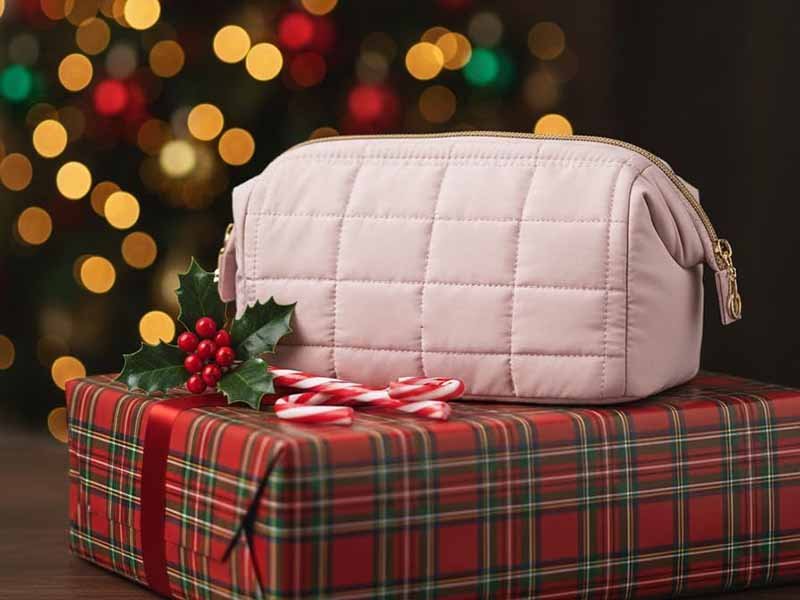
Most makeup bags look fine when they’re packed to the top. The real “truth test” happens when the user has only a few items inside—maybe a foundation bottle, a lip balm, one brush, and a compact. That’s when many bags fold inward, fall on their side, or lose their clean shape. For your customer, it feels messy and annoying. For your brand, it shows up as low ratings: “doesn’t stand up,” “flimsy,” “hard to find items,” “looks cheap.” The frustrating part is that collapse isn’t always caused by cheap fabric. A bag can use expensive PU leather and still collapse if the structure is wrong.
To prevent makeup bags from collapsing when half full, you need a stable base panel, reinforced side walls, and a balanced shape (height vs width). Add hidden support like EVA/PP boards, foam-backed lining, or removable inserts so the bag keeps its form at 30–50% load. Waterproof performance comes from coatings and construction, not fiber name. Test stability using a half-load drop and tilt routine.
At Szoneier (18+ years in bag R&D and manufacturing), we build and test cosmetic bags across nylon, polyester, PU leather, neoprene, TPU and EVA systems. The best-selling makeup bags are not the softest—they are the ones that stay standing and feel organized even when half empty.
Why Do They Collapse?
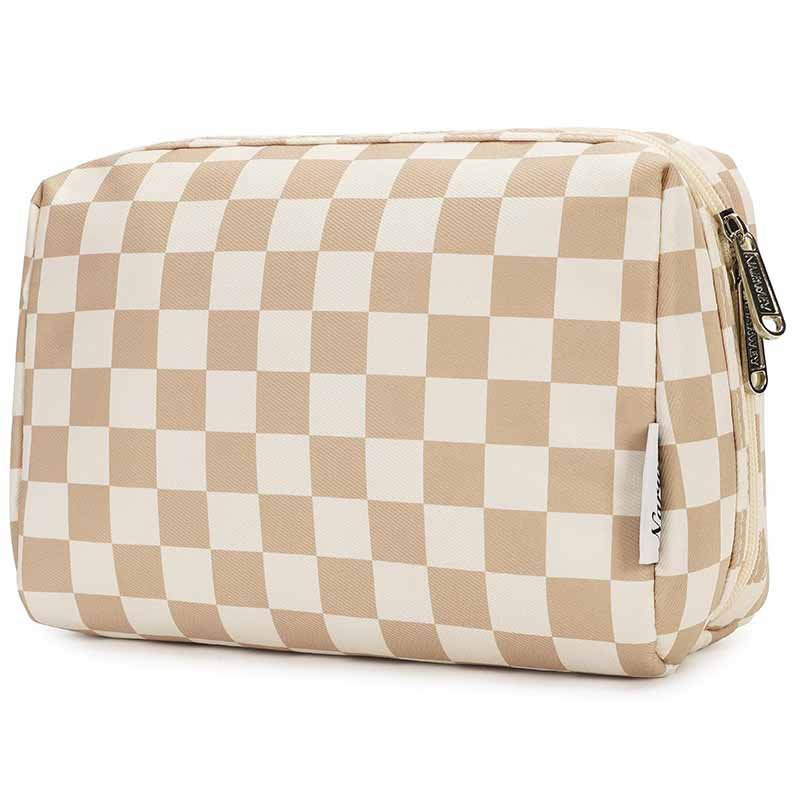
Makeup bags collapse when half full because their structure depends on internal pressure instead of engineered support. When the contents drop below 50%, walls lose outward tension, weight shifts unevenly, and the base panel bends. Most collapses are caused by weak bottom support, soft side panels, poor height-to-width ratios, and unbalanced internal load.
Collapse is rarely about “cheap fabric.” It is about structural design.
Let’s break down the real reasons.
1. The Bag Relies on Contents to Hold Its Shape
Many cosmetic pouches are built like soft envelopes. When fully packed, the items push outward and create tension in the walls. When partially filled, that pressure disappears.
What happens at 40–50% load:
- The top edge starts folding inward
- Side walls wrinkle
- Corners sink
- The bag leans toward the heaviest item
This means the bag was not engineered to stand independently.
In product testing, we see:
| Fill Level | Soft Pouch Result | Structured Pouch Result |
|---|---|---|
| 100% | Looks fine | Looks fine |
| 70% | Slight side fold | Stable |
| 50% | Visible collapse | Stable |
| 30% | Fully deformed | Slight tilt |
If a bag only looks good when completely packed, it is structurally dependent on content pressure.
2. Weak or Missing Bottom Panel
The base is the foundation. Without a stiff base, the entire structure destabilizes.
Common bottom problems:
- Single fabric layer only
- No PP board or EVA sheet
- Soft lining without backing
- Wide bottom with no reinforcement
When a 200g foundation bottle sits in the center, gravity pushes the base downward. If the panel flexes, the center drops and the side walls follow.
Typical deformation pattern:
| Base Type | Result Under 400g Load |
|---|---|
| Fabric only | Bottom curves inward |
| Thin PE board | Slight bend |
| 1mm PP board | Stable |
| 2mm EVA sheet | Very stable |
Many return complaints start with:
“It doesn’t stand up on my counter.”
That is almost always a base issue.
3. Side Panels Have No Structural Backing
A common misconception is that thick outer fabric equals stability.
In reality:
- 600D polyester without backing behaves like cloth.
- PU leather without foam backing collapses easily.
- Nylon without reinforcement wrinkles under partial load.
Side wall stability depends on:
- Foam backing (2–3mm recommended for cosmetic bags)
- EVA inserts
- Double-layer construction
- Seam reinforcement tension
When walls are unsupported, they respond to gravity by folding inward once the internal pressure drops.
Wall failure is usually visible within 2–4 weeks of real use if not reinforced.
4. Height Is Too Large for the Base
Proportion matters more than most brands realize.
If the bag is tall but the base is narrow, the center of gravity rises. When partially filled, weight sits higher and shifts easily.
Here is a simple stability reference:
| Base Width | Height | Stability Risk |
|---|---|---|
| 22cm | 10–12cm | Low |
| 22cm | 14–15cm | Moderate |
| 22cm | 16–18cm | High |
| 22cm | 20cm+ | Very High |
When height exceeds 1.3× base width, structural reinforcement becomes necessary.
Tall vanity-style bags require:
- Base reinforcement
- Side wall stiffening
- Internal dividers
Otherwise, collapse becomes predictable.
5. Uneven Weight Distribution Inside
Even a well-structured bag can tip if weight shifts to one side.
Typical makeup weight distribution:
| Item | Approx Weight |
|---|---|
| Glass foundation bottle | 180–250g |
| Compact | 80–120g |
| Brush | 20–40g |
| Lipstick | 15–25g |
If a single heavy bottle rests against one wall:
- The wall absorbs full load
- The bag leans
- The base twists
- Collapse accelerates
This is why interior design matters.
Without bottle holders or dividers, gravity always pulls to one side.
6. Zipper Opening Weakens the Structure
The zipper seam is a structural break point.
When the zipper opening is wide and unsupported:
- The top edge loses rigidity
- The bag folds inward along the zipper line
- Corners wrinkle
Adding a 1–2cm stiffener strip beneath the zipper tape increases top-edge rigidity significantly.
We often see collapse begin at the zipper seam before the walls fail.
Some materials stretch slightly after repeated loading:
- Nylon can stretch under repeated weight.
- PU leather softens over time.
- Thin polyester loses crispness.
Without internal support, repeated opening and closing cycles weaken structural tension.
In accelerated open-close testing (500+ cycles), soft-wall cosmetic bags show visible deformation if no backing is used.
Real-World Complaint Patterns
From cosmetic bag OEM feedback, the most common collapse-related complaints are:
- “Doesn’t stand when half full.”
- “Sides sink after a few weeks.”
- “Bottom becomes rounded.”
- “Hard to find items because everything shifts.”
- “Looks wrinkled and cheap.”
None of these are caused by zipper brand or logo printing.
They are caused by structural imbalance.
Collapse Is an Engineering Issue, Not a Material Price Issue
A low-cost polyester bag with:
- 2mm EVA base
- Foam-backed walls
- Elastic bottle loops
can outperform an expensive PU leather bag with no internal structure.
The key lesson:
Preventing collapse is about load management, reinforcement placement, and proportion control.
If your cosmetic bag:
- Cannot stand at 40–50% load
- Folds inward at corners
- Leans under 300–400g weight
then the structure needs redesign—not thicker fabric alone.
Which Materials Work Best?
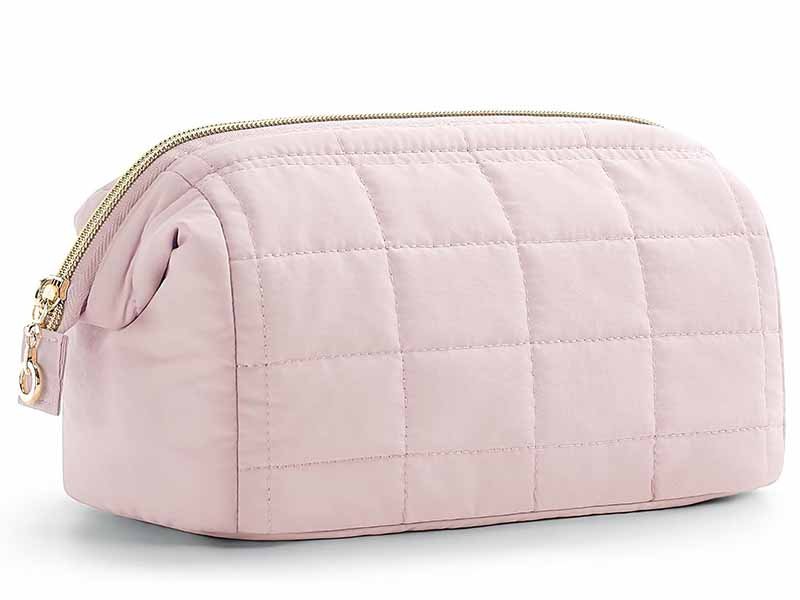
To prevent makeup bags from collapsing when half full, choose materials that provide panel stiffness and structural recovery. Polyester and nylon need foam or backing to hold shape. PU leather performs better when bonded to nonwoven or EVA. Neoprene holds form naturally but can sag if oversized. EVA, PP board, and foam inserts are the most reliable anti-collapse materials.
Material alone does not create structure. The combination of outer fabric + backing + internal reinforcement determines stability.
Which Fabrics Hold Structure Better?
Not all fabrics behave the same when partially loaded. Some recover shape quickly. Others wrinkle and stay collapsed.
Below is a performance comparison based on cosmetic bag production experience:
| Fabric Type | Natural Stiffness | Shape Recovery | Needs Reinforcement? | Common Tier |
|---|---|---|---|---|
| 600D Polyester | Medium | Moderate | Yes | Value / Mid |
| 420D Nylon | Medium | Good | Yes | Mid |
| PU Leather (0.6–0.9mm) | Low–Medium | Depends on backing | Yes | Mid / Premium |
| Neoprene (3–5mm) | High | Very Good | Sometimes | Mid |
| Canvas (12–16oz) | Medium | Moderate | Yes | Casual |
| TPU Laminated Fabric | Medium | Good | Yes | Waterproof lines |
Key observations from production:
- Polyester keeps structure better than thin nylon when both lack backing.
- PU leather collapses easily if it is not bonded to nonwoven or foam.
- Neoprene naturally holds body due to thickness but can sag at large sizes.
Important detail for brands:
Fabric thickness does not equal structural stability.
A thick soft PU leather without backing collapses faster than a thinner polyester bonded to foam.
At Szoneier, we often recommend foam-backed polyester or nylon for cosmetic bags that must stand independently but stay lightweight.
What Linings Add Hidden Support?
The lining layer plays a bigger role than many brands realize.
Cheap lining (190T polyester) offers almost no structural support.
Upgraded lining systems significantly increase panel stiffness.
Here’s a structural comparison:
| Lining Type | Panel Stiffness Impact | Weight Impact | Cost Impact |
|---|---|---|---|
| 190T Polyester | Very Low | Low | Low |
| 210D Polyester | Low | Low | Low |
| Foam-Backed Lining (2–3mm) | High | Moderate | Moderate |
| Nonwoven + Foam | High | Moderate | Moderate |
| EVA Laminated | Very High | Moderate | Higher |
Foam-backed lining (2–3mm PE foam) is one of the most cost-effective anti-collapse upgrades.
Benefits:
- Prevents wall folding
- Improves hand feel
- Makes bag feel “premium”
- Adds cushioning for cosmetics
For waterproof cosmetic bags, we often combine:
- TPU outer layer
- Foam-backed lining
- Base board support
This creates both structure and spill resistance.
How Do EVA and Foam Improve Shape?
When clients ask how to stop collapse, the most reliable answer is:
Add internal reinforcement.
Three common structural materials:
- EVA sheet (1.5–3mm)
- PP board (0.8–1.2mm)
- PE foam (2–5mm)
Comparison:
| Material | Flexibility | Shape Retention | Weight | Use Position |
|---|---|---|---|---|
| EVA | Semi-rigid | Excellent | Moderate | Base & walls |
| PP Board | Rigid | Very High | Low | Base only |
| PE Foam | Soft-flex | Good | Low | Walls |
| Felt Board | Semi-rigid | Moderate | Moderate | Mid-tier lines |
Best anti-collapse combination for cosmetic bags:
- EVA base panel
- Foam-backed side panels
- Optional removable insert
This structure keeps shape even at 30–50% load.
Stability improvement example:
| Structure Type | Standing Stability (50% load) |
|---|---|
| No reinforcement | Poor |
| Base only | Moderate |
| Base + foam walls | Strong |
| Base + EVA walls + insert | Excellent |
At Szoneier, we often customize reinforcement thickness depending on bag size:
- Small pouch (under 20cm) → 1.5mm EVA base
- Medium bag (20–25cm) → 2mm EVA base + 2mm foam wall
- Large vanity bag → 3mm EVA base + insert divider
This keeps structure strong without making the bag too heavy.
What Structure Matters?
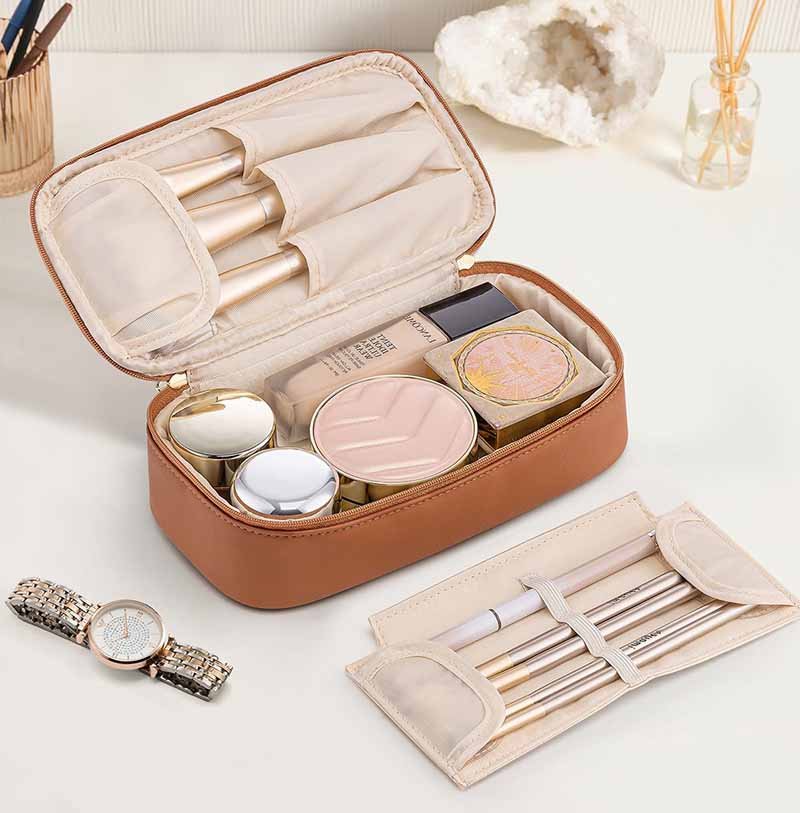
To prevent collapse, the most critical structural components are a flat reinforced base, supported side panels, and a stable zipper opening. Without these, even premium materials lose shape when half full. Reinforcement placement matters more than fabric cost. Strategic support zones create standing stability while controlling weight and price.
Which Bottom Panels Keep Bags Standing?
The base panel is the foundation.
A soft bottom causes:
- Tilting
- Rounded deformation
- Corner sinking
- Load concentration in center
Common base solutions:
| Base Type | Stability Level | Cost Level |
|---|---|---|
| No support | Very Low | Lowest |
| Thin PE board | Moderate | Low |
| PP board | High | Low–Mid |
| EVA base | Very High | Mid |
| Double-layer fabric only | Low | Low |
For cosmetic bags, EVA base panels are most balanced:
- Flexible but supportive
- Resistant to cracking
- Comfortable feel
- Waterproof compatible
We often hide the base panel between outer and lining so it’s invisible but effective.
How Do Side Supports Stop Sagging?
Side sagging happens because vertical walls lack tension.
Solutions include:
- Foam backing
- EVA sheets inside panels
- Vertical seam reinforcement
- Double-layer fabric construction
In tall cosmetic bags, adding vertical reinforcement strips along side seams increases structural strength significantly.
For premium vanity bags, we sometimes use:
- Full panel EVA reinforcement
- Hidden frame structure near zipper line
This prevents inward folding when partially loaded.
What Zipper Designs Add Stability?
Zipper style influences collapse more than most brands expect.
Weak structure examples:
- Long soft zip without top support
- Oversized opening with no frame
- Thin fabric around zipper tape
Better structure options:
- Reinforced zipper panel
- Curved top panel with structure
- Double-zipper design with stiff edge
- Semi-framed opening
Adding a reinforced top strip (1–2cm stiffener under zipper seam) significantly improves visual structure.
For premium makeup organizers, a semi-rigid framed opening keeps the bag upright and accessible.
Practical Engineering Strategy for Cosmetic Bags
Instead of upgrading fabric thickness blindly, focus on reinforcement placement:
- Base panel first
- Side panel second
- Zipper edge third
- Interior insert fourth
This order maximizes structure while minimizing cost increase.
At Szoneier, because we control:
- Fabric production
- EVA/foam lamination
- Bag assembly
- Internal structural cutting
we can adjust reinforcement based on:
- Retail price target
- Weight limit
- Shipping cost
- MOQ requirement
The goal is always balance:
Strong structure, clean appearance, controlled cost.
How Does Interior Design Help?
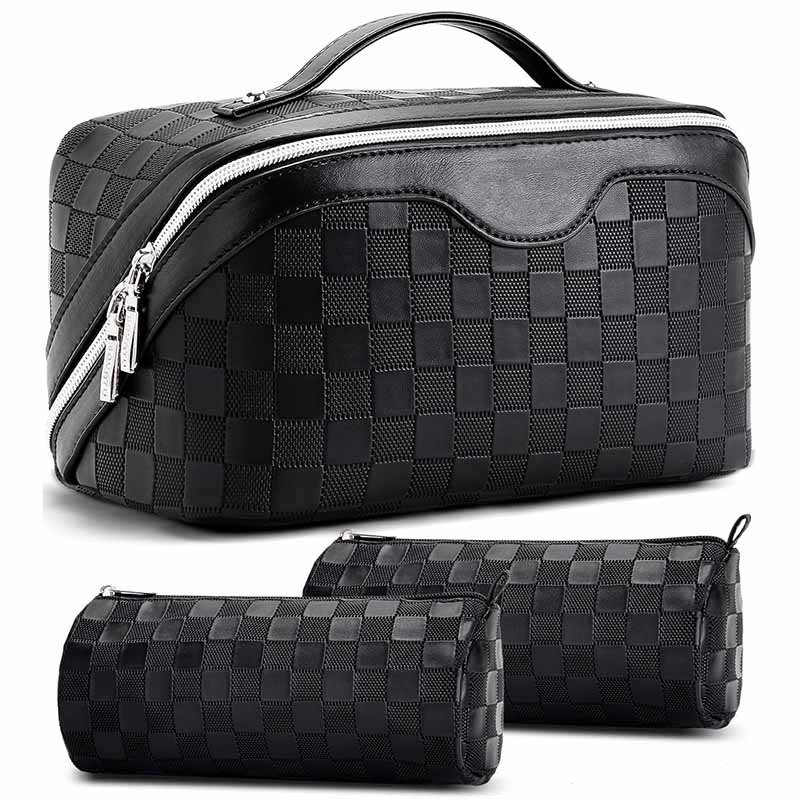
Interior layout plays a major role in preventing makeup bags from collapsing when half full. Dividers, elastic holders, mesh pockets, and removable inserts stabilize weight distribution and reduce wall pressure imbalance. A well-designed interior prevents contents from shifting to one side, which is a primary cause of tipping and deformation.
Many brands focus only on external structure. But internal engineering often determines whether the bag feels organized and stable.
Which Dividers Keep Bottles Upright?
Loose bottles are the main reason cosmetic bags lose balance. When one 200g bottle leans to one side, the bag tilts and collapses.
Effective divider solutions:
| Divider Type | Stability Level | Flexibility | Cost |
|---|---|---|---|
| Fixed fabric divider | Moderate | Low | Low |
| Foam-padded divider | High | Moderate | Mid |
| EVA insert grid | Very High | Low | Mid–High |
| Removable compartment insert | Excellent | High | Mid |
| Elastic bottle loops | High | High | Low–Mid |
For travel makeup bags, elastic bottle loops are highly effective. They:
- Hold heavy items vertically
- Prevent rolling
- Maintain weight distribution
- Improve perceived organization
For premium cosmetic organizers, removable insert trays create box-like structure inside the bag. Even at 30–40% load, the bag keeps its rectangular shape.
At Szoneier, we often recommend removable inserts for mid-to-high tier products because they:
- Improve shape retention
- Increase functionality
- Add perceived value
- Reduce return complaints
How Do Pockets Reduce Weight Shift?
Interior pockets are not just storage features. They are structural stabilizers.
Poor interior design results in:
- All weight pooling at the center
- Uneven wall pressure
- One-sided sagging
Strategic pocket placement:
- Mesh pockets along walls reduce empty panel space
- Elastic flat pockets stabilize lightweight items
- Opposing pockets balance load distribution
Example layout for stability:
| Layout Feature | Purpose |
|---|---|
| Two side mesh pockets | Prevent inward folding |
| Central divider | Maintain vertical tension |
| Elastic bottle holders | Reduce tipping |
| Flat bottom insert | Prevent sagging |
If your bag is wide and has no internal segmentation, collapse risk increases significantly.
Interior layout is especially important for larger vanity-style cosmetic bags.
What Inserts Maintain Shape When Half Empty?
Removable inserts are one of the most effective anti-collapse solutions.
Why they work:
- Create internal frame
- Reduce empty air space
- Support vertical walls
- Control weight distribution
Types of inserts:
- Foam board insert
- EVA structured tray
- Foldable compartment system
- Adjustable velcro divider box
Performance comparison:
| Insert Type | Half-Load Stability | Weight Impact | Premium Feel |
|---|---|---|---|
| No insert | Poor | None | Low |
| Soft divider | Moderate | Low | Moderate |
| EVA tray insert | Excellent | Moderate | High |
| Adjustable box insert | Very Good | Moderate | High |
In Szoneier production, we frequently develop:
- Removable internal cases for travel lines
- Collapsible structured inserts for lightweight shipping
- Modular systems for multi-purpose cosmetic organizers
This approach increases usability and reduces negative reviews.
How to Test Before Production?
Preventing collapse requires real-world half-load testing before mass production. Stability tests should simulate partial fill conditions, tilting angles, drop impact, and weight distribution shifts. Testing at 30–50% load reveals structural weaknesses that full-load inspection hides.
Sampling without stability testing leads to costly bulk production mistakes.
What Is a Half-Load Stability Test?
A proper half-load test includes:
- Fill bag to 50% realistic weight
- Place on flat surface
- Observe for 10 minutes
- Tilt surface gradually to 15°
- Check side wall deformation
Testing weight example:
| Cosmetic Type | Average Weight |
|---|---|
| Foundation bottle | 180–250g |
| Compact | 80–120g |
| Mascara | 20–40g |
| Lipstick | 15–25g |
A realistic half-load cosmetic bag usually carries 300–500g.
If the bag cannot stand under this condition, structure must be improved.
How Do You Simulate Real Use?
Real users:
- Toss bag into tote
- Grab from one side
- Leave it half open
- Store upright on vanity
Simulation methods include:
- Edge compression test
- Corner drop test (from 60–80cm)
- Repeated opening stress test (500+ cycles)
- Cold flex test (for laminated fabrics)
At Szoneier, we conduct:
- Structural compression checks
- Stitch reinforcement inspection
- Base panel flex testing
- Zipper seam reinforcement review
These steps reduce post-sale complaints.
Which Reinforcements Add Value Without High Cost?
For value-tier makeup bags, we recommend:
- PP board base
- 2mm foam wall backing
- Elastic bottle loop
- Reinforced zipper edge strip
For mid-tier:
- EVA base
- Foam-backed lining
- Structured zipper panel
- Removable divider
For premium tier:
- EVA structured frame
- TPU laminated exterior
- Adjustable internal organizer
- High-density stitching
Cost impact estimation:
| Upgrade | Cost Increase (per unit est.) | Customer Value Impact |
|---|---|---|
| PP base | Low | Moderate |
| Foam wall | Low–Moderate | High |
| EVA insert | Moderate | Very High |
| Structured zipper panel | Low | High |
Smart reinforcement placement improves stability more effectively than simply upgrading fabric thickness.
Final Thoughts: Engineering Stability, Not Just Appearance
Makeup bags collapse when half full because of structural imbalance, not because they are “cheap.” The solution lies in:
- Correct base reinforcement
- Supported side panels
- Balanced proportions
- Smart internal layout
- Real half-load testing
When these factors are aligned, even mid-range cosmetic bags can perform like premium products.
Develop Structured Makeup Bags with Szoneier
Szoneier is a China-based bag manufacturer with over 18 years .
We customize bags using:
Cotton, canvas, polyester, nylon, neoprene, PVC, TPU, EVA, jute, leather and more.
For cosmetic bags specifically, we provide:
- Custom structural engineering
- EVA / PP / foam reinforcement systems
- Low MOQ development
- Fast sampling (7–15 days depending on complexity)
- Free design support
- Private label / OEM / ODM service
- 100% quality inspection before shipment
If you are developing a structured makeup bag line and want to prevent collapse before it becomes a review problem, contact Szoneier.
We help brands build cosmetic bags that:
- Stand upright
- Look premium
- Maintain shape when half full
- Reduce return rates
- Improve customer satisfaction
Contact Szoneier today to request a custom quote and sample development plan.
Let’s engineer your next makeup bag collection to stand strong — even when half empty.