Skip to content
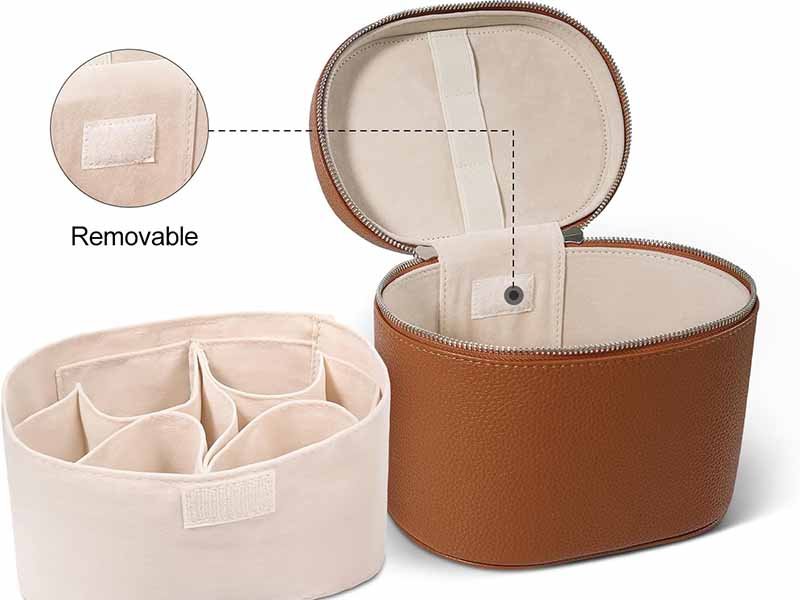
A makeup bag isn’t hard to sew—but it’s surprisingly easy to get wrong. The complaints that hurt most aren’t about color or logo; they’re about daily frustration: “everything gets messy,” “my brush head got stained,” “the zipper pouch tore,” or “I can’t find small items quickly.” Detachable pouches solve these problems in a very practical way: they let users separate categories (liquids, brushes, small items), pull out only what they need, and clean just one section instead of washing the entire bag.
From a product development view, detachable pouches also raise perceived value without making the bag bulky. But there’s a catch: a detachable system must feel secure. If a pouch shifts, falls out, or jams the main zipper, the feature becomes a negative. So the real question isn’t “Can we add removable pouches?” It’s “Can we add them without creating new failure points?”
To create detachable pouches inside makeup bags, start by defining what must be separated (liquids, brushes, tools, small items). Then select a stable attachment method (zip-in, snap-in, hook-and-loop, or clip-in), choose materials that handle moisture and stains, and design pouch sizes that match real item dimensions. The best systems stay secure during movement but remove easily for cleaning and access.
A brand once asked for “three detachable pouches” and got returns because users couldn’t open the bag quickly. One layout adjustment fixed it. The difference was not stitching—it was understanding how people actually pack.
What are detachable pouches in makeup bags?
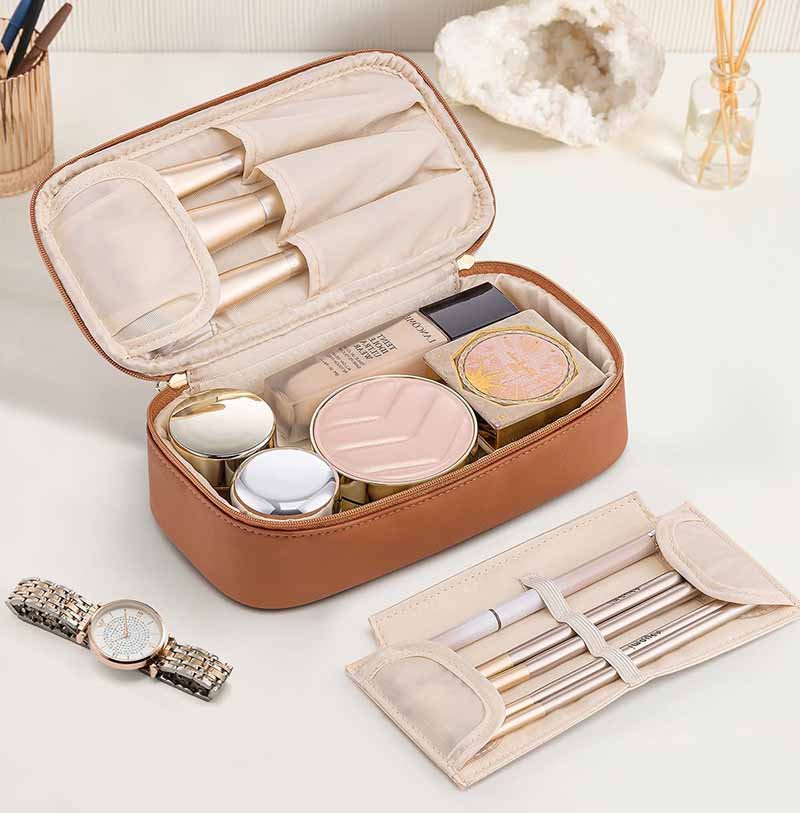
Detachable pouches in makeup bags are removable inner pouches designed to keep categories separated and easier to access. They attach to the main bag through a defined system—such as zippers, snaps, hook-and-loop strips, or clips—so users can remove, clean, replace, or reorganize them. The best designs reduce mess, improve hygiene, and make packing faster, especially for travel and professional use.
Which makeup bag styles use detachable pouches?
Detachable pouches are most useful when the bag carries mixed item types (wet + dry, large + small) or when the user’s routine changes (daily carry vs travel). In custom development, we usually see detachable systems requested for medium to large makeup bags—because you need enough space for modular organization to feel “worth it.”
Common styles where detachable pouches work best:
- Travel makeup bags (medium/large): separate liquids for security checks and hotel use
- Brush + makeup combo bags: detachable brush sleeve prevents powder contamination
- Train-case style cosmetic bags: detachable pouches stop small items from sinking
- Family/shared toiletry bags: users remove their own pouch and leave the rest
| Bag style | Typical bag size | Best detachable pouch goal |
|---|---|---|
| Travel makeup bag | 24–28 cm length | Separate liquids & skincare |
| Brush + makeup bag | 22–26 cm length | Keep brushes clean & dry |
| Train-case cosmetic bag | 25–32 cm length | Prevent “bottom clutter” |
| Multi-user toiletry bag | 26–34 cm length | Personal pouches per user |
A small flat pouch can still use one detachable insert, but multi-pouch systems usually feel cramped below ~20 cm bag length.
What benefits do detachable pouches offer?
Customers don’t buy detachable pouches because they love “features.” They buy them because the feature saves time, reduces mess, and makes the bag feel premium.
User-side benefits (what drives repeat purchase):
- Clean separation: liquids don’t stain powders; brushes stay dust-free
- Faster access: remove a pouch instead of digging through the whole bag
- Easier cleaning: wipe a TPU pouch rather than washing fabric lining
- Flexible packing: bring 1 pouch for daily use, 3 pouches for travel
Brand-side benefits (what improves conversion and reviews):
- More “organized” product photos and user-generated content
- Better unboxing experience (modular pieces feel valuable)
- Stronger differentiation vs basic cosmetic bags
But detachable systems can also create real risks:
- Attachments wear out (snaps loosen, hook-and-loop gets dusty)
- Cheap zipper tapes distort and jam
- Pouch edges rub and fray against lining
| Benefit | What the user notices | What the brand gains |
|---|---|---|
| Separation | Less mess | Fewer complaints |
| Modularity | Faster routine | Higher perceived value |
| Cleaning | Easier maintenance | Better long-term reviews |
| Travel convenience | Security/hotel use | Stronger “travel-ready” story |
When detachable pouches are not the right choice
This is where smart product planning saves money. Detachable pouches are not “better” for every makeup bag.
Detachable pouches can be a poor match when:
- Bag is very small (users want quick open/close, not modules)
- Target price is ultra-low (hardware + extra labor adds cost)
- User expects one-hand access (too many attachments slow down use)
- Bag is meant for minimal daily makeup (fixed pockets can be enough)
A practical rule used in development:
- If the bag holds under ~10 items, fixed pockets often win.
- If the bag holds 15–30 items and includes liquids, detachable pouches add real value.
| Product goal | Better choice |
|---|---|
| Minimal daily carry | Fixed pockets |
| Travel / mixed items | Detachable pouches |
| Ultra-low price | Simple divider only |
| Premium gift / brand value | Modular pouch system |
Which materials work best for detachable pouches?
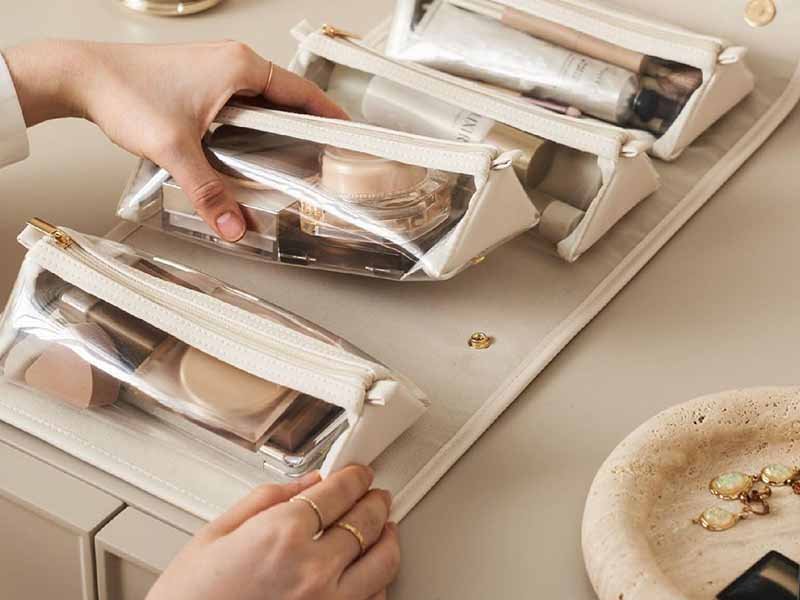
The best materials for detachable pouches depend on what the pouch is meant to hold. Liquids require waterproof or wipe-clean materials like TPU or PU-coated fabric, while brushes and dry items work better with soft but stable textiles such as polyester or nylon. Durability, flexibility, cleaning method, and cost must be balanced—no single material fits every pouch type.
Which fabrics are ideal for makeup pouch linings?
The lining material inside a detachable pouch directly affects cleanliness, durability, and user satisfaction. In real use, linings face constant rubbing from hard cosmetic containers, powder residue, and occasional spills.
Most-used lining materials in detachable pouches:
- Polyester lining (210D–300D): lightweight, affordable, easy to sew.
- Nylon lining: smoother handfeel, better abrasion resistance.
- PU-coated fabric: water-resistant, wipe-clean surface.
- TPU laminated fabric: waterproof, transparent option for liquids.
| Lining material | Water resistance | Cleanability | Durability | Typical use |
|---|---|---|---|---|
| Polyester | Low | Medium | Medium | Dry makeup, tools |
| Nylon | Medium | Medium | High | Mixed daily use |
| PU-coated | High | High | Medium–high | Skincare, creams |
| TPU laminated | Very high | Very high | High | Liquids, travel |
For most detachable systems, we recommend different materials for different pouches instead of forcing one material across all. Users quickly notice when a “liquid pouch” absorbs stains or smells.
Do waterproof or coated fabrics really matter?
Yes—and this is one of the most common upgrade points customers ask for after their first order.
Waterproof or coated fabrics matter because:
- Makeup leaks happen, even with premium packaging.
- Users want to wipe clean, not hand-wash every time.
- Damp interiors shorten the life of stitching and hardware.
However, fully waterproof materials also have trade-offs:
- Thicker laminations reduce flexibility.
- Poor-quality coatings crack over time.
- TPU adds cost and requires careful seam sealing.
| Scenario | Recommended material | Why |
|---|---|---|
| Travel liquids | TPU or PU-coated | Spill protection |
| Daily makeup | Nylon + light coating | Balance feel & protection |
| Brushes | Soft polyester/nylon | Avoid scratching bristles |
| Premium gift bag | Mixed materials | Better experience |
A common mistake is using waterproof fabric everywhere. This often makes the bag feel stiff and over-engineered. A hybrid approach usually performs better.
How does material thickness affect pouch usability?
Thickness isn’t just about durability—it affects how the pouch behaves when attached inside the bag.
What happens with wrong thickness:
- Too thin → pouch collapses, hard to open.
- Too thick → pouch fights the main zipper, feels bulky.
- Uneven thickness → bag looks distorted when closed.
Typical thickness ranges used in production:
| Material type | Thickness range |
|---|---|
| Polyester lining | 0.18–0.25 mm |
| Nylon lining | 0.20–0.30 mm |
| PU-coated fabric | 0.35–0.60 mm |
| TPU laminated | 0.30–0.50 mm |
Detachable pouches should be slightly softer than the main bag body. This allows the system to flex when the bag is full without stressing attachment points.
Which fasteners work best for detachable pouches?
Zippers provide the strongest and cleanest attachment for detachable pouches, while snaps and hook-and-loop systems offer faster removal but lower long-term durability. The best fastener depends on pouch weight, how often it is removed, and whether one-hand operation matters. Poor fastener choice is the main reason detachable pouches fail in daily use.
Which zipper systems are most reliable?
Zippers are the most secure option for detachable pouches, especially when the pouch carries weight.
Common zipper-based systems:
- Zip-in pouch (coil zipper): pouch zips directly into main bag lining.
- Double-slider zip-in: allows left or right removal.
- Partial zip-in: pouch anchors on one side, easier access.
| Zipper type | Strength | Ease of use | Cost level |
|---|---|---|---|
| Nylon coil zipper | High | High | Medium |
| Metal zipper | Very high | Medium | High |
| Invisible zipper | Medium | Medium | Medium |
For detachable pouches, nylon coil zippers outperform metal in most cases. They flex better, reduce stress on seams, and feel smoother during removal.
Are snaps and buttons a good alternative?
Snaps and buttons are popular because they feel simple—but they require caution.
Advantages:
- Quick attachment and removal
- Clean interior look
- Lower sewing complexity
Limitations:
- Snaps loosen over time
- Concentrated stress at snap points
- Poor performance with heavy pouches
| Snap type | Best use case |
|---|---|
| Plastic snap | Lightweight dry pouch |
| Metal snap | Medium-weight pouch |
| Magnetic snap | Not recommended (movement + weight) |
In testing, snap systems work best when:
- Pouch weight < 300 g
- Attachment points ≥ 3
- Reinforcement patches are added
Do hook-and-loop systems work long term?
Hook-and-loop (Velcro-style) systems divide opinion.
Pros:
- Very easy to remove
- Flexible placement
- Low cost
Cons:
- Collects dust and powder
- Loses grip over time
- Creates noise during use
| User type | Hook-and-loop performance |
|---|---|
| Professional makeup artist | Low (wears out fast) |
| Casual home user | Medium |
| Travel use | Medium–low |
Because of these drawbacks, hook-and-loop works best as a secondary stabilizer, not the main attachment method.
How to balance usability, durability, and cost?
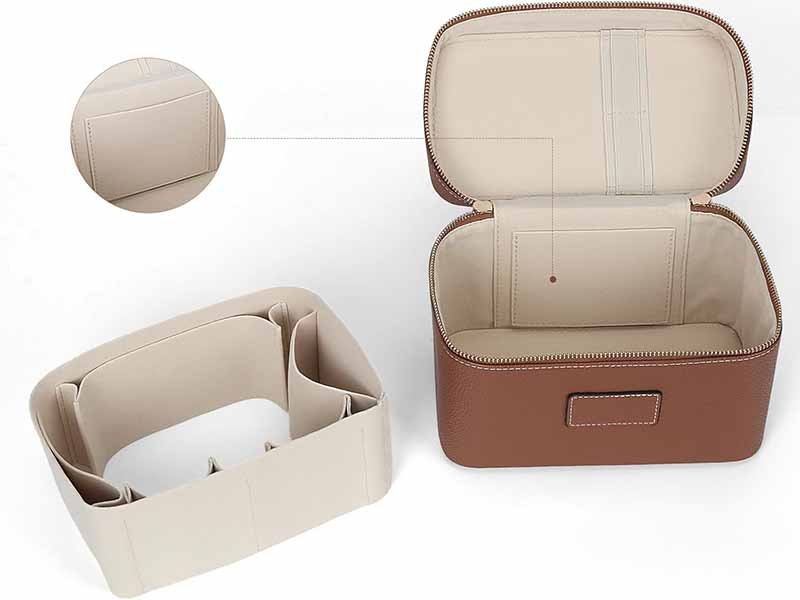
This is the question customers always ask before finalizing samples.
Typical cost impact per detachable pouch (relative):
| Feature | Cost impact |
|---|---|
| TPU lining vs polyester | +15–25% |
| Zip-in system | +10–20% |
| Extra reinforcement | +5–10% |
| Mixed-material pouches | +10–15% |
Smart cost control strategies:
- Use waterproof material only where needed
- Limit detachable pouch count (2–3)
- Standardize zipper length across pouches
- Avoid unnecessary hardware variety
Factories that plan detachable systems early save far more than those trying to “add it later.”
How do you design the layout for detachable pouche?
A good detachable pouch layout starts with real usage behavior, not symmetry. The layout should separate wet and dry items, allow one-hand access, and avoid stacking too many layers. Most successful makeup bags use two or three detachable pouches with clear roles, placed where users naturally reach first, without blocking the main zipper or collapsing the bag shape.
How many detachable pouches should a makeup bag have?
This is one of the most important decisions—and the most common place brands overdo it.
From real-world use and return feedback, more pouches do not mean better organization. In fact, once users need to detach multiple layers just to reach one item, frustration rises quickly.
Factory-tested guideline:
- 1 pouch → small or minimal-use makeup bags
- 2 pouches → daily + travel hybrid bags
- 3 pouches → large travel or professional bags
- 4+ pouches → high risk of over-complexity
| Number of pouches | User experience | Risk level |
|---|---|---|
| 1 | Simple, fast | Low |
| 2 | Organized, flexible | Low |
| 3 | High capacity, modular | Medium |
| 4+ | Confusing, slow | High |
A useful rule: if the user has to remove more than one pouch to reach a basic item, the layout needs simplification.
How to decide pouch sizes for different makeup items?
Detachable pouches fail when they look good but don’t match real item dimensions.
Below are size ranges we commonly use during sampling, based on real products—not drawings.
| Pouch type | Typical contents | Recommended size |
|---|---|---|
| Liquid pouch | Bottles, tubes | 18–22 × 8–10 × 4–6 cm |
| Brush pouch | 6–10 brushes | 20–24 × 6–8 cm |
| Small-item pouch | Lipsticks, tools | 12–16 × 8–10 cm |
Design mistakes to avoid:
- Liquid pouch too shallow → bottles tip over
- Brush pouch too tight → bristles bend
- Small pouch too deep → items disappear inside
A well-sized pouch should be 70–80% full when used. Anything looser feels messy; anything tighter feels forced.
Where should detachable pouches be placed inside the bag?
Placement affects usability more than attachment strength.
Best-performing placements:
- Back panel: for heavier pouches (liquids)
- Side wall: for brush sleeves
- Center divider: only if bag is wide enough
Poor placement choices:
- Directly under the main zipper (causes jamming)
- All pouches stacked on one side (bag collapses)
- Low placement without base support (sags under weight)
| Placement | Stability | Accessibility |
|---|---|---|
| Back panel | High | Medium |
| Side wall | Medium | High |
| Center divider | Medium | Medium |
Factories usually prototype two layout options and let clients physically test which one “feels right” before locking the design.
How do you build detachable pouches inside makeup bags?
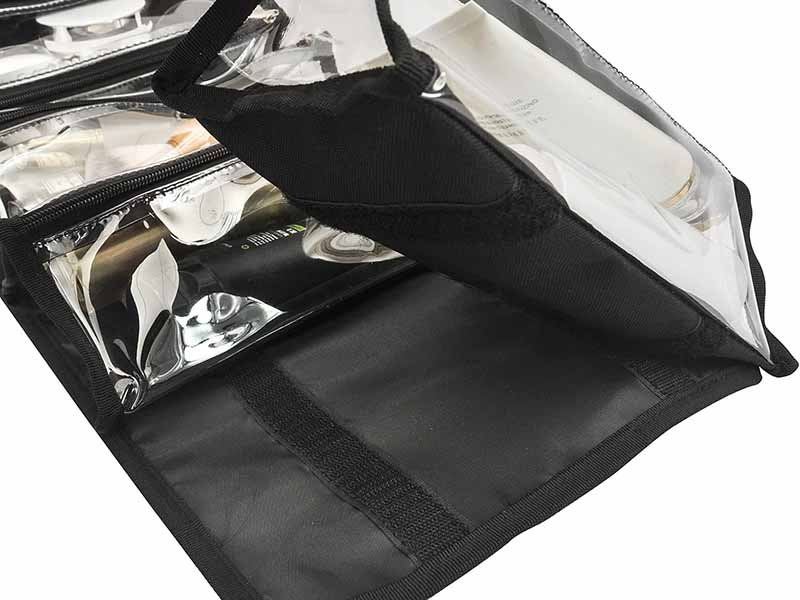
Detachable pouches must be built as load-bearing components, not accessories. Reinforced seams, stable attachment zones, and abrasion-resistant edges are critical. Most failures come from underestimating stress at attachment points and pouch corners. Proper sewing order and reinforcement materials matter as much as fabric choice.
How to attach pouches securely without making removal difficult?
The balance between “secure” and “easy to remove” is where most designs succeed or fail.
Best-performing attachment strategies:
- Zipper tape sewn into reinforced lining panel
- Snap systems with backing patches
- Clip systems paired with fabric loops (not bare seams)
| Attachment type | Security | Removal ease | Typical failure |
|---|---|---|---|
| Zip-in | High | Medium | Poor zipper tape quality |
| Snap-in | Medium | High | Snap loosening |
| Clip-in | Medium | High | Fabric tearing |
Any attachment point must spread force over at least 3–4 cm of fabric. Single-point stress always fails first.
How to reinforce pouch edges and corners?
Corners are the first place detachable pouches fail—especially when users pull them out repeatedly.
Effective reinforcement methods:
- Double-stitch at corners
- Small bartacks at stress points
- Binding or folded edge construction
- Reinforcement patches behind snaps or clips
| Area | Reinforcement needed |
|---|---|
| Zipper ends | Bartack |
| Pouch corners | Double stitch |
| Snap zones | Patch backing |
| Clip loops | Box stitch |
Skipping reinforcement saves seconds per unit—but creates returns that cost far more.
How to keep detachable pouches from distorting the bag shape?
This problem shows up in large makeup bags: once pouches are attached, the bag looks uneven or bulky.
Common causes:
- Pouch too stiff vs main bag
- Pouch too heavy on one side
- Attachment placed too low
Fixes used in production:
- Keep pouch materials slightly softer than main body
- Balance pouch weight left vs right
- Align pouch top edge with bag’s visual centerline
| Issue | Visual result | Adjustment |
|---|---|---|
| Heavy liquid pouch | Bag leans | Move to back panel |
| Thick TPU pouch | Bulge | Reduce thickness |
| Low attachment | Sag | Raise anchor point |
How do you test detachable pouches for quality and daily use?
Detachable pouches must be tested through repeated attachment cycles, weighted load tests, abrasion checks, and spill simulations. Visual inspection is not enough. Testing should reflect how users actually open, remove, clean, and repack the bag over time, not just how it looks when new.
How to test attachment strength?
Factories test detachable systems not once—but repeatedly.
Standard attachment tests:
- Attach/remove cycle: 50–100 times
- Shake test with loaded pouch
- Upside-down hang test (30–60 seconds)
| Test | Pass condition |
|---|---|
| Attach/remove | No loosening |
| Shake | No detachment |
| Hang | No seam stretch |
If a pouch loosens during testing, it will fail in real use.
How to test waterproofing and stain resistance?
Liquid pouches must survive small spills.
Simple but effective checks:
- Water drop test (inside pouch)
- Wipe test with tissue
- Dry-after-wipe check (no residue)
| Material | Wipe result |
|---|---|
| Polyester | Stain risk |
| PU-coated | Clean |
| TPU | Clean |
Customers quickly notice when a “liquid pouch” absorbs stains.
How to simulate real wear and tear?
Real damage comes from friction, not force.
Wear simulation methods:
- Rub pouch against zipper teeth
- Pack with hard bottles and shake
- Store folded for 24–48 hours
| Stress source | Failure sign |
|---|---|
| Friction | Fabric fuzzing |
| Folding | Crease cracks |
| Weight | Seam stretch |
Testing here prevents long-term complaints.
Detachable pouches should feel invisible
When detachable pouches are done right, users barely think about them. They just feel that the makeup bag is easier to use, cleaner, and more organized. When done wrong, they feel annoying fast.
Good detachable systems:
- Match real item sizes
- Stay secure without effort
- Clean easily
- Don’t distort the bag
Customize detachable pouch makeup bags with Szoneier
At Szoneier, we’ve spent over 18 years developing custom bags that work in real life—not just on screens. We help brands design detachable pouch systems that balance usability, durability, and cost from the first sample.
What we offer:
- Custom makeup bags across cotton, canvas, polyester, nylon, TPU, EVA, neoprene, PU, leather, and more
- Detachable pouch system design and testing
- Low MOQ customization
- Fast sampling with layout and structure feedback
- Free design support and material suggestions
- OEM / ODM / private label production with stable quality
If you’re planning a makeup bag with detachable pouches and want it to feel intuitive, durable, and premium, send your idea to Szoneier. We’ll help you turn organization into a feature customers actually love.