Skip to content

If you’re building a tote bag line today, “just canvas” often isn’t enough. Customers are comparing feel, structure, and details the moment they pick up the bag: a smooth lining, a water-resistant bottom, leather or webbing handles that don’t twist, and clean branding that doesn’t crack after a month. That’s why more brands are launching multi-material tote bags—canvas + leather trim, RPET + TPU coating, nylon + foam structure, or jute + cotton lining. The upside is clear: you can create a higher-value product and justify a higher price. The risk is also clear: multi-material designs fail faster when the manufacturer doesn’t understand how materials behave together.
A strong tote bags manufacturer for multi-material collections is one that can source multiple materials, test compatibility (shrinkage, color transfer, bonding strength), and produce consistent quality across small and repeat orders—without “surprise” MOQs or unstable lead times. If you get this choice right, you can build a collection that scales smoothly: entry totes, premium trims, seasonal fabrics, and consistent reorders.
Here’s the reality many brands learn too late: most “factory samples” look good on day one. What matters is whether the bag still looks good after 30 days of real use—commuting, groceries, rain, friction, and heavy loads. Multi-material manufacturing is where good factories separate themselves from average ones.
What Is a Multi-Material Tote Bags Manufacturer?
A multi-material tote bags manufacturer is a factory that can reliably produce tote bags using two or more materials in one design—such as canvas + leather trim, RPET + lining, or nylon + coated panels—while controlling thickness matching, seam strength, color consistency, and bonding/finishing methods. The difference is process control: the factory must manage material behavior (stretch, shrinkage, abrasion, adhesion) so the finished tote performs well in daily use.
What “multi-material” really means in production
Multi-material is not only “add a leather patch.” It changes the production math because each material brings different behavior:
- Thickness mismatch can cause puckering, uneven seams, or broken needles
- Stretch mismatch (nylon vs canvas) can distort shape
- Shrinkage mismatch (cotton vs coated synthetic) can wrinkle or twist after humidity
- Surface friction can cause pilling or color transfer where fabrics rub
- Bonding vs sewing decisions matter (TPU coatings, neoprene, leather edges)
If a manufacturer can’t explain how they handle these issues, your sample may still look okay—but mass production and repeat orders become risky.
What materials are used in tote bags?
Most multi-material tote bags follow a simple structure: main body material + reinforcement/feature material.
| Tote bag part | Common material options | Why brands use it |
|---|---|---|
| Main body | cotton canvas, polyester, RPET, nylon, jute | look, feel, cost, eco positioning |
| Handles | cotton webbing, PP webbing, nylon webbing, leather | load strength, comfort, premium value |
| Trim & corners | leather, PU, TPU, PVC coated fabric | wear resistance, style contrast |
| Lining | cotton, polyester, RPET, PEVA | cleaner inside, better structure |
| Base panel | double fabric, PP board, foam, coated fabric | keeps shape, protects bottom |
| Closure | zipper, magnetic snap, drawstring | security and function |
How do multi-material tote bags affect MOQ?
In multi-material production, MOQ is often set by the hardest component to source, not by sewing capacity.
Common MOQ drivers:
- custom dyed fabrics (mill minimums)
- custom hardware or zippers
- woven labels or embossed leather patches
- specialty coatings (TPU/lamination minimum lots)
To keep MOQ low, experienced factories typically recommend:
- use stock body fabrics in standard colors
- choose stock webbing and standard hardware colors
- start with one trim material (not three)
- avoid custom dye lots until sales data is proven
Here is a realistic planning table for brands building a first collection:
| Component choice | MOQ impact | Why |
|---|---|---|
| Stock canvas + stock webbing | Low | factory can cut immediately |
| Leather trim in standard colors | Medium | trim sets may have minimums |
| Custom lining print | Higher | printing setup + fabric minimum |
| Custom dyed body fabric | Highest | mill lot requirement |
Why choose multi-material tote bags for collections?
Brands choose multi-material totes because they improve three things customers actually notice:
- Feel and structure (the bag looks “finished,” not floppy)
- Durability (handles and corners don’t fail first)
- Shelf value (easier to sell at higher price points)
In practical retail terms, multi-material designs often support a price ladder like this:
| Collection tier | Material approach | Typical positioning |
|---|---|---|
| Entry | single material canvas + print | promo, first launch, low risk |
| Core | canvas + webbing + lining | daily carry, better reviews |
| Premium | canvas/RPET + leather trim + zipper | boutique, gifting, higher ASP |
Multi-material is how brands build a collection that feels intentional, not random.
Which Tote Bags Manufacturer Capabilities Matter?
For multi-material collections, the most important tote bags manufacturer capabilities are: stable multi-material sourcing, in-house sampling, sewing lines that handle mixed thickness, clear QC standards, and export-ready compliance documentation. A capable factory will identify weak points (handles, corners, bonding areas) early, propose structural fixes, and keep production consistent across reorders—especially when your collection uses different fabrics in the same season.
Capabilities that actually reduce your risk
Many factories claim they “can do all materials.” What you want is a factory that can do all materials with control.
Here are the capabilities that matter most for brands:
1) Material control and traceability
A reliable manufacturer can tell you:
- fabric composition and weight (GSM/oz)
- coating type (if any) and thickness
- webbing spec (width, density)
- leather grade and thickness (if used)
- supplier consistency for reorders
If the factory cannot name these specs, you’re not buying a controlled product—you’re buying a guess.
Useful reference ranges brands often request:
| Material | Common spec range for totes | Notes |
|---|---|---|
| cotton canvas | 280–450 gsm (10–16 oz) | heavier = more structure |
| polyester/RPET | 210D–600D | higher D = more abrasion resistance |
| webbing handle | 25–38 mm width | wider = more comfort under load |
| leather trim | 1.2–2.0 mm | too thick causes seam bulging |
2) In-house sampling and fast revision
Multi-material designs usually need at least 1–2 revisions because small choices (handle drop length, corner reinforcement, seam allowance) change how the bag sits.
A factory that samples in-house typically reduces development time by 7–14 days compared to factories that outsource sampling to separate workshops.
3) Mixed-material sewing and finishing ability
The biggest quality differences show up at:
- handle attachment points
- corner seams
- zipper ends
- edge finishing (especially with leather/PU trims)
Ask if they can do:
- Box-X reinforcement stitching
- Bartacks at stress points
- Edge folding or binding cleanly on coated fabrics
- Skiving or edge painting for leather trims (when needed)
These are not “premium extras.” They are what prevents returns.
4) Quality control you can verify
For multi-material tote bags, QC should include checks for:
- seam alignment and puckering
- print placement consistency
- color difference between batches
- bonding strength (for coated or laminated parts)
- handle load performance
A serious factory will share QC photos and measurable checks.
A simple QC checkpoint list brands often use:
| QC point | What “pass” looks like |
|---|---|
| size tolerance | within ±0.5–1.0 cm (depending on size) |
| handle symmetry | left/right equal, no twisting |
| stitch density | consistent, no skipped stitches |
| corner reinforcement | no tearing under load |
| surface finish | no glue marks, no coating scratches |
5) Compliance and export paperwork support
Even if your tote is “just a bag,” export channels often require:
- material declarations (especially for recycled content)
- chemical safety expectations (dyes/coatings)
- packaging labeling requirements
- test reports when selling into stricter markets
A manufacturer experienced with export clients can guide what’s necessary and what’s overkill—so you don’t waste budget.
Where Szoneier fits for multi-material tote collections
Szoneier supports custom tote bags across cotton, canvas, polyester, nylon, neoprene, PVC, TPU, EVA, jute, and leather. For multi-material collections, the practical value is being able to:
- develop multiple material options within one supplier system
- keep specs documented for repeat production
- offer low MOQ options using stock materials when possible
- produce private-label branding (labels, patches, packaging) with consistent QC
How Do You Check Multi-Material Tote Bags Quality?
To check the quality of multi-material tote bags, you need to verify four measurable areas: material performance, seam and handle strength, bonding or coating stability, and real-use durability. Reliable manufacturers provide samples that pass load tests, abrasion checks, colorfastness evaluation, and structural inspection before bulk production. Without these checks, mixed-material totes often fail after short daily use rather than during factory inspection.
Why quality control is more complex in multi-material tote bags
Single-material canvas totes usually fail in predictable ways—thin fabric, weak stitching, or poor printing. Multi-material totes introduce interaction failures between layers, trims, and reinforcements. These failures often appear after customers begin using the bag, not during visual inspection.
Common real-world problems include:
- leather handles cracking where stitched to soft canvas
- coated bottoms peeling after friction with floors
- lining shrinkage pulling the outer shell out of shape
- color transfer between dark trims and light fabric
- seam puckering caused by thickness mismatch
Because these issues develop over time, proper evaluation must simulate daily carrying conditions, not just factory appearance.
A dependable tote bags manufacturer therefore tests stress, friction, moisture, and repeated motion before approving production.
What tests confirm tote bags durability?
Durability testing does not always require a laboratory. Many of the most useful checks are simple mechanical simulations that reveal weakness quickly.
| Test type | How it is performed | What it proves |
|---|---|---|
| Static load test | Hang 10–20 kg weight for 1–2 hours | Handle and seam strength |
| Repeated lift test | Lift loaded bag 50–100 cycles | Long-term fatigue resistance |
| Abrasion rub test | Rub base or corners on rough surface | Coating and fabric wear resistance |
| Color rub test | Rub light cloth across dark material | Dye stability and transfer risk |
| Moisture exposure | Leave bag in humid or damp state | Shrinkage or deformation behavior |
For retail-ready tote bags, brands commonly expect:
- no seam tearing under 15 kg load
- no visible coating damage after abrasion cycles
- no color transfer to dry cotton cloth
If a supplier cannot explain how they check these points, durability risk remains unknown.
How do seams and handles behave in mixed-material tote bags?
Handles and seams carry nearly all structural stress in daily use. In multi-material totes, the difficulty is that different materials resist force differently.
For example:
- canvas stretches slightly under load
- leather stretches less but can crack at stitch holes
- coated synthetics resist stretch but may delaminate
Because of this, seam engineering matters more than decoration.
| Reinforcement method | Strength level | Typical use |
|---|---|---|
| Single straight stitch | Low | light promotional totes |
| Double stitch line | Medium | standard retail totes |
| Box-X reinforcement | High | heavy grocery or daily carry |
| Bartack reinforcement | Very high | stress points near handles |
| Rivet + stitch combination | Maximum | leather-handle premium totes |
A strong multi-material tote usually combines:
- Box-X stitching at handle roots
- thicker thread matched to fabric weight
- balanced seam allowance to prevent tearing
These technical details directly determine whether a bag lasts three months or three years.
Which defects appear most in multi-material tote bags?
Understanding common defects helps brands inspect samples more effectively. Most failures fall into three categories: structural, surface, or dimensional.
Structural defects
- handle detachment or seam tearing
- lining separation from outer shell
- base panel collapse after loading
These usually indicate weak reinforcement or incorrect thread selection.
Surface defects
- coating scratches or peeling
- uneven leather edge finishing
- print cracking near seams
These often result from improper finishing temperature or friction resistance.
Dimensional defects
- twisted body shape after sewing
- uneven handle length
- shrinkage mismatch between layers
These signal pattern or material compatibility problems, not just sewing errors.
A practical inspection table many brands use during sampling:
| Inspection point | Acceptable condition |
|---|---|
| Handles remain straight under load | Yes |
| Seams show no puckering or gaps | Yes |
| Base keeps shape when filled | Yes |
| No color transfer after rubbing | Yes |
| Coating remains intact after abrasion | Yes |
What Costs and Lead Times Come from a Tote Bags Manufacturer?
For multi-material tote bags, cost and lead time are driven by material mix, construction complexity, sourcing minimums, and the number of “setups” needed (printing, cutting patterns, trim sets, coatings). A reliable tote bags manufacturer will break pricing into fabric + trims + labor + decoration + packaging, and will confirm a realistic timeline that includes sampling, pre-production approval, and bulk production—so your collection launches on schedule.
How does a tote bags manufacturer calculate price?
Multi-material tote pricing is easiest to understand if you treat every bag as a bundle of measurable parts. Most factories calculate like this:
- Main body material cost (canvas / RPET / nylon / jute, etc.)
- Secondary materials (lining, leather/PU trim, coated base, foam, etc.)
- Labor (sewing minutes per bag)
- Decoration (printing, embroidery, patches, labels)
- Packaging + carton (inner packing + export carton)
- Overhead + QC (factory management + inspection)
Below is a practical cost share reference (export-level production):
| Cost block | Typical share (multi-material totes) | What pushes it higher |
|---|---|---|
| Main fabric | 30–50% | heavier GSM/oz, specialty coatings |
| Trims & lining | 10–25% | leather, custom lining, foam, zippers |
| Labor | 20–35% | pockets, gussets, zipper top, bindings |
| Decoration | 5–20% | large prints, multi-color, embroidery |
| Packaging | 2–8% | retail inserts, polybags, hangtags |
| QC + overhead | 5–12% | strict AQL, extra inspections |
If you add lining + zipper + leather trim to a basic tote, unit cost commonly increases 35–80% versus a simple open-top canvas tote, because labor minutes rise sharply and trims have their own supply minimums.
Price ranges you can plan with (small and medium runs)
Exact quotations vary by size, printing, and market material pricing, but these ranges are useful for early planning.
| Multi-material tote style | Qty 100–300 pcs | Qty 500–1,000 pcs | Main cost driver |
|---|---|---|---|
| Canvas body + webbing handles | $1.80–$3.20 | $1.30–$2.40 | fabric weight + stitching |
| RPET body + lining | $2.40–$4.20 | $1.90–$3.30 | lining + labor |
| Canvas + zipper + inner pocket | $3.20–$5.80 | $2.60–$4.80 | zipper + sewing time |
| Canvas + leather trim + zipper | $4.20–$7.80 | $3.50–$6.50 | leather set + finishing |
| Nylon + coated base + foam panel | $3.80–$7.00 | $3.00–$5.80 | coating + structure |
How to use this table:
- If a quote is far below these ranges, ask what was reduced (GSM? reinforcement? lining quality? trim thickness?).
- If a quote is far above, check if you’re paying for custom dye lots, special certifications, or complex packaging.
Are there hidden costs with a tote bags manufacturer?
Yes—multi-material collections create “small extras” that can add up to a lot if you don’t list them early. The most common surprises come from setup fees and component minimums.
| Hidden cost | When it happens | Typical range |
|---|---|---|
| Screen printing setup | New artwork or color change | $20–$120 per screen (varies) |
| Embroidery digitizing | New logo file | $20–$80 |
| Leather patch mold / emboss plate | New patch design | $50–$200 |
| Custom woven label setup | New label size/art | $30–$120 |
| Custom zipper pulls | Brand-specific puller | Higher MOQ + tooling |
| Sample courier shipping | International express | depends on destination |
| Third-party QC | When you want extra control | often $150–$400/day |
What lead time is normal for multi-material tote bags?
Multi-material projects take longer because materials must arrive at the right time and be matched correctly. A realistic timeline looks like this:
| Stage | Normal timeline | What causes delays |
|---|---|---|
| Quotation + material confirmation | 2–5 days | unclear specs, missing artwork |
| Prototype sample | 7–15 days | new trim sourcing, zipper matching |
| Revisions (if needed) | 5–10 days | structure changes (pockets, gusset) |
| Pre-production sample approval | 3–7 days | print color matching, lining changes |
| Bulk production (100–500 pcs) | 18–30 days | multiple materials + more sewing minutes |
| Bulk production (1,000+ pcs) | 25–40 days | production scheduling + trim supply |
| Sea freight | 20–40 days | port and route |
| Air freight | 5–10 days | capacity and costs |
Planning tip: If you want a smooth launch, give yourself 6–10 weeks from first sample request to goods arriving (depending on shipping). The more materials you mix, the more important it becomes to approve the pre-production sample and lock the BOM.
How Do You Grow with One Tote Bags Manufacturer?
You grow with one tote bags manufacturer by standardizing your materials and construction rules across the whole collection, then scaling volume in steps while tightening QC and lowering unit cost. The best growth happens when your manufacturer keeps a stable BOM, records proven sewing/finishing settings, and holds reference samples—so new seasons and new materials can be added without losing consistency in size, color, and durability.
How do multi-material tote bags scale in volume?
Scaling is smoother when you design your collection around shared components. This is the simplest way to reduce MOQ pressure and cost.
Smart scaling strategy: “shared parts”
- Use one main body fabric across 2–4 styles
- Use the same webbing handle in multiple colors
- Use the same zipper type across several totes
- Keep lining consistent for a season
This lets the manufacturer consolidate purchasing and cutting, lowering waste.
| Collection design choice | Effect on MOQ | Effect on cost |
|---|---|---|
| Shared main fabric across SKUs | Lower | Lower (bulk purchase) |
| Shared lining across SKUs | Lower | Lower (fewer setups) |
| Shared zipper type | Lower | Lower (volume discounts) |
| Different trim on same base | Medium | Medium (trim sets vary) |
| Custom dye for each SKU | Higher | Higher (mill minimums) |
When brands do this well, they can keep early collection MOQs around 200–500 pcs per style while still offering variety.
What support does a tote bags manufacturer offer long term?
Long-term support is not “friendly service.” It’s operational help that improves margins and reduces mistakes.
A strong manufacturer can provide:
- Material substitution advice when prices change (e.g., RPET availability, canvas cost shifts)
- Seasonal planning: reserving fabric lots to avoid color drift
- Packaging upgrades as you enter retail channels
- QC improvements based on returns and feedback
- Reorder speed: reusing patterns, print files, and trim standards
How does one tote bags manufacturer simplify supply chains?
Multi-material collections usually require multiple suppliers (fabric mill, webbing supplier, zipper supplier, leather trim supplier). When you work with one capable manufacturer, you avoid coordinating all those parts yourself.
A simplified supply chain typically means:
- one BOM file managed by the manufacturer
- one QC standard applied across all materials
- one packaging system for the whole line
- one shipping plan (carton sizing, palletizing, labeling)
That reduces common launch problems like:
- mismatched trim colors between factories
- different bag sizing standards across styles
- inconsistent packaging across SKUs
- delays caused by missing one component
For brands selling online, this consistency directly helps product photos, reviews, and reorder reliability.
What tote bag styles can you customize and develop from Szoneier?
Szoneier can customize a full spectrum of tote bag styles—from simple promotional canvas totes to structured retail totes, leather-trim fashion totes, insulated cooler totes, waterproof utility totes, and multi-pocket organizer totes. Each style can be engineered with different fabrics, reinforcements, closures, and branding methods, allowing brands to launch entry products first and then expand into higher-value collections using the same stable manufacturing system.
Core tote bag categories Szoneier develops for global brands
Most tote bag product lines evolve step-by-step rather than launching with complex designs immediately.
Below is a realistic classification of tote styles frequently produced for export markets, including how they are used and how difficult they are to manufacture.
| Tote bag category | Typical use | Key structure | MOQ flexibility | Price level |
|---|---|---|---|---|
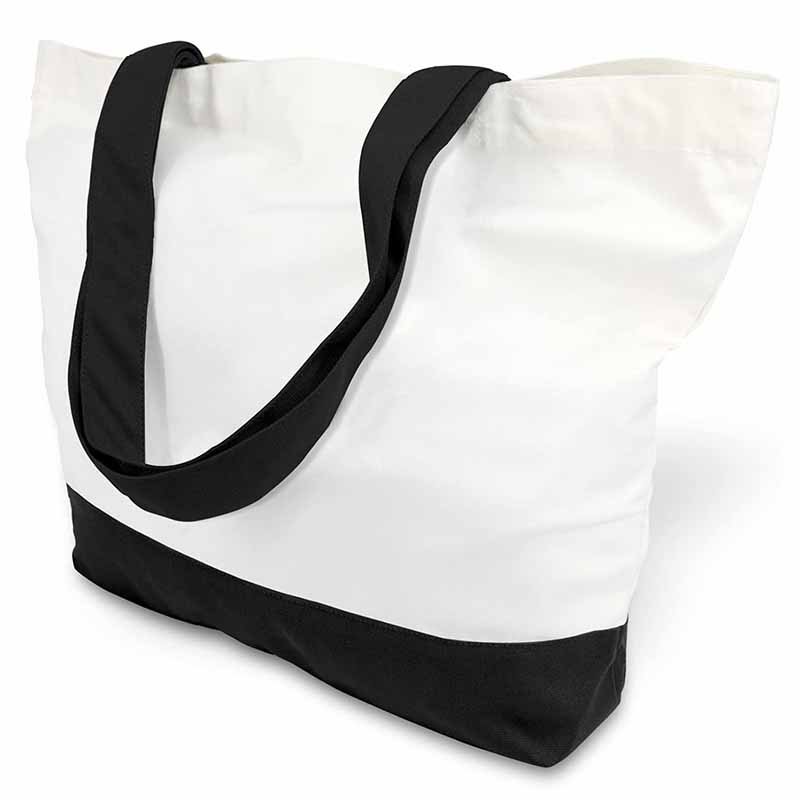
| Basic canvas tote | Promotions, retail giveaways | Single layer, open top | Very high | Low |
| Gusset shopping tote | Grocery, bookstore, daily carry | Bottom/side gusset | High | Low–mid |
| Zipper closure tote | Commuting, travel | Top zipper + inner pocket | Medium | Mid |
| Lined fashion tote | Lifestyle & boutique | Full lining + shape control | Medium | Mid–high |
| Leather-trim tote | Premium retail, gifting | Leather handles or panels | Medium–low | High |
| RPET eco tote | Sustainable brands | Recycled fabric + print | High | Mid |
| Waterproof utility tote | Beach, outdoor, gym | Coated fabric or TPU base | Medium | Mid–high |
| Insulated cooler tote | Food delivery, picnic | Foam + thermal lining | Lower | Mid–high |
| Multi-pocket organizer tote | Work, parenting | Compartments & dividers | Lower | High |
As structure, lining, or trim complexity increases, labor time and material coordination rise, which affects MOQ and cost.
Material combinations available for different positioning levels
Because Szoneier works across multiple fabric systems, tote bags can be engineered for distinct market tiers rather than a single generic style.
| Positioning tier | Common material mix | Visual & functional result |
|---|---|---|
| Entry promotional | Cotton canvas + screen print | Simple, cost-efficient |
| Core retail | Canvas/RPET + webbing + lining | Better durability & feel |
| Premium fashion | Canvas or nylon + leather trim + zipper | Structured, upscale |
| Outdoor utility | Nylon/TPU + reinforced base | Water resistance & strength |
| Eco collection | RPET + recycled webbing + minimal dye | Sustainability story |
This tiered material strategy allows brands to control margin while expanding assortment, instead of redesigning production from scratch for every new SKU.
Structural engineering options that change real-world performance
Tote bags may look simple in photos, but performance depends heavily on hidden reinforcement and construction logic.
Szoneier commonly customizes the following structural elements:
Handle systems
- Cotton, nylon, or polyester webbing
- Padded handles for heavy loads
- Leather-wrapped handles for premium feel
- Box-X or bartack reinforcement for durability
Base support
- Double-layer fabric bottom
- Removable PP board insert
- Foam-padded structure for retail display
- Waterproof coated base for outdoor use
Closure methods
- Open top for fast access
- Zipper closure for commuting security
- Magnetic snap for lifestyle balance
- Drawstring or fold-over for travel styles
Each option directly influences load capacity, lifespan, and perceived value, which strongly affects online reviews and reorder rates.
Branding and decoration methods for private-label tote collections
A tote bag often becomes a moving advertisement for a brand, so decoration durability matters as much as appearance.
| Branding method | Visual style | Durability | Best use case |
|---|---|---|---|
| Screen printing | Solid color logo | Very high | Bulk retail & promos |
| Digital printing | Photo or gradient | Medium–high | Creative artwork |
| Embroidery | Textured premium look | Very high | Fashion & corporate |
| Woven label | Subtle identity | Very high | Long-term collections |
| Leather patch | Luxury positioning | Very high | Premium gifting |
| Heat transfer / DTF | Multicolor detail | Medium | Small MOQ launches |
Selecting decoration based on target retail price ensures the bag’s cost structure stays healthy while still achieving the desired visual impact.
How tote bag development usually progresses with Szoneier
Rather than designing an entire complex collection at once, most brands follow a measured development path:
| Phase | Product focus | Business objective |
|---|---|---|
| Phase 1 | Simple printed canvas tote | Test demand with low risk |
| Phase 2 | Gusseted or zippered tote | Improve usability & reviews |
| Phase 3 | Lined or structured tote | Enter retail or gifting |
| Phase 4 | Leather or eco materials | Strengthen brand identity |
| Phase 5 | Multi-style seasonal line | Expand revenue channels |
This gradual expansion keeps cash flow stable, shortens development cycles, and allows real customer feedback to guide upgrades.
Ready to Build a Multi-Material Tote Collection with Szoneier?
Multi-material tote bags look simple on a product page, but they’re complex in production. The right tote bags manufacturer helps you control the details that customers judge immediately: structure, handle comfort, seam strength, trim finishing, and long-term durability.
Szoneier supports multi-material bag development across cotton, canvas, polyester, nylon, neoprene, PVC, TPU, EVA, jute, and leather, with low MOQ options, rapid sampling, and OEM/private label customization.
If you tell us:
- your target market (Amazon, Shopify, retail, gifting)
- your preferred materials (canvas + leather, RPET + lining, nylon + coated base, etc.)
- your target order quantity and target price
we can recommend the best construction plan and provide a clear quotation.
Send Szoneier your specs to request a quote and sample plan for your multi-material tote bags.