Skip to content
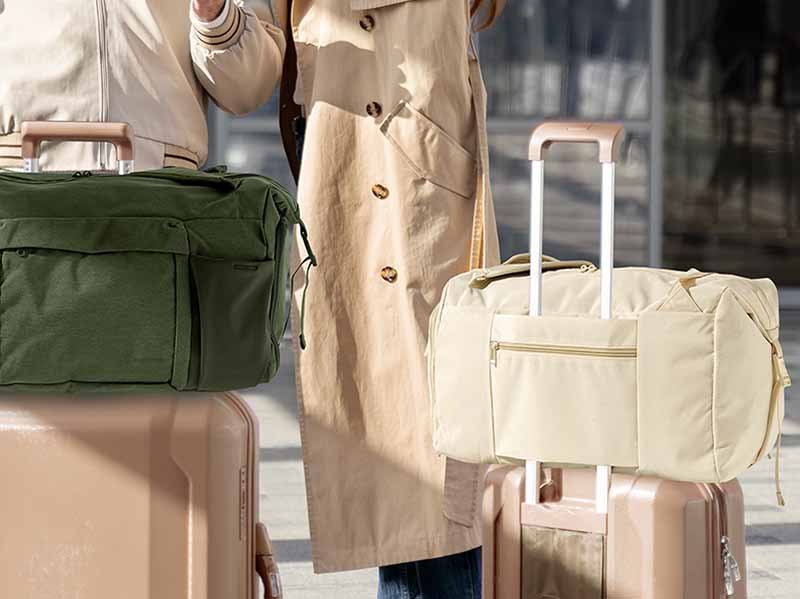
Most duffle bags look fine on day one. The real difference shows up when a customer actually loads it: sweaty clothes, shoes, laptop, a water bottle, maybe a packed lunch—then they carry it for 10 minutes. If the base sags, the zipper line twists, or the shoulder strap digs in, the bag instantly feels “cheap,” even if the fabric itself is strong. And for travel or outdoor trips, the same bag may be thrown into overhead bins, dragged across parking lots, or strapped to gear—where weak handle anchors and soft corners start leaking durability fast.
The best duffle bag structure depends on use. Gym duffles need flexible bodies, fast access, and ventilation. Travel duffles need shape control, balanced reinforcement, and easy packing access. Outdoor duffles need heavy-duty bases, stronger frames, and weather-resistant builds. A wrong structure usually fails at the base and handle zones first, causing discomfort, poor organization, and early wear.
A simple way to think about it: a duffle is not just a “bag.” It’s a moving load that shifts every step you take. Structure decides whether that load feels stable—or annoying.
What Makes A Good Duffle Bag Structure?

A good duffle bag structure is the combination of panel layout, base support, reinforcement mapping, and strap anchoring that keeps the bag stable when full, comfortable to carry, and easy to access—without adding unnecessary weight. The best structures protect the high-stress zones (base, corners, handle anchors, zipper line) and control shape so the bag doesn’t collapse, twist, or sag during use.
A lot of “good-looking” duffles fail because they are built like a tube with handles. Real performance comes from controlling how the bag behaves under load.
What Are Common Duffle Components?
Every duffle bag has a skeleton—even when it looks soft. Brands that specify these components clearly in the tech pack usually get fewer sample revisions and fewer QC disputes.
Core structural components (what actually matters):
- Main Body Panels (side + top) Control expansion and how the bag flexes.
- Base Panel (bottom) Carries most of the weight and protects contents.
- Corner Transitions (bottom corners + end panels) Where stress concentrates and seams split first.
- Handle Anchors (handle wrap + bar-tacks + reinforcement patches) The highest pull-force zone in real use.
- Shoulder Strap System (D-rings, webbing loops, triangle reinforcement) Transfers load to the body; bad geometry causes twisting.
- Zipper Line + Zipper Ends Most frequent “I can’t close it” complaint zone.
- Internal Control Pieces (pockets, dividers, lining, binding tape) Prevent “everything drops to the bottom” behavior.
| Failure Zone | What Customers Notice | Why It Happens |
|---|---|---|
| Handle Anchors | “Handle tearing” | weak backing + short stitch length |
| Base Seams | “Bottom sagging” / seam fray | no base reinforcement, thin fabric |
| Zipper Ends | “Zipper pops open” | poor zipper stop reinforcement |
| Bottom Corners | “Holes at corners” | abrasion + bending fatigue |
| Shoulder Strap Points | “Bag twists” | anchor angle wrong, no stabilizer |
If your bag is designed for 15–25 kg loads (common in travel/outdoor), handle anchors must be treated like a safety-critical area—not decoration.
Which Materials Affect Structure Most?
Customers don’t ask “What denier is it?” They ask:
- “Why does this bag collapse?”
- “Why does it feel heavy?”
- “Why does it twist when I carry it?”
Those behaviors are material + structure together.
Material properties that change structure:
- Fabric stiffness (weave density + coating)
- Tear strength (affects reinforcement needs)
- Abrasion resistance (corners and base life)
- Water resistance (outdoor/travel expectations)
- Memory and rebound (does it keep shape or stay creased?)
Practical Material Choices By Structure Need
| Material Type | Structural Feel | Best Use | Common Notes |
|---|---|---|---|
| 420D Nylon | Soft, light | Gym/light travel | needs reinforced base |
| 600D Polyester | Balanced | Travel | good cost/performance |
| 900D Nylon | Firm, rugged | Outdoor | heavier, very durable |
| Canvas (10–16 oz) | Naturally stiff | Lifestyle/travel | weight increases fast |
| TPU-Laminated Fabric | Semi-rigid | Outdoor/wet use | easier to wipe clean |
| Neoprene | Elastic + padded | Gym/sports | needs internal control |
If a duffle must stand up and pack neatly, you’ll almost always need either:
- a stiffer fabric (600D/900D range), or
- a base insert (EVA/PP board), or both.
How Does Shape Impact Use?
Shape decides three things customers feel immediately:
- How easy it is to pack
- How stable it feels when carried
- How fast they can access items
Shape Types And Real-Use Behavior
| Shape | What It Feels Like | Gym | Travel | Outdoor |
|---|---|---|---|---|
| Soft Cylinder | flexible but messy inside | ✅✅✅ | ✅ | ✅ |
| Boxy Rectangle | stable, stacks well | ✅✅ | ✅✅✅ | ✅✅ |
| Hybrid (Soft Body + Rigid Base) | best balance | ✅✅ | ✅✅✅ | ✅✅✅ |
A soft cylinder looks great in photos and is cheap to produce—but when it’s half full, it collapses, and items pile into one corner. Travel users hate this. Outdoor users hate it even more because load shift increases shoulder strain.
What “Good Structure” Looks Like In Numbers
To help brands write clearer requirements, here are practical ranges that match real product tiers. These are not “lab promises”—they’re common build targets.
Suggested Structural Targets By Use
| Use | Typical Volume | Typical Load | Base Support Needed | Reinforcement Level |
|---|---|---|---|---|
| Gym | 25–45 L | 6–12 kg | light EVA or none | medium |
| Travel | 40–90 L | 10–20 kg | EVA/PP board recommended | medium-high |
| Outdoor | 50–120 L | 15–30 kg | strong EVA/PP + corner guards | high |
Where brands save money without hurting quality: Use smart reinforcement mapping instead of “thick fabric everywhere.” Heavy fabric on all panels often makes the bag feel unnecessarily heavy and still doesn’t fix handle-anchor failures.
Which Duffle Structures Work Best For Gym Use?
Gym duffle bags are used often, quickly, and repeatedly. Most users open and close the bag several times per visit and carry it for short distances. This makes daily comfort and speed more important than heavy-duty strength.
Key structural features gym users actually notice:
- Soft side panels that compress easily in lockers and car trunks
- Stable but lightweight base so the bag doesn’t collapse when set down
- Wide zipper opening for fast packing and unpacking
- Good odor control structure, not just antimicrobial fabric
- Balanced handle and strap placement for one-hand or one-shoulder carry
Typical gym load is not heavy, but it is unbalanced.
| Typical Gym Load | Average Weight |
|---|---|
| Shoes | 0.7–1.1 kg |
| Wet towel | 0.4–0.9 kg |
| Clothing | 0.6–1.5 kg |
| Bottle / shaker | 0.4–0.8 kg |
| Total | 3–7 kg |
Because weight concentrates at the bottom and one end, gym structures fail when:
- the base has no support
- the bag twists during carry
- moisture spreads through the lining
Which Compartment Designs Help Gym Users?
Compartment design directly affects odor, hygiene, and packing speed. Gym users don’t want many small pockets—they want clear separation.
1. Ventilated Shoe Compartment
This is the most requested feature in gym duffles.
Effective shoe compartment structure includes:
- Independent shoe chamber (not just a mesh pocket)
- Ventilation panel (mesh or perforated fabric)
- Water-resistant inner lining
- Bottom anchoring, so moisture does not flow into clothing area
| Shoe Compartment Type | Odor Control | User Feedback |
|---|---|---|
| Open mesh pocket | Low | smells spread fast |
| Lined pocket, no vent | Medium | moisture trapped |
| Ventilated lined pocket | High | best long-term use |
Without structural separation, odor complaints usually appear within 3–6 months of daily use.
2. Wet / Dry Separation Area
After workouts, wet towels are unavoidable. Without structure, moisture transfers to clean clothes.
Good wet/dry structure:
- TPU or PEVA laminated divider
- Heat-sealed or bound edges (not raw stitching)
- Divider attached to base panel, not floating
This prevents the common complaint:
“My clean clothes smell even when I didn’t use the bag much.”
3. Bottle Stabilization Pocket
Loose bottles roll, press against the lining, and stress the zipper.
Recommended structure:
- Vertical elastic pocket
- Positioned near side panel, not center
- Slight tension to keep bottle upright
This improves:
- internal balance
- liner durability
- user experience during carry
How Does Airflow And Ventilation Work In Gym Bags?
Ventilation is not just about adding mesh.
It’s about where moisture goes and how fast it escapes.
There are three practical ventilation levels in gym duffles:
| Ventilation Level | Structure | Result |
|---|---|---|
| Surface mesh only | decorative mesh | limited effect |
| Mesh + lining gap | passive airflow | moderate drying |
| Vent + shoe chamber | directed airflow path | best odor control |
Key structural points:
- ventilation should target shoes and wet zones, not just side panels
- lining material should be low water absorption (PU or TPU coated polyester)
- cotton or uncoated canvas linings trap moisture and worsen odor
Odor is caused by moisture retention, not bacteria alone.
Structure controls moisture first.
Base And Carry Structure For Gym Use
Gym bags are rarely carried longer than 5–10 minutes, so heavy base boards are unnecessary.
Best base options:
| Base Construction | Weight | Stability | Gym Suitability |
|---|---|---|---|
| Fabric only | Very light | Low | budget only |
| 2–3 mm EVA sheet | Light | Balanced | best choice |
| Thick PP board | Heavy | High | overbuilt |
Strap and handle structure matters more than padding.
Recommended geometry:
- Handle drop: 18–25 cm
- Webbing width: 35–40 mm
- Anchor reinforcement length: ≥ 6 cm
- Bar-tack stitches per anchor: ≥ 28
Poor geometry causes:
- twisting while walking
- uneven shoulder pressure
- early seam fatigue
Practical Structural Targets For Gym Duffle Bags
These ranges are based on real daily use, not theoretical maximums:
| Parameter | Recommended Range |
|---|---|
| Volume | 25–40 L |
| Empty weight | 0.5–0.8 kg |
| Safe daily load | 6–9 kg |
| Base thickness | 2–3 mm EVA |
| Ventilation area | ≥ 8% of panel |
| Opening width | ≥ 70% of bag length |
Which Duffle Structures Work Best For Travel Use?

Travel duffle bags require balance between shape retention, load capacity, and easy access. The ideal structure uses reinforced panels, a balanced internal layout, and a smooth, durable zipper system for fast packing. While gym duffles focus on flexibility, travel bags must stay rigid enough to hold items in place, resist wear during transit, and offer easy access to items on the go.
A travel duffle is about easy packing and stability when moving through airports or travel situations. Let’s break it down.
What Size And Access Design Help Travelers?
Travel duffles come in a variety of sizes, but regardless of the exact volume, access and packing flexibility are critical to user satisfaction. The last thing a traveler wants is to struggle with opening the bag when they need to find something quickly—especially when they’re stuck at a gate or unpacking at a hotel.
Best Design Features for Travel Duffles:
- Large top opening for easy packing
- Clamshell-style zipper access for wide entry
- External quick-access pockets for travel documents, keys, or phone
- Compression straps to minimize bulge when full
- Reinforced base with rigid support to prevent sagging in luggage compartments
Many travel duffles use clamshell zippers (two-way zippers that fully open the bag along its middle) to maximize space and allow easy packing and unpacking.
Travel Duffle Opening Comparison
| Type | Access Speed | Stability | Best For |
|---|---|---|---|
| Large Top Opening | Fast | Medium | Light travel bags |
| Clamshell Opening | Very fast | High | Full-capacity bags |
| Roll-top Closure | Medium | Low | Minimalist travel bags |
A travel duffle that opens quickly (clamshell-style or wide-opening) allows better organization and faster access—especially useful in high-traffic travel areas like airports.
Which Internal Layout Fits Packing Needs?
How a bag organizes and holds items determines how efficiently it’s used. Travelers often pack varying items—from clothing to toiletries to electronics—and need clear, segregated space.
Internal structure essentials:
- Central compartment: Enough space for clothes or bulkier items
- Laptop sleeve or tech pocket: Easy access to electronics
- Internal zippered mesh pockets: Keeps small items organized and separate
- Compression or tie-down straps: Prevents shifting during travel
- Waterproof sections: Protects cosmetics or damp items
Ideal Layout for Travel Duffle Bags
| Feature | Purpose | Design |
|---|---|---|
| Central compartment | Major clothing and gear storage | Spacious, full-access design |
| Laptop pocket | Tech organization | Padded, easy access zipper |
| Zippered mesh pockets | Small item storage | Internal organization |
| Compression straps | Weight control | Keeps contents secure |
| Waterproof section | Cosmetics | Sealed or laminated fabric |
Ensure the tech compartment is separate from wet items and cosmetics to avoid accidental spills.
How Do Wheels And Handles Affect Travel Duffles?
When people think of duffles, they often imagine shoulder straps and handheld carry. But for travelers carrying heavier loads or navigating long distances (like airports or train stations), wheeled duffles are a game-changer.
When and why to choose wheeled duffles:
- Long-distance travel (especially international trips or long transfers)
- Heavy load capacity (above 15 kg)
- Older travelers or people with mobility concerns
Travel Duffle with Wheels and Handles Comparison:
| Feature | Benefits | Typical Use |
|---|---|---|
| Soft body, wheels | More flexible, lightweight | Casual travelers |
| Hard body, wheels | More protection, solid structure | Long-haul or rugged travelers |
| Short handle + telescoping handle | Better grip and control | Easy to maneuver through crowds |
| No wheels | More compact, lighter | Light travel (short trips) |
While wheeled duffles are great for heavy loads and long travel distances, they may not fit well in small trunks or tight overhead compartments. Weigh the trade-off carefully depending on your target customers.
Which Duffle Structures Work Best For Outdoor Use?

Outdoor duffles require rugged, durable, and waterproof builds to withstand the harsh conditions of camping, hiking, or adventure travel. A good structure combines reinforced base support, waterproof materials, and ergonomic strap systems that balance load distribution and comfort. Heavy-duty frames, water-resistant zippers, and enhanced abrasion resistance are essential for outdoor bags that will face rough handling and weather exposure.
In outdoor duffles, the structure must support heavy loads, weather resistance, and long-term use under demanding conditions.
What Rugged Design Features Outdoor Duffles Need?
Outdoor activities place different demands on a bag—weather resistance, abrasion resistance, and easy load distribution are key factors.
Must-Have Features For Outdoor Duffles:
- Waterproof liners: To handle rain or wet conditions
- Reinforced stitching and double seams: To handle rough use
- Compression straps: To manage heavy gear
- Molded or rigid base: To prevent sagging when loaded
- High-durability zippers: To resist external elements like dirt or grit
Outdoor Duffle Durability Requirements
| Feature | Need | Best Material |
|---|---|---|
| Waterproof material | Rain/river exposure | TPU laminated fabric |
| Abrasion resistance | Rough handling | 1000D Cordura nylon |
| Strengthened stitching | Heavy gear | Bar-tacked seams |
| Zipper quality | Frequent opening | YKK waterproof zippers |
Material choice is critical. TPU-laminated fabrics are great for outdoor waterproofing, while Cordura or ballistic nylon adds abrasion resistance.
How Do Waterproofing And Reinforcements Matter?
Outdoor conditions test every material to its limit. Without proper waterproofing and reinforcement, gear and clothing inside will get soaked, and the bag itself can break down under stress.
Key Waterproofing Features in Outdoor Duffles:
- TPU or PEVA coating for total waterproof integrity
- Waterproof zippers that seal out water
- Seam taping or welding to prevent leaks at stress points
Reinforcements:
- EVA or PP board inserts in the base keep the duffle stable and firm under load
- Webbing straps with heavy-duty stitching can bear the weight of camping equipment without tearing
Essential Waterproofing Checklist for Outdoor Duffles
| Material/Feature | Why It Matters | Typical Use |
|---|---|---|
| TPU or PEVA coating | High-level water resistance | Wet conditions (river, rain) |
| Waterproof zippers | Keeps water out at zippers | Outdoor/expedition duffles |
| Reinforced EVA base | Prevents sagging & increases durability | Heavy gear storage |
| Bar-tack stitching | Reinforced strength at pressure points | Outdoor adventure bags |
What Strap And Load Distribution Systems Help Hikers?
Hikers, climbers, and outdoor travelers carry their gear for long distances. Improperly placed straps, poorly designed load distribution, and lack of adjustment options will cause back pain or uneven weight distribution, turning an adventure into a nightmare.
Best Strap Design for Outdoor Duffles
- Wide, padded shoulder straps to distribute load across the body
- Hip belt with load lifters for large duffles (helps carry heavy loads on the hips, not just shoulders)
- Compression straps to secure gear and stabilize the contents
- Chest strap for improved weight balance
These features help spread out the weight from heavy outdoor gear.
Ideal Strap System Comparison
| Feature | Benefits | Best Use |
|---|---|---|
| Padded straps | Even weight distribution | Hiking, camping |
| Compression straps | Stabilize load | Long-distance trekking |
| Hip belt | Carries load on hips | Heavy outdoor gear |
| Adjustable chest strap | Reduces shoulder strain | Backcountry travel |
How To Choose The Right Duffle Structure For Real-World Use?
Choosing the right duffle structure depends on load weight, usage frequency, carry distance, and environment. Gym bags prioritize flexibility and airflow, travel bags require balanced structure and access, and outdoor bags demand reinforced waterproof durability. The correct decision comes from matching structure to scenario, not copying a single popular design.
Most product failures don’t come from bad fabric. They come from structure mismatch.
Which Questions Should You Answer Before Designing A Duffle?
Before sketching shape or choosing fabric, experienced brands start with usage truth, not appearance.
Core Questions That Define Structure
- How many kilograms will users really carry? (Not catalog weight—real packed weight.)
- How long will the bag be carried at one time? 5 minutes in a gym ≠ 40 minutes through an airport.
- Will the bag touch wet floors, dirt, or rocks?
- Do users open the bag frequently or only once per trip?
- Is odor control or waterproofing more critical?
These answers decide base thickness, reinforcement mapping, zipper type, and fabric weight long before styling.
| Usage Reality | Structural Priority | Common Mistake |
|---|---|---|
| Daily gym routine | airflow + light base | over-heavy materials |
| Weekend travel | shape control + access | too soft cylinder body |
| Expedition / outdoor | waterproof + reinforcement | weak handle anchors |
When brands skip this step, they often redesign after sampling— which increases MOQ, tooling cost, and launch delay.
How Do Weight And Capacity Change Structural Design?

Volume alone does not define structure. Load density matters more.
A 40L gym bag may carry 5 kg, while a 40L outdoor duffle may carry 18 kg.
Same size. Completely different engineering.
Load Range Vs Required Structure
| Safe Load | Structural Requirement | Typical Use |
|---|---|---|
| 5–8 kg | soft body + light EVA base | gym |
| 10–15 kg | reinforced base + anchor patches | travel |
| 18–30 kg | heavy base board + bar-tack grid | outdoor |
Above 20 kg, structure becomes a safety issue, not just comfort.
Handle tear failures almost always trace back to:
- insufficient reinforcement area
- short stitch length
- weak internal backing fabric
—not the outer fabric itself.
Capacity Without Structure Creates False Value
A common low-cost strategy is:
Increase volume, reduce reinforcement.
This creates bags that look high value online but fail under real load.
Example Of Hidden Structural Risk
| Spec Sheet Claim | Real Outcome |
|---|---|
| 60L large capacity | sags at 12 kg |
| heavy fabric marketing | handle still tears |
| “travel ready” wording | zipper distortion under load |
Customers rarely say“the reinforcement grid is missing.” They simply say**“the bag broke.”**
What Role Does Customization Play In Duffle Development?
Customization is not only about logo printing or color. For serious brands, the real value of customization is structural control.
Structural Elements Brands Actually Customize
- Base system thickness (EVA / PP / composite board)
- Reinforcement mapping (handle zone, corners, zipper ends)
- Compartment architecture (shoe, wet, tech, divider layouts)
- Fabric lamination level (water resistance vs weight)
- Strap geometry (carry comfort and balance)
These choices determine:
- product lifespan
- return rate
- review score
- perceived brand quality
—not surface styling.
Why Structure Customization Reduces Long-Term Cost
Low-cost generic duffles often lead to:
- early seam failure
- shape collapse
- odor retention
- customer complaints within months
Each return costs far more than the extra reinforcement added during production.
Brands that invest slightly more in correct structure at the beginning usually see:
- fewer warranty claims
- higher repeat purchase
- stronger retailer confidence
Structure is one of the highest ROI decisions in soft-goods development.
Developing Custom Duffle Structures With Szoneier
For over 18 years, Szoneier has focused on one core capability: turning real usage requirements into repeatable manufacturing structure.
Not just making bags— but engineering how they perform after thousands of uses.
What Szoneier Controls In Structural Development
1. Load-Bearing Reinforcement Engineering
- internal backing fabrics matched to load range
- bar-tack density based on kilogram targets
- handle pull testing before mass production
This prevents the most common field failure: handle separation under real weight.
2. Base System Design For Different Scenarios
| Scenario | Base Solution |
|---|---|
| Gym | 2–3 mm EVA light support |
| Travel | EVA + PP hybrid board |
| Outdoor | thick PP + corner armor |
This keeps the bag:
- stable when packed
- comfortable when carried
- durable during transport
3. Material Matching Instead Of Overbuilding
Rather than using thick fabric everywhere, Szoneier balances:
- fabric denier
- reinforcement zones
- lamination level
- total bag weight
This achieves durability without heaviness, which customers notice immediately.
4. Real-Use Testing Before Mass Production
Every serious duffle project should confirm:
- handle load testing
- zipper cycle durability
- base deformation under weight
- seam fatigue after repeated carry
Testing early avoids large-scale after-sale problems.
Structure Defines Brand Trust
Customers rarely analyze stitching, reinforcement, or base boards. But they feel the result every time they lift the bag.
If the bag stays balanced, stable, and durable, they trust the brand.
If it twists, sags, or tears, they don’t blame engineering—they blame the name on the logo.
That is why duffle structure is not just a design topic. It is a brand reputation decision.
Request A Custom Duffle Bag Structure Consultation
If you are planning to develop:
- a new gym duffle line
- a travel-ready carry system
- or a heavy-duty outdoor gear bag
the Szoneier engineering team can help you:
- define correct structural parameters
- balance durability with weight and cost
- prototype quickly with low MOQ
- prepare stable mass production
Contact Szoneier today to start building duffle bags that perform reliably in real-world use—not just in product photos.