Skip to content

Plastic pollution and single-use packaging have become daily concerns—not just for governments, but for brands, retailers, and consumers alike. In this shift toward more responsible packaging, non woven bags have quietly become one of the most widely adopted alternatives to traditional plastic bags. You see them in grocery stores, trade shows, retail shops, and promotional campaigns—but many people still aren’t entirely sure what a non woven bag actually is, or why it’s different from other fabric bags.
At first glance, a non woven bag looks like a simple fabric tote. In reality, it represents a specific material technology, production process, and cost-performance balance that makes it attractive for large-scale use. For brands, non woven bags offer a unique combination of low unit cost, custom printing, durability, and perceived eco-friendliness—a rare mix in packaging and carry solutions.
A non woven bag is a reusable bag made from non woven fabric, typically polypropylene (PP), where fibers are bonded together without weaving or knitting. Non woven bags are lightweight, durable, and cost-effective, making them widely used for shopping, promotional, and packaging purposes. They are designed as an alternative to single-use plastic bags and are often reusable and recyclable depending on material grade.
Behind this simple definition lies a much deeper story—how the fabric is made, how it compares to woven bags, whether it’s truly “good” or eco-friendly, and how brands can choose the right specifications for real-world use. Let’s start by understanding exactly what a non woven bag is and what it’s made of.
What Is a Non Woven Bag

A non woven bag is a reusable bag made from non woven fabric, most commonly polypropylene (PP), where fibers are bonded together using heat, pressure, or ultrasonic processes rather than weaving or knitting. This construction creates a lightweight, durable, and cost-effective material. Non woven bags are widely used for shopping, promotions, packaging, and retail as an alternative to single-use plastic bags.
What does “non woven bag” mean in simple terms?
“Non woven” describes how the fabric is made, not how the bag is used.
Unlike woven fabrics—where yarns are interlaced over and under each other—non woven fabric is created by bonding loose fibers directly into a sheet.
For bags, this means:
- no traditional weaving or knitting
- faster production speed
- more consistent thickness
- lower manufacturing cost
This structure gives non woven bags their characteristic felt-like appearance and makes them ideal for large-volume, standardized bag production.
What is a non-woven bag made of?
Most non woven bags are made from polypropylene (PP), a thermoplastic polymer widely used in packaging and textiles.
Key material characteristics:
- lightweight but strong
- resistant to moisture
- flexible and tear-resistant
- recyclable under proper systems
Typical non woven bag fabric ranges from 60–120 GSM, depending on load requirements and reuse expectations. Higher GSM increases strength but also cost and weight.
Why are non woven bags different from fabric bags?
Although non woven bags look like fabric, they behave differently.
| Aspect | Woven Fabric Bags | Non Woven Bags |
|---|---|---|
| Structure | Interlaced yarns | Bonded fibers |
| Production speed | Slower | Faster |
| Cost | Higher | Lower |
| Consistency | Varies by weave | Very consistent |
| Best use | Long-term, heavy loads | Reusable retail & promo |
This difference explains why non woven bags dominate grocery, promotional, and event markets, while woven bags are reserved for heavier, premium use.
What makes non woven bags suitable for mass use?
Non woven bags are engineered for scale and efficiency.
They offer:
- predictable strength per GSM
- easy cutting and sealing
- excellent print surfaces for logos
- short production lead times
For brands and retailers, this translates into reliable quality, consistent branding, and controllable cost—even at very large order volumes.
Are non woven bags considered reusable or disposable?
Non woven bags are designed to be reusable, not disposable—but their lifespan depends on specification.
- Low-GSM bags → short-term or promotional reuse
- Medium-GSM bags → daily shopping use
- Laminated or reinforced bags → extended reuse cycles
They are not meant to replace heavy woven bags, but to replace single-use plastic bags with a more durable, repeat-use option.
Why are non woven bags so widely used worldwide?
Their popularity comes from a rare balance of:
- affordability
- reusability
- customization
- production efficiency
Governments, retailers, and brands adopt non woven bags because they meet regulatory pressure to reduce plastic use without dramatically increasing cost.
How Are Non Woven Bags Made
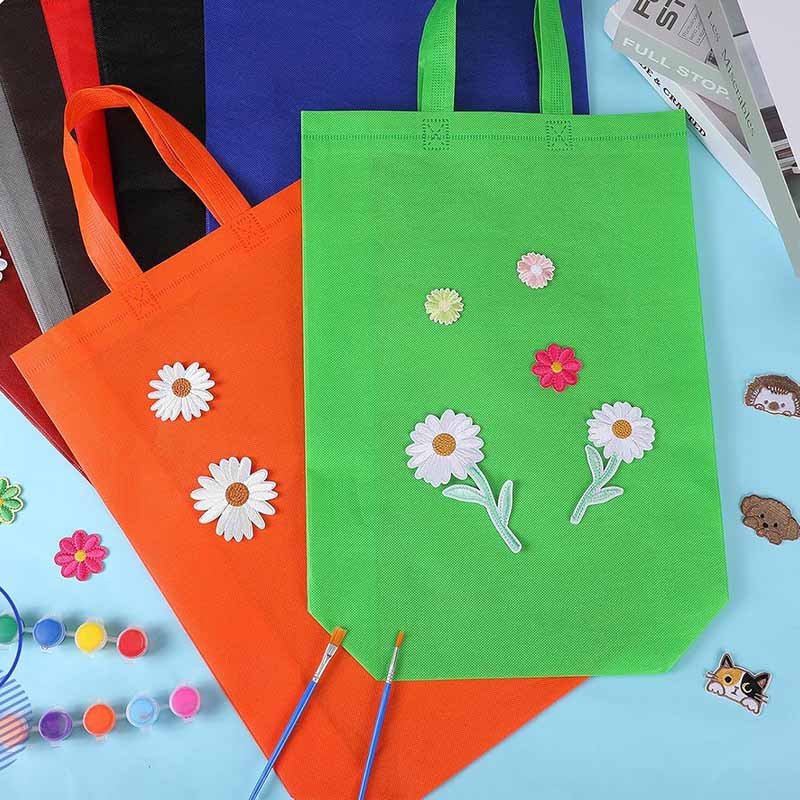
Non woven bags are made by first producing non woven fabric—usually from polypropylene fibers—through heat or pressure bonding instead of weaving. The fabric is then cut, printed, and assembled into bags using sewing or ultrasonic welding. This streamlined process allows fast, large-scale production with consistent quality, making non woven bags cost-effective and easy to customize.
How is non woven fabric produced from raw materials?
The process starts with polypropylene (PP) resin pellets, which are melted at high temperature and extruded into fine continuous fibers. These fibers are laid randomly onto a conveyor to form a web, then bonded together using heat, pressure, or ultrasonic energy.
The most common method for bag fabric is spunbond non woven, because it offers:
- stable fiber structure
- predictable strength per GSM
- smooth surface for printing
- low production cost
This step defines the fabric’s thickness, strength, and durability.
How is fabric thickness (GSM) controlled during production?
GSM (grams per square meter) is controlled by adjusting fiber density during the web-forming stage.
Typical ranges:
- 60–70 GSM → lightweight promotional bags
- 80–100 GSM → standard shopping bags
- 100–120 GSM → reinforced or laminated bags
Accurate GSM control is critical. Too low, and bags tear easily; too high, and cost and stiffness increase unnecessarily.
How is non woven fabric prepared for bag production?
After fabric rolls are produced, they are:
- slit to required widths
- inspected for uniformity
- optionally laminated (PP film) for water resistance
At this stage, factories also test:
- tensile strength
- tear resistance
- surface quality for printing
This ensures the fabric meets the bag’s intended load and usage cycle.
How are logos and graphics printed on non woven bags?
Printing is usually done before final bag assembly.
Common printing methods include:
- silk screen printing (most common)
- heat transfer printing (multi-color designs)
- gravure printing (large-volume, high detail)
Non woven fabric accepts ink well, making it ideal for promotional branding. Proper curing ensures logos don’t crack or fade during reuse.
How are non woven bags cut and assembled?
Once printed, fabric panels are cut into shape and assembled.
Assembly methods include:
- sewing (stronger seams, higher labor)
- ultrasonic welding (faster, cleaner edges)
Handles are attached using:
- same non woven material
- PP webbing
- die-cut integrated handles
Choice of method affects strength, appearance, and cost.
How is quality controlled during production?
Professional factories implement checks at every stage:
- GSM verification
- seam strength testing
- handle pull tests
- print adhesion checks
These controls ensure bags perform as expected and reduce defects in bulk orders.
How does non woven bag manufacturing differ from woven bags?
Non woven bag manufacturing is:
- faster
- less labor-intensive
- more standardized
Woven bags require fabric weaving first, which adds time and cost. This difference explains why non woven bags dominate high-volume, cost-sensitive markets.
What Is the Difference Between Woven and Non Woven Bags
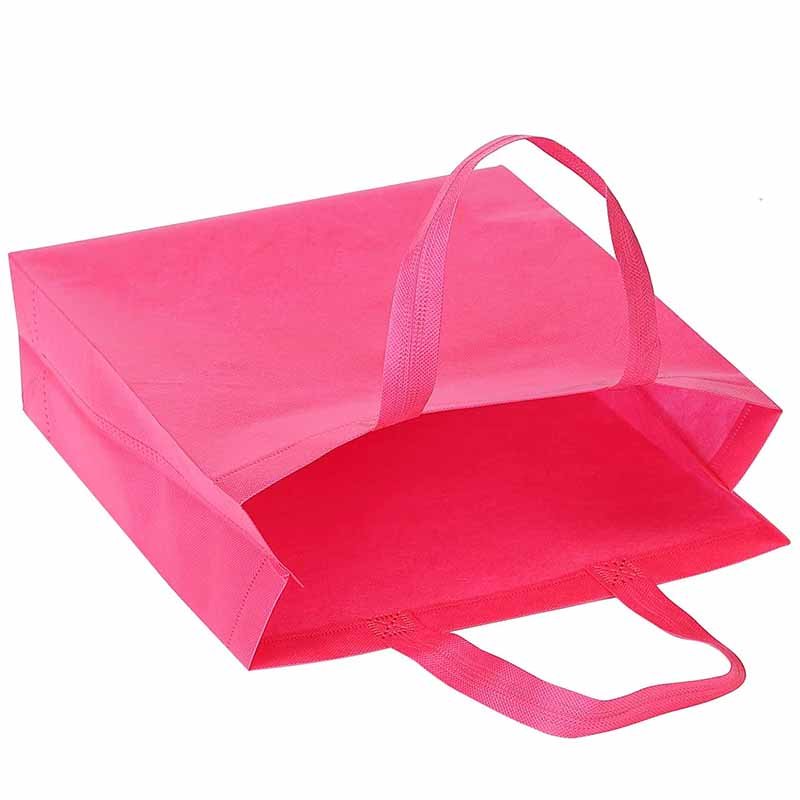
The main difference between woven and non woven bags lies in how the fabric is constructed. Woven bags are made by interlacing yarns, resulting in higher strength and durability. Non woven bags are made by bonding fibers together without weaving, making them lighter, more affordable, and faster to produce. Woven bags suit long-term, heavy-duty use, while non woven bags are ideal for retail, promotional, and short-term reuse.
How are woven and non woven fabrics constructed differently?
The fabric structure is the root of all performance differences.
- Woven bags use yarns woven over and under each other at right angles. This creates a stable, grid-like structure with high tensile strength.
- Non woven bags are made by bonding loose fibers using heat, pressure, or ultrasonic processes, forming a sheet-like material without yarn interlacing.
This structural difference explains why woven bags resist tearing better, while non woven bags are easier and faster to manufacture.
How does strength and load capacity compare?
Woven bags generally handle heavier loads and longer reuse cycles.
| Feature | Woven Bags | Non Woven Bags |
|---|---|---|
| Load capacity | High | Medium |
| Tear resistance | Excellent | Moderate |
| Reuse cycles | Long-term | Short–medium |
| Shape stability | Strong | Flexible |
Non woven bags can still perform well when higher GSM and reinforced handles are used, but they are not designed for heavy industrial loads.
How do cost and production speed differ?
This is where non woven bags dominate.
- Non woven bags
- Faster production
- Lower material and labor cost
- Ideal for bulk orders and promotions
- Woven bags
- Slower fabric production
- Higher labor input
- Higher unit cost
For cost-sensitive projects, non woven bags offer a clear advantage.
How does printing and branding performance compare?
Non woven fabric has a flat, consistent surface, making it excellent for:
- silk screen printing
- heat transfer printing
- large logo coverage
Woven bags can be printed, but the weave texture may affect fine details. This is why non woven bags are widely used for branding, events, and marketing campaigns.
How do environmental and reuse considerations differ?
Both bag types can be reusable, but their environmental impact depends on use frequency.
- Non woven bags reduce single-use plastic when reused multiple times
- Woven bags have a higher upfront footprint but last longer
The more times a bag is reused, the better its overall environmental performance—regardless of type.
What is the difference between woven and non-woven tea bags?
This comparison often causes confusion and needs clarification.
- Woven tea bags use woven or mesh fabrics designed for controlled water flow.
- Non woven tea bags use food-grade non woven filter materials designed for infusion, not carrying weight.
Although both use “woven” or “non woven” terminology, tea bags and shopping bags are engineered for entirely different functions and should not be compared directly beyond fabric structure.
When should you choose woven vs non woven bags?
Choose woven bags when:
- heavy loads are expected
- long-term reuse is required
- premium durability is a priority
Choose non woven bags when:
- cost efficiency matters
- fast production is needed
- branding and promotion are key
Experienced manufacturers like Szoneier help clients choose the right option based on real usage—not assumptions.
Are Non Woven Bags Good for Everyday Use

Yes, non woven bags are good for everyday use when the correct material thickness, structure, and handle design are chosen. They are lightweight, reusable, cost-effective, and easy to clean, making them suitable for daily shopping, retail use, and short-distance carrying. While not as durable as woven bags, properly specified non woven bags perform reliably for routine, medium-load tasks.
Are non woven bags strong enough for daily shopping?
Strength depends mainly on GSM (grams per square meter) and construction quality.
Typical performance by GSM:
- 60–70 GSM → light promotional use, giveaways
- 80–100 GSM → daily grocery and retail shopping
- 100–120 GSM → heavier loads and frequent reuse
When combined with reinforced seams and strong handles, non woven bags can comfortably carry groceries, clothing, and packaged goods on a daily basis.
How do non woven bags perform compared to plastic bags?
Compared to single-use plastic bags, non woven bags are:
- significantly stronger
- designed for repeated use
- less prone to sudden tearing
This makes them far more reliable for everyday errands. Many users switch to non woven bags because they reduce the risk of spills and breakage during transport.
Are non woven bags comfortable to carry daily?
Comfort is often overlooked but critical for everyday use.
Non woven bags are:
- lightweight even at higher GSM
- flexible, adapting to contents
- easy to fold and store
Wide handles or PP webbing handles distribute weight better, reducing hand strain during longer carries.
How do non woven bags handle moisture and spills?
Non woven polypropylene is naturally moisture-resistant, meaning it doesn’t absorb water easily.
Additional features that improve performance:
- laminated PP coating for spill protection
- ultrasonic welded seams
- wipe-clean surfaces
This makes non woven bags practical for food shopping and everyday use in varied conditions.
Are non woven bags durable over repeated use cycles?
Non woven bags are designed for short- to medium-term reuse.
- They can withstand dozens of shopping trips when properly specified
- They are not intended for years of heavy-duty use like woven canvas bags
When expectations align with design intent, user satisfaction remains high.
Are non woven bags eco-friendly for everyday use?
While made from plastic-based PP, non woven bags are considered more eco-friendly than single-use plastic because:
- they reduce overall bag consumption
- they are reusable
- they are recyclable in appropriate systems
The environmental benefit increases with each reuse cycle.
When are non woven bags not ideal for everyday use?
Non woven bags may not be suitable when:
- carrying very heavy or sharp items
- long-term daily use over several years is required
- premium aesthetics or luxury positioning is needed
In such cases, woven or canvas bags may be more appropriate.
How can brands make non woven bags better for daily use?
Performance improvements include:
- choosing the right GSM instead of overspecifying
- reinforcing handle attachment points
- selecting laminated or structured designs
Manufacturers like Szoneier help brands fine-tune these details during sampling to match real-world use.
Which Types of Non Woven Bags Are Commonly Used
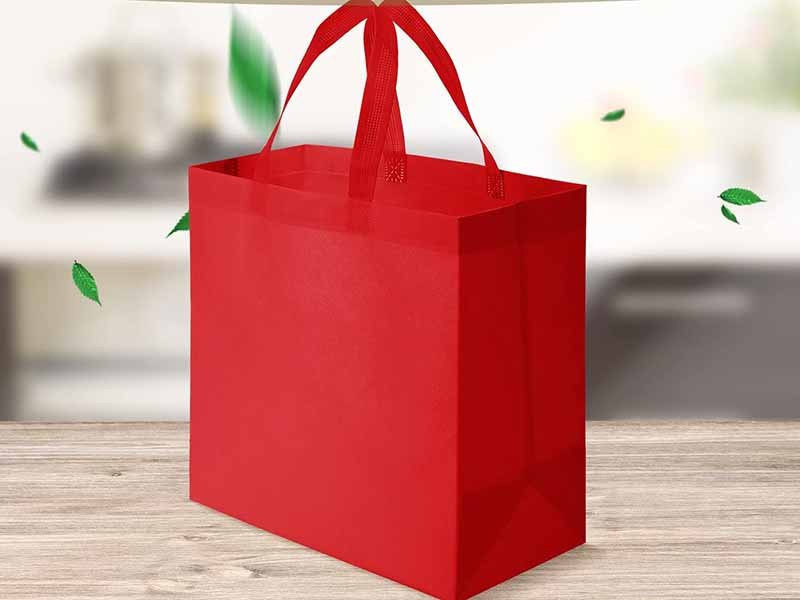
Commonly used non woven bag types include tote bags, grocery bags, die-cut handle bags, drawstring bags, laminated shopping bags, and promotional bags. These styles are popular because they are lightweight, reusable, cost-effective, and easy to customize. Different types are chosen based on load capacity, reuse frequency, branding needs, and industry application.
Which non woven tote bags are most widely used?
Non woven tote bags are the most common and versatile type.
Key features:
- open-top or zip-top design
- two handles or shoulder straps
- flat or boxed bottom
They are widely used in grocery stores, retail shops, and daily shopping. With GSM ranging from 80–120, tote-style non woven bags balance durability and affordability.
Which non woven grocery and shopping bags are popular?
These bags are designed specifically for repeated shopping use.
Typical characteristics:
- reinforced handles
- higher GSM fabric
- box bottom for stability
They are often used by supermarkets and convenience stores as a reusable alternative to plastic bags.
Which die-cut handle non woven bags are used for promotions?
Die-cut handle bags are lightweight and cost-efficient.
Features:
- integrated handle cut into the fabric
- lower GSM
- compact and easy to distribute
They are commonly used at trade shows, exhibitions, and promotional events where large quantities are needed at low cost.
Which laminated non woven bags are used for heavier loads?
Laminated non woven bags include an extra PP film layer.
Benefits:
- improved water resistance
- enhanced durability
- higher-quality print appearance
They are often chosen for premium retail or branded shopping bags.
Which non woven drawstring bags are commonly used?
Drawstring non woven bags are popular for:
- sports events
- school activities
- promotional giveaways
They are lightweight, simple, and easy to carry, though not intended for heavy loads.
Which industries use non woven bags the most?
Key industries include:
- retail & supermarkets
- exhibitions & trade shows
- corporate branding
- food & takeaway services
Their wide adoption is driven by predictable cost and fast production.
How do brands choose the right non woven bag type?
Selection depends on:
- intended load
- reuse cycles
- branding visibility
- cost targets
Manufacturers like Szoneier help brands match bag types to real usage rather than assumptions.
How Do You Choose the Right Non Woven Bag
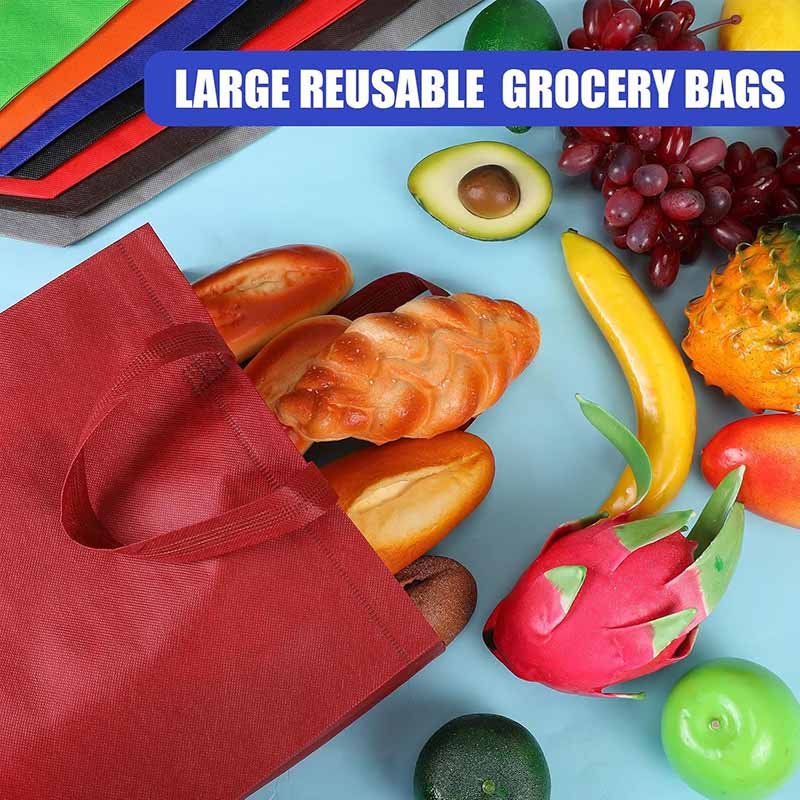
To choose the right non woven bag, you should consider its intended use, load capacity, fabric thickness (GSM), handle structure, and branding requirements. The best non woven bag balances durability, cost, and appearance while matching how the bag will actually be used. Selecting the correct specifications early helps avoid quality issues, unnecessary cost, and poor user experience.
How does the intended use determine the right non woven bag?
The first and most important step is defining how the bag will be used.
- Promotional giveaways → light-duty, lower GSM
- Daily shopping or retail → medium GSM, reinforced handles
- Heavier or repeated use → higher GSM, boxed bottom or lamination
Choosing without a clear use case often leads to over-specification (wasted cost) or under-specification (quality complaints).
How do thickness (GSM) and fabric quality affect performance?
GSM directly impacts strength, feel, and cost.
Typical guidance:
- 60–70 GSM → events, promotions, short-term use
- 80–100 GSM → standard shopping and retail
- 100–120 GSM → heavier loads and extended reuse
However, increasing GSM alone is not always the best solution. Proper structure and handle design can often improve performance more efficiently than simply adding material.
How should you choose the right handle type and attachment?
Handles are the most stressed part of a non woven bag.
Common options include:
- non woven handles (cost-effective)
- PP webbing handles (stronger, more comfortable)
- die-cut handles (low cost, light use)
For daily use, reinforced stitching or ultrasonic welding at handle attachment points is essential to prevent failure.
How do bag structure and shape influence usability?
Structure affects how the bag performs in real life.
- Flat bags → simple, low cost, limited capacity
- Box-bottom bags → better stability and load distribution
- Laminated bags → improved water resistance and durability
A well-designed structure often improves usability more than higher GSM alone.
How should branding and printing requirements be considered?
Non woven bags are popular because they are easy to customize.
Key considerations:
- logo size and placement
- number of colors
- printing method (silk screen, heat transfer)
Clear branding requirements help manufacturers select the right fabric surface and printing process, ensuring clean and durable logos.
How does budget influence specification choices?
Budget should guide smart trade-offs, not just cost cutting.
For example:
- medium GSM + reinforced handles often outperform low GSM + thick printing
- standardized sizes reduce material waste and cost
Balancing cost and performance is key to long-term satisfaction.
How should brands choose non woven bags for OEM or private label projects?
For brands, selection is both a product and business decision.
Best practices include:
- defining target market and price point
- testing samples with real use scenarios
- aligning specifications with scalable production
Experienced manufacturers like Szoneier help brands optimize specifications early, avoiding costly revisions during mass production.
What questions should you ask before finalizing a non woven bag?
Before confirming production, ask:
- What load will the bag carry regularly?
- How many reuse cycles are expected?
- Is the handle strong enough for daily use?
- Does the GSM match the real purpose?
If these questions are clearly answered, the bag choice is likely correct.
Is It Profitable to Manufacture Non Woven Bags
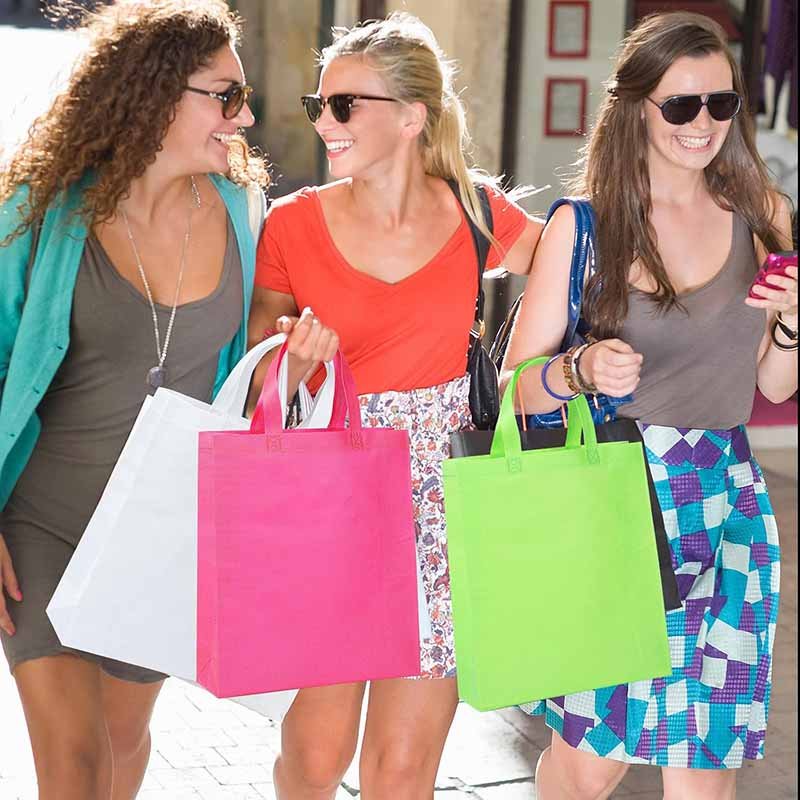
Yes, manufacturing non woven bags is generally profitable due to low material costs, fast production cycles, and strong global demand for reusable and promotional bags. Profitability increases with bulk orders, standardized designs, and efficient printing and assembly processes. For brands and OEM buyers, non woven bags offer attractive margins when specifications are optimized for scale rather than over-engineered.
Why are non woven bags considered a high-margin product?
Non woven bags benefit from a simple and scalable cost structure.
Key reasons include:
- low-cost polypropylene raw material
- fast, automated fabric production
- simplified cutting and assembly
- minimal waste in standardized designs
Compared to woven or canvas bags, non woven bags require less labor and fewer processing steps, which directly improves gross margin at scale.
How does order volume affect profitability?
Volume is one of the strongest profit drivers.
- Small orders → higher unit cost, lower margin
- Medium orders → stable margin
- Large bulk orders → optimized material usage, lower labor cost per unit
For factories, bulk production improves machine efficiency. For buyers, it significantly reduces per-unit cost, improving resale margins.
How does customization impact cost and profit?
Customization adds perceived value without proportional cost increase.
Common custom elements:
- logo printing
- custom colors
- handle variations
- size adjustments
Because non woven fabric prints easily, branding often increases product value far more than it increases production cost—especially in promotional and retail markets.
What role does GSM selection play in profitability?
Over-specification is a common profit killer.
- Too low GSM → quality complaints, returns
- Too high GSM → unnecessary material cost
The most profitable projects use just enough GSM combined with smart structure (reinforced handles, boxed bottoms) rather than excessive thickness.
Are non woven bags profitable for brands and resellers?
For brands and resellers, non woven bags offer:
- predictable unit pricing
- flexible customization
- strong demand in retail and promotions
They are often used as:
- retail shopping bags
- branded giveaways
- paid add-on items
Low entry cost makes them attractive for testing new markets or campaigns.
How does production efficiency affect factory margins?
Factories with:
- in-house fabric sourcing
- automated cutting and welding
- experienced QC systems
achieve higher yield and lower defect rates. This efficiency directly improves profitability and delivery reliability.
What are common mistakes that reduce profitability?
Profit is often lost through:
- unclear specifications
- frequent design changes
- unrealistic price targets
- ignoring real usage needs
Early technical alignment between buyer and manufacturer prevents these issues.
Why do many brands choose China to manufacture non woven bags?
China offers:
- mature non woven material supply chains
- experienced bag manufacturing infrastructure
- competitive labor-to-automation balance
- fast sampling and scaling capability
Factories like Szoneier, with over 18 years of bag manufacturing experience, help buyers control cost while maintaining consistent quality.
When are non woven bags less profitable?
Non woven bags may be less profitable when:
- very small quantities are ordered
- extreme durability is required (woven bags may be better)
- overly complex designs reduce production efficiency
Understanding product-market fit is essential.
Conclusion
Non woven bags may look simple, but delivering consistent quality, correct GSM, clean printing, and reliable lead times requires real manufacturing experience.
Szoneier, with over 18 years of bag R&D and manufacturing experience.
Looking to develop or customize non woven bags for your brand or promotion?
Contact Szoneier today to discuss materials, specifications, and OEM / Private Label solutions tailored to your market.