Skip to content
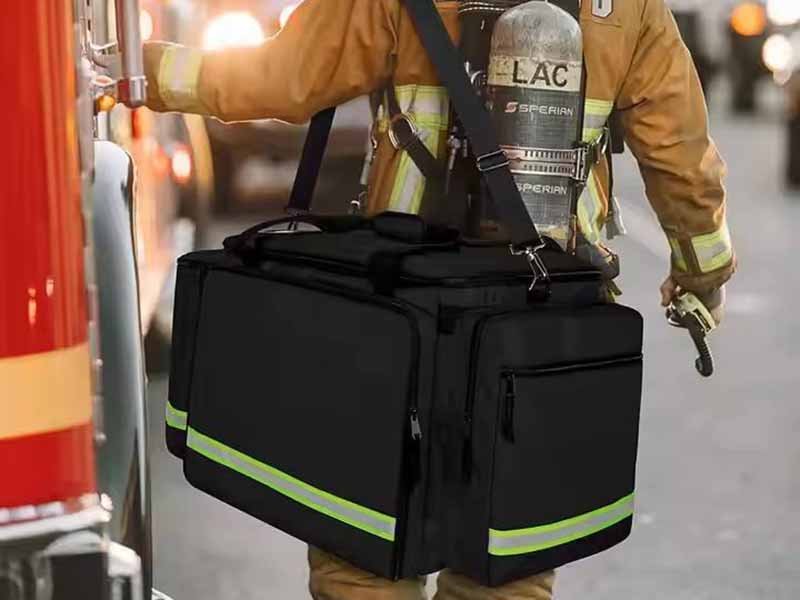
Firefighting is one of the most demanding professions in the world, and the equipment firefighters rely on is both expensive and safety-critical. Yet one essential item is often underestimated: the firefighting gear bag. To many outsiders, it looks like just a large duffel or backpack. To firefighters and departments, however, it is a critical link between readiness, safety, and long-term equipment protection.
A poorly designed gear bag can contaminate clean spaces, damage turnout gear, or slow down response times. A well-engineered one does the opposite: it organizes, isolates, transports, and protects lifesaving equipment under extreme conditions. As departments modernize and health risks such as contamination exposure receive more attention, firefighting gear bags have evolved from simple carry bags into specialized equipment systems.
Firefighting gear bags are heavy-duty storage and transport bags designed to carry and protect firefighter equipment such as turnout gear, helmets, boots, gloves, and SCBA accessories. They help organize gear, prevent contamination, and improve readiness. Modern firefighting gear bags use abrasion-resistant, fire-resistant, and waterproof materials and are often customized for department use.
Behind this simple definition lies a complex world of materials, safety standards, contamination control, and operational efficiency. Understanding what firefighting gear bags are—and how they differ by type and function—is the first step toward choosing the right solution for professional use.
What Are Firefighting Gear Bags
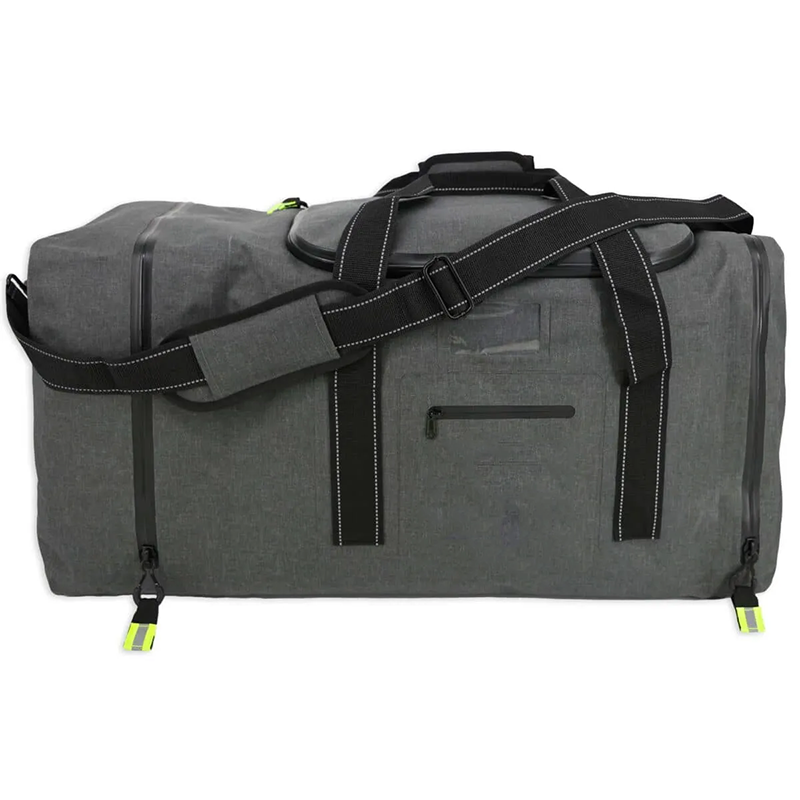
Firefighting gear bags are heavy-duty storage and transport bags designed specifically for firefighters to carry, protect, and isolate personal protective equipment (PPE) such as turnout gear, helmets, boots, gloves, and SCBA accessories. Unlike regular duffel bags, firefighting gear bags focus on durability, contamination control, organization, and operational readiness in harsh environments.
What is the primary purpose of a firefighting gear bag?
The primary purpose of a firefighting gear bag is not convenience, but readiness and protection. Firefighters rely on these bags to ensure that all essential PPE is stored together, easy to access, and protected from damage between calls.
A well-designed gear bag allows firefighters to:
- Transport full PPE safely between station, vehicle, training site, and home
- Protect gear from abrasion, moisture, UV exposure, and impact
- Reduce setup time when responding to emergencies
In professional firefighting operations, missing or damaged gear is not a minor inconvenience—it can directly affect response time and personal safety.
What equipment is typically stored inside firefighting gear bags?
A standard firefighting gear bag is designed to hold a complete PPE system, which often includes:
- Turnout coat and turnout pants
- Firefighter helmet
- Fire boots
- Gloves and protective hood
- Personal tools or flashlights
- SCBA mask (depending on bag design)
Because this equipment is bulky and heavy, firefighting gear bags must handle high load weights while maintaining structural integrity and ease of handling.
How are firefighting gear bags different from regular duffel bags?
Although they may look similar at first glance, firefighting gear bags are fundamentally different from consumer duffel bags.
Key differences include:
- Reinforced stitching and load-bearing handles
- Abrasion-resistant and water-resistant fabrics
- Heavy-duty zippers designed for gloved hands
- Compartment layouts tailored to PPE shapes
- Features supporting contamination control
A regular duffel bag is built for clothing. A firefighting gear bag is built for safety-critical equipment under extreme use conditions.
Why are firefighting gear bags considered part of the safety system?
Modern fire departments increasingly treat gear bags as part of the overall firefighter safety ecosystem.
Because turnout gear can absorb:
- Smoke particulates
- Carcinogenic residues
- Chemical contaminants
Proper storage and isolation are essential. Firefighting gear bags help prevent contaminants from spreading to:
- Fire apparatus interiors
- Personal vehicles
- Living quarters and homes
This makes gear bags not just storage tools, but risk-reduction equipment.
What is a gear check bag and how does it differ?
A gear check bag is a specialized firefighting bag used primarily for inspection, auditing, and maintenance rather than daily transport.
Key characteristics include:
- Full-opening or lay-flat design
- Clear organization for inspection
- Lighter weight compared to daily-use gear bags
Gear check bags are often used during training, compliance checks, or equipment rotation, complementing—not replacing—standard firefighting gear bags.
Are firefighting gear bags used only by firefighters?
While designed for firefighters, these bags are also used by:
- Fire academies and training centers
- Industrial fire brigades
- Airport fire and rescue teams
- Emergency response units
Any profession requiring heavy PPE management, contamination control, and rapid deployment can benefit from firefighting-style gear bags.
How have firefighting gear bags evolved in recent years?
Historically, firefighters used basic canvas or military-style duffels. Today’s gear bags have evolved due to:
- Increased awareness of occupational health risks
- Heavier and more complex PPE systems
- Demand for better organization and durability
Modern firefighting gear bags now incorporate:
- Modular compartments
- Washable or removable liners
- Reflective elements
- Hybrid duffel–backpack carry systems
This evolution reflects the growing professionalism and safety focus within fire services.
Why does manufacturing quality matter for firefighting gear bags?
Because these bags operate in high-stress environments, manufacturing quality directly affects reliability. Weak stitching, low-grade fabrics, or poor zipper selection can lead to failure under load.
Manufacturers with extensive bag R&D and production experience—such as Szoneier—design firefighting gear bags with:
- Load-tested structures
- Application-specific materials
- Consistent quality control
This ensures the bag performs as reliably as the gear it carries.
Why Are Firefighting Gear Bags Important
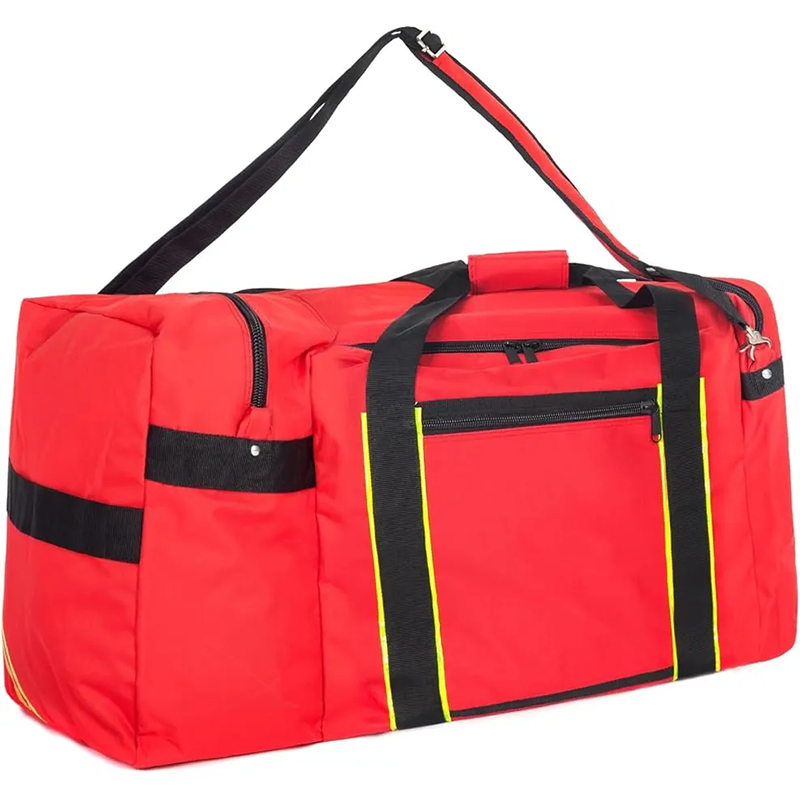
Firefighting gear bags are important because they protect costly PPE, improve emergency readiness, reduce contamination risks, and extend equipment lifespan. Proper gear storage and transport help prevent gear damage, cross-contamination, and disorganization, directly supporting firefighter safety, operational efficiency, and long-term health protection.
How do firefighting gear bags protect expensive PPE?
Firefighter PPE is a major investment. A full set of turnout gear, helmet, boots, and accessories can cost thousands of dollars per firefighter. Without proper protection, this equipment is easily damaged during transport and storage.
Firefighting gear bags help by:
- Shielding gear from abrasion, tearing, and crushing
- Protecting against moisture that leads to mildew and material breakdown
- Preventing UV exposure that weakens fabrics and coatings
Over time, proper storage can extend gear service life, reducing replacement frequency and overall department costs.
Why do gear bags improve emergency readiness and response speed?
In emergency services, time and organization save lives. Firefighting gear bags ensure that all essential equipment is stored together, consistently, and predictably.
Benefits include:
- Faster deployment with no missing items
- Reduced confusion during shift changes or mutual aid responses
- Easier transport between stations, vehicles, and training sites
A firefighter who knows exactly where their gear is—and that it’s ready to use—responds more confidently and efficiently.
How do firefighting gear bags reduce contamination risks?
Modern firefighting recognizes contamination as a serious occupational hazard. Turnout gear absorbs:
- Smoke particulates
- Carcinogenic residues
- Chemical and biological contaminants
Firefighting gear bags act as containment systems, helping:
- Isolate contaminated gear from clean environments
- Prevent transfer to vehicles, stations, or homes
- Support decontamination and cleaning workflows
This makes gear bags a frontline tool in long-term health protection strategies.
Why is gear separation critical for firefighter health?
Cross-contamination is one of the most overlooked risks in firefighting. Without proper bags, contaminated PPE can come into contact with:
- Personal clothing
- Vehicle interiors
- Living quarters
Dedicated firefighting gear bags help enforce physical separation between dirty and clean zones. Some designs include washable liners or wipe-clean interiors, further supporting hygiene and health protocols.
How do gear bags support compliance and professional standards?
Fire departments increasingly operate under formal safety, inspection, and accountability standards. Proper gear storage is often part of these expectations.
Firefighting gear bags support compliance by:
- Enabling routine gear inspections
- Supporting equipment tracking and identification
- Reducing damage that could cause non-compliance
Well-organized storage reflects a department’s professionalism and commitment to safety.
Why are firefighting gear bags important beyond the fireground?
The importance of gear bags extends beyond emergency scenes.
They are essential during:
- Training and certification programs
- Equipment transport between facilities
- Gear cleaning and maintenance cycles
- Mutual aid deployments
In each scenario, the bag ensures gear integrity and accountability outside of immediate fire response.
How does poor gear storage increase long-term costs?
Using inadequate or improvised bags often leads to:
- Accelerated gear wear
- Higher repair and replacement rates
- Increased contamination cleanup costs
- Greater health-related risks and liabilities
What appears as a “cheap solution” often becomes a long-term financial and operational burden.
Why does manufacturing quality matter for firefighting gear bags?
Because these bags carry heavy, safety-critical equipment, manufacturing quality directly affects reliability.
High-quality gear bags feature:
- Reinforced load-bearing points
- High-denier abrasion-resistant fabrics
- Industrial-grade zippers and hardware
Which Types of Firefighting Gear Bags Are There
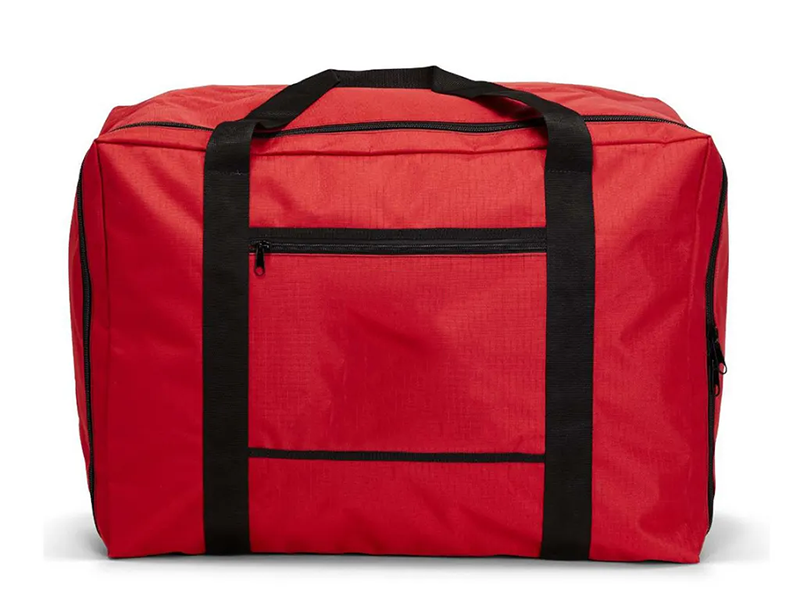
There are several types of firefighting gear bags, including turnout gear bags, SCBA and mask bags, helmet and boot bags, gear check bags, duffel-style gear bags, and backpack-style gear bags. Each type is designed for specific equipment loads, transport methods, and operational scenarios, helping firefighters protect gear, stay organized, and reduce contamination risks.
What are turnout gear bags?
Turnout gear bags are the most common and essential type of firefighting gear bag. They are designed to carry a full set of firefighter PPE, typically including turnout coat, pants, boots, gloves, hood, and helmet.
Key characteristics:
- Large capacity to handle bulky PPE
- Heavy-duty fabrics to support high load weight
- Reinforced handles and stress points
- Often duffel-style with wide openings
These bags prioritize capacity and durability over compactness and are widely used for daily duty storage and transport between station, vehicle, and home.
Which bags are used for SCBA, masks, and respiratory equipment?
SCBA-related equipment often requires separate protection due to its sensitivity and hygiene requirements.
Common SCBA bag types include:
- SCBA mask bags with padded interiors
- Respirator storage bags
- Small protective cases for regulators
These bags protect lenses, seals, and valves from damage and contamination. Many departments require respiratory equipment to be stored separately from turnout gear to support cleaning and inspection protocols.
What types of bags are used for firefighter helmets and boots?
Helmets and boots experience significant wear if stored improperly.
Dedicated helmet and boot bags offer:
- Structured or semi-rigid protection
- Ventilation panels to reduce moisture and odor
- Separation from contaminated clothing
These bags are often used alongside a main turnout gear bag, especially in departments emphasizing gear longevity and hygiene.
What is a gear check bag and when is it used?
A gear check bag is designed specifically for inspection, auditing, and maintenance activities, not daily emergency response.
Typical use cases include:
- Routine PPE inspections
- Training and certification checks
- Equipment rotation or replacement programs
Gear check bags often feature:
- Full clamshell or lay-flat opening
- Clear internal organization
- Lighter construction compared to turnout bags
They support compliance and accountability rather than heavy transport.
What are duffel-style firefighting gear bags?
Duffel-style gear bags are the traditional format for firefighting equipment transport.
Advantages:
- Large opening for quick access
- Simple, rugged construction
- Easy loading and unloading from vehicles
Limitations:
- Weight carried primarily by hands or shoulders
- Less ergonomic for long-distance carrying
Duffel gear bags remain the most widely used option for station-based and vehicle-based operations.
What are backpack-style firefighting gear bags?
Backpack-style gear bags distribute weight across the shoulders and back, making them useful in urban, high-rise, or long-carry scenarios.
Key features:
- Padded shoulder straps
- Improved weight distribution
- Often smaller than duffel bags
However, backpack designs may limit capacity and accessibility. Many firefighters prefer hybrid designs that combine backpack straps with duffel-style openings.
What’s the difference between gear bags and firefighting backpacks?
Although sometimes used interchangeably, there are clear differences:
| Feature | Gear Bag | Backpack |
|---|---|---|
| Carry method | Hand / shoulder | Back |
| Capacity | Large | Medium |
| Access | Wide opening | Narrower |
| Best use | Vehicle & station | Long carry |
Choosing between them depends on operational environment, not personal preference alone.
Are there specialized or hybrid firefighting gear bags?
Modern fire services increasingly adopt hybrid and modular designs, such as:
- Duffel bags with hidden backpack straps
- Modular compartment systems
- Bags with removable liners for cleaning
These designs aim to balance capacity, ergonomics, and hygiene, reflecting evolving firefighting practices.
Which firefighting gear bag type is best for your operation?
There is no single “best” type. The right choice depends on:
- Type and amount of gear carried
- Transport method (vehicle vs on-foot)
- Contamination control policies
- Storage space and workflow
What Materials Are Firefighting Gear Bags Made From
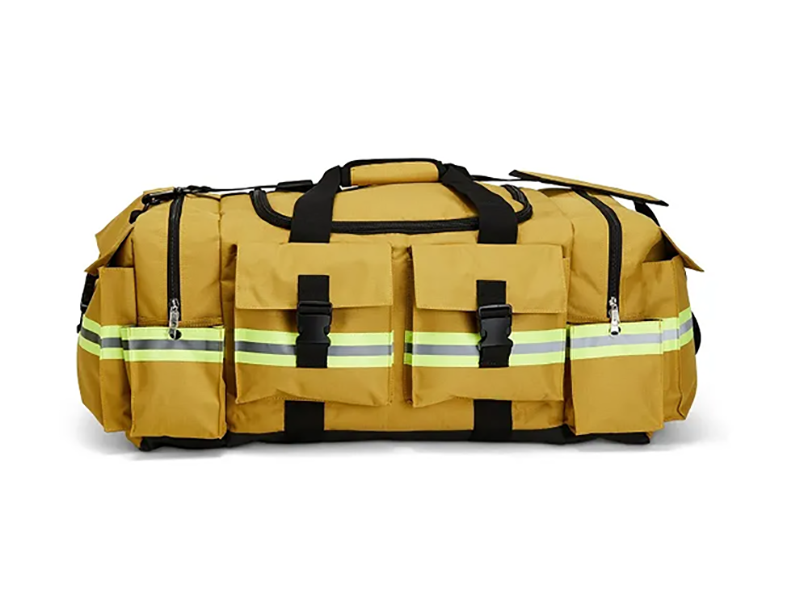
Firefighting gear bags are typically made from heavy-duty synthetic materials such as high-denier polyester, nylon, PVC- or TPU-coated fabrics, and reinforced composite textiles. These materials are selected for abrasion resistance, load strength, moisture protection, and ease of decontamination. Inner linings are often waterproof, wipe-clean, or removable to support contamination control and hygiene requirements.
Why are synthetic fabrics preferred over natural fabrics?
Firefighting gear bags are almost never made from natural fibers like cotton or canvas. The reason is performance and safety.
Synthetic fabrics outperform natural ones in:
- Abrasion resistance (dragging on concrete, asphalt, metal surfaces)
- Load-bearing strength (supporting 25–40 kg of gear)
- Moisture resistance (preventing mildew and odor)
- Dimensional stability (maintaining shape under stress)
Natural fabrics absorb moisture, degrade faster, and are harder to decontaminate. For professional firefighting environments, synthetics provide predictable performance and longer service life.
What role does high-denier polyester play in gear bags?
High-denier polyester (commonly 600D, 900D, or 1680D) is one of the most widely used outer materials for firefighting gear bags.
Key advantages:
- Excellent abrasion resistance
- Cost-effective compared to specialty nylons
- Good UV resistance
- Consistent quality in large-scale production
Polyester is often chosen for daily-use turnout gear bags where durability, price stability, and ease of customization are important.
When is nylon a better choice than polyester?
Nylon fabrics—especially ballistic or ripstop nylon—are sometimes selected for premium or weight-sensitive designs.
Nylon offers:
- Higher tensile and tear strength
- Better flexibility in cold environments
- Lighter weight at similar strength levels
However, nylon is typically more expensive and may absorb more moisture unless treated. It is often used in backpack-style or hybrid gear bags where ergonomics matter.
Why are PVC- or TPU-coated fabrics commonly used?
Coated fabrics add functional protection beyond basic textiles.
Benefits include:
- Waterproof barriers to block moisture penetration
- Easy wipe-clean surfaces for decontamination
- Improved resistance to oils, chemicals, and smoke residue
PVC coatings are cost-effective and durable, while TPU coatings are more flexible and environmentally friendly. These coatings are especially valuable for contamination control and hygiene-focused departments.
Are firefighting gear bags fire-resistant or flame-retardant?
Contrary to common assumptions, most firefighting gear bags are not designed to be fireproof.
Why?
- Gear bags are not used inside active fire zones
- Flame-resistant materials significantly increase cost
- Durability and contamination control are higher priorities
Some specialty bags may use flame-retardant treated fabrics, but for most applications, abrasion resistance and waterproofing deliver more practical value.
What materials are used for inner linings and compartments?
Interior materials are just as important as outer shells.
Common lining materials include:
- Waterproof polyester or PEVA liners
- TPU-coated inner layers
- Removable, washable inner bags
These materials help:
- Contain contaminated gear
- Prevent absorption of harmful residues
- Simplify cleaning and maintenance
Modern gear bags increasingly treat the interior as a containment system, not just a fabric layer.
How do zippers, webbing, and hardware affect material performance?
Material choice extends beyond fabric.
Critical components include:
- Heavy-duty zippers (often #8–#10 size)
- Reinforced polyester or nylon webbing
- Load-tested buckles and D-rings
Weak hardware can cause failure even if the fabric is strong. High-quality gear bags balance fabric strength with equally robust components.
How do materials impact weight, cost, and lifespan?
There is always a trade-off:
| Priority | Material Strategy |
|---|---|
| Maximum durability | High-denier fabric + reinforced coating |
| Lower weight | Nylon or hybrid constructions |
| Easy decontamination | Coated or lined interiors |
| Cost efficiency | Polyester-based constructions |
Smart material selection focuses on operational needs, not overengineering.
Why does material engineering matter in manufacturing?
Material selection affects:
- Sewing complexity
- Seam reinforcement requirements
- Quality control standards
- Long-term consistency
How to Choose the Right Firefighting Gear Bag
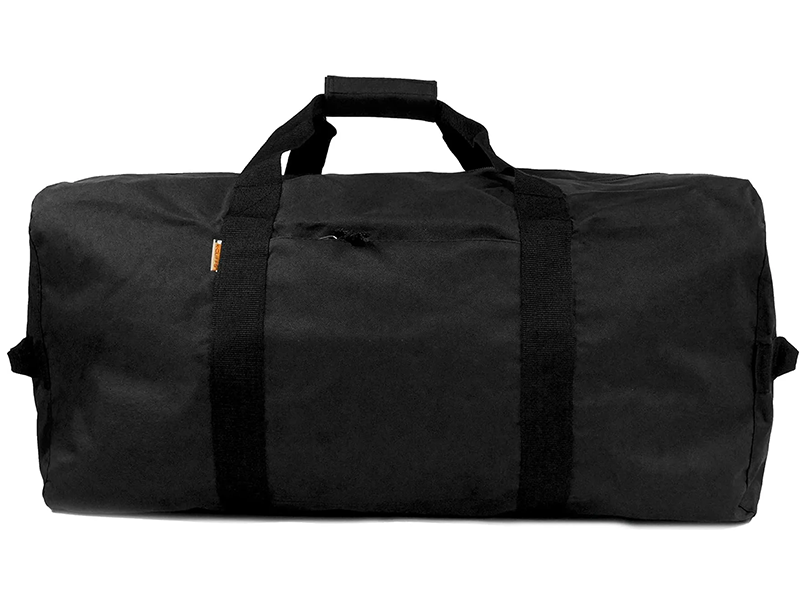
To choose the right firefighting gear bag, consider the type and amount of gear carried, load weight, contamination control needs, durability, and transport method. The best gear bag offers sufficient capacity, reinforced construction, moisture protection, easy cleaning, and practical organization without unnecessary bulk or features.
What type of firefighting gear will the bag carry?
The first and most important question is what exactly goes inside the bag. Firefighting gear bags are not one-size-fits-all.
Common scenarios include:
- Full turnout gear (coat, pants, boots, helmet, gloves, hood)
- Partial PPE plus personal tools
- Separate storage for SCBA masks or respiratory equipment
If the bag is too small, gear gets compressed and damaged. If it’s oversized, the bag becomes bulky and harder to manage. Matching the bag’s internal layout to the actual gear set is critical.
How much weight must the bag safely support?
A fully loaded firefighting gear bag can easily exceed 25–40 kg (55–88 lbs).
When evaluating load capacity, look beyond stated dimensions and ask:
- Are handles double-stitched or reinforced?
- Is the bottom panel strengthened?
- Are stress points bar-tacked or boxed?
Structural reinforcement often matters more than fabric thickness alone. A bag that “looks strong” may still fail under real load if reinforcement is poorly designed.
Should you choose a duffel-style, backpack-style, or hybrid bag?
Carrying method directly affects usability.
- Duffel-style bags: Best for vehicle transport and station storage. Large opening, easy access, maximum capacity.
- Backpack-style bags: Better for long carries, urban environments, or stairs. Improved ergonomics, smaller capacity.
- Hybrid designs: Combine duffel capacity with backpack straps. Increasingly popular for flexibility.
Choosing the right format depends on how far and how often the bag is carried, not personal preference alone.
How important is contamination control in your operation?
Modern fire services increasingly prioritize health risk reduction. Gear bags play a key role.
Features to consider:
- Water-resistant or coated interiors
- Removable, washable liners
- Ventilation panels to reduce moisture buildup
- Separation between dirty gear and clean accessories
Departments with strong contamination control policies often treat gear bags as containment tools, not just transport bags.
What level of durability is required for daily use?
Daily-use firefighting gear bags face constant abuse:
- Dragging on concrete and asphalt
- Compression in vehicle compartments
- Repeated loading and unloading
Look for:
- High-denier synthetic fabrics
- Reinforced base panels
- Industrial-grade zippers and webbing
Overengineering slightly at the beginning often saves significant replacement cost over time.
How does organization and compartment design affect efficiency?
Good organization reduces setup time and mistakes.
High-value organizational features include:
- Dedicated boot or helmet compartments
- Internal dividers for gloves and accessories
- Clear ID windows or label panels
However, excessive compartments can reduce usable space. The best designs balance clarity with simplicity.
Should visibility and identification be considered?
In busy stations or multi-agency responses, quick identification matters.
Useful features include:
- Reflective strips for low-light visibility
- Name panels or Velcro ID patches
- Color coding by unit or role
These details improve accountability and reduce gear mix-ups.
How do maintenance and cleaning requirements affect bag choice?
Firefighting gear bags should be easy to clean.
Ask:
- Can the interior be wiped down easily?
- Are liners removable?
- Do materials resist odor and residue absorption?
Bags that are difficult to clean quickly become hygiene liabilities.
How should budget be evaluated beyond unit price?
The cheapest option is rarely the best value.
A smarter evaluation considers:
- Expected service life
- Replacement frequency
- Impact on PPE longevity
- Health and contamination risk
Spending slightly more on a durable, well-designed gear bag often reduces total cost of ownership.
Why does supplier experience matter when choosing gear bags?
Firefighting gear bags are professional equipment, not consumer accessories. Manufacturers with experience in heavy-duty, functional bag engineering understand real-world stress points.
An experienced supplier such as Szoneier supports buyers by:
- Advising on material and structure choices
- Offering free design optimization
- Providing rapid sampling and low-MOQ customization
- Maintaining consistent quality control
Are Firefighting Gear Bags Customizable
Yes, firefighting gear bags are highly customizable. Fire departments, distributors, and brands can customize size, materials, compartments, logos, colors, and functional features to match operational needs. OEM and private label manufacturing allows firefighting gear bags to be tailored for durability, contamination control, identification, and budget requirements rather than relying on one-size-fits-all designs.
Why do standard firefighting gear bags often fall short?
Off-the-shelf firefighting gear bags are designed to meet average needs, not specific operational realities. In practice, fire departments vary widely in:
- PPE configurations
- SCBA storage policies
- Contamination control protocols
- Transport methods (apparatus vs personal vehicle)
A standard bag may be too small, poorly ventilated, or lack proper identification features. Customization allows departments to solve real operational pain points, rather than adapting their workflow to a generic product.
Which structural elements can be customized?
Firefighting gear bag structure is one of the most common customization areas.
Typical structural options include:
- Overall bag dimensions and capacity
- Duffel, backpack, or hybrid carry systems
- Reinforced bottom panels
- Handle placement and load reinforcement
Custom structure ensures the bag supports actual gear weight and carrying habits without premature failure.
How can compartments and internal layout be customized?
Internal organization directly affects efficiency and hygiene.
Customization options often include:
- Separate boot or helmet compartments
- Dedicated SCBA mask pockets
- Dirty/clean gear separation
- Removable or washable inner liners
Departments with strong contamination control policies often prioritize interior containment design during customization.
What material and performance upgrades are possible?
Material customization allows buyers to match performance to environment and budget.
Options may include:
- Higher-denier fabrics for extreme durability
- PVC or TPU coatings for easy cleaning
- Water-resistant or waterproof constructions
- Abrasion-resistant base materials
These upgrades are especially valuable for departments operating in harsh climates or high-frequency response environments.
Can logos, names, and unit identification be added?
Branding and identification are among the most requested custom features.
Common options:
- Screen-printed department logos
- Embroidered names or unit numbers
- Velcro ID patches
- Reflective lettering for visibility
Clear identification reduces gear mix-ups, improves accountability, and enhances professional appearance during multi-agency responses.
How does private label and OEM customization work?
OEM and private label programs allow buyers to:
- Customize design without owning factories
- Maintain consistent quality across batches
- Control branding and specifications
- Scale production as needs grow
This is particularly valuable for distributors, emergency equipment suppliers, and brands serving multiple departments.
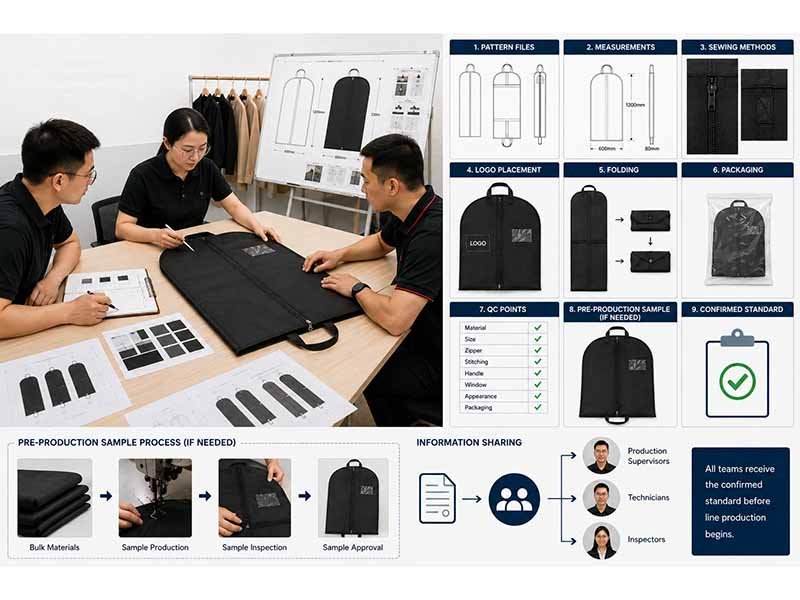
What is the typical customization process timeline?
A professional customization workflow usually includes:
- Requirement review (gear type, load, usage)
- Design proposal and material selection
- Prototype or sample development
- Sample testing and approval
- Mass production and QC
With experienced manufacturers, sampling can be completed in days rather than weeks, allowing departments to validate designs before committing to volume orders.
How does customization affect cost and MOQ?
Customization does not always mean high cost.
Factors that influence pricing include:
- Complexity of structural changes
- Material upgrades
- Branding methods (print vs embroidery)
- Order quantity
Many manufacturers offer low-MOQ customization, making tailored solutions accessible even to smaller departments or pilot programs.
Is customization worth it for firefighting gear bags?
For professional firefighting operations, the answer is often yes.
Customization delivers:
- Better gear protection
- Improved contamination control
- Higher user satisfaction
- Longer product lifespan
When evaluated over the life of the bag, custom gear bags often provide better value and lower total cost of ownership than generic alternatives.
Conclusion
Firefighting gear bags are not just storage tools—they are part of a firefighter’s daily safety system. The right bag protects expensive PPE, supports contamination control, improves readiness, and extends gear lifespan. The wrong one becomes a weak link.
Szoneier is a China-based bag manufacturer with over 18 years of experience in R&D, manufacturing, and global supply of professional bags. Szoneier specializes in custom, private label, and OEM/ODM bag solutions.
With 100% quality assurance, free design support, low MOQs, fast sampling, free samples, and short lead times, Szoneier helps international buyers and high-end brands turn functional requirements into reliable, scalable products.
Contact Szoneier today to discuss your firefighting gear bag project, customization needs, and target specifications.