Skip to content
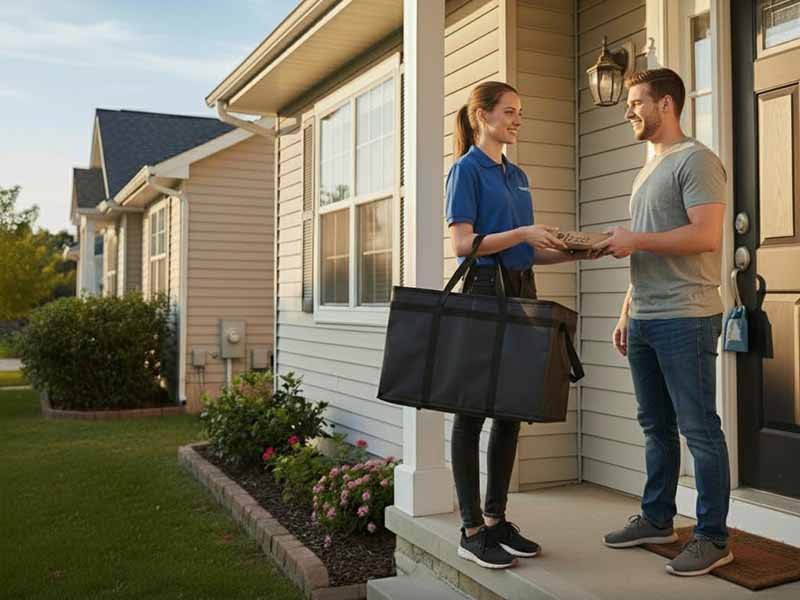
Delivering food at the right temperature has quietly become one of the biggest factors shaping modern dining experiences. Whether it’s a Friday night pizza order, a grocery delivery packed with frozen items, or a catering company transporting 200 lunch boxes, customers expect the food to arrive hot, fresh, safe, and consistent. Yet behind that expectation is a simple but powerful tool many people never think about: the insulated food delivery bag. These bags are no longer just accessories used by couriers—they are temperature-control systems engineered to manage heat, airflow, moisture, and time. Insulated food delivery bags are specialized multi-layer bags designed to keep food hot or cold during transportation. They use foam insulation, reflective liners, and heat-retaining construction to reduce heat loss and maintain food quality. Restaurants, delivery drivers, and catering services rely on these bags to preserve temperature, prevent contamination, and ensure meals arrive fresh and safe to customers.
Today, insulated bags are not just about keeping soup warm. They’re used across restaurants, delivery apps, grocery services, schools, hospitals, and meal-prep brands. They come in backpack styles, tote styles, pizza boxes, catering carriers—even waterproof and odor-proof formats. But the question remains: How do these bags actually work, what types exist, and how do you choose the right one for your business?
What Are Insulated Food Delivery Bags?

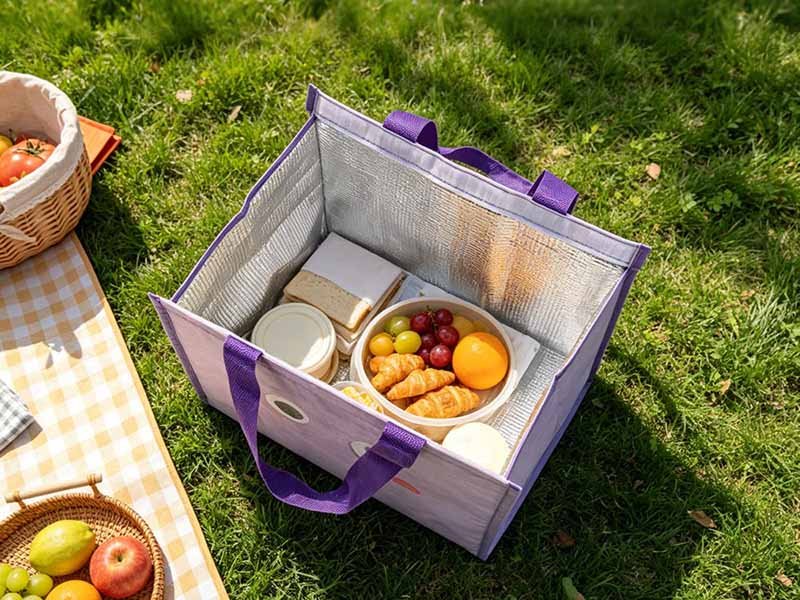
Insulated food delivery bags are engineered thermal carriers designed to maintain food temperature during transportation. They use multi-layer insulation—typically foam, reflective aluminum lining, and durable outer fabric—to reduce heat transfer and protect meals from temperature loss, moisture, and contamination. These bags ensure that hot foods stay hot and cold foods stay cold across delivery distances, supporting food safety, freshness, and customer satisfaction.
What Are Insulated Food Delivery Bags?
Insulated food delivery bags are specialized temperature-control carriers used by restaurants, delivery platforms, catering services, grocery delivery companies, meal-prep brands, and independent couriers. Unlike ordinary tote bags, insulated delivery bags are built as portable thermal systems, engineered to slow down heat transfer and protect food quality during transport.
These bags typically feature three to five functional layers working together:
1. Outer Fabric Layer (Durability + Weather Protection)
The outer shell is usually made from:
- Polyester (420D–1680D) – lightweight, cost-effective, abrasion-resistant
- Nylon (600D–1000D) – stronger, better for commercial use
- PVC / TPU Laminated Fabric – waterproof, ideal for bike couriers
- Oxford Fabric with PU Coating – waterproof + flexible
This layer shields food from rain, wind, dust, and physical impact, ensuring bags perform reliably in outdoor delivery environments.
2. Middle Foam Insulation (Thermal Barrier)
This is the core of the temperature-retention system.
Common insulation materials include:
- PE foam (lightweight, affordable, widely used)
- EVA foam (denser, premium insulation)
- EPE foam (multi-layer laminated foam for enhanced performance)
Typical thickness ranges:
- 10–15 mm for standard commercial bags
- 18–25 mm for high-performance or catering bags
This foam layer prevents heat from escaping (for hot food) and external heat from entering (for cold food).
3. Reflective Aluminum or Foil Lining (Radiant Heat Control)
The innermost layer is usually:
- Aluminum foil liner
- Metalized PET
- Heat-shield reflective film
Its job is to reflect radiant heat back toward the food, much like thermal blankets. This significantly slows down temperature loss—especially important for pizza delivery and stackable meal containers.
4. Sealed Closures (Convection Control)
Heat escapes fastest through air movement. That’s why insulated bags use:
- Heavy-duty zippers
- Wide Velcro flaps
- Double-flap closures (very effective for pizzas)
- Magnetic seals (high-end solutions)
The tighter the seal, the less heat escapes—leading to longer temperature retention times.
5. Structural Reinforcement (Shape Integrity)
Premium insulated bags include:
- Stiff panels
- PE boards
- EVA sidewalls
- Foam-reinforced bottoms
These reinforcements help the bag maintain shape under weight, prevent food crushing, and improve both insulation and durability.
What Is an Insulated Delivery Bag?
An insulated delivery bag is a purpose-built temperature management device, not just a carrying bag. It is specifically engineered to:
- Limit thermal conduction through foam layers
- Reduce convective heat loss with sealed closures
- Control radiant heat escape via reflective linings
- Maintain structural shape for efficient air circulation
- Provide food safety compliance during transport
- Protect meals from contamination, moisture, and compression
In practical terms, this means insulated bags ensure your hot soup arrives steaming—not lukewarm—and your frozen groceries don’t thaw before reaching the customer.
Key Functions & Temperature Control Basics
The three primary heat-transfer mechanisms insulated bags fight are:
- Conduction – heat escaping through materials
- Convection – heat loss from air movement
- Radiation – infrared heat naturally radiating outward
Insulated bags slow down all three by combining foam layers, air gaps, reflective films, and sealed closures.
This engineered system can maintain temperature for:
- 45–90 minutes for hot food
- 2–4 hours for cold food (with ice packs)
- 2–3 hours for catering bags with reinforced insulation
This performance is critical for restaurants, franchises, couriers, and last-mile delivery services.
How to Tell If a Bag Is Insulated
Buyers can identify a true insulated delivery bag by checking for:
✔ Multi-layer construction
Open the zipper and feel:
- Soft outer fabric
- Foam or padding layer
- Reflective lining
✔ Thickness and firmness
A properly insulated bag feels structured—not floppy.
✔ Reflective interior
Look for aluminum foil or metalized PET.
✔ Sealed seams and closures
Zippers should close tightly; flaps should cover gaps.
✔ Product specifications
Manufacturers should list:
- Foam thickness
- Fabric type
- Temperature retention duration
- Construction details
✔ Shape retention
If the bag collapses easily, insulation is likely thin or poor quality.
Why Are Insulated Bags Important for Food Delivery?
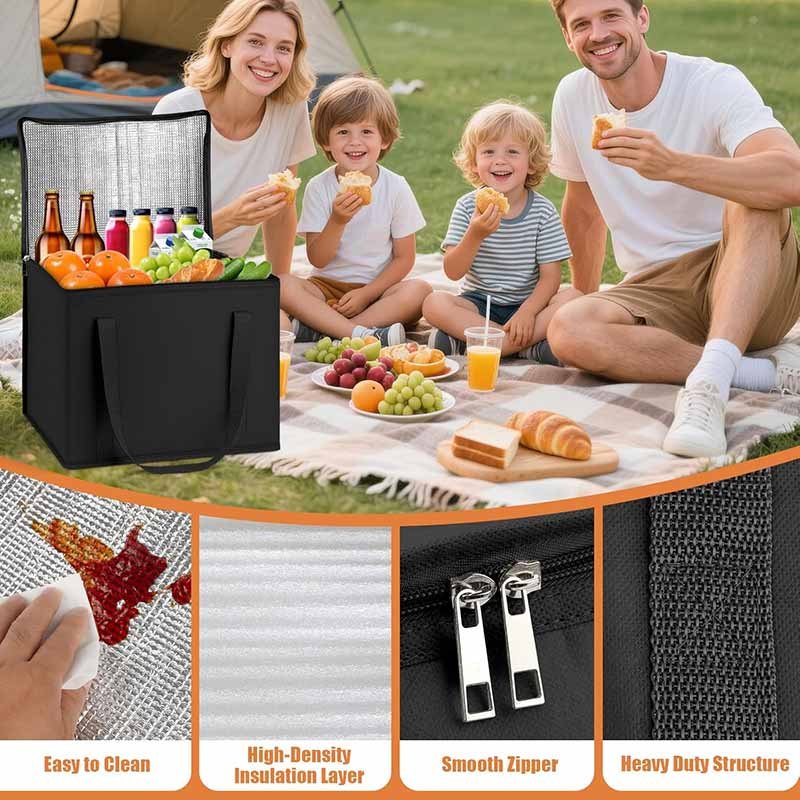
Insulated bags are essential for food delivery because they maintain safe temperatures, preserve flavor and texture, prevent contamination, and reduce customer complaints. By controlling heat loss and moisture, insulated bags keep hot foods hot and cold items cold during transport. This results in fresher meals, higher satisfaction, fewer refunds, and more consistent delivery quality for restaurants, couriers, and catering businesses.
Insulated bags are no longer optional equipment—they are a foundational part of the food delivery infrastructure. As delivery volumes rise globally and customer expectations become stricter, insulated bags ensure that every meal arrives safe, fresh, and restaurant-quality, regardless of weather, distance, or transportation method.
Whether you operate a small local restaurant, a national franchise, or a delivery fleet, insulated bags affect your brand reputation, food safety compliance, profitability, and operational efficiency.
1. Insulated Bags Ensure Food Safety & Regulatory Compliance
Food safety guidelines—such as HACCP and FDA standards—state that:
- Hot food must remain above 140°F (60°C)
- Cold food must remain below 40°F (4°C)
Between these two temperatures is the “danger zone”, where bacteria grow rapidly.
Without insulated bags, food can enter the danger zone in 10–20 minutes, especially in cold or hot outdoor environments.
Insulated bags extend the safe transportation window by maintaining stable internal temperatures for:
- 45–90 minutes for hot foods
- 2–4 hours for cold foods with ice packs
- Up to 3 hours for catering-grade insulated carriers
For businesses delivering soups, meats, dairy, sushi, prepared meals, or bulk catering trays, this temperature safety is critical.
2. Insulated Bags Preserve Flavor, Texture & Food Quality
Customers expect takeout meals to match dine-in quality. Insulated bags help preserve:
| Food Type | Delivery Risk | How Insulation Helps |
|---|---|---|
| Fried Foods | Become soggy from steam | Vented insulation reduces condensation |
| Pizza | Gets rubbery, loses heat quickly | Reflective liners retain radiant heat |
| Soups / Hot Drinks | Spill & cool rapidly | Reinforced insulation stabilizes heat |
| Desserts & Dairy | Melt or lose structure | Cold insulation prevents warming |
| Meal Prep Boxes | Temperature contamination | Multi-zone insulation separates hot & cold |
Insulated bags protect food integrity, which directly influences customer satisfaction.
3. Insulated Bags Reduce Customer Complaints & Refund Requests
Delivery platforms like Uber Eats, DoorDash, Grubhub, Deliveroo, and food delivery apps allow customers to request refunds for:
- Cold food
- Melted items
- Soggy fried foods
- Unsafe food temperatures
- Spilled contents
Restaurants using low-quality or non-insulated bags experience significantly higher refund rates.
Based on industry data from major franchises:
High-quality insulated bags reduce temperature-related complaints by 25–40%.
This directly improves profit margins, ratings, and visibility on delivery platforms.
4. Insulated Bags Improve Delivery Efficiency & Consistency
Food delivery environments include:
- Urban traffic
- Long distances
- Multiple stops
- Cold winters & hot summers
- Motorbike, bicycle, and scooter delivery
- Batch deliveries (1–5 orders at once)
Insulated bags create predictable, stable temperature control, allowing delivery teams to:
- Complete multiple drop-offs
- Handle busy periods
- Maintain consistent food quality across routes
This improves operational efficiency for restaurants, ghost kitchens, and couriers.
5. Insulated Bags Enhance Professional Image & Brand Perception
Customers judge brands not only by the food but also by:
- Packaging
- Delivery method
- Professional appearance
- Consistency
Well-designed insulated bags signal:
- Reliability
- Cleanliness
- High operational standards
- Care for food quality
For franchise chains or premium restaurants, custom-branded insulated bags reinforce brand identity and serve as mobile advertising.
6. Insulated Bags Protect Food From Environmental Conditions
Real-world delivery is unpredictable. Insulated bags protect orders from:
- Rain
- Wind chill
- Urban pollution
- Sun exposure
- Physical impact
- Temperature swings inside vehicles
For bike couriers—common in Europe, Asia, and large US cities—these bags are essential for protecting food from weather extremes.
7. Insulated Bags Reduce Operational Waste & Improve Profit Margins
Because insulated bags:
- Keep food safe
- Reduce spoilage
- Reduce delivery errors
- Minimize customer refunds
- Extend delivery range
They directly increase profit margins.
For catering businesses, insulated carriers also reduce the need for heating fuel, warming trays, or backup containers.
Why Food Temperature Matters in Delivery
Temperature determines food safety, taste quality, texture, and customer satisfaction. Food outside the safe temperature range grows bacteria quickly and loses freshness. Insulated bags preserve ideal temperatures long enough to mimic dine-in quality.
How Insulated Bags Improve Customer Satisfaction
Insulated bags reduce sogginess, prevent heat loss, maintain flavor, and ensure consistency. Customers are more likely to reorder when meals arrive hot, fresh, and visually appealing. Better food quality also reduces negative reviews and refund risks.
How Do Insulated Food Delivery Bags Work?
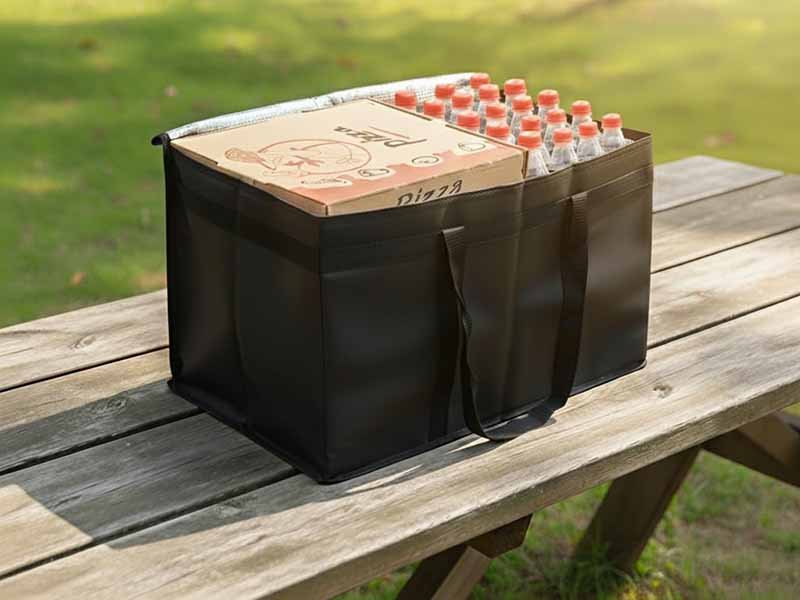
Insulated food delivery bags work by slowing heat transfer using layered insulation, reflective liners, moisture control, and sealed closures. They reduce conduction, convection, and radiant heat loss, keeping hot foods hot and cold foods cold. Materials like PE/EVA foam, aluminum foil, airtight zippers, and structured panels form a thermal barrier that stabilizes temperature during delivery.
Insulated food delivery bags are essentially portable thermal management systems engineered to maintain temperature stability over time. Their performance is based on science—specifically, how they control the three primary forms of heat transfer:
- Conduction – heat passing through solid materials
- Convection – heat lost or gained due to air movement
- Radiation – infrared heat escaping outward
A well-engineered insulated bag uses multi-layer construction to combat each of these heat-loss mechanisms simultaneously.
1. Multi-Layer Insulation System (Thermal Engineering Core)
Every insulated food delivery bag contains a combination of the following layers:
A. Outer Layer — Weather & Impact Protection
Common materials:
- 600D–1680D Polyester
- 600D–1000D Nylon
- Waterproof PVC / TPU Laminated Fabric
- Coated Oxford Fabric
This layer protects against:
- Rain
- Wind chill
- UV exposure
- Abrasion
- Dirt & contamination
A durable outer shell ensures the thermal layers inside are not compromised during heavy commercial use.
B. Middle Insulation Layer — The Thermal Barrier
This is the most important part of the bag.
Common insulation materials:
- PE Foam (lightweight & cost-efficient)
- EVA Foam (dense & premium-grade insulation)
- EPE Foam (laminated foam with improved rigidity)
Typical thickness range:
- 10–15 mm for standard delivery
- 18–25 mm for premium or catering bags
This foam traps air inside its structure, significantly reducing heat conduction.
C. Inner Reflective Liner — Radiant Heat Control
Usually made of:
- Aluminum foil
- Metalized PET
- Heat-shield film
This reflective layer:
- Bounces radiant heat back to hot food
- Reflects warm air inward
- Prevents cold items from absorbing external heat
Reflective liners improve temperature retention by 10–25%.
D. Structural Panels — Shape & Airflow Stability
Premium insulated bags include:
- PE boards
- PP boards
- Foam-reinforced sidewalls
These components:
- Maintain bag shape
- Prevent pressure on food containers
- Enhance insulation by reducing surface compression
- Improve air circulation inside the thermal chamber
Deformation or collapse dramatically reduces insulation performance—one reason cheaper bags fail quickly.
Heat Transfer Control: How Each Layer Works Together
✔ Controlling Conduction
Foam insulation slows the movement of heat through the bag walls.
✔ Controlling Convection
Zippers, flaps, and magnetic closures reduce warm-air escape and cold-air intrusion.
✔ Controlling Radiation
Reflective linings reflect infrared heat back toward the food.
Together, these functions create a stable micro-environment that maintains temperature—even when:
- Outside weather is extreme
- Delivery distance is long
- Bags are opened multiple times
- Food is stacked or tightly packed
3. Moisture & Steam Management (A Critical Factor Most People Overlook)
Hot foods release steam. If steam condenses inside the bag:
- Fried foods become soggy
- Pizza crust softens
- Packaging weakens
High-quality insulated bags include:
- Strategically placed vents
- Moisture-wicking interior surfaces
- Airflow channels
This balances moisture release vs. heat retention, which is essential for fried foods.
Cold-delivery bags, however, minimize ventilation to prevent warm air from entering.
4. Closure Systems & Airtightness (Huge Impact on Performance)
Effective closure systems include:
- Heavy-duty zippers
- Wide Velcro flaps
- Fold-over thermal flaps
- Magnetic seals
- Double-door pizza flaps
Airtight seals reduce convective heat loss, helping bags maintain temperature longer—sometimes by 20–30%.
5. Packing Density & Thermal Mass (Real-World Physics of Delivery)
The performance of an insulated bag isn’t just about the bag—it’s also influenced by how food is packed.
Higher thermal mass = longer temperature retention.
For example:
- 5 hot meals stay hot longer than 1 hot meal
- Cold items grouped together stay chilled longer
- Separating hot and cold items improves performance for both
This is why delivery platforms recommend:
- Hot Zone & Cold Zone compartments
- Proper stacking
- Avoiding empty spaces
Many modern insulated bags from Szoneier support:
- Dividers
- Dual-compartment thermal zones
- Reinforced stacking structure
6. Real-World Performance: What Good Insulation Actually Achieves
High-quality insulated food delivery bags can maintain temperature for:
| Bag Type | Hot Food Retention | Cold Food Retention |
|---|---|---|
| Standard insulated bag | 45–60 minutes | 1–2 hours |
| Premium insulated bag | 60–90 minutes | 2–4 hours |
| Catering-grade carrier | 2–3 hours | 4–6 hours |
| Frozen delivery bag (with ice packs) | — | 6–12 hours |
This performance varies by:
- Insulation thickness
- Material quality
- Closure type
- Bag size
- Packing method
- Ambient temperature
Premium multi-layer construction clearly outperforms budget options.
7. Why Engineering Quality Matters for Delivery Businesses
Well-designed insulated bags allow delivery operators to:
- Deliver farther distances
- Handle multiple orders at once
- Maintain food quality despite delays
- Reduce refund requests
- Increase customer satisfaction
- Meet food-safety standards
This directly affects profitability and brand reputation.
Poorly insulated bags can cause:
- Lukewarm meals
- Melted desserts
- Spilled liquids
- Negative reviews
- Lost returning customers
Which is why choosing a reliable manufacturer—like Szoneier—is crucial.
Insulation Mechanisms Explained
Insulated bags function by reducing the three types of heat transfer—conduction, convection, and radiation—using foam insulation, reflective liners, and sealed closures. Advanced designs use layered materials and airflow control to maintain stable internal temperatures.
Do Insulated Delivery Bags Really Work?
Yes. Well-engineered insulated bags can maintain safe and stable temperatures for 45–90 minutes for hot meals and several hours for cold or frozen items. Their actual performance depends on insulation thickness, construction quality, closure systems, and packing method.
What Types of Insulated Food Delivery Bags Exist?
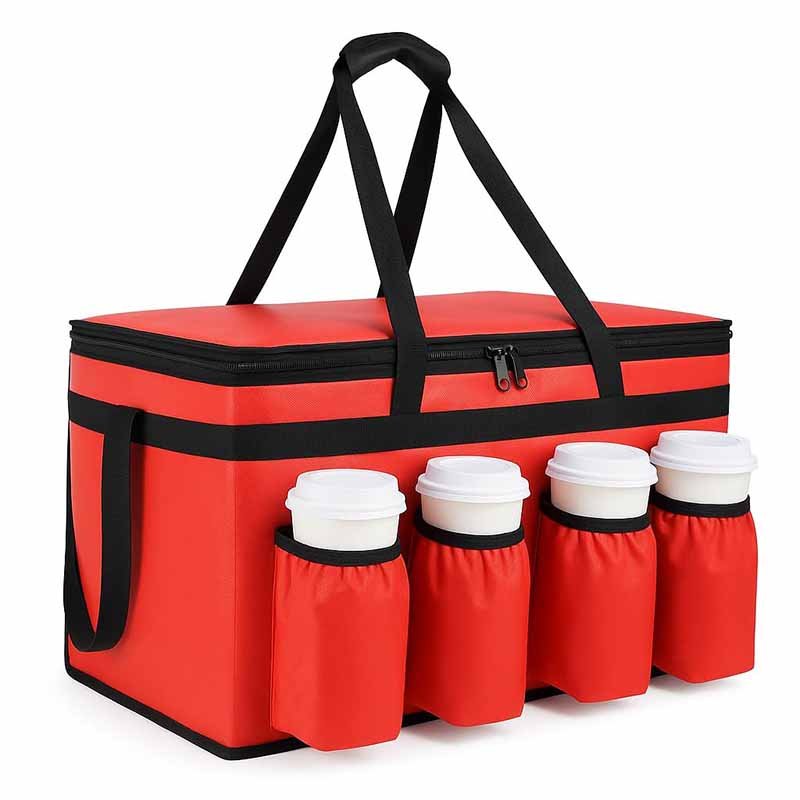
There are several types of insulated food delivery bags, including pizza bags, catering carriers, delivery backpacks, grocery cooler bags, beverage carriers, and dual-compartment hot–cold bags. Each type is engineered for specific delivery needs—such as keeping food hot, protecting cold groceries, transporting large meal trays, or supporting bike couriers. Material choice, structure, insulation level, and closure style vary by use case.
Insulated food delivery bags come in many designs because food delivery operations differ widely—bike delivery, car delivery, catering transportation, grocery logistics, meal-prep services, and more. Each bag type is engineered to solve a specific delivery problem: heat loss, cold-chain stability, moisture control, multi-stop routing, or volume transportation.
Below is a comprehensive, industry-level classification of insulated delivery bags, including their structure, best-use scenarios, and key differentiating features.
1. Pizza Delivery Bags (Flat, Wide, Heat-Retention Optimized)
Best For:
- Pizza restaurants
- Fast-food chains
- Urban delivery operators
Key Features:
- Wide, flat rectangular shape
- Front-opening flap for quick loading
- Reflective aluminum interior to retain radiant heat
- Moisture vent holes to prevent sogginess
- Stackable design
Why They Matter:
Pizza loses heat rapidly due to warm air escaping from the crust and cheese. These bags maximize radiant heat retention and reduce convection loss.
Typical Insulation Specs:
- Foam thickness: 10–15 mm
- High-density aluminum foil lining
- Double flap or Velcro closure
Retention Time: 30–60 minutes (depending on thickness)
2. Catering Insulated Carriers (Large, Structured, High-Capacity)
Best For:
- Catering companies
- Hotels & banquets
- Corporate meal delivery
- School lunch distribution
Key Features:
- Box-shaped with rigid walls
- Designed to hold multiple trays or food pans
- Heavy-duty insulation and thicker foam (18–25 mm)
- Often compatible with GN pans and food trays
- Reinforced handles for heavy loads
Why They Matter:
Catering operations must transport large quantities of food over longer distances. These bags maintain temperature for hours, not minutes.
Typical Insulation Specs:
- Foam thickness: 18–25 mm
- Multi-layer reflective insulation
- PE or PP structural boards
Retention Time: 2–3 hours (hot), 4+ hours (cold)
3. Delivery Backpacks (Hands-Free, Bike/Scooter-Optimized)
Best For:
- Bike couriers in urban areas
- Food-delivery platforms (Uber Eats, DoorDash)
- Deliveries requiring mobility
Key Features:
- Worn like a backpack—ideal for cyclists
- Upright structure prevents food tipping over
- Can include internal dividers for multiple orders
- Waterproof TPU/PVC exteriors
- Ergonomic shoulder and waist straps
Why They Matter:
Bike delivery is often subject to:
- Rain
- Wind
- Bumpy roads
- Long distances
Backpacks help couriers stay balanced while protecting the food from weather and vibration.
Typical Insulation Specs:
- Foam thickness: 10–20 mm
- High-waterproofing shell (PVC/TPU)
- Reinforced stitching
Retention Time: 45–90 minutes
4. Grocery Cooler Bags (Cold-Chain & Frozen Delivery)
Best For:
- Grocery delivery apps
- Meat, seafood, dairy transport
- Frozen food delivery
- Meal-prep companies
Key Features:
- Airtight zippers or roll-top closures
- Thicker insulation (often 20–30 mm)
- Designed to be used with ice packs
- Multi-layer cold-chain liners
- Waterproof interior
Why They Matter:
Cold-chain compliance is essential, especially for:
- Dairy
- Raw meat
- Fresh produce
- Frozen meals
- Ice cream
If cold food rises above 40°F (4°C), it enters the bacterial “danger zone.” Grocery cooler bags prevent this.
Typical Insulation Specs:
- Foam thickness: 20–30 mm
- Lining optimized for cold retention
- Airtight or low-airflow closure
Retention Time: 3–12 hours (with ice packs)
5. Multi-Compartment Insulated Bags (Hot & Cold Combination)
Best For:
- Restaurants delivering mixed menu items
- Delivery platforms handling multiple orders
- Customers ordering both hot meals & cold drinks
Key Features:
- Two or more internal temperature zones
- Dividers with independent insulation layers
- Reduces temperature cross-contamination
- Front-loading or top-loading variations
Why They Matter:
Delivering a hot pizza + cold soda in the same bag without compromising either is a huge challenge. Multi-zone bags solve it.
Typical Insulation Specs:
- Internal divider insulation: 10–15 mm
- Separate hot & cold linings
- Dual closures
Retention Time:
- Hot zone: 45–75 minutes
- Cold zone: 1–3 hours
6. Beverage Carriers / Drink Transport Bags
Best For:
- Coffee shops
- Milk tea / boba stores
- Smoothie delivery
- Office beverage drop-offs
Key Features:
- Individual cup compartments
- Spill-prevention design
- Insulated walls to retain heat/cold
- Handles for stable transport
Why They Matter:
Hot drinks cool down quickly, and cold drinks melt easily. Beverage carriers provide the stability and insulation needed for both.
7. Food-Pan Insulated Bags (For Professional Kitchens & Catering)
Best For:
- Commercial kitchens
- Banquets & events
- Outdoor dining
- Large-scale meal transport
Key Features:
- Holds full-size / half-size GN pans
- Thick insulation (20–25 mm+)
- Stackable design
- Top-load or front-load configurations
Why They Matter:
These bags are essentially soft coolers/hot boxes, engineered for maintaining high-volume food at proper temperatures.
Retention Time: Up to 3 hours
8. Foldable or Collapsible Insulated Bags (Space-Saving)
Best For:
- Home delivery startups
- Stores with limited storage
- Multi-vehicle delivery
Key Features:
- Foldable panels
- Lightweight construction
- Affordable cost
- Easy to store in vehicles
Though lighter-duty, they are ideal for moderate delivery distances.
9. Waterproof / Weatherproof Insulated Bags (Extreme Conditions)
Best For:
- Rainy or snowy climates
- Bike couriers
- Outdoor catering
Key Features:
- TPU or PVC-coated shell
- Welded seams (for waterproofness)
- Anti-slip bottoms
- Reinforced handles
These bags protect food from temperature loss and weather damage.
10. Heavy-Duty Commercial Grade Insulated Bags
Best For:
- High-volume restaurants
- Franchises
- Professional delivery fleets
Key Features:
- Industrial stitching
- 18–25 mm foam insulation
- Reinforced zippers
- Long-term durability
High-performance bags often reduce food temperature complaints by 30–40%.
Comparison Table for Quick Buyer Reference
| Bag Type | Best Use Case | Insulation Level | Temperature Retention | Price Range |
|---|---|---|---|---|
| Pizza Bag | Pizzas, flat meals | Medium | 30–60 mins | Low–Medium |
| Delivery Backpack | Couriers, scooters | Medium–High | 45–90 mins | Medium |
| Catering Carrier | Large food trays | High | 2–3 hrs | High |
| Grocery Cooler Bag | Cold chain delivery | Very High | 3–12 hrs | Medium–High |
| Multi-Compartment Bag | Mixed orders | Medium | 45–75 mins | Medium |
| Beverage Carrier | Drinks | Low–Medium | 30–60 mins | Low |
| Food-Pan Insulated Bag | Catering, hotels | High | 2–3 hrs | High |
| Waterproof Bag | Extreme weather | Medium–High | 45–90 mins | Medium |
Common Bag Categories & Use Cases
Common categories include pizza bags, catering carriers, insulated backpacks, grocery cooler bags, multi-zone carriers, beverage carriers, and food-pan carriers. Each supports different operational needs depending on delivery method, food type, volume, distance, and temperature requirements.
Material & Layer Differences Across Bag Types
High-heat bags emphasize reflective liners and ventilation; cold-chain bags use thicker foam and airtight zippers; backpack bags use waterproof shells and structural reinforcements; catering bags use denser insulation and rigid walls to support heavy loads.
How to Choose the Right Insulated Delivery Bag
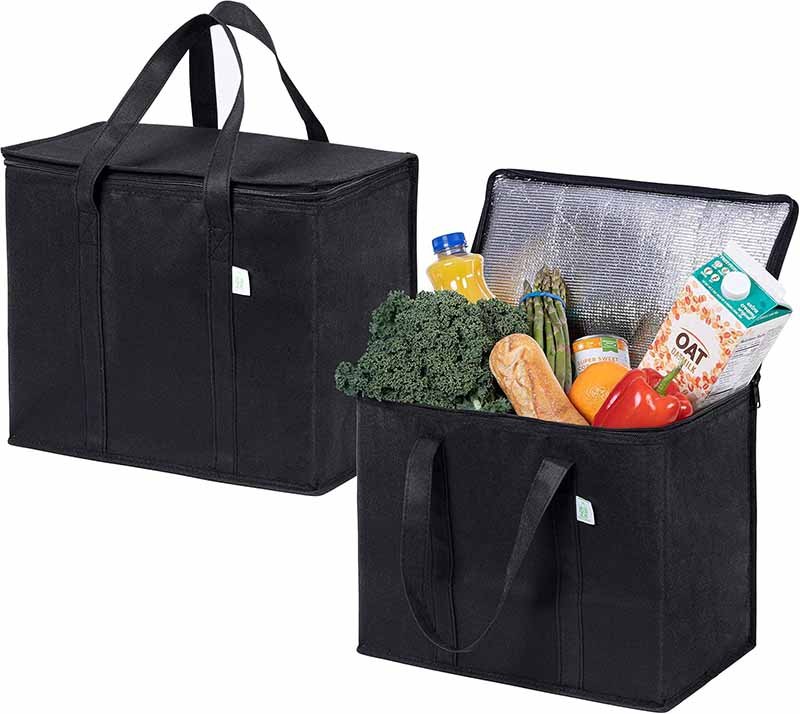
To choose the right insulated delivery bag, evaluate delivery distance, order volume, food types, temperature requirements, bag size, insulation materials, closure systems, durability, and cleaning ease. Consider delivery method (bike, car), weather conditions, and branding needs. Match foam thickness, reflective liners, and structural features to your specific operation to ensure optimal thermal performance and lasting service life.
Selecting the ideal insulated delivery bag isn’t simply about price or appearance—it’s a strategic decision that impacts food quality, customer satisfaction, operational efficiency, and your brand reputation. A poorly chosen bag can lead to temperature loss, soggy food, customer complaints, refund requests, and wasted delivery efforts.
Below is a detailed guide to help you make an informed and optimized purchase decision based on your specific business needs.
1. Understand Your Delivery Needs
Delivery Distance & Time
- Short-distance delivery (≤10 minutes): Smaller bags with basic insulation may suffice.
- Medium-distance (10–30 minutes): Choose moderate insulation with high-density foam and reflective liners.
- Long-distance (30+ minutes): Premium insulation (20–25 mm foam, multi-layer barriers), double closures, or dual-zone bags.
Delivery Method
- Bike/Scooter: Look for lightweight, waterproof delivery backpacks with ergonomic straps.
- Car/Van: Larger, structured bags or catering carriers optimized for trunk space.
- Foot Delivery: Smaller, carry-on bags with strong handles and stable internal supports.
2. Size & Capacity Matching
Match bag size to your average order types. Too small = squeezed food and poor airflow. Too large = wasted thermal space and faster heat loss.
| Order Profile | Recommended Bag Size | Suggested Use Case |
|---|---|---|
| Single meal | Small/Mid-size bag | Restaurants, quick-service |
| Multiple meals | Mid-size large bag | Delivery apps, batch delivery |
| Catering orders | XL structured carrier | Catering & events |
| Grocery & frozen | Large cooler bag + ice packs | Grocery delivery |
| Drink orders | Beverage-specific bag | Coffee/tea shops |
3. Insulation Material & Thickness
Material Choices
- PE Foam: Lightweight & cost-efficient
- EVA Foam: Denser & premium thermal performance
- Reflective Aluminum Liner: Reduces radiant heat loss
- TPU/PVC Exterior: Waterproof, ideal for extreme weather
Recommended Foam Thickness
- 10–15 mm: Standard restaurants & short deliveries
- 15–20 mm: Mixed menus with hot & cold items
- 20–30 mm: Long-distance, grocery cold chain, catering
The thicker and denser the foam, the better the thermal retention, especially for cold deliveries requiring longer holding times.
4. Closure Type & Seal Quality
Heat escapes fastest through air gaps. Choose closures that reduce this:
| Closure Type | Thermal Performance | Best For |
|---|---|---|
| Zipper | High | General use |
| Velcro + Flap | Medium | Pizza & quick meals |
| Double Flap | Very High | Long-distance pizza |
| Magnetic | High & convenient | Fast-loading operations |
Double-flap systems outperform single closures by reducing airflow changes when opened multiple times.
5. Structural Support & Durability
For high-volume or repeat deliveries, structural reinforcement is vital.
Look for:
- PE/PP internal boards – Prevent collapse under load
- Reinforced stitching – Handles heavier loads
- Waterproof materials – Weather protection
- Anti-slip base pads – Stability during transport
Structural support maintains proper air circulation and prevents temperature loss.
6. Multi-Zone & Compartment Features
If your delivery service handles hot meals + cold drinks or mixed baskets, choose bags with:
- Dual compartments (hot zone + cold zone)
- Internal dividers to avoid cross-temperature contamination
- Adjustable partitions
This feature reduces the need for multiple bags and improves delivery efficiency.
7. Weather & Climate Considerations
Different climates demand different insulation strategies:
| Climate | Recommended Features |
|---|---|
| Hot climates | Thicker insulation + reflective liners |
| Cold climates | Waterproof shells + windproof outer layer |
| Rainy conditions | TPU/PVC waterproof exterior |
| Snowy environments | Reinforced seams + insulated base |
Weatherproof bags protect against temperature loss caused by environmental factors.
8. Ease of Cleaning & Maintenance
Cleaning efficiency affects hygiene and thermal performance over time.
Choose bags with:
- Removable liners
- Waterproof interiors
- Mildew-resistant coatings
- Smooth surfaces (easier to sanitize)
Hygienic insulation prevents odors and preserves customers’ trust in food safety.
9. Ergonomics & Transport Efficiency
For delivery workers:
- Adjustable backpack straps
- Padded handles
- Balanced weight distribution
- Easy-access pockets
Ergonomic bags reduce fatigue, improve delivery speed, and make peak hours more efficient.
10. Custom Branding & Business Identity
Customized insulated bags not only enhance thermal performance but also:
- Reinforce brand visibility
- Increase perceived value
- Strengthen customer recognition
- Provide mobile advertising
Szoneier offers customization options such as:
- Logo printing (screen, embroidery, heat transfer)
- Unique color schemes
- Branded external pockets
These elevate brand exposure on every delivery.
11. Durability vs. Cost Trade-Off
Higher upfront costs for commercial-grade bags often lead to:
- Longer service life
- Reduced refund rates
- Lower long-term replacement costs
- Better performance under heavy use
Investing in premium insulation and higher-quality materials is cost-effective for high-volume operations.
Capacity, Layout & Opening Style Considerations
Choosing the right layout means prioritizing how food is loaded and unloaded:
- Top-loading: Good for bulk trays and tall containers
- Front-loading: Easy access for pizzas and stacked meals
- Multi-door systems: Improves thermal control on repeated access
Proper layout also supports efficient route-based delivery.
Material & Insulation Quality Factors
Ask your manufacturer for:
- Material denier range (e.g., 600D–1680D)
- Foam density and thickness
- Reflective liner type
- Closure engineering
- Seam sealing quality
These factors directly affect thermal retention and durability.
Durability, Cleaning & Cost Trade-Offs
A higher-grade bag typically shows:
- Thicker insulation
- Better weatherproofing
- Reinforced seams
- Longer lifespan (up to 2–3 years in commercial use)
Lower-cost bags often fail prematurely, leading to frequent replacements and operational disruption.
How to Maintain & Clean Insulated Bags
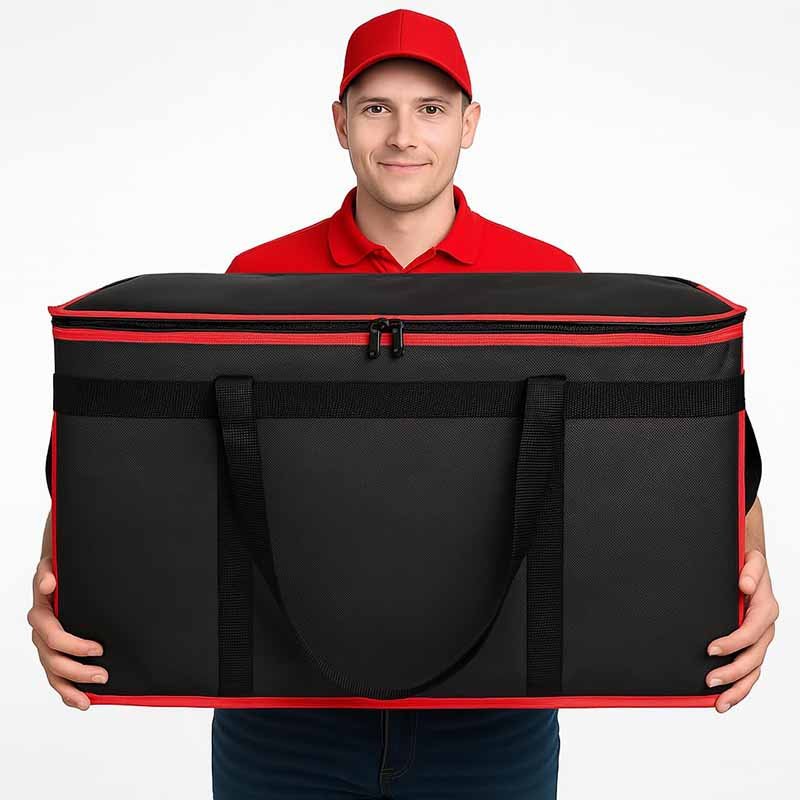
To maintain insulated delivery bags, clean the interior after every shift, remove spills immediately, air-dry thoroughly, and sanitize regularly with mild detergent. Check insulation integrity, closures, zippers, and seams weekly. Proper maintenance prevents odor, mold, heat loss, and wear, extending the bag’s lifespan and ensuring food safety during transport.
How to Maintain & Clean Insulated Bags
Insulated delivery bags are essential tools in professional food delivery, and like any frequently used equipment, they require regular cleaning and maintenance to ensure hygiene, performance, and long-term durability. Poor maintenance not only affects temperature retention but also contributes to odor, contamination, and customer dissatisfaction.
Below is a complete, industry-level guide to maintaining insulated food delivery bags.
1. Daily Cleaning Routine — Keeping Hygiene Consistent
Why it matters
Food particles, grease, condensation, and spills accumulate quickly inside insulated bags. Without daily cleaning, these can lead to bacterial growth, mold, and persistent odors that compromise food safety.
Daily Steps
- Empty the bag completely—remove crumbs, packaging, and liquids.
- Wipe down the interior lining with warm water and a mild soap.
- Avoid bleach or harsh chemicals, as these can damage reflective liners.
- Pay attention to corners and seams, where residue often collects.
- Dry the bag fully before closing it to prevent mildew growth.
Recommended Cleaning Tools
- Soft cloth or sponge
- Mild detergent (citrus-based preferred)
- Microfiber towels
- Optional: odor-neutralizing cleaners
Daily cleaning should take 2–5 minutes but dramatically extends bag lifespan.
2. Weekly Deep Cleaning — Maintaining Long-Term Performance
Why it matters
Even with daily cleaning, oils and moisture can seep into foam layers or between seams. Deep cleaning ensures long-term hygiene and preserves insulation.
Weekly Steps
- Remove internal panels or dividers (if detachable).
- Scrub the interior with a soft-bristle brush and mild cleaner.
- Clean the outer shell, especially if waterproof (TPU/PVC shells collect dust).
- Rinse interior lightly (do not soak).
- Leave the bag open to air-dry for 12–24 hours.
For waterproof bags
Avoid prolonged water exposure—use damp cloth cleaning instead.
3. Monthly Inspection — Ensuring Structural & Thermal Integrity
Insulated bags lose effectiveness when insulation collapses, liners peel, or seams open.
What to Inspect
✔ Foam compression — If insulation feels flat, heat retention decreases. ✔ Liner damage — Look for peeling aluminum, punctures, or scratches. ✔ Zippers & closures — These control convection; any failure reduces performance. ✔ Handles & straps — Heavy loads weaken stitching over time. ✔ Base structure — Collapsed bottoms reduce airflow and stability.
Many restaurants replace low-quality bags every 3–6 months. High-quality bags maintained well can last 12–18 months or more.
4. Odor Control — Preventing Long-Term Smells & Bacteria Growth
Insulated bags are prone to odor because they trap heat and moisture.
Best Practices
- Place baking soda inside overnight.
- Use charcoal deodorizing bags for strong odors.
- Allow bags to air out regularly—never store zipped closed when damp.
- Avoid transporting highly scented items (e.g., raw fish) without liners.
For persistent odors
Use a mix of:
- White vinegar (diluted 1:4)
- Warm water
- Mild detergent
This eliminates odor-causing bacteria without damaging insulation.
5. Preventing Mold & Mildew
Moisture trapped inside foam or seams leads to mold, which is nearly impossible to fully remove.
Prevention Techniques
- Always dry the bag completely before storing.
- Avoid placing hot containers without lids—they create excess steam.
- Use bags with moisture vents for fried items.
- Store in cool, dry, well-ventilated areas.
If mold appears:
- Clean immediately with a vinegar-water solution.
- Sun-dry the bag—UV helps kill bacteria.
- Replace if mold penetrates the insulation layer.
6. Extending Insulation Life
The quality of insulation decreases naturally over time, especially when bags are overloaded or improperly stored.
How to Extend Lifespan
✔ Avoid placing very heavy items that compress foam. ✔ Do not store bags stacked under heavy boxes. ✔ Rotate multiple bags to prevent overuse of one unit. ✔ Replace broken zippers or Velcro before they reduce airtightness.
Rule of thumb: When the foam no longer springs back or the walls feel thin, thermal efficiency is reduced by up to 30–50%.
7. Maintaining Waterproof & Weatherproof Features
Exterior materials such as nylon, TPU, or PVC require periodic care.
Maintenance Tips
- Wipe waterproof shells with mild soap; avoid solvents.
- For TPU/PVC bags, apply silicone-based protectants to maintain flexibility.
- Inspect seams for cracking—especially in cold weather.
- Avoid prolonged sunlight exposure, which degrades coatings.
8. Storage Best Practices — Preserving Shape & Insulation
Correct storage extends bag lifespan significantly.
For long-term storage
- Store bags open, not zipped.
- Keep them upright to maintain structural integrity.
- Avoid humid or hot environments.
- Use silica gel packets to absorb moisture.
For multi-bag operations
Implement a rotation system to ensure equal wear across units.
9. Repair vs. Replace — Knowing When to Upgrade
Some issues can be fixed; others require replacing the bag.
Repairable
- Zippers
- Handles
- Velcro
- Surface scratches
- Minor liner punctures (patchable)
Replace When
- Foam collapses
- Insulation absorbs odor
- Mold penetrates inner layers
- Aluminum liner peels
- Seams open wide
- Temperature retention drops noticeably
Replacing a worn bag often improves customer satisfaction more than the cost of repair.
10. Cleaning & Sanitization Checklist
| Task | Frequency | Purpose |
|---|---|---|
| Wipe interior | Daily | Remove spills & bacteria |
| Air dry fully | Daily | Prevent mildew |
| Deep clean interior | Weekly | Remove grease & buildup |
| Exterior wipe-down | Weekly | Maintain durability & appearance |
| Inspect insulation | Monthly | Ensure thermal performance |
| Deodorize | As needed | Prevent odors |
| Replace damaged parts | As needed | Extend lifespan |
Cleaning, Drying & Odor Control Tips
Daily wiping removes bacteria and food residue, while air-drying prevents mold. Use mild detergents, avoid bleach, and deodorize with baking soda or charcoal packs. Never store bags while wet, as moisture significantly reduces insulation life.
How to Inspect Insulation Performance Over Time
Check for collapsed foam, peeling reflective liners, loose closures, and damaged seams. These issues indicate that the bag is losing thermal efficiency. High-quality insulation should remain firm, reflective, and structurally stable for 12–18 months with proper care.
Are Insulated Food Delivery Bags Worth It?
Yes. Insulated food delivery bags are worth the investment because they improve food safety, preserve temperature and freshness, reduce refunds and complaints, extend delivery range, support brand professionalism, and significantly enhance customer satisfaction. High-quality insulated bags also reduce long-term operational costs, making them essential for restaurants, delivery fleets, catering companies, and grocery transport services.
Are Insulated Food Delivery Bags Worth It?
Whether you run a small restaurant, a busy delivery fleet, or a large catering operation, insulated food delivery bags are one of the highest-ROI investments you can make. They directly impact temperature retention, food quality, customer perception, operational efficiency, and profit margins.
Insulated bags cost more upfront than regular bags, but the long-term value far outweighs the investment.
Below is a detailed, data-supported breakdown of why insulated bags are absolutely worth it for modern food delivery operations.
1. Strong Impact on Customer Satisfaction & Repeat Orders
Temperature is the #1 factor influencing customer satisfaction in food delivery.
If food arrives cold, melted, soggy, or separated, customers instantly lose trust. Studies from major delivery platforms (DoorDash, Uber Eats, Deliveroo) consistently show:
- 68% of customers complain most about temperature issues
- Nearly 50% of customers say a cold meal stops them from ordering from a restaurant again
- Warm food increases repeat-order rate by up to 30%
Insulated bags ensure food arrives in near restaurant-quality condition, increasing:
✓ 5-star ratings
✓ Customer loyalty
✓ Positive word-of-mouth
✓ Order frequency
In the delivery economy, customer retention equals profit.
2. Reduce Refunds, Complaints & Food Waste (Major Cost Savings)
Delivery platforms allow customers to request refunds when:
- Food arrives cold
- Ice cream melts
- Drinks spill
- Pizza becomes soggy
- Food appears unsafe
Restaurants using low-grade bags experience high refund rates, especially during peak hours and cold weather.
High-quality insulated bags can reduce refund requests by:
20–40% reduction in temperature-related complaints
10–25% reduction in refund payouts
Up to 33% reduction in food returned or remade
For a high-volume restaurant delivering 50–200 orders per day, this translates into thousands of dollars saved each month.
3. Maintain Food Safety Standards (HACCP Compliance)
Food safety regulations require:
- Hot food ≥ 140°F (60°C)
- Cold food ≤ 40°F (4°C)
Food outside these limits enters the danger zone, where bacteria multiply rapidly.
Insulated delivery bags:
- Maintain stable temperatures
- Delay heat loss for 45–90 minutes (hot foods)
- Preserve cold-chain integrity for 2–4+ hours
- Protect temperature-sensitive items like dairy, meat, seafood, and sushi
Maintaining compliance prevents foodborne illness and protects your brand from liability.
4. Extend Delivery Range & Support Multi-Stop Routes
In real-world food delivery:
- Drivers often deliver multiple orders at once
- Routes may be unpredictable
- Traffic and weather slow down delivery
- Delivery distances vary
Insulated bags are engineered to handle these factors.
Benefits for operations
✔ Longer delivery range
✔ More efficient batch delivery
✔ Fewer quality issues during multi-stop routes
✔ Faster workflow (no need to reheat or repack food)
This allows restaurants to serve more customers without compromising quality.
5. Preserve Brand Reputation & Professional Appearance
Customers do notice the delivery bag—especially in restaurants with strong branding.
High-quality insulated bags signal:
- Professionalism
- Cleanliness
- Consistency
- Care for food quality
- Commitment to customer experience
Custom-branded insulated bags elevate the brand and turn every delivery into mobile advertising.
Restaurants using branded bags often enjoy:
✓ Higher customer trust
✓ Better delivery recognition
✓ Stronger brand presence in local communities
6. Longer Lifespan & Lower Total Cost of Ownership
A high-quality insulated bag typically lasts:
- 12–18 months in daily commercial use
- Up to 24+ months with proper maintenance
Cheap bags often fail in:
- 2–3 months (foam collapses, liners peel, zippers break)
- 1–2 months for bike couriers in bad weather
Investing in durable, commercial-grade insulated bags:
- Reduces replacement frequency
- Improves thermal retention over time
- Lowers long-term operational cost
In many cases, better insulation pays for itself within 2–4 weeks simply by lowering complaints and maintaining quality.
7. Value for Different Business Types
Restaurants & Takeout Shops
ROI comes from lower refund rates and improved reviews.
Delivery Platforms (Uber Eats, DoorDash)
ROI comes from more efficient multi-order delivery and route optimization.
Catering Companies
ROI comes from extended holding times and reduced need for portable heaters.
Grocery & Cold-Chain Delivery
ROI comes from protecting sensitive items like meat and dairy.
Meal Prep Companies
ROI comes from keeping meal kits fresh, safe, and leak-resistant.
Different industries benefit in different—but equally valuable—ways.
8. Measurable ROI: A Practical Comparison
| Factor | Without Insulated Bags | With High-Quality Insulated Bags |
|---|---|---|
| Food temperature | Inconsistent | Stable for 45–90 mins |
| Customer complaints | High | Reduced by 20–40% |
| Refund cost | High | Lower by 10–25% |
| Brand perception | Poor | Professional & reliable |
| Delivery range | Limited | Extended |
| Bag lifespan | 1–3 months | 12–18 months |
| Total cost | High (due to replacements & refunds) | Lower overall |
9. Long-Term Strategic Value
Insulated bags support business growth in ways that extend beyond cost savings:
- Allow scaling into new delivery zones
- Enable premium menu items (e.g., steaks, soups, ramen)
- Protect reputation in highly competitive delivery markets
- Increase efficiency during peak hours
- Improve logistics without major investment
They are one of the few restaurant tools that combine:
✓ Low cost
✓ High usage
✓ Strong customer impact
✓ Significant operational value
ROI for Restaurants, Couriers & Catering Businesses
Insulated bags reduce refunds, improve customer satisfaction, and support consistent delivery quality. They enable multi-stop routes and protect food safety, making them essential for profitability.
How Insulated Bags Support Food Safety Regulations
By maintaining hot and cold foods within safe temperature ranges, insulated bags help restaurants and caterers comply with HACCP guidelines. This reduces liability, prevents contamination, and ensures safe meal transport.
Conclusion
Whether you’re a restaurant, delivery app, catering company, or food startup, choosing the right insulated bag directly impacts the quality of every order you send out. If you’re considering upgrading or custom-producing insulated bags, Szoneier can help you build products that meet your temperature, durability, branding, and budget needs.
Ready to manufacture your insulated food delivery bags? Contact Szoneier today to get a custom quote, design proposal, or sample.