Skip to content
A money belt might look like a simple accessory, but its purpose, history, and utility go far beyond holding cash. In a world where travelers face digital theft, pickpocketing, crowded transportation, identity fraud, and increasingly unpredictable travel environments, a money belt has re-emerged as a surprisingly relevant solution. Yet many people still wonder: What exactly is a money belt? Is it outdated? Does it actually keep your belongings safe? And how do you choose the right one among so many options?
A money belt is a slim, wearable pouch designed to hide and protect cash, passports, cards, and important documents during travel. It is typically worn under clothing around the waist or hips to reduce the risk of theft or pickpocketing. Modern money belts use lightweight materials, RFID-blocking layers, adjustable straps, and moisture-wicking backing for comfort and security. They are ideal for travelers needing discreet, hands-free protection of valuables.
While the money belt has evolved dramatically—from bulky nylon pouches to ultra-slim, moisture-wicking, RFID-shielded designs—the core idea remains the same: keep your valuables close, invisible, and protected. And despite debates about whether money belts still matter in today’s digital travel age, millions of travelers continue to rely on them for peace of mind.
What Exactly Is a Money Belt and How Does It Work?

A money belt is a slim, body-hugging security pouch worn around the waist or hips—usually under clothing—to protect passports, money, cards, and documents from theft. It works by keeping valuables hidden, secured against the torso, and difficult for pickpockets to access. Modern money belts use lightweight fabrics, breathable mesh, RFID-blocking layers, and flat zippers to stay comfortable and invisible. They provide discreet, hands-free protection during travel, outdoor activities, and crowded environments.
Although a money belt looks simple at first glance, its effectiveness comes from a strategic combination of security design, body placement, concealment, ergonomics, and modern material technology. To understand what a money belt truly is, we must look beyond the zipper and strap and examine how its features work together to provide discreet protection.
A money belt is fundamentally a slim, flexible storage pouch attached to an adjustable strap. Its purpose is not to act as a bag—it is to act as a hidden compartment for critical valuables that must remain protected at all times. Unlike fanny packs or waist bags, which are meant to be seen and accessed frequently, a money belt’s primary goal is invisibility and security, not fashion or capacity.
Modern money belts are engineered around several core principles:
1. Concealment: Keeping Valuables Invisible to Thieves
The most important characteristic of a money belt is that it is hidden under clothing, not worn outside. Pickpockets look for visible pockets, dangling bags, backpack zippers, or belt bags. A money belt eliminates these obvious targets because:
- It sits flat against your torso
- It cannot be opened without physical contact
- It does not reveal that valuables are inside
- It stays covered by a shirt, jacket, or sweater
This invisibility dramatically reduces theft risk because thieves cannot steal what they cannot see or reach.
2. Body-Proximity Security: Physical Access is Nearly Impossible
Conventional bags can be unzipped without your knowledge, especially in crowded areas. A money belt, however, requires direct access to your torso—something a thief cannot do discreetly.
The security advantage includes:
- Zippers face inward toward the body
- The belt is pressed against the waist or stomach
- Stretch fabric limits movement of items inside
- A thief would need to lift your shirt to reach it (highly unlikely)
Money belts turn theft prevention from a game of awareness into a physical barrier.
3. Organization of Critical Travel Items
A money belt holds only your most important valuables—the items you absolutely cannot afford to lose during travel:
- Passport
- Visa documents
- Emergency cash
- Backup credit/debit cards
- Driver’s license
- Important receipts
- Hotel contact info
- Medical insurance cards
- Travel emergency contacts
Because these items are essential for border control, identity verification, and emergency situations, storing them securely is crucial.
Most money belts contain:
- separate passport sleeves
- flat currency pockets
- anti-theft hidden compartments
- mesh organizers
- stretch pockets for cards
This organization ensures items stay flat, quiet, and easy to retrieve when needed.
4. Slim, Low-Profile Design That Avoids Clothing “Printing”
“Printing” refers to the visible outline of a belt or pouch under clothing. A money belt is designed to avoid this by using:
- ultra-slim zippers
- soft, flexible fabric
- flat seams
- contoured patterns
- minimal hardware
High-end belts fit so flush that even fitted T-shirts conceal them effectively. This adds both security and comfort.
5. Comfort Engineering for All-Day Wear
Since a money belt sits directly on your skin or base layer, comfort matters. Modern belts use:
- moisture-wicking backing to reduce sweat
- micro-mesh ventilation
- elastic waistbands
- adjustable, soft-touch straps
- ultra-lightweight nylon or polyester
This allows travelers to wear belts comfortably on:
- long-haul flights
- crowded city walks
- train rides
- day tours
- airport transfers
A good money belt should disappear from your awareness after a few minutes of wear.
6. RFID-Blocking Technology for Electronic Theft Prevention
Cyber theft is a growing travel concern. Some thieves use scanners to read:
- contactless credit cards
- digital passports
- NFC-enabled IDs
RFID-blocking money belts include a metallic or composite layer that blocks electromagnetic signals, preventing unauthorized scanning.
This is especially important in:
- airports
- buses and metros
- tourist areas
- malls and markets
- train stations
While not mandatory, RFID protection adds an extra layer of modern security.
7. How the Strap System Works to Maintain Stability
Unlike fashion belt bags, money belts require non-slip, low-bounce fit. Good belts use:
- elastic straps that contour to body curves
- slim buckles that reduce printing
- anti-slip adjustments keeping the belt in place
- stretch zones that absorb movement during walking
This ensures the belt doesn’t slide up or down when:
- bending
- sitting
- climbing stairs
- carrying luggage
It stays fixed, comfortable, and concealed.
How You Use a Money Belt Properly (Step-by-Step)
Using a money belt correctly is crucial for maximizing security. Best practices include:
Step 1 — Load Only Essential Items
Avoid overstuffing. Too many items reduce stealth and comfort.
Step 2 — Wear It Under Clothing
The entire point is concealment. Never wear a money belt externally like a fanny pack.
Step 3 — Avoid Accessing It in Public
If you need money or documents, go to a private area such as:
- restrooms
- changing areas
- quiet corners of shops
Step 4 — Keep Daily Cash Elsewhere
Carry small spending cash in a pocket or outer bag to avoid revealing the belt.
Step 5 — Use It as a Backup, Not a Wallet
Think of it as a vault:
- You store what you cannot lose
- You rarely open it except when necessary
Following these steps ensures the money belt enhances security rather than attracting attention.
Which Types of Money Belts Are Available Today?
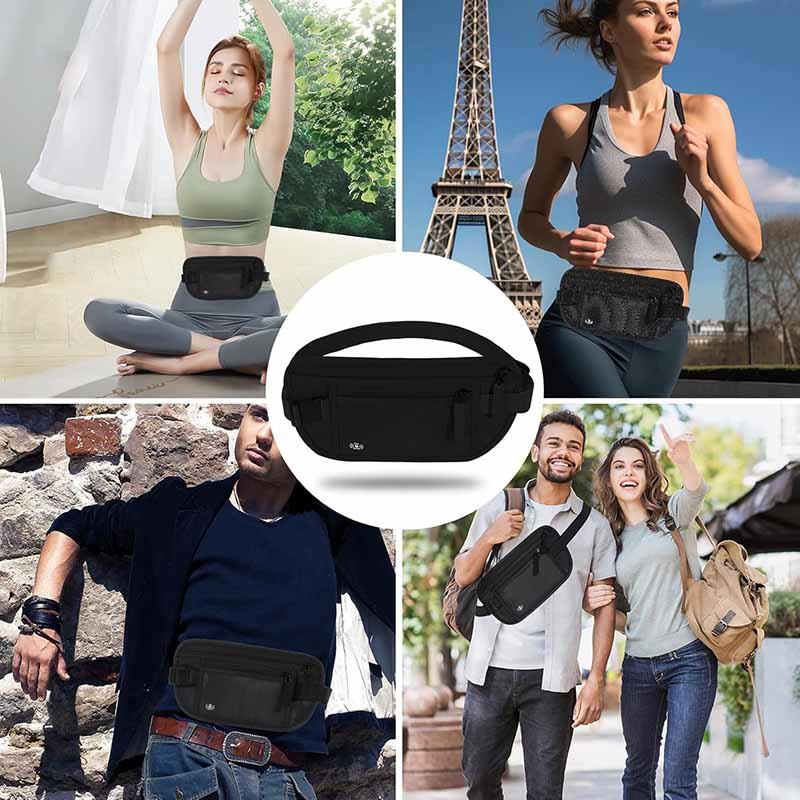
Modern money belts come in several types, including traditional travel money belts, hidden under-clothing money belts, RFID-blocking belts, running belts, neck-stash hybrids, and anti-theft waist pouches. Each type offers different levels of concealment, comfort, and storage capacity. Choosing the right style depends on your travel environment, security needs, clothing, and how often you access your valuables. Slim under-clothing belts are best for stealth, while expandable belts and running belts offer more versatility.
Today’s money belts look nothing like the bulky pouches travelers once wore in the 1990s. Driven by evolving travel habits, security threats, and advancements in materials, money belts now come in a wide range of styles designed for different needs—stealth, comfort, breathability, mobility, capacity, or digital protection.
Understanding these categories helps travelers—and brands—in choosing the right money belt for specific conditions and audiences.
Below is a comprehensive guide of every major money belt type in the modern market.
1. Traditional Travel Money Belt (Classic Waist Security Belt)
The traditional travel money belt is the most recognizable style. It is designed for discreet use during international travel and offers a balanced combination of security, comfort, and storage.
Key Characteristics:
- Slim, rectangular pouch
- 1–3 zippered compartments
- Adjustable elastic strap
- Worn inside or outside clothing
- Lightweight nylon or polyester construction
Best For:
- city travel
- airports and train stations
- day tours
- general travel security
This is the “standard” money belt used by millions of travelers worldwide.
2. Hidden or Under-Clothes Money Belt (Ultra-Slim Concealment Belt)
This type prioritizes stealth above all else. It is engineered to remain invisible under clothes—even under thin shirts or fitted outfits.
Key Characteristics:
- super-flat pockets
- minimal hardware
- hidden zipper lines
- breathable, moisture-wicking backing
- soft-touch elastic straps
Best For:
- high-risk pickpocket cities
- crowded markets
- metro transportation
- backpackers traveling through multiple countries
This belt is nearly undetectable when worn correctly, making it the safest option for concealed carry.
3. RFID-Blocking Money Belt (Digital-Proof Belt)
As digital theft becomes more common, RFID-blocking belts have grown in popularity. They prevent unauthorized scanning of credit cards, passports, transit cards, and NFC-enabled IDs.
Key Characteristics:
- metallic or composite RFID-blocking layer
- discreet design similar to hidden belts
- multi-pocket structure for document organization
Best For:
- business travelers
- tech-savvy travelers
- digital identity protection
These are often preferred by travelers visiting large, high-traffic cities where digital scanning risks are higher.
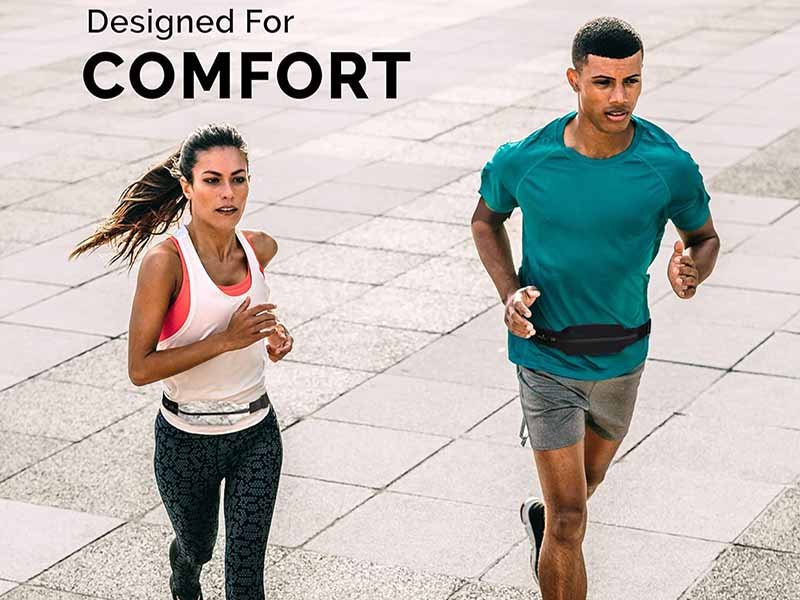
4. Running or Fitness Money Belt (Hybrid Running Pouch)
Although not exclusively a “travel money belt,” running belts have become widely used as lightweight security belts for active travelers.
Key Characteristics:
- stretch fabric (spandex or Lycra blend)
- bounce-free fit around waist or hips
- expandable pockets for phone + cash
- moisture-wicking properties
- sleek, athletic appearance
Best For:
- running, jogging
- hiking or trekking
- sightseeing with minimal carry
- gym or sports use
These belts provide excellent comfort and mobility, though their concealment is moderate rather than total.
5. Anti-Theft Waist Pouch / Travel Pouch (External Security Belt)
This type is often mistaken for a money belt but typically worn outside clothing. It provides security features but lacks the concealment of a true hidden belt.
Key Characteristics:
- lockable zippers
- slash-resistant materials
- larger storage capacity
- external access convenience
- optional RFID layers
Best For:
- travelers needing frequent access
- adventure tourists
- festival attendees
- outdoor activities where stealth isn’t essential
These are more practical than discreet but offer enhanced security compared to ordinary waist bags.
6. Neck-Wallet / Hybrid Money Belt (Neck Stash)
Though technically not a waist belt, many travelers use neck wallets as an alternative to money belts for similar purposes.
Key Characteristics:
- worn around the neck under clothing
- vertical pouch layout
- soft fabric for comfort
- often includes RFID protection
Best For:
- travelers who dislike waist belts
- situations requiring frequent document access
- wearing under jackets
However, neck wallets can be less comfortable in warm climates, and visibility risk increases if clothing shifts.
7. Concealed Travel Garter or Leg Money Belt (Lower-Body Security)
Although less common, these belts wrap around the thigh or calf and are extremely discreet.
Key Characteristics:
- elastic compression-style straps
- very small pockets
- hidden under pants or long skirts
- no printing under clothing
Best For:
- concealed emergency cash
- countries requiring secure document separation
- travelers wanting secondary backup storage
This is the most discreet option but also the least convenient for access.
8. Travel Security Belt with Hidden Zipper (Secret Compartment Belt)
This is a belt that looks like a regular clothing belt but secretly contains a hidden zip pocket inside.
Key Characteristics:
- holds only cash or small documents
- leather, canvas, or webbing construction
- completely invisible
- zero external signs of storage
Best For:
- storing backup emergency money
- travelers wanting maximum stealth
- situations requiring anti-theft without bulk
Perfect for minimalists—but too small for passports.
9. Expandable Money Belt (High-Capacity Travel Belt)
This category bridges the gap between a money belt and a small waist pack.
Key Characteristics:
- expandable pockets
- higher volume
- semi-concealed design
- mesh dividers for organization
Best For:
- multi-country travel
- travelers carrying multiple passports
- long flights with many travel documents
It sacrifices some stealth for higher functionality.
How Safe Are Money Belts for Travel and Daily Use?
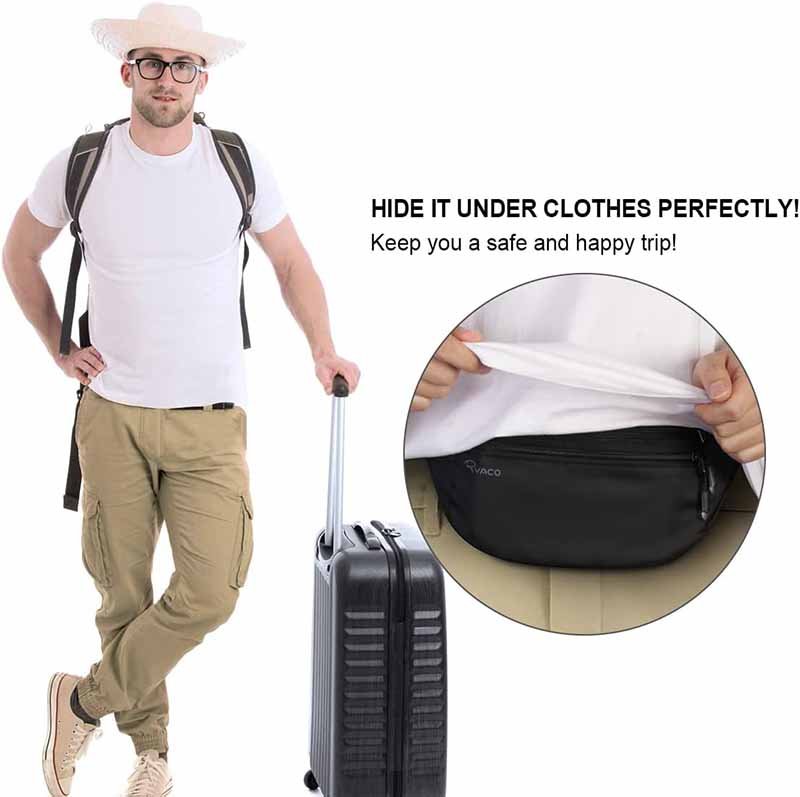
Money belts are generally very safe because they store valuables close to the body and out of sight, making theft extremely difficult. When worn under clothing and accessed discreetly, they protect against pickpockets, accidental loss, and electronic theft through RFID-blocking layers. While no security product is 100% theft-proof, a properly used money belt greatly reduces risk in crowded, high-theft travel environments, offering a practical and discreet layer of personal security.
Travel safety, especially in unfamiliar environments, requires a balance of preparation, concealment, and smart behavior. Money belts provide one of the simplest yet most effective forms of physical security because they are intentionally designed to eliminate the vulnerabilities thieves exploit—visibility, accessibility, and distraction.
However, the level of safety you gain depends not only on the belt itself but also on how and where it is used. Below is a complete breakdown of why money belts are considered safe, the risks they address, what they cannot solve, and how to maximize protection.
Are Money Belts Safe Against Theft and Pickpocketing?
Money belts are one of the most effective deterrents against traditional theft because they remove the two primary opportunities pickpockets rely on:
- Visibility of valuables
- Quick access to external pockets or bags
Pickpockets specialize in unzipping backpacks, reaching into side pockets, or cutting through purse straps. But a money belt sits:
- under your clothing
- pressed directly against your torso
- closed by inward-facing zippers
- protected by your movement and awareness
This placement makes it nearly impossible for a thief to access it undetected.
Why thieves avoid money belts:
- They require lifting clothing—high risk of being noticed
- They are secured by the natural pressure of your body
- Their flat profile prevents easy gripping
- They provide no visible cues that valuables exist
Studies in European tourist zones show that thieves overwhelmingly target bags, pockets, and backpacks, not concealed body-worn belts. The risk-to-reward ratio is simply not worth it.
A money belt becomes less safe if you:
- frequently pull it out in public
- wear it outside clothing like a fanny pack
- store bulky items that print visibly
Used properly, it’s one of the safest low-tech travel tools available.
Is RFID Blocking Necessary for Modern Electronic Theft Prevention?
Electronic pickpocketing (digital skimming) is a concern for modern travelers carrying:
- contactless credit cards
- biometric passports
- NFC-enabled IDs
- transport cards
RFID-blocking money belts protect against unauthorized scanning.
How RFID-blocking works:
A thin metallic or composite fabric layer inside the belt blocks electromagnetic signals. This stops criminals from using scanning devices to read card data or passport chips.
Is RFID-blocking essential?
Not for everyone—but it is recommended for:
- international travelers
- big-city commuters
- business travelers carrying multiple cards
- users with digital passports
It adds an extra layer of invisible protection in crowded or high-tech theft areas.
Are Money Belts Comfortable and Safe for Long Wear?
A money belt must be comfortable to be safe. If it causes irritation or constant adjustment, users may pull it into visible positions or access it frequently—reducing safety.
High-quality belts include:
- breathable mesh back panels
- moisture-wicking fabric
- slim, ergonomic shaping
- soft elastic straps
- low-profile buckles
These features ensure the belt stays flat, stays concealed, and does not shift while walking, sitting, or traveling.
Comfort impacts safety because:
- A comfortable belt keeps movements natural
- Less friction = less temptation to adjust it
- Less adjusting = less exposure to thieves
- Breathable fabric prevents sweat buildup, redness, or rash
Comfort and safety are directly linked in under-clothing accessories.
Are Money Belts Safe from Loss or Misplacement?
Yes—they are significantly safer than:
- shoulder bags
- small purses
- phone wallets
- pockets
- backpacks
People often accidentally leave bags in restaurants, taxis, or airplanes. But you almost never forget something that is strapped to your body.
Money belts protect against accidental loss caused by:
- fatigue
- distraction
- travel stress
- rushing through airports
- carrying multiple items
Since it remains attached, a money belt eliminates one of the most common travel risks: misplacing valuables.
When Are Money Belts NOT Safe or NOT Ideal?
Although very safe, money belts have limitations.
Not ideal if:
- You need frequent access to money
- You wear ultra-tight clothing that shows outlines
- You carry bulky objects like phones, deodorant, or snacks
- You sweat heavily and wear low-quality belts without wicking layers
Not theft-proof against:
- violent theft (rare but possible)
- hotel room theft (this is where safes help)
- loss due to improper use
Money belts are safest when used as intended—as long-term storage for essentials, not as a daily-access wallet.
How to Maximize Safety When Using a Money Belt
To get the highest safety benefit, follow these best practices:
1. Wear the belt under clothing
Never use a money belt as a fashion bag.
2. Store only items you do NOT need to access often
Daily cash should go in a pocket or a secondary pouch.
3. Do not take out the money belt in public
Go to a restroom or private corner.
4. Distribute risk
Keep emergency cash in the belt, but small spending money elsewhere.
5. Keep the belt flat and not overstuffed
This prevents printing and unwanted attention.
6. Use RFID blocking when traveling internationally
It adds digital protection on top of physical security.
7. Choose breathable materials
Comfort significantly affects safety during long days.
These habits ensure the money belt works as a security tool—not just an accessory.
Which Materials, Features, and Construction Make a High-Quality Money Belt?
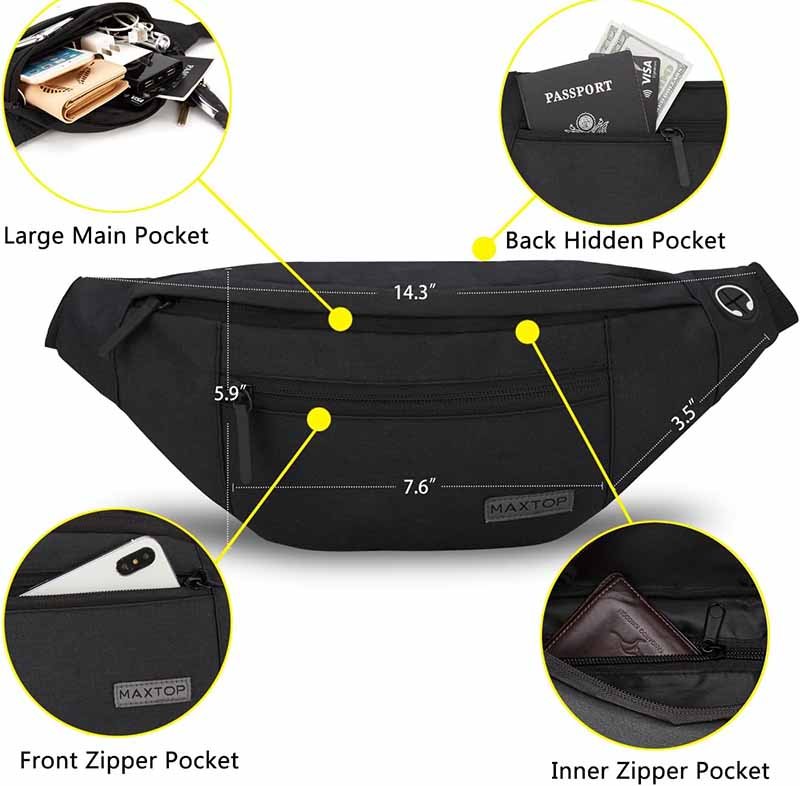
A high-quality money belt uses lightweight yet durable fabrics such as ripstop nylon or polyester, breathable mesh backing, RFID-blocking layers, slim anti-theft zippers, and soft elastic straps. Superior construction includes reinforced stitching, low-profile hardware, moisture-wicking liners, and a flat, ergonomic silhouette that stays hidden under clothing. Together, these materials and features ensure comfort, secure document storage, long wear durability, and discreet protection during travel.
What Fabrics Are Best for a Money Belt? (Nylon, Polyester, Spandex, Mesh)
The fabric determines durability, stealth, weight, breathability, and comfort. The best-performing money belts use a combination of:
1. Ripstop Nylon (Most Durable & Lightweight)
- Tear-resistant grid structure
- Light, thin, highly packable
- Ideal for long-term travel
- Resists abrasion and moisture
This is the top-tier fabric for performance-focused belts.
2. Smooth Polyester (Lightweight & Cost-Efficient)
- Lightweight and soft against the body
- Good moisture resistance
- Holds shape well
- Affordable for OEM production
Often used in mid-range belts.
3. Spandex/Elastane Blends (Stretch & Body Contouring)
- Provides flexibility
- Conforms to body curves
- Ideal for running money belts
Adds comfort during high-movement activities.
4. Breathable Mesh Backing (Critical for Comfort)
- Airflow reduces sweat buildup
- Prevents skin irritation
- Essential for warm climates or long wear times
Premium belts use multi-layer mesh similar to sportswear.
Which Structural Features Improve Security? (Hidden Zippers, Slim Profile, Secure Pockets)
Security depends not on visible locks, but on concealment and controlled access.
1. Hidden or Inward-Facing Zippers
These prevent thieves from spotting openings and make it harder to access pockets discretely.
2. Low-Profile Construction
A money belt must not print through clothing. High-quality belts employ:
- thin edges
- flat zippers
- soft seams
- shallow pockets
This keeps the belt invisible under shirts or jackets.
3. Multi-Compartment Layout
Internal divisions allow separation of:
- passport
- cash
- cards
- emergency documents
A dedicated passport pocket protects it from bending or moisture.
4. Anti-Theft Document Sleeves
Hidden sleeves inside the main pocket create a second line of defense—useful for emergency cash or backup cards.
How Do Moisture-Wicking and Anti-Sweat Backings Improve Comfort and Safety?
Because money belts are worn directly against the skin, sweat and heat buildup are common issues—especially in humid destinations.
High-quality belts use:
- moisture-wicking micro-mesh
- perforated foam padding
- quick-dry polyester
- anti-odor treatments
Benefits:
- Prevent chafing during long walks
- Keep skin cool and dry
- Reduce bacteria buildup
- Improve comfort when worn for hours at airports or tourist sites
Comfort = Safety A belt that irritates you increases the likelihood that you’ll adjust it publicly—drawing attention to your valuables.
Which Strap and Buckle Systems Offer the Best Fit?
The strap design affects stability, comfort, and concealment.
Characteristics of a superior strap system:
- Soft elastic straps that conform gently to the waist
- Micro-adjustable sliders for precise fit
- Slim buckles that do not show under clothing
- Non-slip elastic preventing sliding during movement
Plastic Buckles vs Metal Buckles
- Plastic = TSA-friendly, lightweight, invisible under clothing
- Metal = stronger but heavier, may trigger detectors
For travel, plastic low-profile buckles are preferred.
What Role Do Zippers and Hardware Play in Durability and Stealth?
Good hardware transforms a basic belt into a premium travel tool.
1. Quiet, Smooth Zippers
No jingling or catching—important for discreet access.
2. Reverse Coil Zippers
The teeth face inward, creating a clean exterior line and reducing snagging on clothing.
3. Micro Pull Tabs
Small, fabric-covered zipper pulls reduce noise and visibility.
4. Reinforced Stitching
Critical stress points include:
- zipper ends
- strap junctions
- pocket corners
Double or bar-tack stitching improves longevity under daily movement.
How Does RFID-Blocking Construction Work in a Money Belt?
RFID-blocking technology is often misunderstood, but its purpose is simple: prevent electronic theft of digital data stored in passports and cards.
Materials commonly used include:
- metallic fabric layers
- aluminum polymer blends
- conductive mesh barriers
These materials reflect or absorb radio waves, protecting against:
- digital pickpocketing
- unauthorized scanning
- identity theft
Not every traveler needs RFID blocking—but for international travelers, it adds high-value security.
What Are the Signs of a Low-Quality Money Belt?
Recognizing poor construction helps avoid belts that compromise comfort and safety.
Warning signs include:
- rough or scratchy backing
- poor-quality stitching that unravels
- bulky profile showing under clothing
- cheap zippers that jam or break
- straps that slip loose
- plastic that smells of chemicals (low material-grade)
A poorly made belt can cause more problems than it solves, including skin irritation, broken pockets, or security risk.
How Do You Choose the Right Money Belt for Your Needs?
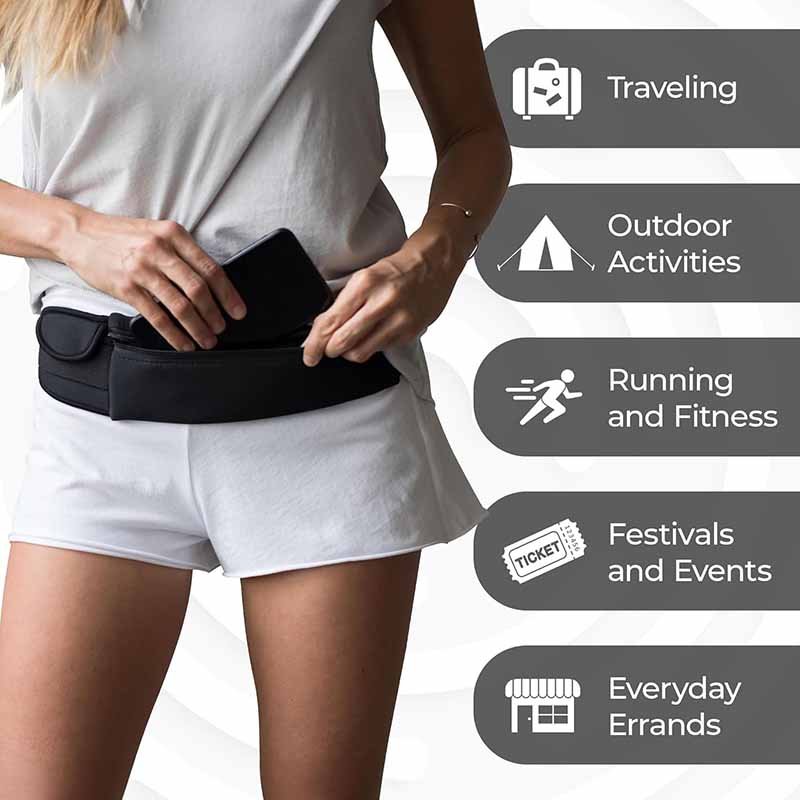
Choosing a money belt isn’t just about picking a pouch. It’s about choosing the security system that best matches your lifestyle, destination, comfort level, and risk tolerance. Your travel habits and personal needs determine whether you require ultra-stealth security, quick-access convenience, high-capacity storage, or sweat-resistant comfort.
Below is a highly practical, experience-based guide covering every factor you should evaluate before choosing a money belt.
Step 1: Identify Your Travel Style and Security Risk Level
A business traveler moving between airports and hotels has different needs than a backpacker navigating crowded bazaars or a runner exploring city parks.
1. Low-Risk Travel (Business trips, short vacations, hotel-to-airport routes)
Choose:
- simple hidden belts
- light, breathable materials
- moderate storage capacity
These travelers value comfort over extreme stealth.
2. Medium-Risk Travel (Tourist spots, museums, metro, mixed environments)
Choose:
- RFID-blocking belts
- multi-compartment organizers
- ultra-flat designs that stay hidden
This audience benefits from balanced protection and ease of use.
3. High-Risk Travel (crowded markets, festival environments, developing regions)
Choose:
- ultra-slim under-clothing belts
- hidden zipper systems
- moisture-wicking liners for long wear
Here, the priority is maximum concealment and minimal printing.
Step 2: Decide What You Need to Carry (Capacity & Layout)
A money belt is not meant to replace a wallet—it is a secure vault for essential items. Your item list determines the size and organization of the belt you need.
If you carry only essentials:
- passport
- cards
- emergency cash
Choose a minimalist slim belt with 1–2 pockets.
If you carry multiple items:
- visas or permits
- boarding passes
- multiple passports
- large currency volumes
Choose a multi-pocket organizer belt.
If you need daily quick access:
Choose a running belt or anti-theft pouch (not fully hidden but easy to reach).
Step 3: Determine How Important Stealth Is to You
Different belts offer different levels of concealment.
Highest concealment:
- ultra-slim hidden belts
- low-profile mesh back
- reverse-coil zippers
- soft, contouring edges
Best for travelers in pickpocket-heavy destinations.
Moderate concealment:
- RFID belly belts
- expandable flat belts
Best for tourists who want protection AND convenience.
Low concealment:
- running belts
- fitness pouches
- external anti-theft waist bags
Best for active users or short outings where stealth is less critical.
Step 4: Prioritize Comfort Based on Climate and Wear Time
You may wear a money belt for 6–12 hours at airports, walking tours, train rides, and long sightseeing days.
Consider:
- Heat & sweat (choose breathable mesh + moisture-wicking liners)
- Movement comfort (elastic straps > rigid straps)
- Clothing type (thin shirts need flatter belts)
- Skin sensitivity (soft-touch backing prevents rubbing)
Hot climates (Southeast Asia, Mediterranean, South America)
Choose:
- mesh-backed belts
- minimal padding
- ultra-thin layers
Cold climates (Europe winters, US winters)
Choose:
- padded backing
- layered fabrics
- slightly larger belts (hidden under coats)
Comfort equals safety: discomfort leads to constantly adjusting the belt, which exposes it.
Step 5: Evaluate Security Features That Matter to You
Security needs vary. Some travelers need physical theft protection. Others need digital data protection. Some want both.
1. RFID-blocking layer
Necessary if carrying:
- biometric passports
- NFC credit cards
- digital driver’s licenses
2. Hidden sewing seams and inward-facing zippers
Prevents thieves from spotting openings.
3. Anti-slash or reinforced materials
Important in extremely high-theft regions.
4. Dual-pocket dividers
Allows storing backup cash separately.
5. Flat-profile buckles
Reduce printing under clothing.
6. Water-resistant front layer
Protects from sweat or rain.
The more crowded or unpredictable your travel destination, the more value advanced security features provide.
Step 6: Choose the Right Belt Based on Your Primary Use Case
Below is a simple decision map:
| Use Case | Best Belt Type | Why It Works |
|---|---|---|
| International travel | Hidden under-clothing belt | Maximum stealth & security |
| Backpacking or long-term travel | RFID-blocking travel belt | Multi-pocket organization + digital safety |
| Running or outdoor activity | Stretch running belt | Bounce-free, comfortable |
| Festivals or crowded events | Slim RFID belt or anti-theft pouch | Fast access + theft protection |
| Minimalist daily carry | Secret-compartment travel belt | Small + zero visibility |
Step 7: Consider Fit, Adjustability, and Body Shape
Perfect fit is crucial for comfort, invisibility, and safety.
Look for:
- stretchy, soft elastic straps
- micro-adjustable sliders
- thin buckles that lie flat
- contour-shaped body panels
- belts available in multiple sizes (S–XL)
A too-loose belt bounces. A too-tight belt causes discomfort and printing. A properly fitted belt feels like clothing—not gear.
Conclusion
Choosing the right money belt is ultimately about feeling secure, confident, and comfortable—whether you’re navigating airports, exploring crowded city streets, or trekking across continents. And while travelers today have countless options, brands that want to stand out in the competitive travel accessories market need more than just a functional belt. They need a thoughtfully engineered product, crafted with precision materials, user-first ergonomics, and reliable anti-theft construction. That’s where a professional manufacturing partner becomes essential.
At Szoneier, we’ve spent more than 18 years perfecting the craft of soft goods and travel gear manufacturing. Our vertically integrated capabilities—ranging from raw material development, pattern engineering, and industrial design to sampling, testing, mass production, and packaging—enable us to turn your product vision into a commercially successful reality. Whether you want a minimalist hidden money belt, a premium RFID-blocking travel belt, a running-style stretch belt, or a high-volume multi-pocket organizer, our engineering team can develop a solution tailored exactly to your brand’s audience and market positioning.
Whether you’re launching your first travel accessory line or expanding an established brand, now is the perfect time to develop a custom money belt collection with a trusted, experienced manufacturing partner.
Ready to create your own private-label money belts? Contact Szoneier today for custom development, free design support, and sample production.
We’re excited to help your brand bring safer, smarter, beautifully engineered travel essentials to the global market.