Skip to content
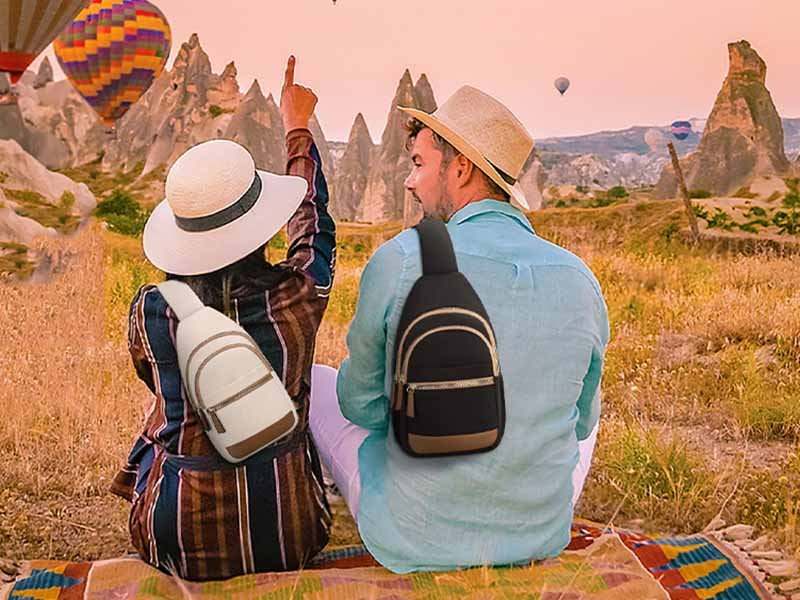
Sling bags were once a quiet accessory in the fashion world—functional, compact, and tucked into the wardrobes of travelers and cyclists. But in recent years, they’ve transformed into a global style movement. From Tokyo streetwear to New York commuters, from minimalist tech lovers to luxury fashion fans, sling bags have become a symbol of mobility, efficiency, and modern identity. People no longer ask whether to wear a sling bag—they ask how to wear it the right way.
To wear a sling bag correctly, place the strap diagonally across your body, adjust the length so the bag rests securely on your chest or back, and choose your position depending on comfort, outfit, and activity. Properly wearing a sling bag improves balance, accessibility, safety, and style—making everyday carry more efficient and comfortable.
The rise of sling bags isn’t accidental. As our lifestyles shift toward commuting, remote work, micro-travel, and minimalist everyday carry, people want a hands-free solution that’s stylish but not bulky. Sling bags offer exactly that—compactness without compromise. They’re easy to adjust, easy to access, and easy to blend with nearly any outfit.
Imagine stepping into a busy airport with everything essential at your fingertips—passport, phone, charger, cards—securely positioned on your chest. Or walking downtown with a sleek leather sling that complements your business-casual outfit. Or biking through the city with a lightweight, waterproof sling that never bounces or slips.
This guide will teach you exactly how to wear a sling bag comfortably, stylishly, and confidently—whether you’re choosing your first sling or looking to upgrade your look.
What Is the Correct Way to Wear a Sling Bag?

The correct way to wear a sling bag is diagonally across your torso with the strap adjusted to keep the bag secure and stable. Wear it on the chest for security and quick access, on the back for comfort and movement, or on the side for casual styling. The strap should sit snug—not too tight—and the bag should rest at mid-torso or upper-waist level for maximum comfort and balance.
Wearing a sling bag correctly is not only about style—it is about balance, comfort, mobility, and safety. Because sling bags sit on a single strap worn diagonally across your body, small differences in adjustment can dramatically impact how it feels during daily movement. A poorly positioned sling bag may bounce while walking, cause shoulder strain, or even pull your posture out of alignment. A properly adjusted sling bag, however, feels almost weightless and becomes a natural extension of your body.
Correct wearing depends on four core factors:
- Position (front, back, or side)
- Strap tension (loose, medium, or tight)
- Bag height placement
- Body movement and posture alignment
Let’s break each down with expert-level detail.
1. Choosing the Right Position: Chest, Back, or Side?
Chest Wearing (High Security, High Accessibility)
Wearing the sling bag on your chest is ideal when:
- traveling through airports or crowded transportation
- carrying valuables (passport, wallet, phone)
- navigating high-theft areas
- biking or riding scooters
Chest carry keeps everything within sight and allows instant access. It’s favored in urban environments and offers a modern streetwear look.
Back Wearing (Comfort for Long Walks)
Back wearing is the most comfortable position for:
- commuting
- walking long distances
- hiking
- low-risk urban areas
Because the bag sits closer to your spine, it distributes weight more evenly and reduces front pressure. It’s less intrusive and better for movement.
Side Wearing (Relaxed, Casual, Stylish)
Side wearing works well for:
- quick errands
- style-focused outfits
- fashion-forward looks
- minimal carrying
Side carry is less secure but very stylish and commonly used in streetwear culture.
2. Strap Tightness: How Snug Should It Be?
The strap should be:
- tight enough to prevent bouncing
- loose enough to allow natural arm rotation and chest expansion
- aligned with your shoulder’s natural slope to avoid friction
Signs Your Strap Is Too Tight:
- shoulder soreness
- strap digging into your collarbone
- difficulty taking deep breaths
- bag riding too high
Signs Your Strap Is Too Loose:
- bag swings while walking
- bag rotates unintentionally
- strap slips off your shoulder
A medium, ergonomic tightness is always best.
3. Bag Height: Where Should the Sling Bag Rest?
Correct height dramatically improves comfort.
Optimal height:
mid-torso upper waist 5–10 cm below the chest line
Why this height works best?
- prevents bouncing
- supports neutral spine alignment
- keeps items reachable
- prevents strap strain
Wearing the bag too low causes instability. Too high causes pressure on the shoulder and chest.
4. Body Type and Posture
Different body types affect ideal wearing angles:
For taller users:
- lower bag placement gives balance
- longer strap length prevents the bag from riding awkwardly high
For shorter or petite users:
- mid-torso or slightly higher positioning prevents the bag from overwhelming the frame
For broader shoulders:
- diagonal strap angles work better
- choose wider straps to distribute pressure
For narrow shoulders:
- padded straps prevent slipping
- wear the bag slightly higher on the torso
Posture tips:
- keep shoulders relaxed
- avoid leaning forward due to bag weight
- center the strap to prevent imbalance
5. Activity-Based Wearing Styles
Walking / Commuting:
Back wear or side wear provides maximum freedom.
Cycling / Scootering:
Chest wear is safest; prevents shifting during movement.
Travel / Airports:
Front wear for security. Back wear when carrying light items.
Shopping / Daily Errands:
Side wear offers convenience and style.
6. Safety and Anti-Theft Considerations
When safety matters most:
- chest wear
- strap on dominant-side shoulder
- zipper facing inward
- hidden pocket facing your body
Why it reduces risk:
- harder for pickpockets
- items never out of sight
- strap cannot be cut easily if positioned toward the body
7. Material and Weight Considerations
The heavier the bag, the tighter the strap needs to be.
Example:
| Bag Type | Recommended Position | Strap Tightness | Reason |
|---|---|---|---|
| Leather sling bag | Side or chest | Slightly loose | Heavy material, needs flexibility |
| Nylon travel sling | Chest or back | Medium-tight | Lightweight; needs stability |
| Outdoor sling | Back | Tight | Prevents movement during activities |
| Anti-theft sling | Chest | Medium | Keeps valuables secure |
8. Style Matching with Wearing Position
Chest Carry → bold, modern, sporty
Matches hoodies, oversized tees, jackets.
Back Carry → clean, minimalist, practical
Matches casual outfits, formal casual looks.
Side Carry → streetwear, relaxed, fashion-focused
Matches denim, graphic tees, and sneakers.
What positions can you wear a sling bag in?
You can wear a sling bag on the chest, back, or side. Each position changes accessibility, comfort, and level of security. Chest carry improves safety, back carry improves comfort, and side carry prioritizes style and convenience.
How tight should the strap be for comfort and safety?
The strap should be snug enough to eliminate bouncing yet loose enough not to restrict breathing or shoulder movement. Medium tension is ideal for most users.
What factors determine front vs. back wearing?
Security, activity level, bag size, and weight distribution determine whether front or back wearing is better. Front protects valuables; back improves comfort.
How do different body types affect the ideal fit?
Taller people wear slings lower; petite users benefit from mid-torso placement; broad shoulders need wider straps; narrow shoulders need padded straps to avoid slipping.
What is the difference between a sling bag and a messenger bag?
A sling bag is compact, lightweight, and meant for essentials; a messenger bag is larger, rectangular, and designed for documents or laptops. Sling bags wrap closer to the body and allow more flexible wearing positions.
Which Sling Bag Styles Fit Different Outfits and Activities?
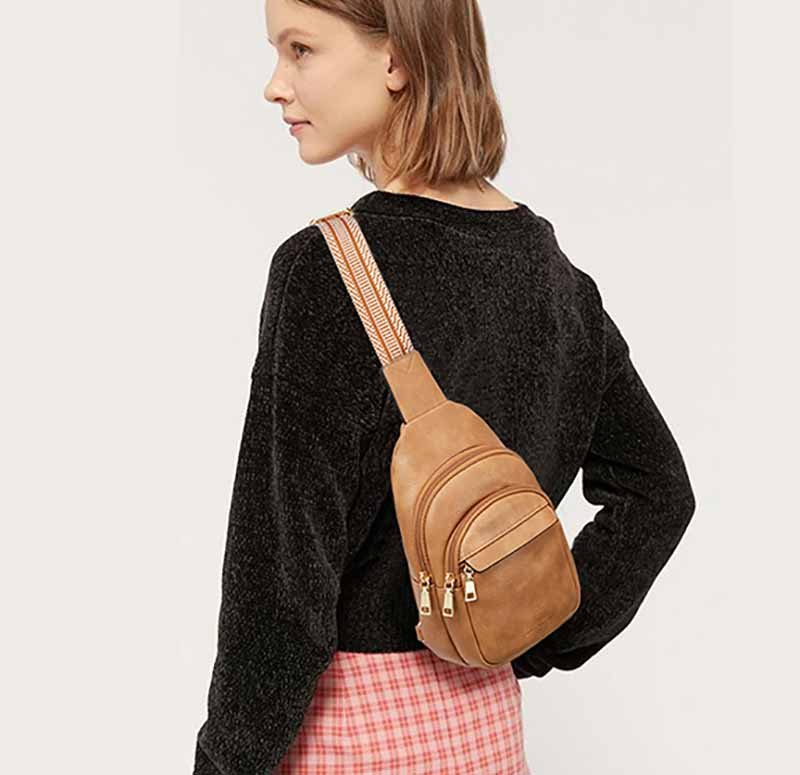
Different sling bag styles fit different outfits and activities. Minimalist leather or PU slings pair well with business-casual looks, while nylon or canvas slings match streetwear and everyday outfits. Waterproof technical slings suit travel and outdoor activities, and compact crossbody slings work best for errands or fashion styling. Choosing the right material, size, and silhouette ensures balance between comfort, functionality, and outfit coordination.
Sling bags come in a wide range of materials, shapes, and silhouettes—and understanding which style matches which activity or outfit is the secret to wearing them effortlessly. While some slings prioritize fashion appeal, others are engineered for performance, travel convenience, or daily carry. Different situations demand different designs.
Let’s break down the best sling bag styles for streetwear, business outfits, travel, and outdoor activities.
1. Sling Bags for Casual Streetwear
Best Styles:
- compact nylon slings
- canvas crossbody slings
- teardrop-shaped slings
- lightweight minimalist EDC slings
Why they match streetwear
Streetwear embraces movement, layering, and accessories. Sling bags fit perfectly because they sit close to the body without overwhelming proportions. Their simple silhouettes blend well with hoodies, oversized tees, bomber jackets, joggers, and sneakers.
Ideal materials & features
- nylon or canvas (lightweight & stylish)
- bold colors, logos, or patches
- wide adjustable straps
- quick-access pockets
Use-case examples
✔ running errands ✔ coffee shop visits ✔ campus wear ✔ city walks
These slings add an urban vibe while keeping essentials organized.
2. Sling Bags for Business or Office Outfits
Best Styles:
- leather sling bags
- structured PU sling bags
- slim-profile crossbody slings
- monochrome minimalist designs
Why they fit business environments
Business outfits require accessories that look intentional and professional. A structured or leather sling bag acts like a modern alternative to a small briefcase—sleek, clean, and functional.
Ideal materials & features
- genuine or premium PU leather
- matte hardware
- slim silhouette (not bulky)
- internal organization pockets
- neutral colors: black, brown, navy, charcoal
Best for:
✔ office commuting ✔ business casual outfits ✔ meetings & corporate events
A refined sling bag elevates your outfit instead of distracting from it.
3. Sling Bags for Travel and Commuting
Best Styles:
- anti-theft sling bags
- water-resistant nylon slings
- multi-pocket travel crossbody bags
- RFID-blocking passport slings
Why they are ideal for travel
Travel demands security, organization, and comfort. Sling bags keep essentials accessible while keeping thieves at bay. They also free your hands for luggage, tickets, or navigation.
Key features to look for:
- hidden anti-theft pockets
- waterproof zippers
- RFID compartments for passports/cards
- breathable back padding
- lightweight materials
Best for:
✔ airports ✔ sightseeing ✔ public transportation ✔ city-to-city commuting
Security becomes a top priority, making the bag style as important as the outfit.
4. Sling Bags for Outdoor, Hiking, and Gym Use
Best Styles:
- technical TPU-coated slings
- ripstop nylon slings
- mesh-back padded slings
- hydration-compatible slings
Why they work for outdoor activities
Outdoor environments require functionality first. These sling bags prioritize:
- sweating resistance
- waterproofing
- ergonomic support
- stability during movement
Outdoor sling bags integrate well with performance clothing like softshell jackets, windbreakers, gymwear, and athletic outfits.
Ideal features:
- breathable mesh padding
- compression straps
- reflective strips
- adjustable stabilizer straps
Best for:
✔ hiking ✔ biking ✔ running ✔ gym sessions
These slings keep up with high-intensity movement.
5. Sling Bags for Fashion-Forward or Trendy Outfits
Best Styles:
- curvy modern designer slings
- bold-pattern streetwear slings
- micro-sized fashion slings
- chest-rig style slings
Why they fit fashionable looks
Trendy outfits require accessories with personality. Micro-sized and chest-rig slings are popular in K-pop fashion, Japanese Harajuku styles, and high-fashion streetwear.
Perfect for:
✔ fashion shoots ✔ concerts ✔ clubbing ✔ influencer-style outfits
Ideal materials:
- patent leather
- textured PU
- bold prints or logos
- neon colors
- metallic accents
They function as both bags and fashion statements.
6. Matching Sling Bags to Seasons
Spring/Summer:
- nylon
- canvas
- mesh
- lightweight designs
Fall/Winter:
- leather
- PU
- padded slings
- structured silhouettes
Matching materials to seasons improves comfort and aesthetics.
What style works best for casual streetwear?
Nylon and canvas slings pair perfectly with hoodies, denim jackets, joggers, and sneakers. Compact sizes work best to maintain a balanced silhouette and urban aesthetic.
Which sling bags match business or office outfits?
Leather or slim PU slings elevate corporate attire, offering a clean, structured look that matches blazers, button-down shirts, knitwear, and tailored trousers.
How to choose sling bags for travel or commuting?
Choose lightweight, water-resistant slings with anti-theft features, padded backs, and organized compartments to keep travel documents easily accessible and safe.
What designs suit outdoor, gym, or sports use?
Opt for technical fabrics like TPU, ripstop nylon, and breathable mesh. Look for stabilizer straps and ergonomic shaping for intense movement.
Are sling bags still in style today?
Yes. Sling bags remain one of the most in-demand accessories globally, trending heavily in streetwear, luxury fashion, techwear, and travel gear due to their versatility and comfort.
How Do You Adjust a Sling Bag for the Best Fit?
To adjust a sling bag for the best fit, set the strap length so the bag rests at mid-torso or upper-waist level without bouncing, choose a strap angle that follows the natural shoulder line, and position the bag in front, back, or side depending on activity. Proper adjustment improves comfort, prevents slipping, reduces shoulder strain, and enhances mobility during walking, commuting, or travel.
1. Correct Strap Length
The strap length determines bag position, stability, and pressure distribution. Unlike backpacks, sling bags sit closer to the body and move with it, meaning the strap length directly affects comfort.
Ideal strap length depends on:
- torso length
- bag size
- activity level
- weight distribution
- personal style preference
General rule:
✔ Longer strap → looser, more relaxed look (better for streetwear) ✔ Shorter strap → secure, stable fit (best for commuting or cycling)
What happens when the strap is too long?
- the bag bounces while walking
- it rotates toward the front unintentionally
- items inside shift constantly
- uneven load may cause soreness on one side
What happens when the strap is too short?
- pressure builds around the shoulder and chest
- movement feels restricted
- the bag rides unnaturally high
- breathing may feel compressed during long wear
2. Finding the Ideal Bag Height
Proper bag height ensures both comfort and practicality.
Ideal position:
Mid-torso or upper-waist level (5–10 cm below the chest line)
Why this is optimal:
- prevents awkward swinging
- maintains center-of-gravity balance
- allows ergonomic walking
- offers easy access
- avoids compressing the chest
Bad height positioning examples:
too high → shoulder strain too low → heavy bouncing & imbalance too far forward → restricts arm movement too far back → difficult access & twisting
The best height is where the bag “sits into” your torso naturally.
3. Choosing the Best Wearing Angle
The strap angle determines how the sling bag interacts with your body.
Best angle:
A diagonal, shoulder-to-hip line that follows your shoulder slope.
Why angle is important:
- reduces slipping
- prevents strap twisting
- distributes load evenly
- avoids pressure points
- keeps bag aligned with your movements
If the angle is wrong:
- the bag slides toward your neck
- strap twists and folds
- movement feels unnatural
- bag loses stability
Correct angle = better posture + cleaner look + higher comfort.
4. Preventing Strap Slipping and Twisting
Strap slipping is the #1 complaint among sling bag users, especially with smooth fabrics or narrow shoulders.
Solutions that actually work:
(1) Tighten the strap gradually
A slightly shorter strap keeps the sling more stable.
(2) Switch shoulders
If your dominant shoulder is narrow, try the opposite one.
(3) Choose padded or textured straps
These increase friction and grip.
(4) Ensure correct strap angle
Most slipping problems come from wearing too vertically.
(5) Add stabilizer strap (if available)
Outdoor or travel slings often include them for extra control.
5. Activity-Based Adjustment
Different activities require different strap settings.
Walking / Commuting
- medium-tight strap
- bag mid-torso
- back or side wearing ✔ comfort-focused adjustment
Running / Cycling / Scootering
- shorter strap
- bag worn in front or tightly on the back
- snug fit ✔ avoids bouncing & increases safety
Travel / Airports
- front wearing for security
- medium-tight strap
- zippers facing inward ✔ protects valuables
Shopping / Errands
- relaxed strap length
- side wearing ✔ easy access
Photography / EDC gear use
- mid-tight strap
- chest or side wearing ✔ quick-access optimized
Activity-based adjustment is one of the biggest secrets to using sling bags effectively.
6. Matching Strap Adjustment to Body Type
Different bodies require different fit strategies.
Taller Individuals
- slightly longer strap
- lower bag placement
- prevents “floating box look”
Petite Users
- shorter strap length
- mid-torso placement
- avoids bag overwhelming the frame
Broad Shoulders
- wider straps
- steeper diagonal angle
- reduces slipping
Narrow Shoulders
- padded or textured straps
- mid-tight adjustment
- prevents rotation
Understanding body type significantly improves comfort.
7. Adjusting Based on Bag Material and Weight
Bag material impacts how it behaves on the body.
Leather sling bags
- heavier
- require a slightly looser strap for flexibility
- best worn side or front
Nylon / Polyester slings
- lightweight
- work well with medium-tight straps
- suitable for all wear positions
TPU / Technical outdoor slings
- firm structure
- require tighter adjustment
- best for active movement
Bag size & weight rule:
bigger or heavier sling → tighter strap smaller or lighter sling → longer strap possible
8. The Perfect-Fit Checklist
To find the best fit, follow this 7-step checklist:
- Set the strap length to mid-torso height
- Check that the strap follows your shoulder’s slope
- Tighten until the bag stops bouncing
- Test front, back, and side positions
- Adjust based on body type
- Choose angle based on material
- Walk 10 steps to confirm stability
This checklist alone significantly improves user comfort and prevents long-term strain.
How to lengthen or shorten the strap properly?
Use the adjuster buckle to find a balanced length. Shorten the strap for running or commuting; lengthen it for fashion styling or relaxed walking. Adjust in small increments rather than drastic changes.
What is the ideal strap angle for comfort?
A diagonal line from shoulder to opposite hip aligns the bag with your body’s natural movement, reducing slipping and improving balance.
How should the bag rest on your torso?
Ideally at mid-torso or upper-waist level—this keeps the center of gravity close, prevents bouncing, and provides quick access without restricting movement.
How do you fix slipping or twisting issues?
Tighten the strap, switch shoulders, adjust the angle, or choose textured/padded straps. In outdoor settings, use stabilizer straps for maximum stability.
How Should Men and Women Wear Sling Bags Differently?
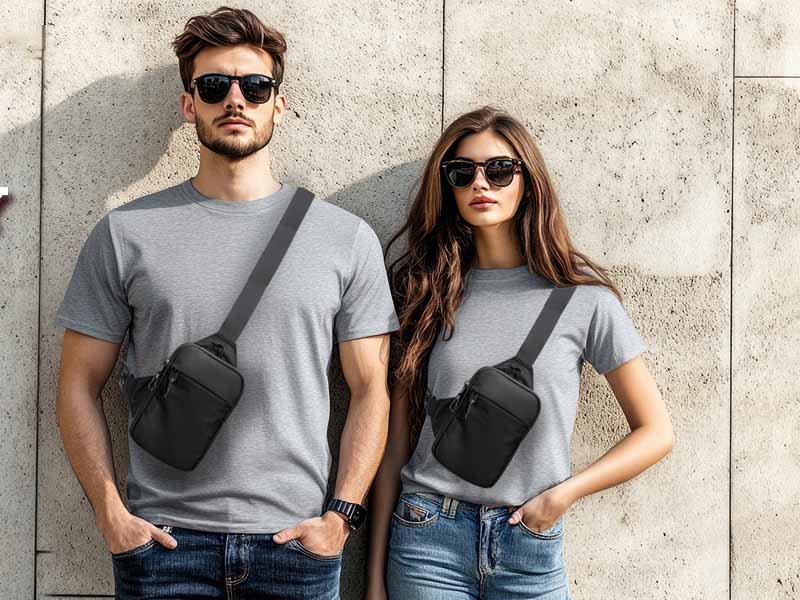
Men and women wear sling bags differently because of variations in body proportions, styling preferences, outfit structure, and carry needs. Men often choose larger, rectangular slings worn across the chest or back, while women prefer slimmer or curved designs for balanced proportions. Unisex sling bags suit both by offering adjustable straps, neutral colors, and mid-sized silhouettes that fit a wide range of outfits and activities.
Men and women wear sling bags differently not just because of style preferences—but because of differences in shoulder width, torso shape, clothing structure, and functional expectations. Understanding these differences helps users choose the most comfortable position, strap length, silhouette, and styling approach. Even the same sling bag can look dramatically different depending on who wears it and how it is adjusted.
Sling bags are one of the few accessories that adapt naturally to all genders, but the way they are worn often varies due to visual proportions, fashion aesthetics, and ergonomic needs. Below is a full expert-level breakdown that explores these variations.
1. Body Proportions: Shoulder Width, Torso Shape & Strap Behavior
Men typically have broader shoulders and longer torsos, while women often have narrower shoulders and more defined torso curves. These anatomical differences affect strap placement, comfort, and visual proportion.
Men’s fit characteristics:
- broader shoulders stabilize straps more naturally
- larger chest and ribcage area gives more room for cross-body alignment
- longer torsos allow wider height-adjustment range
- rectangular bags look proportionally balanced
Women’s fit characteristics:
- narrower shoulders can cause straps to slip if not angled properly
- chest shape affects bag position and strap angle
- shorter torso length requires precise strap shortening
- curved or slim bags complement natural proportions
Understanding proportions helps avoid discomfort and enhances aesthetic balance.
2. Strap Adjustment Differences Between Men and Women
For Men:
- medium-tight strap
- bag sits lower on the torso (mid-to-lower chest or upper waist)
- wider straps work better for broader frames
- diagonal angle follows wider shoulder slope
This creates a rugged, balanced look and reduces bouncing.
For Women:
- slightly tighter strap for stability
- bag sits higher to align with shorter torso length
- padded or textured straps prevent slipping on narrower shoulders
- diagonal angle adjusted to avoid pressure on the chest
Women often prefer a higher or mid-torso position because it creates a more harmonious silhouette with dresses, tops, and outerwear.
3. Style Compatibility
Men’s outfit compatibility
Men usually pair sling bags with:
- streetwear (hoodies, cargo pants, sneakers)
- smart casual (overshirts, polos, chinos)
- sportswear (sweatshirts, track jackets)
- travel outfits (light jackets, backpacks combo)
Larger, rectangular, and technical sling bags visually match the bold, structured lines in men’s clothing.
Women’s outfit compatibility
Women match sling bags with:
- dresses and skirts
- blouses, crop tops, and knits
- fitted jeans and tailored pants
- oversized outerwear and long coats
- athleisure (leggings, sports tops)
Slim, curved, or small slings complement feminine silhouettes without overwhelming the outfit.
4. Preferred Sling Bag Shapes for Men vs Women
Men’s preferred shapes:
- rectangular and boxy
- tactical or technical shapes
- medium or large EDC silhouettes
- multi-pocket crossbody slings
These shapes match men’s wider frames and create a balanced upper-body visual weight.
Women’s preferred shapes:
- curved or teardrop-shaped
- slim, minimalist rectangular
- micro-sling or compact pouch-like slings
- fashion-forward sculptural designs
Women usually choose slings that enhance proportions without overshadowing their outfits.
5. Wearing Positions: Chest, Back, or Side?
MEN
- Chest wearing → masculine, bold, streetwear-forward
- Back wearing → practical, athletic, balanced
- Side wearing → casual, relaxed, urban
Men often prefer front or back wear due to comfort and styling stability.
WOMEN
- Chest wearing → trendy, secure, fashion-forward
- Back wearing → great for commuting and neutral styling
- Side wearing → the most popular; elegant and flattering
Side wearing is especially common for women because it complements dresses, outerwear, and layered looks.
6. Functional Behavior Differences
Men generally carry:
- phone
- keys
- earbuds
- wallet
- small gadgets
- travel essentials
Thus, they choose bigger slings with more compartments.
Women generally carry:
- phone
- cosmetics
- compact wallet
- sunglasses
- hygiene items
Thus, they choose smaller slings or mid-sized slings with a cleaner layout.
7. Unisex Sling Bags
Why unisex designs work for everyone:
- mid-sized silhouette
- neutral colors (black, beige, grey, olive, navy)
- adjustable long-range straps
- body-contouring shapes
- lightweight materials
These designs adapt naturally to both masculine and feminine styling.
Best unisex materials:
- nylon
- canvas
- polyester
- soft PU
- ripstop
Unisex slings remove gender distinctions and match nearly any wardrobe.
8. Color Psychology & Aesthetic Differences
Men’s most chosen colors:
- black
- grey
- navy
- olive
- brown
These colors match men’s dominantly neutral wardrobes.
Women’s most chosen colors:
- black
- beige
- cream
- soft brown
- pastel tones
- earth tones
Women align sling bag colors with shoes, belts, or outerwear to create cohesive outfits.
What sling bag fits men’s proportions and styling?
Men benefit from medium-to-large sling bags with rectangular or technical shapes that balance broader shoulders and more structured outfits. Sporty, tactical, or minimalist designs work best.
What sling bag shapes flatter women’s outfits?
Women look best with slim, curved, or compact sling bags that complement torso length and outfit silhouettes. These shapes blend well with feminine lines and layered fashion.
How do unisex sling bags adapt to both styles?
Unisex slings use neutral colors, mid-sized silhouettes, and long-range adjustable straps. Their balanced shapes suit any body type and blend effortlessly with casual, business, or travel outfits.
Which colors work universally for all genders?
Black, grey, beige, navy, brown, and olive offer high versatility and match both masculine and feminine wardrobes.
What Items Should You Carry in a Sling Bag?
You should carry only essential, lightweight items in a sling bag—such as your phone, wallet, keys, sunglasses, earbuds, hand sanitizer, passport, and small accessories. Keep heavier objects close to your body to maintain balance. Avoid large bottles, heavy electronics, and bulky items that strain the strap or distort the bag’s shape. Proper organization improves comfort and accessibility for daily use, commuting, or travel.
Below is the ultimate expert-approved guide to what you should and should not carry in a sling bag, based on real-world use cases such as everyday carry, travel, commuting, outdoor activities, and safety-conscious environments.
1. Everyday Essentials: The Core Items Most Users Need
For daily life, your sling bag should contain only the must-haves you use repeatedly throughout the day.
Recommended everyday items:
✔ Phone (in quick-access pocket) ✔ Wallet / cardholder ✔ Keys (in a separate or clipped pocket to avoid scratching other items) ✔ Earbuds / AirPods ✔ Sunglasses / glasses ✔ Hand sanitizer ✔ Lip balm / compact cosmetic item ✔ Small power bank (≤5000mAh) ✔ USB cable ✔ Tissues / wipes
These items maintain comfort, low weight, and daily utility.
Why this works:
- keeps the sling lightweight
- allows fast access during errands
- prevents distortion of bag shape
- ideal for short trips, coffee runs, commuting
2. Travel Essentials: What to Pack for Airports, Trains & Tours
Travel requires more organization and security. A sling bag is the perfect travel companion because it keeps your valuables close and protected.
Travel-specific essentials:
✔ Passport / ID ✔ Boarding pass / travel documents ✔ Travel-size sanitizer ✔ Ultra-light power bank ✔ International SIM / eSIM QR printout ✔ Currency and coins ✔ Pen for immigration forms ✔ Earbuds / noise-blocking earbuds ✔ Small snack (granola bar) ✔ Backup mask ✔ RFID-protected wallet
Why these items matter:
- essential for checkpoints
- protect valuables from theft
- help you move quickly through airports
- reduce dependence on heavy backpacks
- allow easy access without removing the sling
Anti-Theft Packing Tips:
- place passport in hidden pocket
- keep phone in front zip pocket
- turn zippers inward when in crowds
- avoid showing cash when opening the bag
3. Outdoor, Hiking, or Sports Essentials
Active users need items that support movement, hydration, and minor emergencies.
Recommended:
- ✔ Foldable raincoat
- ✔ Energy bar
- ✔ Small first-aid kit
- ✔ Compact flashlight
- ✔ Protein packet or electrolytes
- ✔ Foldable water pouch
- ✔ Gloves or bandana
Why sling bags work for outdoor use:
- lightweight and breathable
- sit closer to the body during movement
- easier access than backpacks
- reduce sweat accumulation
BUT NOTE: You should avoid packing rigid or heavy objects, because bounce and friction are intensified during activity.
4. Work or Commuting Essentials
For professional settings, a sling bag contains practical items used on-the-go.
Best items for commuting:
- ✔ Mini notebook
- ✔ Pen
- ✔ Keycard / access pass
- ✔ Tablet (only if sling is designed for it)
- ✔ Portable charger
- ✔ Business cards
- ✔ Breath mints
- ✔ Minimal cosmetic fix-up items
Why this works:
- keeps pockets free
- improves organization during busy days
- blends with business-casual outfits
- prevents unnecessary bulk
5. Items You Should Not Carry in a Sling Bag
Sling bags are not made for heavy-duty loads.
Avoid these items:
- water bottles or heavy thermos
- full-size perfume bottles
- DSLR cameras
- large power banks (>10,000mAh)
- umbrellas (unless pocketable)
- hardcover books
- laptops
- thick jackets
- large makeup kits
Why avoid them?
- cause shoulder strain
- distort bag shape
- increase bouncing
- pull strap out of alignment
- shorten bag lifespan
- look bulky and unbalanced
6. Weight Distribution: How to Pack for Comfort
Golden rule:
Heaviest items should sit closest to your body.
This stabilizes the center of gravity and reduces swing.
Packing example:
- inner pocket → wallet, power bank
- middle pocket → snack, sanitizer
- outer pocket → phone & quick-access items
Benefits:
- prevents rotation
- reduces shoulder pressure
- improves stability during walking
- keeps the sling looking clean and structured
7. Safety-Based Packing: Crowded Cities, Events & Public Transport
If safety is a concern, here’s what to prioritize:
Best items for security:
- ✔ RFID-protected wallet
- ✔ Hidden cash pouch
- ✔ Anti-theft phone pocket
- ✔ Lockable zipper
- ✔ Secondary card (kept separate from wallet)
- ✔ Emergency contact card
Safety tips:
- carry fewer items to reduce exposure
- place valuables in rear compartment
- keep sling worn in front when in crowds
8. Comparison Table: What to Carry for Each Scenario
| Scenario | Essential Items | Do Not Carry |
|---|---|---|
| Daily Use | phone, wallet, keys, earbuds | heavy bottles, camera |
| Travel | passport, boarding pass, sanitizer, charger | full-size liquids, bulky devices |
| Outdoor | energy bar, raincoat, mini first-aid | glass bottles, heavy electronics |
| Work | pen, small notebook, access card | thick books, large cosmetic bags |
| Crowded Cities | RFID wallet, hidden pouch | visible cash, loose valuables |
How Do You Choose the Best Sling Bag for Your Needs?
Choosing the right sling bag goes far beyond color or design — it’s a decision that affects your comfort, organization, security, and daily mobility. With hundreds of styles available, the “best” sling bag will depend on your lifestyle and the environments you usually move through. A well-chosen sling bag should feel natural, freeing, and ergonomic, while also matching your outfits and activities.
1. Define Your Purpose: What Will You Use the Sling Bag For?
The best sling bag always aligns with your primary activities.
Everyday Use → lightweight, simple, versatile
Choose compact polyester or nylon slings with 2–3 compartments.
Business / Office → structured, elegant, leather or PU
A slim-profile leather sling elevates your smart-casual outfits.
Travel / Airport → anti-theft, multi-pocket, secure
Prioritize RFID pockets, hidden zippers, and water-resistant materials.
Outdoor / Hiking / Gym → breathable, technical materials
TPU-coated or ripstop nylon with padded backing works best.
Streetwear / Fashion → bold design or sculptural silhouettes
Focus on shape, hardware, and aesthetic appeal.
Knowing your primary usage helps eliminate 70% of irrelevant options.
2. Choose the Right Material
Materials determine weight, durability, weather resistance, and style.
Leather (Best for Business & Premium Style)
- luxurious and professional
- durable with long lifespan
- heavier but more structured
- matches smart-casual and formal outfits
- ideal for office and daily city use
Best for: business, travel, urban environments Avoid: high-intensity outdoor use (sweat and moisture affect leather)
Polyester (Ideal for Everyday Use)
- lightweight
- affordable
- many color options
- water-resistant
- easy to maintain
Best for: daily errands, commuting, casual streetwear
Nylon (Best for Travel & Active Users)
- lightweight yet strong
- excellent for anti-theft styles
- dries quickly
- flexible for movement
- suitable for outdoor or humid climates
Best for: airports, travel, biking, hiking Choose: ballistic nylon or ripstop nylon for toughness
TPU / PVC-Coated (Best for Outdoor & Sport)
- waterproof
- durable, technical look
- resistant to sweat and dirt
- holds structure well
Best for: gym, hiking, wet environments
Canvas (Best for Vintage Streetwear)
- natural, rugged feel
- pairs well with denim and casual wear
- durable but heavier
Best for: casual city fashion, daily wear
3. Pick the Right Size
Sling bags range from micro-size to medium EDC.
| Sling Size | Capacity | Best For | Notes |
|---|---|---|---|
| Small (1–3L) | phone, wallet, keys | streetwear, short errands | ultra-light, fashion-first |
| Medium (3–7L) | daily essentials | commuting, everyday carry | most balanced option |
| Large (7–12L) | tablet, power bank, extra gear | travel, outdoor | bulkier but practical |
General rule:
✔ Small → fashion ✔ Medium → everyday use ✔ Large → travel/activity
Avoid selecting a size too small “just for aesthetics” — discomfort comes from overstuffing.
4. Strap Comfort & Adjustability: The Most Overlooked Factor
A good strap makes or breaks the sling bag experience.
Features to look for:
✔ adjustable buckle with smooth gliding ✔ padded shoulder area ✔ breathable mesh underside ✔ wide strap (≥3.5 cm for men, ≥2.8 cm for women) ✔ anti-slip texture
Strap Range
Choose slings with long adjustment range so they fit across layers (coats, jackets).
Padded Back Panel
Improves comfort and prevents items from poking your body.
5. Pocket Layout: Organization Matters More Than Capacity
The ideal number of pockets depends on usage:
For daily carry:
- 1 front quick-access pocket
- 1 main compartment
- 1 interior divider
For travel:
- RFID pocket
- passport pocket
- hidden back pocket
- mesh internal organizer
- cable compartment
For outdoor:
- water-resistant pockets
- stretch mesh pockets
- gear loop
- stabilizer strap pockets
Avoid sling bags with:
- too many pockets (cause complexity)
- too few pockets (cause clutter)
Organization improves efficiency and keeps your items safe.
6. Security Features: Especially Important for Travel & Urban Use
If you’re in busy cities or travel often, security features matter a lot.
Key security features to consider:
- ✔ RFID-blocking compartments
- ✔ hidden anti-theft zipper
- ✔ slash-resistant strap
- ✔ lockable zipper pulls
- ✔ inward-facing main zipper
- ✔ padded back panel to hide outlines of valuables
When security is a priority:
- crowded cities
- airports
- subway stations
- foreign countries
- festivals or concerts
A secure sling bag prevents theft and keeps valuables protected.
7. Aesthetics & Style: Make Sure It Fits Your Wardrobe
Men typically prefer:
- black, grey, navy, olive
- rectangular or tactical slings
- medium size
- matte hardware
Women typically prefer:
- beige, cream, brown, pastel tones
- slim, curved, or compact slings
- textured materials
- gold/silver-tone hardware
Universal options (unisex):
- black nylon
- charcoal polyester
- beige canvas
- soft PU
- minimalistic shapes
Choose a sling bag that blends naturally with your shoes, jacket, or belt to build outfit harmony.
8. Lifestyle Fit: A Sling Bag Should Match Your Routine
Best for commuters:
medium polyester/nylon slings with padded straps
Best for travelers:
anti-theft, multi-pocket nylon (lightweight + secure)
Best for minimalists:
small PU or leather slings
Best for outdoor users:
technical TPU or ripstop slings
Best for fashion-forward users:
designer shapes, bold colors, micro-sling styles
Your lifestyle should guide your final decision.
What materials are most suitable for sling bags?
Nylon for travel, polyester for everyday use, leather for business, canvas for vintage streetwear, and TPU-coated fabrics for outdoor conditions. Choose based on durability, weather, and outfit style.
Which features matter most (pockets, padding, RFID, etc.)?
Key features include RFID-blocking pockets, hidden compartments, padded straps, breathable back panels, and waterproof zippers. These enhance comfort, security, and organization.
How do size and shape affect wearing comfort?
Smaller slings support minimal essentials and reduce weight; larger slings fit travel items but require wider straps. Curved shapes fit women’s silhouettes; rectangular shapes fit men’s proportions.
What is the history and name origin of sling bags?
“Sling bags” originate from historical utility pouches worn diagonally across the body by messengers and travelers. The term “sling” comes from the motion of slinging a strap over the shoulder—today modernized into compact, ergonomic crossbody bags.
Conclusion
Sling bags offer functionality, freedom, and style—making them one of the most universal accessories today. Understanding how to wear them, how to adjust them, how to style them, and how to choose the right design helps users enjoy maximum comfort and confidence. For brands and businesses, the booming demand for sling bags presents a major market opportunity.
If you’re ready to launch a new sling bag collection or upgrade your current lineup, Szoneier can help you create market-ready, premium-quality sling bags from concept to mass production.
Contact Szoneier today to start your custom sling bag project.