In a world where data security and privacy are becoming increasingly important, Faraday bags have emerged as a practical solution for protecting electronic devices from electromagnetic signals, RFID skimming, GPS tracking, and EMP attacks. With concerns about digital surveillance, car key cloning, and wireless hacking rising every year, both individuals and businesses are looking for cost-effective, reliable, and customizable solutions.
A Faraday bag works by blocking electromagnetic signals using layers of conductive material such as nickel, copper, or silver-coated fabrics. These bags protect phones, laptops, car key fobs, and credit cards from RFID skimming, GPS tracking, and EMP damage. They can be DIY-made using shielding fabrics or professionally manufactured for higher performance and durability standards.
A cybersecurity researcher once demonstrated how a simple DIY Faraday bag blocked all cell and Wi-Fi signals during a live conference. That story went viral because it proved you could build affordable signal-blocking solutions at home—yet professional Faraday bags offer superior performance, certifications, and longevity for serious applications.
What Is a Faraday Bag and How Does It Work?
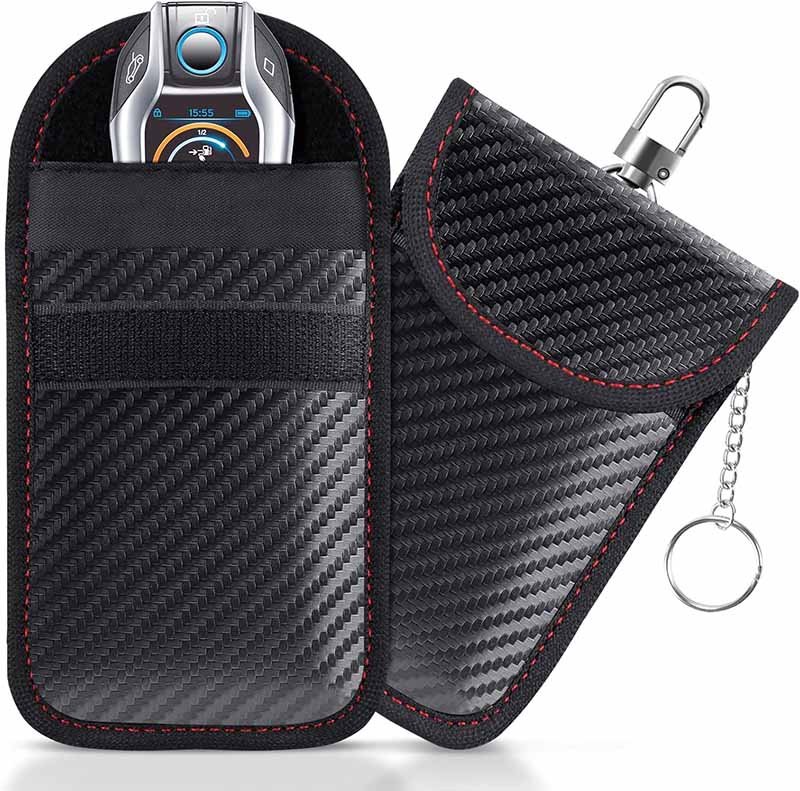
A Faraday bag is a signal-blocking enclosure built with multiple layers of conductive materials such as nickel, copper, or silver-coated fabrics. Using Faraday cage principles, it blocks electromagnetic signals—including Wi-Fi, GPS, RFID, cellular, and Bluetooth frequencies—from reaching devices inside. Faraday bags are used to protect phones, car key fobs, credit cards, and laptops from hacking, tracking, data theft, and EMP damage, ensuring digital privacy and security in everyday and professional settings.
Faraday Cage Principles in Everyday Bags
The original Faraday cage was invented by Michael Faraday in 1836. It demonstrated that electric charges and electromagnetic waves cannot penetrate a closed conductive surface, creating a shielded space inside. Modern Faraday bags replicate this concept using:
- Conductive Fabrics: Industrial-grade nickel-copper or silver-coated fabrics form the primary shield. Each layer reflects and absorbs incoming electromagnetic waves, preventing them from penetrating the bag.
- Layered Designs: Consumer-grade Faraday bags use 2–3 layers, while military or forensics bags use 5+ layers for near-total shielding. More layers improve attenuation levels, measured in decibels (dB); 80–100 dB attenuation means blocking 99.9% of signals.
- Seamless Closures: The weakest point in any Faraday bag is its opening. High-end bags use roll-top seals, double magnetic strips, or Velcro combined with conductive tapes to ensure no leakage points.
Example:
A phone inside a properly sealed Faraday bag will lose cellular, Wi-Fi, Bluetooth, and GPS signals immediately, appearing “offline” even in high-signal areas. This isolation protects devices during cyberattacks, EMP events, or forensic investigations.
Core Applications of Faraday Bags
Faraday bags serve multiple industries and everyday consumers:
Everyday Privacy & Security
- Protects car key fobs from relay attacks that enable thieves to clone signals and steal vehicles.
- Shields credit cards and passports from RFID skimming devices that steal financial or identity data.
- Prevents smartphone tracking by disabling GPS and cellular connectivity when privacy is critical.
Law Enforcement & Forensics
- Used by police forces globally to preserve digital evidence during criminal investigations.
- Prevents suspects from remotely wiping or encrypting seized devices before analysis.
Corporate & Government Security
- Executives and diplomats use Faraday bags to protect sensitive data from corporate espionage or state-level surveillance.
Military & Defense Applications
- Military vehicles and field units carry EMP-rated Faraday enclosures to protect communication systems and navigation equipment during electromagnetic attacks.
| Application Area | Typical Devices Protected | Frequency Range Blocked |
|---|---|---|
| Personal Privacy | Phones, Credit Cards, Car Keys | 100 kHz–6 GHz |
| Law Enforcement | Smartphones, Tablets, Laptops | 100 kHz–6 GHz |
| Military & Defense | Radios, GPS Units, Drones | 100 kHz–40 GHz (EMP grade) |
Advantages & Disadvantages
Advantages:
- Comprehensive Signal Blocking: Faraday bags block Wi-Fi, GPS, Bluetooth, RFID, and cellular frequencies.
- Device Protection: Prevents data theft, GPS tracking, key fob hacking, and EMP damage.
- Portable & Versatile: Available in wallet-size pouches to backpack-size enclosures for laptops and drones.
- OEM Customization: Can be combined with fireproofing, waterproofing, and branding options for commercial resale.
Disadvantages:
- Cost: Professional-grade bags with military certifications cost $100–$200+ each.
- Bulkiness: Multi-layer shielding adds thickness compared to normal bags.
- Testing Requirements: DIY versions require frequent signal-blocking tests to ensure performance over time.
| Feature | Advantages | Disadvantages |
|---|---|---|
| Signal Blocking | Blocks 99.9% of wireless signals | DIY bags may degrade faster |
| Privacy & Security | Prevents hacking, tracking, and data theft | Professional bags can be expensive |
| Device Versatility | Works for phones, tablets, laptops, car keys | May require multiple sizes per device |
| Durability | Pro-grade lasts 3–5 years | DIY lasts <1 year with heavy use |
DIY vs Professional Faraday Bags
Many online tutorials teach users how to make basic Faraday bags using aluminum foil or low-cost conductive fabrics. These DIY solutions work for casual needs but have clear limitations:
DIY Faraday Bags:
- Cost less than $20.
- Use 1–2 layers of foil or fabric.
- Provide 90–95% signal blocking efficiency.
- Last only 6–12 months before material degradation.
Professional Faraday Bags:
- Use nickel-copper or silver fabrics with reinforced closures.
- Tested to MIL-STD-188-125 military standards for EMP and RF shielding.
- Block signals across 100 kHz–40 GHz, covering RFID, cellular, GPS, and Wi-Fi.
- Last 3–5 years or more with proper maintenance.
| Parameter | DIY Faraday Bags | Professional Faraday Bags |
|---|---|---|
| Signal Blocking | 90–95% | 99.9% Certified |
| Material Durability | 6–12 months | 3–5 years |
| Cost | <$20 | $50–$200+ |
| Frequency Coverage | Limited (RFID & Wi-Fi) | Full (RFID, Cellular, GPS, EMP) |
| Certifications | None | MIL-STD, FCC, EU Testing Standards |
Which Materials Are Best for Making Faraday Bags?
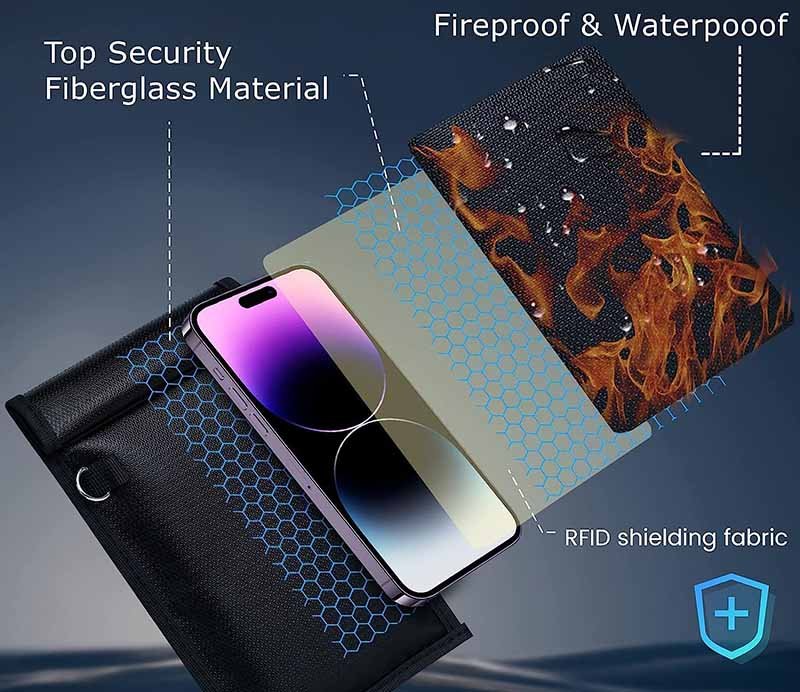
The best materials for Faraday bags include nickel-copper conductive fabrics, silver-coated textiles, and military-grade multi-layer RF shielding materials. DIY makers often use aluminum foil or budget RF fabrics, while professional OEMs choose multi-layered conductive fabrics with reinforced seams for 99.9% signal blocking, long durability, and EMP protection. Material choice affects shielding performance, durability, weight, and cost, so selecting the right fabric depends on the intended use and certification requirements.
1. Common Materials for Faraday Bags
Nickel-Copper RF Shielding Fabric
- Most widely used for consumer and law enforcement Faraday bags.
- Provides 60–80 dB attenuation across 100 kHz–6 GHz frequencies.
- Lightweight, flexible, and moderately priced.
- Typical lifespan: 3–5 years with regular use.
Silver-Coated Textiles
- Premium option offering 80–100 dB attenuation and antimicrobial properties.
- Common in military-grade EMP protection bags and medical shielding applications.
- Higher cost but unmatched durability and signal blocking.
Aluminum Foil (DIY Option)
- Cheap and accessible but prone to tearing and limited frequency blocking.
- Offers 30–40 dB attenuation and lasts less than a year.
- Suitable only for temporary or low-risk applications.
Multi-Layer Industrial RF Composites
- Combine conductive fabrics with waterproof nylon, fireproof coatings, or shockproof layers.
- Used in OEM/ODM production for multi-functional Faraday bags targeting defense, forensics, and outdoor markets.
2. Material Comparison Table
| Material Type | Attenuation (dB) | Durability | Cost Tier | Typical Applications |
|---|---|---|---|---|
| Nickel-Copper Fabric | 60–80 dB | 3–5 years | Mid-Range | Consumer, Law Enforcement Bags |
| Silver-Coated Textiles | 80–100 dB | 5+ years | Premium | Military, Medical, EMP Protection |
| Aluminum Foil (DIY) | 30–40 dB | <1 year | Low-Cost | Basic DIY Projects, Hobby Use |
| Multi-Layer RF Composites | 80–100 dB | 5+ years | Premium-Plus | OEM/ODM Custom Bags, Outdoor Gear |
3. Performance Factors Affecting Material Choice
Attenuation Level (dB):
- Measured in decibels, indicates signal reduction strength.
- Consumer-grade bags → 60–80 dB; Military → 100+ dB.
Frequency Coverage:
- RFID skimming: 13.56 MHz
- Cellular: 800–1900 MHz
- GPS: 1.2–1.6 GHz
- Wi-Fi/Bluetooth: 2.4–5 GHz
- EMP: Up to 40 GHz shielding required.
Weight vs Flexibility:
- Silver-coated fabrics → heavier but highly durable.
- Nickel-copper → best balance of weight and flexibility.
How to Make a DIY Faraday Bag Step by Step?
To make a Faraday bag, cut two layers of RF-shielding fabric (nickel–copper or silver-coated), place the conductive faces together, and sew or tape three sides with conductive thread/tape. Add a roll-top or double-Velcro closure that overlaps by ≥5–7 cm to prevent leaks. Optionally wrap the shield with a durable outer shell (nylon/canvas). Test by sealing a phone inside and confirming no cellular, Wi-Fi, Bluetooth, GPS, or NFC connectivity.
1) Bill of Materials (BOM) & Tools
- Shielding fabric (primary): Nickel–copper RF textile (best cost/performance) or silver-coated fabric (premium).
- Outer shell (optional): 210D–420D nylon, polyester, or canvas for abrasion/water resistance.
- Liner (optional): Soft polyester or microfiber to protect device screens.
- Seam & closure items:
- Conductive thread or conductive adhesive tape for electrical continuity at seams.
- Velcro (hook & loop) or magnetic strip + Velcro.
- RF gasket tape (conductive adhesive tape) to bridge overlaps at the opening.
- Tools: Fabric shears/rotary cutter, ruler, clips (avoid pins through the shield area), sewing machine (heavy needle #16–18), multimeter (continuity test), and marker/chalk.
Sizing tip: For a phone pouch, add +2.5–3 cm (1–1.25″) total ease in width and height to accommodate seam allowances and closure. For laptops/tablets, add +3.5–4.5 cm.
2) Cut Plan & Layer Orientation
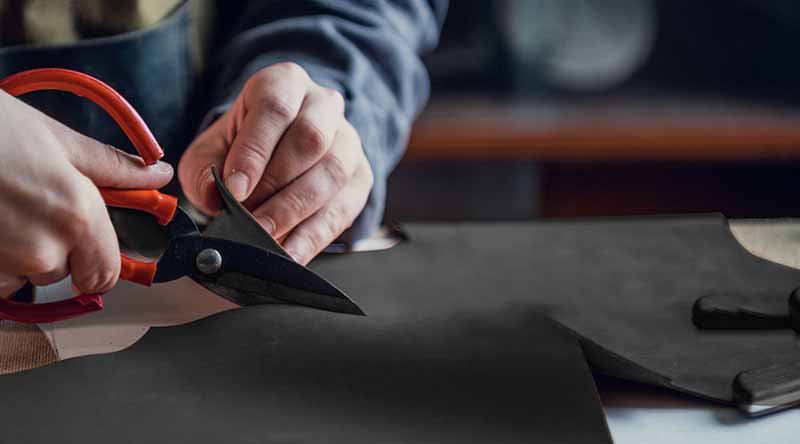
Cut two identical shielding panels. If using an outer shell and liner, cut those slightly larger, then trim after sewing. Place the shielding panels conductive side facing inward toward each other—this ensures the inside of the finished bag is an unbroken continuous conductor. Keep seam allowances 10–15 mm (3/8–5/8″).
3) Seams That Actually Shield
Good seams are everything—most DIY failures leak at the seams or the mouth of the bag.
Option A — Sewn seam (strong & repeatable):
- With shielding panels right sides together, stitch two side seams + bottom seam using conductive thread inside the allowance.
- Fold seam allowances to one side and topstitch them down to create a flat-felled or lapped seam; this doubles the conductive overlap.
- Apply a strip of conductive adhesive tape over the inside seam to guarantee continuity.
Option B — Tape-only seam (no sewing):
- Overlap edges by 10–15 mm and bond with conductive tape on both sides.
- Add a second internal tape to form a “Z” overlap. This works well for metallized films but is less durable over time.
Tip: Avoid needle holes near the final mouth/closure zone; perforations can create RF “slot antennas.” Keep topstitching below the closure overlap.

4) Closure Design That Prevents Leaks
Your closure must create continuous metal-to-metal contact around the opening:
- Roll-top (best DIY): Add a stiffener strip to the mouth. Roll down 2–3 full turns (≥5–7 cm of overlap), then secure with Velcro. Inside the roll zone, apply conductive tape so metal touches metal during the roll.
- Double-Velcro flap: Create an inner conductive flap (2–3 cm) that tucks inside, then fold the main flap over with a second Velcro—two sealing planes, both bridged with RF gasket tape.
- Magnetic + Velcro hybrid: Magnets align the flap; Velcro provides pressure. Still add conductive tape across the flap edge to avoid microgaps.
5) Add Outer Shell & Finish
Wrap the shielded pouch with a nylon/poly outer shell for durability and water repellency. Sew the shell to itself (not through the shield near the mouth). If you must stitch through the shielding layer, keep those stitches below the closure overlap and re-bridge inside with conductive tape.
6) Functional Testing (Basic → Better → Best)
Basic (pass/fail):
- Place a smartphone inside, seal fully. Attempt a call, text, and app push. Confirm no ring/notifications.
- Try Wi-Fi/Bluetooth pairing near a router or laptop—should fail.
- Tap NFC (contactless card/reader)—should not register.
Better (field strength):
- On the phone, open Field Test (e.g., signal in dBm). Note baseline (e.g., −85 dBm). Seal bag and recheck—it should show no service or a large drop beyond the device’s detection.
Best (multi-band confidence):
- Test cellular, Wi-Fi 2.4/5 GHz, Bluetooth, GPS, and NFC (13.56 MHz) separately.
- For key fobs, stand near the car. If the car does not detect the fob while sealed, the bag is working.
Troubleshooting: If any signal leaks, increase closure overlap, add another shielding layer at the mouth, and re-tape seams internally.
7) Durability & Care
- Avoid hard creases in metallic fabrics; roll, don’t fold.
- Wipe clean with a damp cloth; do not machine-wash shielding layers.
- Inspect seams/closure monthly; replace tired Velcro and re-apply conductive tape if needed.
8) Variants You Can Build
- Phone/key fob sleeve: Slim, double-Velcro flap; pocketable.
- Laptop envelope: Roll-top with 3-turn closure; handles attached to the outer shell only.
- Backpack liner: A removable inner sack with drawstring + fold-over conductive flap.
Do Professional Faraday Bags Offer Better Protection?
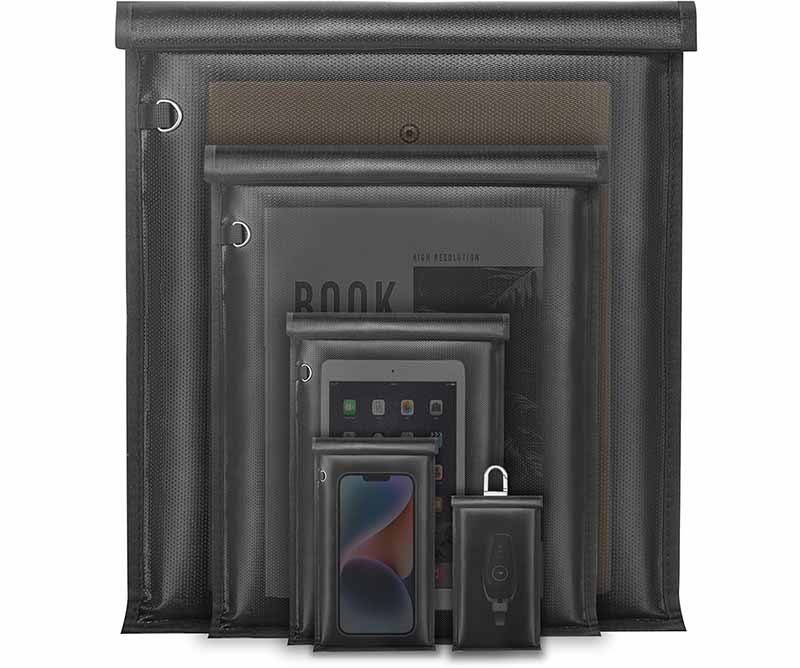
Yes. Professional Faraday bags offer certified multi-layer RF shielding, military-grade attenuation (80–100 dB+), and durable closures tested against cellular, GPS, Wi-Fi, Bluetooth, RFID, and EMP threats. Unlike DIY bags, they meet MIL-STD-188-125 or IEEE 299 standards, last 3–5+ years, and integrate waterproofing, fire resistance, and custom branding. Law enforcement, military, and corporate security rely on professional Faraday bags for forensics, anti-tracking, and data-protection applications where DIY solutions fall short.
1. Certified Multi-Layer Construction
Shielding Layers:
- Pro bags use 3–5 conductive layers (nickel–copper, silver-coated, or RF composites) for full-spectrum attenuation.
- DIY bags often use 1–2 low-cost layers with inconsistent coverage.
Closure Systems:
- Professional bags employ roll-top, RF gasketed Velcro, or double magnetic seals tested for leak-free performance.
- DIY bags rely on simple Velcro flaps, prone to micro-gaps where RF signals leak through.
Outer Shells:
- Industrial nylon (420D–1000D) or ballistic polyester offers water/abrasion resistance for field conditions.
- DIY bags typically skip protective shells entirely.
2. Laboratory Testing & Certifications
Professional Faraday bags undergo independent lab verification:
- MIL-STD-188-125: EMP shielding standards for defense and critical infrastructure.
- IEEE 299: Electromagnetic attenuation testing across frequencies up to 40 GHz.
- CE/FCC Compliance: Required for EU and North American commercial distribution.
These certifications ensure consistent 80–100 dB signal reduction across multiple bands (cellular, GPS, Wi-Fi, RFID, NFC). DIY bags rarely exceed 40–60 dB in real-world tests.
3. Brands & Market Segments
- Mission Darkness (USA): Law enforcement & forensics, EMP-rated.
- Silent Pocket (Global): Consumer privacy wallets, backpacks, and key pouches.
- Szoneier (China OEM/ODM): Customizable Faraday bags for brands with private-label options, combining RF shielding + waterproof/fireproof layers for defense, outdoor, and corporate security markets.
4. Lifespan & Durability
| Parameter | DIY Faraday Bag | Professional Faraday Bag |
|---|---|---|
| Layers | 1–2 | 3–5+ industrial-grade |
| Attenuation (dB) | 40–60 dB | 80–100 dB+ |
| Service Life | 6–12 months | 3–5+ years |
| Closure Seal Quality | Velcro only | Roll-top, RF gasket, or hybrid |
| Outer Shell Protection | None or minimal | Waterproof, fireproof, abrasion-resistant |
| Certifications | None | MIL-STD, IEEE, CE/FCC |
Professional bags integrate redundant shielding layers, reinforced seams, and moisture-resistant exteriors, ensuring longevity even under field use by military or forensic teams.
5. Multi-Functionality in Modern Faraday Bags
- Fireproof + Faraday: Protects against EMP + wildfires for disaster preparedness markets.
- Waterproof + Faraday: Critical for marine law enforcement, outdoor tactical, or industrial fieldwork.
- Shockproof + Faraday: For drones, servers, or rugged electronics in transport.
How to Customize Faraday Bags for Personal or Commercial Use?
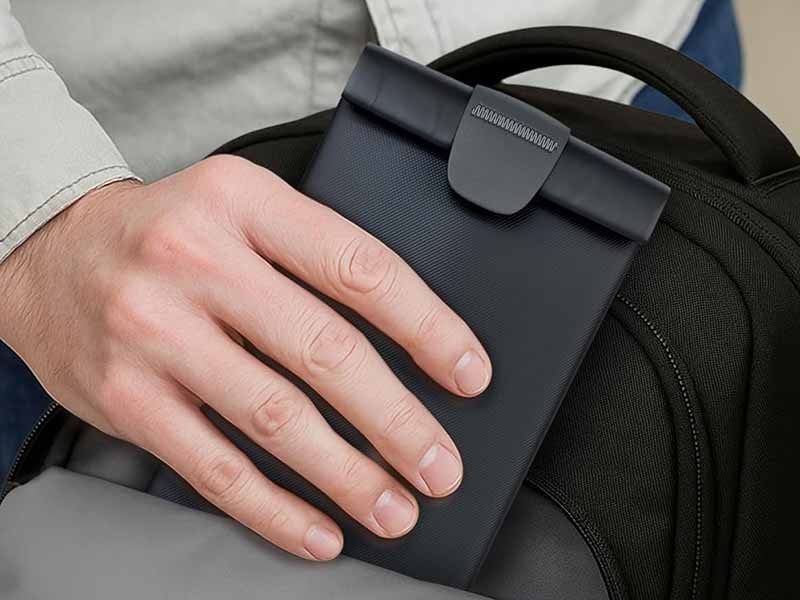
OEM manufacturers like Szoneier offer custom sizes, branding, materials, and multi-functionality options for Faraday bags. Businesses can request private-label designs, fireproof/waterproof combinations, and low-MOQ production for both consumer and industrial markets, ensuring brand differentiation and global compliance certifications.
What Branding Options Do OEM/ODM Manufacturers Offer?
OEM/ODM manufacturers like Szoneier provide a full range of branding solutions, including custom logo printing, embossing, embroidery, and laser engraving on both the outer shell and internal labels. Clients can specify Pantone-matched colors, choose from materials like nylon, canvas, or leather, and request retail-ready packaging designs with barcodes, hang tags, or QR codes. For premium markets, metallic logo plates, reflective decals, or private-label zipper pulls are also available, ensuring brands can differentiate their Faraday bags for consumer, tactical, or corporate security segments.
How to Choose the Right Size and Style for Different Devices?
Sizing depends on the device dimensions, frequency coverage requirements, and end-user scenarios. For example, phone pouches typically use slim profiles with double-Velcro or magnetic flaps, while laptop sleeves require roll-top closures and multi-layer seams for higher attenuation. Tactical backpacks or evidence bags often integrate Faraday liners within rugged, waterproof exteriors. Manufacturers provide custom templates for phones, tablets, drones, car key fobs, or servers, ensuring each product meets specific attenuation ratings (e.g., 80–100 dB) while maintaining ergonomic portability and multi-purpose usability for everyday or industrial applications.
Is It Possible to Combine Faraday Protection with Fireproof or Waterproof Features?
Yes, professional OEMs combine RF shielding fabrics with fire-retardant coatings, waterproof TPU laminates, or shock-resistant foam layers, creating multi-functional Faraday bags for demanding environments. For instance, a waterproof + Faraday backpack suits outdoor and marine use, while a fireproof + Faraday document pouch safeguards critical files and electronics during wildfires or industrial accidents. These hybrid designs meet global compliance standards (MIL-STD, CE, FCC) and appeal to markets like emergency preparedness, defense, and law enforcement, where signal-blocking performance must coexist with environmental protection for mission-critical reliability.
Are Faraday Bags Worth It in Everyday Life?
Faraday bags are worth it for privacy-focused individuals, businesses handling sensitive data, and travelers wanting to prevent RFID theft or GPS tracking. While DIY versions work for basic needs, professional-grade Faraday bags last longer, block more signals, and comply with global standards.
How Long Do Faraday Bags Last?
Faraday bags typically last 6–12 months for DIY or low-cost models and 3–5+ years for professional-grade bags made with multi-layer conductive fabrics, reinforced seams, and certified closures. Lifespan depends on material quality, frequency of use, environmental exposure, and maintenance practices. OEM/ODM Faraday bags with military-standard testing and waterproof/fireproof integration can exceed 5 years of regular use in law enforcement, defense, and commercial applications.
| Faraday Bag Type | Typical Materials | Avg. Lifespan | Maintenance Needs |
|---|---|---|---|
| DIY (Aluminum Foil) | Single-layer foil | 3–6 months | High (replace often) |
| Budget Retail ($20–$50) | 1–2 layers, Velcro closure | 1–2 years | Moderate |
| Professional ($50–$150) | 3–5 layers, RF gaskets | 3–5 years | Low |
| Military/Forensics ($150+) | EMP-rated, waterproof, fireproof | 5+ years | Minimal |
Faraday Bag vs RFID Blocker
RFID blockers protect only credit cards, passports, and RFID-enabled IDs from unauthorized scanning, while Faraday bags block all wireless signals — including cellular, Wi-Fi, GPS, Bluetooth, and RFID — for phones, laptops, key fobs, and IoT devices. Faraday bags offer comprehensive shielding, often with EMP, waterproof, or fireproof features, making them ideal for privacy, forensics, and security markets. RFID blockers are cheaper but far more limited in scope.
- Signal Coverage & Functionality
RFID Blockers:
- Designed for 13.56 MHz (HF RFID) and sometimes 125 kHz (LF RFID).
- Blocks contactless card readers, skimming devices at airports, ATMs, or crowded public areas.
- Cannot block cellular, Wi-Fi, GPS, or Bluetooth signals.
Faraday Bags:
- Shields frequencies from 100 kHz to 40 GHz, covering RFID, GPS, cellular, Wi-Fi, Bluetooth, and NFC.
- Suitable for keyless car fobs, smartphones, laptops, tablets, and even drones or servers.
- Used in law enforcement, military, corporate security, and consumer privacy applications.
- Device Compatibility
| Feature | RFID Blocker | Faraday Bag |
|---|---|---|
| Cards & Passports | Yes | Yes |
| Smartphones & Tablets | No | Yes |
| Car Key Fobs | Limited (RFID only) | Yes (relay attack prevention) |
| Laptops & Drones | No | Yes (full-frequency shielding) |
| EMP Protection | No | Yes (if MIL-STD certified) |
Conclusion
As wireless threats become more sophisticated — from RFID skimming and keyless car relay theft to GPS tracking, corporate espionage, and even EMP events — the demand for reliable, customizable, and certified Faraday solutions continues to rise. Whether you’re a privacy-conscious consumer, a law enforcement agency securing digital evidence, or a brand seeking private-label Faraday products, the right manufacturing partner makes all the difference.
Whether you need consumer privacy wallets, law enforcement evidence bags, tactical-grade Faraday backpacks, or multi-functional hybrid solutions, Szoneier ensures quality, performance, and brand differentiation for every product line.
Contact Szoneier today to discuss your custom Faraday bag project.